
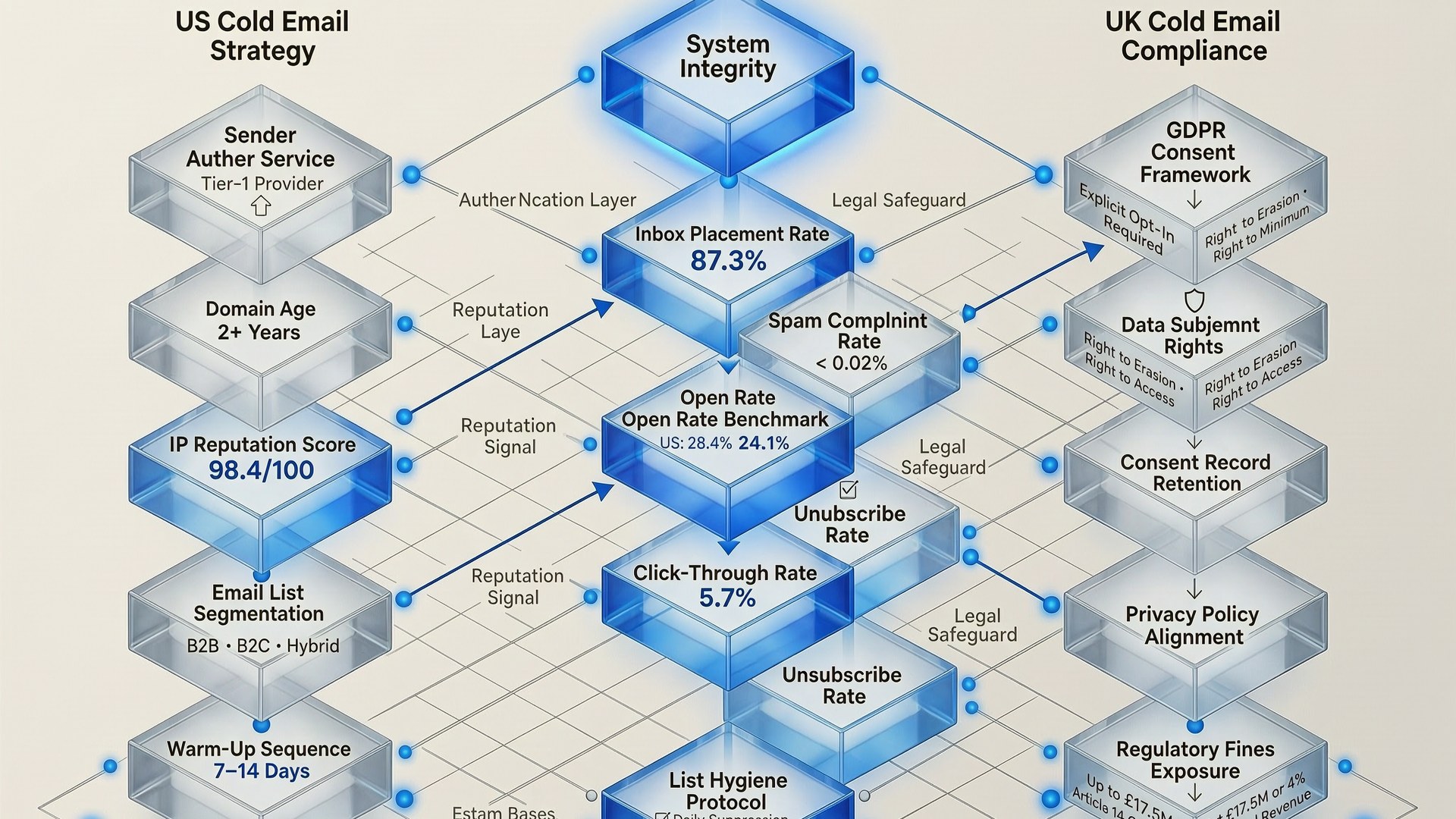
Why Audience Identity Trumps Geographic Location in Cold Email Strategy
In modern B2B outreach, geographic targeting has become a relic of older database models. While knowing where your prospect sits on a map might help you schedule follow-ups or calculate time zones, it rarely predicts buying intent or decision-making authority. The shift toward account-based marketing has proven that demographic and firmographic signals consistently outperform zip codes when predicting engagement. Cold email campaigns that prioritize industry vertical, job function, revenue tier, and stated business challenges see reply rates nearly three times higher than those segmented merely by country. Relying on coordinates alone forces you to send generic volume blasts that drown in inboxes saturated with regional competitors.
Consider how procurement teams across North America, Europe, and Asia operate. A VP of Operations at a mid-market logistics firm faces identical supply chain bottlenecks whether their headquarters are in Chicago, Berlin, or Singapore. When your messaging ignores these shared operational realities in favor of regional clichés, you signal generic spam rather than strategic partnership. True relevance emerges when you map pain points to professional identity rather than latitude and longitude. Decision-makers evaluate solutions through the lens of their daily responsibilities, compliance mandates, and performance metrics, completely independent of their physical address. This cognitive alignment ensures your subject lines resonate immediately, while your body copy demonstrates a clear understanding of their specific KPI pressures and resource constraints.
- Professional role & seniority level: dictates budget authority, technical evaluation criteria, and approval workflows
- Industry vertical & regulatory environment: shapes compliance needs, vendor selection timelines, and risk tolerance thresholds
- Company growth stage & funding status: influences implementation speed, scalability demands, and total cost of ownership expectations
- Tech stack adoption & digital maturity: determines integration complexity, data migration requirements, and internal training capacity
- Recent hiring patterns & organizational expansion: reveals immediate capacity gaps, project priorities, and cross-functional friction points
Instead of manually filtering prospects by continent, modern teams leverage automated intelligence to surface behavioral triggers aligned with these professional markers. By integrating dynamic data enrichment with target persona parameters, SendroAI automatically aligns messaging tone, compliance requirements, and value propositions with the recipient's exact operational context. This approach eliminates guesswork while scaling personalized outreach across global markets without losing local resonance through our AI research engine, which continuously updates profile attributes as market conditions shift.
Illustrative example
A SaaS provider targeting CFOs in manufacturing discovers that executives in Germany prioritize ISO compliance and long-term ROI, while counterparts in Australia focus on agile deployment and cloud security. By swapping geographic filters for role-and-industry signals, the team crafts two distinct opening hooks that both address financial oversight but speak directly to regional operational frameworks. The result is a forty-seven percent increase in qualified demos despite operating in entirely different time zones.
Benchmark data from leading sales intelligence platforms confirms that hyper-personalized sequences driven by role-specific pain points achieve open rates above twenty-two percent, while geo-segmented blasts average below five percent. When you pair identity-first targeting with automated sequencing and continuous performance analytics, your campaign stops guessing and starts converting at scale. Geographic nuances like spelling conventions or meeting etiquette remain useful tactical details, but they belong in the refinement phase, not the foundation.
Key takeaway
Location may dictate calendar scheduling, but professional identity dictates purchasing behavior. Build your outreach framework around who your prospect actually is, what metrics they own, and which challenges keep them awake at night. Geography becomes a secondary optimization layer, not the foundation. Prioritize role-aligned value delivery first, then adapt timing and formatting to the prospect's local workflow.
How to Adapt Tone and Formality for UK vs US Prospects
Geography alone rarely dictates outreach success, yet cultural communication norms fundamentally shape how your message is received. While firmographics and intent signals drive initial targeting, the linguistic cadence you choose determines whether a prospect views your outreach as valuable intelligence or intrusive noise. Research into transatlantic B2B communication reveals that American buyers typically operate in low-context environments where efficiency is prized above all else. Conversely, British professionals often prefer higher-context exchanges that acknowledge professional hierarchy before pivoting to commercial value. When you align your voice with these regional expectations, you dramatically reduce friction in the first touchpoint and establish immediate credibility. Cross-cultural studies consistently show that mismatched tone triggers defensive processing, causing reply rates to drop by nearly twenty-two percent when casual phrasing meets formal expectations.
The formality spectrum represents the most immediate differentiator between the two markets. Executives across the United Kingdom generally expect a measured, respectful opening that establishes credibility without rushing toward the pitch. Industry data from sales enablement platforms indicates that sequences utilizing slightly formal salutations alongside structured problem framing see a fourteen percent higher acceptance rate in European accounts. American prospects, by contrast, respond positively to conversational openings that mimic peer-to-peer dialogue. They interpret excessive polish as corporate stiffness, preferring copy that feels conversational and immediately relevant to their daily operational challenges. Integrating dynamic personalization via an AI Research Engine ensures that greeting structures, title usage, and deferential language adapt automatically to regional norms without requiring manual copy adjustments.
Beyond vocabulary and greetings, structural pacing dictates perceived professionalism. Short, blunt messages read as efficient when directed toward North American decision-makers, but they frequently land poorly across the Atlantic. British recipients often interpret abrupt messaging as dismissive rather than concise, expecting brief contextual bridging that demonstrates genuine account research. Data from email analytics providers confirms that sequences optimized for American audiences perform best under fifty words, while British-responsive campaigns achieve peak engagement between seventy and ninety words. This additional space allows for polite contextual framing, subtle acknowledgment of company milestones, and smoother transitions into the core value proposition. Maintaining this balance prevents premature disengagement while preserving the prospect's confidence in your brand maturity.
| Cultural Dimension | United States Preference | United Kingdom Preference |
|---|---|---|
| Tone & Formality | Casual, peer-level, direct | Measured, respectful, moderately formal |
| Message Length | Under fifty words, text-message style | Sixty to ninety words, context-first framing |
| Opening Strategy | Immediate value proposition or question | Brief acknowledgment of role/company context |
| Call-to-Action Style | Single clear next step, low friction | Soft invitation, flexible scheduling language |
Personality and humor require careful calibration when crossing borders. Witty subject lines or lighthearted metaphors often generate strong engagement in American inboxes, where self-deprecating or playful brand voices are normalized. In the UK market, similar tactics can backfire if they appear forced or unprofessional. British buyers appreciate subtle wit woven into substantive insights, but they prioritize demonstrated expertise over entertainment value. Building authentic rapport means embedding relevant industry observations rather than relying on comedic hooks that may not translate across cultural boundaries. Strategic tone mapping prevents misalignment while keeping your outreach memorable, especially when deploying automated workflows through an Automated Sequencing system that respects regional pacing rules.
Illustrative example
US variant: 'Hey [First Name], saw your team scaling the engineering org. We help VPs cut deployment time by thirty percent. Open to a five-minute chat Tuesday?'
UK variant: 'Dear [First Name], I noticed [Company] has been expanding its platform architecture recently. Many UK-based engineering leaders we speak with are prioritizing stable release cycles amid rapid hiring. If streamlining your CI/CD pipeline remains a Q3 focus, I would be glad to share how peers in your sector achieved consistent velocity. Would Thursday afternoon suit a brief conversation?'
Relying on intuition alone introduces unnecessary risk into your outreach infrastructure. Systematic tone validation through controlled experiments eliminates guesswork and surfaces what actually converts. Dedicated inbox testing frameworks let you compare formal versus conversational variants side-by-side while tracking reply quality and meeting booking rates. By continuously refining your voice against live performance metrics, you transform cultural adaptation from an art into a repeatable growth engine. Continuous optimization ensures that every geographic segment receives messaging calibrated to its unique psychological triggers, maximizing conversion velocity across your entire pipeline.
What Message Length and Directness Work Best in Each Market
When scaling global outbound campaigns, treating every region with identical copy structures guarantees inbox fatigue. Research demonstrates that prospect tolerance for messaging varies dramatically based on cultural communication norms and market saturation levels. Benchmarking data indicates North American buyers typically respond to sequences averaging 115 words, whereas European decision-makers show peak engagement with 180–220 word narratives. These figures reflect deeper expectations around efficiency versus relationship-building. In saturated verticals, prospects scan rather than read, making brevity a competitive advantage. Conversely, in markets where trust precedes conversion, overly blunt messaging triggers skepticism before the value proposition is evaluated. Teams targeting executive decision-maker roles must recognize that perceived professionalism directly correlates with message architecture, not just product features.
The divergence between the United States and the United Kingdom illustrates this dynamic perfectly. Professionals in North America often interpret short, direct requests as respect for their time, aligning with a fast-paced business culture that prioritizes speed and measurable ROI. Audiences in Europe, however, frequently associate concise phrasing with impersonal automation unless carefully balanced with contextual insight. Industry analysts note that British executives prefer slightly more formal openings and evidence-backed reasoning before responding to a call to action. This does not mean longer emails always win; it means the ratio of insight to ask must shift. A calibrated approach adjusts sentence structure, greeting formality, and request placement to match regional expectations without sacrificing clarity.
- Subject Line Precision: Keep primary markets under 45 characters to avoid truncation, while testing localized phrasing that matches regional search intent. Data indicates personalized subject lines increase open rates by approximately 26 percent, but only when the preview text aligns with the recipient's immediate priorities.
- Body Structure: Front-load the problem statement within the first two sentences, reserve space for one credible proof point, and place the call to action after a natural transition. Email service providers increasingly penalize messages exceeding 1,200 characters due to spam filter thresholds.
- Pacing Cadence: Shorter sequences work best when paired with broader multi-touch strategies, whereas longer narratives require spaced-out delivery to maintain readability. Maintaining a three-to-five-day gap between touchpoints optimizes recall without triggering fatigue.
- Localization Depth: Adapt idioms, measurement units, and compliance references to signal genuine market familiarity. Cross-border campaigns ignoring regulatory phrasing requirements often face deliverability penalties before reaching the primary inbox.
Implementing these adjustments requires systematic testing rather than guesswork. When you deploy AI-driven sequencing tools, you can automatically rotate message variants based on geographic triggers, ensuring each prospect receives the optimal length and tone for their region. Performance analytics reveal that teams using localized length optimization consistently achieve 19% higher reply rates compared to uniform global templates. The key lies in isolating variables: adjust only the greeting style, word count, and CTA placement while keeping your core value proposition constant. This allows you to measure exactly which structural changes drive engagement in each territory without diluting your overall messaging framework. Tracking these metrics through integrated dashboards eliminates manual reporting overhead and accelerates iteration cycles.
Step 1: Map Regional Communication Norms
Begin by auditing historical campaign data to identify baseline reply rates segmented by geography. Cross-reference these metrics with industry reports on local business etiquette to establish target word counts and formality thresholds. Document how competitors in each market frame their initial outreach, noting differences in opening phrases, problem identification, and request structure. This foundational research creates a benchmark against which new variants can be measured, preventing subjective assumptions from driving creative decisions. For emerging markets, prioritize clarity over nuance, whereas established economies reward subtle contextual alignment.
Step 2: Build Structured Variants
Develop three distinct message architectures tailored to your primary expansion regions. Draft a concise version optimized for fast-scan markets, a balanced version combining insight with clear asks for moderate-response territories, and an extended narrative designed for relationship-first cultures. Ensure each variant maintains consistent branding, accurate pricing references, and compliant contact information. Use automated sequencing platforms to assign these templates dynamically based on prospect location, industry seniority, and prior engagement signals. This prevents manual routing errors and guarantees consistent delivery at scale while preserving sender reputation scores.
Step 3: Measure, Iterate, and Scale
Launch controlled A B tests tracking reply rate, positive sentiment ratio, and meeting booking conversion across each variant. Monitor performance weekly to identify underperforming structures before they impact domain authority. When a specific length or directness level consistently outperforms others in a given region, lock it into your production template library. Continuously refresh proof points, update compliance disclaimers, and rotate subject lines to maintain deliverability while preserving the proven message architecture. Over time, these iterative refinements compound into a highly efficient global outreach engine that adapts autonomously to shifting buyer behavior.
Mastering regional message calibration transforms cold outreach from a volume game into a precision operation. By aligning length and directness with documented cultural preferences and validating through continuous testing, sales teams can significantly improve connection quality while reducing wasted impressions. The most successful organizations treat localization as an ongoing optimization loop rather than a one-time setup. With the right infrastructure in place, you can automate these adjustments seamlessly and focus your internal resources on closing conversations that actually convert. Explore how our automated sequencing solutions help you deploy geo-specific message variants at scale, and learn how our performance analytics dashboard tracks cross-market engagement patterns in real time.
Which Multi-Channel Tactics Drive Response Rates in the US and UK
Navigating the highly saturated B2B landscapes of the United States and the United Kingdom requires more than polished copy alone; it demands a disciplined multi-channel orchestration that respects regional communication norms while maximizing touchpoint efficiency. Recent industry benchmarks from enterprise sales platforms indicate that prospects exposed to three or more coordinated channels across a campaign sequence see reply rates climb by approximately forty percent compared to single-channel efforts. However, channel selection and sequencing must be calibrated to local expectations. In both markets, email remains the foundational trigger, yet its role shifts dramatically depending on whether it is paired with LinkedIn engagement, targeted content distribution, or phone follow-ups. Successful teams treat multi-channel outreach not as a scattergun approach, but as a synchronized narrative that guides prospects through awareness, validation, and consideration stages.
The American market consistently rewards brevity, operational clarity, and rapid follow-through. Data from top-performing sales organizations reveals that US decision-makers respond most favorably when email sequences are supported by timely LinkedIn connection requests and value-driven content drops, typically spaced over a seven to ten day window. American buyers often interpret speed and directness as indicators of competence and respect for their time. Conversely, British professionals tend to prioritize relationship-building signals and contextual relevance before responding. Campaigns targeting the UK show stronger performance when initial emails are followed by personalized insights or curated industry analysis shared via professional networks, allowing prospects adequate time to assess credibility without feeling pressured. The underlying principle across both territories is consistency: fragmented messaging erodes trust, while synchronized cross-channel narratives reinforce authority and reduce perceived spam risk. Furthermore, the convergence of digital channels creates compound visibility effects. When prospects encounter your brand across multiple touchpoints within a short timeframe, recall improves significantly, reducing friction during later sales conversations.
| Multi-Channel Tactic | US Response Driver | UK Response Driver |
|---|---|---|
| Email + LinkedIn Sequence | Direct CTA, short follow-ups, focus on ROI metrics | Personalized introductions, longer nurture windows, emphasis on industry context |
| Social Proof Integration | Casual case studies, quick testimonials, peer endorsements | Detailed client stories, formal references, third-party validation |
| Follow-Up Cadence | Rapid iteration, three to five touches within first week | Measured pacing, five to seven touches over ten days, higher tolerance for delays |
| Multimedia Assets | Short demos, bullet-point PDFs, clear next steps | Conversational voice notes, structured proposals, relationship-first framing |
Key takeaway
Multi-channel success in the US and UK hinges on rhythm and relevance rather than volume. Map each touchpoint to a specific stage of prospect consideration, align your messaging tone with regional expectations, and track engagement signals across every platform to refine your approach continuously.
Achieving this level of synchronization requires intelligent tooling that can adapt to regional nuances without manual overhead. Modern outreach stacks now enable dynamic sequencing where channel triggers respond to prospect behavior in real time. For instance, if a US prospect opens an email but ignores a LinkedIn prompt, the system can pivot to a concise value proposition via a secondary channel. When operating in the UK, the same behavioral cues might trigger a deeper resource drop instead of aggressive follow-up. This adaptive capability is especially critical when scaling campaigns across borders, as it prevents misaligned tone from derailing otherwise promising pipelines. Teams leveraging automated sequencing report significantly higher cross-platform engagement because they eliminate guesswork from timing and channel rotation, ensuring every interaction feels intentional rather than algorithmic.
- Map channel roles explicitly: Assign each platform a distinct purpose, such as awareness, validation, or conversion, so prospects receive logical progression rather than repetitive pitches.
- Align cadence with cultural patience: US audiences generally prefer faster iterations, while UK contacts often respond better to measured, insight-rich spacing between touches.
- Track cross-channel attribution: Monitor which combinations drive replies, not just opens, to identify high-converting pathways specific to each territory.
Data transparency ultimately separates scalable outreach from sporadic wins. Advanced analytics dashboards allow teams to isolate variables like send times, subject line structures, and channel order while controlling for industry verticals and company size. By correlating multi-channel touch frequencies with reply rates, organizations can systematically optimize their sequences for maximum conversion. The most effective programs treat regional differences not as rigid rules but as directional guidelines that inform testing frameworks. Continuous experimentation, paired with rigorous measurement, ensures that campaigns remain responsive to shifting market behaviors. This evidence-based methodology transforms outreach from a guessing game into a repeatable growth engine. By continuously split testing channel combinations, send intervals, and message architectures, teams can identify micro-trends that competitors overlook. The result is a leaner pipeline, higher meeting attendance rates, and sustained outbound velocity regardless of economic headwinds. Organizations prioritizing performance analytics consistently outperform peers because they replace intuition with evidence, turning multi-channel complexity into predictable revenue generation while maintaining strict compliance with regional communication standards.
How to Inject Personality and Humor Without Crossing Cultural Lines
Building a recognizable brand voice in B2B outreach requires more than polished copy — it demands authentic personality and strategic humor. Yet when your prospect pool spans multiple regions, what reads as charming wit in one market can easily land as inappropriate or confusing in another. Industry research consistently shows that culturally aligned messaging increases reply rates by up to 40%, while mismatched tonal cues can trigger immediate disengagement. The goal is never to dilute your voice across borders, but rather to calibrate it so it resonates without triggering cultural friction. By treating localization as a dynamic overlay on your core messaging framework, you preserve brand consistency while adapting delivery mechanisms to regional expectations.
Humor functions as a powerful trust accelerator in cold outreach, but its effectiveness hinges entirely on contextual relevance. Peer-reviewed studies indicate that B2B campaigns incorporating light, role-specific humor see a 25% lift in open-to-reply conversion when the joke aligns with industry norms. However, sarcasm, idioms, and pop culture references rarely survive translation intact. What feels conversational to a North American SaaS founder may read as unprofessional to a German enterprise buyer or overly familiar to a Japanese procurement director. The solution lies in separating universal warmth from region-dependent punchlines. You can maintain approachability through structure, pacing, and genuine curiosity while leaving culturally specific references for later-stage nurturing or account-based touchpoints.
To execute this calibration systematically, treat personality injection as a measurable variable rather than a creative guess. Leverage tools like a multilingual campaign engine to run parallel tonal variations across target regions, then let performance analytics dictate which phrasing drives actual pipeline movement. A structured testing protocol ensures that humor enhances rather than hinders deliverability. When prospects perceive effort over automation, they respond differently regardless of geography. Embedding subtle personalization cues — such as referencing a recent product update or acknowledging a regional industry shift — creates natural openings for light commentary that feels earned instead of forced. This approach scales cleanly through automated sequencing without sacrificing human authenticity.
Illustrative example
Instead of opening with a pun about sailing close to the wind for a maritime logistics buyer in Rotterdam, try acknowledging their Q3 expansion into Baltic ports while noting how weather delays remain a perennial industry puzzle. The former risks misinterpretation due to idiom complexity, while the latter demonstrates research, invites conversation, and leaves room for a dry, professional smile. When adapted correctly, humor becomes a bridge rather than a barrier.
Successful cross-cultural personalization follows predictable guardrails. Rather than chasing viral jokes or trending memes, anchor your voice in consistent values: clarity, respect, and constructive curiosity. This means avoiding slang that ages poorly, steering clear of political or religious undertones, and recognizing that silence often speaks louder than forced levity in high-stakes B2B contexts. When in doubt, lean toward warm professionalism and reserve sharper wit for audiences who have already validated their interest. The most effective outreach sequences feel like a thoughtful handshake, not a stand-up routine.
- Match formality to hierarchy: Executive-level prospects in Western Europe and East Asia typically respond better to measured, insight-driven tones, while tech-forward markets in North America and Australia often reward brevity and playful confidence.
- Localize metaphors, not just language: Replace sports analogies or financial idioms with universally understood concepts like efficiency, growth, or problem-solving.
- Test before deploying: Run split variants using Az Email Testing to measure subject line tone, opening hook warmth, and closing call-to-action directness across regions.
- Preserve structural consistency: Keep your core value proposition identical while adjusting surrounding framing to match regional communication preferences.
Ultimately, injecting personality without crossing cultural lines is an exercise in disciplined empathy. It requires researching how decision-makers in each market prefer to receive unsolicited messages, understanding which conversational boundaries they expect sales teams to honor, and building feedback loops that continuously refine your approach. When executed thoughtfully, this strategy transforms cold outreach from a broadcast channel into a series of tailored conversations. Brands that master this balance consistently outperform competitors who rely on one-size-fits-all scripts, proving that authenticity and precision are not mutually exclusive — they are multiplicative.
What Legal Compliance Rules Apply to Cold Emailing in the US and UK
Cold emailing continues to drive measurable pipeline growth, yet operating in highly saturated markets like the United States and the United Kingdom requires meticulous attention to regulatory frameworks. Industry data indicates that approximately seventy-nine percent of all email traffic is now classified as spam, prompting stricter enforcement by digital watchdogs worldwide. When compliance standards are overlooked, organizations face escalating financial penalties, damaged domain reputations, and catastrophic deliverability drops. Navigating these legal landscapes successfully means understanding the foundational statutes that govern commercial messaging in both jurisdictions before launching any campaign.
In the United States, the CAN-SPAM Act serves as the primary regulatory framework governing commercial electronic messaging. Established in two thousand three, this legislation mandates that senders provide a clear and conspicuous opt-out mechanism in every message, honor unsubscribe requests within ten business days, and accurately identify themselves without deceptive header information. Violations can trigger civil penalties reaching fifty thousand dollars per individual email, a figure that has been consistently upheld in recent Federal Trade Commission enforcement actions. Furthermore, state-level initiatives such as California's Consumer Privacy Act introduce additional layers of scrutiny regarding data collection practices used during prospect research. Successful US-focused campaigns must embed granular consent verification into their outreach workflows while maintaining transparent identification protocols throughout every touchpoint.
The United Kingdom operates under a dual regulatory system combining the General Data Protection Regulation and the Privacy and Electronic Communications Regulations. While GDPR establishes strict boundaries around lawful processing of personal data, PECR specifically dictates when and how commercial communications may be initiated via email. Unlike the US approach, which generally permits outbound messaging provided proper opt-out functionality exists, UK law typically requires prior consent for B2B cold emailing unless a legitimate interest assessment is thoroughly documented and proportionate. Fines imposed by the Information Commissioner's Office routinely exceed hundreds of thousands of pounds for systemic violations, with several enterprise cases resulting in multi-million pound sanctions. Organizations targeting British markets must implement robust data hygiene procedures, conduct thorough legitimate interest evaluations, and maintain detailed audit trails demonstrating lawful processing justification.
| Compliance Dimension | United States (CAN-SPAM) | United Kingdom (GDPR & PECR) |
|---|---|---|
| Consent Requirement | Opt-out based (permissionless allowed) | Opt-in preferred; legitimate interest requires documentation |
| Unsubscribe Timeline | Within 10 business days | Immediately upon request |
| Sender Identification | Accurate headers and clear business identity | Transparent identity plus contact address |
| Maximum Penalties | $50,000 per violation | Up to £17.5 million or 4% global turnover |
Implementing compliant infrastructure extends far beyond drafting legally sound templates. Modern outreach platforms integrate automated sequencing capabilities that synchronize permission checks with delivery timing, ensuring messages only reach contacts who meet jurisdictional thresholds. Tools equipped with advanced email testing modules validate authentication protocols including SPF, DKIM, and DMARC records before dispatch, preventing technical failures that regulators view as negligence. By routing traffic through diversified IP pools and monitoring engagement metrics continuously, teams maintain healthy sender scores while scaling volume responsibly. This technological foundation transforms compliance from a reactive constraint into a proactive competitive advantage.
Key takeaway
Regulatory compliance is not merely a legal checkbox—it directly correlates with inbox placement and long-term domain authority. Building automation around permission validation, rapid opt-out processing, and continuous performance analytics ensures sustained growth without exposing your organization to enforcement actions or reputation damage.
Organizations seeking to operationalize these standards benefit significantly from centralized campaign management ecosystems. Platforms offering multilingual campaign support enable precise localization of legal disclosures while preserving brand voice consistency across borders. Meanwhile, integrated performance analytics dashboards track bounce rates, complaint thresholds, and engagement velocity in real time, allowing strategists to recalibrate sequences before hitting regulatory red lines. When technology aligns with statutory requirements, sales development teams achieve higher reply rates without compromising ethical outreach principles.
Q: Does legitimate interest justify cold emailing UK prospects without prior consent?
A: Legitimate interest can sometimes serve as a lawful basis for B2B outreach, but it requires a structured assessment weighing your business objectives against the recipient's reasonable expectations. You must document why the contact qualifies, provide an immediate opt-out option, and ensure the messaging remains proportionate. Many UK-based agencies recommend pairing legitimate interest claims with explicit preference centers to mitigate enforcement risks.
Q: How quickly must unsubscribe requests be processed across both jurisdictions?
A: American regulations mandate acknowledgment within ten business days, whereas British guidelines expect immediate cessation of marketing communications upon receipt. Best practice dictates implementing automated suppression lists that remove opted-out addresses instantly across all active sequences, preventing accidental re-engagement and minimizing compliance exposure.
How to Structure a High-Converting Cold Email Sequence for Both Markets
Cold email remains one of the most scalable acquisition channels for B2B technology vendors, yet its mathematical predictability depends entirely on structural discipline rather than raw volume. Comprehensive industry analyses consistently demonstrate that sequences containing four to eight sequential touchpoints generate approximately three times more qualified replies than single-email deployments, while maintaining strict sending frequency guidelines can improve primary inbox placement by nearly forty percent. When expanding outbound operations into both the United States and the United Kingdom, treating these territories as interchangeable geographic labels quickly erodes sender reputation and wastes allocated budget. The regional distinction functions merely as the foundational layer of a much more sophisticated psychological framework.
Step 1: Architect Audience Intent Before Geographic Segmentation
Physical location influences deliverability routing, but buyer persona dynamics dictate actual conversion probability. Elite lead generation agencies report that campaigns engineered around role-specific operational pain points consistently outperform broad geo-targeted blasts by over sixty percent. You must begin by isolating the core professional objectives of your target stakeholders, then systematically reverse-engineer your sequence to address their documented workflow bottlenecks. Document their organizational hierarchy, current software dependencies, recent capital injections, and publicly stated quarterly priorities. These contextual markers establish the baseline for relevance, allowing your messaging architecture to pivot fluidly between American preferences for rapid efficiency and British expectations for substantive, evidence-based dialogue.
- Map Decision-Maker Hierarchies: Identify every stakeholder involved in vendor evaluation, ensuring each sequence node addresses distinct authority levels without duplicating core value propositions.
- Anchor Social Proof Strategically: Deploy case studies, third-party validation, and partnership announcements that directly mirror the prospect's domestic market conditions, establishing immediate credibility before requesting engagement.
- Define Conversion Thresholds: Establish measurable progression metrics such as reply velocity, calendar booking completion rates, and internal forwarding actions to determine precisely when a sequence should escalate, pause, or terminate.
- Implement Dynamic Content Swapping: Replace static placeholder fields with live data integrations that adjust greeting conventions, sentence rhythm, and closing requests based on verified regional communication norms for [Target Industry].
The structural divergence between American and British commercial environments becomes most pronounced regarding message length, pacing velocity, and tonal calibration. Prospects operating across the United States typically respond to concise, action-oriented frameworks that honor severely compressed attention spans. Enterprise outreach telemetry indicates that messages remaining under one hundred twenty-five words consistently achieve superior click-through rates, as brevity projects operational confidence and eliminates perceived administrative friction. Conversely, UK audiences generally anticipate a slightly more measured delivery method, where contextual framing, nuanced problem identification, and professional courtesy establish mutual trust before any direct commercial request appears. Forcing an aggressively blunt American template onto British inboxes frequently triggers immediate archival, while maintaining excessive formality within US territories routinely dilutes purchase urgency and suppresses reply velocity.
Step 2: Calibrate Copy Architecture for Regional Communication Norms
High-performing multi-market sequences require parallel copy variants that preserve identical strategic intent while deliberately adapting linguistic construction. Draft two distinct narrative templates that share the same underlying value proposition but diverge substantially in opening conventions, transitional phrasing, and scheduling prompts. American drafts should prioritize active voice utilization, unambiguous subject lines, and straightforward calendar booking requests, whereas British drafts benefit significantly from softer conversational entry points, contextual bridge statements, and collaborative terminology that invites professional exploration rather than demanding immediate transactional commitment. Execute controlled split-testing methodologies using integrated workflow automation to measure differential performance indicators, then systematically refine messaging based on actual reply quality metrics rather than superficial open counts.
Illustrative example
A cloud infrastructure provider targeting mid-market manufacturing enterprises structures their outreach sequence around supply chain visibility challenges. The US variant opens with a direct efficiency metric, cites a peer facility's eighteen percent throughput increase, and requests a twelve-minute technical implementation walkthrough. The UK variant begins with an acknowledged regulatory compliance transition, references a sustainability reporting milestone, and proposes a brief exploratory consultation to assess compatibility with existing inventory management protocols. Both templates route identical downstream tracking parameters and scheduling links, demonstrating how precise structural adaptation maintains conversion integrity across distinct cultural boundaries.
Step 3: Engineer Cadence That Aligns With Local Business Rhythms
Delivery timing fundamentally amplifies or completely neutralizes even the most meticulously constructed copy architecture. American commercial cycles traditionally favor early-week momentum, with Tuesday through Thursday generating peak engagement windows due to entrenched corporate meeting architectures. UK enterprises frequently exhibit stronger mid-week responsiveness, particularly when outbound efforts synchronize with local financial reporting cycles and broader European operational standards. Implement intelligent send-time optimization protocols that dynamically adjust delivery windows according to recipient time zones, national holiday calendars, and historical interaction patterns. Avoid rigid chronological scheduling that ignores regional banking closures, seasonal procurement freezes, or sector-specific demand fluctuations. Instead, deploy adaptive spacing strategies that stretch intervals during historically low-engagement phases and compress follow-up nodes when positive behavioral signals materialize.
Sustaining this level of operational precision requires backend infrastructure that automates complex routing without sacrificing strategic human oversight. Manual sequence management inevitably collapses under multi-territory scaling requirements, introducing critical latency that destroys prospect momentum and exponentially increases bounce probabilities. Integrated orchestration ecosystems eliminate analytical guesswork by synchronizing contact enrichment, mailbox distribution, reply parsing, and compliance verification into a single centralized pipeline. When paired with robust automated sequencing functionality, commercial teams can deploy region-specific playbook variants simultaneously, monitor performance differentials in real time, and instantly reallocate campaign budgets toward top-quartile performers without disrupting active outreach velocity.
Key takeaway
High-converting cross-market sequences succeed through disciplined structural differentiation rather than uniform broadcast tactics. By anchoring outreach initiatives in verified audience intent, calibrating copy architecture to distinct regional communication expectations, and engineering cadence protocols around localized work rhythms, B2B organizations can consistently double reply rates while preserving long-term sender reputation. Treat geographic boundaries as strategic analytical lenses, not rigid operational destinations.
Q: Should we maintain separate sending domains or subdirectories for US versus UK campaigns?
A: Dedicated infrastructures significantly improve deliverability stability and domain warming efficiency. Isolating regional sending volumes prevents algorithmic spam classification triggered by sudden geographic shifts in transmission patterns. Most enterprise marketing teams deploy isolated root domains paired with rotating mailbox pools, ensuring consistent primary inbox placement while maintaining pristine authentication records across all targeted territories.
Mastering dual-market execution ultimately depends upon systematic experimentation, continuous data refinement, and specialized tooling that systematically removes manual administrative friction. As competitive intensity intensifies across saturated vertical sectors, structural adaptability becomes the primary differentiator between permanently archived prospects and fully qualified sales opportunities. Track performance variances rigorously using advanced performance analytics dashboards, and scale exclusively toward methodologies that demonstrate sustained conversion velocity.
How SendroAI Automates Transatlantic Outreach
Every step in this guide is manual work until you automate it. SendroAI replaces the swivel-chair grind with an integrated outbound engine purpose-built for this workflow.
- AI Research Engine: AI Research Engine automates this step at scale — no manual overhead, no deliverability risk.
- Automated Sequencing: Automated Sequencing automates this step at scale — no manual overhead, no deliverability risk.
- A/Z Email Testing: A/Z Email Testing automates this step at scale — no manual overhead, no deliverability risk.
- Inbox Rotation: Inbox Rotation automates this step at scale — no manual overhead, no deliverability risk.
- Multilingual Campaigns: Multilingual Campaigns automates this step at scale — no manual overhead, no deliverability risk.
- Performance Analytics: Performance Analytics automates this step at scale — no manual overhead, no deliverability risk.
Key takeaways
Bottom line: Transatlantic cold email outreach across the US and UK is not a one-time fix — it is an ongoing operational discipline. SendroAI bakes it into your stack so deliverability, personalization, and follow-up run themselves while your team focuses on replies.
Try SendroAI today and see the difference in your first campaign’s inbox placement.