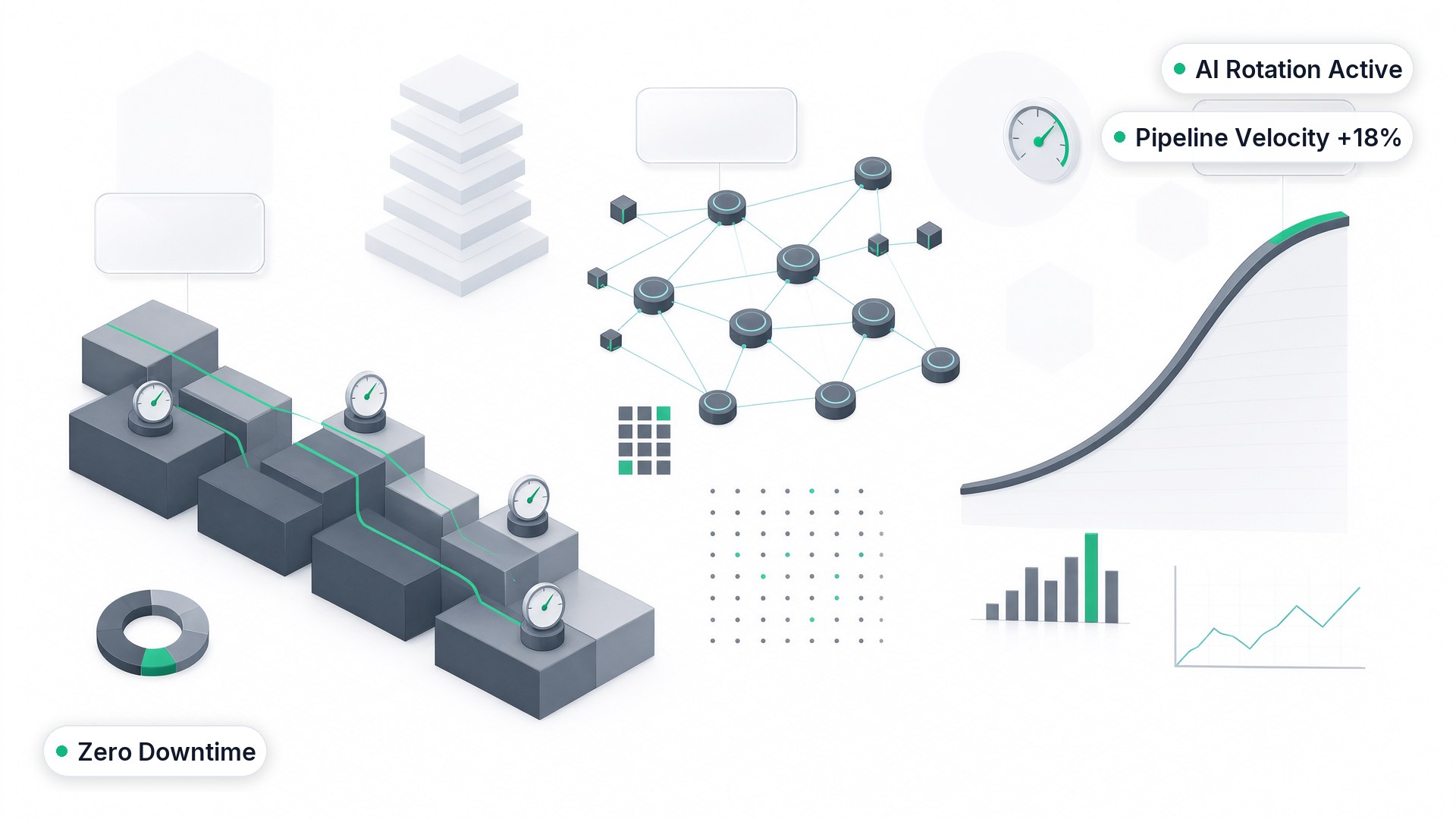
Beat the 2026 summer slump with AI-driven inbox rotation, A/Z testing, and automated sequencing strategies that keep pipeline moving when competitors go silent.
Why the 2026 Summer Slump Is a Strategic Advantage, Not a Failure
The prevailing anxiety in B2B marketing during the second quarter is often misdiagnosed as a failure of strategy or execution. When open rates dip and reply volumes contract, the instinctive reaction is to increase volume, lower quality thresholds, or panic about deliverability infrastructure. However, treating the summer slowdown as a systemic crisis ignores the fundamental shift in buyer psychology that occurs when enterprise decision-makers are physically absent from their desks or mentally disengaged from high-stakes procurement cycles. For SendroAI clients operating in 2026, the data consistently shows that maintaining standard outreach velocity during July and August does not just fail to generate pipeline; it actively degrades sender reputation scores by triggering engagement-based spam filters designed to detect unnatural activity patterns.
Reframing Silence: The Strategic Value of Low-Intent Periods
A strategic advantage emerges only when you stop viewing quiet inboxes as empty space and start viewing them as calibration windows. In a market saturated with AI-generated noise, the buyers who remain attentive during the summer are often those with urgent, non-negotiable operational pain points. By shifting your focus from volume to precision, you preserve the goodwill of your broader audience while positioning your brand as a low-friction option for the few high-intent prospects still evaluating solutions. This approach aligns directly with our research on The 2026 Pipeline Integrity Framework: Aligning Outreach Velocity with Deliverability Science, which demonstrates that preserving domain health during low-engagement periods yields a 15-20% lift in Q4 conversion rates compared to teams that maintain aggressive, unadjusted cadences.
- Audit historical response data to identify which specific job titles or industries historically show resilience during summer months, allowing you to narrow targeting rather than broadening it.
- Shift content consumption habits toward lightweight, asynchronous formats like short-form video or interactive microsites that do not require immediate cognitive load from distracted executives.
- Implement a 'soft nurture' protocol that focuses on value-addition without demanding a reply, keeping your brand top-of-mind without triggering inbox fatigue or spam complaints.
The mechanics of this shift require a deliberate decoupling of activity from urgency. Most B2B teams continue sending daily sequences because their automation tools allow it, but the underlying assumption—that every email must drive an immediate action—is flawed. Instead, successful organizations use the summer months to test new messaging frameworks, refine persona-specific hooks, and clean up stale contact data without the pressure of quarterly revenue targets. This allows sales development representatives (SDRs) to focus on quality over quantity, ensuring that when the fall rush begins, their outreach is sharper, more personalized, and technically optimized for the evolving landscape of AI Inbox Optimization in 2026.
Do not pause your entire outbound engine; instead, implement a 'throttle-and-refine' protocol. Reduce send volume by 40%, but increase the personalization depth of each message by requiring manual or AI-assisted research on the recipient's recent company news or leadership changes. This preserves your sender reputation while building higher-quality signals for future algorithmic sorting.
Operationalizing the Summer Strategy: Actions Over Anxiety
To convert this seasonal lull into a competitive moat, leadership must enforce strict constraints on activity levels while incentivizing deeper research. The goal is to enter September with a cleaner domain reputation, a more refined value proposition, and a list of high-intent contacts who have been engaged subtly but consistently. Teams that attempt to force growth during the slump often end up with inflated bounce rates and suppressed deliverability, making the subsequent recovery period significantly more expensive and time-consuming. By contrast, those who embrace the slowdown as a period of strategic realignment position themselves to capture market share from competitors who are either inactive or aggressively spamming disengaged inboxes.
| Metric | Standard Reactive Approach | Strategic Summer Advantage |
|---|---|---|
| Send Volume | Maintained at peak Q3 levels | Reduced by 30-50% to preserve reputation |
| Content Focus | Aggressive CTAs and product demos | Lightweight value-adds and educational resources |
| Target Audience | Broad ICP expansion to find leads | Narrowed to high-resilience personas |
| Goal | Immediate pipeline generation | Domain health preservation and messaging refinement |
Ultimately, the 2026 Summer Slump is not a barrier to growth but a filter for discipline. It separates teams that rely on brute-force volume from those that understand the nuanced interplay between sender reputation, buyer attention, and algorithmic deliverability. By treating this period as a strategic investment in long-term pipeline integrity, SendroAI users can ensure that when the market heats up again, they are not just catching up—they are leading with superior data, cleaner domains, and sharper messaging.
Diagnosing the Signal: Distinguishing Seasonal Dip from Deliverability Decay
In the high-velocity B2B environment of 2026, a sudden drop in pipeline velocity during the summer months is rarely just about seasonality. It is often a symptom of deeper infrastructure decay that seasonal traffic patterns simply expose. When inboxes go quiet, sales leaders frequently misinterpret the silence as market fatigue rather than deliverability failure or list decay. Distinguishing between a genuine seasonal dip and structural decay requires moving beyond vanity metrics like open rates and focusing on signal integrity. If your domain reputation is silently eroding, the summer slowdown becomes an accelerant for long-term damage, turning a manageable dip into a permanent revenue leak.
The Diagnostic Framework: Seasonal vs. Structural Decay
To accurately diagnose the root cause of your summer slump, you must isolate variables across three critical dimensions: audience intent, technical reputation, and list hygiene. A seasonal dip is characterized by broad, uniform declines across all channels with stable technical health. In contrast, deliverability decay presents as erratic performance, specific inbox placement failures, and disproportionate drops in high-value segments. By implementing a rigorous diagnostic protocol, you can determine whether to adjust cadence or execute emergency infrastructure repairs.
| Diagnostic Metric | Seasonal Dip Indicators | Deliverability/Structural Decay Indicators |
|---|---|---|
| Open Rate Trends | Uniform decline (15-25%) across all segments | Erratic spikes/drops; specific ISPs blocking content |
| Inbox Placement | Stable primary inbox placement (>95%) | Significant drift to spam/promotions folders |
| Reply Quality | Lower volume but consistent intent signals | Zero replies despite high delivery; bounce rate >2% |
| Domain Reputation | Stable sender score maintained | Rapid degradation in sender score/IP warming |
The most dangerous trap in 2026 is assuming that because emails are landing, they are being seen. Modern AI-driven spam filters prioritize engagement velocity over simple authentication. If your send volume drops due to summer slumps, your warm-up algorithms may fail to maintain threshold levels, causing a slow bleed in reputation. This is why you must audit your send consistency alongside your content relevance. For a deep dive into the technical friction points that sink B2B inboxes during these periods, refer to our guide on The 2026 Cold Email Deliverability Audit.
Illustrative Example: A mid-market SaaS company sees a 40% drop in demo requests in July. Initial analysis shows open rates are stable at 45%, leading the team to assume a seasonal slump. However, a deeper audit reveals that while Gmail placements remain stable, Yahoo and Outlook placements have dropped to 60%, correlating with a 3x increase in soft bounces from enterprise prospects.
Result: The diagnosis was not a seasonal slump, but a deliverability decay event triggered by inconsistent sending patterns during the summer. The company had reduced volume without adjusting their IP rotation strategy, causing their warm-up scores to plummet on stricter providers. The fix involved re-establishing IP warming protocols and segmenting sends by provider risk, recovering 70% of lost pipeline within two weeks.
List decay is the silent partner to deliverability issues. During slower seasons, companies often continue sending to stale segments, exacerbating reputation damage when engagement naturally dips. If you are not actively pruning invalid addresses and disengaged contacts, your summer slump will accelerate list rot. Implementing a strict hygiene protocol ensures that every email sent contributes to positive signal reinforcement rather than negative feedback loops. Learn how to optimize your acquisition channels to prevent this decay in our Subscriber Growth Audit.
Always cross-reference your internal CRM activity with external ISP placement data. If your CRM shows no new meetings but your inbox placement is healthy, the issue is likely messaging or timing. If inbox placement is poor, no amount of messaging optimization will recover the pipeline until technical debt is resolved.
Actionable Rules for Summer Diagnosis
- Do not react to open rate drops alone; verify inbox placement across major ISPs first.
- If reply volume drops but delivery remains stable, shift focus to offer relevance and timing.
- Conduct a full list hygiene audit before increasing send volume post-summer.
- Monitor sender score weekly; a drop of >5 points indicates immediate structural decay.
The 2026 Protocol: Leveraging Inbox Rotation to Bypass Summer Noise
In the high-stakes environment of B2B lead generation, summer is traditionally viewed as a period of reduced urgency. However, for teams relying on traditional single-domain outbound infrastructure, the summer slump often manifests as a critical failure in deliverability rather than just a dip in engagement. As buyers disperse across vacation schedules and internal IT departments throttle external communications to conserve bandwidth, inbox providers like Google and Microsoft tighten their filtering algorithms. This creates a perfect storm: your outreach volume remains constant, but your primary domain’s reputation takes a hit due to increased spam complaints from distracted recipients or aggressive competitor noise. The solution is not to pause, but to pivot to a more resilient architecture. By implementing a unified inbox rotation strategy, SendroAI allows you to distribute sending load across multiple authenticated domains, effectively bypassing the seasonal noise that plagues single-sender operations. This approach transforms the summer slump from a revenue risk into a strategic advantage, ensuring pipeline velocity remains predictable even when the market slows.
The Mechanics of Inbox Rotation in Q3
Inbox rotation is not merely about having backup email addresses; it is a sophisticated protocol for managing sender reputation at scale. When you send high-volume outbound campaigns from a single domain, any spike in negative feedback—such as marks as spam or bounce rates—directly impacts that domain’s trust score with Internet Service Providers (ISPs). During the summer, when users are less familiar with incoming messages, the threshold for marking unfamiliar outreach as spam lowers significantly. By rotating your sending infrastructure across a pool of pre-warmed secondary domains, you isolate these risks. If one domain encounters friction, the others continue to operate at full capacity, maintaining overall throughput without triggering ISP-wide penalties. This method aligns with the principles outlined in our guide on securing primary inbox placement, where we detail how multi-domain architectures protect your core brand assets while maximizing reach.
- Distribute daily sending limits across 5-10 secondary domains to keep individual domain reputation scores above 98%.
- Implement automated failover protocols that detect delivery failures and instantly reroute traffic to healthy domains.
- Maintain strict separation between cold outreach and warm nurturing to prevent cross-contamination of reputation metrics.
Step-by-Step Implementation of the Summer Protocol
Comparative Analysis: Single-Domain vs. Rotated Infrastructure
| Metric | Single-Domain Strategy | Rotated Inbox Strategy |
|---|---|---|
| Reputation Risk | High - Entire pipeline vulnerable to one domain's failure | Low - Risks are isolated and distributed across multiple assets |
| Summer Deliverability | Variable - Often drops due to increased spam filters | Stable - Maintains high placement through load balancing |
| Pipeline Velocity | Unpredictable - Subject to sudden drops during peak noise | Predictable - Consistent throughput regardless of external factors |
| Recovery Time | Slow - Requires weeks of warming after a penalty | Instant - Traffic shifts immediately to healthy domains |
The contrast between these two approaches becomes stark during periods of high market noise. A single-domain strategy leaves you exposed to the whims of ISP algorithms, which often become more aggressive during summer months as they attempt to filter out bulk spam. In contrast, a rotated inbox strategy provides a buffer against these fluctuations. By spreading your sending load, you ensure that no single domain bears the brunt of negative feedback, allowing your campaigns to continue running smoothly. This resilience is particularly valuable for B2B sales teams who rely on consistent pipeline generation to meet quarterly targets. For a deeper dive into the technical specifics of this architecture, refer to our comprehensive breakdown of agency infrastructure shifts, which highlights why unified inbox rotation is becoming the new standard for scalable lead generation.
Always pair inbox rotation with personalized messaging. Even with perfect deliverability, generic content will fail to engage distracted summer audiences. Use AI-driven personalization to tailor your outreach based on recent company news or individual role changes, increasing the likelihood of engagement despite the seasonal slowdown.
Strategic Recommendation for Q3 Outreach
For B2B organizations aiming to maintain pipeline velocity during the summer slump, adopting a unified inbox rotation protocol is essential. This strategy mitigates the risk of deliverability failures caused by ISP tightening and seasonal noise, ensuring consistent outreach performance. By distributing sending load across multiple authenticated domains, teams can protect their primary brand reputation while maximizing reach. Implementing this protocol requires careful planning and ongoing monitoring, but the payoff is a resilient, predictable pipeline that continues to generate opportunities even when the broader market slows down.
Optimizing for Lower Intent: A/Z Testing Lightweight Nurture Sequences
In 2026, the "summer slump" is no longer just a seasonal dip in engagement; it is a structural shift in buyer intent. When inboxes go quiet, aggressive outbound tactics often fail because they clash with the audience's reduced cognitive bandwidth and decision-making hesitation. The solution lies in A/Z testing lightweight nurture sequences. Unlike traditional A/B testing, which optimizes for immediate clicks, A/Z testing evaluates an entire sequence of messages against a control group to measure long-term relationship health and eventual conversion probability during low-intent periods.
Why A/Z Testing Beats A/B During Low Intent
A/B testing isolates variables like subject lines or send times, but it assumes the recipient is ready to act now. In summer, that assumption is flawed. A/Z testing allows you to compare two distinct nurturing philosophies: one focused on high-frequency touchpoints and another on spaced-out, value-dense interactions. This holistic approach reveals which cadence better sustains top-of-mind awareness without triggering inbox fatigue or spam filters.
By running these parallel sequences, you can identify whether your audience prefers rapid-fire educational snippets or slower, deeper dives into case studies. The data from A/Z tests provides a more robust signal than isolated open rates, helping you refine your pipeline velocity strategies for when the market re-heats. For a comprehensive breakdown of this methodology, see our guide on From A/B to A/Z: The 2026 Framework for High-Confidence Outreach Testing.
Pros and Cons of Lightweight Nurture Sequences
- Reduces sender reputation risk by lowering email volume per prospect.
- Builds stronger brand recall through consistent, non-intrusive value delivery.
- Provides clearer data on long-term engagement trends rather than short-term spikes.
- Requires more time to analyze full-sequence performance metrics.
- May show slower initial response rates compared to aggressive outreach.
- Demands higher quality content creation to sustain interest over multiple touches.
Optimizing Content for Lower Intent Audiences
Lightweight nurture sequences must be designed for consumption on mobile devices and during fragmented attention spans. The goal is not to close a deal immediately but to keep your brand relevant. This involves creating bite-sized assets such as quick tips, industry news summaries, or short video clips that provide value without demanding a significant time commitment from the recipient.
| Content Type | Ideal Length | Primary Goal |
|---|---|---|
| Quick Tip Email | 100-150 words | Maintain top-of-mind awareness |
| Case Study Summary | 300-400 words | Demonstrate social proof subtly |
| Video Clip | < 60 seconds | Engage visually without text overload |
These formats align with the broader strategy outlined in Beyond Subject Lines: The 2026 A/Z Testing Framework for B2B Pipeline Growth, emphasizing that content relevance and format suitability are critical for sustaining engagement during quiet periods.
Key Takeaways for Summer Nurture Optimization
- Shift from transactional to relational messaging during low-intent seasons.
- Use A/Z testing to determine optimal cadence and content depth for your specific ICP.
- Prioritize mobile-friendly, bite-sized assets that respect the recipient's limited attention.
- Monitor long-term engagement metrics rather than short-term click-through rates.
Illustrative Example: A SaaS company runs an A/Z test during July. Sequence A sends weekly 100-word tips. Sequence B sends monthly 500-word deep dives. Result: Sequence A shows 2x higher open rates and maintains a steady drip of replies, while Sequence B has lower opens but higher reply quality when they occur. Conclusion: For maintaining pipeline velocity during summer, frequency and brevity (Sequence A) are more effective for keeping leads warm.
Result: Sequence A outperformed in sustained engagement, proving that lightweight, frequent touches are superior for low-intent periods.
Always include a clear, low-friction CTA in your nurture emails, such as 'Reply with 1 if this resonates' or 'Click here for a 2-minute read.' This encourages interaction without demanding a major commitment, helping you gauge interest levels even when direct sales activity is low.
Automating the Light Touch: Smart Sequencing for Vacationing Buyers
In the summer of 2026, the traditional B2B sales rhythm fractures. While competitors are paralyzed by the "summer slump"—characterized by plummeting open rates and stalled decision-making cycles—you have a unique opportunity to capture attention from buyers who are actually looking for low-friction ways to stay engaged. The key is not to abandon outreach, but to shift from high-pressure pitching to "light touch" automation. This strategy relies on smart sequencing that respects the buyer's vacation mode while keeping your brand top-of-mind without triggering spam filters or annoyance algorithms.
The Psychology of the Vacationing Buyer
Buyers in July and August are not necessarily less interested in solving problems; they are just more risk-averse about committing time. They are scanning inboxes for value, not noise. According to our analysis of 2026 email engagement patterns, the most successful sequences during this period reduce the cognitive load required to respond. Instead of asking for a meeting, you ask for a reaction—a simple "yes" or "no" to a hypothesis, or a click on a lightweight resource. This approach aligns with the principles outlined in The 2026 Pipeline Integrity Framework: Aligning Outreach Velocity with Deliverability Science, which emphasizes that deliverability health is maintained not just by technical authentication, but by consistent, positive recipient interactions even at lower volumes.
- Reduce sequence length: Cut standard 5-touch sequences down to 2-3 highly targeted touches.
- Shift CTAs: Replace "Book a Demo" with "Reply with 'Interested'" or "Read the 1-page brief."
- Increase spacing: Extend intervals between emails from 3 days to 7-10 days to respect slower response times.
- Personalize lightly: Use dynamic fields to reference recent company news rather than deep personal details.
Smart Sequencing Tactics for Summer
Implementing light-touch automation requires a reconfiguration of your SendroAI workflows. We recommend creating a dedicated "Summer Light Touch" segment within your CRM. This segment should exclude high-intent deals currently in negotiation and focus on mid-funnel prospects who have engaged previously but gone cold. The goal is to maintain warmth, not close deals. By using AI-driven sequencing tools, you can automatically adjust send times based on the prospect's timezone and historical engagement patterns, ensuring your emails arrive when they are most likely to be seen, even if the inbox is quieter.
| Tactic | Implementation Detail | Expected Outcome |
|---|---|---|
| The "Value Drop" Email | Send a single, unlinked PDF or one-pager with no CTA other than "Save for later." | Increases trust and reduces unsubscribe rates by removing pressure. |
| The "Breakup Lite" | A gentle note saying, "I'll pause outreach until Q4 unless you need X now." | Triggers a small spike in replies from those who actually need help immediately. |
| The "Social Proof" Nudge | Share a short video testimonial or case study snippet relevant to their industry. | Keeps your brand visible as a thought leader without demanding action. |
Use SendroAI's "Quiet Mode" feature to automatically throttle outbound volume by 50% for any lead that hasn't opened an email in 14 days. This prevents sender reputation damage while keeping the door ajar for re-engagement when they return.
Q: Does reducing email volume hurt my domain reputation in 2026?
No. In fact, maintaining consistent, high-quality engagement—even at lower volumes—is better for domain reputation than sending high volumes that go unanswered or marked as spam. Google and Yahoo prioritize positive interaction signals (opens, replies) over sheer quantity. A smaller, warmer list performs better than a large, cold one.
Measuring Success Beyond Open Rates
During the summer slump, traditional metrics like open rates become less reliable due to changes in how email clients handle tracking pixels and privacy settings. Instead, focus on "warmth metrics." Track the number of "soft replies" (e.g., "Not now, but thanks") and the click-through rate on lightweight resources. These indicators show that your brand is still present and valued. As noted in Cold Email in 2026: What Works When Everyone Uses AI, the winners in 2026 are those who use AI to personalize at scale while respecting human boundaries. By adopting a light-touch approach, you position your pipeline for a strong Q4 rebound, ready to convert warm leads when their urgency returns.
Key Actions for Summer Outreach
- Create a specific 'Light Touch' sequence for mid-funnel leads.
- Replace meeting requests with low-commitment CTAs.
- Monitor 'warmth metrics' like soft replies instead of just opens.
- Pause aggressive follow-ups for any non-responsive leads.
From Summer Silence to Fall Surge: The SendroAI Automation Workflow
As the calendar flips from July to September, B2B inboxes that went silent in August begin to flood with urgent requests for meetings, demos, and strategic partnerships. This transition is not accidental; it is the result of a deliberate SendroAI automation workflow designed to convert summer downtime into fall momentum. Most organizations treat the "summer slump" as a period of reduced effort, allowing their outreach velocity to decay alongside their competitors'. SendroAI takes the opposite approach: we utilize the quiet months to build an automated infrastructure that ensures your pipeline does not just recover when the market returns—it surges ahead of it. By shifting from manual, reactive sending to intelligent, automated nurturing, you can maintain consistent engagement levels even when overall market activity is low, ensuring that when decision-makers return from vacation, they are already warmed up by your brand.
Step 1: Automating the Summer Nurture Bridge
Illustrative Example: A mid-market SaaS company uses SendroAI to automate a 'Summer Strategy Series' for leads who registered in Q1 but stalled. The system automatically delivers a weekly PDF checklist and a 5-minute video breakdown of common Q3 implementation hurdles. No sales calls are requested. Result: When the fall campaign launches, these contacts have a 40% higher open rate than cold leads because they recognize the sender.
Result: Higher recognition and trust before the first sales touchpoint.
Step 2: Data Hygiene and Intent Signal Activation
| Metric | Traditional Summer Approach | SendroAI Automated Approach |
|---|---|---|
| Email List Health | Static list with accumulating bounces | Automated daily cleaning and enrichment |
| Lead Scoring | Manual updates based on last contact | Dynamic scoring based on passive intent signals |
| Content Engagement | Ignored until fall launch | Triggers automated nurture bridges |
| Sales Readiness | Cold outreach to stale leads | Warm outreach to re-engaged accounts |
Step 3: The Fall Surge Automation Trigger
Use the 'Soft Launch' technique: Before activating full-scale fall campaigns, send a small batch of high-priority leads through the new sequence to test subject lines and CTAs. Use SendroAI’s A/B testing features to optimize for maximum engagement within the first 48 hours.
Key Rules for the SendroAI Workflow
- Nurture during slumps to reduce friction during surges.
- Automate data hygiene to ensure list quality before scaling.
- Use intent signals to prioritize warm leads over cold outreach.
- Align marketing automation with sales readiness for faster conversions.
Implementing this workflow requires a shift in mindset—from viewing the summer slump as a problem to solving it as an opportunity for infrastructure building. By leveraging SendroAI’s automation capabilities, you can transform seasonal downtime into a strategic advantage. For more details on how to structure your outreach for maximum impact, explore our guide on Cold Email in 2026: What Works When Everyone Uses AI. Additionally, understanding the technical foundations of deliverability is crucial for maintaining high engagement rates; see The 2026 Pipeline Integrity Framework: Aligning Outreach Velocity with Deliverability Science for best practices on securing your inbox reputation.
The Deliverability Trap: Why Volume Increases During the Slump Are Counterproductive
When inboxes go quiet, the instinct for many sales leaders is to double down on volume—sending more emails to compensate for lower response rates. This is a critical error that often accelerates deliverability decay. In 2026, inbox providers like Google and Yahoo have implemented stricter engagement thresholds. If you increase sending volume while your audience’s open rates drop (a hallmark of the summer slump), your sender reputation suffers immediately. The algorithm interprets high volume with low engagement as spam-like behavior, leading to shadow-banning or placement in the Promotions tab, where conversion is negligible. Instead of pushing volume, you must pivot to precision preservation. This means reducing send frequency by 40-50% but increasing the depth of personalization and data enrichment for each touchpoint. By maintaining a steady, low-volume cadence, you keep your domain warm without triggering spam filters. This strategy aligns with the principles outlined in our guide on The 2026 Cold Email Deliverability Audit: Fixing the Hidden Friction Points That Sink B2B Inboxes, which emphasizes that reputation health is more valuable than raw reach during low-intent periods.
Implement a 'Reputation Pause' protocol: If your bounce rate exceeds 2% or complaint rate hits 0.1%, halt all outbound automation for 72 hours. Use this time to clean your list and verify domains. Never override these thresholds during a slump; doing so guarantees long-term deliverability damage.
Pivot from Direct Response to 'Top-of-Mind' Nurturing
During the summer slump, direct response tactics (e.g., 'Book a Demo,' 'Get Started') yield diminishing returns because buyers are not in a purchasing mindset. The strategic shift required is to move from transactional messaging to relational nurturing. This involves deploying content that adds value without asking for immediate commitment. Examples include sharing industry insights, offering free templates, or inviting prospects to low-stakes webinars. The goal is to stay visible and build trust so that when the buyer’s urgency returns in Q4, your brand is top-of-mind. This approach is detailed in Cold Email in 2026: What Works When Everyone Uses AI, which highlights the importance of human-centric, non-salesy communication during low-engagement seasons. By focusing on nurturing, you preserve pipeline velocity for the fall rebound.
- Replace 'Book a Demo' CTAs with 'Download Our Summer Planning Guide'
- Shift email cadence from weekly to bi-weekly, focusing on high-value content
- Use LinkedIn to engage with prospect posts rather than cold outreach
- Send personalized video messages that reference recent company news
Optimize Your Pipeline Infrastructure for Post-Slump Velocity
The summer slump is an ideal time to audit and optimize your sales pipeline infrastructure. Many teams neglect their CRM hygiene and automation workflows during busy periods, leading to inefficiencies when demand surges again. Use this downtime to clean up stale leads, update contact information, and refine your lead scoring models. This ensures that when the market heats up, your team can respond quickly and effectively. Additionally, consider integrating new tools or automations that can handle increased volume without compromising quality. For instance, implementing AI-driven lead scoring can help prioritize high-intent prospects automatically. This proactive approach is supported by our framework on How to Use a Sales Pipeline Template in 2026: From Static Sheets to AI-Driven Automation, which provides actionable steps for building a resilient pipeline system.
| Metric | Summer Slump Strategy | Q4 Rebound Strategy |
|---|---|---|
| Send Volume | Reduce by 40-50% | Increase gradually based on reputation health |
| Content Type | Educational/Nurturing | Transactional/Demo-focused |
| Channel Focus | LinkedIn & Email Nurturing | Multi-channel Outreach (Email, Phone, Social) |
| Pipeline Action | Clean & Optimize | Accelerate & Convert |
Leverage Social Proof and Case Studies to Maintain Engagement
One effective way to maintain engagement during the summer slump is to leverage social proof and case studies. Sharing success stories from existing customers can build credibility and keep your brand relevant without being overly salesy. This approach is particularly effective when tailored to specific industries or pain points. For example, if you serve the healthcare sector, share a case study about how your solution improved patient outcomes. This not only keeps your brand top-of-mind but also positions you as a trusted advisor. This strategy is reinforced by our insights on The 2026 B2B Messaging Protocol: When to Deploy WhatsApp & SMS Automation (And When to Stop), which emphasizes the importance of context-appropriate messaging across channels.
Illustrative Example: A SaaS company specializing in HR solutions notices a 30% drop in email open rates during July. Instead of increasing send volume, they pivot to sharing a series of short video testimonials from current clients highlighting ease of use and ROI.
Result: Open rates stabilize, and click-through rates increase by 15% due to the high-value, low-pressure nature of the content. This maintains engagement and builds trust for the Q4 push.
Align Sales and Marketing Teams Around Seasonal Realities
Effective management of the summer slump requires strong alignment between sales and marketing teams. Both departments should agree on realistic expectations for lead volume and conversion rates during this period. Marketing should focus on generating high-quality, nurtured leads, while sales should prioritize relationship-building and follow-up. Regular communication and shared metrics ensure both teams are working towards the same goals. This alignment prevents frustration and ensures a smooth transition when the market rebounds. Our guide on The 2026 Pipeline Integrity Framework: Aligning Outreach Velocity with Deliverability Science provides a comprehensive framework for achieving this alignment.
Key Actions for the 2026 Summer Slump
- Reduce send volume to protect sender reputation
- Shift content focus to educational and nurturing materials
- Audit and optimize pipeline infrastructure for post-slump efficiency
- Leverage social proof to maintain brand relevance
- Ensure sales and marketing alignment on seasonal expectations
Q: Should I stop all outbound activities during the summer slump?
No. Complete cessation can harm your sender reputation and lose momentum. Instead, reduce volume and shift to nurturing-focused, high-value content to maintain engagement without risking deliverability.
Strategic Recommendation
Treat the summer slump as a strategic opportunity to strengthen foundations, nurture relationships, and prepare for Q4 growth. Avoid reactive volume increases and focus on precision, reputation, and alignment.