Quick decision verdict
Executive rulings based on technical testing and pricing data.
Best for Autonomous Cold Outreach
sendroAI eliminates manual research by autonomously generating unique, context-aware emails for every lead, ensuring messages bypass spam filters through genuine personalization rather than just accurate contact info.
Best for Traditional Database Lookups
Lusha is ideal if your primary need is revealing verified email addresses and phone numbers from a pre-existing database, though it requires separate tools for sending and personalization.
Best for Predictable Budgeting
sendroAI's flat monthly fee with unlimited mailboxes avoids the 'credit trap' where scaling outreach volume exponentially increases costs per seat or per reveal.
sendroAI vs Lusha at a glance
Side-by-side core specifications and live platform viewports.
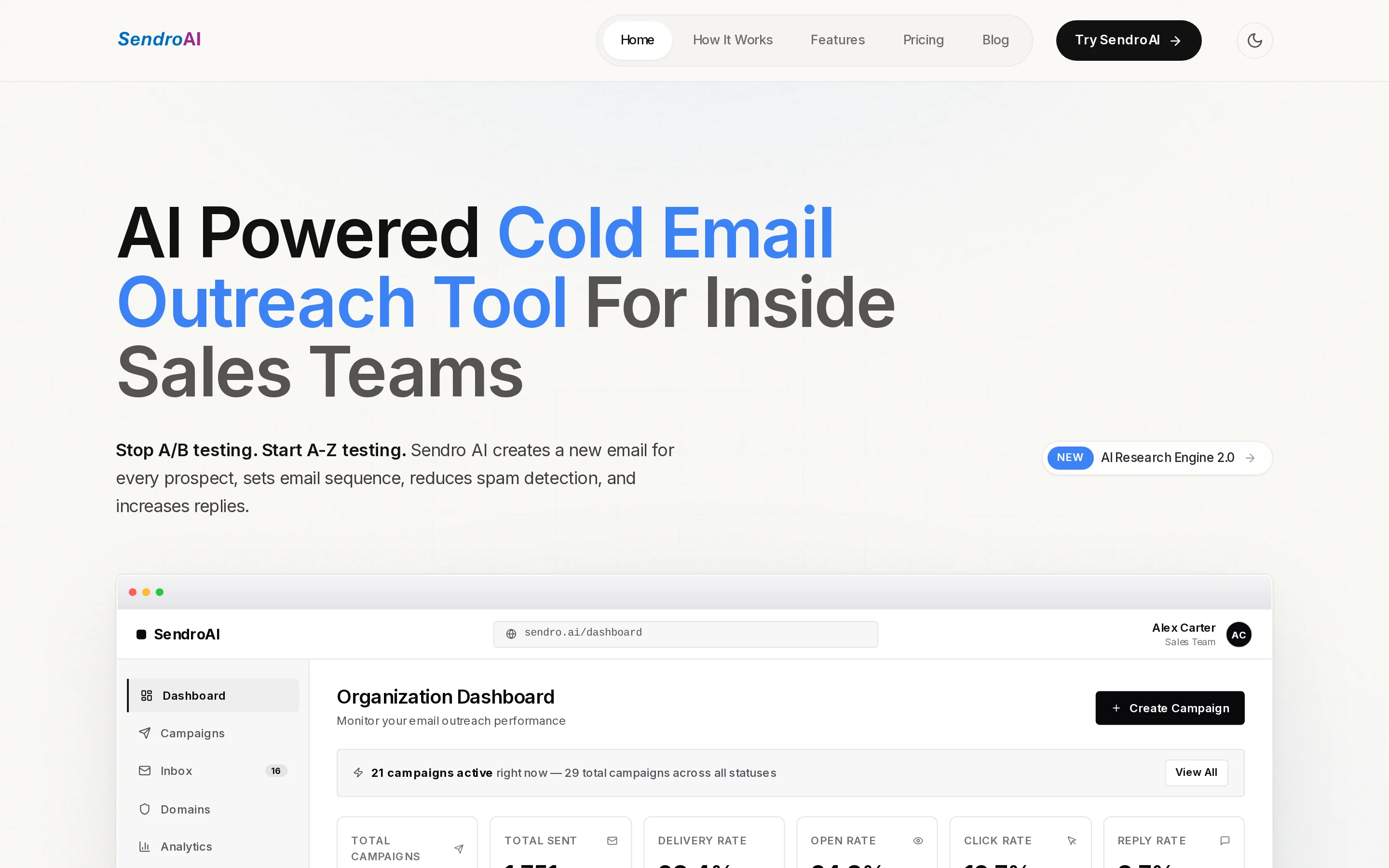
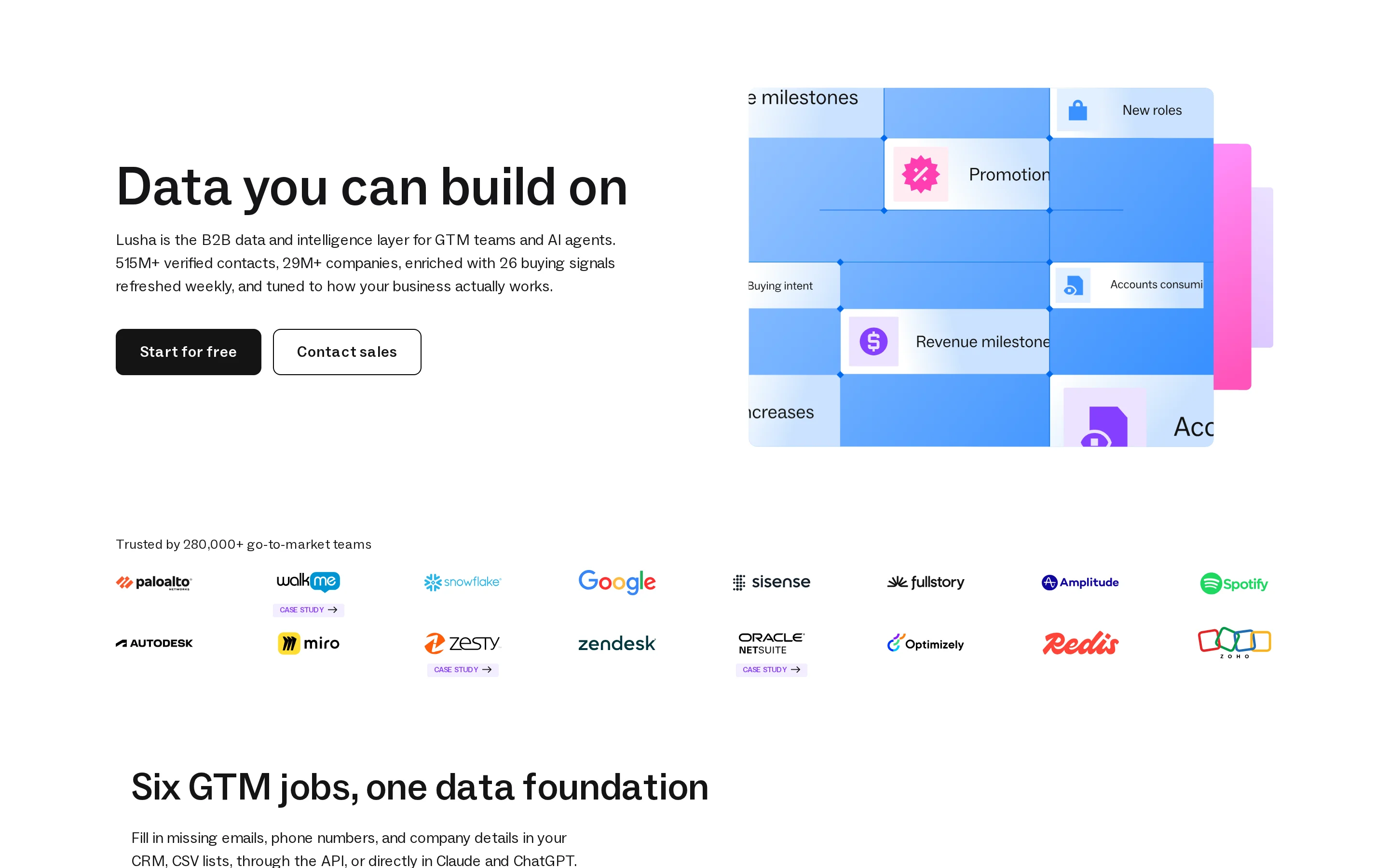
| Attribute | sendroAI | Lusha |
|---|---|---|
| Primary Purpose | Autonomous AI Outbound Engine (Research + Write + Send) | Sales Intelligence & Contact Data Provider |
| Starting Price | $99/mo (Flat, Unlimited Inboxes) | Free Plan (40 credits); Paid plans vary by seat/credits |
| Personalization Depth | Deep 1:1 Contextual Research (No Templates) | Static Data Enrichment (Requires external copywriting) |
| Mailbox Rotation | Smart Automated Multi-Domain Rotation | N/A (Not a sending platform) |
| Lead Source | Bring Your Own List (Import Unlimited Leads) | Built-in Database (Credit-based reveal) |
Feature-by-feature matrix
Audited capabilities across data sourcing, sending infrastructure, and integrations.
| Capability | Why it matters | sendroAI | Lusha | Winner |
|---|---|---|---|---|
| Autonomous Prospect Research | Unique personalized angles per lead prevent pattern detection and increase reply rates. | ✓ Native (AI Researches Every Lead) | — None (Manual or Static Data Only) | sendroai |
| AI Copywriting | Eliminating template merging ensures each email feels hand-written. | ✓ Native (Hand-written feel, no templates) | ◐ Partial (Basic enrichment fields only) | sendroai |
| Smart Mailbox Rotation | Distributing load across multiple mailboxes protects domain reputation. | ✓ Native (Unlimited domains/mailboxes) | — None (External tool required) | sendroai |
| Auto-Pause on Reply | Preventing awkward follow-ups after a lead responds improves CX. | ✓ Native (Reply-safe auto-pause) | — None (External tool required) | sendroai |
| Contact Data Access | Finding direct lines to decision-makers. | — None (Bring your own leads) | ✓ Native (Emails & Phone Numbers) | lusha |
| Pricing Model | Predictable costs allow for scalable budgeting without usage shocks. | ✓ Flat Monthly Fee (Unlimited usage) | ✗ Credit-Based (Pay-per-reveal) | sendroai |
Technical deep dives
Architectural comparisons derived from live platform testing.
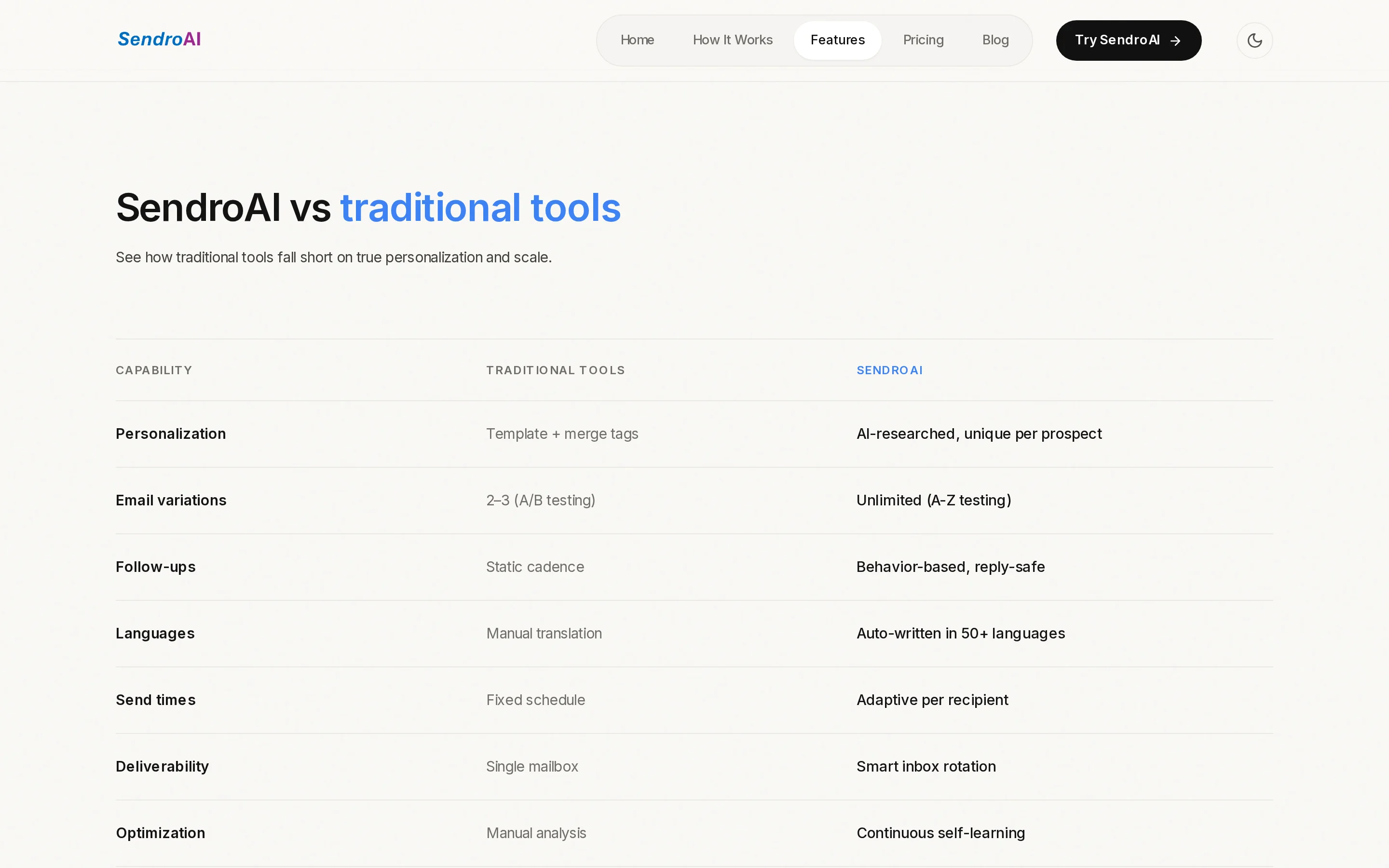 Full resolution
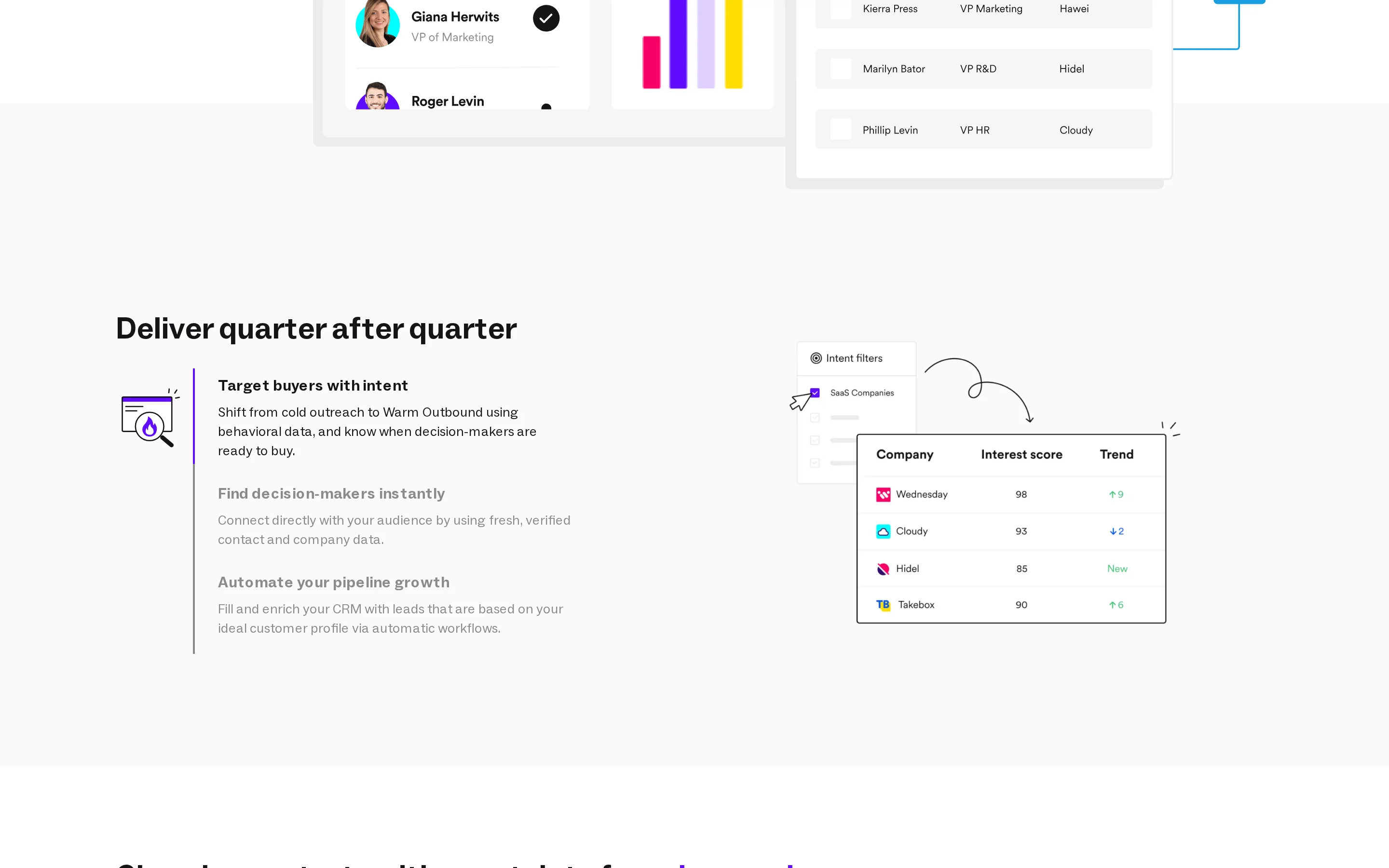 Full resolution
Prospect Intelligence: Autonomous 1:1 Research vs. Static Database Enrichment
Core Architecture: Lusha operates as a sales intelligence database, providing firmographics and contact details like emails and phone numbers. Its value lies in 'revealing' this data using a credit system. However, the output is static; once you have the email, you must manually research the prospect or use a separate tool to personalize the message. sendroAI takes a fundamentally different approach by integrating an AI Research Engine directly into the outreach workflow. It doesn't just give you a name and title; it analyzes the company's recent news, role-specific challenges, and persona traits to craft a unique narrative for every single lead.
Workflow & Rep Reality: With Lusha, an SDR spends time filtering databases, spending credits to reveal contacts, exporting lists, and then switching to a writing tool to draft emails. This fragmented workflow introduces friction and delays. sendroAI consolidates this into a four-step process: Import leads, describe the product once, and let the AI handle research, writing, and sequencing. The result is a 'hand-written-feeling' email generated in seconds, eliminating the need for merge tags or generic templates that often trigger spam filters.
Tradeoffs & Ruling: If your bottleneck is finding *who* to talk to, Lusha is effective. But if your bottleneck is getting them to *reply*, sendroAI wins. By automating the deep-dive research and copywriting, sendroAI ensures that high-volume outreach remains hyper-personalized, a feat difficult to achieve manually when scaling beyond a few hundred prospects.
Sending Infrastructure: Dedicated Smart Rotation vs. Shared Platform Risks
Infrastructure & Deliverability: Lusha is primarily a data provider, not a sending infrastructure platform. While they may offer integrations or basic campaign features, their core competency isn't managing SMTP servers or domain reputation. sendroAI is built specifically around protecting sender reputation through 'Smart Mailbox Rotation.' It allows users to connect unlimited domains and mailboxes, automatically distributing sends across these accounts to mimic human behavior and avoid rate limits associated with single-mailbox sending.
Daily Operational Realities: Sales teams using Lusha typically pair it with a separate sending tool (like Instantly or Lemlist) to manage deliverability. This creates a disjointed stack where data flows out but sending logic is siloed elsewhere. sendroAI handles the entire lifecycle: it verifies lead email IDs internally, rotates mailboxes based on performance, and ramps up sending volume gradually over 28 days to establish warm-up protocols. This integrated approach reduces the risk of blacklisting primary domains.
Tradeoffs & Ruling: For teams serious about scale, relying on a third-party sender alongside a data provider adds complexity and cost. sendroAI’s native infrastructure provides full control over the sending environment, ensuring that high-quality data translates directly into high-deliverability campaigns without needing to stitch together multiple vendors.
Total Cost of Ownership: Flat Unlimited Pricing vs. Credit & Seat Traps
Economics & Scalability: Lusha utilizes a credit-based model where revealing an email costs 1 credit and a phone number costs 5 credits. As your team grows or your outreach volume increases, your costs rise linearly or exponentially depending on usage. Additionally, many GTM tools charge per seat, penalizing larger teams. sendroAI offers a flat monthly subscription ($99-$249/mo) that includes unlimited connected domains, mailboxes, campaigns, and imported leads. You pay for capacity, not per action.
Real Outbound Math: Consider a team sending 10,000 emails/month. With Lusha, you might spend significant budget on credits just to get the contact list, plus additional fees for the sending tool seats. With sendroAI, the Pro plan ($249/mo) covers all 16,400 emails, unlimited mailboxes, and AI research. There are no hidden 'per-lead' fees. This predictability allows CFOs and Sales VPs to forecast accurately without worrying about budget shocks during peak outreach months.
Tradeoffs & Ruling: Lusha’s model is suitable for low-volume, targeted account-based marketing where specific phone numbers are critical. However, for broad outbound strategies, sendroAI’s flat-rate structure offers superior ROI by decoupling cost from volume, allowing teams to scale aggressively without financial penalty.
Pricing & true cost
Published tier structures, credit scaling mechanics, and total outbound cost.
 Full resolution
 Full resolution
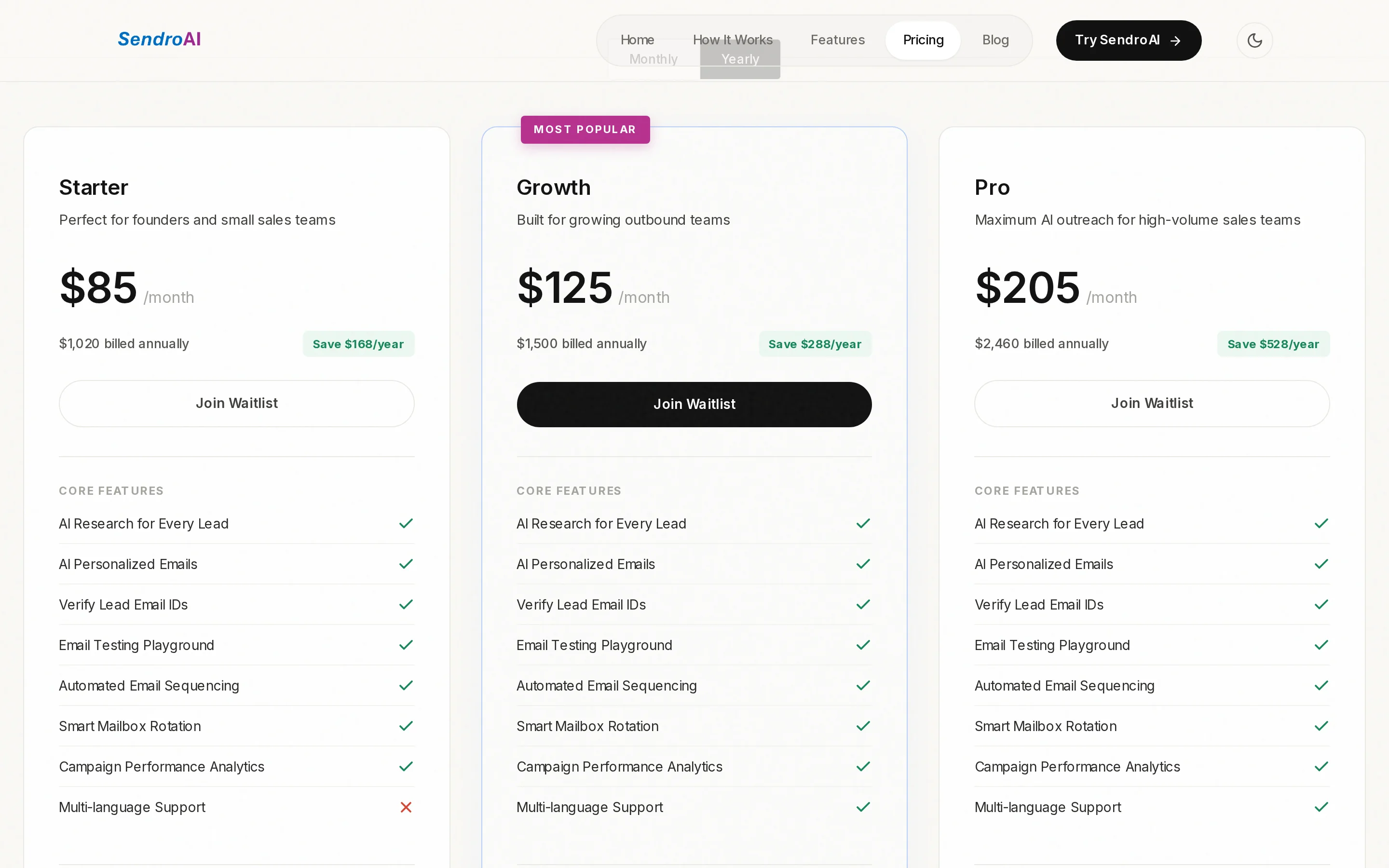
sendroAI plans
- Starter: $99/mo ($85/yr) — 25 intro emails/day, 4,100 emails/mo
- Growth: $149/mo ($125/yr) — 50 intro emails/day, 8,200 emails/mo
- Pro: $249/mo ($205/yr) — 100 intro emails/day, 16,400 emails/mo
- All plans: Unlimited connected domains, mailboxes, and campaigns
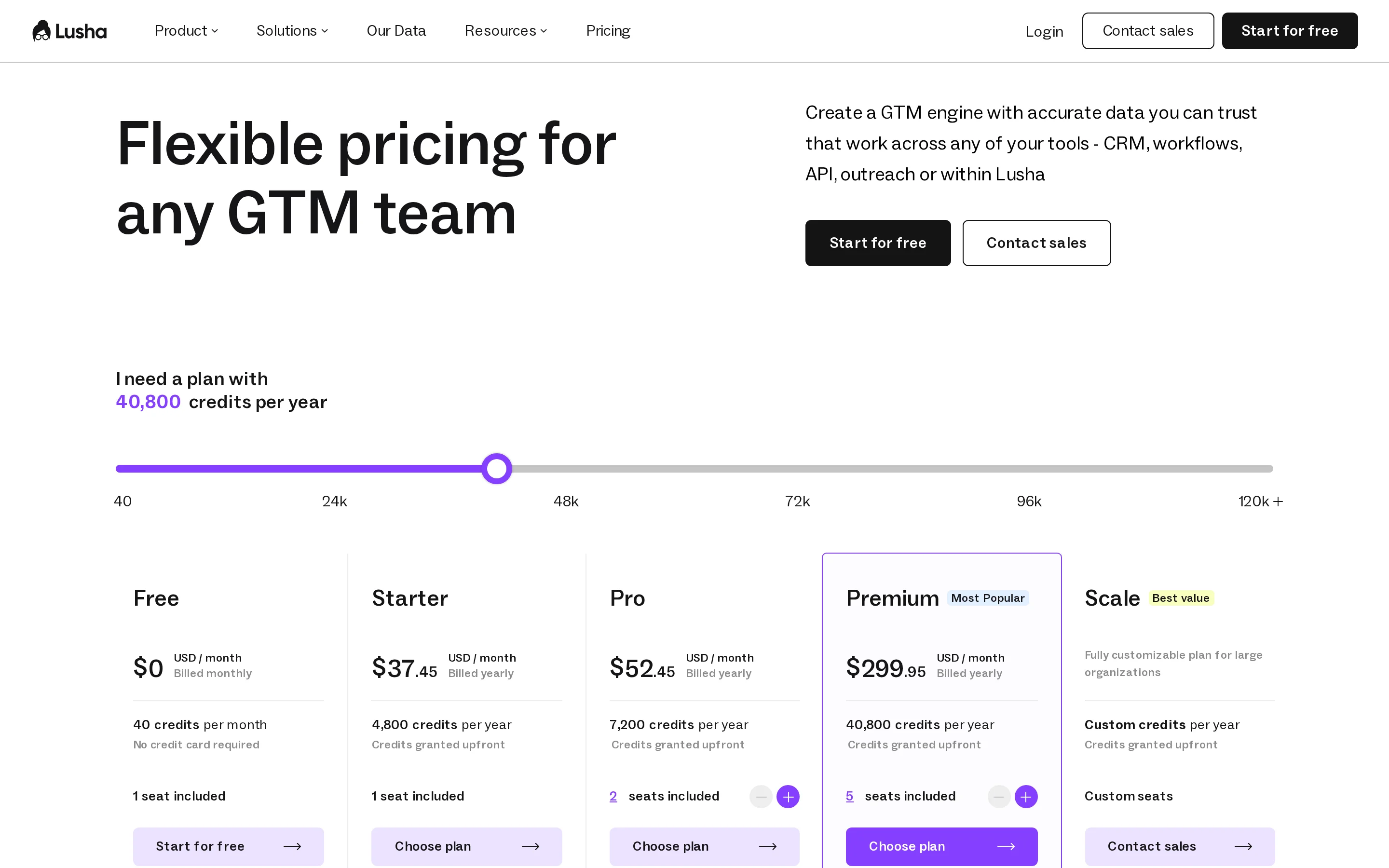
Lusha plans
- Free: Up to 40 credits/month (basic prospecting, browser extension)
- Paid Plans: Credit-based system (1 credit = email reveal, 5 credits = phone reveal). Specific dollar amounts vary by seat count and credit bundle size.
sendroAI provides transparent, flat-rate pricing that scales with your ambition, not your usage. You know exactly what you’ll pay regardless of how many leads you import or mailboxes you connect. Lusha’s credit-based model creates variable costs that can spike unexpectedly, especially when targeting senior decision-makers who require phone numbers (5x the cost of an email). For predictable budgeting and high-volume outreach, sendroAI is the financially safer choice.
of Ownership Analysis
Beyond the sticker price, sendroAI reduces the 'hidden labor cost' of outbound. By automating research and writing, it saves SDRs hours per day previously spent on manual prospecting and drafting. Lusha requires reps to export data, verify it, and write emails separately, consuming valuable selling time. Furthermore, sendroAI’s unlimited mailbox feature eliminates the need for expensive secondary sending tools, consolidating the tech stack into one lower-cost vendor.
Which fits your outbound model?
Match your team size, deal complexity, and lead volume to the right engine.
High-Value Account Executive Outreach
sendroAI crafts deep 1:1 tailored messaging that triggers replies from senior leaders, whereas Lusha only provides the contact info needed to start the conversation.
Large-Scale Cold Email Campaigns
sendroAI’s smart rotation and flat pricing support high volume without deliverability risks or credit burnout.
Phone-First Sales Prospecting
Lusha is superior here as it specializes in revealing mobile numbers, which sendroAI does not provide.
International Multilingual Outreach
sendroAI natively writes campaigns in 50+ languages, while Lusha focuses on data accuracy rather than content localization.
Where each platform falls short
Constructive limitations and architectural trade-offs to weigh before signing.
Where sendroAI falls short
- Focused on email outbound; no voice dialer or SMS capabilities
- Requires own lead lists (no internal prospect database built-in)
- Does not provide phone numbers for direct calling
Where Lusha falls short
- Credit-based pricing creates unpredictable costs for high-volume teams
- Not a sending platform; requires integration with third-party tools for email delivery
- Data is static; lacks autonomous AI research and copywriting capabilities
- Phone number reveals are expensive (5 credits per number)
The switching playbook
What you gain and give up when migrating across platforms.
- Zero manual research time per lead due to AI engine
- Guaranteed inbox rotation across secondary domains to protect reputation
- Flat pricing with unlimited mailboxes and campaigns
- Native multilingual support for global outreach
- Loss of built-in access to Lusha’s proprietary contact database
- Need to source leads externally (e.g., LinkedIn Sales Navigator, Apollo, etc.)
- Access to Lusha’s extensive database of verified emails and phone numbers
- Ability to find direct mobile lines for decision-makers
- Paying per-seat charges and credit add-ons for every new lead
- Reliance on static template merging instead of dynamic AI personalization
- Need to purchase and configure a separate sending tool for email delivery
Frequently asked questions
Direct technical answers about sendroAI and Lusha.
How does sendroAI differ from Lusha?
Lusha is a data provider that helps you find contact information (emails/phones) using a credit system. sendroAI is an autonomous outbound engine that takes your existing lead list, researches each prospect using AI, writes personalized emails, and manages the sending infrastructure with smart mailbox rotation.
Can I connect multiple secondary domains to sendroAI?
Yes, sendroAI includes unlimited connected domains and mailboxes on all plans, allowing you to scale sending volume safely without hitting per-domain caps.
Does sendroAI replace my SDR team?
sendroAI acts as an autonomous outbound co-pilot, conducting research and drafting personalized copy so your reps can focus on closing deals. It automates the top-of-funnel grunt work but still requires human oversight for strategy and relationship building.
Do I need to buy leads for sendroAI?
Yes. Unlike Lusha, sendroAI does not have a built-in prospect database. You must import your own leads from sources like LinkedIn, Apollo, or other data providers.
Sources & methodology
Every claim is grounded in official vendor documentation and live audits.