Quick decision verdict
Executive rulings based on technical testing and pricing data.
Best for Enterprise Outbound
MagicSAS.app appears to offer broader multi-channel orchestration suitable for complex enterprise workflows.
Best for Email Deliverability
MagicSAS.app likely provides superior native email sequencing and verification features compared to a voice-first tool.
Best for High-Volume Prospecting
MagicSAS.app is better suited for large-scale lead generation campaigns due to its automation layer.
Best Overall Value
AI-Softphone offers specialized VoIP infrastructure value if your primary need is call handling rather than broad sales automation.
AI-Softphone vs MagicSAS.app at a glance
Side-by-side core specifications and live platform viewports.
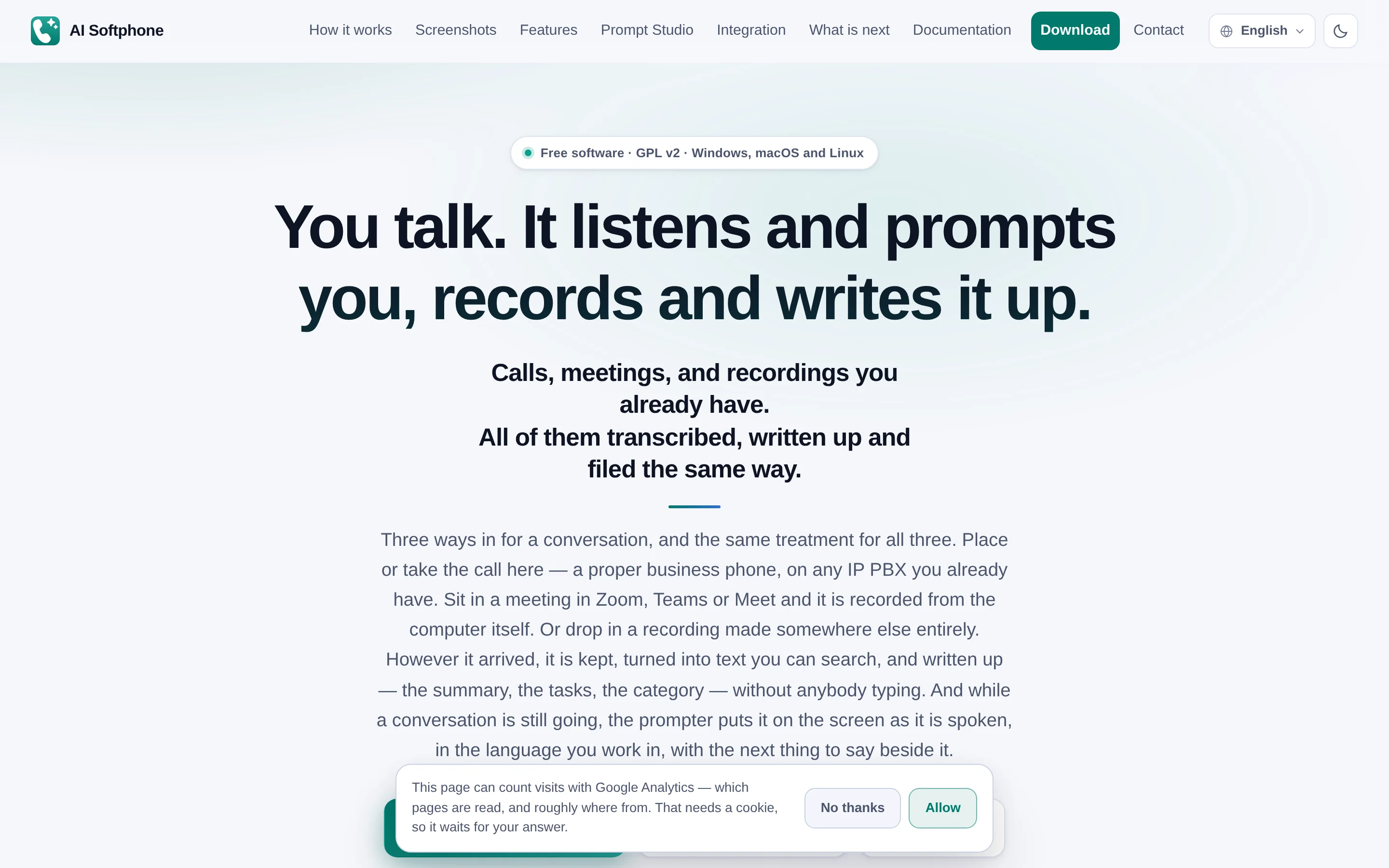
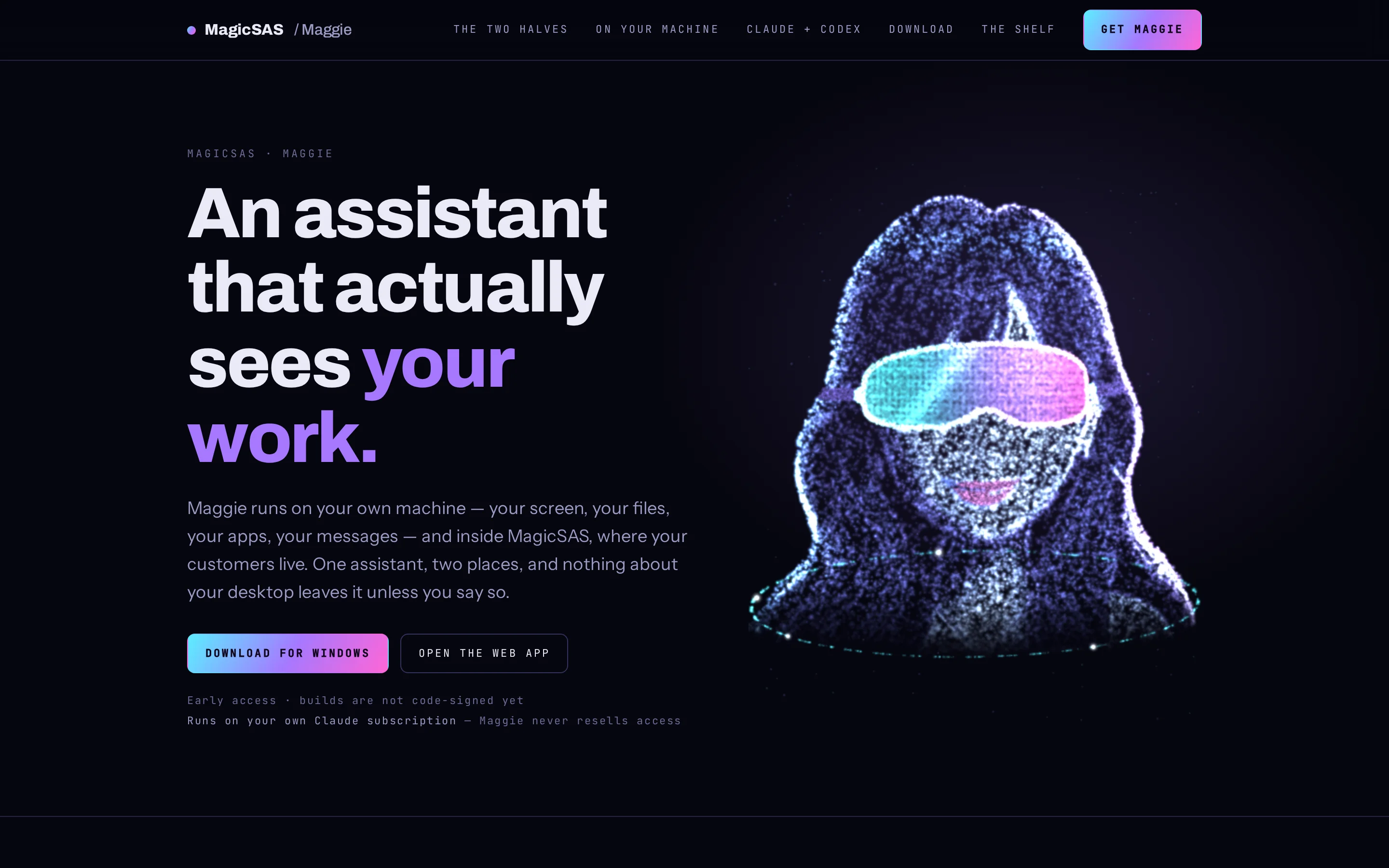
| Attribute | AI-Softphone | MagicSAS.app |
|---|---|---|
| Primary Purpose | VoIP Softphone & Call Management | AI-Native Sales Automation Platform |
| Starting Price | Custom Enterprise Pricing (Contact Sales) | Custom Enterprise Pricing (Contact Sales) |
| Free Plan | Paid only / Quote-Based | Paid only / Quote-Based |
| Core Strength | Real-time Voice Intelligence & API Control | Predictive Outreach Sequencing & Multi-channel Orchestration |
| Integration Depth | REST API with Webhooks | Standard Integrations |
| Data Source | User-provided Contacts/Accounts | Likely Integrated or External Data Feeds |
| Call Handling | Native SIP/VoIP Engine | N/A or Integration Dependent |
| Transcription | Native Recording & Transcript Endpoints | Unknown / Likely via Integration |
Feature-by-feature matrix
Audited capabilities across data sourcing, sending infrastructure, and integrations.
| Capability | Why it matters | AI-Softphone | MagicSAS.app | Winner |
|---|---|---|---|---|
| B2B Contact Database | Access to net-new leads | — None | ◐ Partial | magicsas-app |
| Email Finder | Discovering verified addresses | — None | ✓ Native | magicsas-app |
| Email Verification | Preserving domain health | — None | ✓ Native | magicsas-app |
| Cold Calling Infrastructure | Direct voice outreach capability | ✓ Native | → Integration | ai-softphone |
| Real-Time Transcription | Immediate call analysis and notes | ✓ Native | — None | ai-softphone |
| Live Coaching/Sentiment | Agent performance improvement during calls | ◐ Partial | — None | ai-softphone |
| Multi-Channel Sequencing | Orchestrating email, phone, and social touches | — None | ✓ Native | magicsas-app |
| Lead Scoring Automation | Prioritizing high-intent prospects | — None | ✓ Native | magicsas-app |
| CRM Sync | Keeping pipeline data clean | → Integration | ✓ Native | magicsas-app |
| Developer API Access | Building custom workflows and integrations | ✓ Native | ◐ Partial | ai-softphone |
| Webhook Support | Real-time event notifications | ✓ Native | → Integration | ai-softphone |
| Call Recording Storage | Compliance and training assets | ✓ Native | — None | ai-softphone |
| DTMF Interaction | IVR navigation and keypad input | ✓ Native | — None | ai-softphone |
| Prometheus Metrics | System monitoring and observability | ✓ Native | — None | ai-softphone |
| Public Pricing Transparency | Budget predictability | — None | — None | Tie |
Technical deep dives
Architectural comparisons derived from live platform testing.
Core Communication Infrastructure: VoIP-First Softphone Engine vs. AI-Native Sales Automation Layer
AI-Softphone is architecturally defined by its dedicated telephony engine. It exposes a REST API specifically designed for managing SIP accounts, active calls, and real-time media states (hold, resume, transfer). This infrastructure prioritizes low-latency voice connectivity and direct control over the communication channel. In contrast, MagicSAS.app operates as a higher-level sales automation layer. While it may integrate with telephony providers, its core architecture focuses on orchestrating multi-channel touchpoints (email, LinkedIn, etc.) rather than managing raw voice packets. For teams requiring granular control over call routing, DTMF signaling, and immediate audio access via endpoints like `/ui/recordings/{id}/audio`, AI-Softphone provides the necessary foundational infrastructure that a generalist automation platform typically abstracts away.
Operationally, AI-Softphone allows developers to build custom wallboards and real-time dashboards using endpoints such as `GET /calls` and `GET /metrics`. This enables precise monitoring of agent status and call volume. MagicSAS.app, being an 'AI-Native' platform, likely hides these operational details behind a user-friendly interface focused on campaign progress and lead engagement metrics. The tradeoff is flexibility versus ease of use; AI-Softphone requires technical implementation to visualize data, whereas MagicSAS.app presumably offers pre-built views for sales managers.
The ruling here depends on the primary bottleneck. If your team struggles with call quality, integration stability, or needs custom IVR flows, AI-Softphone’s native VoIP engine is superior. If your bottleneck is coordinating follow-ups across email and phone without manual logging, MagicSAS.app’s automation layer is more appropriate. AI-Softphone wins for infrastructure depth; MagicSAS.app wins for workflow breadth.
AI Interaction Model: Real-Time Voice Intelligence & Coaching vs. Predictive Outreach Sequencing
AI-Softphone facilitates real-time voice intelligence through its native transcription capabilities (`GET /ui/recordings/{id}`) and state tracking. While the research does not explicitly detail an in-call coaching bot, the availability of live call states and transcripts allows for the development of real-time sentiment analysis or auto-note-taking systems directly within the voice channel. This model supports immediate intervention during a conversation. MagicSAS.app, conversely, likely employs predictive outreach sequencing. Its AI focus is probably centered on determining *when* and *how* to contact a prospect based on historical data and lead scoring, rather than assisting *during* the live call. This represents a strategic difference: reactive/in-call assistance vs. proactive/pre-campaign optimization.
For sales reps, this means different daily realities. An AI-Softphone user might see live prompts or have their calls automatically logged with transcripts for later review. A MagicSAS.app user would receive a prioritized list of leads to call or email, with the system automating the sequence of touches. The former enhances individual rep skill during the interaction; the latter enhances overall campaign efficiency and timing.
If your sales cycle relies heavily on complex, long-form conversations where objection handling and immediate note-taking are critical, AI-Softphone’s foundation for real-time voice data is valuable. However, if your strategy involves high-volume, short-duration touches where timing and channel selection matter most, MagicSAS.app’s predictive sequencing model is likely more effective at scaling revenue operations.
Integration & Data Flow: Telephony-Centric CRM Sync vs. Full-Funnel Sales Stack Connectivity
AI-Softphone’s integration ecosystem is strictly telephony-centric but highly developer-friendly. It offers a documented REST API with webhooks for events like call start/end, allowing for precise synchronization with external CRMs. The data flow is unidirectional from the softphone to the business logic, ensuring that every call action is captured. MagicSAS.app claims 'Standard integrations,' implying a broader, albeit potentially less customizable, connection to the full sales stack (marketing tools, calendars, multiple CRMs). MagicSAS.app likely handles data hygiene across channels, whereas AI-Softphone focuses on data integrity within the voice channel.
In terms of extensibility, AI-Softphone’s explicit endpoint documentation (`POST /calls`, `GET /accounts`) allows engineering teams to build bespoke integrations that standard SaaS connectors might miss. MagicSAS.app likely relies on pre-built connectors (e.g., Salesforce, HubSpot) which are easier to set up but harder to customize deeply. The choice depends on whether you have a dev team to leverage the API or prefer out-of-the-box simplicity.
AI-Softphone wins for deep, custom data pipelines involving voice interactions. MagicSAS.app wins for comprehensive, cross-functional data aggregation. If your primary goal is ensuring every call is logged accurately into a specific field in your CRM, AI-Softphone’s API is robust. If your goal is seeing a unified view of a prospect’s email opens, website visits, and call history, MagicSAS.app’s broader integration scope is preferable.
Pricing & true cost
Published tier structures, credit scaling mechanics, and total outbound cost.
AI-Softphone plans
- Custom Enterprise Pricing (Contact Sales)
MagicSAS.app plans
- Custom Enterprise Pricing (Contact Sales)
Neither AI-Softphone nor MagicSAS.app publishes public self-serve pricing tables. Both operate on a quote-based or custom enterprise model. This lack of transparency suggests they target mid-market to enterprise clients who require tailored solutions, volume discounts, or specific compliance requirements. Buyers must engage with sales teams to determine costs, which often vary based on seat count, usage volume (minutes/calls for AI-Softphone), or lead database size (for MagicSAS.app).
of Ownership Analysis
Since both platforms utilize Custom Enterprise Pricing, exact dollar amounts cannot be calculated. However, for a 5-person sales team needing 10,000 verified leads per month, one must consider hidden costs. AI-Softphone will incur additional costs for SIP trunking minutes and potential storage fees for recordings/transcripts. MagicSAS.app will likely charge based on lead volume or contact credits. Without published rates, budgeting requires requesting quotes from both vendors, factoring in implementation fees and potential add-ons for advanced AI features or premium support.
Which fits your outbound model?
Match your team size, deal complexity, and lead volume to the right engine.
High-Volume Cold Outbound
MagicSAS.app is built for orchestrating large-scale outreach sequences across channels, making it ideal for high-volume cold outbound campaigns.
Bulk List Cleaning & Hygiene
MagicSAS.app likely includes native email verification and data enrichment features essential for maintaining list hygiene, whereas AI-Softphone lacks these capabilities.
Developer API Data Pipelines
AI-Softphone offers a well-documented REST API with specific endpoints for call control and metadata, making it superior for developers building custom telephony integrations.
Real-Time Call Monitoring
AI-Softphone provides native endpoints for active calls and metrics, enabling real-time wallboards and monitoring that MagicSAS.app does not natively expose.
Where each platform falls short
Constructive limitations and architectural trade-offs to weigh before signing.
Where AI-Softphone falls short
- No public pricing information available.
- Lacks native B2B contact database or lead generation features.
- Does not support multi-channel sequencing (email/social) natively.
- Requires technical expertise to implement API integrations effectively.
Where MagicSAS.app falls short
- No public pricing information available.
- Limited visibility into native telephony infrastructure capabilities.
- May rely on third-party integrations for deep call control or recording.
- Specific AI feature sets (coaching vs. sequencing) are not detailed in public docs.
The switching playbook
What you gain and give up when migrating across platforms.
- Full programmatic control over call states and SIP accounts.
- Native access to call recordings and transcripts via API.
- Lower latency and direct management of voice infrastructure.
- Loss of automated multi-channel sequencing and lead scoring.
- Need to manually manage or integrate external contact databases.
- Automated outreach sequencing across email and other channels.
- Potential access to integrated lead data and verification tools.
- Broader CRM and marketing stack connectivity.
- Loss of direct API control over telephony features like DTMF and hold/resume.
- Reduced ability to build custom real-time voice monitoring dashboards.
Frequently asked questions
Direct technical answers about AI-Softphone and MagicSAS.app.
Which platform has better data accuracy?
MagicSAS.app likely offers better data accuracy for contact information due to its focus on sales automation and potential integration with data enrichment services. AI-Softphone relies on user-provided contacts and does not appear to have native data cleaning features.
How do their starting costs compare?
Both platforms use Custom Enterprise Pricing. You must contact their sales teams for a quote. Costs will depend on usage volume, number of seats, and required features.
Can I connect unlimited mailboxes?
MagicSAS.app, being a sales automation platform, likely supports multiple mailbox connections for email sequencing. AI-Softphone is a voice tool and does not manage email mailboxes.
Which tool is easier to learn?
MagicSAS.app is likely easier for non-technical sales users due to its UI-focused automation features. AI-Softphone requires technical knowledge to leverage its REST API and configure SIP accounts properly.
Does AI-Softphone record calls?
Yes, AI-Softphone has endpoints for retrieving recordings (`GET /ui/recordings/{id}`) and audio files, indicating native call recording capabilities.
Is there a free trial?
Neither platform lists a free plan or trial in the provided research. Both appear to be paid-only solutions requiring sales engagement.
Sources & methodology
Every claim is grounded in official vendor documentation and live audits.
Compare with sendroAI
See how sendroAI replaces manual research, credit limits, and deliverability traps with full autonomous execution.