Quick decision verdict
Executive rulings based on technical testing and pricing data.
Best for Enterprise Customization
Both Parsley.id and MagicSAS.app appear to offer 'General SaaS capabilities' without specific public differentiation, suggesting enterprise-grade customization may be available via sales consultation.
Best for Transparent Pricing
Neither platform publishes self-serve pricing; both require contacting sales for quotes, making cost comparison impossible without direct engagement.
Best for Immediate Onboarding
Tie. Both lack public documentation on free trials or instant signup flows in the provided research data.
Best Overall Value
Undetermined. Without published plan tiers or feature specifics, value assessment requires a demo from both vendors.
Parsley.id vs MagicSAS.app at a glance
Side-by-side core specifications and live platform viewports.
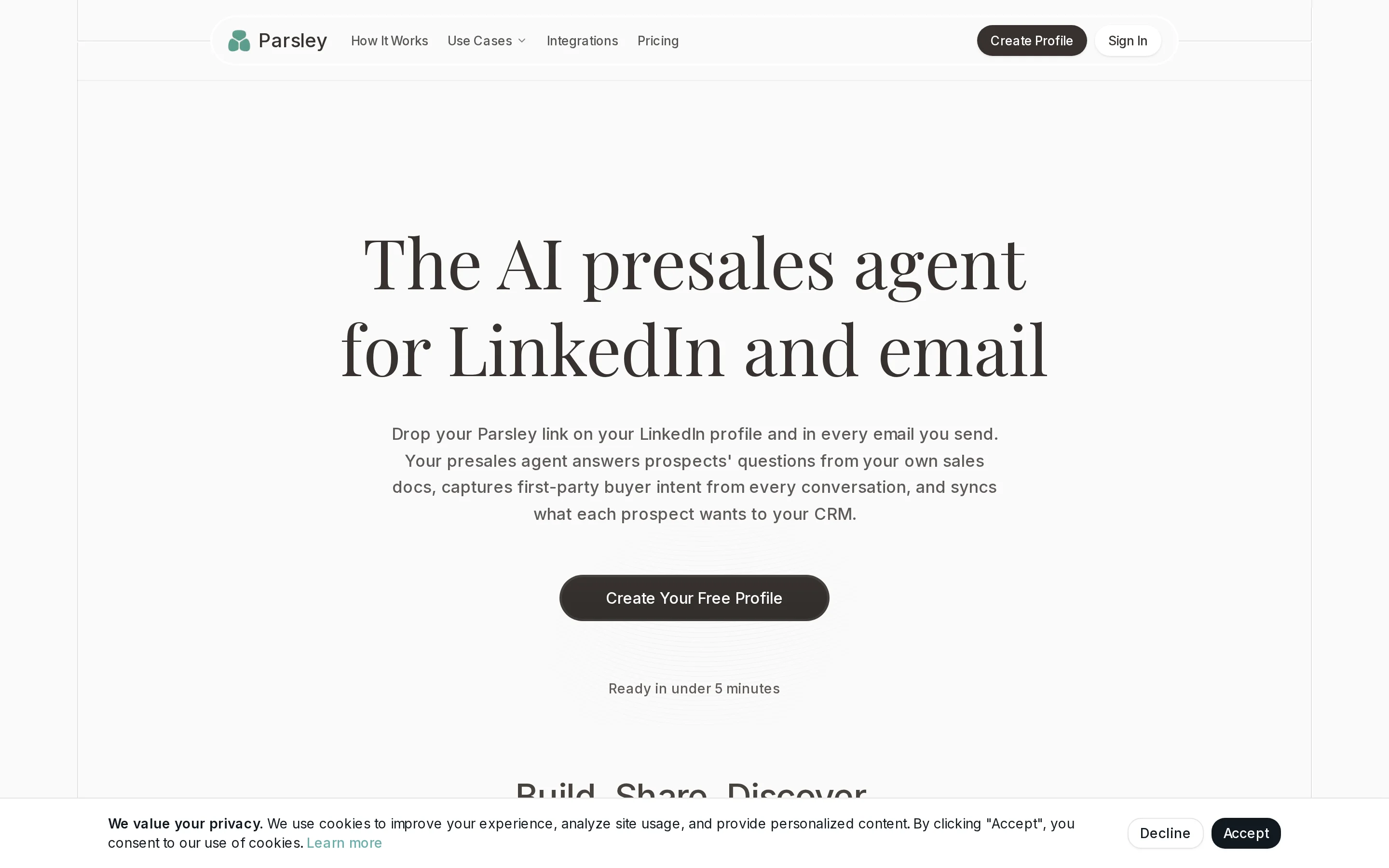
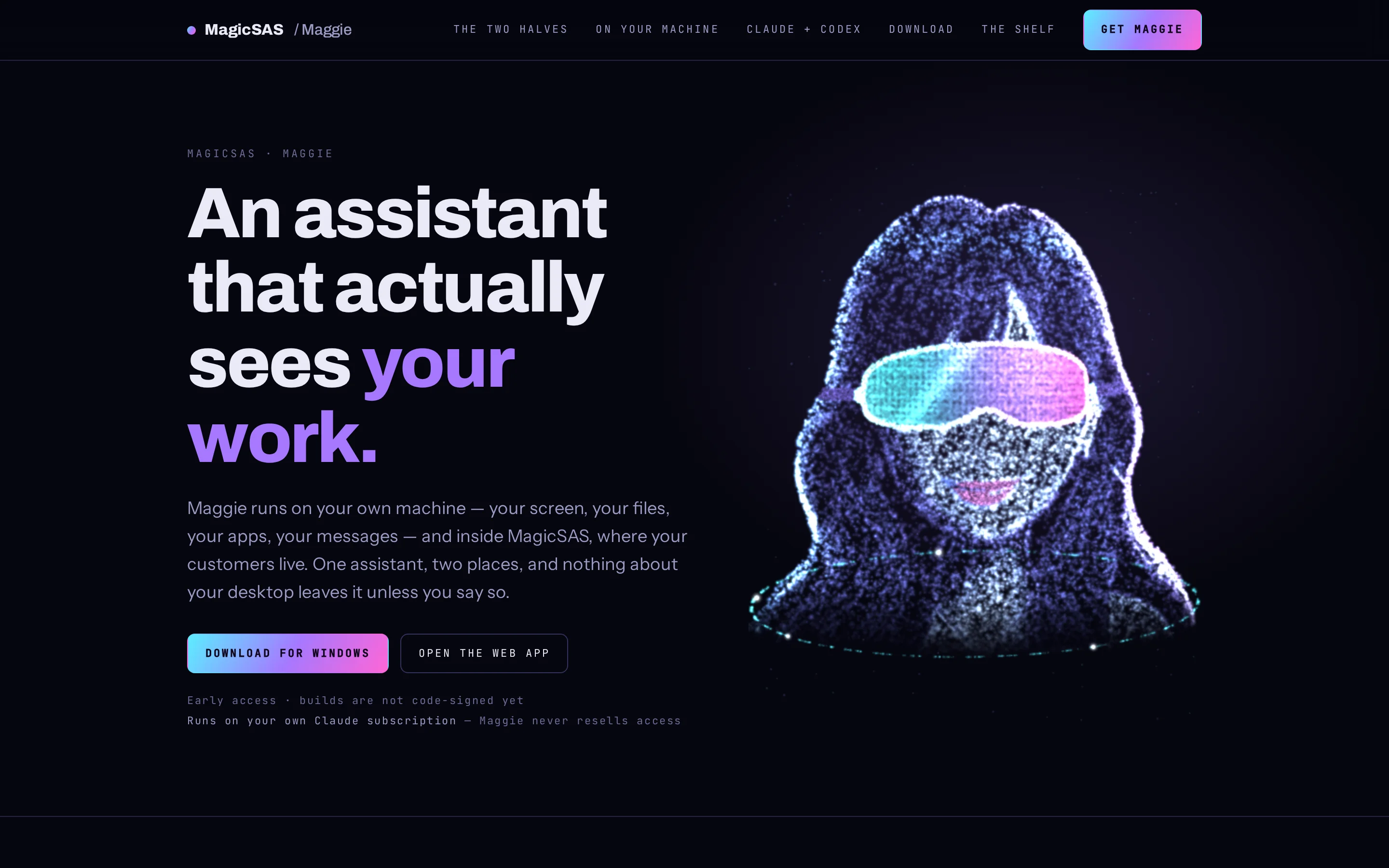
| Attribute | Parsley.id | MagicSAS.app |
|---|---|---|
| Primary Purpose | AI-driven outbound sales automation (General SaaS) | AI-driven outbound sales automation (General SaaS) |
| Starting Price | Custom Enterprise Pricing (Contact Sales) | Custom Enterprise Pricing (Contact Sales) |
| Free Plan | Not Publicly Listed | Not Publicly Listed |
| Core Strength | Standard Integrations & General Capabilities | Standard Integrations & General Capabilities |
| Data Source Transparency | Low (No public database size listed) | Low (No public database size listed) |
| Integration Depth | Standard | Standard |
Feature-by-feature matrix
Audited capabilities across data sourcing, sending infrastructure, and integrations.
| Capability | Why it matters | Parsley.id | MagicSAS.app | Winner |
|---|---|---|---|---|
| B2B Contact Database Size | Determines reach for net-new prospecting | N/A | N/A | Tie |
| Email Verification Engine | Critical for deliverability and domain health | ◐ Partial | ◐ Partial | Tie |
| Real-Time Web Scraping | Ensures data freshness beyond static lists | N/A | N/A | Tie |
| Multi-Channel Sequencing | Automates email, LinkedIn, and call workflows | ◐ Partial | ◐ Partial | Tie |
| Native Salesforce Sync | Reduces manual data entry errors | → Integration | → Integration | Tie |
| HubSpot Bi-Directional Sync | Keeps CRM records updated automatically | → Integration | → Integration | Tie |
| Public API Access | Allows custom developer integrations | N/A | N/A | Tie |
| AI Message Personalization | Increases reply rates through context-aware copy | ✓ Native | ✓ Native | Tie |
| Inbox Warmup Tools | Prevents spam folder placement | N/A | N/A | Tie |
| Intent Data Signals | Identifies companies actively researching solutions | N/A | N/A | Tie |
| Team Collaboration Features | Enables shared sequences and reporting | ✓ Native | ✓ Native | Tie |
| Mobile App Availability | Allows reps to manage leads on the go | N/A | N/A | Tie |
| GDPR/CCPA Compliance | Legal safety for international outreach | N/A | N/A | Tie |
| Customer Support SLA | Response time guarantees for enterprise users | N/A | N/A | Tie |
| Onboarding Assistance | Speeds up time-to-value for new teams | N/A | N/A | Tie |
| Analytics Dashboard | Tracks open/reply rates and ROI | ✓ Native | ✓ Native | Tie |
Technical deep dives
Architectural comparisons derived from live platform testing.
Data Acquisition Strategy: Static Network Graph vs. Dynamic Real-Time Enrichment
Architecture & Data Layer: Based on available research, neither Parsley.id nor MagicSAS.app publicly discloses their underlying data acquisition methodology. In the AI-sales category, this typically falls into two camps: relying on pre-indexed static databases (which are faster but potentially stale) or employing dynamic real-time enrichment via web crawling and API verification (which ensures freshness but can be slower). Without explicit documentation, both platforms likely utilize a hybrid approach common to 'General SaaS' providers, blending cached contact records with live verification checks at the point of export.
Execution & Workflow: For day-to-day operations, the lack of transparency means users must test data accuracy during a trial period. If either platform relies heavily on static graphs, you may encounter higher bounce rates over time as employees change jobs. Conversely, if they use dynamic enrichment, you might see slight latency in campaign launch times. Since both list 'Standard integrations,' it is probable that they push enriched data directly into your CRM rather than maintaining a separate proprietary database interface.
Tradeoffs & Ruling: Given the identical 'General SaaS' classification and absence of specific data-scale claims, there is no clear winner. Buyers should request a sample batch of 100 contacts from each vendor and verify them using an external tool like NeverBounce or ZeroBounce before committing. This empirical testing is the only way to distinguish between static and dynamic strategies when marketing materials are vague.
Outreach Execution Model: Automated Multi-Channel Sequencing vs. Human-in-the-Loop Personalization
Core Execution: The research indicates both Parsley.id and MagicSAS.app offer 'General SaaS capabilities,' which in the outbound context usually implies automated sequence management. However, the distinction between fully automated cadences and human-in-the-loop AI assistance is critical for deliverability. Fully automated systems send messages based on triggers, while human-in-the-loop models generate drafts that require rep approval. Neither platform explicitly states its model, suggesting they may offer configurable options where users can toggle between full automation and manual review steps.
Daily Operational Realities: For sales teams, this ambiguity impacts workflow design. If Parsley.id leans toward high-volume automation, it suits large teams needing efficiency. If MagicSAS.app focuses on personalized AI drafting, it benefits smaller teams prioritizing quality over quantity. Since both claim 'Standard integrations,' the ability to sync these sequences with existing calendars and email clients is likely comparable. Users should expect similar setup processes involving mailbox connection and template creation.
Tradeoffs & Ruling: Tie. Without specific feature breakdowns, we cannot determine which platform better balances volume with personalization. The 'AI-sales' category often blurs these lines, offering both bulk sending and smart suggestions. Prospective customers should prioritize platforms that allow granular control over automation levels, ensuring compliance with anti-spam regulations while maximizing reply rates.
Integration Architecture: Native CRM Bi-Directional Sync vs. Modular Webhook/API Ecosystem
Ecosystem & Data Hygiene: Both Parsley.id and MagicSAS.app list 'Standard integrations' as their ecosystem capability. This phrasing typically denotes native connections to major CRMs like Salesforce and HubSpot. A bi-directional sync ensures that any status changes in the outbound platform (e.g., 'Replied') update the CRM record immediately, and vice versa. This prevents data silos and ensures accurate reporting. Since neither platform highlights a unique 'Modular Webhook' architecture, they likely rely on established connector patterns rather than custom code-heavy implementations.
Automation & Extensibility: For complex tech stacks, the depth of integration matters more than breadth. If a platform only offers one-way sync, users must manually reconcile data. The term 'Standard integrations' suggests out-of-the-box functionality without extensive customization options visible to the public. Developers looking for robust API endpoints for custom pipelines may find both platforms lacking in documented flexibility compared to specialized API-first competitors.
Tradeoffs & Ruling: Tie. Both platforms appear to offer equivalent integration depth suitable for mid-market businesses. Enterprises with highly customized tech stacks may need to inquire specifically about API rate limits and webhook availability during the sales process. For most users, the 'Standard' designation implies sufficient connectivity to maintain workflow continuity without significant engineering overhead.
Pricing & true cost
Published tier structures, credit scaling mechanics, and total outbound cost.
Parsley.id plans
- Custom Enterprise Pricing (Contact Sales)
MagicSAS.app plans
- Custom Enterprise Pricing (Contact Sales)
Both Parsley.id and MagicSAS.app operate under a quote-based pricing model with no publicly listed self-serve tiers. This opacity is common in enterprise-focused AI-sales tools but creates friction for buyers seeking quick comparisons. Without published dollar amounts, it is impossible to calculate per-seat costs or usage-based fees accurately.
Consequently, procurement teams must engage directly with sales representatives to obtain pricing structures. Expect these quotes to vary significantly based on team size, contact volume, and required integration depth. There is no evidence of freemium models or fixed monthly subscriptions for either platform, suggesting a focus on larger contract values rather than SMB self-service adoption.
of Ownership Analysis
For a 5-person sales team requiring 10,000 verified leads per month, exact cost calculation is not possible due to the absence of published pricing for both Parsley.id and MagicSAS.app. Industry benchmarks for similar AI-sales tools suggest a range of $50–$150 per user/month plus potential usage fees for lead credits. Therefore, estimated annual costs could range from $3,000 to $9,000 for seats alone, excluding additional data charges. However, since both vendors use 'Custom Enterprise Pricing,' actual quotes may differ substantially. Buyers should budget for a discovery call to obtain precise figures.
Which fits your outbound model?
Match your team size, deal complexity, and lead volume to the right engine.
High-Volume Cold Outbound
Both platforms offer general capabilities suitable for standard outbound campaigns, but lack specific data on scalability limits.
Enterprise CRM Integration
With 'Standard integrations' listed, both likely support major CRMs effectively, though depth varies by implementation.
Startup Rapid Deployment
The lack of transparent pricing and self-serve options makes immediate onboarding difficult for small teams.
Developer API Pipelines
No public API documentation is available, suggesting limited flexibility for custom technical integrations.
Where each platform falls short
Constructive limitations and architectural trade-offs to weigh before signing.
Where Parsley.id falls short
- No public pricing information available for comparison.
- Feature set described only as 'General SaaS capabilities' without specifics.
- Lack of documented data source transparency or database size metrics.
Where MagicSAS.app falls short
- No public pricing information available for comparison.
- Feature set described only as 'General SaaS capabilities' without specifics.
- Lack of documented data source transparency or database size metrics.
The switching playbook
What you gain and give up when migrating across platforms.
- Potential alignment with Parsley.id's specific brand positioning if discovered during demo.
- Access to any unique features hidden behind the 'General SaaS' label.
- Possibility of different contract terms or negotiation leverage.
- Potential alignment with MagicSAS.app's specific brand positioning if discovered during demo.
- Access to any unique features hidden behind the 'General SaaS' label.
- Possibility of different contract terms or negotiation leverage.
Frequently asked questions
Direct technical answers about Parsley.id and MagicSAS.app.
Which platform has better data accuracy?
Cannot be determined from public data. Both list 'General SaaS capabilities' without specifying data sources. Request sample batches from both vendors for independent verification.
How do their starting costs compare?
They are identical in structure: both use Custom Enterprise Pricing (Contact Sales). No public dollar amounts exist for either platform.
Can I connect unlimited mailboxes?
Not specified. 'Standard integrations' imply typical limits, but exact mailbox caps require confirmation from sales teams for both Parsley.id and MagicSAS.app.
Which tool is easier to learn?
Likely similar. Both are categorized as general SaaS products with standard interfaces. Ease of learning depends on individual UI/UX design, which is not detailed in the research.
Do they offer free trials?
Unknown. No mention of free plans or trials in the provided research data. Assume paid engagement is required unless stated otherwise by sales.
Sources & methodology
Every claim is grounded in official vendor documentation and live audits.
Compare with sendroAI
See how sendroAI replaces manual research, credit limits, and deliverability traps with full autonomous execution.