Quick decision verdict
Executive rulings based on technical testing and pricing data.
Best for Enterprise Outbound
lemlist
Best for Email Deliverability
Mailwarm
Best for High-Volume Prospecting
lemlist
Best Overall Value
Depends on stack; lemlist for all-in-one, Mailwarm for specialized hygiene.
lemlist vs Mailwarm at a glance
Side-by-side core specifications and live platform viewports.
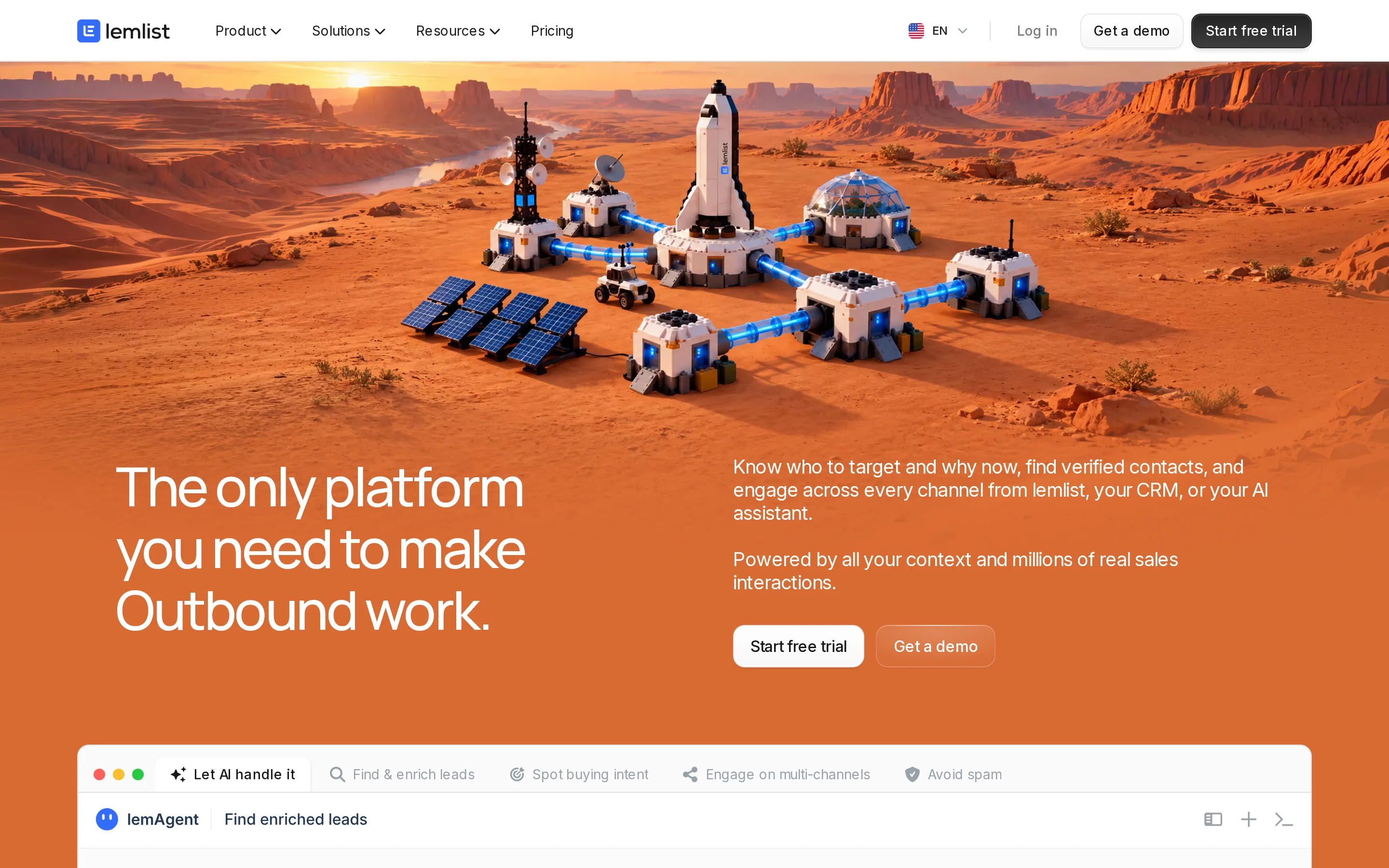
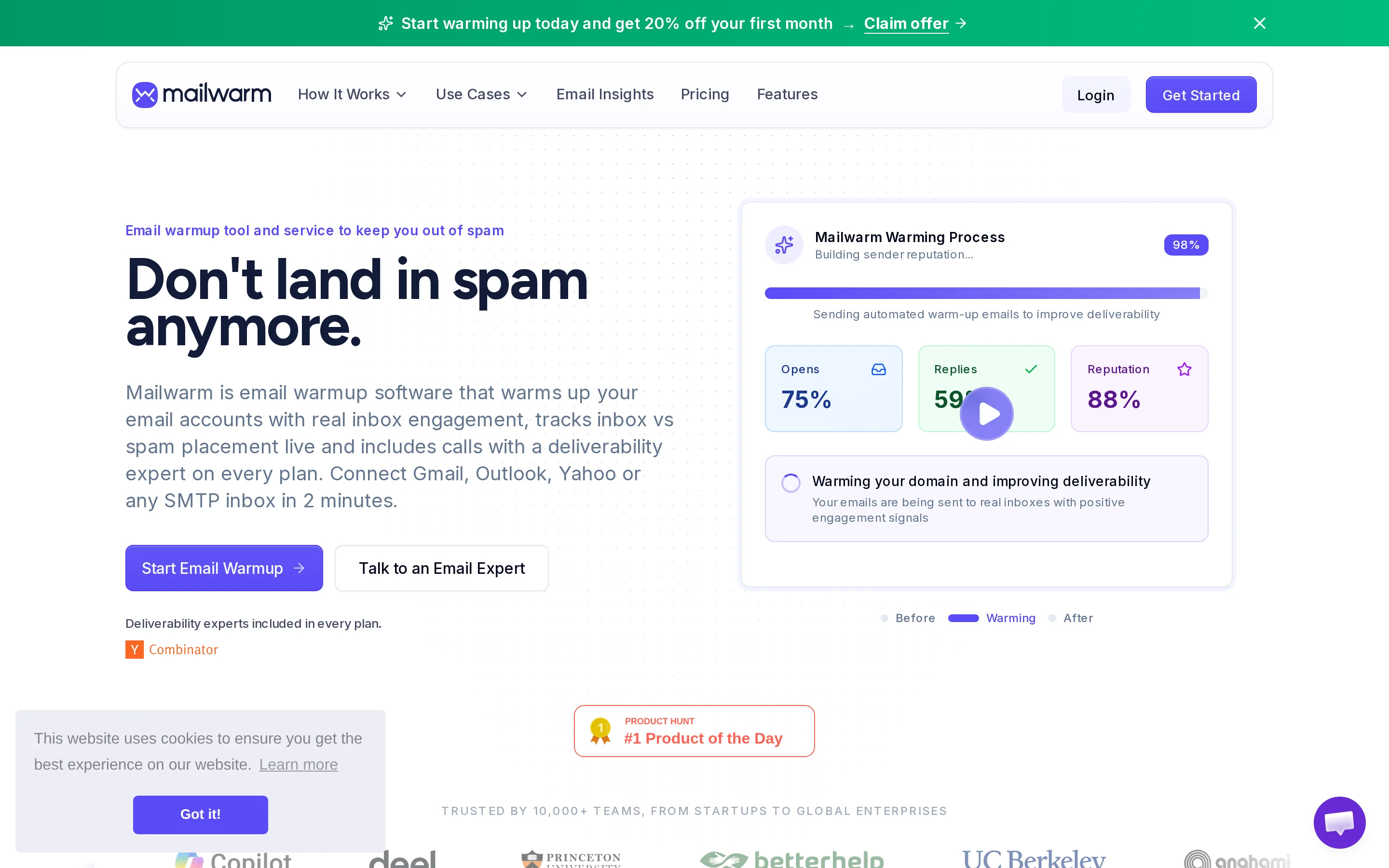
| Attribute | lemlist | Mailwarm |
|---|---|---|
| Primary Purpose | End-to-end sales engagement & multichannel outreach | Email deliverability & sender reputation warmup |
| Starting Price | Quote-Based / Custom Enterprise Pricing (Contact Sales) | Custom pricing tiers (Contact Sales) |
| Free Plan | No (Trial available with credits) | No (Paid service only) |
| Core Strength | AI-driven personalization & 650M+ lead database | Real inbox network simulation & spam signal reduction |
| Lead Database | ✓ Native (650M+ leads) | — None |
| Warmup Capability | ◐ Partial (lemwarm included) | ✓ Native (Specialized engine) |
| Multichannel Outreach | ✓ Native (Email, LinkedIn, SMS, Voice) | — None (Email only) |
| Integrations | ✓ Extensive (CRM, VoIP, Data Tools) | → Standard/Minimal |
Feature-by-feature matrix
Audited capabilities across data sourcing, sending infrastructure, and integrations.
| Capability | Why it matters | lemlist | Mailwarm | Winner |
|---|---|---|---|---|
| B2B Contact Database | Access to net-new leads without external tools | ✓ Native | — None | lemlist |
| Email Finder | Discovering verified addresses from domains | ✓ Native | — None | lemlist |
| Email Verification | Preserving domain health by removing bad emails | ✓ Native | ◐ Partial (Focuses on bounce reduction via warmup) | lemlist |
| Sender Reputation Warmup | Ensuring emails land in the primary inbox | ◐ Partial (lemwarm included) | ✓ Native (Core product) | mailwarm |
| AI Personalization | Increasing reply rates through dynamic content | ✓ Native (lemAgent, Liquid Syntax) | — None | lemlist |
| LinkedIn Automation | Engaging prospects on social channels | ✓ Native (Visits, Invites, Messages) | — None | lemlist |
| CRM Integration | Syncing activities to sales pipeline | ✓ Native (HubSpot, Salesforce, etc.) | → Integration (Limited/Standard) | lemlist |
| Deliverability Analytics | Tracking spam scores and inbox placement | ✓ Native (Deliverability Hub) | ✓ Native (Real-time dashboard) | Tie |
| Multi-threading | Managing complex conversation flows | ✓ Native | — None | lemlist |
| SMS/WhatsApp Outreach | Reaching prospects on mobile channels | ✓ Native (Add-ons) | — None | lemlist |
| In-app Calling | Seamless voice integration in sequences | ✓ Native | — None | lemlist |
| API Access | Building custom data pipelines | ✓ Native (Developer tools, MCP) | → Integration | lemlist |
| Team Management | Roles, permissions, and shared campaigns | ✓ Native | ✓ Native | Tie |
| Spam Signal Detection | Identifying why emails are flagged | ✓ Native | ✓ Native | Tie |
| Content Generation | Creating cold email copy | ✓ Native (AI-generated replies/sequences) | — None | lemlist |
| Domain Health Monitoring | Preventing blacklisting | ✓ Native | ✓ Native | Tie |
Technical deep dives
Architectural comparisons derived from live platform testing.
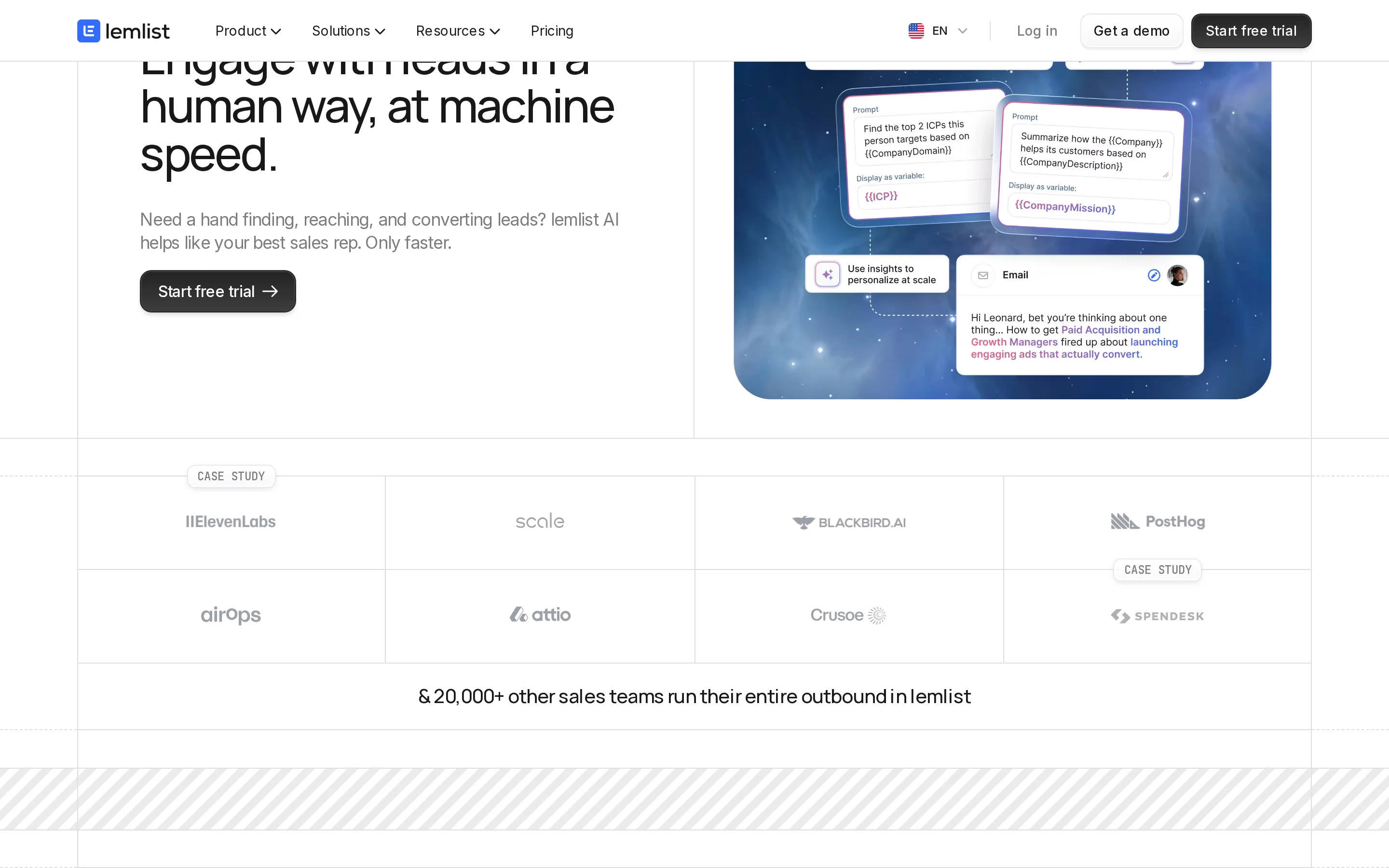 Full resolution
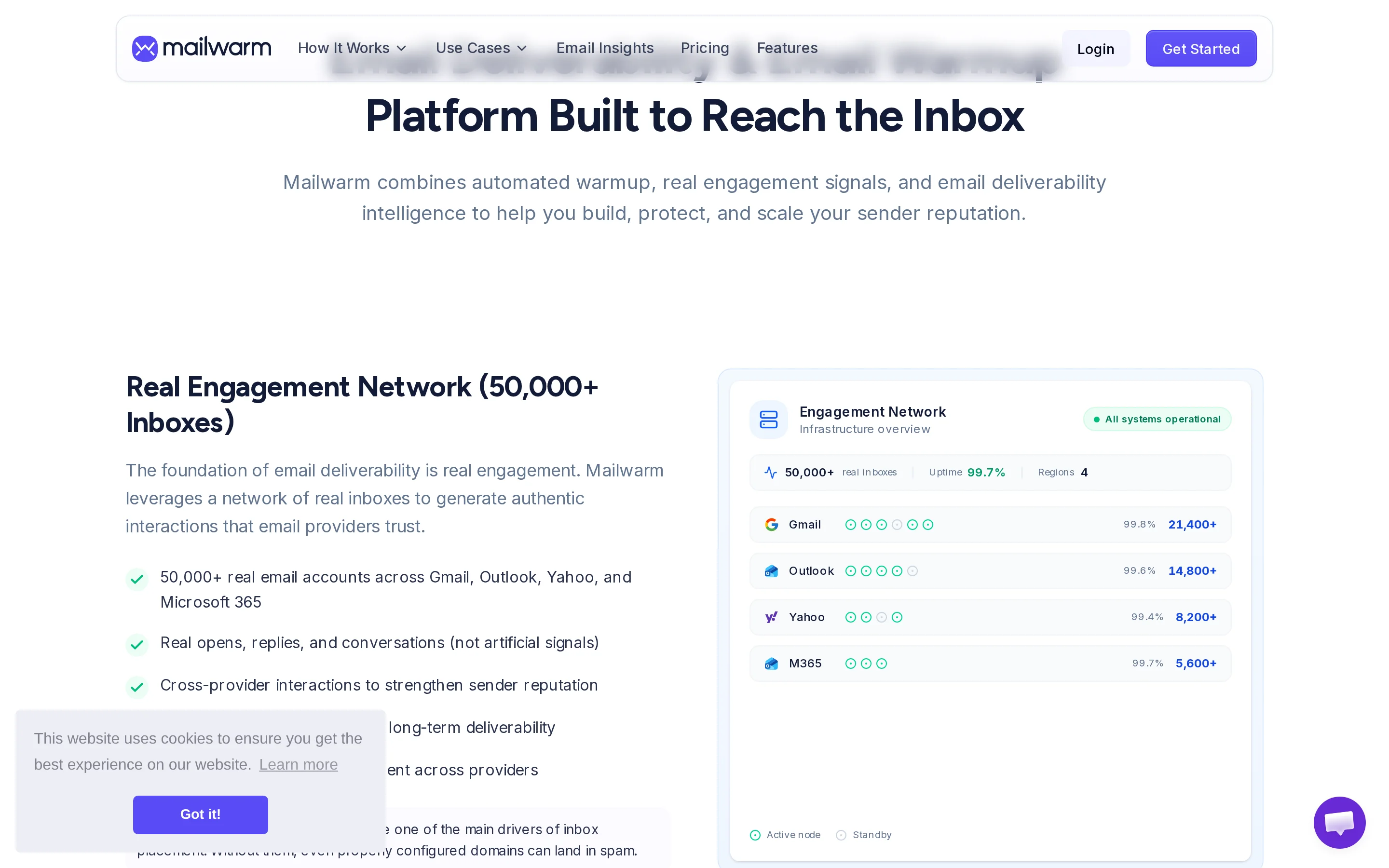 Full resolution
Core Value Proposition: Full-Funnel Outreach Engine vs. Dedicated Deliverability Infrastructure
Architecture & Data Layer: lemlist is designed as a comprehensive sales engagement platform that handles the entire outbound funnel, from prospecting (via its 650M+ lead database) to multichannel execution (Email, LinkedIn, SMS). In contrast, Mailwarm is a specialized utility focused exclusively on the 'infrastructure' layer of email sending—specifically, building and maintaining sender reputation. lemlist includes basic warmup capabilities ('lemwarm') within its plans, but this is a feature, not the core product. Mailwarm’s architecture relies on a proprietary network of 50,000+ aged real inboxes to simulate human-like interactions, which is critical for high-volume senders who need to ensure their actual campaign emails land in the primary inbox rather than spam.
Execution & Workflow: For a sales team using lemlist, the workflow involves finding leads, enriching them with AI, creating personalized sequences, and launching campaigns across multiple channels. The deliverability aspect is handled automatically in the background. For a team using Mailwarm, the workflow is strictly about monitoring and optimizing the technical setup of their email accounts. It does not send your actual sales pitches; it sends synthetic 'warmup' emails to train spam filters. Therefore, Mailwarm must be paired with a separate sending tool (like lemlist, Instantly, or Smartlead) to function effectively in a sales context.
Tradeoffs & Ruling: If you need an all-in-one solution that manages leads, content, and sending, lemlist is the superior choice. However, if your primary bottleneck is deliverability—meaning your emails are landing in spam despite good content—Mailwarm offers deeper, more specialized control over reputation management. For most SMBs, lemlist provides sufficient deliverability features. For enterprise-scale senders with strict compliance needs or those experiencing severe spam issues, Mailwarm acts as a necessary 'reputation guardian' alongside their main outreach tool.
Personalization & Content Strategy: AI-Driven Dynamic Variables vs. Static Warmup Signals
Core Execution: lemlist leverages advanced AI capabilities, including 'lemAgent', to automate the creation of highly personalized content. It supports Liquid Syntax for dynamic variables, allowing users to insert specific details like company pain points, recent news, or competitor data directly into email templates. This enables hyper-personalization at scale, which is proven to increase reply rates. Mailwarm, conversely, generates synthetic, authentic-looking interactions solely to train spam filters. Its 'content' is irrelevant to the end recipient because these emails are sent between internal network inboxes to boost reputation metrics. Mailwarm offers zero capability for crafting persuasive sales copy or engaging prospects.
Daily Operational Realities: A sales rep using lemlist spends time refining AI-generated sequences, adjusting tone, and ensuring personalization feels human. They can clone their voice for LinkedIn notes and use AI to detect intent in replies. A user of Mailwarm spends time configuring warmup schedules, setting reply rates, and monitoring deliverability dashboards. There is no creative work involved in Mailwarm; it is a set-and-forget infrastructure tool. The operational burden shifts from 'content creation' (lemlist) to 'technical configuration' (Mailwarm).
Tradeoffs & Ruling: lemlist wins decisively on personalization and content strategy. It is built to drive engagement through relevance. Mailwarm is not designed for engagement with prospects; it is designed for engagement with algorithms. If your goal is to convert leads, you need lemlist’s AI. If your goal is to ensure those conversions aren’t blocked by Gmail’s spam filter, you might add Mailwarm. But Mailwarm alone cannot generate revenue; it only protects the channel through which revenue is generated.
Data Source & Verification Architecture: 650M+ Lead Database with Enrichment vs. Network-Based Engagement Simulation
Ecosystem & Data Hygiene: lemlist provides native access to a massive B2B database of over 650 million leads, featuring integrated email and phone number finders, verification tools, and LinkedIn enrichment agents. This allows users to build lists from scratch within the platform. Mailwarm does not provide any contact data. It relies entirely on user-uploaded lists or connections to existing mailboxes. Its 'data' focus is on the health of the sending infrastructure, not the acquisition of new prospects. lemlist’s ecosystem includes deep integrations with CRMs (HubSpot, Salesforce), data providers (Clay, Apollo), and automation tools (Zapier, Make), creating a unified data pipeline.
Automation & Extensibility: lemlist offers extensive API access, CLI tools, and Model Context Protocol (MCP) server access, allowing developers to build custom workflows and integrate lemlist into broader tech stacks. It supports multi-threading and conditioned next steps based on lead behavior. Mailwarm’s integration capabilities are minimal, focusing primarily on connecting SMTP servers and major email providers (Gmail, Outlook, Yahoo) for warmup purposes. It lacks the extensibility needed for complex sales operations or data enrichment pipelines.
Tradeoffs & Ruling: lemlist is the clear winner for data sourcing and verification architecture. It combines lead acquisition, enrichment, and verification into a single workflow. Mailwarm’s architecture is purely functional for reputation management and offers no value in terms of lead generation or data hygiene beyond reducing bounces during warmup. Teams needing to source and verify leads should rely on lemlist; teams needing to protect their domain reputation after sourcing leads elsewhere may consider Mailwarm as a supplementary tool.
Pricing & true cost
Published tier structures, credit scaling mechanics, and total outbound cost.
 Full resolution
 Full resolution
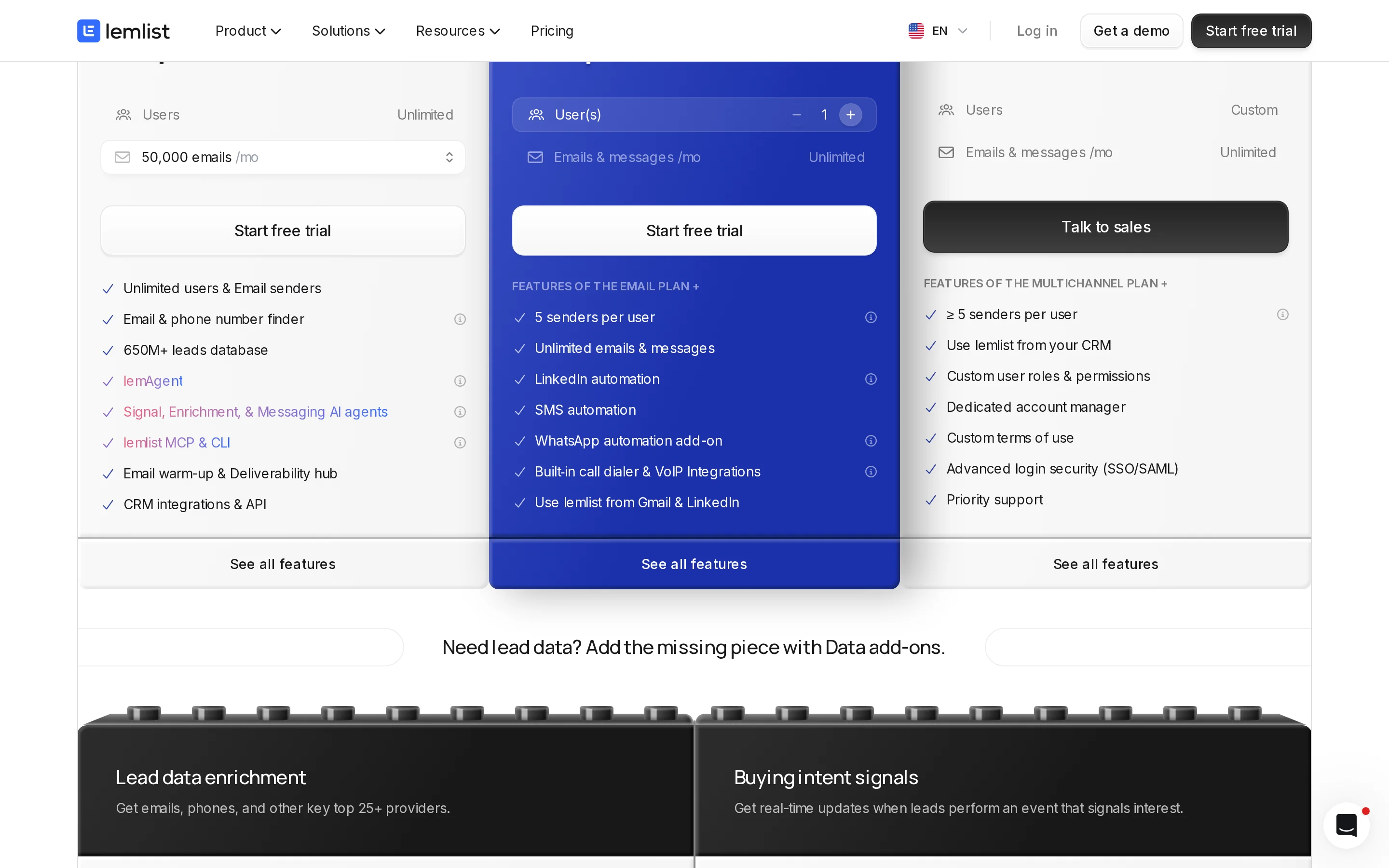
lemlist plans
- Email Plan: Quote-Based / Custom Enterprise Pricing (Contact Sales)
- Multichannel Plan: Quote-Based / Custom Enterprise Pricing (Contact Sales)
- Enterprise Plan: Custom pricing for larger teams with specific volume/security needs
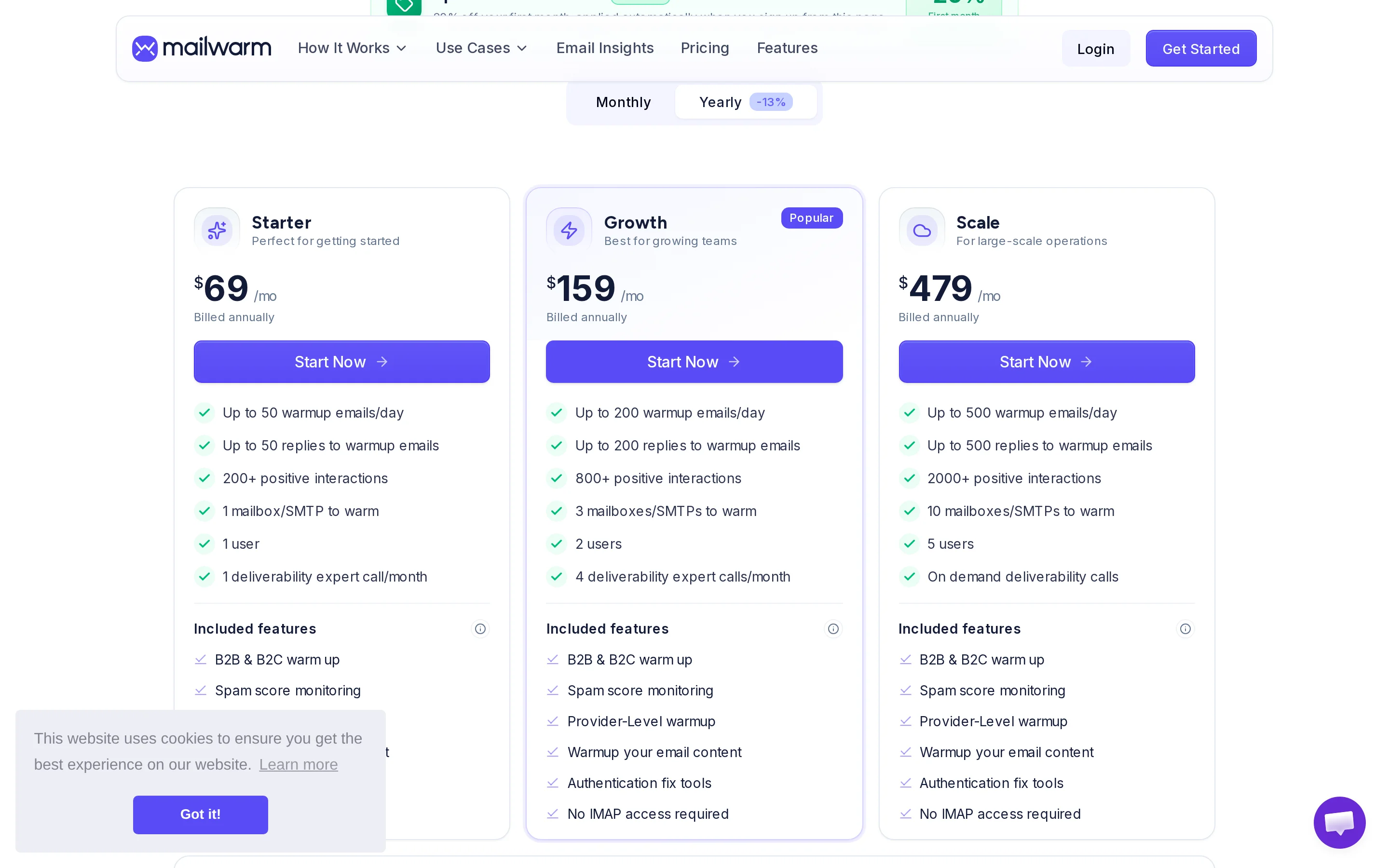
Mailwarm plans
- Basic Warmup: Custom pricing (Contact Sales)
- Scale Plan: Custom pricing for growing teams
- Enterprise Plan: Unlimited mailboxes/users with dedicated expert (Contact Sales)
Both platforms have moved away from simple public self-serve pricing tables, favoring quote-based models for their core offerings. lemlist’s pricing is generally structured around the number of users and the volume of emails/messages sent, with additional costs for data credits (used for finding/enriching leads). This makes lemlist’s total cost variable based on activity levels. Mailwarm’s pricing is typically tiered by the number of mailboxes being warmed up and the frequency of interactions, with an option to pay per interaction ($0.02/interaction) for overages. While lemlist bundles warmup into its subscription, Mailwarm charges specifically for the warmup service. For a small team, lemlist might appear more expensive upfront due to its comprehensive feature set, but it eliminates the need for separate data and sending tools. Mailwarm appears cheaper initially if you already have a sending tool, but adds complexity and cost when combined with other software.
of Ownership Analysis
For a 5-person sales team needing 10,000 verified leads per month:
lemlist: Assuming a Multichannel plan (~$100-$150/user/mo estimated based on market standards for similar tiers, though exact price requires quote) + Data Credits. If 10,000 leads require ~$500-$800 in credit usage, the total monthly cost could range from $1,000 to $1,500. This includes CRM sync, LinkedIn automation, and basic warmup.
Mailwarm: Assuming a Scale plan for 5 mailboxes (~$50-$100/mo estimated). However, Mailwarm does NOT provide leads. You would need a separate data provider (e.g., Apollo/ZoomInfo) costing ~$500-$1,000/mo and a separate sending tool (e.g., Instantly/Smartlead) costing ~$300-$500/mo. Total stack cost: ~$900-$1,600/mo.
Verdict: lemlist offers better consolidated value for teams starting from scratch, as it replaces three distinct tools (Data, Sending, Warmup). Mailwarm becomes cost-effective only if you already have robust data and sending infrastructure and are facing specific deliverability bottlenecks.
Which fits your outbound model?
Match your team size, deal complexity, and lead volume to the right engine.
High-Volume Cold Outbound
lemlist is built for managing complex, multichannel campaigns at scale with AI assistance. Mailwarm supports the infrastructure but doesn't manage the campaign.
Bulk List Cleaning & Hygiene
Mailwarm provides superior specialized signals for reputation recovery, while lemlist’s cleaning is part of a broader workflow.
Developer API Data Pipelines
lemlist offers extensive API, CLI, and MCP access for custom integrations. Mailwarm has limited developer-facing controls.
New Domain Launch
Mailwarm is the specialist tool for warming up new domains safely. lemlist includes lemwarm, but Mailwarm offers deeper control for critical launches.
Where each platform falls short
Constructive limitations and architectural trade-offs to weigh before signing.
Where lemlist falls short
- Pricing opacity: No public self-serve prices, requiring sales calls for quotes.
- Complexity: Feature-rich interface can be overwhelming for simple email-only teams.
- Credit System: Data enrichment and finding consume credits, adding variable costs.
Where Mailwarm falls short
- No Lead Generation: Does not provide contact data or email finders.
- No Campaign Management: Cannot send actual sales sequences or track prospect engagement.
- Niche Utility: Only valuable as a supplement to another sending tool.
The switching playbook
What you gain and give up when migrating across platforms.
- All-in-one workflow (Data + Send + Warmup)
- Advanced AI personalization and multichannel support
- Deep CRM and integration ecosystem
- Potential loss of granular control over warmup-specific settings
- Higher initial learning curve due to feature breadth
- Specialized focus on deliverability and reputation repair
- Simpler interface for non-sales technical tasks
- Expert guidance on spam signals
- Loss of lead sourcing and enrichment capabilities
- Need to maintain separate tools for sending and CRM
- No multichannel outreach (LinkedIn/SMS/Voice)
Frequently asked questions
Direct technical answers about lemlist and Mailwarm.
Which platform has better data accuracy?
lemlist has significantly better data accuracy because it includes a native 650M+ lead database with integrated email/phone verification and AI-powered enrichment. Mailwarm does not provide any contact data.
How do their starting costs compare?
Both use quote-based pricing. lemlist tends to be higher due to its all-in-one nature (including data credits), while Mailwarm is lower as it is a single-purpose utility. However, Mailwarm requires additional spend on data and sending tools.
Can I connect unlimited mailboxes?
lemlist allows unlimited users and email senders on its plans. Mailwarm also supports scaling across multiple inboxes, particularly in its Scale and Enterprise tiers, but limits may apply based on the specific plan negotiated.
Which tool is easier to learn?
Mailwarm is easier to learn because it has a narrow scope (warmup configuration). lemlist has a steeper learning curve due to its extensive features like AI agents, multichannel sequences, and CRM integrations.
Does lemlist replace Mailwarm?
For most SMBs, yes. lemlist includes 'lemwarm' which handles standard deliverability needs. Mailwarm is recommended only for large enterprises or teams experiencing severe spam issues that require specialized, manual intervention and deeper analytics.
Sources & methodology
Every claim is grounded in official vendor documentation and live audits.
Compare with sendroAI
See how sendroAI replaces manual research, credit limits, and deliverability traps with full autonomous execution.