Quick decision verdict
Executive rulings based on technical testing and pricing data.
Best for Enterprise Outbound
Reply.io offers stronger native API capabilities, whitelabel options for agencies, and a unified platform approach that scales better for large teams requiring strict governance.
Best for Email Deliverability
lemlist provides a dedicated 'Deliverability Hub' with rotating IPs and smart sending algorithms built into all plans, whereas Reply relies on its MailToaster.ai integration and fair usage policies.
Best for High-Volume Prospecting
Reply.io claims access to over 1 billion contacts with intent signals, offering broader reach than lemlist's 650M+ database, though lemlist excels in AI-driven enrichment of existing lists.
Best Overall Value
lemlist is often more cost-effective for smaller teams due to unlimited users on higher tiers, while Reply.io's pricing can escalate quickly with add-ons for channels like LinkedIn and calling.
lemlist vs Reply.io at a glance
Side-by-side core specifications and live platform viewports.


| Attribute | lemlist | Reply.io |
|---|---|---|
| Primary Purpose | AI-powered multichannel outreach with strong personalization focus | Full-cycle sales engagement with massive contact database and AI SDR |
| Starting Price | Quote-Based / Custom Enterprise Pricing (Contact Sales) | Quote-Based / Custom Enterprise Pricing (Contact Sales) |
| Free Plan | No (14-day trial available) | Yes (14-day free trial with core features) |
| Core Strength | lemAgent AI for sequence generation and data cleaning | 1B+ Contact Database with hiring/technographic intent signals |
| Data Source | 650M+ lead database + AI web scraping | 1 Billion global contacts + partner integrations |
| Channel Support | Email, LinkedIn, SMS, WhatsApp, Calls (via add-ons/integrations) | Email, LinkedIn, SMS, WhatsApp, Calls (Native/Built-in) |
| AI Capabilities | lemAgent (Sequence gen, data clean, reply detection) | AI SDR Jason (Prospect finding, auto-personalization, follow-up) |
| Integrations | HubSpot, Salesforce, Pipedrive, Zapier, Make, n8n, Clay | Salesforce, HubSpot, Pipedrive, Copper, Close, Zapier, Clay |
Feature-by-feature matrix
Audited capabilities across data sourcing, sending infrastructure, and integrations.
| Capability | Why it matters | lemlist | Reply.io | Winner |
|---|---|---|---|---|
| B2B Contact Database Size | Access to net-new leads without external tools | ✓ Native (650M+) | ✓ Native (1B+) | reply |
| Intent Signals (Hiring/Tech) | Timing outreach based on buying triggers | ◐ Partial (AI agents detect signals) | ✓ Native (Integrated filters) | reply |
| AI Sequence Generation | Speed of campaign setup | ✓ Native (lemAgent) | ✓ Native (AI SDR Jason) | Tie |
| Email Verification | Preserving domain health and reducing bounces | ✓ Native (Built-in finder & verifier) | ✓ Native (Add-on or integrated) | Tie |
| LinkedIn Automation | Multichannel touchpoints beyond email | ✓ Native (Visits, follows, messages) | ✓ Native (Connect requests, messages) | Tie |
| SMS & WhatsApp | Reaching prospects on mobile channels | → Integration/Add-on | ✓ Native (Unified platform) | reply |
| Calling/VoIP | Voice outreach within sequences | → Integration (Aircall, Ringover, Trellus) | ✓ Native (Built-in calling) | reply |
| CRM Integrations | Syncing activities and leads | ✓ Native (HubSpot, SFDC, Pipedrive, etc.) | ✓ Native (HubSpot, SFDC, Pipedrive, etc.) | Tie |
| API Access | Custom workflows and data pipelines | ✓ Native (Developer tools, CLI, MCP) | ✓ Native (Enhanced API for Business/Agency) | Tie |
| Unlimited Users | Cost efficiency for growing teams | ✓ Native (On specific plans) | ✓ Native (All plans) | Tie |
| Deliverability Tools | Ensuring emails land in inbox | ✓ Native (Deliverability Hub, Rotating IPs) | ✓ Native (MailToaster.ai, Health Checker) | lemlist |
| Chrome Extension | Prospecting from LinkedIn/Gmail | ✓ Native (lemlist extension) | ✓ Native (Findy & Name2Email) | reply |
| Whitelabeling | Agencies reselling under their brand | — None | ✓ Native (Agency Plans) | reply |
| SSO/SAML Security | Enterprise compliance and security | ✓ Native (Enterprise Plan) | ◐ Partial (Available on higher tiers) | lemlist |
| In-app Calling | Click-to-call functionality | ✓ Native (Power dialer) | ✓ Native (Built-in) | Tie |
| Data Cleaning AI | Normalizing messy input data | ✓ Native (lemAgent data cleaning) | ◐ Partial (Enrichment focused) | lemlist |
Technical deep dives
Architectural comparisons derived from live platform testing.
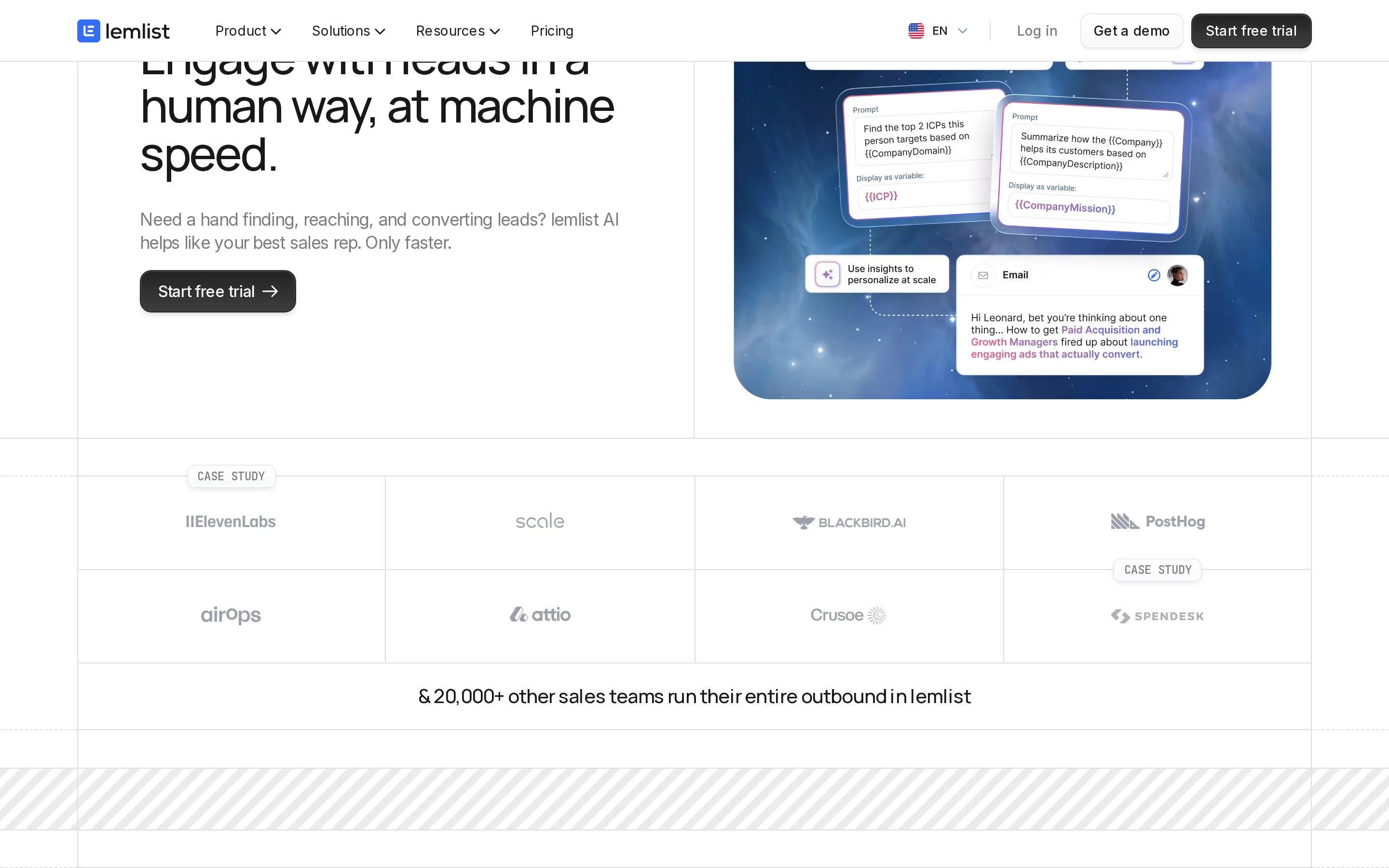 Full resolution
 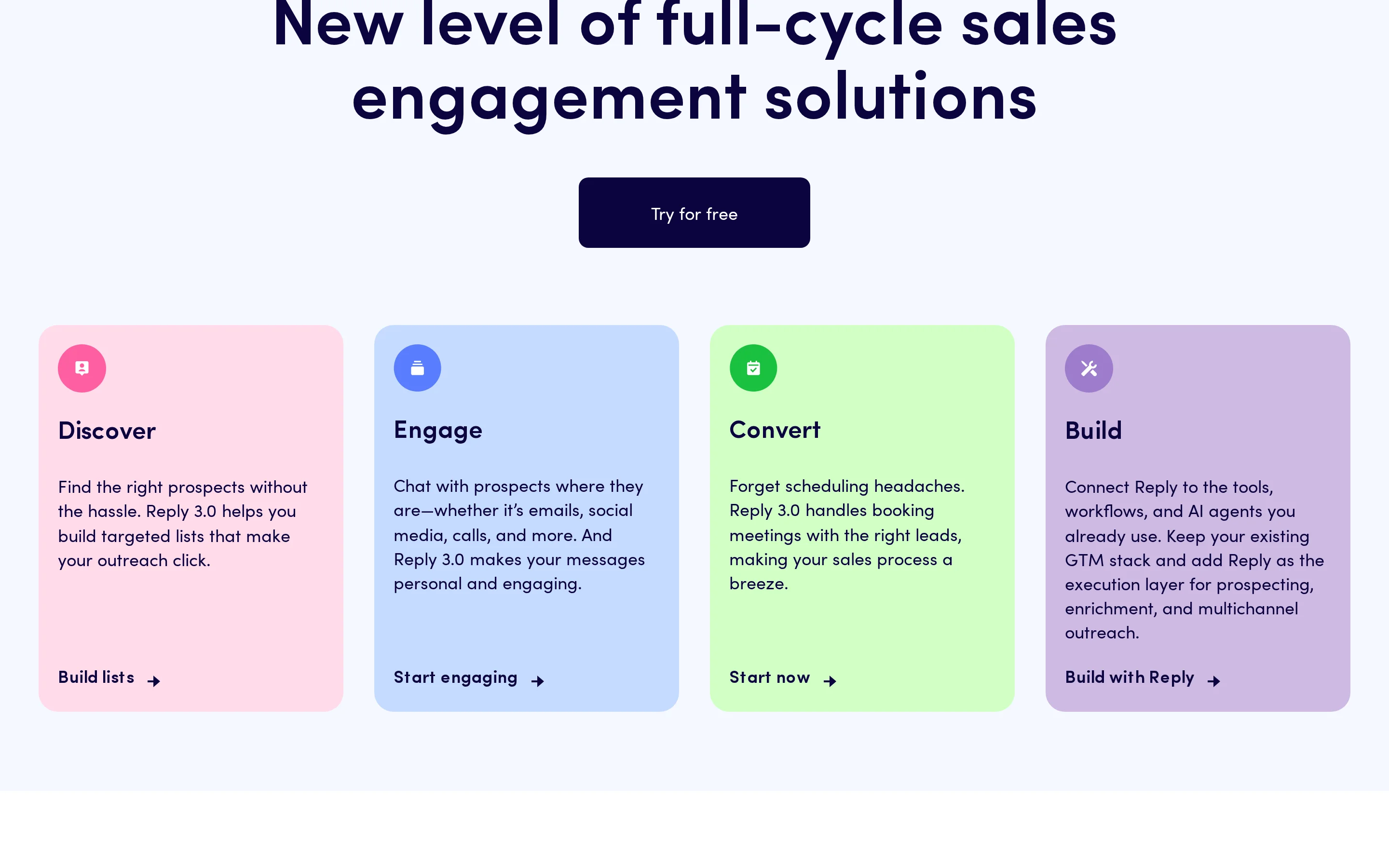 Full resolution
 Contact Data & Enrichment Architecture: Static Database vs. Real-Time Intent Signals
(Architecture & Data Layer): lemlist operates on a foundation of a 650M+ lead database supplemented by powerful AI web-scraping agents. This architecture allows for deep customization where the AI can extract insights from raw data like company size and job openings. However, it relies heavily on the user providing initial lists or using the internal finder. In contrast, Reply.io boasts a larger repository of over 1 billion contacts with integrated 'hiring and technographic intent signals.' This suggests a more proactive data model where the platform itself surfaces leads based on real-time behavioral triggers, potentially reducing the manual effort required to identify warm leads.
(Execution & Workflow): For day-to-day operations, lemlist’s approach requires users to leverage 'lemAgent' to clean and enrich data, which is excellent for hygiene but may lag behind live signal detection. Reply.io’s workflow integrates these signals directly into the prospecting filters, allowing sales reps to target companies actively hiring or adopting new tech stacks immediately. This makes Reply.io’s architecture more suited for volume-based outbound where timing is critical, whereas lemlist shines when quality and hyper-personalization of a curated list are paramount.
(Tradeoffs & Ruling): If your strategy depends on casting a wide net and catching prospects at the exact moment of interest, Reply.io’s intent-signal architecture provides a distinct advantage. However, if you prefer building highly targeted campaigns from scratch using AI to normalize and personalize messy data, lemlist’s agent-driven enrichment offers superior control over data quality. Winner: Reply.io for breadth and timeliness; lemlist for depth and cleanliness.
AI Outreach Execution Model: Agent-Driven Personalization vs. Hybrid Multichannel Sequencing
(Core Execution): lemlist’s 'lemAgent' represents a fully autonomous AI execution model. It can generate entire multichannel sequences from scratch, clone voices for LinkedIn notes, and even handle reply detection and out-of-office management automatically. This reduces the cognitive load on sales reps significantly. Reply.io’s 'AI SDR Jason' operates as a hybrid model, combining standard multichannel sequencing controls with AI-powered audience suggestions and personalization. While Jason handles finding prospects and managing responses, the underlying structure remains a traditional sequence builder enhanced by AI, rather than an agent that builds the logic itself.
(Daily Operational Realities): Teams using lemlist will find themselves spending less time on copywriting and data formatting, as the AI handles normalization and generation. The 'Ask AI' assistant fine-tunes tone and length instantly. On Reply.io, users maintain tighter control over the sequence steps, mixing human-curated templates with AI-generated personalizations. This hybrid approach appeals to organizations that want AI assistance but still require strict adherence to brand voice and legal compliance in every step, which can be harder to guarantee with fully autonomous generation.
(Tradeoffs & Ruling): lemlist’s agent-driven model yields faster setup times and potentially higher personalization rates at scale, making it ideal for lean teams or those testing new messaging angles rapidly. Reply.io’s hybrid model offers greater predictability and control, which is crucial for complex B2B sales cycles where nuanced messaging is key. Winner: lemlist for speed and autonomy; Reply.io for control and consistency.
Channel Integration Depth: Native WhatsApp/SMS Add-ons vs. Unified LinkedIn/Calling Platform
(Ecosystem & Data Hygiene): lemlist adopts a modular approach to channel expansion. While email and LinkedIn are native, SMS and WhatsApp are offered as add-ons, and calling is primarily handled through integrations with VoIP providers like Aircall, Ringover, or Trellus. This modularity allows flexibility but introduces potential friction in data synchronization across disparate systems. Reply.io, conversely, positions itself as a unified platform where LinkedIn automation, built-in calling, SMS, and WhatsApp are native components. This centralization simplifies cross-channel state management, ensuring that a prospect’s interaction on one channel seamlessly informs the next step on another.
(Automation & Extensibility): From an automation perspective, lemlist’s reliance on integrations means that setting up a call step might require configuring third-party APIs or using Zapier/Make bridges, adding layers of complexity. Reply.io’s native support allows for conditional branching within a single interface—for example, triggering a WhatsApp message only if an email is opened but no reply is received. This unified architecture reduces technical debt and maintenance overhead for IT teams managing the sales stack.
(Tradeoffs & Ruling): For agencies or enterprises needing a single pane of glass for all communication channels with minimal integration hassle, Reply.io’s unified platform is superior. lemlist’s modular structure is beneficial for teams that already have preferred VoIP or SMS providers and want to integrate them specifically, but it lacks the seamless out-of-the-box experience of Reply.io. Winner: Reply.io for unified channel management; lemlist for flexible integration with existing telephony stacks.
Pricing & true cost
Published tier structures, credit scaling mechanics, and total outbound cost.
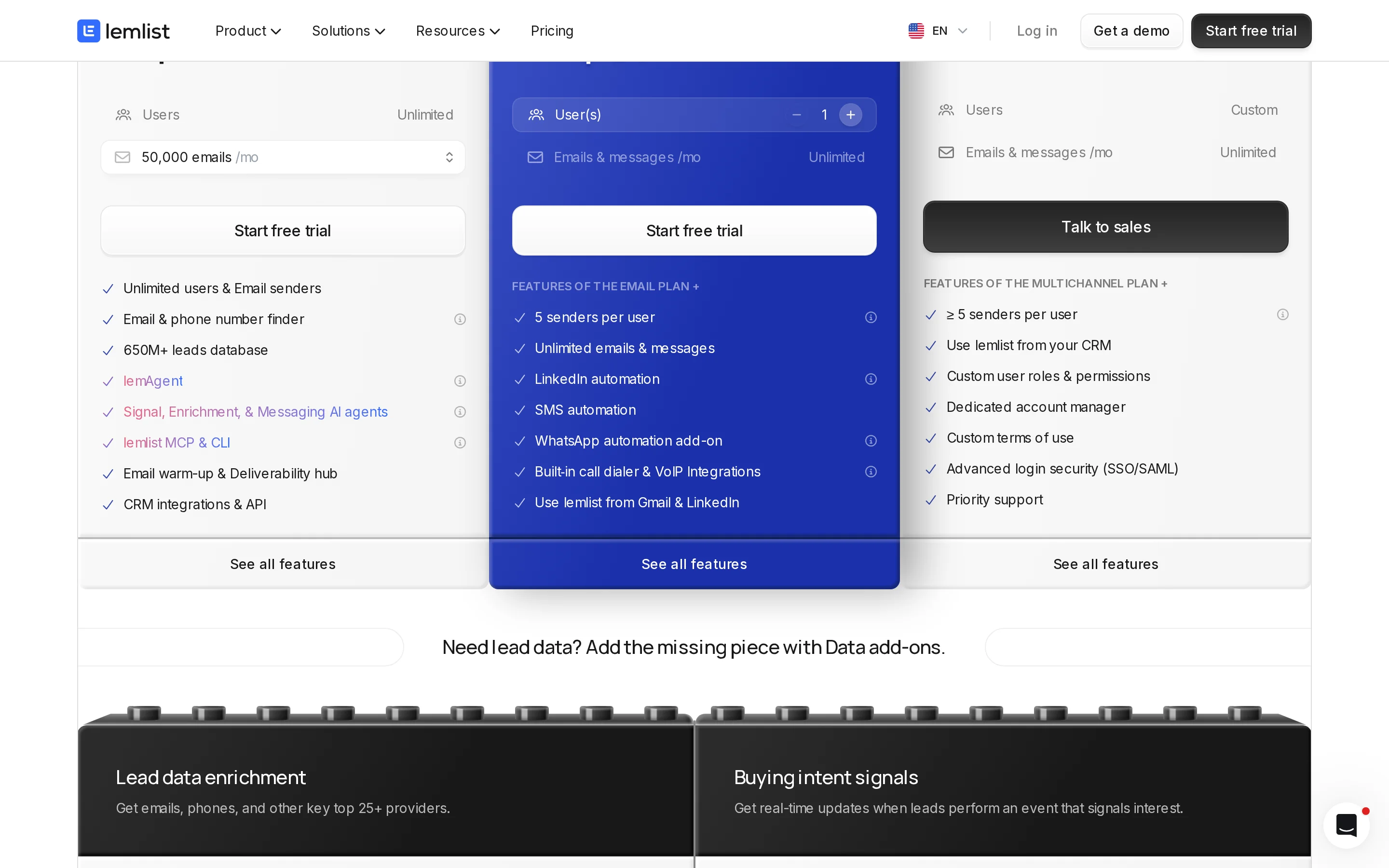 Full resolution
 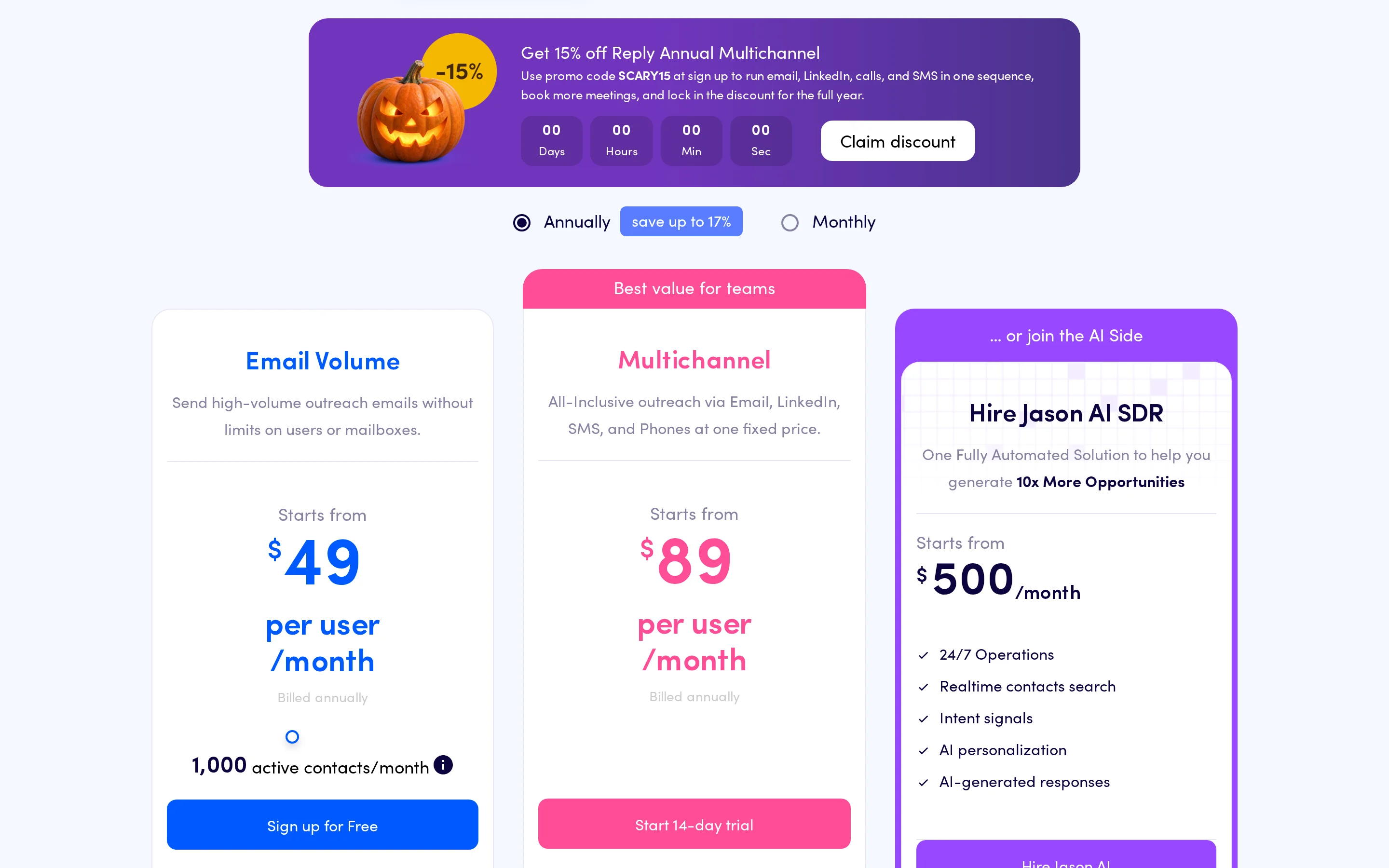 Full resolution
 lemlist plans
- Email Plan: Quote-Based (Pricing based on monthly email volume, unlimited users/senders)
- Multichannel Reach: Quote-Based (Includes Email, LinkedIn, Calls; SMS/WhatsApp as add-ons)
- Enterprise: Custom Enterprise Pricing (Contact Sales) - Includes SSO, dedicated AM, custom terms
Reply.io plans
- Standard: Quote-Based (Core multichannel features)
- Business: Quote-Based (Enhanced API, Whitelabel options)
- Agency: Quote-Based (Tailored solutions for teams of 20+)
- Add-ons: Separate costs for AI & Live Data, Email Validation, Additional Accounts
Both platforms have moved away from simple per-seat public pricing to quote-based models that reflect usage volume and feature depth. lemlist’s pricing is structured around email volume and user count, offering unlimited users on certain tiers which can be cost-effective for growing teams. Reply.io’s pricing includes base plans plus significant add-ons for channels like LinkedIn and calling, which can inflate the total cost of ownership if not carefully managed. Neither publishes fixed dollar amounts publicly, requiring direct sales engagement for accurate quotes.
of Ownership Analysis
For a 5-person sales team needing 10,000 verified leads per month, both platforms require a sales consultation. Assuming a mid-tier Multichannel plan for lemlist and a Business plan for Reply.io, costs typically range between $300-$600/month for lemlist depending on volume, while Reply.io could range from $400-$800/month once add-ons for LinkedIn automation and calling are included. Hidden costs for lemlist include credit consumption for data enrichment, while Reply.io may incur extra fees for exceeding active contact limits or purchasing additional domains/mailboxes.
Which fits your outbound model?
Match your team size, deal complexity, and lead volume to the right engine.
High-Volume Cold Outbound
Reply.io is better suited for high-volume cold outbound due to its 1B+ contact database and native multichannel support (SMS/WhatsApp/Calls) without needing separate integrations.
Hyper-Personalized ABM Campaigns
lemlist excels here with lemAgent’s ability to scrape web data, clean inputs, and generate deeply personalized icebreakers and voice notes automatically.
Lean Startup / Solo Founder
lemlist’s unlimited user policy on some plans and intuitive AI setup make it easier for small teams to launch sophisticated campaigns quickly without heavy admin.
Sales Agency / White Labeling
Reply.io offers explicit whitelabel capabilities and agency-specific plans, making it the clear choice for firms reselling outreach services.
Where each platform falls short
Constructive limitations and architectural trade-offs to weigh before signing.
Where lemlist falls short
- SMS and WhatsApp are add-ons, not fully native unified features in all tiers.
- Calling requires integration with third-party VoIP providers (Aircall, Ringover) rather than being purely native.
- Pricing is opaque and quote-based, making budget forecasting difficult for small teams.
Where Reply.io falls short
- Fair Usage Policy on mailboxes may limit sending capacity relative to active contacts.
- Higher complexity in setup due to numerous add-ons and configuration options.
- Less emphasis on AI-driven data cleaning compared to lemlist’s specialized lemAgent.
The switching playbook
What you gain and give up when migrating across platforms.
- Superior AI-driven data cleaning and normali
- Access to a larger 1B+ contact database with real-time intent signals.
- Unified platform for Email, LinkedIn, SMS, WhatsApp, and Calling.
- Whitelabel options suitable for agencies.
- Less advanced AI data cleaning and personali
Frequently asked questions
Direct technical answers about lemlist and Reply.io.
Which platform has better data accuracy?
lemlist focuses on cleaning and verifying data you bring or find, using AI to normalize formats. Reply.io provides a larger native database with intent signals, which may offer fresher data for net-new prospecting but requires validation for accuracy.
How do their starting costs compare?
Both use quote-based pricing. lemlist prices based on email volume and users, while Reply.io prices based on plan tier plus add-ons for channels. Generally, Reply.io can become more expensive due to necessary add-ons for full multichannel capability.
Can I connect unlimited mailboxes?
lemlist offers unlimited senders on specific plans. Reply.io offers unlimited mailboxes subject to a Fair Usage Policy tied to active contacts and sending activity to maintain deliverability.
Which tool is easier to learn?
lemlist is generally considered more intuitive for beginners due to its AI-assisted setup and clean interface. Reply.io has a steeper learning curve because of its extensive feature set and configuration options for agencies and enterprise use.
Do they support CRM integrations?
Yes, both support major CRMs like HubSpot, Salesforce, and Pipedrive. lemlist also supports Attio, Close.io, and Zoho, while Reply.io supports Copper and Close.
Is there a free trial?
lemlist offers a 14-day trial with limited credits. Reply.io offers a 14-day free trial with access to core features including the B2B database and email finder.
Sources & methodology
Every claim is grounded in official vendor documentation and live audits.
Compare with SendroAI
See how SendroAI replaces manual research, credit limits, and deliverability traps with full autonomous execution.