Quick decision verdict
Executive rulings based on technical testing and pricing data.
Best for Enterprise Outbound
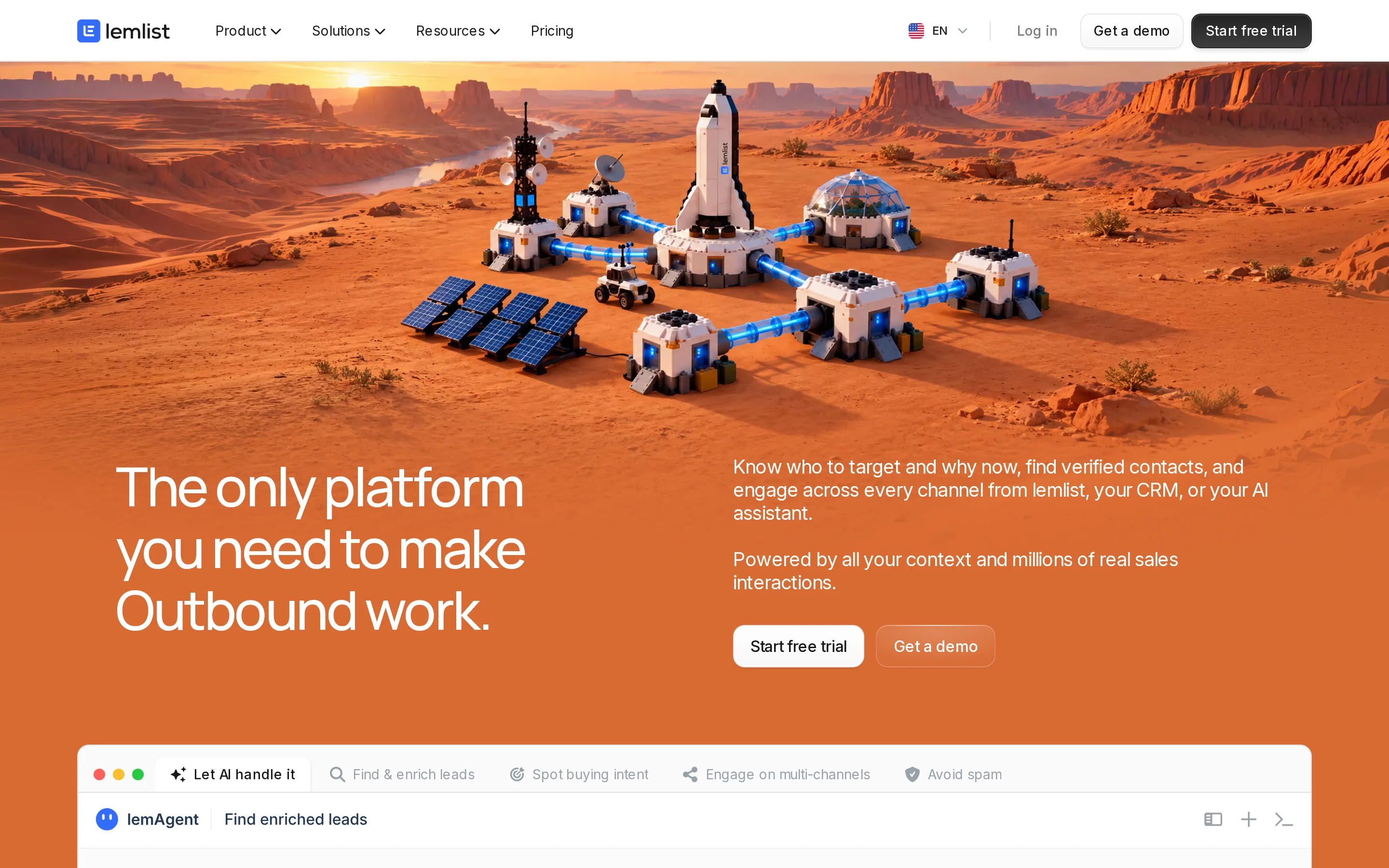
lemlist is the superior choice for teams needing a full-stack solution with AI-driven personalization, multi-channel outreach (Email/LinkedIn/SMS), and integrated CRM syncing.
Best for Email Deliverability
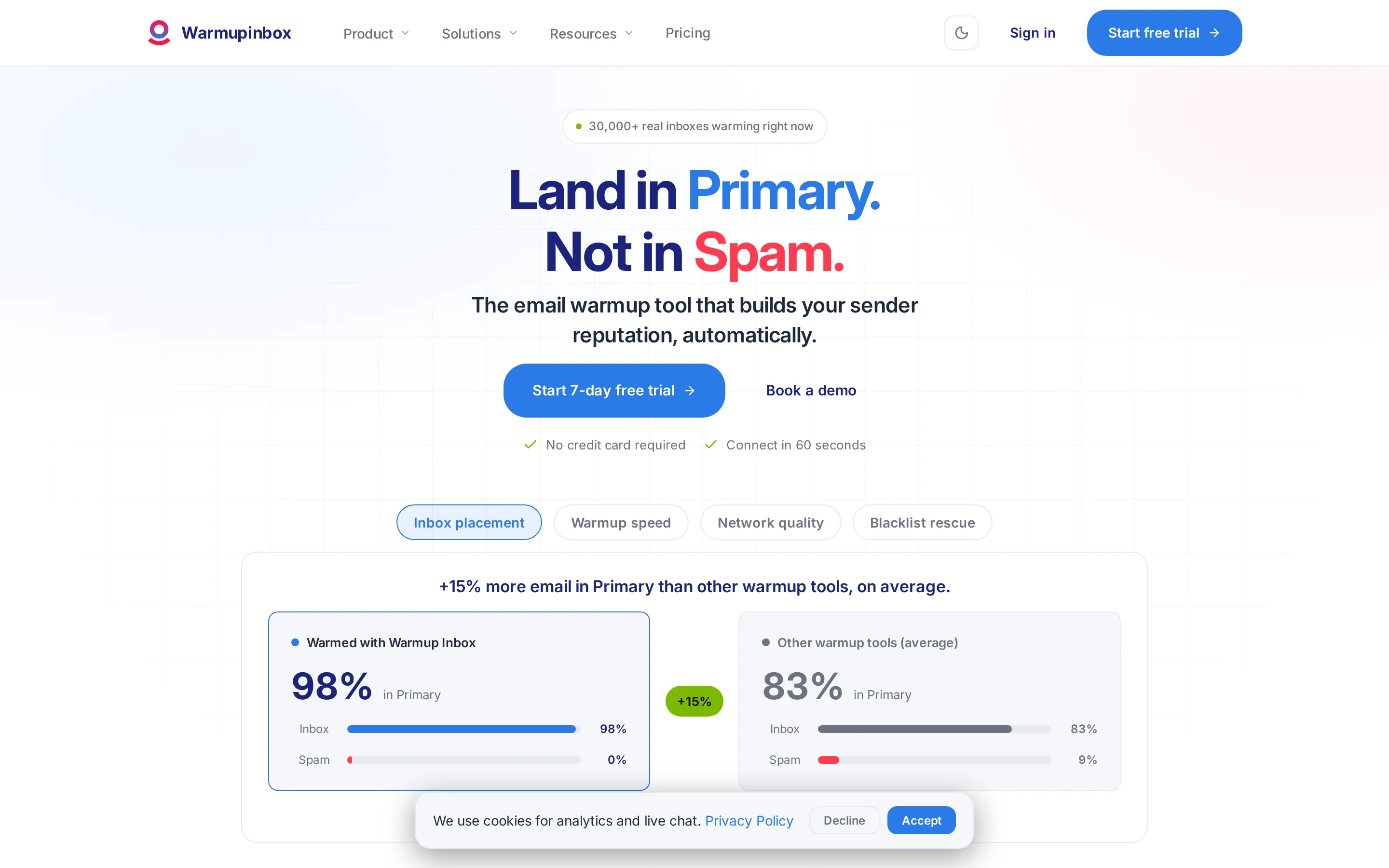
Warmup Inbox excels here as a specialized infrastructure tool, using real inboxes to build sender reputation and prevent spam folder placement through algorithmic volume ramp-up.
Best for High-Volume Prospecting
lemlist provides the necessary lead database (650M+ leads) and enrichment tools required to generate high-volume prospect lists from scratch.
Best Overall Value
Warmup Inbox offers lower entry costs ($15/inbox/month) for basic deliverability needs, while lemlist requires higher investment but replaces multiple point solutions.
lemlist vs Warmup Inbox at a glance
Side-by-side core specifications and live platform viewports.
| Attribute | lemlist | Warmup Inbox |
|---|---|---|
| Primary Purpose | All-in-one sales engagement & lead generation platform | Specialized email/IP warmup & deliverability infrastructure |
| Starting Price | Quote-Based / Custom Enterprise Pricing | $15 per inbox/month (Annual) |
| Free Plan | No (7-day trial available) | No (7-day trial available) |
| Core Strength | AI-powered multichannel sequences & 650M+ lead database | Real-inbox network (30k+) for reputation building |
| Lead Sourcing | Native (650M+ database, LinkedIn export) | None |
| Personalization | Advanced (Liquid Syntax, AI Variables, Voice Cloning) | N/A |
| Channels Supported | Email, LinkedIn, SMS, WhatsApp, Calls | Email Only |
| Integration Depth | Deep (CRM, Zapier, API, Chrome Extension) | Limited (SMTP/OAuth connections only) |
Feature-by-feature matrix
Audited capabilities across data sourcing, sending infrastructure, and integrations.
| Capability | Why it matters | lemlist | Warmup Inbox | Winner |
|---|---|---|---|---|
| B2B Contact Database | Access to net-new leads without external sourcing | ✓ Native | — None | lemlist |
| Email Finder & Verifier | Discovering verified addresses to reduce bounces | ✓ Native | — None | lemlist |
| LinkedIn Enrichment | Automating profile visits and connection requests | ✓ Native | — None | lemlist |
| AI Personalization | Creating human-like messages at scale | ✓ Native | — None | lemlist |
| Multi-Channel Outreach | Reaching prospects via Email, SMS, and Calls | ✓ Native | — None | lemlist |
| IP Warmup | Building trust for dedicated IP addresses | ◐ Partial | ✓ Native | warmup-inbox |
| Domain Reputation Building | Ensuring emails land in Primary Inbox | ◐ Partial | ✓ Native | warmup-inbox |
| Real Inbox Network | Using actual users instead of bots for warmup | — None | ✓ Native | warmup-inbox |
| CRM Integration | Syncing activities to HubSpot/Salesforce | ✓ Native | — None | lemlist |
| API Access | Custom workflows and developer control | ✓ Native | → Integration | lemlist |
| Unlimited Contacts | Scaling list size without extra fees | ✓ Native | N/A | lemlist |
| Sending Limits Management | Preventing account bans due to over-sending | ✓ Native | ✓ Native | Tie |
| Deliverability Alerts | Proactive monitoring of spam placement | ✓ Native | ✓ Native | Tie |
| Voice Cloning/AI Audio | Personalizing LinkedIn voice notes | ✓ Native | — None | lemlist |
| Agency White-Labeling | Reselling services under own brand | ◐ Partial | ✓ Native | warmup-inbox |
| Ease of Setup | Time to first campaign launch | ◐ Moderate | ✓ Easy | warmup-inbox |
Technical deep dives
Architectural comparisons derived from live platform testing.
 Full resolution
 Full resolution
Core Value Proposition & Scope: Full-Stack Outreach Platform vs. Specialized Infrastructure Utility
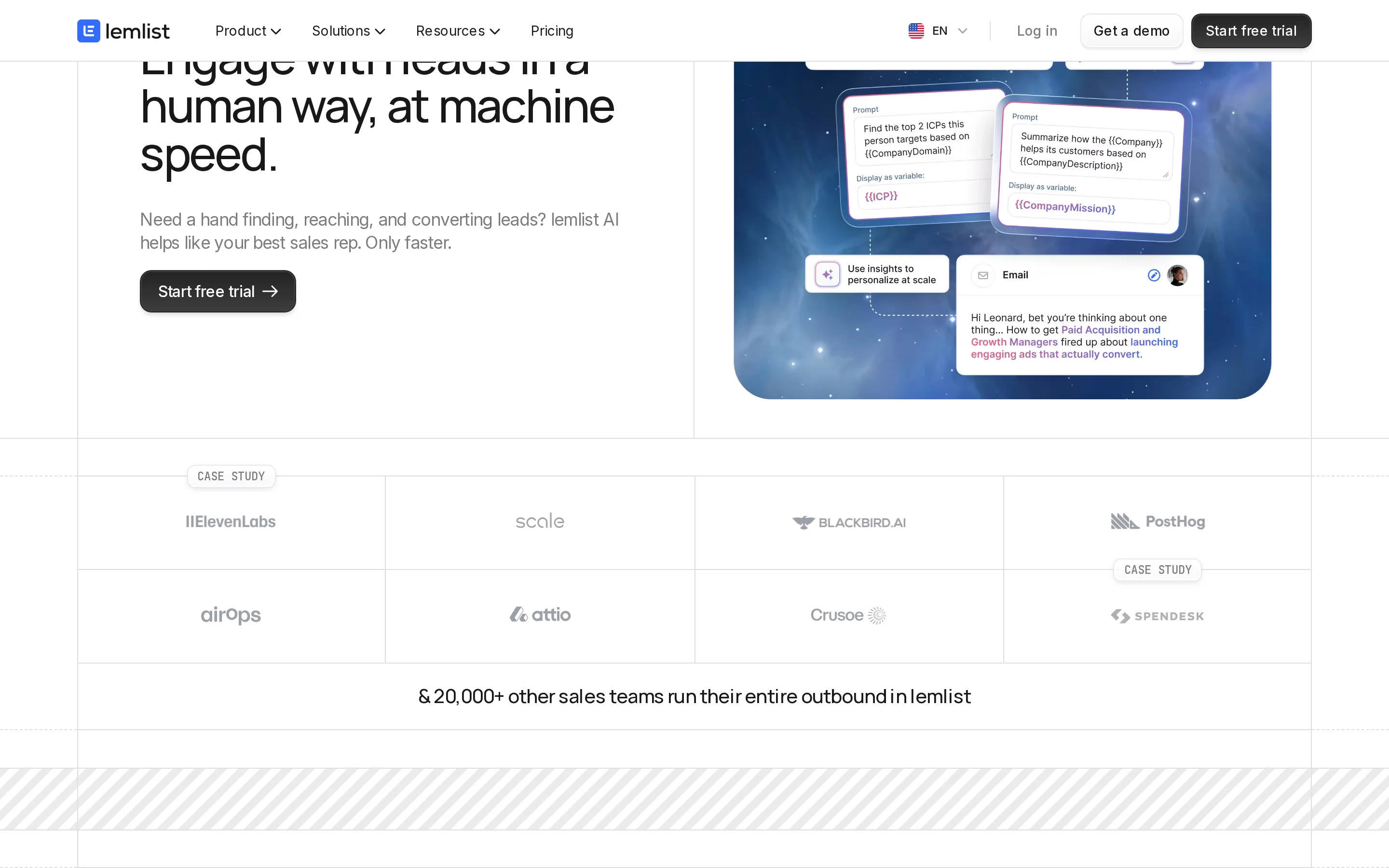
lemlist positions itself as an all-in-one 'GTM Automation' platform. It covers the entire funnel from lead sourcing (via its 650M+ lead database and LinkedIn export tools) to execution (multichannel campaigns across Email, LinkedIn, SMS, and Calls) and conversion (reply management, CRM sync). Its value proposition is consolidation: replacing separate tools for data enrichment, cold emailing, and social selling. In contrast, Warmup Inbox is a niche utility focused exclusively on the pre-campaign phase: ensuring that when you *do* send emails, they land in the inbox. It does not find leads, write copy, or manage replies; it solely manages sender reputation.
Operationally, this means lemlist is designed for SDRs and AEs who need to execute complex, personalized sequences. The interface includes campaign builders, AI variables, and unified inboxes. Warmup Inbox is designed for IT managers or deliverability specialists who need to configure SMTP credentials and monitor domain health metrics. For a startup, lemlist might be the primary tool, whereas for an enterprise with existing sending infrastructure, Warmup Inbox acts as a critical layer underneath their ESP.
The ruling depends on your current stack. If you lack a reliable source of leads and a way to personalize outreach, lemlist is the better fit because it solves the 'what to send' problem. If you already have a robust CRM and email sending platform but suffer from low open rates due to spam filtering, Warmup Inbox is the essential fix for the 'where it lands' problem.
Deliverability Strategy: AI-Personalized Content Signals vs. Algorithmic Volume Ramp-Up
Modern spam filters evaluate two main factors: content relevance and sender reputation history. lemlist attempts to solve deliverability primarily through content quality. By using AI to clean data, normalize formats, and generate hyper-personalized icebreakers, lemlist aims to create emails that look like legitimate human correspondence rather than bulk marketing blasts. This reduces the likelihood of being flagged by content-based filters. However, even perfect content can fail if the sending domain has no reputation.
Warmup Inbox takes the opposite approach, focusing entirely on behavioral mimicry. It uses a network of 30,000+ real inboxes to simulate natural user interactions (opens, replies, moving to primary) over time. This builds a positive 'trust score' with mailbox providers (Gmail, Outlook, Yahoo) before any cold traffic is sent. It employs gradual volume ramp-ups, starting with low daily sends and increasing them systematically to avoid triggering velocity alarms.
The contention lies in whether one strategy supersedes the other. lemlist’s built-in 'lemwarm' feature provides basic protection, but it may not suffice for new domains or high-volume scaling. Warmup Inbox’s dedicated infrastructure is more rigorous for establishing initial trust. Therefore, sophisticated outbound teams often use both: Warmup Inbox to establish the domain's baseline reputation, and lemlist to ensure the content generated during those campaigns remains engaging and non-spammy.
Operational Workflow & Pricing Model: Seat-Based GTM Automation vs. Inbox-Count Infrastructure Scaling
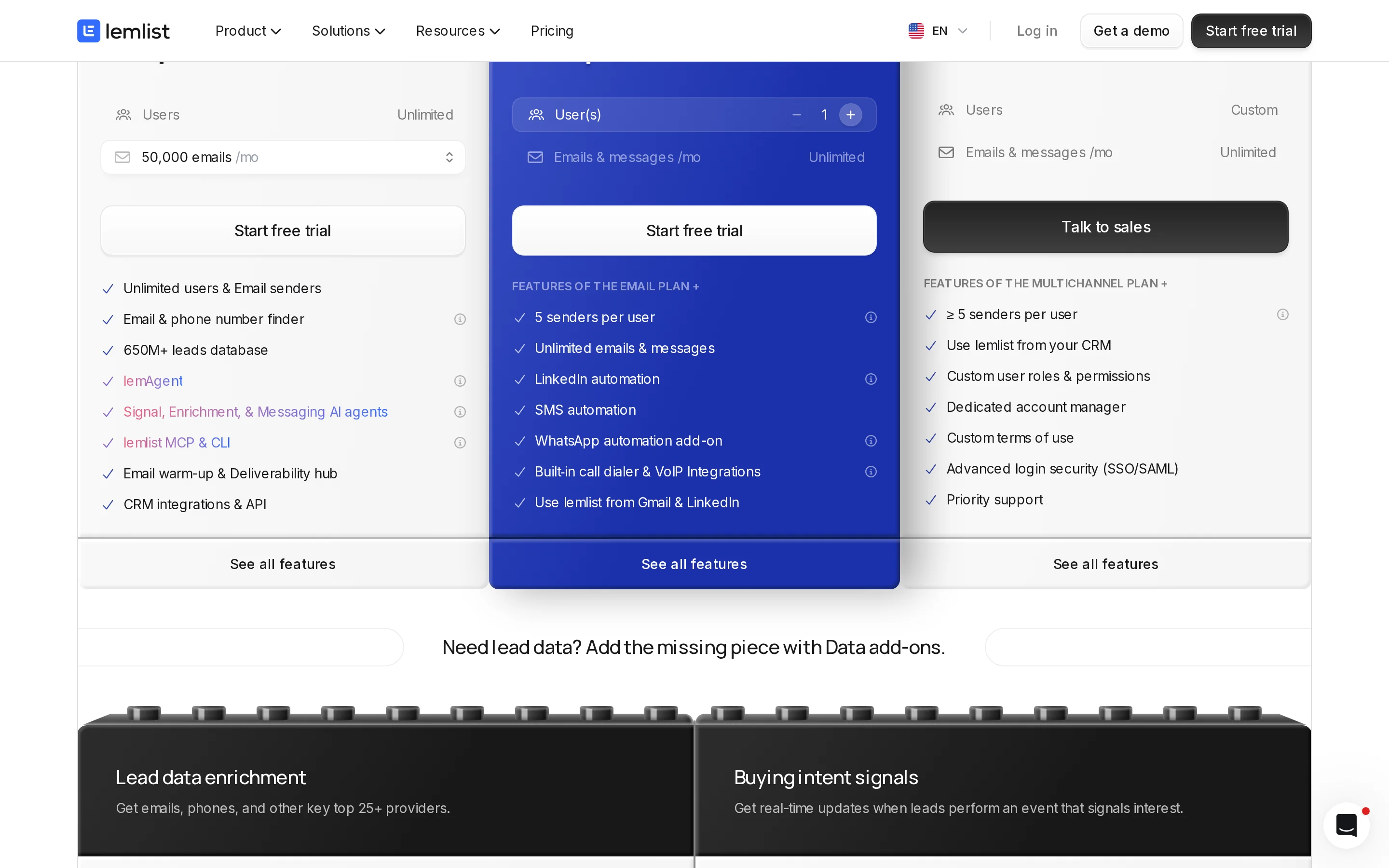
lemlist operates on a tiered plan model based on features and user seats. While specific public pricing tiers are not explicitly detailed in the provided text beyond 'Enterprise' and 'Multichannel', the structure implies a subscription cost tied to team size and advanced capabilities like AI agents and unlimited contacts. This model favors growing sales teams where adding a new rep adds marginal cost but significant revenue potential. The workflow is centralized: reps log into lemlist to see leads, draft messages, and track replies.
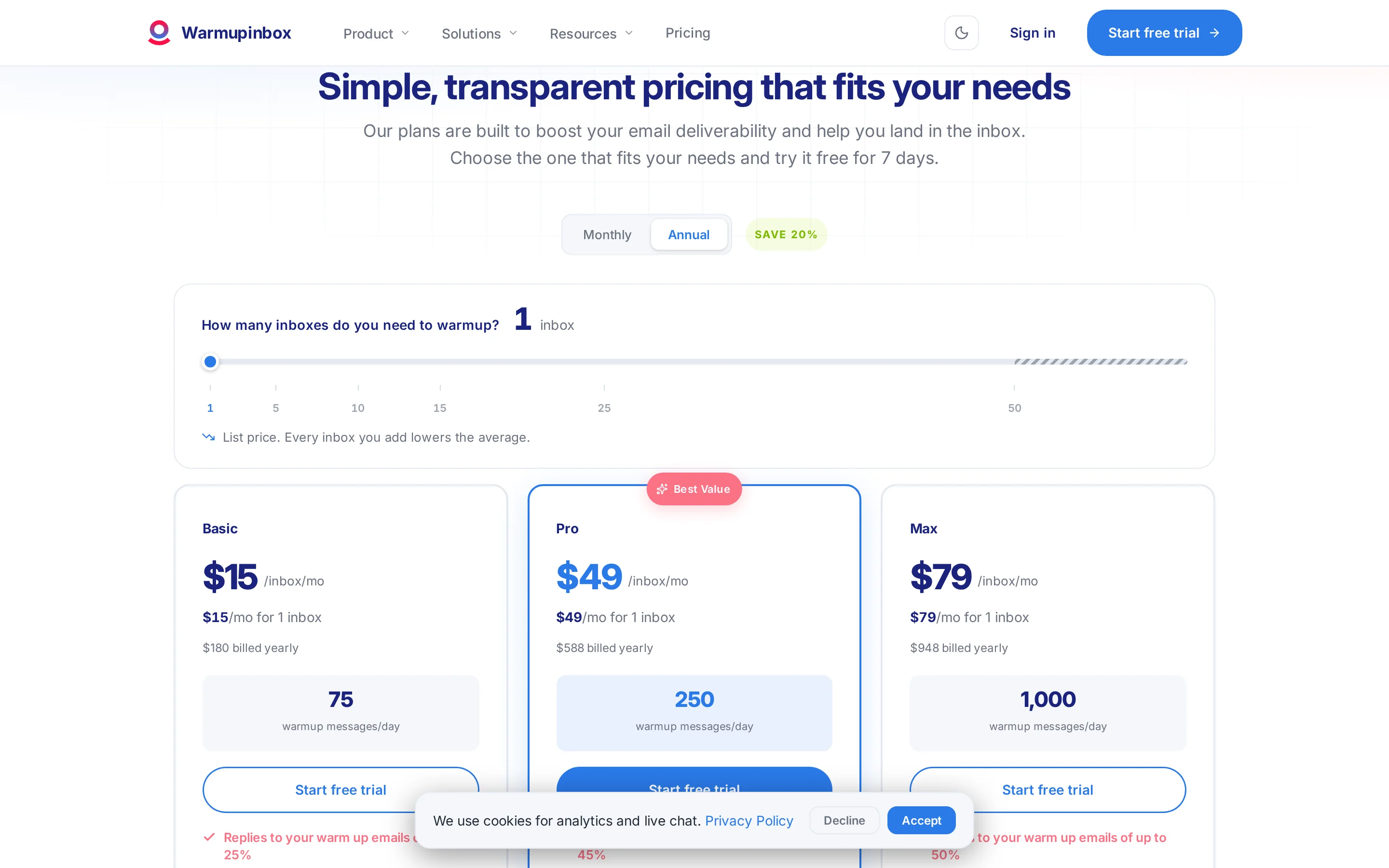
Warmup Inbox uses a per-inbox pricing model, starting at $15/inbox/month annually. This scales linearly with technical infrastructure needs. If you add a new domain or mailbox, you pay for another unit of warmup capacity. This creates a friction point for agencies or large enterprises managing hundreds of mailboxes, where costs can accumulate quickly. However, it allows for granular control over which specific domains are being warmed up.
From an integration perspective, lemlist offers deep ecosystem connectivity (HubSpot, Salesforce, Zapier, Make, n8n), allowing it to act as the central hub of the sales stack. Warmup Inbox integrates via SMTP/OAuth, acting as a background service. For a 5-person team, lemlist likely represents a higher fixed monthly cost but consolidates multiple vendor relationships. Warmup Inbox represents a variable operational cost that must be managed alongside the primary sending tool.
Pricing & true cost
Published tier structures, credit scaling mechanics, and total outbound cost.
 Full resolution
 Full resolution
lemlist plans
- Multichannel Plan: Quote-Based / Custom Enterprise Pricing (Includes AI, Unlimited Users, Multi-channel)
- Email Plan: Quote-Based / Custom Enterprise Pricing (Focus on Email Volume & Senders)
- Enterprise: Custom Terms, SSO/SAML, Dedicated Account Manager
Warmup Inbox plans
- Standard Warmup: $15 per inbox/month (Annual Billing)
- Volume Discounts: Available past 50 inboxes (Quote Required)
- Agency/Multi-Client: Custom Pricing for white-label and consolidated billing
lemlist utilizes a value-based pricing model tied to business outcomes (pipeline generation), requiring direct sales contact for exact figures, which suggests a premium positioning for comprehensive GTM automation. Warmup Inbox employs transparent, usage-based pricing ($15/inbox/month), making it highly predictable for budgeting infrastructure costs. For small teams, Warmup Inbox is significantly cheaper to start, but lemlist offers better ROI if it eliminates the need for separate lead-gen and email-writing tools.
of Ownership Analysis
For a 5-person sales team sending 10,000 emails/month:
Scenario A: lemlist Only
Assuming a mid-tier Multichannel plan (estimated ~$100-$200/user/mo based on market standards for such features, though exact price is quote-based): Cost ≈ $500-$1,000/mo. Includes leads, writing, and sending.
Scenario B: Existing ESP + Warmup Inbox
If the team already pays for an ESP (e.g., $50 total) and needs 5 mailboxes warmed:
Warmup Inbox Cost: 5 inboxes * $15 = $75/mo.
Total Incremental Cost: $75/mo.
Hybrid Approach (Recommended for Scale)
Many teams use lemlist for creation/sending but add Warmup Inbox for new domains.
Cost: lemlist (~$500) + Warmup Inbox for 2 new domains ($30) = $530/mo.
*Note: Exact lemlist pricing requires a sales quote. Warmup Inbox is strictly $15/inbox.*
Which fits your outbound model?
Match your team size, deal complexity, and lead volume to the right engine.
High-Volume Cold Outbound
lemlist is built for generating and executing high-volume campaigns with AI assistance. Warmup Inbox supports this but doesn't execute it.
New Domain Launch
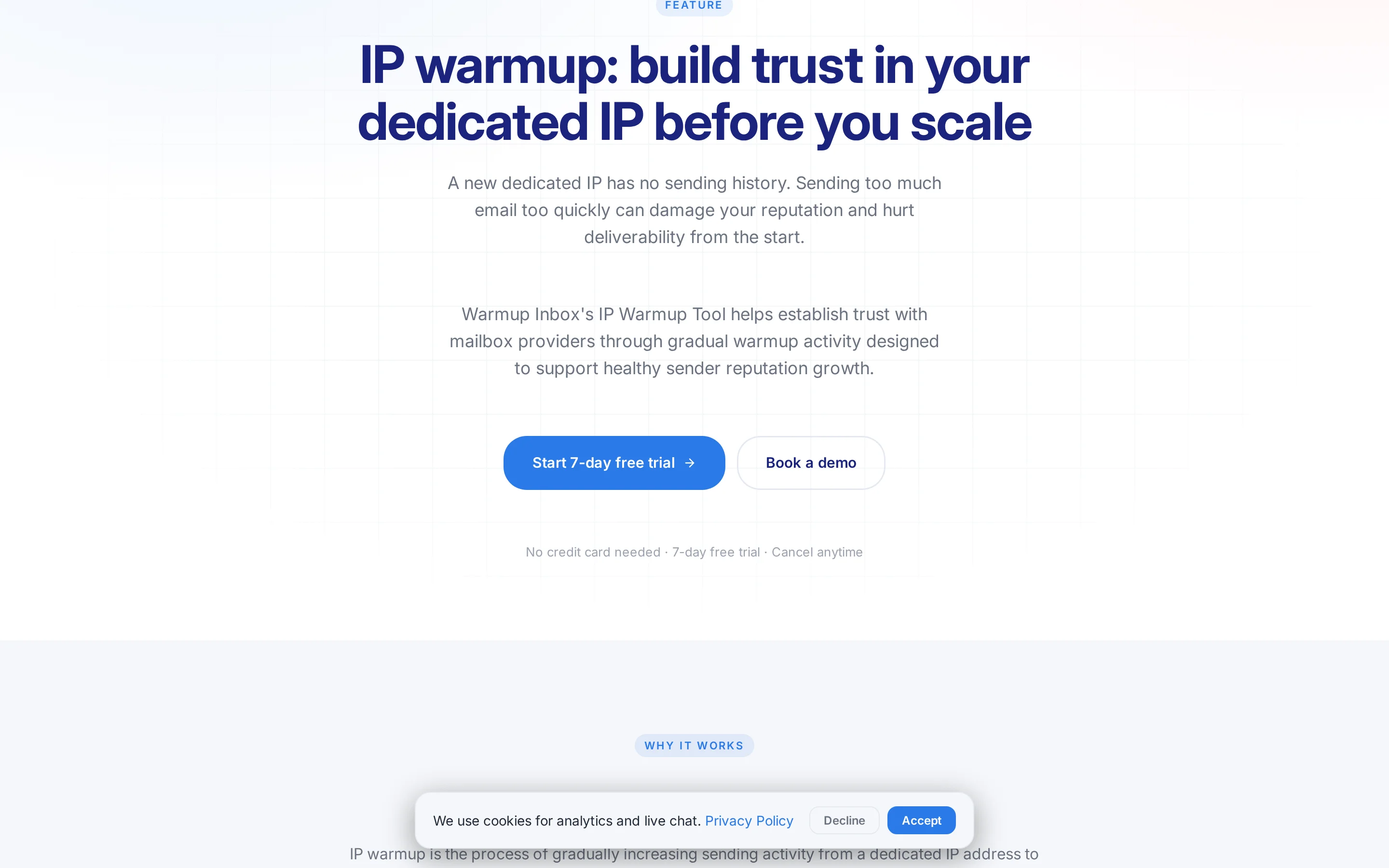
Warmup Inbox is superior for launching new domains due to its dedicated IP warmup and real-inbox network, preventing immediate blacklisting.
Lean Startup Budget
Warmup Inbox offers a low-cost entry point ($15/mo) for startups that already have a free/cheap sending method but need deliverability assurance.
Complex Multi-Channel Sequences
Only lemlist supports LinkedIn, SMS, and Call steps within a single automated sequence.
Where each platform falls short
Constructive limitations and architectural trade-offs to weigh before signing.
Where lemlist falls short
- Pricing opacity: No public self-serve pricing tiers listed; requires sales interaction.
- Learning Curve: Extensive feature set (AI, Liquid Syntax, Multi-channel) requires training.
- Deliverability Dependency: While it has 'lemwarm', it relies heavily on content quality; poor setup can still lead to spam issues without external warmup tools.
Where Warmup Inbox falls short
- No Lead Generation: Cannot find or enrich contact data; requires external list sources.
- Single Channel: Focuses exclusively on email; ignores LinkedIn, SMS, or phone outreach.
- Manual Campaign Execution: Does not send actual sales campaigns; only warms up the accounts used for sending.
The switching playbook
What you gain and give up when migrating across platforms.
- Access to 650M+ lead database and enrichment tools.
- Ability to automate LinkedIn, SMS, and Phone calls alongside email.
- Integrated AI for writing, personali
- Significantly lower cost for basic deliverability needs.
- Speciali
Frequently asked questions
Direct technical answers about lemlist and Warmup Inbox.
Which platform has better data accuracy?
lemlist has native access to a 650M+ lead database with verification tools, making it far superior for data accuracy. Warmup Inbox does not provide lead data.
How do their starting costs compare?
Warmup Inbox starts at $15 per inbox/month. lemlist pricing is quote-based and typically higher, reflecting its all-in-one platform nature.
Can I connect unlimited mailboxes?
lemlist allows unlimited users and senders on certain plans. Warmup Inbox charges per inbox, so connecting unlimited mailboxes increases cost linearly.
Which tool is easier to learn?
Warmup Inbox is easier to learn as it is a background utility. lemlist has a steeper learning curve due to its extensive campaign, AI, and CRM features.
Do I need both tools?
Not necessarily. lemlist includes 'lemwarm' for basic deliverability. However, high-volume senders often add Warmup Inbox for new domains to ensure maximum safety.
Sources & methodology
Every claim is grounded in official vendor documentation and live audits.
Compare with sendroAI
See how sendroAI replaces manual research, credit limits, and deliverability traps with full autonomous execution.