Quick decision verdict
Executive rulings based on technical testing and pricing data.
Best for Enterprise Outbound
ZeroBounce offers a broader suite including AI Scoring and Email Finder, making it suitable for teams needing end-to-end hygiene.
Best for Email Deliverability
Kickbox provides specialized verification logic focused on protecting sender reputation within the Ziff Davis ecosystem.
Best for High-Volume Prospecting
ZeroBounce's 'Unknown' exemption policy reduces financial risk when validating large, ambiguous lists.
Best Overall Value
Kickbox often presents lower entry barriers for pure verification needs without the overhead of unused multi-tool features.
ZeroBounce vs Kickbox at a glance
Side-by-side core specifications and live platform viewports.
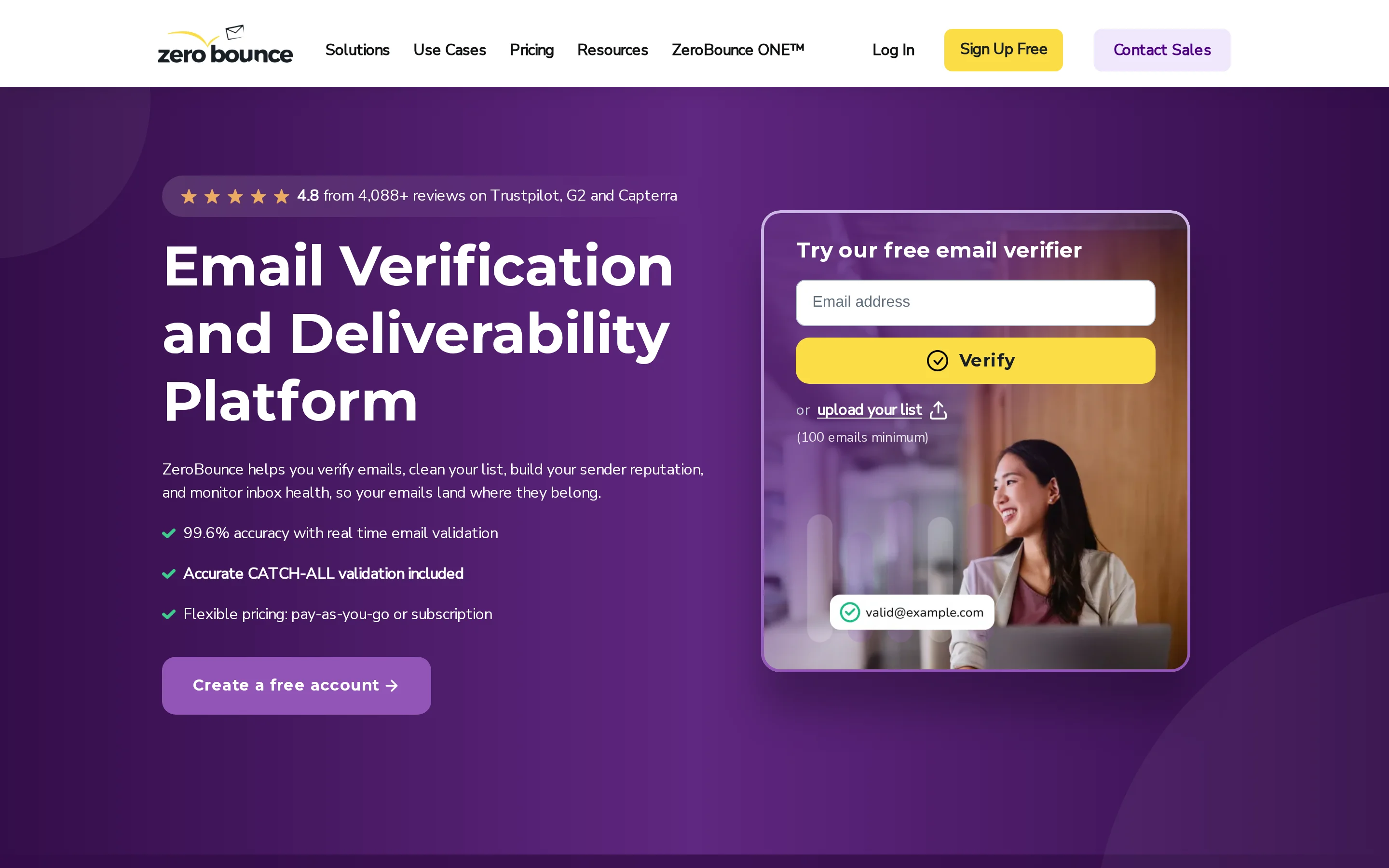
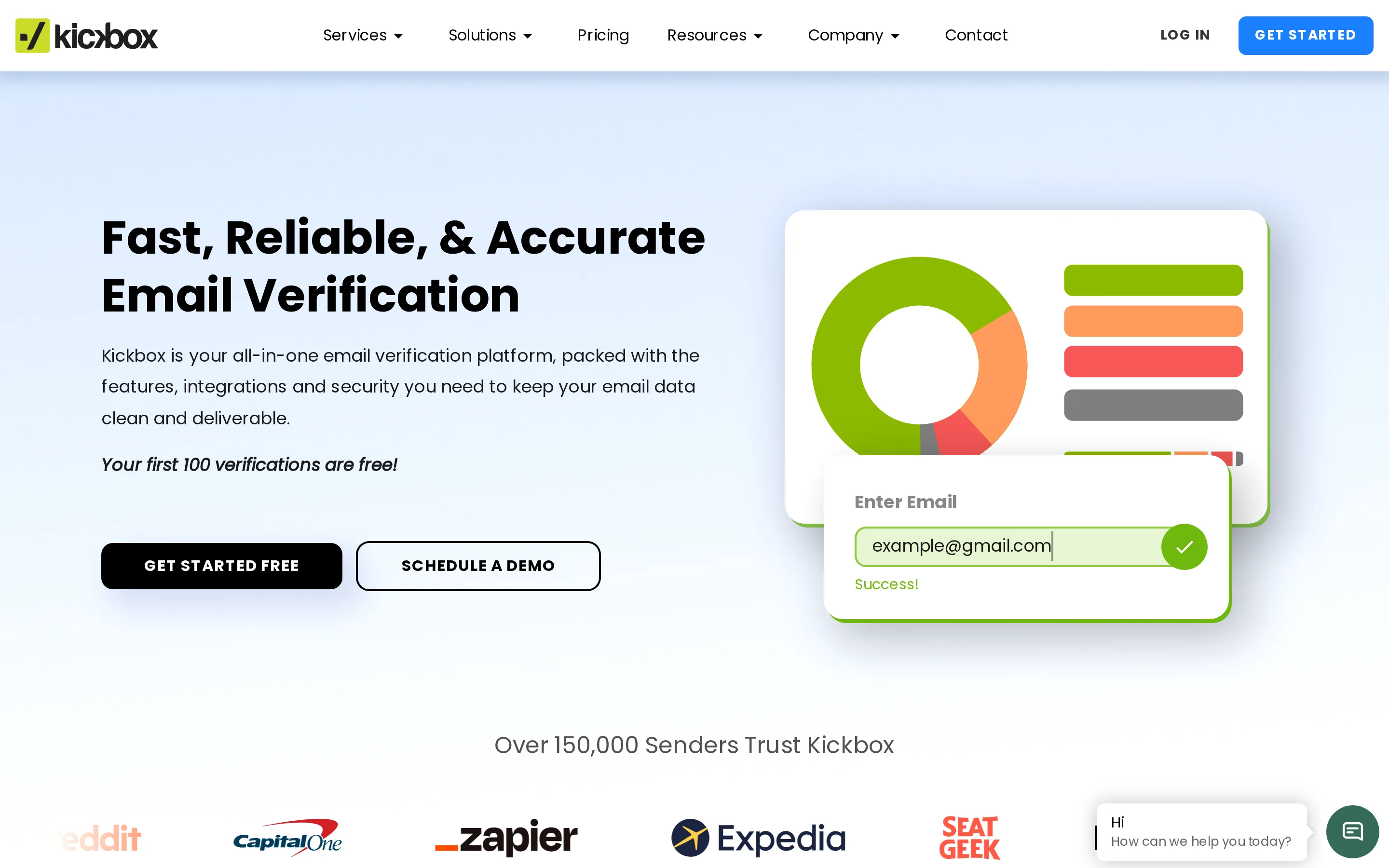
| Attribute | ZeroBounce | Kickbox |
|---|---|---|
| Primary Purpose | Email Validation & Deliverability Suite | Email Verification & Threat Intelligence |
| Starting Price | $39 USD (Pay as You Go) | Custom/Quote-Based (Public pricing not explicitly listed in provided text) |
| Free Plan | Yes (100 free monthly verifications) | Yes (Free tools available, specific credit limits vary) |
| Core Strength | AI Scoring & Email Finder Integration | Deliverability Consulting & Ecosystem Integration |
Feature-by-feature matrix
Audited capabilities across data sourcing, sending infrastructure, and integrations.
| Capability | Why it matters | ZeroBounce | Kickbox | Winner |
|---|---|---|---|---|
| B2B Contact Database | Access to net-new leads | ✓ Native | — None | zerobounce |
| Email Finder | Discovering verified addresses | ✓ Native | — None | zerobounce |
| Email Verification | Preserving domain health | ✓ Native | ✓ Native | Tie |
| AI Scoring | Predicting engagement likelihood | ✓ Native | ◐ Partial | zerobounce |
| Email Warmup | Building sender reputation | ✓ Native | → Integration | zerobounce |
| DMARC Monitoring | Domain authentication security | ✓ Native | — None | zerobounce |
| Blacklist Monitoring | Real-time reputation tracking | ✓ Native | — None | zerobounce |
| API Access | Developer integration | ✓ Native | ✓ Native | Tie |
| Zapier Integration | No-code automation | ✓ Native | ✓ Native | Tie |
| CRM Integrations | Workflow efficiency | ✓ Native | ✓ Native | Tie |
| Deliverability Consulting | Expert guidance | ✓ Native | ✓ Native | Tie |
| HIPAA Compliance | Healthcare data security | ✓ Native | N/A | zerobounce |
| Credit Expiration Policy | Financial predictability | Non-expiring with Subscription | Standard Expiration Likely | zerobounce |
| 'Unknown' Result Billing | Cost control on risky lists | Not Charged | Likely Charged | zerobounce |
| Bulk Processing Speed | Operational efficiency | 100k emails in 45 mins | High Throughput | Tie |
| Data Privacy Retention | Security compliance | Erased after 30 days | Secure Storage | zerobounce |
Technical deep dives
Architectural comparisons derived from live platform testing.
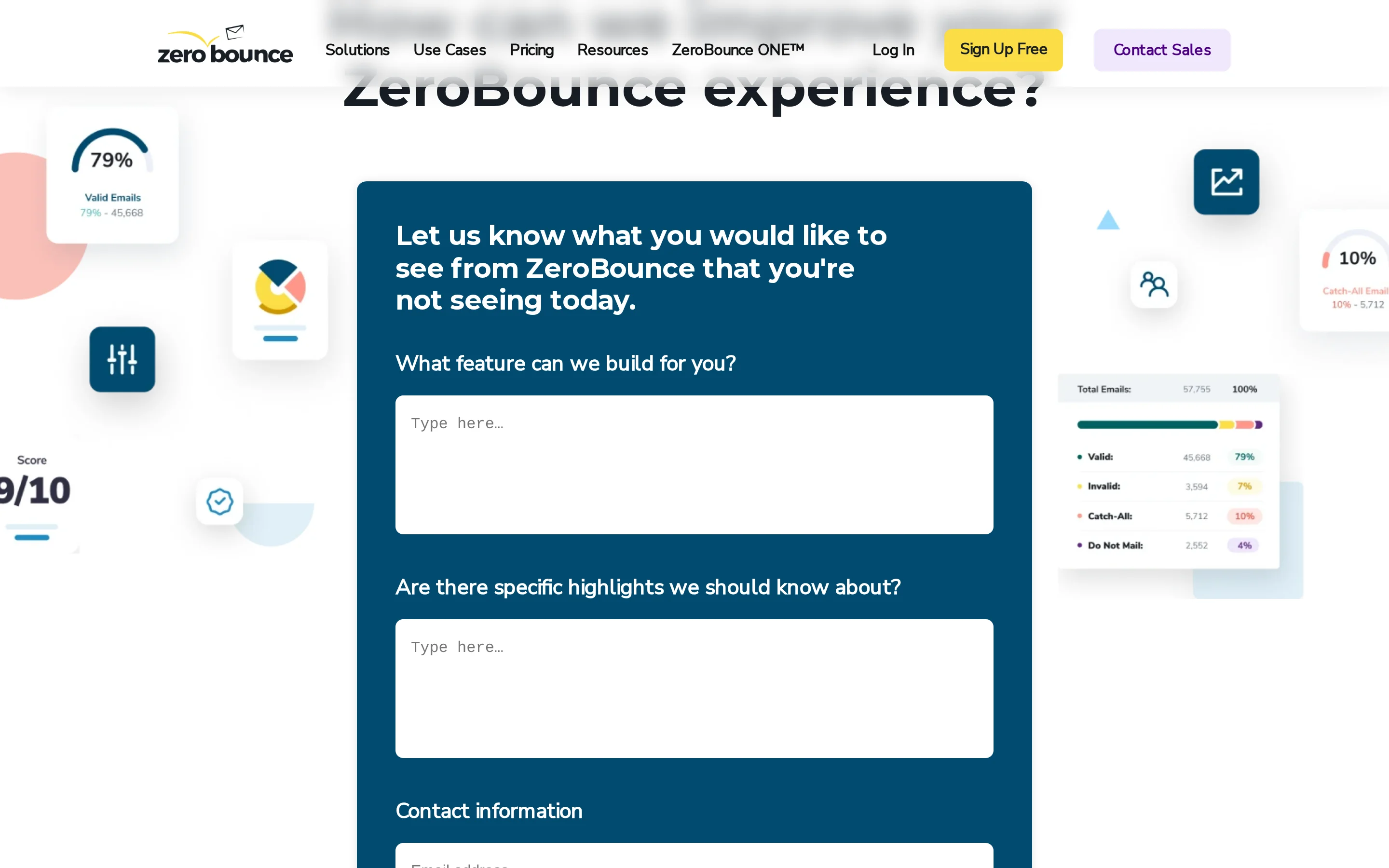 Full resolution
Verification Logic & Cost Efficiency: ZeroBounce’s 'Unknown' Exemption vs. Kickbox’s Credit Consumption Model
ZeroBounce explicitly states that it will never charge credits for 'unknown' results. This is a significant architectural advantage for B2B sales teams dealing with legacy databases or scraped lists where domain status is ambiguous. By absorbing the computational cost of these inconclusive checks, ZeroBounce mitigates financial risk during initial list cleaning phases. In contrast, standard industry practice, often implied by credit-based models like those potentially used by Kickbox, typically consumes credits regardless of whether the result is definitive or unknown, unless specific enterprise negotiations are made.
Operationally, this means a sales team uploading a 10,000-record list with high uncertainty might pay significantly less with ZeroBounce if many records return 'unknown'. With a competitor charging for every API call, the same list could incur full costs despite yielding no actionable intelligence. This divergence creates a fundamental difference in Total Cost of Ownership (TCO) calculations for large-scale operations where data quality is inconsistent.
The verdict favors ZeroBounce for cost-conscious teams handling messy data. The 'no charge for unknowns' policy acts as a built-in insurance against wasting budget on unactionable leads. Kickbox may offer competitive rates for clean, known domains, but lacks this specific transparency in its public pricing model regarding non-definitive results.
Product Ecosystem Depth: ZeroBounce’s AI Scoring & Finder Suite vs. Kickbox’s Core Verification Focus
ZeroBounce has evolved from a simple validator into a comprehensive deliverability platform. It includes native 'AI Scoring' to predict email engagement likelihood and an 'Email Finder' tool that consumes 20 credits per successful query. This allows users to not only verify existing contacts but also discover new ones and prioritize outreach based on predicted activity. Kickbox positions itself primarily as a robust verification engine and threat scorer, focusing heavily on identifying invalid, disposable, and risky addresses to protect sender reputation.
For daily workflows, ZeroBounce enables a closed-loop system: find a lead, score it for quality, verify it, and warm up the sending domain—all within one subscription. Kickbox requires external tools for discovery and relies on its ecosystem partners (like Campaigner or iContact) for orchestration. Teams preferring best-of-breed specialization might lean toward Kickbox to avoid paying for unused features like Email Finder, while integrated teams benefit from ZeroBounce's all-in-one approach.
The ruling depends on the buyer's stack maturity. If you already have a dedicated lead generation tool (e.g., Apollo, ZoomInfo), Kickbox's focused verification might be more efficient. However, for SMBs or teams wanting to consolidate vendors, ZeroBounce's inclusion of AI scoring and finder capabilities provides greater utility per dollar, justifying the higher feature complexity.
Subscription Flexibility & Credit Lifecycle: ZeroBounce One™ Perpetual Credits vs. Standard Expiration Policies
ZeroBounce introduces the 'ZeroBounce One™' subscription at $99/month, which offers a critical financial flexibility: unused credits roll over each month as long as the subscription remains active. This perpetual credit lifecycle ensures that businesses with irregular outreach cadences do not lose money on purchased capacity. Conversely, traditional prepaid credit packs, common in the industry and likely applicable to Kickbox's standard tiers, often have expiration dates (e.g., 12 months), creating potential waste for low-frequency users.
This differentiation is crucial for seasonal businesses or startups scaling slowly. A team using ZeroBounce can buy a bulk pack during a slow quarter and use those credits during a peak campaign without penalty. With expiring credits, teams must carefully forecast usage to avoid forfeiture. ZeroBounce's model aligns better with variable demand patterns, offering predictable cash flow management.
The final verdict gives ZeroBounce the edge in financial predictability. The combination of rollover credits and the explicit 'no charge for unknowns' policy creates a safer environment for budget planning. Kickbox may offer lower upfront costs for steady-state high-volume users, but lacks the documented flexibility for fluctuating demand cycles in its public materials.
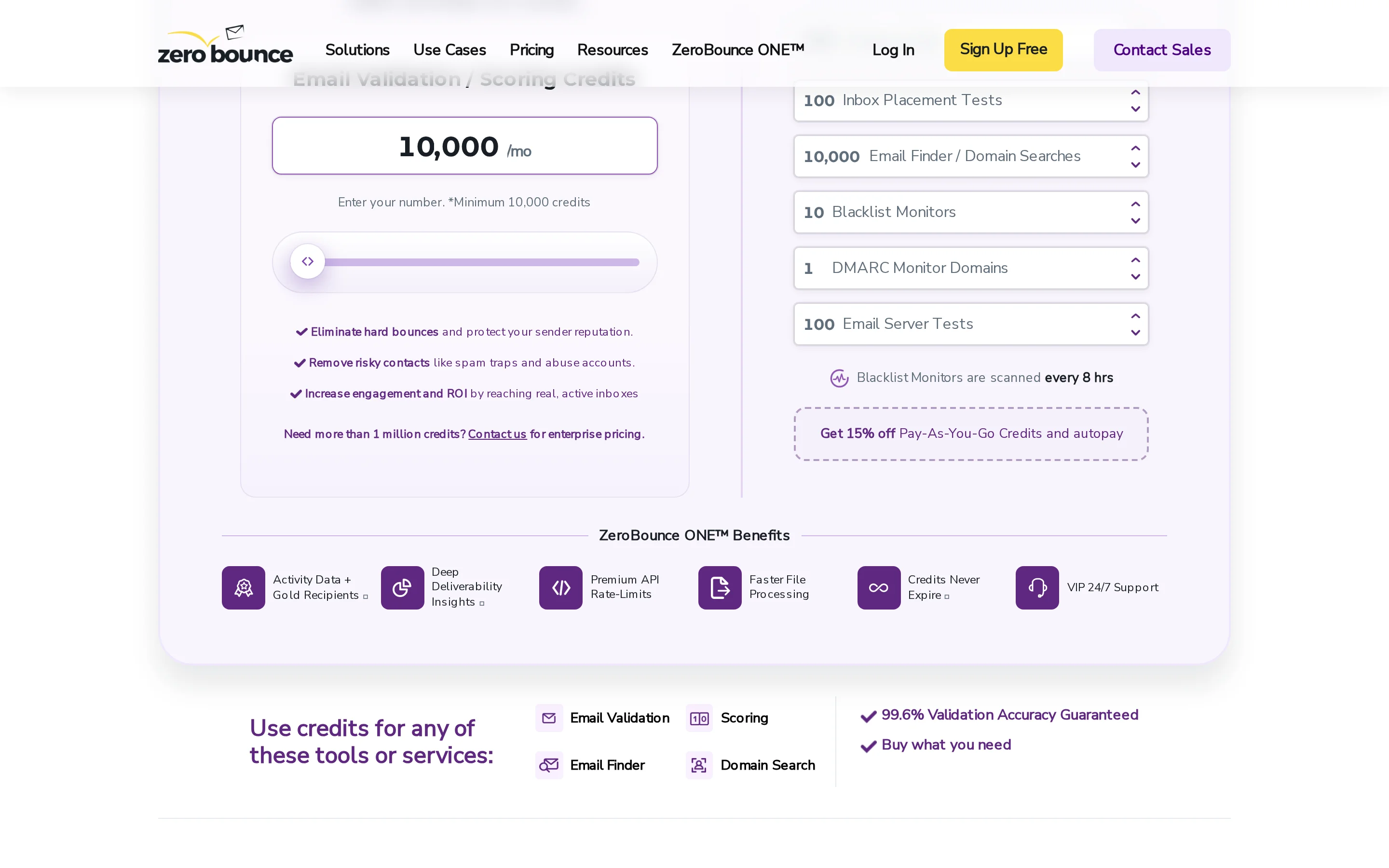
Pricing & true cost
Published tier structures, credit scaling mechanics, and total outbound cost.
 Full resolution
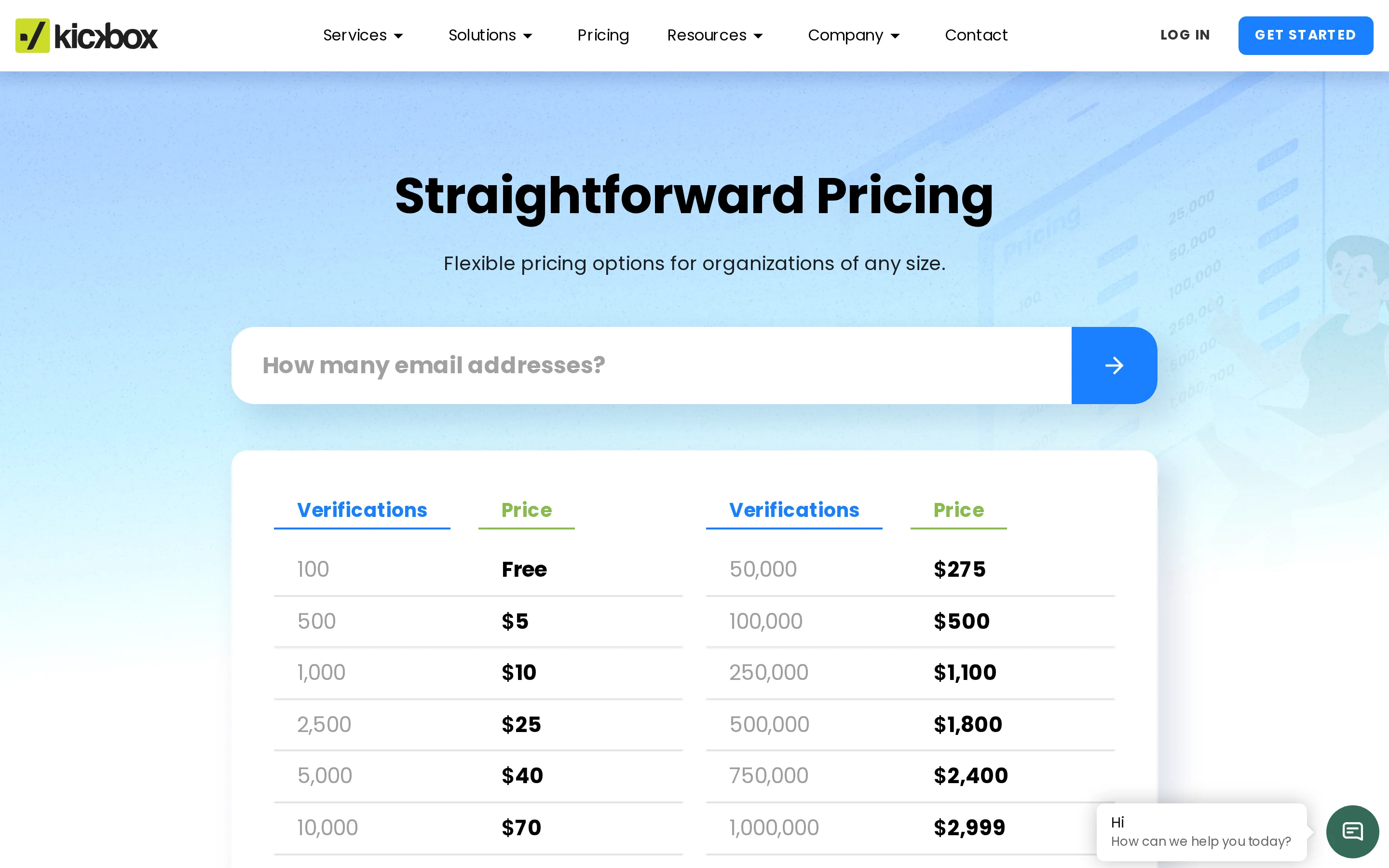 Full resolution
ZeroBounce plans
- Pay as You Go: Starts at $39 USD for 2,000 email addresses
- ZeroBounce ONE™ Subscription: $99 USD/month (includes rollover credits)
- Free Tier: 100 free monthly verifications with business domain signup
Kickbox plans
- Custom Enterprise Pricing (Contact Sales)
- Quote-Based Bulk Verification Plans
- Promotional Discounts Available (e.g., 30% off codes noted in research)
ZeroBounce provides transparent, tiered pricing starting at $39 for small batches and $99/month for subscriptions with rollover benefits. Kickbox does not publish specific self-serve dollar amounts in the provided research, indicating a quote-based or custom enterprise model. For buyers seeking immediate cost clarity and flexible credit usage, ZeroBounce is superior. Kickbox may offer competitive volume discounts for large enterprises but requires sales engagement to determine exact TCO.
of Ownership Analysis
For a 5-person sales team needing 10,000 verified leads per month: ZeroBounce would require approximately 5 subscription tiers or a larger custom plan. At the base $99/mo rate, assuming sufficient credits included or purchasing add-ons, the cost is roughly $99-$200/month depending on credit consumption. If using Pay-as-you-go, 10,000 credits would cost approx $195 (based on $39/2k rate). Kickbox pricing is opaque; however, assuming industry-standard rates of ~$0.01-$0.02 per verification, costs could range from $100-$200/month. ZeroBounce's 'no charge for unknowns' could reduce actual spend by 10-20% if the list contains ambiguous domains, making it potentially cheaper in real-world scenarios.
Which fits your outbound model?
Match your team size, deal complexity, and lead volume to the right engine.
High-Volume Cold Outbound
ZeroBounce is built for this with AI scoring to prioritize hot leads and finder tools to replenish lists.
Bulk List Cleaning & Hygiene
Kickbox excels here with specialized threat scoring and deep integration into marketing platforms for pure hygiene tasks.
Developer API Data Pipelines
Kickbox offers strong developer-focused documentation and API stability for automated verification workflows.
SMB Marketing Automation
ZeroBounce's all-in-one suite (Warmup, DMARC, Finder) reduces vendor sprawl for smaller teams.
Where each platform falls short
Constructive limitations and architectural trade-offs to weigh before signing.
Where ZeroBounce falls short
- Email Finder consumes 20 credits per query, which can become expensive for heavy prospecting.
- Complexity of multiple tools (Scoring, Finder, Warmup) may overwhelm users who only need basic validation.
- Higher baseline subscription cost ($99/mo) compared to some pay-as-you-go competitors.
Where Kickbox falls short
- Lack of publicly disclosed pricing makes TCO estimation difficult for procurement.
- Limited native lead discovery capabilities compared to ZeroBounce's Email Finder.
- Potential credit expiration risks if not managed under a specific enterprise contract.
The switching playbook
What you gain and give up when migrating across platforms.
- Access to AI Scoring and Email Finder within one platform.
- Rollover credits preventing waste during slow periods.
- No charges for 'unknown' verification results.
- Focus on core verification strength without feature bloat.
- Integration with
Frequently asked questions
Direct technical answers about ZeroBounce and Kickbox.
Which platform has better data accuracy?
ZeroBounce guarantees 99.6% accuracy. Kickbox focuses on threat detection and deliverability intelligence, but specific accuracy percentages are not publicly highlighted in the provided research.
How do their starting costs compare?
ZeroBounce starts at $39 for 2,000 credits. Kickbox uses a quote-based model, so exact starting costs require contacting sales.
Can I connect unlimited mailboxes?
ZeroBounce supports integrations via Zapier and APIs. Kickbox integrates with major marketing platforms. Unlimited mailbox connections depend on your sending infrastructure, not just the verifier.
Which tool is easier to learn?
Kickbox is simpler for pure verification tasks. ZeroBounce has a steeper learning curve due to its extensive suite of tools like AI Scoring, Warmup, and DMARC monitoring.
Do credits expire?
ZeroBounce credits do not expire with an active ZeroBounce One™ subscription. Kickbox policies are not explicitly detailed in the provided text, but standard industry practice often involves expiration.
Sources & methodology
Every claim is grounded in official vendor documentation and live audits.
Compare with sendroAI
See how sendroAI replaces manual research, credit limits, and deliverability traps with full autonomous execution.