Quick decision verdict
Executive rulings based on technical testing and pricing data.
Best for Enterprise Revenue Intelligence
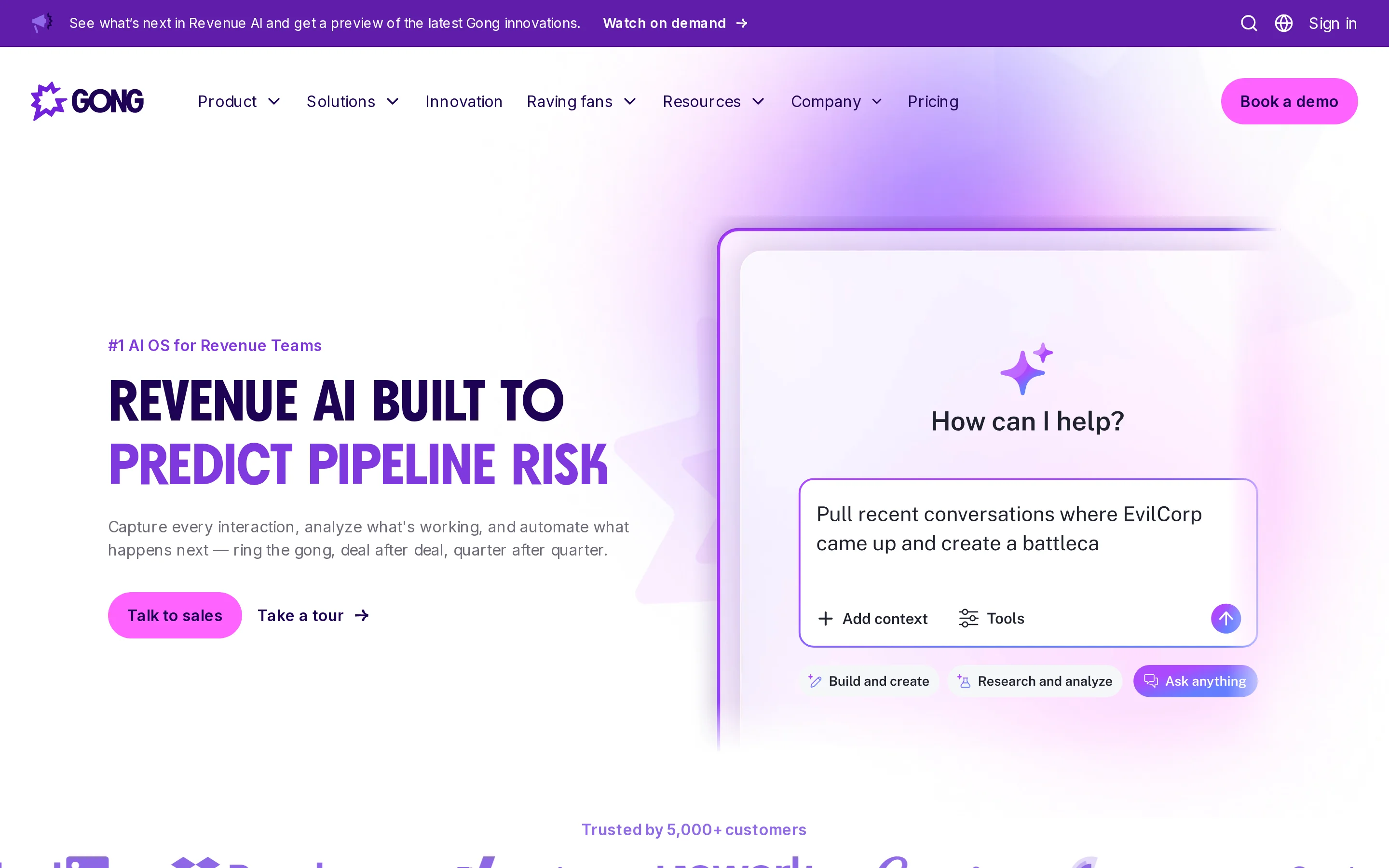
Gong.io dominates with its 'Revenue Graph' that passively captures context from every interaction, providing unmatched visibility into deal health without manual input.
Best for Active Outbound Execution
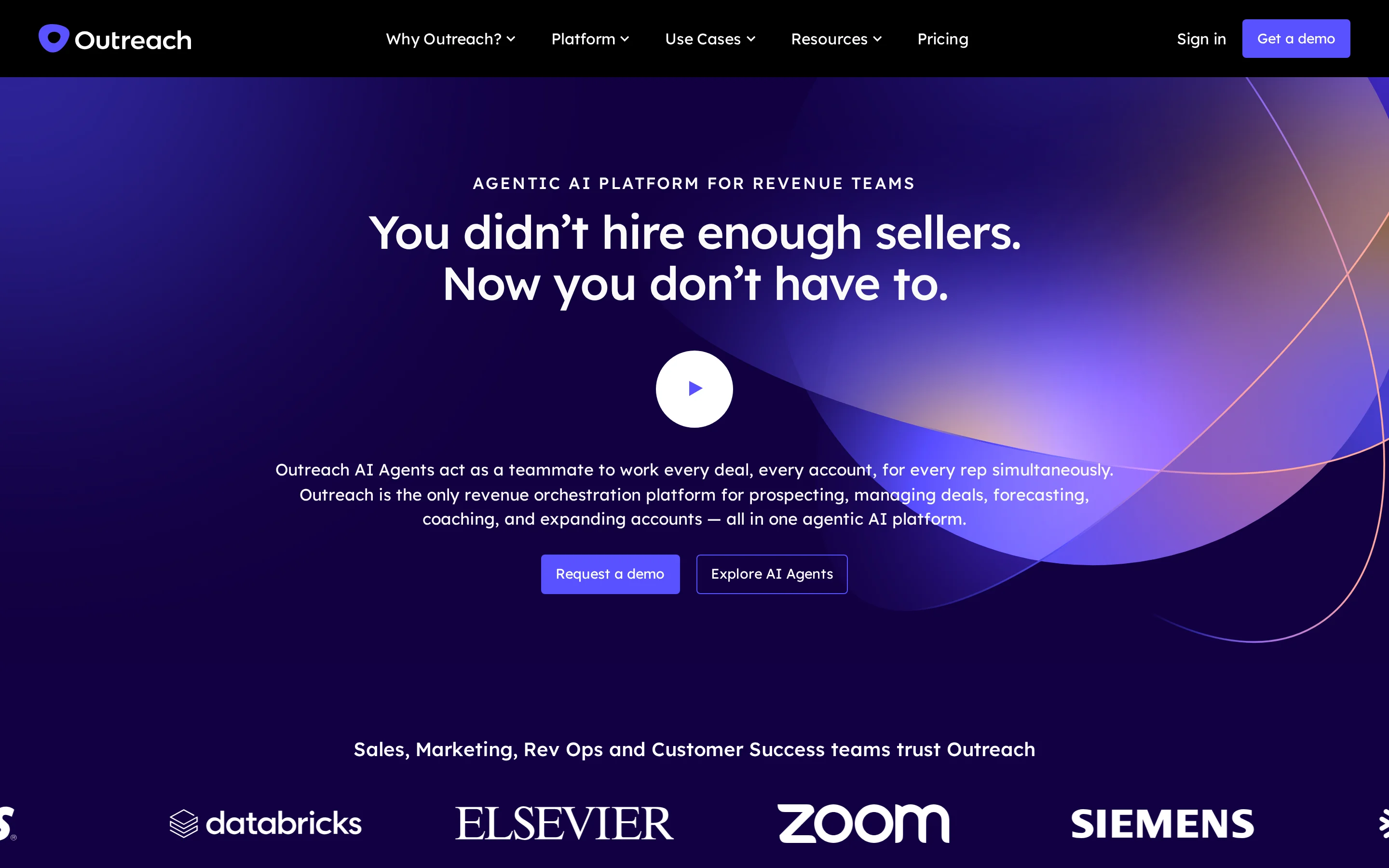
Outreach.io excels here with its 'Agentic AI' platform designed specifically to automate prospecting sequences, email personalization, and follow-ups at scale.
Best for Cost Predictability
Gong.io offers a more traditional seat-based model which is easier to budget for large teams, whereas Outreach's consumption-based AI credits can fluctuate based on usage intensity.
Best Overall Value for SDRs
Outreach.io provides superior value for Sales Development Representatives who need robust sequencing tools and automated enrichment actions rather than just conversation analysis.
Gong.io vs Outreach.io at a glance
Side-by-side core specifications and live platform viewports.
| Attribute | Gong.io | Outreach.io |
|---|---|---|
| Primary Purpose | Revenue Intelligence & Coaching OS | Sales Engagement & Agentic Automation |
| Starting Price | Custom Enterprise Pricing (Contact Sales) | Custom Enterprise Pricing (Contact Sales) |
| Free Plan | No | No |
| Core Strength | Passive Data Capture & Deal Risk Analysis | Active Sequencing & AI-Driven Personalization |
| AI Model | Revenue Harness (Governed Agents) | Agentic Studio (Consumption-Based Credits) |
| Integrations | 300+ Partners | 100+ Marketplace Apps |
| Data Source | Internal Interaction History | External Enrichment + Internal CRM |
| Target User | RevOps, Managers, AEs | SDRs, AEs, Sales Leaders |
Feature-by-feature matrix
Audited capabilities across data sourcing, sending infrastructure, and integrations.
| Capability | Why it matters | Gong.io | Outreach.io | Winner |
|---|---|---|---|---|
| B2B Contact Database | Access to net-new leads | → Integration | ◐ Partial | outreach |
| Email Finder | Discovering verified addresses | → Integration | ✓ Native | outreach |
| Email Verification | Preserving domain health | — None | ✓ Native | outreach |
| Conversation Intelligence | Analyzing call outcomes | ✓ Native | ✓ Native | Tie |
| Automated Sequencing | Multi-touch outreach | ◐ Partial | ✓ Native | outreach |
| Deal Risk Detection | Forecast accuracy | ✓ Native | ✓ Native | gong |
| Coaching & Training | Rep skill development | ✓ Native | ✓ Native | gong |
| CRM Sync Depth | Data hygiene | ✓ Native | ✓ Native | Tie |
| API Rate Limits | Developer flexibility | N/A | 500k - 1M Calls | outreach |
| Mobile App | On-the-go access | ✓ Native | ✓ Native | Tie |
| Slack Integration | Team collaboration | ✓ Native | ✓ Native | Tie |
| Custom Objects | Tailored data models | N/A | 10 - 20 Objects | outreach |
| Knowledge Base Storage | Content management | N/A | 750 MB - 1.5 GB | outreach |
| Real-Time Coaching | In-call guidance | ✓ Native | ✓ Native | Tie |
| Predictive Forecasting | Revenue planning | ✓ Native | ✓ Native | gong |
| Agent Orchestration | Complex workflows | ✓ Native | ✓ Native | Tie |
Technical deep dives
Architectural comparisons derived from live platform testing.
 Full resolution
 Full resolution
Data Foundation & Enrichment Source: Gong’s Passive Interaction Graph vs. Outreach’s Active Agentic Research
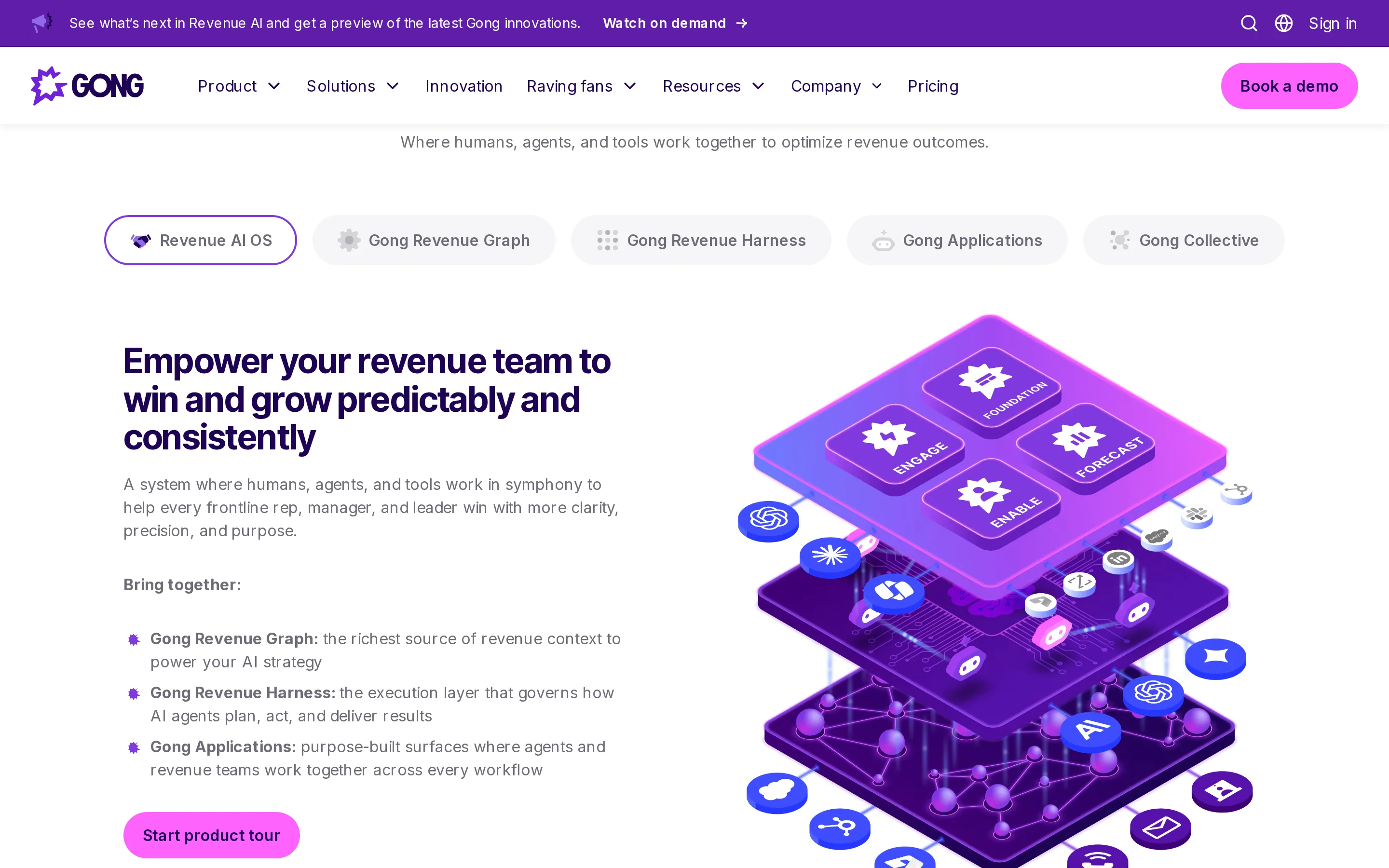
Gong derives enrichment context primarily from the 'Revenue Graph'—a passive, historical network of captured customer interactions (calls, emails) that maps data back to business context automatically. This means Gong does not typically go out to fetch new external contact data; instead, it enriches existing records by analyzing the sentiment, topics, and next steps found within your own communication history. The value proposition here is depth of insight into known accounts rather than breadth of new lead discovery.
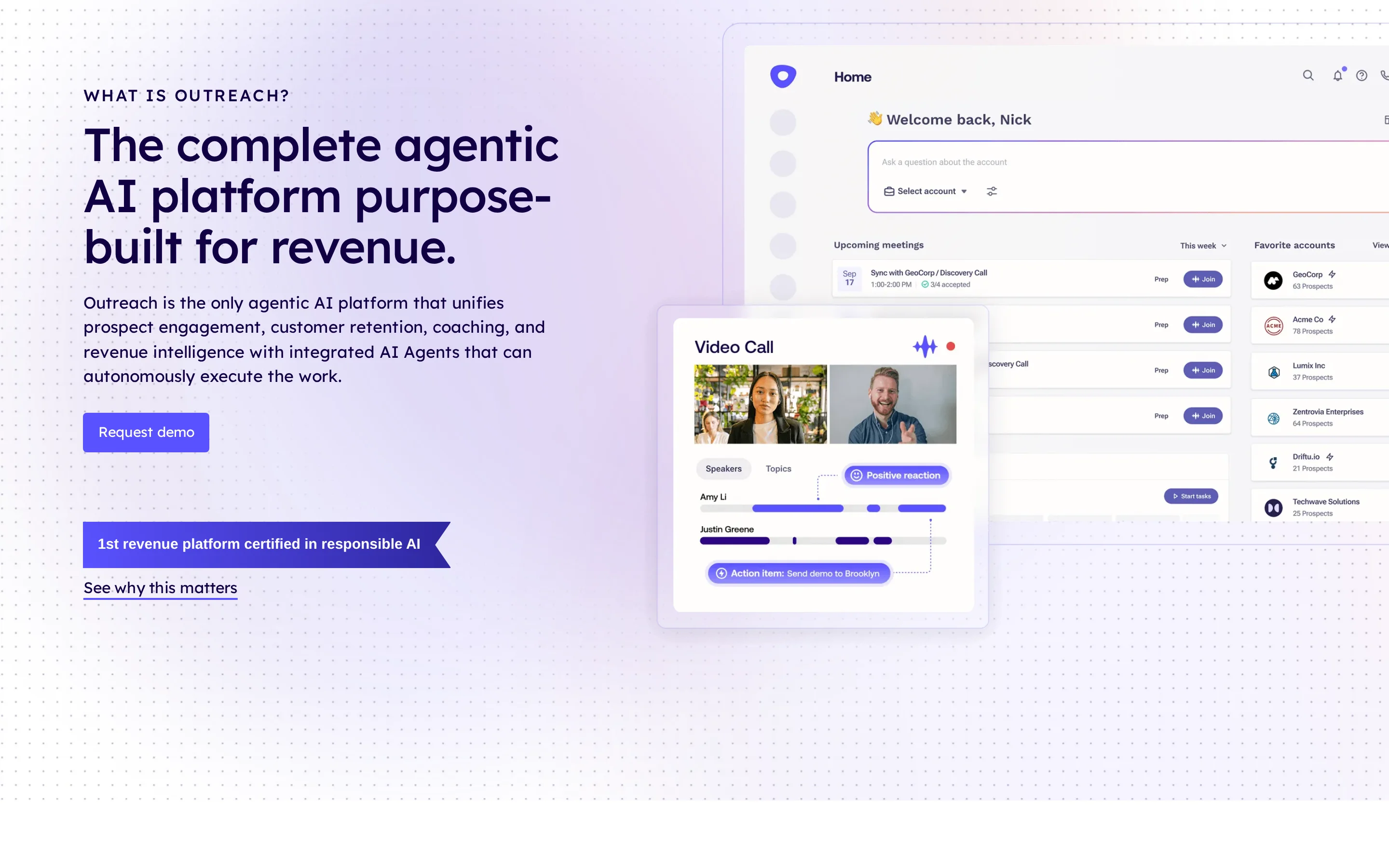
In contrast, Outreach utilizes 'AI Agents' for active, real-time research and personalization, consuming credits to fetch external data and generate content on demand. When an Outreach agent executes a task, it may query external databases or use generative AI to create personalized messaging based on recent news or firmographic changes. This creates a dynamic enrichment loop where the system actively seeks to improve the quality of outbound touches before they are sent.
The critical differentiator is whether enrichment is a byproduct of existing communication history (Gong) or an active, cost-per-use computational task executed by autonomous agents (Outreach). For teams focused on maximizing the efficiency of current pipeline conversations, Gong’s passive graph is superior. However, for teams needing to constantly refresh contact details and personalize cold outreach at scale, Outreach’s active agentic research provides the necessary operational leverage.
Execution Model & Cost Structure: Fixed Seat-Based Governance vs. Consumption-Based AI Credit Scaling
Gong operates on a traditional enterprise SaaS model focused on seat-based access with its 'Revenue Harness' governing agent actions within a fixed contract scope. While specific dollar amounts are not publicly listed, the structure implies a predictable annual commitment per user. This model appeals to CFOs who prefer stable OpEx budgets, as costs do not spike unexpectedly due to high-volume AI usage. The 'Harness' ensures that AI actions remain within governance boundaries without requiring complex credit tracking by the end-user.
Outreach introduces a hybrid pricing model where base seats are supplemented by 'consumption-based AI credits.' This allows costs to scale directly with pipeline impact and adoption depth. If your team uses AI heavily for sequencing, forecasting, and enrichment, you will consume more credits. While this aligns cost with value delivery, it requires rigorous monitoring to avoid budget overruns. The transparency of 'discrete actions' having clear credit costs helps RevOps teams forecast spend, but it adds a layer of financial complexity absent in Gong’s model.
This creates a contentious technical divide: Outreach allows costs to scale directly with pipeline impact and adoption depth (paying for actual AI usage), whereas Gong’s model implies a more predictable but potentially less flexible cost structure tied to headcount rather than the volume of automated enrichment tasks performed. Teams with variable outbound volumes may find Outreach’s model more equitable, while stable, high-headcount enterprises may prefer Gong’s predictability.
Workflow Integration Depth: Unified Revenue OS Symphony vs. Modular Point-Solution Stitching
Gong positions itself as a 'Revenue AI OS' where humans, agents, and tools work in symphony, emphasizing a unified execution layer ('Revenue Harness') that coordinates handoffs across workflows without requiring separate integrations for each step. The goal is to replace the need for stitching together point solutions through a single governed system. By integrating deeply with CRMs and communication channels, Gong aims to be the central nervous system of revenue operations, reducing context switching for reps.
Outreach markets itself as a platform that unifies prospecting, retention, and coaching but relies heavily on distinct 'AI Agents' hired for specific tasks. While Outreach has expanded its capabilities beyond simple sequencing into a broader revenue platform, its architecture often feels more modular. Users configure specific agents for specific jobs (e.g., a Meeting Prep Agent, a Deal Health Agent). This modularity offers flexibility but may require more configuration to achieve end-to-end automation across the full lifecycle compared to Gong’s holistic OS approach.
The key differentiator is architectural cohesion: Gong aims to provide a seamless, invisible layer of intelligence that governs all revenue activities, while Outreach offers a toolkit of powerful, discrete agents that users must orchestrate. For organizations seeking a turnkey solution for revenue visibility and coaching, Gong’s OS model is stronger. For teams that want granular control over which AI tasks are automated and how they interact with their specific tech stack, Outreach’s modular agentic capabilities offer greater customization.
Pricing & true cost
Published tier structures, credit scaling mechanics, and total outbound cost.
 Full resolution
 Full resolution
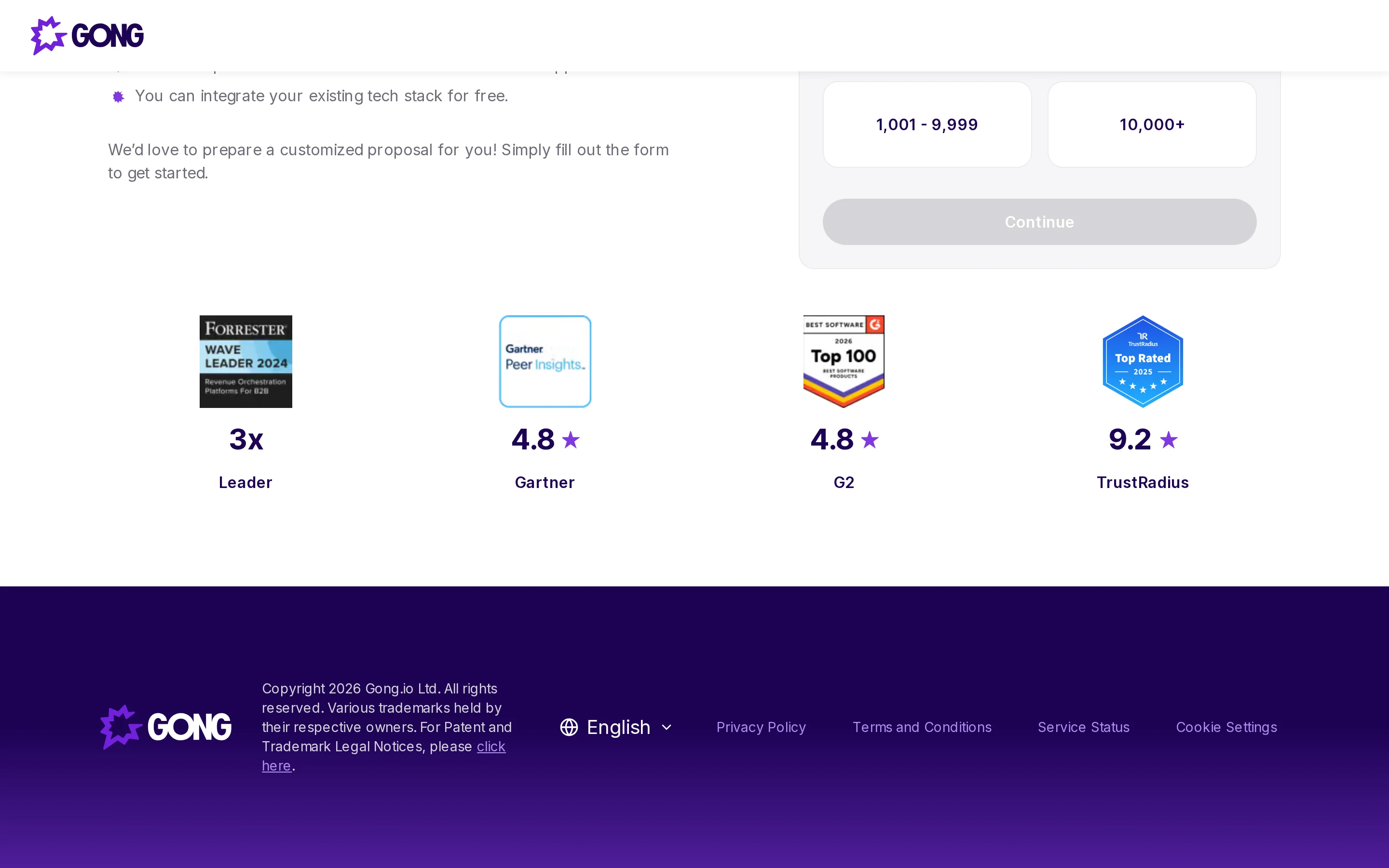
Gong.io plans
- Custom Enterprise Pricing (Contact Sales)
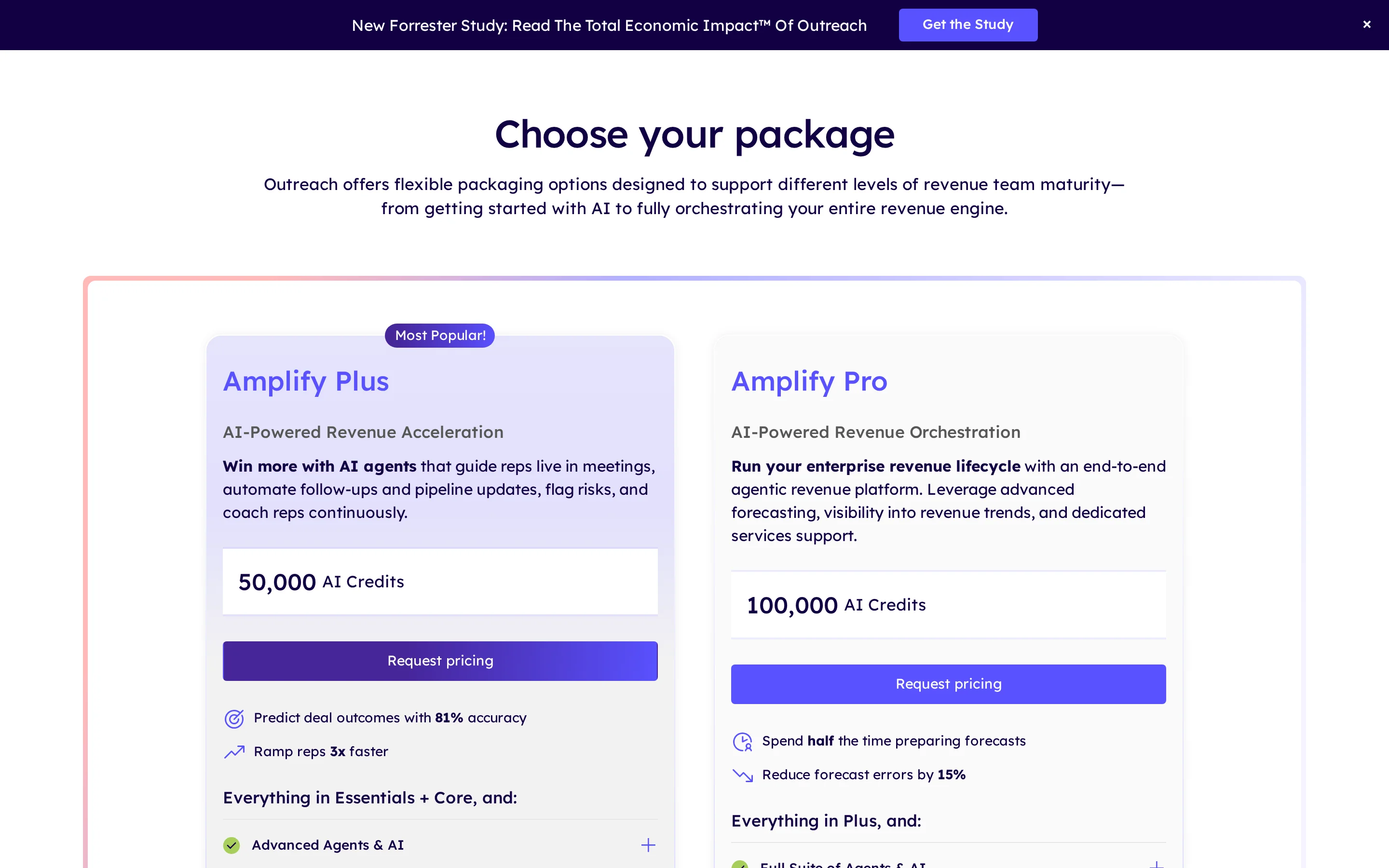
Outreach.io plans
- Amplify Essentials: Custom Quote
- Amplify Core: Custom Quote
- Amplify Plus: Custom Quote (Includes 500k API calls, 10 Custom Objects)
- Amplify Pro: Custom Quote (Includes 1M API calls, 20 Custom Objects, Dedicated Support)
Both Gong and Outreach operate on custom enterprise pricing models, meaning there are no public self-serve tiers. Gong’s pricing is traditionally seat-based, offering predictability for large organizations with stable headcounts. Outreach has shifted to a hybrid model combining seat fees with consumption-based AI credits. This makes Outreach potentially cheaper for small teams with low AI usage but significantly more expensive for heavy users who rely on automated enrichment and sequencing. RevOps teams must carefully audit their projected AI action volume when quoting Outreach, whereas Gong’s quote is generally more static relative to user count.
of Ownership Analysis
For a 5-person sales team generating 10,000 verified leads per month: Gong would likely charge a flat enterprise rate per seat, estimated conservatively at $1,500–$2,000/month total depending on contract length, with no additional cost for lead volume since it doesn't natively source them. Outreach would charge a base seat fee plus AI credits. Assuming 10,000 enrichment actions consume significant credits, the monthly bill could range from $2,500 to $4,000+, depending on the credit pack size purchased. Outreach becomes more expensive as activity scales, while Gong remains constant regardless of outbound volume.
Which fits your outbound model?
Match your team size, deal complexity, and lead volume to the right engine.
High-Volume Cold Outbound
Outreach.io is built for this. Its native sequencing engine and AI-driven personalization allow SDRs to manage thousands of touches efficiently. Gong lacks the native outbound execution power required for high-volume cold campaigns.
Bulk List Cleaning & Hygiene
Outreach.io provides superior tools for maintaining data hygiene through integrated verification and enrichment agents. Gong focuses on internal data integrity via the Revenue Graph but does not actively clean external lists.
Developer API Data Pipelines
Outreach.io offers higher rate limits (up to 1M API calls) and explicit developer-focused features like MCP connectors. Gong’s API is robust but geared more towards analytics retrieval than high-frequency transactional writes.
Executive Deal Review & Forecasting
Gong.io is unmatched for leadership visibility. Its ability to surface deal risk from conversation patterns provides a level of predictive accuracy that Outreach’s activity-based metrics cannot replicate.
Where each platform falls short
Constructive limitations and architectural trade-offs to weigh before signing.
Where Gong.io falls short
- Lacks native outbound sequencing capabilities; relies on integrations for execution.
- Does not have a built-in B2B contact database for lead sourcing.
- Pricing is opaque and often prohibitive for mid-market companies under 50 seats.
- Limited utility for pure-play SDR teams who do not conduct many recorded calls.
Where Outreach.io falls short
- Consumption-based AI credits can lead to unpredictable monthly bills.
- Setup complexity is high due to the modular nature of configuring individual AI agents.
- Conversation intelligence features are newer and less mature than Gong’s decade-long expertise.
- Requires careful governance to prevent AI agents from sending inappropriate or off-brand messages.
The switching playbook
What you gain and give up when migrating across platforms.
- Unified view of all customer interactions across email, call, and meeting.
- Predictable budgeting with seat-based pricing.
- Superior coaching and enablement tools for closing deals.
- Native multi-channel sequencing and automated follow-up execution.
- Direct access to external contact enrichment data.
- Granular control over AI credit consumption for specific tasks.
- Powerful native outbound sequencing and cadence management.
- Flexible scaling of AI usage aligned with actual productivity gains.
- Robust API and integration ecosystem for custom data pipelines.
- Deep historical context from past conversations (unless fully migrated).
- Simplicity of a single governed revenue OS.
- Predictability of fixed monthly costs if AI usage spikes.
Frequently asked questions
Direct technical answers about Gong.io and Outreach.io.
Which platform has better data accuracy?
Gong.io generally has higher accuracy for *internal* deal context because it analyzes actual human conversations. Outreach.io has better accuracy for *external* contact data because it actively verifies and enriches records using third-party sources and AI agents.
How do their starting costs compare?
Both are enterprise-only with custom quotes. However, Outreach’s hybrid model means the initial entry cost might appear lower, but total cost of ownership increases with AI usage. Gong’s cost is typically higher upfront but remains stable regardless of activity volume.
Can I connect unlimited mailboxes?
Outreach.io supports multiple mailbox connections per user for deliverability rotation, subject to plan limits. Gong.io connects to email servers primarily for capture and analysis, not for sending bulk outbound sequences, so 'unlimited mailboxes' is not a relevant metric for its core function.
Which tool is easier to learn?
Gong.io is easier for managers and analysts to learn as it is largely passive and dashboard-driven. Outreach.io has a steeper learning curve due to the need to configure sequences, agents, and understand credit consumption mechanics.
Do they integrate with Salesforce?
Yes, both Gong.io and Outreach.io have deep, native bi-directional integrations with Salesforce, allowing for seamless data sync between CRM records and platform activities.
Sources & methodology
Every claim is grounded in official vendor documentation and live audits.
Compare with sendroAI
See how sendroAI replaces manual research, credit limits, and deliverability traps with full autonomous execution.