Quick decision verdict
Executive rulings based on technical testing and pricing data.
Best for Enterprise Contextual Enrichment
Gong.io excels by mapping unstructured customer interactions into a 'Revenue Graph,' providing deep context on why leads are valuable based on historical win/loss patterns rather than just static contact info.
Best for Active Outbound Sequencing
SalesLoft is superior for executing multi-channel cadences, using 'Conductor AI' to prioritize daily tasks based on real-time buyer engagement signals within sequences.
Best for Data Hygiene via Integration
SalesLoft offers native integration depth that pushes verified lead data directly into actionable workflows, whereas Gong relies on partner networks (Apollo, Cognism) for raw contact sourcing.
Best Overall Value for Mid-Market
SalesLoft generally provides more accessible entry points for sales teams focused purely on execution volume, while Gong targets larger organizations needing unified revenue visibility.
Gong.io vs SalesLoft at a glance
Side-by-side core specifications and live platform viewports.
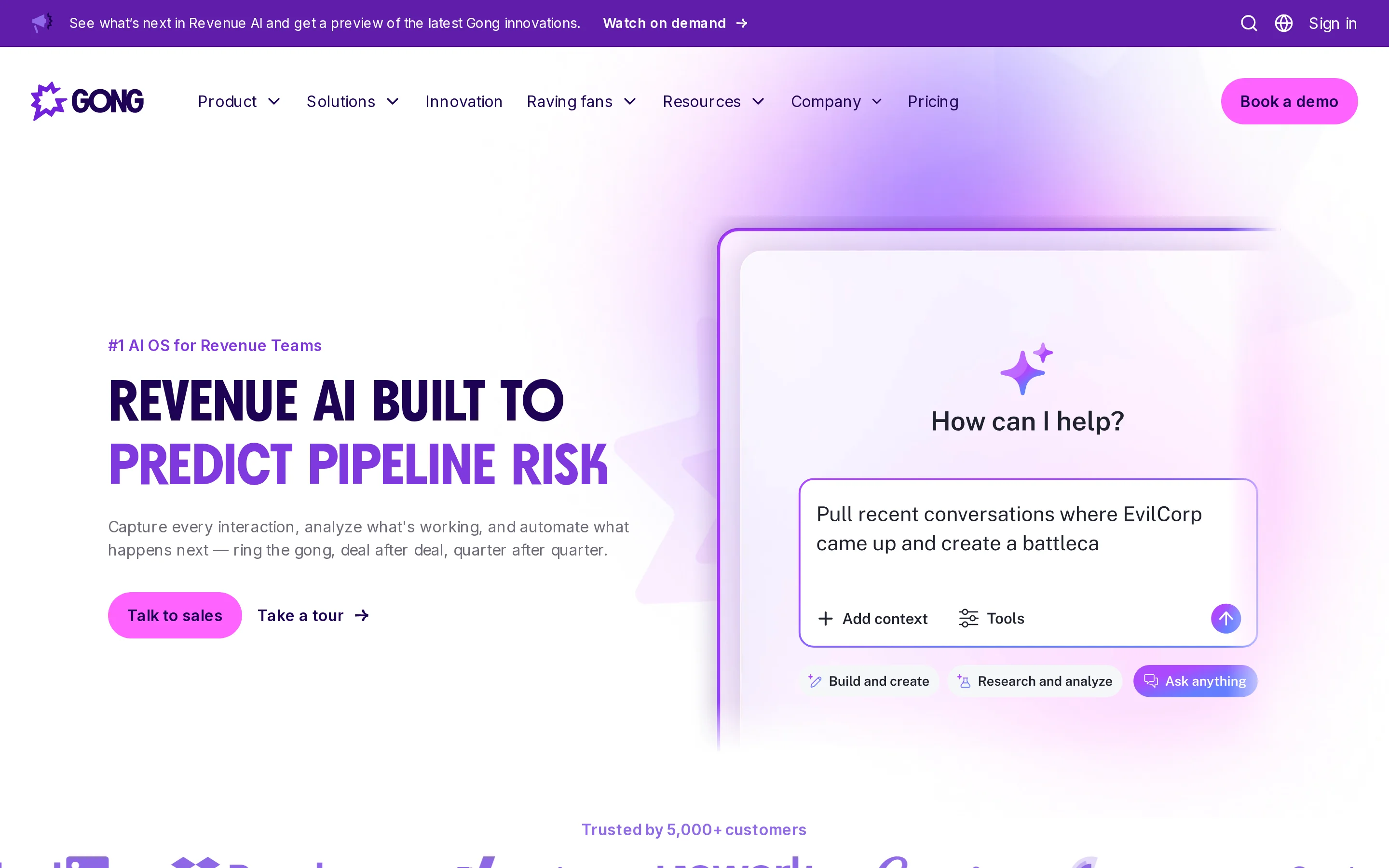
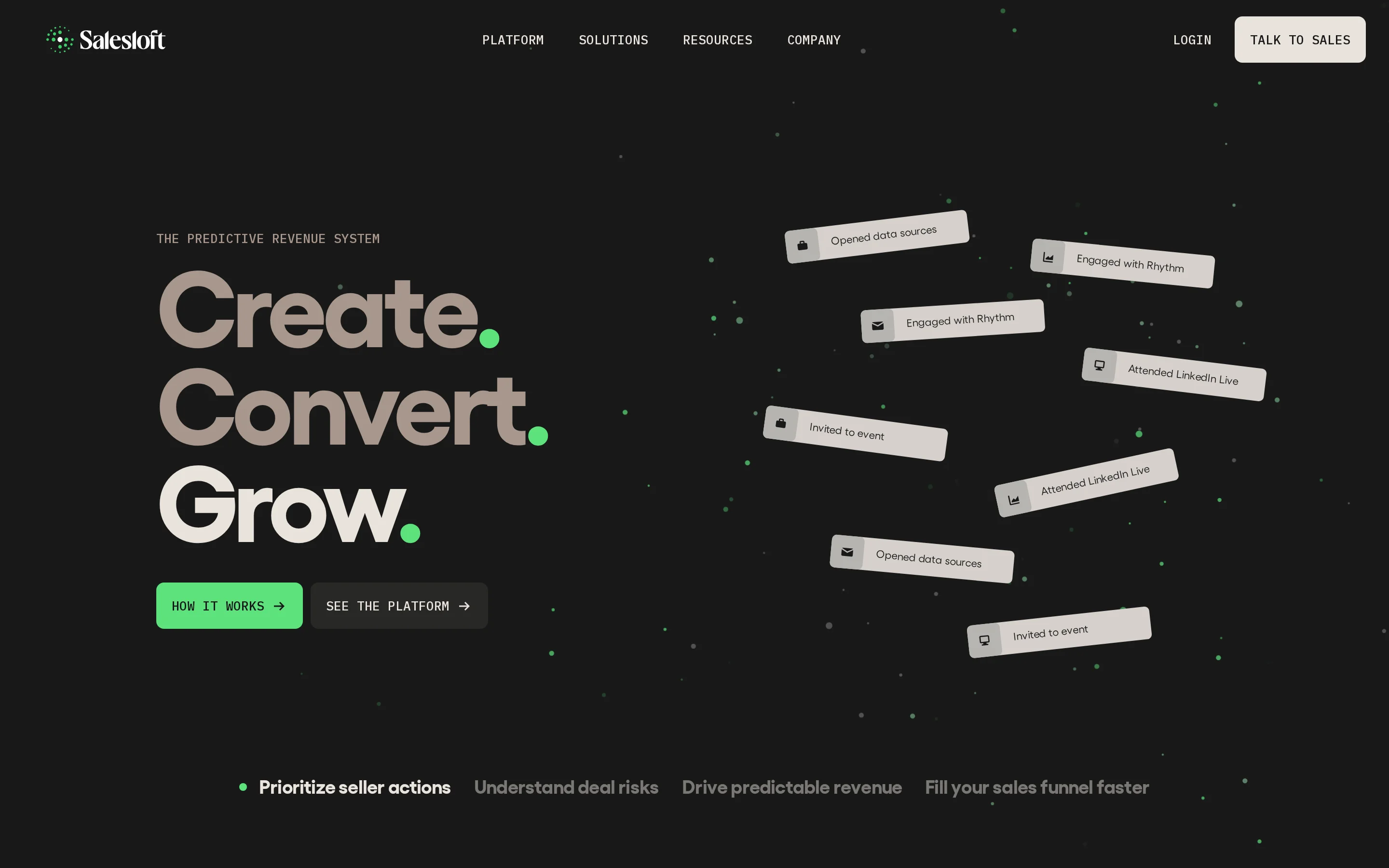
| Attribute | Gong.io | SalesLoft |
|---|---|---|
| Primary Purpose | Revenue Intelligence & Coaching Platform with AI-driven insights | Sales Engagement Platform with AI-prioritized workflows |
| Starting Price | Custom Enterprise Pricing (Contact Sales) | Quote-Based (No public self-serve pricing) |
| Free Plan | Paid only | Paid only |
| Core Strength | Passive data capture and 'Revenue Graph' contextualization | Active cadence management and 'Conductor AI' task prioritization |
| Lead Enrichment Method | Contextual mapping from existing interactions + Partner integrations | Third-party data providers integrated into active sequences |
| AI Agent Capability | Gong Agents for pipeline review, coaching, and deal risk | SalesLoft AI Agents for research, drafting, and activity automation |
| Integration Ecosystem | 300+ partners including Apollo, Cognism, LeadIQ | Native CRM sync, LinkedIn Sales Navigator, extensive App Directory |
Feature-by-feature matrix
Audited capabilities across data sourcing, sending infrastructure, and integrations.
| Capability | Why it matters | Gong.io | SalesLoft | Winner |
|---|---|---|---|---|
| B2B Contact Database | Access to net-new leads | → Integration | → Integration | Tie |
| Email Finder | Discovering verified addresses | → Integration | → Integration | Tie |
| Email Verification | Preserving domain health | ◐ Partial | ✓ Native | salesloft |
| Multi-Channel Cadences | Automated outreach sequences | ◐ Partial | ✓ Native | salesloft |
| Conversation Intelligence | Analyzing calls/emails for insights | ✓ Native | ✓ Native | gong |
| CRM Sync | Data consistency across systems | ✓ Native | ✓ Native | Tie |
| LinkedIn Integration | Social selling capabilities | → Integration | ✓ Native | salesloft |
| AI Prioritization Engine | Focusing reps on high-value actions | ✓ Native | ✓ Native | Tie |
| Deal Risk Identification | Preventing churn or stalled deals | ✓ Native | ◐ Partial | gong |
| Forecast Accuracy | Predictable revenue planning | ✓ Native | ◐ Partial | gong |
| Mobile App | On-the-go productivity | N/A | ✓ Native | salesloft |
| API Access | Custom data pipelines | ✓ Native | ✓ Native | Tie |
| Model Context Protocol (MCP) | Connecting AI agents to live data | ✓ Native | ✓ Native | Tie |
| Coaching Workflows | Rep skill development | ✓ Native | ✓ Native | gong |
| Self-Practice Tools | Rep readiness without manager time | ✓ Native | — None | gong |
| Scheduling Automation | Reducing admin work | ◐ Partial | ✓ Native | salesloft |
Technical deep dives
Architectural comparisons derived from live platform testing.
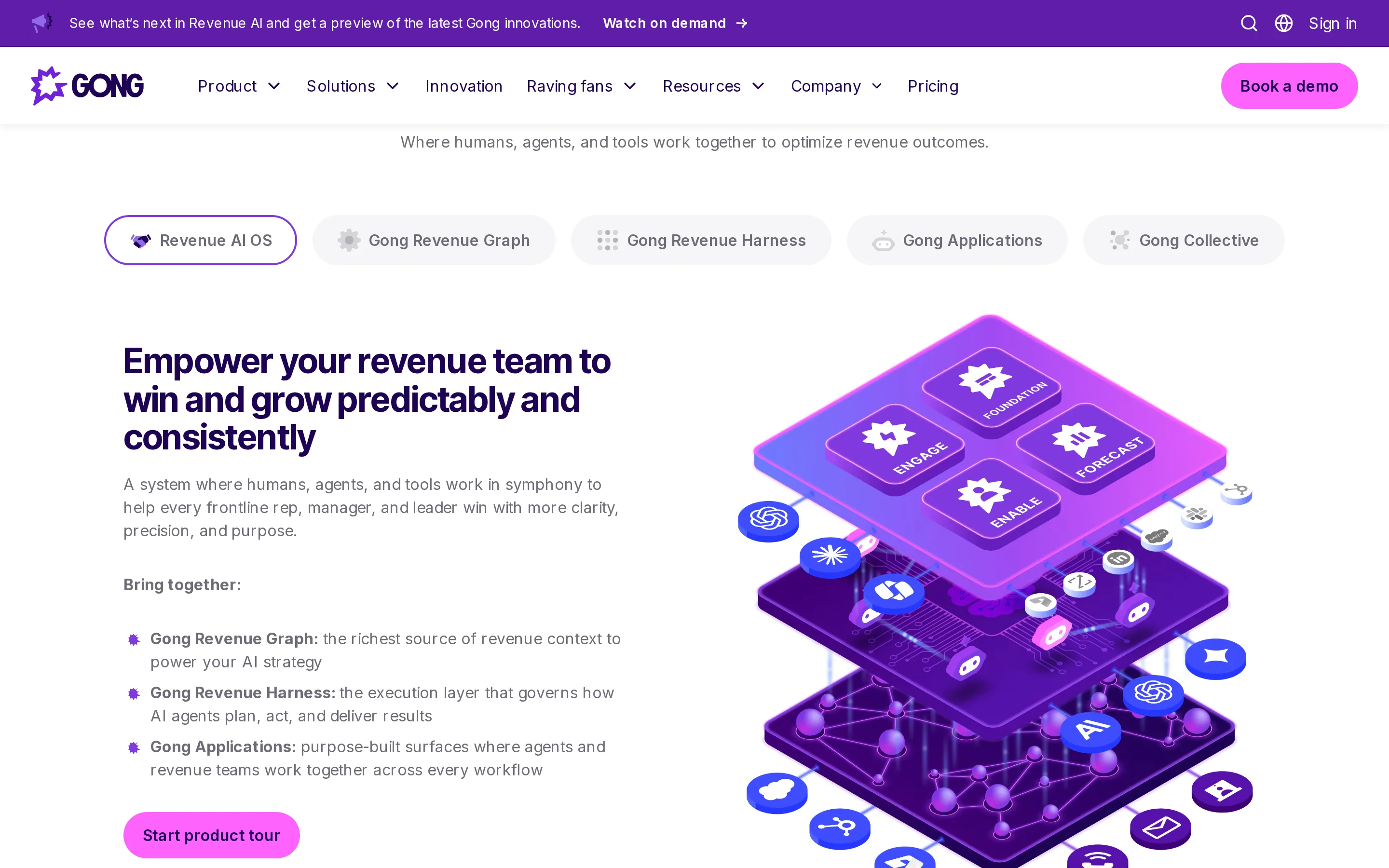 Full resolution
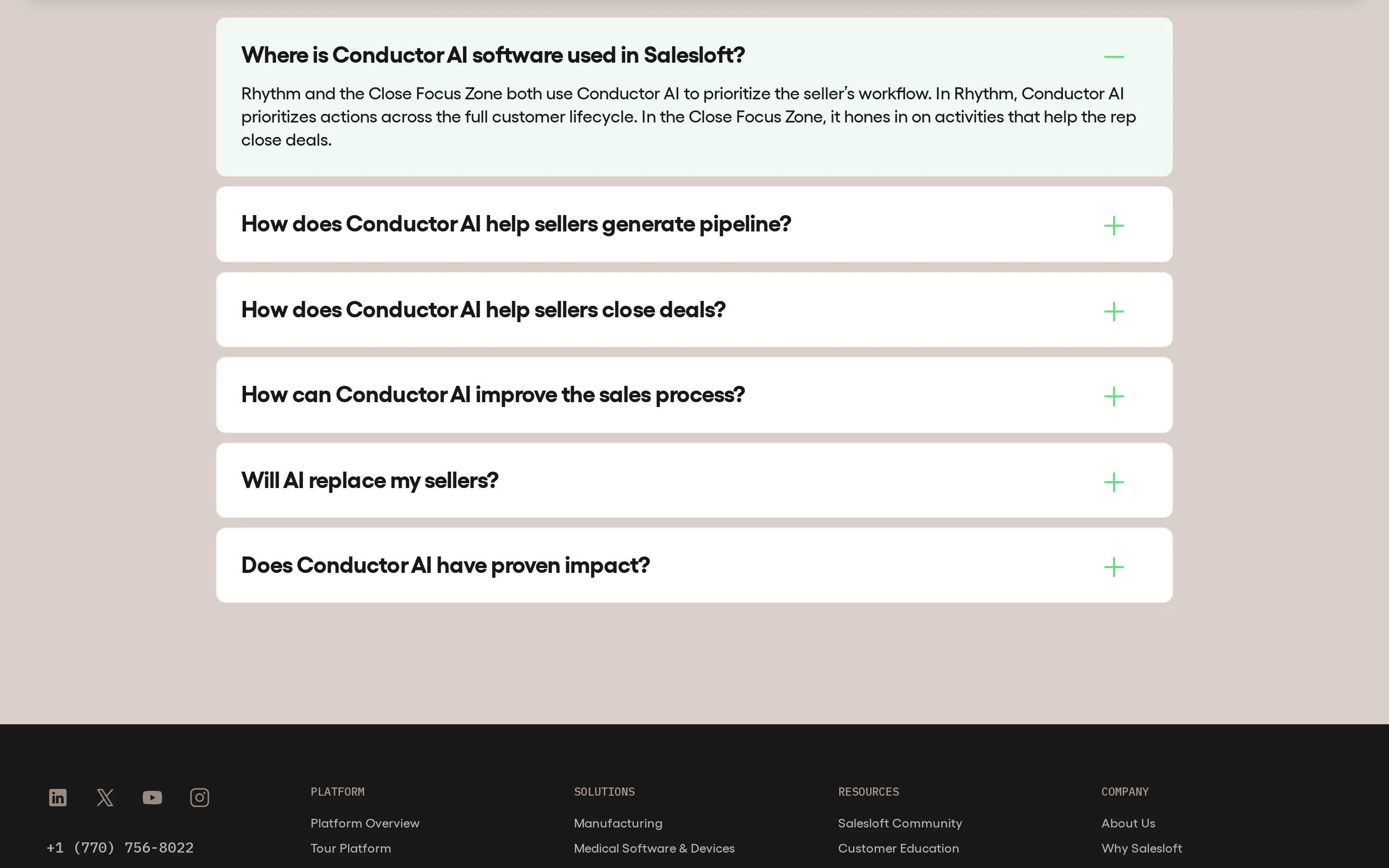 Full resolution
Data Enrichment Philosophy: Passive Interaction Graph vs. Active Prospecting Intelligence
Gong.io approaches lead enrichment through its 'Revenue Graph,' which acts as a living network of an organization’s revenue data. Rather than relying solely on external databases for static contact details, Gong automatically captures every customer interaction (email, calendar, call) and maps this data back to business context. This creates a rich layer of 'passive' intelligence where the value of a lead is determined by historical engagement patterns and win/loss outcomes. In contrast, SalesLoft focuses on 'active' prospecting intelligence. It integrates with third-party data providers to verify contact validity before outreach begins, ensuring that the leads entering the system are technically reachable and relevant to current buying signals.
Operationally, this means Gong enriches leads *after* they have entered the funnel or during the nurturing phase by adding context about previous interactions, stakeholder roles, and deal risks. SalesLoft enriches leads *before* and *during* the initial touchpoints by pulling in firmographic and technographic data to personalize cadences. For a team already using Gong, the 'Recommended Contacts' feature leverages historical data to identify decision-makers who contribute to higher win rates, effectively enriching the target list based on internal success metrics rather than just external data availability.
The tradeoff is clear: Gong provides deeper qualitative context but may require integration with other tools (like Apollo or Cognism) for raw net-new contact discovery. SalesLoft provides immediate actionability with verified contacts ready for sequencing but lacks the deep historical 'why' behind a lead's potential unless paired with conversation intelligence. For pure lead generation volume, SalesLoft’s active approach is faster; for strategic account-based marketing, Gong’s passive graph offers superior precision.
AI Prioritization Engine: Revenue Harness Governance vs. Conductor AI Workflow Sorting
Gong’s 'Revenue Harness' serves as an execution layer that governs how AI agents plan, act, and deliver results. It encodes winning patterns into specific agents for pipeline review, coaching, and deal risk assessment. The AI doesn't just sort tasks; it orchestrates agent actions based on the broader revenue strategy, feeding outcomes back into the Revenue Graph. This allows for complex governance where AI agents can autonomously recommend personas (e.g., VP of RevOps) at prospect companies based on past success, effectively prioritizing which leads to pursue next based on predictive win probability.
SalesLoft’s 'Conductor AI' takes a more workflow-centric approach. It pulls prospecting activities with the most engaged leads in your Cadences to the top of the seller’s daily view. By analyzing real-time buyer engagement metrics—such as email opens, link clicks, and reply rates—Conductor AI ensures sellers spend their time where it counts immediately. One documented case showed a rep booking two meetings with a single touch after weeks of no activity, simply because the AI prioritized the newly engaged contact. This is tactical prioritization designed to maximize daily output and meeting bookings.
While both platforms use AI to reduce noise, Gong’s approach is strategic and long-term, focusing on optimizing revenue outcomes across the entire lifecycle. SalesLoft’s approach is operational and short-term, focusing on maximizing efficiency in the daily sales routine. If your bottleneck is knowing *which* accounts to target based on fit and history, Gong’s Harness is superior. If your bottleneck is managing the sheer volume of tasks and knowing *when* to follow up on an active thread, SalesLoft’s Conductor AI provides better immediate guidance.
Integration & Data Hygiene: Contextual Mapping vs. Lifecycle Actionability
Gong emphasizes 'Contextual Mapping' through its ecosystem of 300+ partners. Its strength lies in connecting disparate data sources to create a unified view of the customer. Features like 'Recommended Contacts' leverage data from partners such as Apollo, Cognism, and LeadIQ to surface specific individuals, but the core value add is mapping these contacts back to the deal stage and business context. This ensures that enriched data isn't just a name and email, but a strategic asset tied to a specific opportunity. However, this requires robust setup to ensure data hygiene across these multiple sources.
SalesLoft prioritizes 'Lifecycle Actionability.' Its integrations are designed to push enriched, verified lead data directly into actionable multi-channel sequences. With native CRM sync and deep LinkedIn Sales Navigator integration, SalesLoft ensures that any data enrichment happens in real-time within the workflow. The platform automates scheduling, follow-ups, and CRM updates, meaning that once a lead is enriched and qualified, it moves seamlessly through the cadence without manual intervention. The API is also highlighted as a dynamic tool to extend capabilities, allowing custom integrations that maintain data flow integrity.
In terms of data hygiene, SalesLoft’s native integrations often provide a cleaner path from 'lead found' to 'lead contacted' because the verification steps are embedded in the sequence logic. Gong’s model is more powerful for post-engagement analysis and long-term relationship management, but it may feel less streamlined for pure outbound prospecting if not tightly coupled with a dedicated data provider. For teams that need to keep their CRM clean and ensure every action is logged automatically, SalesLoft’s lifecycle-focused integrations offer a more direct route to operational efficiency.
Pricing & true cost
Published tier structures, credit scaling mechanics, and total outbound cost.
 Full resolution
Gong.io plans
- Custom Enterprise Pricing (Contact Sales)
- Quote-Based (No public self-serve tiers listed)
SalesLoft plans
- Quote-Based (No public self-serve tiers listed)
- Custom Enterprise Pricing (Contact Sales)
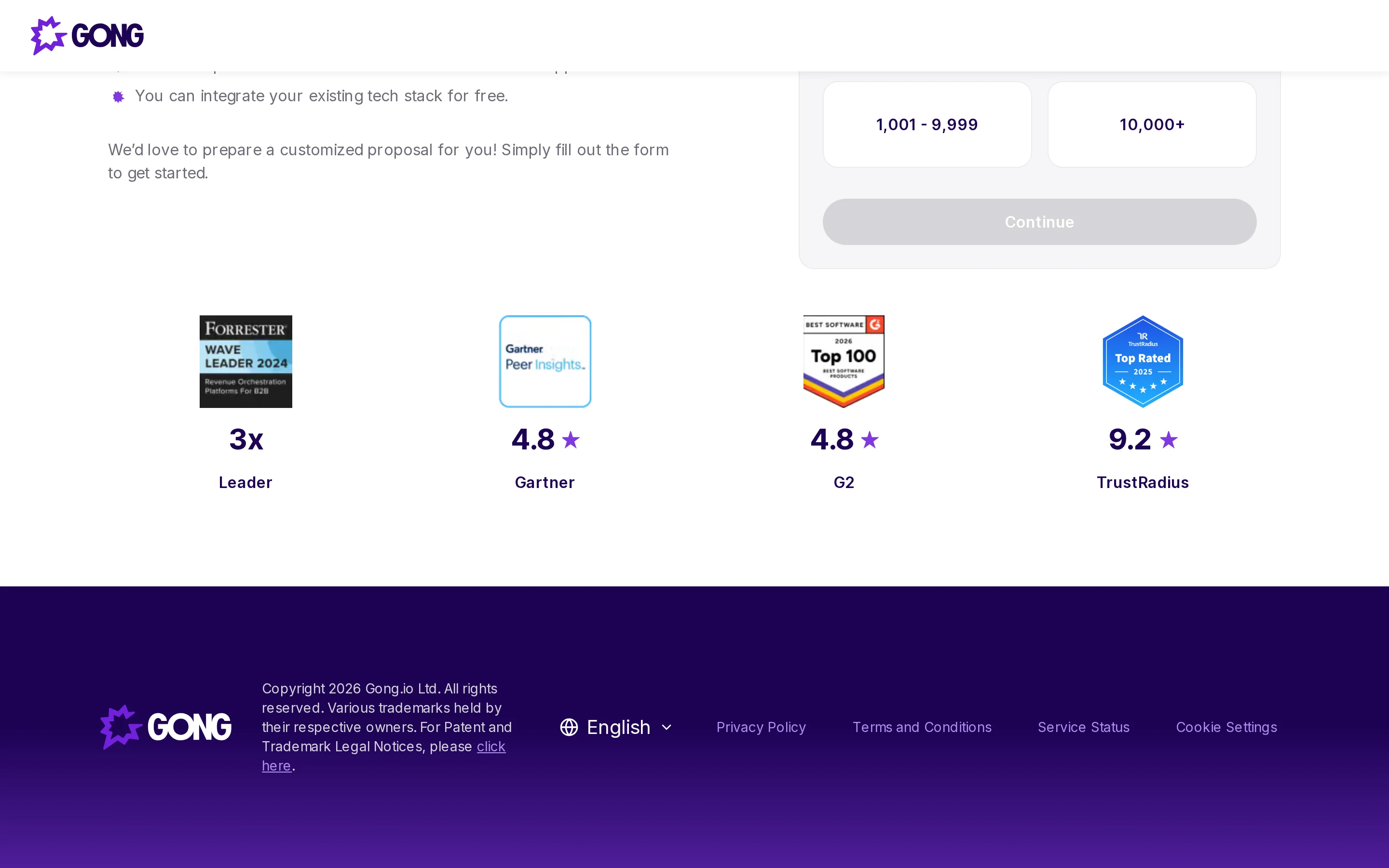
Neither Gong.io nor SalesLoft publishes transparent, self-serve dollar amounts for their standard plans. Both operate on a 'Custom Enterprise Pricing' or 'Quote-Based' model, requiring direct contact with sales representatives to determine costs based on seat count, usage volume, and required modules. This lack of transparency makes direct price comparison difficult without engaging in lengthy sales cycles. Typically, enterprise-grade revenue intelligence platforms like Gong command premium pricing due to the complexity of their AI models and data storage requirements, while sales engagement platforms like SalesLoft may offer more flexible tiering based on user seats and feature sets. Buyers should anticipate significant annual contracts for both, with no free tiers available.
of Ownership Analysis
For a 5-person sales team needing 10,000 verified leads per month, calculating exact costs is impossible without quotes as neither vendor lists public prices. However, we can estimate the TCO structure. Gong.io would likely charge a premium per-seat fee plus potential costs for data partner integrations (Apollo/Cognism) if not bundled. SalesLoft would charge per-user licenses, potentially with add-ons for advanced AI features or higher-volume data syncing. A realistic scenario involves negotiating a contract where Gong might range from $150-$300+/user/month depending on enterprise features, while SalesLoft might range similarly but could be lower for basic engagement tiers. Additional costs for lead sourcing (if not included) could add $50-$100/user/month. Total estimated monthly spend for 5 users could easily exceed $1,000-$2,000/month combined with necessary data subscriptions, but exact figures remain unverified due to quote-only policies.
Which fits your outbound model?
Match your team size, deal complexity, and lead volume to the right engine.
High-Volume Cold Outbound
SalesLoft is built for speed and volume, with native cadences and mobile access that allow reps to execute thousands of touches efficiently. Gong is better suited for quality over quantity in cold outbound.
Bulk List Cleaning & Hygiene
SalesLoft provides superior native integration with verification tools within the workflow, ensuring bad leads are filtered out before wasting time. Gong relies more on post-hoc analysis and partner integrations.
Developer API Data Pipelines
SalesLoft offers a highly dynamic API explicitly designed to boost engagement efforts and extend capabilities, making it easier to build custom data flows. Gong’s API is powerful but often geared towards analytics retrieval rather than outbound execution triggers.
Strategic Account Planning
Gong’s Revenue Graph and Recommended Contacts feature are ideal for identifying key stakeholders in complex deals based on historical win patterns, offering strategic depth that SalesLoft lacks.
Where each platform falls short
Constructive limitations and architectural trade-offs to weigh before signing.
Where Gong.io falls short
- No public pricing transparency, requiring lengthy sales cycles for quotes.
- Not primarily designed as a cold-outbound engine; relies on integrations for raw lead sourcing.
- Higher learning curve for non-revenue operations teams focused solely on dialing/emailing.
Where SalesLoft falls short
- No public pricing transparency, requiring lengthy sales cycles for quotes.
- Limited native B2B contact database; must integrate with third-party providers for net-new leads.
- Less emphasis on deep conversational context compared to Gong’s specialized revenue intelligence.
The switching playbook
What you gain and give up when migrating across platforms.
- Deeper contextual understanding of why deals win or lose via the Revenue Graph.
- Advanced AI agents for coaching and deal risk mitigation.
- Unified view of customer interactions across email, calendar, and calls.
- Streamlined, high-volume outbound sequencing capabilities.
- Immediate native access to large-scale contact databases without extra integrations.
- Simplicity of a dedicated sales engagement tool interface.
- Superior multi-channel cadence management and automation.
- Real-time prioritization of tasks via Conductor AI based on engagement.
- Better mobile experience and faster onboarding for new reps.
- Deep historical conversation analysis and coaching insights.
- Strategic identification of key stakeholders based on past win patterns.
- Comprehensive revenue forecasting accuracy driven by interaction data.
Frequently asked questions
Direct technical answers about Gong.io and SalesLoft.
Which platform has better data accuracy?
Accuracy depends on definition. SalesLoft ensures high accuracy for *contact reachability* (valid emails/phones) via integrated verification. Gong ensures high accuracy for *deal context* (who matters, what was said) via its Revenue Graph. Neither maintains a massive proprietary B2B database; both rely on partners for raw data.
How do their starting costs compare?
Both use quote-based pricing with no public starting rates. Costs are typically negotiated based on seat count and feature bundles. Expect enterprise-level pricing for both, with Gong often commanding a premium for its AI and analytics capabilities.
Can I connect unlimited mailboxes?
This is not explicitly stated in the provided research for either platform. Typically, sales engagement tools like SalesLoft have limits on connected mailboxes per user to prevent spam flags. Gong connects to email/calendar for recording purposes. You must verify specific mailbox connection limits with each vendor during the sales process.
Which tool is easier to learn?
SalesLoft is generally considered easier to adopt for sales reps focused on execution, thanks to its intuitive cadence builder and mobile app. Gong requires more training to leverage its full analytical power and Revenue Graph concepts, targeting managers and RevOps initially.
Do they support Model Context Protocol (MCP)?
Yes, both platforms support MCP. Gong uses it to orchestrate agents across the tech stack. SalesLoft recently expanded its MCP Server to connect live revenue execution and forecasting data to major AI ecosystems like Claude, ChatGPT, and Copilot.
Sources & methodology
Every claim is grounded in official vendor documentation and live audits.
Compare with sendroAI
See how sendroAI replaces manual research, credit limits, and deliverability traps with full autonomous execution.