Quick decision verdict
Executive rulings based on technical testing and pricing data.
Best for Enterprise Revenue Operations
Gong.io is the superior choice for managing existing pipeline, coaching reps, and forecasting using AI-driven insights from customer interactions.
Best for Net-New Lead Sourcing
BuiltWith excels at identifying new prospects based on technology usage, providing massive lists of companies using specific tech stacks.
Best for Data Enrichment & Hygiene
BuiltWith offers deeper firmographic and technographic enrichment capabilities for CRM records compared to Gong's interaction-focused data.
Best Overall Value for SMBs
BuiltWith provides a more accessible entry point with transparent pricing tiers, whereas Gong requires significant enterprise investment.
Gong.io vs BuiltWith at a glance
Side-by-side core specifications and live platform viewports.
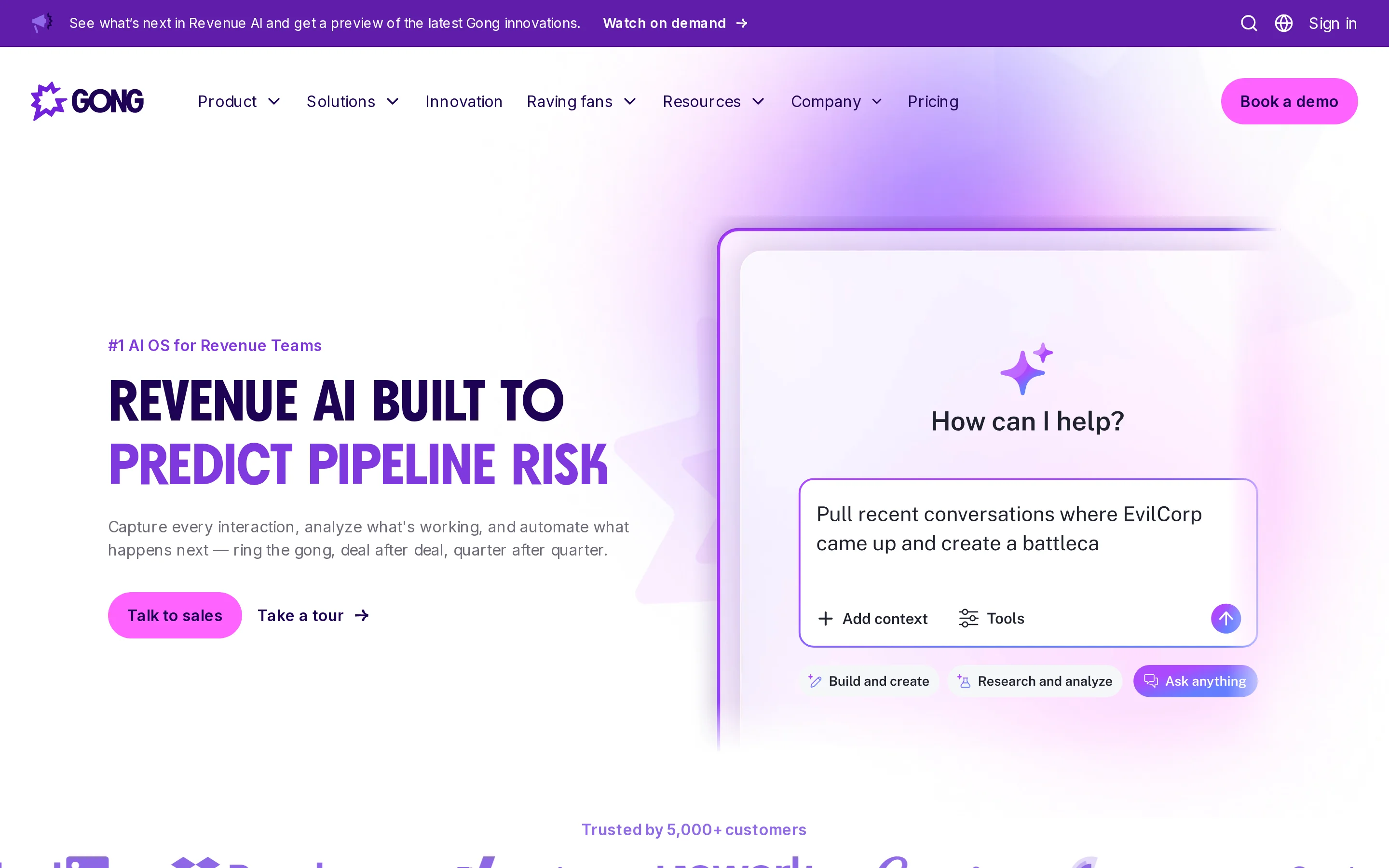
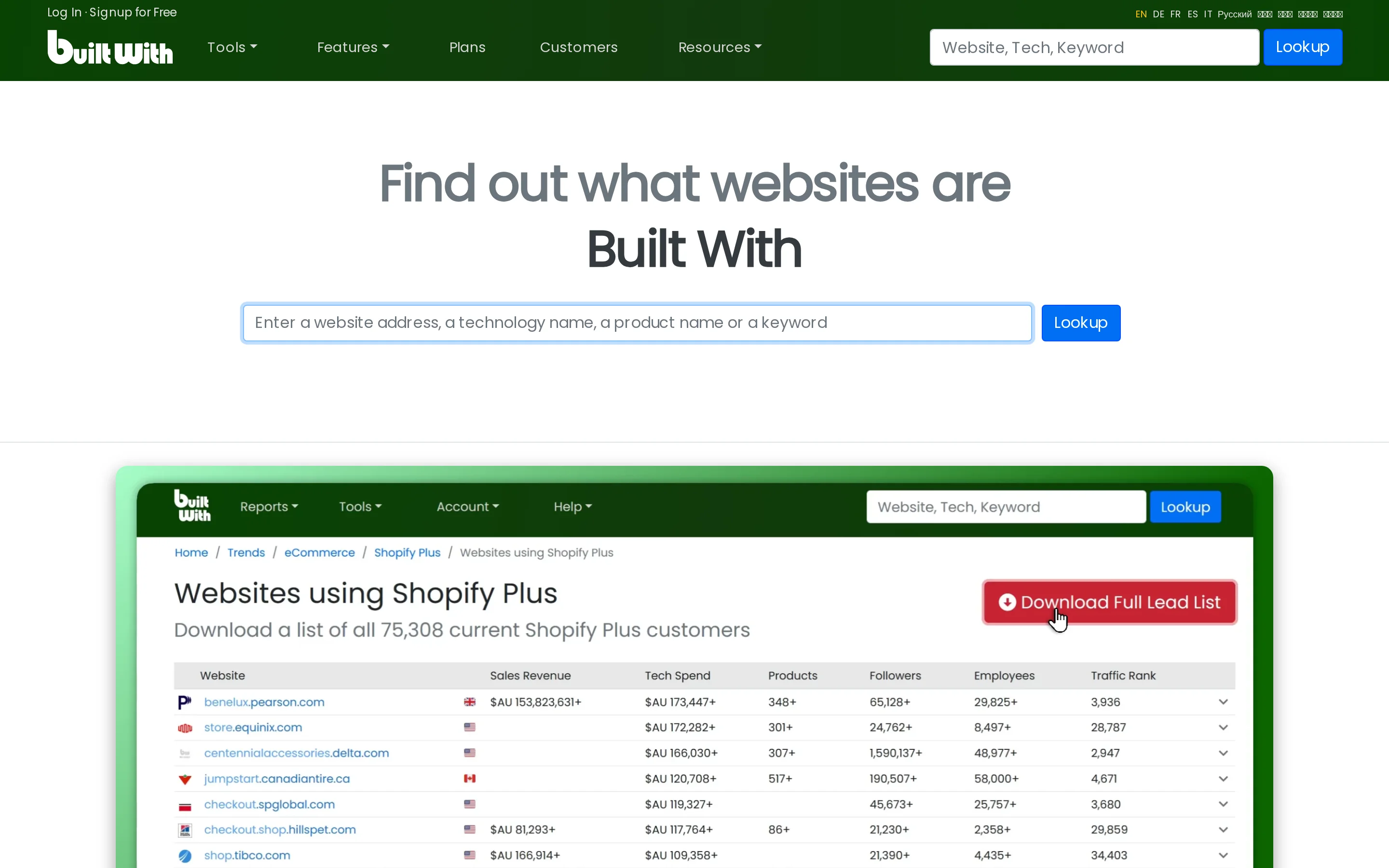
| Attribute | Gong.io | BuiltWith |
|---|---|---|
| Primary Purpose | Revenue Intelligence & Coaching Platform | Technographic & Firmographic Data Provider |
| Starting Price | Custom Enterprise Pricing (Contact Sales) | Basic Plan (Free for individual lookups; Paid tiers available) |
| Free Plan | No (Demo/Quote only) | Yes (Individual site lookups forever) |
| Core Strength | AI Agents for Pipeline Review & Forecasting | Database of 491.9M+ Domains & Tech Usage |
| Data Source | Proprietary Customer Interactions (Calls/Emails) | Public Web Crawling & Indexing |
| Integration Depth | Deep Native CRM Sync (Salesforce/HubSpot) | Bulk Export & API Integrations |
| Target User | RevOps, Sales Managers, CROs | SDRs, Growth Marketers, Data Analysts |
| Key Feature | Gong Revenue Graph & Harness | Predictive Leads & Technology Churn Tracking |
Feature-by-feature matrix
Audited capabilities across data sourcing, sending infrastructure, and integrations.
| Capability | Why it matters | Gong.io | BuiltWith | Winner |
|---|---|---|---|---|
| B2B Contact Database | Access to net-new leads | ◐ Partial | ✓ Native | builtwith |
| Email Finder | Discovering verified addresses | → Integration | ✓ Native | builtwith |
| Email Verification | Preserving domain health | — None | ◐ Partial | builtwith |
| Cold Outreach Sequencing | Automating initial touchpoints | ✓ Native | — None | gong |
| Call Recording & Analysis | Quality assurance and training | ✓ Native | — None | gong |
| Pipeline Forecasting | Revenue predictability | ✓ Native | — None | gong |
| Technographic Data | Identifying tech stack fit | — None | ✓ Native | builtwith |
| Intent Signals | Timing outreach correctly | ✓ Native | ✓ Native | Tie |
| CRM Integration | Workflow efficiency | ✓ Native | ✓ Native | Tie |
| API Access | Custom data pipelines | ◐ Partial | ✓ Native | builtwith |
| Competitor Analysis | Market positioning | ◐ Partial | ✓ Native | builtwith |
| Coaching & Enablement | Rep skill development | ✓ Native | — None | gong |
| Lead Scoring | Prioritizing high-value prospects | ✓ Native | ◐ Partial | gong |
| Data Export Formats | Ease of use in other tools | ◐ Partial | ✓ Native | builtwith |
| Real-time Alerts | Immediate action triggers | ✓ Native | ✓ Native | Tie |
| Historical Data Depth | Trend analysis | ◐ Partial | ✓ Native | builtwith |
| GDPR Compliance Tools | Legal safety | ✓ Native | ✓ Native | Tie |
| User Interface Ease | Adoption speed | ◐ Partial | ✓ Native | builtwith |
Technical deep dives
Architectural comparisons derived from live platform testing.
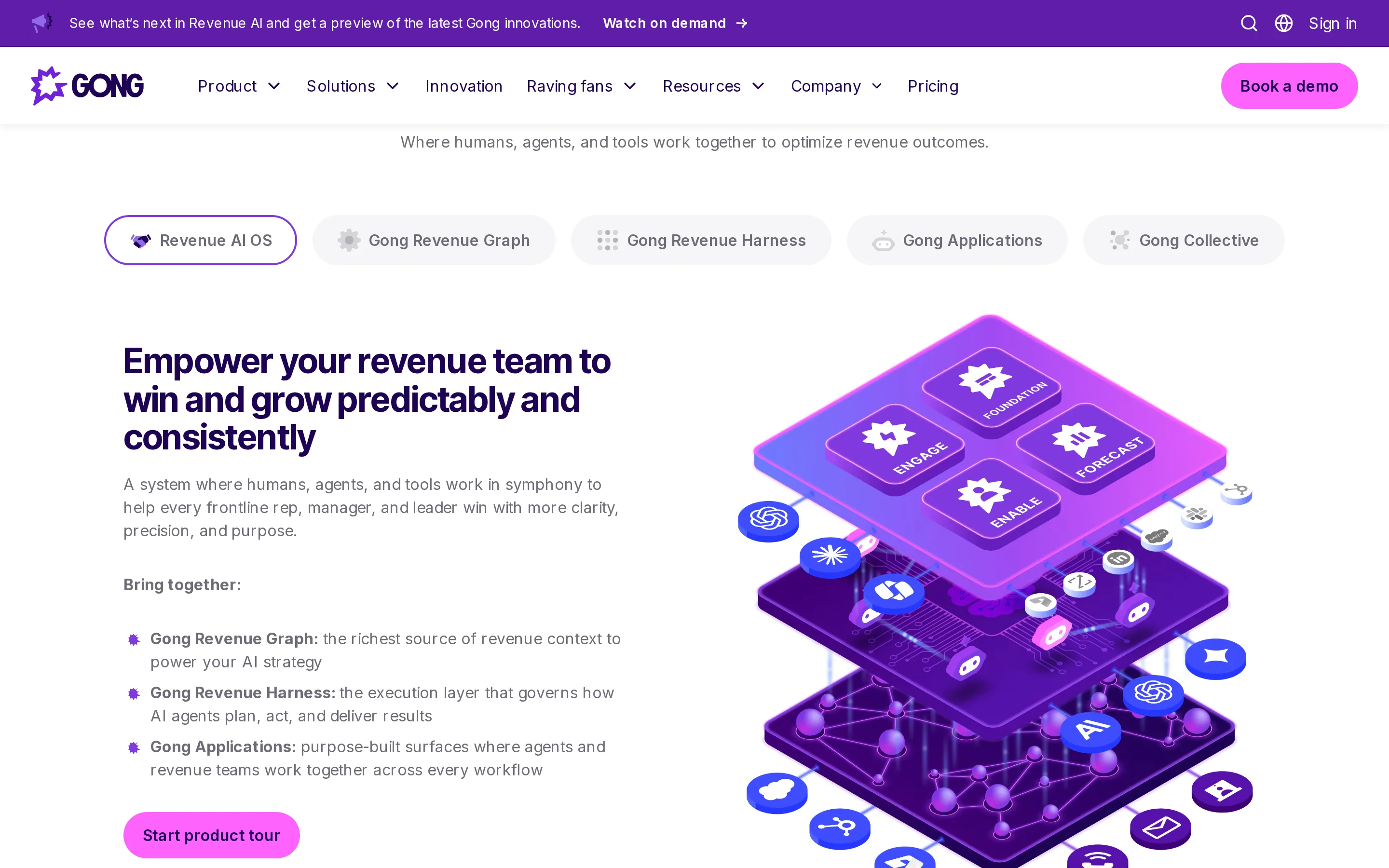 Full resolution
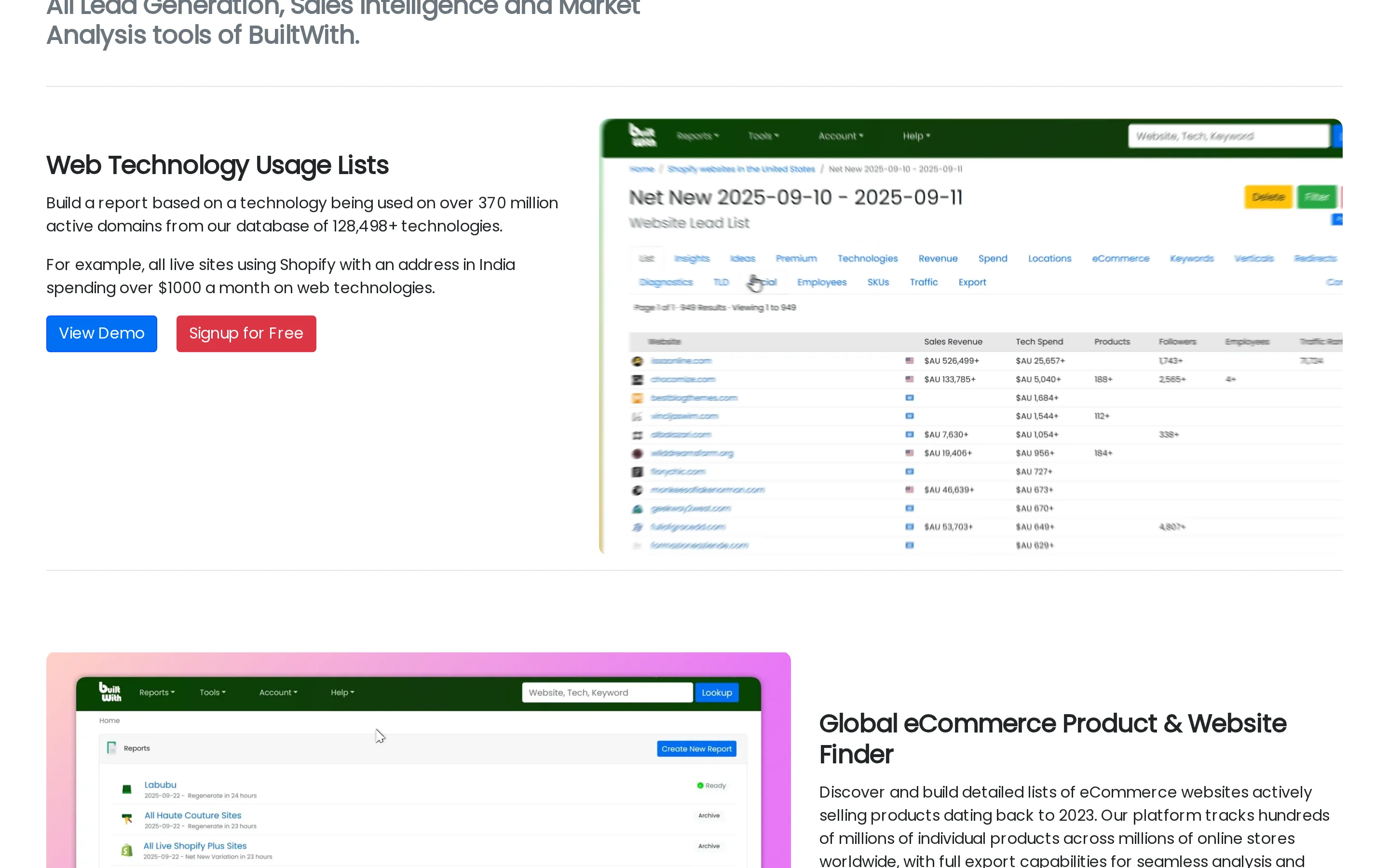 Full resolution
Data Provenance & Signal Type: Proprietary Revenue Graph vs. Public Web Technology Index
Gong.io builds its intelligence layer, the 'Revenue Graph,' by capturing private, consent-based customer interactions such as calls, emails, and meetings. This creates a rich, internal dataset that maps specific deal dynamics, buyer sentiment, and competitive mentions directly to revenue outcomes. In contrast, BuiltWith aggregates external, public-domain data by crawling over 491.9 million domains. Its strength lies in identifying what technologies a company uses, their estimated spend, and their digital footprint, rather than the nuances of human conversation.
Operationally, this means Gong provides deep context on *how* deals are being won or lost within your organization, enabling precise coaching and forecasting. BuiltWith provides broad context on *who* might be a good fit based on their infrastructure, enabling targeted list building. Gong’s data is proprietary and unique to your sales team’s activities, while BuiltWith’s data is shared across millions of users, offering market-wide visibility but less granular insight into individual deal health.
The tradeoff is clear: if you need to understand why a specific prospect said 'no' or which value prop resonated, Gong is indispensable. If you need to find every company in Germany using Shopify with a monthly tech spend over $1,000, BuiltWith is the superior tool. They serve fundamentally different stages of the funnel: BuiltWith for top-of-funnel identification and Gong for mid-to-bottom-funnel optimization.
Operational Scope: AI-Driven Execution Layer vs. Static List Generation Engine
Gong has evolved into an active execution platform with its 'Revenue Harness.' This layer governs how AI agents plan, act, and coordinate tasks like pipeline reviews, deal risk assessment, and follow-up drafting. It doesn't just report on data; it suggests actions and automates workflows within the sales cycle. BuiltWith, conversely, functions primarily as a static intelligence engine. It generates exportable lists and reports that require manual intervention or downstream automation via third-party tools to execute outreach.
For a sales team, this distinction impacts daily workflow significantly. Gong integrates into the CRM to prompt reps on next steps, flag risky deals, and automate administrative tasks like CRM updates. BuiltWith requires analysts or SDRs to pull data, clean it, and then upload it into a separate engagement platform like Salesforce Marketing Cloud or HubSpot. Gong reduces friction in the selling process; BuiltWith adds a step of data preparation before selling can begin.
While BuiltWith offers 'Predictive Leads' and 'Actionable Insights' to help prioritize lists, it lacks the native capability to send emails or schedule calls. Gong’s 'Engage' application allows for personalized outreach scaling, bridging the gap between insight and action. Therefore, Gong is better suited for teams wanting an end-to-end revenue OS, while BuiltWith serves teams that prefer best-of-breed data sourcing combined with specialized execution tools.
Integration Architecture: Native CRM Context Sync vs. Bulk Data Export APIs
Gong’s integration architecture is designed for deep, two-way synchronization with existing tech stacks. It connects with CRMs like Salesforce and HubSpot to map captured interactions back to business context in real-time. This ensures that every call recording and email thread is linked to the correct account and opportunity record, maintaining data integrity without manual effort. The system also supports Model Context Protocol (MCP) to orchestrate agents across various revenue tools.
BuiltWith’s integration strategy focuses on bulk data movement and enrichment. It offers robust APIs and integrations to push large volumes of technographic data into CRMs, marketing automation platforms, and data lakes like Snowflake or BigQuery. While it supports syncing up to 300,000 records daily into Salesforce or HubSpot, the primary use case is enriching existing records or importing new leads rather than tracking ongoing communication history.
The architectural difference highlights their roles: Gong acts as a central nervous system for revenue operations, requiring tight coupling with the CRM to function effectively. BuiltWith acts as a peripheral intelligence source, feeding data into the core systems. For enterprises with complex data governance needs, Gong’s native context sync simplifies compliance and reporting, whereas BuiltWith’s flexible export options allow for custom-built data pipelines tailored to specific analytical requirements.
Pricing & true cost
Published tier structures, credit scaling mechanics, and total outbound cost.
 Full resolution
 Full resolution
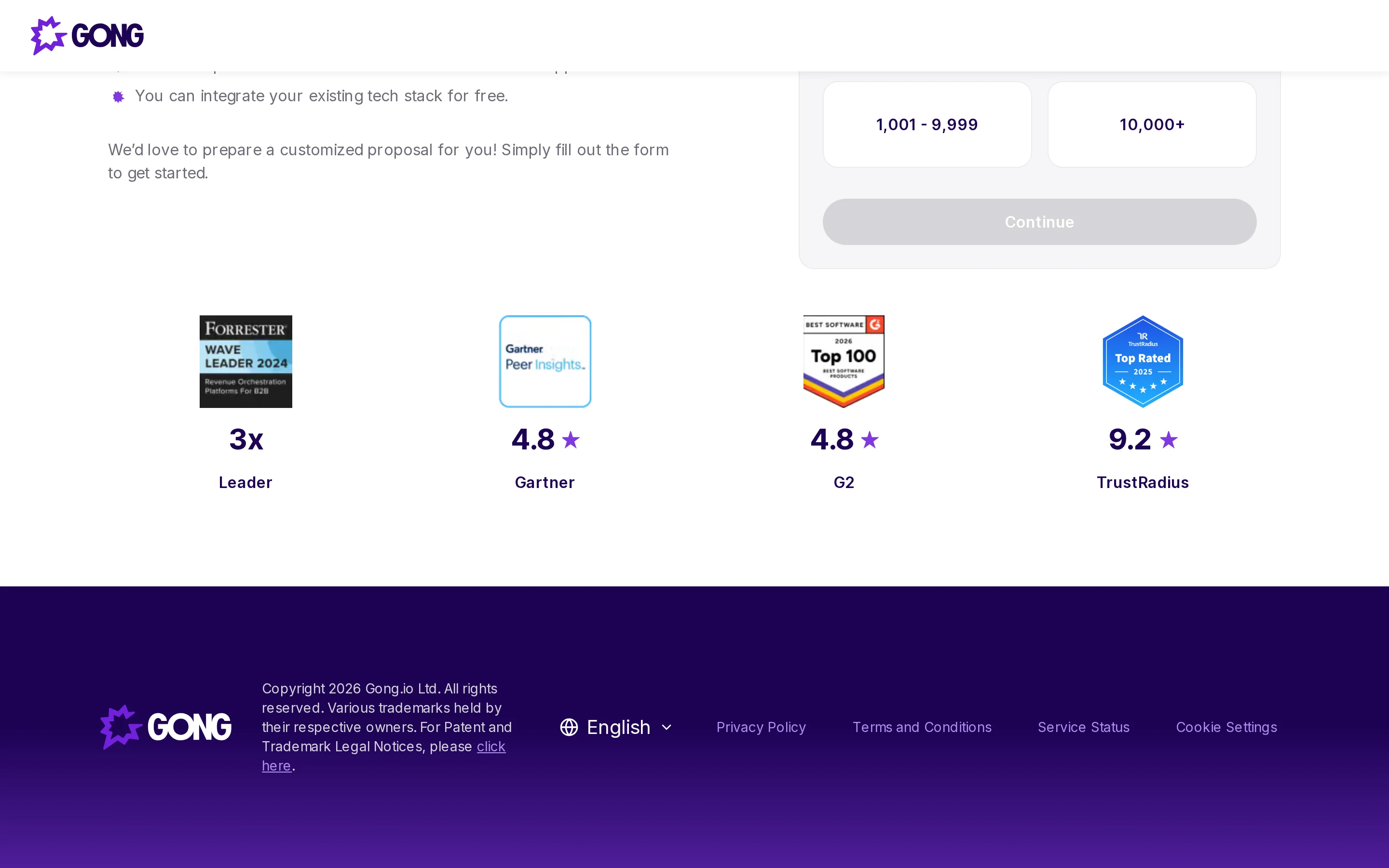
Gong.io plans
- Custom Enterprise Pricing (Contact Sales): Licenses priced per user + platform fee based on number of users supported.
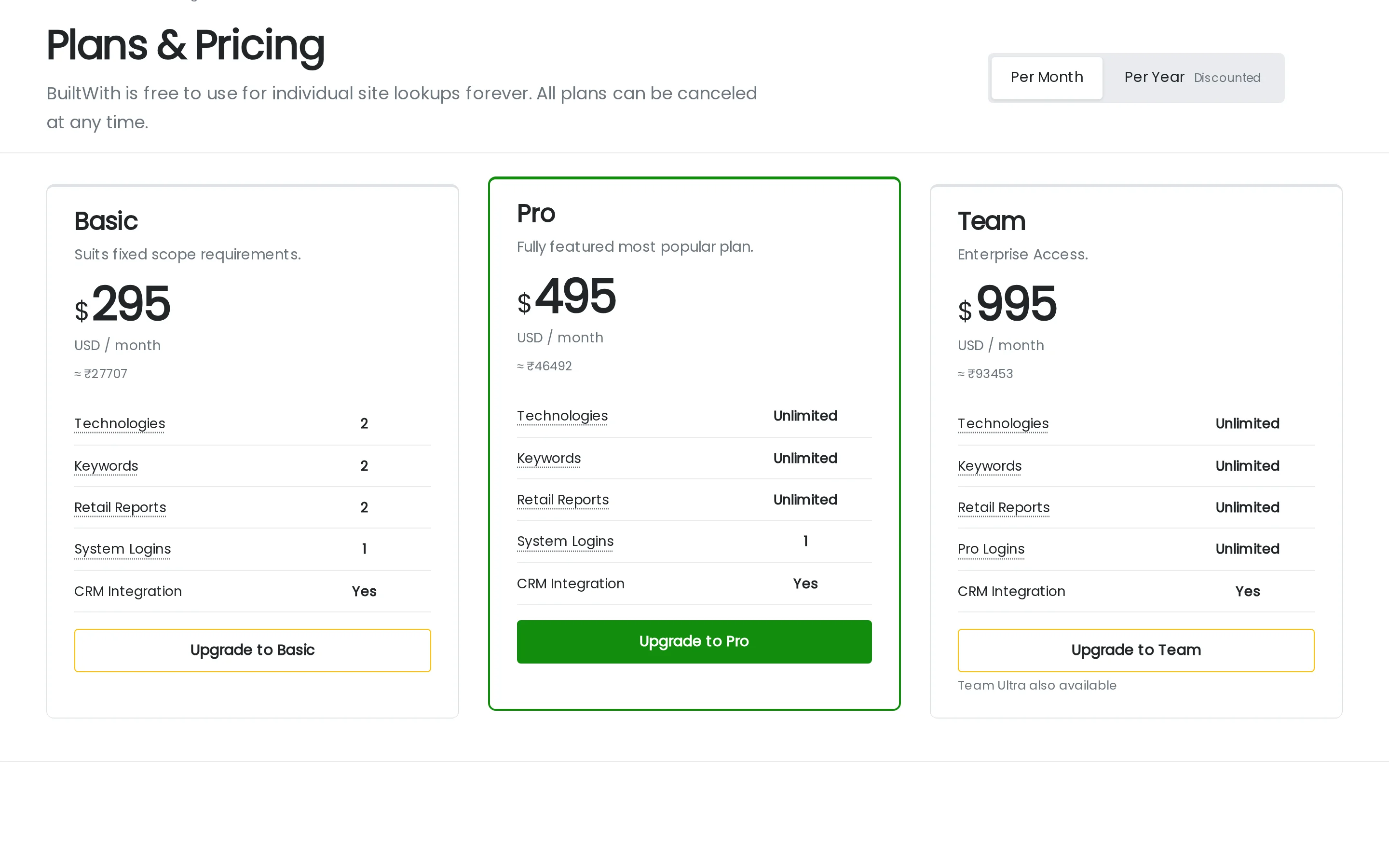
BuiltWith plans
- Basic: Free for individual lookups; Paid tier details not explicitly listed in snippet but implies fixed scope.
- Pro: Fully featured most popular plan (Price not specified in text, typically ~$295-$495/mo depending on region/terms).
- Team: Enterprise Access with unlimited logins (Price not specified in text, typically higher tier).
Gong.io operates on a quote-based enterprise model where costs are driven by seat count and platform fees, making it a significant capital expenditure suitable for larger organizations seeking comprehensive revenue intelligence. BuiltWith offers a more transparent, tiered subscription model with a free entry-level option for basic lookups, scaling up to paid plans for advanced filtering and exports. For small to mid-sized businesses, BuiltWith presents a lower barrier to entry and clearer ROI calculation, while Gong requires a broader organizational commitment to justify its premium pricing structure.
of Ownership Analysis
For a 5-person sales team needing 10,000 verified leads per month:
Gong.io: Since Gong does not publish standard self-serve prices, we must estimate based on industry standards for enterprise revenue intelligence. A typical contract for 5 seats often ranges from $15,000 to $25,000 annually, plus potential implementation fees. However, Gong is not primarily a lead generation tool; acquiring 10,000 net-new leads would likely require additional integrations with data providers (like Apollo or Cognism), adding further cost.
BuiltWith: To generate 10,000 leads, the team would likely need the 'Pro' or 'Team' plan. Assuming a conservative average of $395/month for the Pro plan (based on historical public data, though exact current price varies by region/currency), the annual cost is approximately $4,740. This includes unlimited report downloads and access to the database.
Verdict: BuiltWith is significantly cheaper for pure lead sourcing ($4.7k vs $15k+). However, if the goal is to improve conversion rates on existing leads, Gong’s ROI may outweigh its higher cost through increased win rates, whereas BuiltWith only helps fill the top of the funnel.
Which fits your outbound model?
Match your team size, deal complexity, and lead volume to the right engine.
High-Volume Cold Outbound
BuiltWith is ideal for generating massive lists of prospects based on tech stack criteria, which can then be fed into outbound sequences. Gong assists in optimizing these sequences but isn't the primary source of net-new volume.
Enterprise Deal Coaching
Gong shines here by analyzing call recordings to provide actionable feedback to reps, helping them navigate complex buying committees and close deals faster.
Competitive Displacement
BuiltWith’s 'Churn' and 'Trial' data allows sales teams to identify companies actively switching away from competitors, providing a timely trigger for outreach.
Forecast Accuracy Improvement
Gong’s AI analyzes historical win/loss patterns and current deal signals to provide unbiased pipeline forecasts, reducing reliance on rep self-reporting.
Where each platform falls short
Constructive limitations and architectural trade-offs to weigh before signing.
Where Gong.io falls short
- Does not have a native, extensive B2B contact database for net-new lead generation; relies on partners.
- Pricing is opaque and typically expensive for small teams.
- Requires significant change management to get reps to adopt call recording and logging habits.
Where BuiltWith falls short
- Lacks native email sequencing or calling capabilities; purely a data source.
- Data accuracy can vary for smaller or newer websites with limited public footprints.
- Interface can be overwhelming for non-technical users due to the sheer volume of filter options.
The switching playbook
What you gain and give up when migrating across platforms.
- Deep visibility into deal health and pipeline risks.
- Automated coaching and performance insights for sales reps.
- More accurate revenue forecasting based on actual customer interactions.
- Direct access to a massive, searchable database of net-new prospects.
- Lower upfront software costs.
- Simplicity of setup (Gong requires integration with multiple tools).
- Ability to build highly targeted lists based on technographics and firmographics.
- Significant cost savings for lead sourcing.
- Flexibility to integrate data into any preferred outreach tool.
- Insights into why deals are winning or losing.
- Automated coaching and rep enablement features.
- Unified view of customer interactions across channels.
Frequently asked questions
Direct technical answers about Gong.io and BuiltWith.
Which platform has better data accuracy?
Gong has higher accuracy for *internal* deal data because it captures actual conversations. BuiltWith has high coverage for *public* web data but cannot verify private intent or budget beyond estimates.
How do their starting costs compare?
BuiltWith starts with a free tier for basic lookups and paid plans around $300-$500/month. Gong is enterprise-only with custom pricing, typically costing thousands per year per user.
Can I connect unlimited mailboxes?
Gong connects to your existing email server (Exchange/O365/Gmail) for monitoring, not sending. BuiltWith does not connect to mailboxes; it exports data to your CRM or marketing tool.
Which tool is easier to learn?
BuiltWith is generally easier for beginners due to its search-and-filter interface. Gong requires training to interpret AI insights and integrate into daily sales workflows.
Do they both support GDPR compliance?
Yes, both platforms emphasize GDPR compliance. Gong secures private communications with encryption and access controls. BuiltWith filters out non-compliant data and respects robots.txt and privacy laws during crawling.
Sources & methodology
Every claim is grounded in official vendor documentation and live audits.
Compare with sendroAI
See how sendroAI replaces manual research, credit limits, and deliverability traps with full autonomous execution.