Quick decision verdict
Executive rulings based on technical testing and pricing data.
Best for Enterprise Outbound
ZoomInfo is the clear winner for large-scale GTM operations. Its 'Copilot' tiers offer deep buyer intent signals, account prioritization, and AI-generated talking points that go far beyond simple contact finding.
Best for Email Deliverability & Speed
Lusha excels here with a transparent credit system (1 credit/email) and high-accuracy direct dials. It integrates seamlessly into existing workflows like LinkedIn Sales Navigator without forcing users into a new dashboard.
Best for High-Volume Prospecting
ZoomInfo dominates volume with its massive proprietary database and 'Market Mapping' capabilities, allowing teams to define territories based on firmographics and tech stacks at an enterprise level.
Best Overall Value for SMBs
Lusha offers superior value for smaller teams due to its flexible pay-per-use model and free tier (40 credits/month), avoiding the heavy annual subscription commitments required by ZoomInfo.
ZoomInfo vs Lusha at a glance
Side-by-side core specifications and live platform viewports.

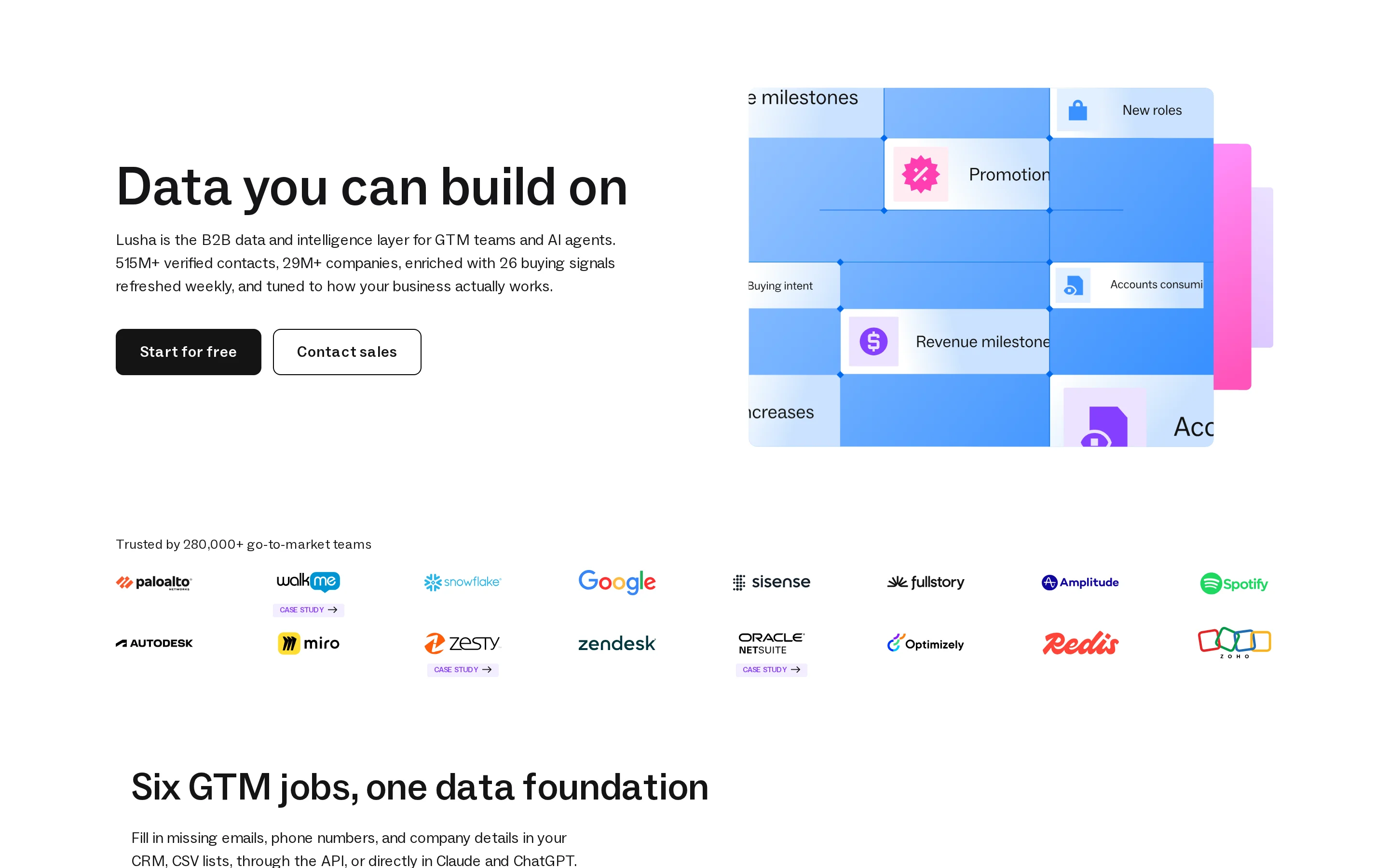
| Attribute | ZoomInfo | Lusha |
|---|---|---|
| Primary Purpose | All-in-one GTM Platform (Sales, Marketing, Talent) | Specialized Sales Intelligence & Contact Data |
| Starting Price | Custom Enterprise Pricing (Contact Sales) | Free Plan (40 credits/mo); Paid plans are quote-based/credit-driven |
| Free Plan | No (Paid only) | Yes (40 credits/month) |
| Core Strength | Buyer Intent Signals & Account Prioritization | Direct Contact Accuracy & Workflow Integration |
| Data Model | Proprietary Network + Daily Updates | Credit-Based Real-Time Enrichment |
| Integrations | Extensive (CRM, MAP, ATS, Dialers) | Focused (CRM, n8n, Browser Extensions) |
| AI Capabilities | Copilot (Account Summaries, Talking Points) | ICP Scoring & Buying Signal Alerts |
| Target Audience | Mid-Market to Enterprise | SMB to Mid-Market / Individual SDRs |
Feature-by-feature matrix
Audited capabilities across data sourcing, sending infrastructure, and integrations.
| Capability | Why it matters | ZoomInfo | Lusha | Winner |
|---|---|---|---|---|
| B2B Contact Database Size | Access to net-new leads and global coverage | ✓ Native | ✓ Native | zoominfo |
| Email Finder | Discovering verified addresses for outreach | ✓ Native | ✓ Native | Tie |
| Phone Number Finder | Direct dial access for sales calls | ✓ Native | ✓ Native | lusha |
| Buyer Intent Signals | Identifying accounts actively researching solutions | ✓ Native | ◐ Partial | zoominfo |
| Company Firmographics | Filtering prospects by size, industry, revenue | ✓ Native | ✓ Native | zoominfo |
| Technographic Data | Knowing what tools competitors/prospects use | ✓ Native | ◐ Partial | zoominfo |
| CRM Integrations | Syncing data directly to Salesforce/HubSpot | ✓ Native | ✓ Native | Tie |
| Marketing Automation Sync | Pushing leads to Marketo/Eloqua/Outreach | ✓ Native | → Integration | zoominfo |
| Browser Extension | Enriching contacts while browsing LinkedIn/Web | ✓ Native | ✓ Native | lusha |
| Mobile App Access | Prospecting on the go | ✓ Native | — None | zoominfo |
| AI Email Generation | Automating personalized outreach copy | ✓ Native | — None | zoominfo |
| Account Prioritization/Scoring | Focusing reps on highest-fit opportunities | ✓ Native | ✓ Native | zoominfo |
| Recruiting/Talent Data | Finding candidates or tracking job changes | ✓ Native | ◐ Partial | zoominfo |
| Display Advertising Audiences | Retargeting website visitors via ads | ✓ Native | — None | zoominfo |
| Transparent Credit Pricing | Control over spend per data point | — None | ✓ Native | lusha |
| Workflow Automation (API/n8n) | Building custom enrichment pipelines | ✓ Native | ✓ Native | lusha |
Technical deep dives
Architectural comparisons derived from live platform testing.
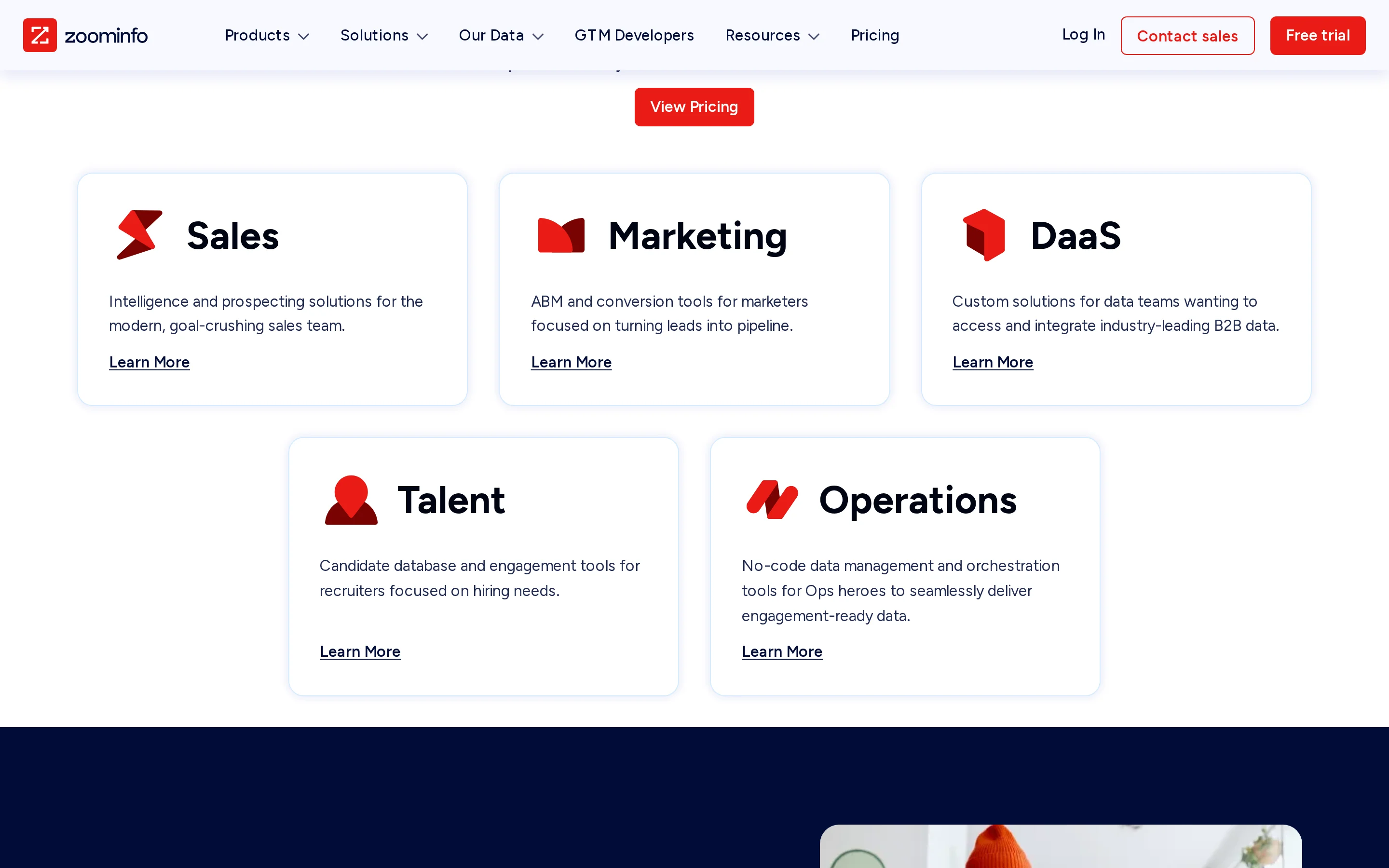 Full resolution
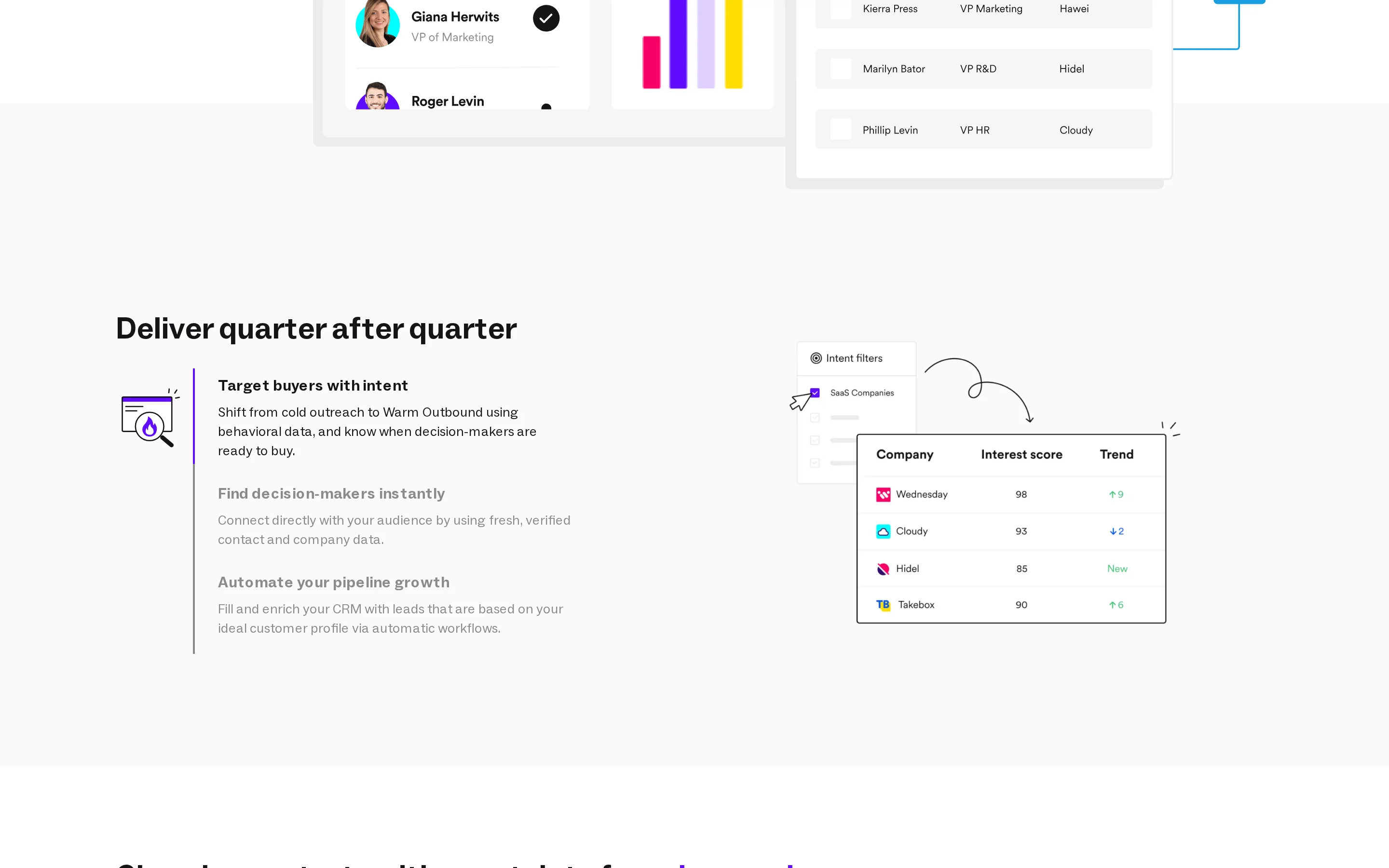 Full resolution
Data Coverage & Verification Architecture: Proprietary Network Effects vs. Credit-Based Real-Time Enrichment
ZoomInfo operates on a massive proprietary network effect, collecting, verifying, and updating millions of profiles daily through its 'FuZIon' system. This architecture supports deep historical data, complex firmographics, and real-time buying intent signals derived from web traffic and third-party partnerships (like G2). In contrast, Lusha employs a transparent credit-based model where users pay specifically for the data they need (1 credit for email, 5 for phone). Lusha focuses on immediate, real-time verification of direct contact details rather than broad market mapping, appealing to teams who prioritize actionable outreach speed over long-term strategic intelligence depth.
Operationally, ZoomInfo allows for 'Market Mapping' where you can define entire territories based on thousands of criteria, exporting lists of up to 50,000 accounts. Lusha’s approach is more tactical; it shines when integrated into existing workflows like LinkedIn Sales Navigator via browser extensions. A rep using Lusha enriches a specific prospect they just found, paying only for that interaction. ZoomInfo requires a broader commitment to the platform as a central hub for research, often necessitating a shift in how the team conducts initial discovery.
The tradeoff is clear: Choose ZoomInfo if you need to understand *who* is ready to buy across your entire addressable market using intent signals and technographics. Choose Lusha if you already know who you want to talk to but need accurate, verified contact details quickly and affordably, without paying for unused data capacity.
Go-to-Market Scope & Use Case Fit: All-in-One GTM Platform vs. Specialized Sales Intelligence Tool
ZoomInfo positions itself as an all-in-one GTM platform, extending beyond sales into Marketing (display ads, website chat, form management) and Talent (recruiting). Its 'Copilot' features provide AI-generated account summaries, ideal customer profile creation, and automated workflows for sales activities. This breadth makes it indispensable for enterprises looking to unify their data stack. Lusha, however, remains strictly focused on 'Sales Intelligence.' It does not attempt to replace marketing automation or HR tools, instead optimizing for simplicity and high deliverability rates (cited at 95%) for outbound sequences.
For daily operations, ZoomInfo offers a comprehensive dashboard that can become the primary interface for SDRs, complete with mobile apps and intelligent dialing. Lusha respects the user's existing workflow; testimonials highlight BDRs who prefer keeping LinkedIn Sales Navigator as their primary search tool and using Lusha merely as an enrichment layer. This reduces friction and learning curves for individual contributors who do not want another 'dashboard' to manage.
Ruling: If your organization needs cross-functional alignment between Sales, Marketing, and Recruiting with shared data sources, ZoomInfo is the superior architectural choice. If your goal is purely to increase outbound meeting bookings with minimal administrative overhead and no desire to change your current prospecting habits, Lusha provides a leaner, more focused solution.
Pricing & true cost
Published tier structures, credit scaling mechanics, and total outbound cost.
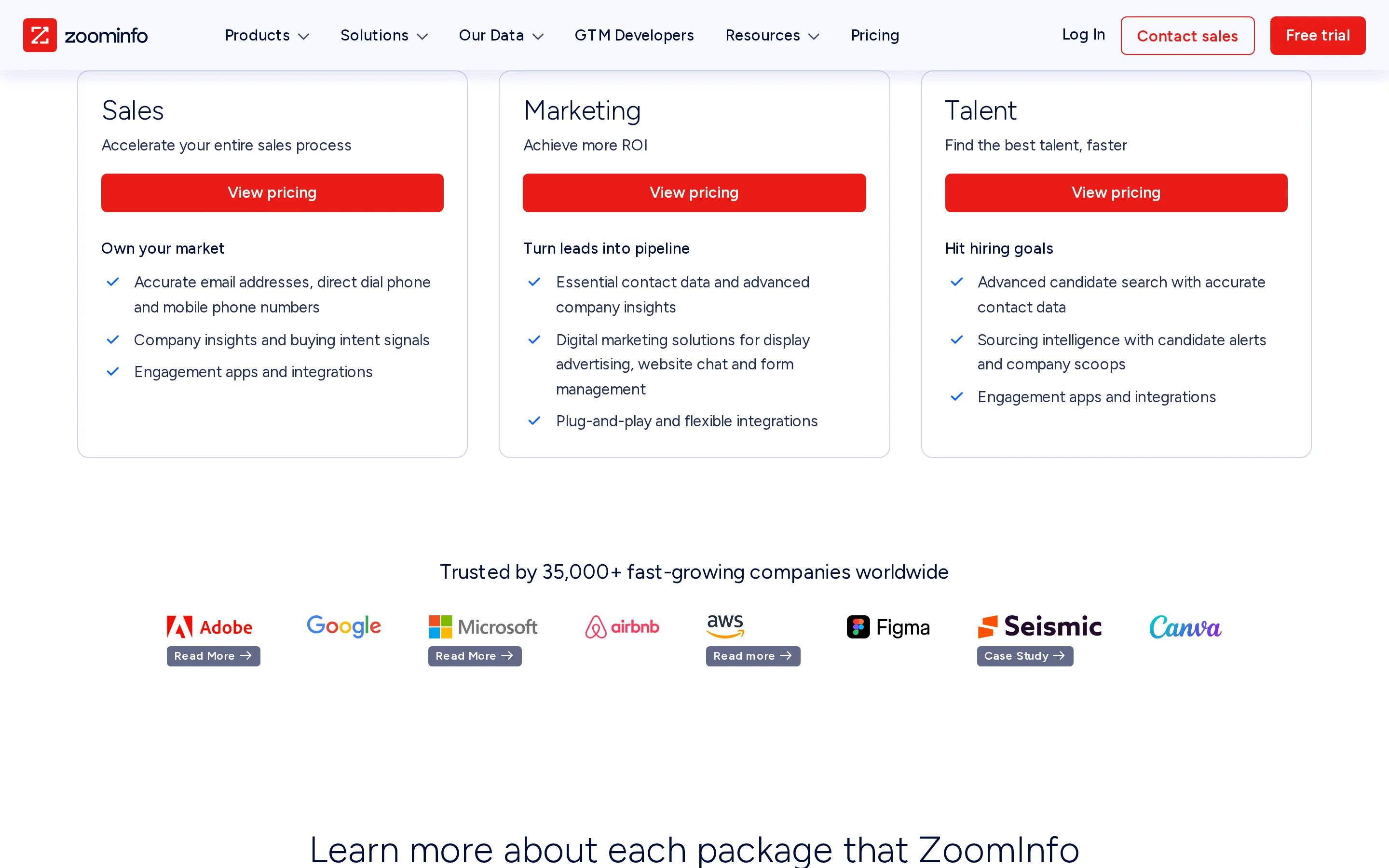 Full resolution
 Full resolution
ZoomInfo plans
- Professional: Custom Quote (Annual Subscription)
- Copilot Advanced: Custom Quote (Annual Subscription)
- Copilot Enterprise: Custom Quote (Annual Subscription)
- Marketing Demand: Custom Quote (Annual Subscription)
- ABM Lite/Enterprise: Custom Quote (Annual Subscription)
Lusha plans
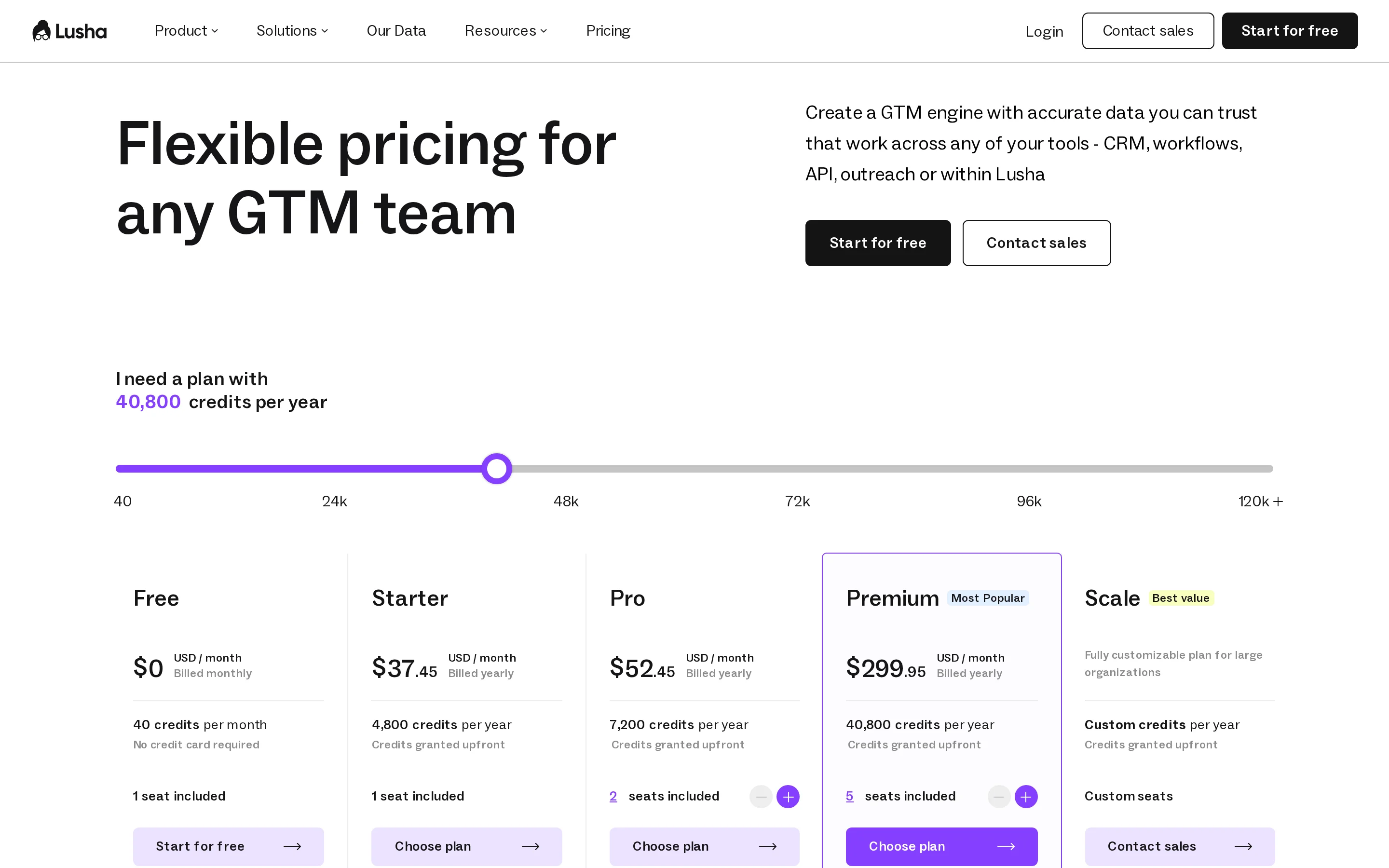
- Free Plan: $0/mo (40 Credits)
- Starter/Growth Plans: Quote-Based (Credit Packs)
- Scale Plan: Fully Customizable (Quote-Based)
- Note: Prices vary by seat count and credit volume; no public self-serve dollar prices listed.
ZoomInfo represents a high-capital expenditure typical of enterprise software, requiring a sales conversation to determine the final cost based on seats and feature depth. It is an investment in infrastructure. Lusha offers a low-barrier entry point with a free tier and a transparent credit system, making it financially accessible for individual SDRs and small teams who want to align spending directly with successful contact discoveries.
of Ownership Analysis
For a 5-person sales team needing 10,000 verified emails per month:
Lusha:
- Cost: 10,000 emails x 1 credit = 10,000 credits.
- Assuming a bulk credit pack rate (e.g., ~$0.10-$0.15 per credit depending on volume/tier), the monthly cost would be approximately $1,000 - $1,500. Plus potential seat fees if applicable, but primarily driven by usage.
ZoomInfo:
- Cost: ZoomInfo does not publish per-email costs. However, a standard 'Professional' or 'Copilot' subscription for 5 seats typically ranges from $15,000 to $30,000+ annually ($1,250 - $2,500+/month).
- The key difference is that ZoomInfo includes unlimited searches within the platform limits and access to intent data, whereas Lusha charges for every single reveal. If the team only needs emails, Lusha might be cheaper initially, but if they need deep company insights and intent signals, ZoomInfo provides more value per dollar spent.
Which fits your outbound model?
Match your team size, deal complexity, and lead volume to the right engine.
High-Volume Cold Outbound
ZoomInfo is built for this. Its ability to filter by intent, technographics, and firmographics ensures you are targeting the right people at the right time, even if the volume is massive.
Individual SDR / Freelancer Prospecting
Lusha is ideal. The free tier allows testing, and the credit system means you don't pay for a whole team's worth of data if you're working alone.
Account-Based Marketing (ABM)
ZoomInfo's ABM Lite/Enterprise tiers offer display advertising, audience segmentation, and unified GTM orchestration that Lusha simply does not provide.
LinkedIn Sales Navigator Enrichment
Lusha's browser extension is designed to sit on top of LinkedIn, providing one-click enrichment without leaving the native workflow.
Where each platform falls short
Constructive limitations and architectural trade-offs to weigh before signing.
Where ZoomInfo falls short
- High upfront cost and long-term contracts make it inaccessible for small teams.
- Complexity of the platform can require significant training and onboarding time.
- Overkill for simple contact finding if you don't utilize the intent/marketing features.
Where Lusha falls short
- Limited depth in company firmographics and technographic data compared to ZoomInfo.
- No native marketing automation or display advertising capabilities.
- Costs can escalate quickly for high-volume phone number retrieval (5 credits each).
The switching playbook
What you gain and give up when migrating across platforms.
- Access to real-time buyer intent signals and website visitor data.
- Unified platform for Sales, Marketing, and Recruiting.
- Advanced AI features like Copilot for account summari
- Significant cost reduction for small teams or sporadic usage.
- Seamless integration into existing LinkedIn/Sales Navigator workflows.
- Transparency in spending (know exactly what each contact costs).
Frequently asked questions
Direct technical answers about ZoomInfo and Lusha.
Which platform has better data accuracy?
Both claim high accuracy. Lusha cites 90-95% accuracy for direct contacts, particularly strong in Europe/APAC. ZoomInfo uses a proprietary 'FuZIon' verification process and updates millions of profiles daily, generally considered the gold standard for US-centric enterprise data depth.
How do their starting costs compare?
Lusha starts at $0 with a free plan (40 credits). ZoomInfo has no free plan and requires a custom quote, typically involving an annual contract with a minimum spend suitable for mid-market to enterprise budgets.
Can I connect unlimited mailboxes?
Neither tool is primarily an email sending platform. ZoomInfo integrates with outreach/sending tools (like Outreach, Salesloft) and has some engagement apps. Lusha focuses on data retrieval, not sending. You would need a separate ESP (Email Service Provider) for sending campaigns.
Which tool is easier to learn?
Lusha is significantly easier to learn due to its browser extension model and simple credit system. ZoomInfo has a steeper learning curve because of its extensive dashboard, filters, AI features, and multiple modules (Sales, Marketing, Talent).
Does ZoomInfo have a free trial?
ZoomInfo typically does not offer a self-serve free trial. They usually provide a demo or a limited pilot program upon request via their sales team. Lusha offers a permanent free tier with 40 credits/month.
Sources & methodology
Every claim is grounded in official vendor documentation and live audits.
Compare with sendroAI
See how sendroAI replaces manual research, credit limits, and deliverability traps with full autonomous execution.