Quick decision verdict
Executive rulings based on technical testing and pricing data.
Best for Enterprise Outbound
Hootsuite is superior for enterprise-scale social listening and multi-channel brand monitoring, offering advanced governance and SSO capabilities that MailChimp lacks in its lower tiers.
Best for Email Deliverability
MailChimp dominates in direct email outreach with robust lifecycle automation, predictive segmentation, and deep e-commerce integration for personalized campaigns.
Best for High-Volume Prospecting
MailChimp provides better tools for nurturing known contacts through automated flows, while Hootsuite focuses on engaging public conversations rather than private prospecting lists.
Best Overall Value
MailChimp offers a more accessible entry point with a generous free tier for small teams, whereas Hootsuite's per-seat pricing model can become costly for larger sales organizations.
MailChimp vs Hootsuite at a glance
Side-by-side core specifications and live platform viewports.
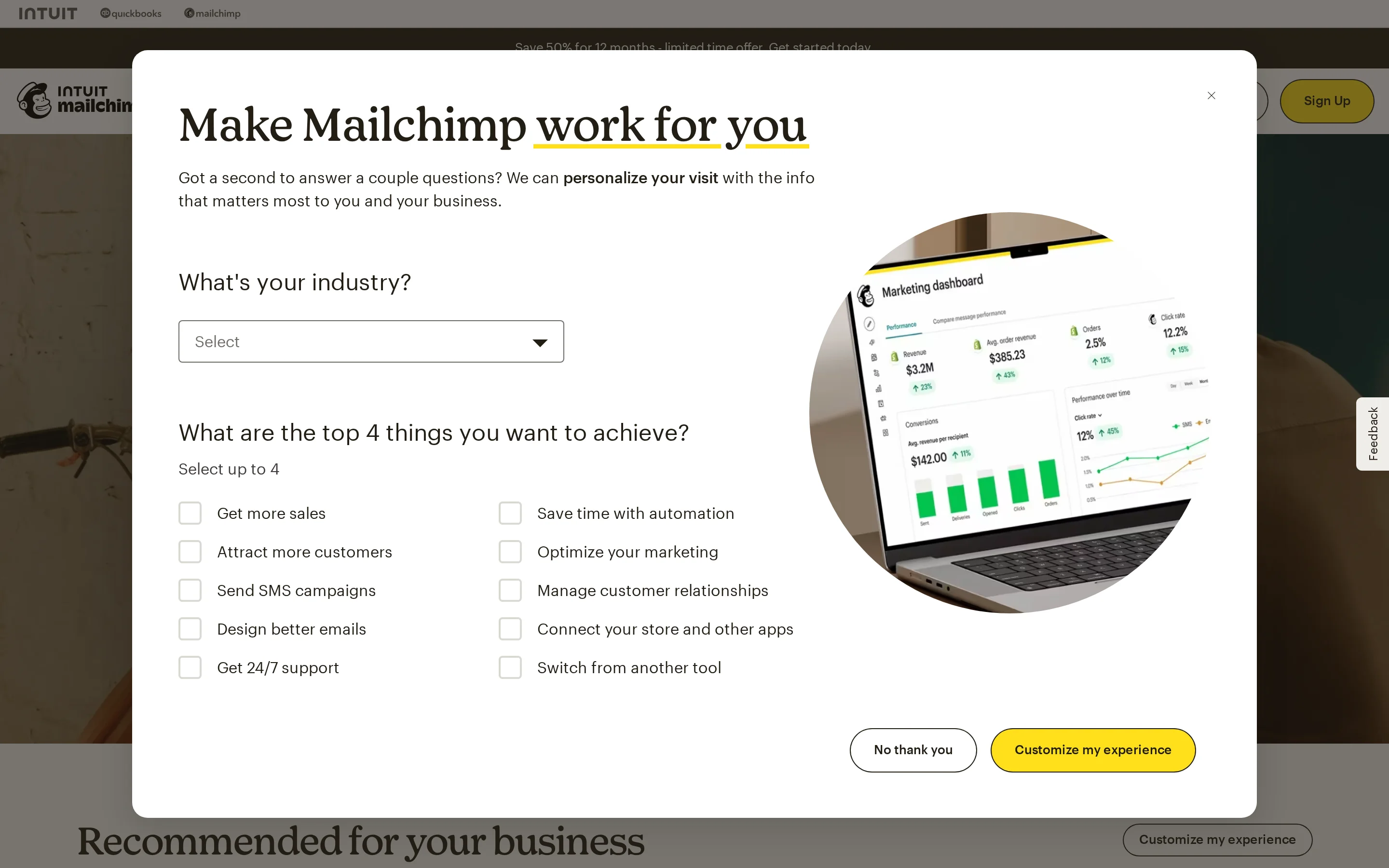

| Attribute | MailChimp | Hootsuite |
|---|---|---|
| Primary Purpose | Email Marketing & CRM Automation | Social Media Management & Listening |
| Starting Price | $0/mo (Free Plan) | $99/user/mo (Standard) |
| Free Plan | Yes (Up to 500 contacts) | No (Trial only) |
| Core Strength | Lifecycle Trigger-Based Sequencing | Public Social Listening Graph |
| Data Ownership | First-Party Contact Database | Third-Party Public Streams |
| Integration Focus | E-commerce & CRM Sync | Cross-Platform Publishing API |
| AI Capabilities | Generative Copy & Predictive Segmentation | Sentiment Analysis & Trend Forecasting |
| Team Collaboration | Role-based Access (Premium/Enterprise) | Approval Workflows & Routing (Advanced+) |
Feature-by-feature matrix
Audited capabilities across data sourcing, sending infrastructure, and integrations.
| Capability | Why it matters | MailChimp | Hootsuite | Winner |
|---|---|---|---|---|
| B2B Contact Database | Access to net-new leads | ✓ Native | — None | mailchimp |
| Email Finder | Discovering verified addresses | ◐ Partial | — None | mailchimp |
| Email Verification | Preserving domain health | ✓ Native | — None | mailchimp |
| Social Account Management | Unified publishing dashboard | → Integration | ✓ Native | hootsuite |
| Social Listening | Monitoring brand mentions | — None | ✓ Native | hootsuite |
| Competitor Analysis | Benchmarking against rivals | ◐ Partial | ✓ Native | hootsuite |
| Marketing Automation Flows | Triggered user journeys | ✓ Native | ◐ Partial | mailchimp |
| CRM Integration | Syncing lead data | ✓ Native | → Integration | mailchimp |
| E-commerce Sync | Purchase history tracking | ✓ Native | — None | mailchimp |
| Multi-Channel Inbox | Centralized customer care | ◐ Partial | ✓ Native | hootsuite |
| Content Approval Workflows | Brand safety & compliance | — None | ✓ Native | hootsuite |
| Predictive Analytics | Forecasting engagement | ✓ Native | ✓ Native | Tie |
| API Rate Limits | Developer scalability | ◐ Partial | ✓ Native | hootsuite |
| SSO / Security | Enterprise access control | ✓ Native | ✓ Native | Tie |
| Mobile App Functionality | On-the-go management | ✓ Native | ✓ Native | Tie |
| Reporting Customization | Tailored insights | ◐ Partial | ✓ Native | hootsuite |
Technical deep dives
Architectural comparisons derived from live platform testing.
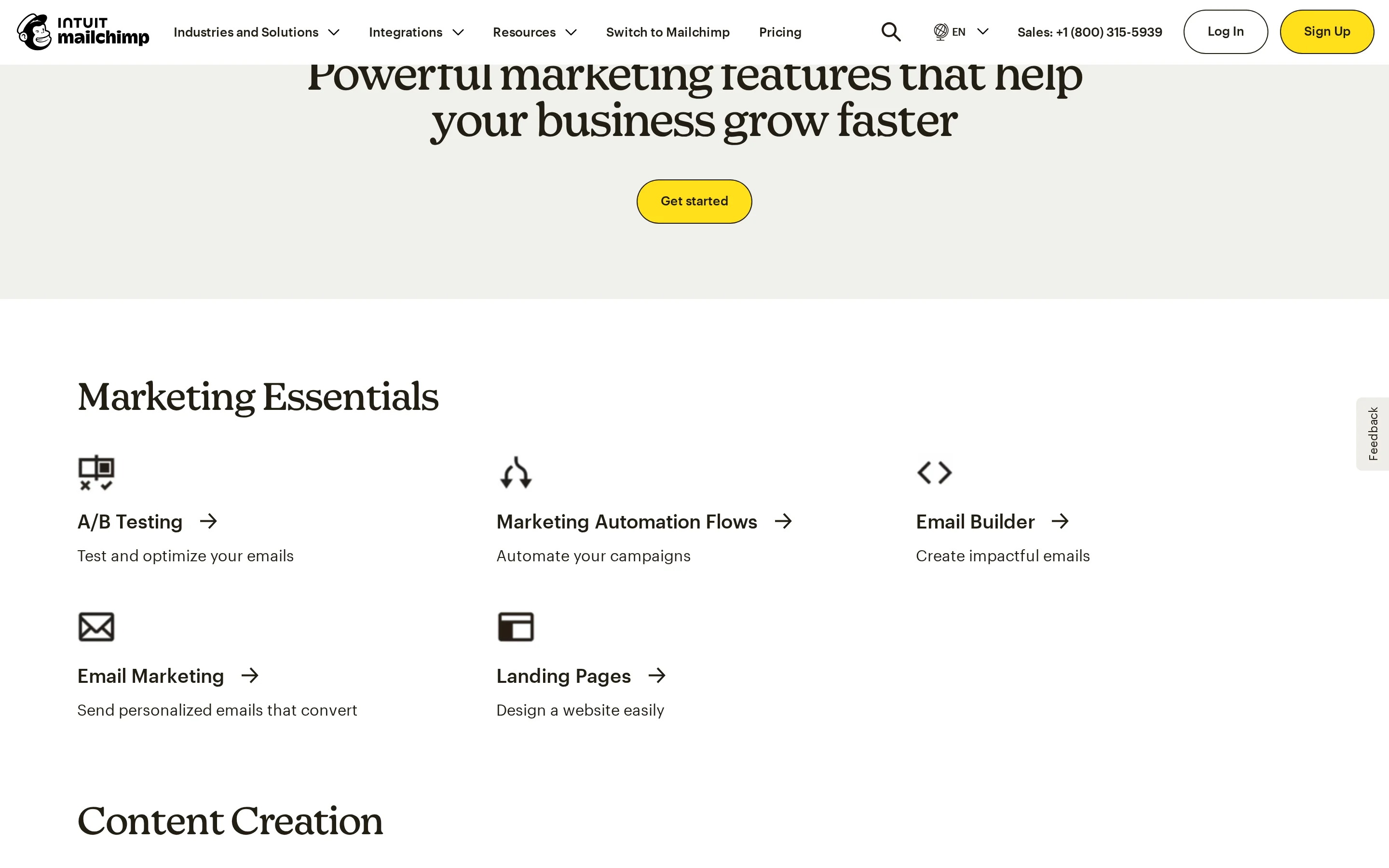 Full resolution
 Full resolution
Core Data Architecture: Owned Audience CRM vs. Public Social Listening Graph
MailChimp operates on a permission-based, first-party contact database requiring explicit opt-in for direct outreach. This architecture centers on the individual subscriber, leveraging behavioral data such as opens, clicks, and purchase history from integrated e-commerce platforms like Shopify or WooCommerce. The system builds a comprehensive profile for each contact, enabling highly targeted segmentation and personalized messaging based on owned data assets.
In contrast, Hootsuite aggregates third-party public data streams from over 30 social networks, review sites, and millions of websites to build an intent-based intelligence layer without owning the underlying user identity. Its architecture is designed for breadth and real-time monitoring of public conversations, sentiment analysis, and competitive benchmarking. While it can identify potential leads through social listening, it does not maintain a persistent, consent-based CRM record of those individuals in the same way MailChimp does.
The tradeoff is clear: MailChimp excels at nurturing known relationships with high precision using owned data, making it ideal for retention and direct response marketing. Hootsuite shines in discovery and reputation management, allowing brands to react to market trends and engage with prospects who have not yet opted into a formal communication channel. For pure outbound lead generation via cold email, MailChimp’s architecture is foundational; for inbound social engagement and brand monitoring, Hootsuite’s graph is superior.
Automation Logic: Lifecycle Trigger-Based Sequencing vs. Workflow & Approval Orchestration
MailChimp automations are driven by individual user behavior events, such as 'opened email', 'abandoned cart', or 'visited landing page'. These triggers initiate personalized multi-step journeys designed to move a specific contact down the sales funnel. The logic is deeply embedded in the customer lifecycle, focusing on conversion optimization through timely, relevant content delivery across email and SMS channels.
Hootsuite automation focuses on operational efficiency rather than individual journey mapping. It routes inbound messages to appropriate team members, schedules content queues across multiple social channels, and manages complex approval workflows. The automation here is about coordinating human effort and ensuring brand consistency across platforms, handling tasks like auto-responses, saved replies, and bulk scheduling.
While both platforms offer AI-driven recommendations, their application differs significantly. MailChimp uses AI to predict send times and segment audiences for maximum engagement within a campaign. Hootsuite uses AI to draft posts, analyze sentiment, and forecast trends. For a sales team focused on closing deals through follow-up sequences, MailChimp’s trigger-based logic is indispensable. For a marketing team managing a high volume of social interactions and content production, Hootsuite’s workflow orchestration provides the necessary structure and speed.
Integration Surface: Marketing Stack Connectivity vs. Cross-Platform Publishing API
MailChimp integrates deeply with e-commerce platforms and CRMs to sync purchase history and customer segments for targeted messaging. Its ecosystem is built around connecting transactional data with marketing actions, allowing for sophisticated personalization based on what a customer has bought or viewed. Integrations with tools like Salesforce, HubSpot, and various payment gateways ensure that the contact database remains rich with contextual business intelligence.
Hootsuite’s integration strength lies in its unified publishing API that connects disparate social networks (LinkedIn, X, Instagram, TikTok) into a single dashboard for cross-channel campaign execution. It also integrates with project management tools, design software like Canva, and customer service platforms. The focus is on extending reach and streamlining the content creation-to-distribution pipeline across all major social interfaces.
The choice depends on whether your primary bottleneck is data silos or distribution complexity. If you need to unify customer data from sales and support systems to drive personalized email campaigns, MailChimp’s integration surface is more effective. If you need to manage a global social presence with consistent branding and rapid response times across dozens of accounts, Hootsuite’s API connectivity is unmatched. Both offer robust developer tools, but MailChimp leans towards data ingestion and Hootsuite towards content dissemination.
Pricing & true cost
Published tier structures, credit scaling mechanics, and total outbound cost.
 Full resolution
 Full resolution
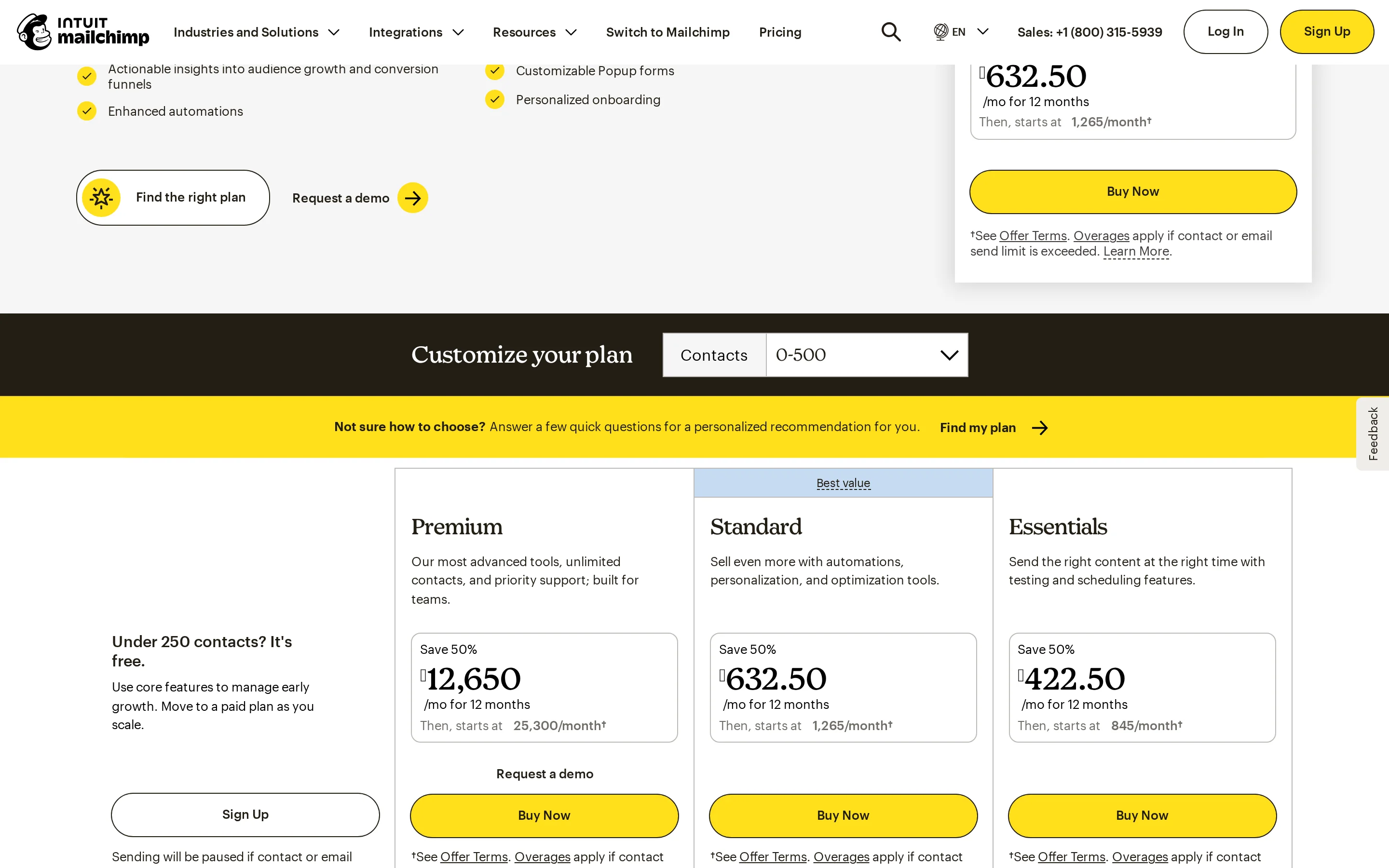
MailChimp plans
- Free: $0/mo (Up to 500 contacts, 1,000 emails/month)
- Essentials: Starts at ~$13/mo (varies by contact count, includes basic automation)
- Standard: Starts at ~$20/mo (includes advanced automation, A/B testing)
- Premium: Starts at ~$350/mo (for large lists, includes dedicated support, multivariate testing)
Hootsuite plans
- Standard: $99/user/mo (billed annually), up to 10 social accounts
- Professional: $199/user/mo (billed annually), unlimited social accounts
- Advanced: $399/user/mo (billed annually), includes approval workflows
- Enterprise: Custom Quote (Contact Sales), includes SSO and advanced analytics
MailChimp utilizes a usage-based pricing model tied to the number of contacts and emails sent, which allows smaller teams to start for free and scale costs gradually as their audience grows. This makes it highly cost-effective for businesses with varying list sizes. Hootsuite employs a strict per-seat pricing model, where every user requires a license regardless of account volume. This structure can lead to higher fixed costs for larger teams, especially when combined with the need for multiple seats to manage extensive social portfolios effectively.
of Ownership Analysis
For a 5-person sales team needing to manage 10,000 contacts in MailChimp, the Standard plan would likely cost approximately $83-$100/month depending on current promotions, totaling around $1,200/year. In contrast, for the same 5-person team using Hootsuite Professional, the cost would be $199/user/month * 5 users = $995/month, or $11,940/year. MailChimp offers significantly lower TCO for direct outreach operations, while Hootsuite represents a premium investment for social-centric roles.
Which fits your outbound model?
Match your team size, deal complexity, and lead volume to the right engine.
High-Volume Cold Outbound
MailChimp is built for managing large contact lists and executing automated drip campaigns, making it the clear winner for traditional outbound sales efforts.
Bulk List Cleaning & Hygiene
MailChimp provides native tools for verifying emails and managing unsubscribes, whereas Hootsuite does not handle email list hygiene.
Developer API Data Pipelines
Hootsuite offers higher rate limits and specialized APIs for social data extraction and posting, suitable for custom integrations.
Real-Time Brand Monitoring
Hootsuite’s listening capabilities allow for immediate detection of brand mentions and sentiment shifts across the web, a feature absent in MailChimp.
Where each platform falls short
Constructive limitations and architectural trade-offs to weigh before signing.
Where MailChimp falls short
- Limited social media management features compared to dedicated tools
- Costs escalate quickly with large contact lists
- Basic reporting capabilities in lower-tier plans
Where Hootsuite falls short
- Per-seat pricing becomes expensive for large teams
- No native email marketing or CRM functionality
- Complexity in setup for non-social media specialists
The switching playbook
What you gain and give up when migrating across platforms.
- Direct access to owned customer data
- Powerful lifecycle automation for conversions
- Lower entry cost for small teams
- Loss of comprehensive social listening capabilities
- Reduced ability to monitor competitor activity on social platforms
- Lack of centrali
- Unified management of all social profiles
- Advanced sentiment analysis and trend forecasting
- Robust team collaboration and approval workflows
Frequently asked questions
Direct technical answers about MailChimp and Hootsuite.
Which platform has better data accuracy?
MailChimp generally offers higher data accuracy for individual customer profiles because it relies on first-party, consent-based data collected directly from subscribers. Hootsuite aggregates public data, which can be noisy and less precise regarding individual identities.
How do their starting costs compare?
MailChimp starts at $0 for up to 500 contacts, making it accessible for startups. Hootsuite starts at $99 per user per month for the Standard plan, requiring a minimum budget even for solo operators.
Can I connect unlimited mailboxes?
MailChimp allows unlimited users on Premium plans but restricts sending capacity based on contact counts. Hootsuite allows unlimited social accounts on Professional and above, but mailbox connections are not its primary function.
Which tool is easier to learn?
MailChimp has a steeper learning curve due to its complex automation builder and segmentation logic. Hootsuite is often considered more intuitive for social media managers familiar with scheduling tools, though its analytics suite is dense.
Do they integrate with each other?
Yes, MailChimp can integrate with social platforms that Hootsuite manages, but they serve different functions. You might use Hootsuite to post content and MailChimp to capture leads from those posts via landing pages.
Is there a free trial for Hootsuite?
Hootsuite typically offers a 30-day free trial for new users, whereas MailChimp offers a permanent free plan with limited features.
Sources & methodology
Every claim is grounded in official vendor documentation and live audits.
Compare with sendroAI
See how sendroAI replaces manual research, credit limits, and deliverability traps with full autonomous execution.