Quick decision verdict
Executive rulings based on technical testing and pricing data.
Best for Enterprise Outbound
Outplay HQ is the superior choice for teams requiring multi-channel orchestration (Email, SMS, Voice) with robust CRM integration and centralized reporting.
Best for Email Deliverability
Outplay HQ provides native tools like mailbox rotation, spintax, and A/B testing to protect domain reputation, which Dux Soup lacks entirely.
Best for LinkedIn Social Selling
Dux Soup is a specialized automation tool designed exclusively for LinkedIn workflows (connections, InMails, profile visits), offering deeper platform-specific controls than generalist tools.
Best Overall Value for Solo Reps
Dux Soup's 'STACKED local' plan at $55/month offers a lower entry point for individual users who primarily rely on LinkedIn for lead generation.
Outplay HQ vs Dux Soup at a glance
Side-by-side core specifications and live platform viewports.
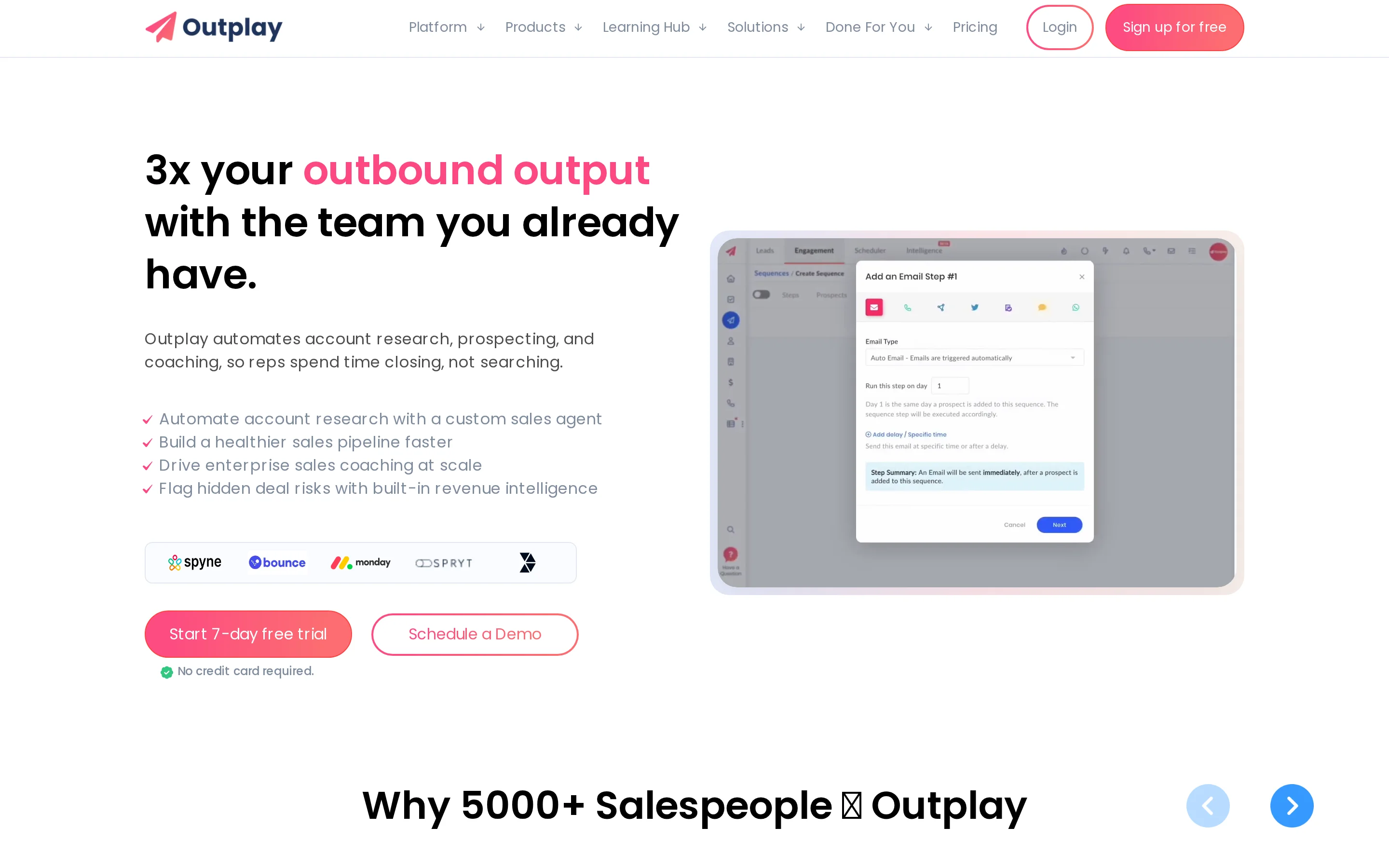
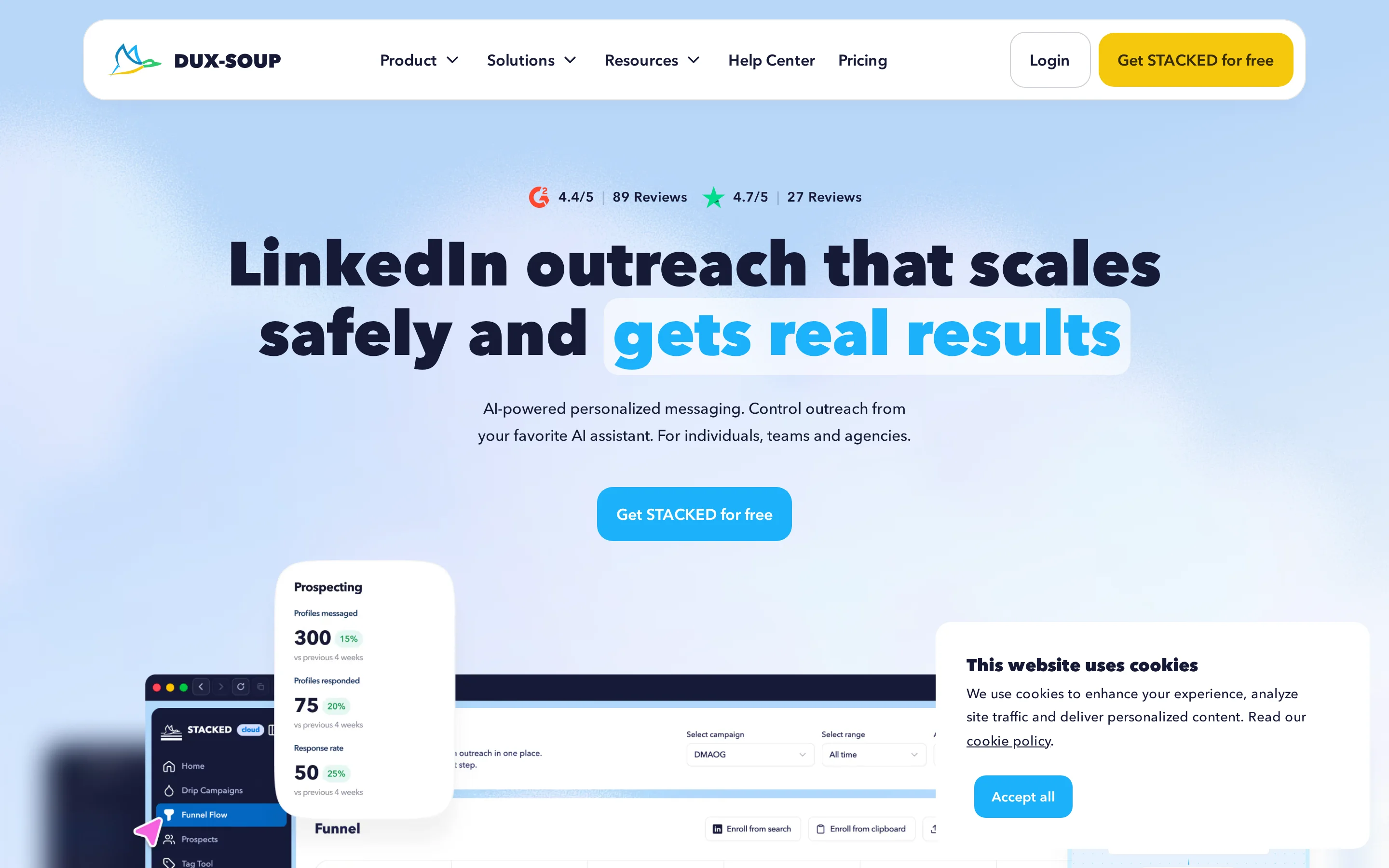
| Attribute | Outplay HQ | Dux Soup |
|---|---|---|
| Primary Purpose | Multi-Channel Sales Engagement Platform | LinkedIn Automation & Social Selling Tool |
| Starting Price | $0 (Free Forever) / Starter Plan Available | $55.00/mo (STACKED Local) |
| Free Plan | Yes (Free Forever with limits) | No (Paid only) |
| Core Strength | Unified Inbox & CRM Sync | LinkedIn Account Safety & Campaign Automation |
| Deployment Model | Cloud SaaS | Hybrid (Local Desktop App or Cloud Managed) |
| AI Capabilities | Sequence Writer, Objection Handling, OOO Detection | Message Personalization via Claude/OpenAI Integration |
| Integrations | Native CRM (Salesforce, HubSpot, Pipedrive) + Dialers | API/Webhooks, Zapier, Make, Slack, Teams |
Feature-by-feature matrix
Audited capabilities across data sourcing, sending infrastructure, and integrations.
| Capability | Why it matters | Outplay HQ | Dux Soup | Winner |
|---|---|---|---|---|
| B2B Contact Database | Access to net-new leads without external enrichment | → Integration | — None | Tie |
| Email Sequences | Automated follow-ups across multiple touches | ✓ Native | — None | outplay-hq |
| LinkedIn Automation | Scaling social selling actions safely | ◐ Partial | ✓ Native | dux-soup |
| SMS/Text Messaging | High-intent channel for urgent outreach | ✓ Native | — None | outplay-hq |
| Built-in Dialer/Voice | Seamless transition from email to call | ✓ Native | — None | outplay-hq |
| CRM Two-Way Sync | Keeping pipeline data accurate in real-time | ✓ Native | → Integration | outplay-hq |
| Mailbox Rotation | Protecting sender reputation during high volume | ✓ Native | — None | outplay-hq |
| Spintax Support | Avoiding spam filters with varied copy | ✓ Native | — None | outplay-hq |
| Local Execution Option | Reducing cloud dependency and cost | — None | ✓ Native | dux-soup |
| Open API/Webhooks | Custom developer integrations | ◐ Partial | ✓ Native | dux-soup |
| Team Leaderboards | Gamification and performance tracking | ✓ Native | ◐ Partial | outplay-hq |
| Call Recording Storage | Coaching and compliance | ✓ Native | — None | outplay-hq |
| InMail Automation | Direct messaging to non-connections | ◐ Partial | ✓ Native | dux-soup |
| Profile Visit Tracking | Identifying warm leads via intent signals | → Integration | ✓ Native | dux-soup |
| Slack/Teams Notifications | Real-time alerting for replies | ✓ Native | ✓ Native | Tie |
| Free Tier Availability | Low-risk trial for small teams | ✓ Native | — None | outplay-hq |
Technical deep dives
Architectural comparisons derived from live platform testing.
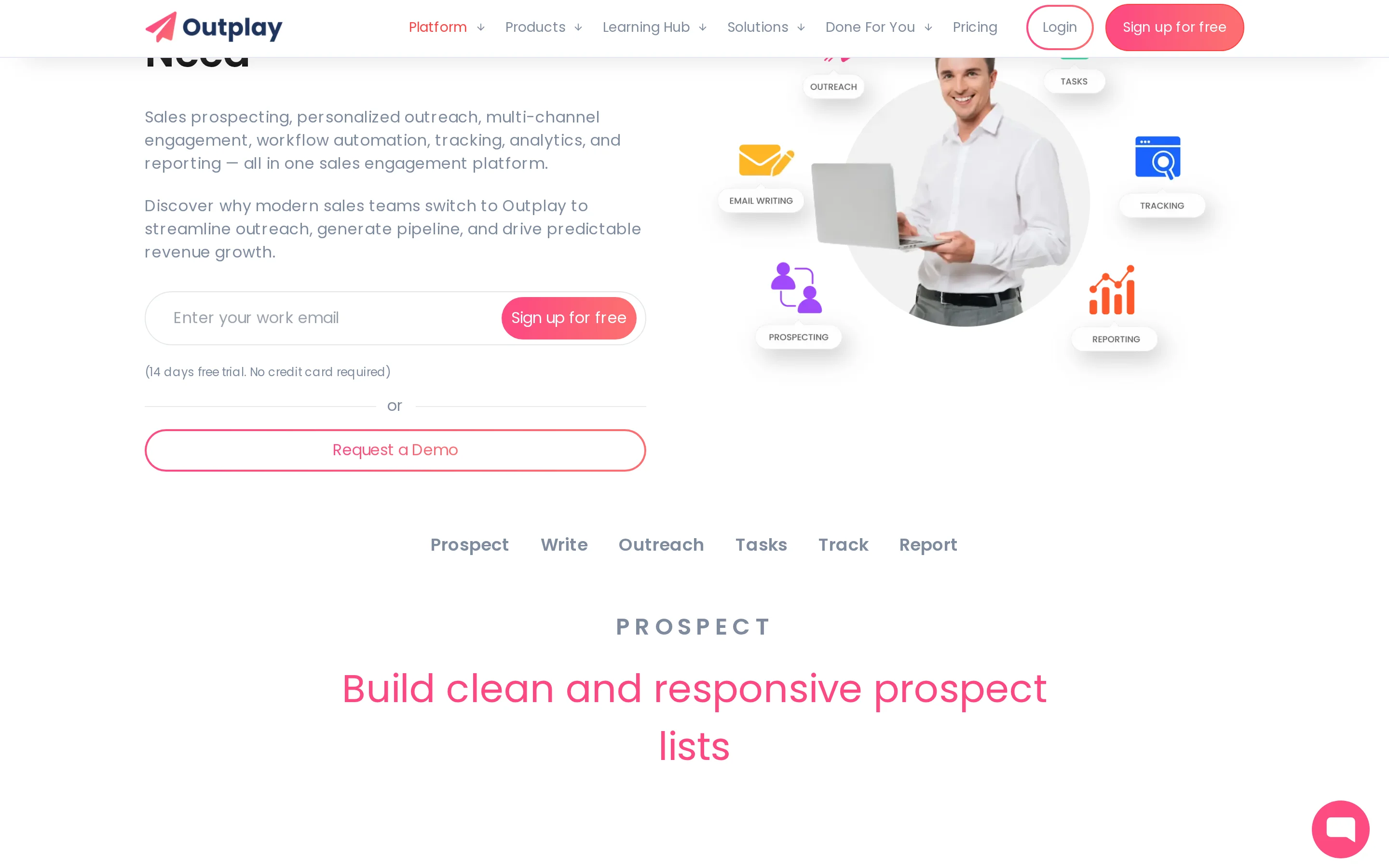 Full resolution
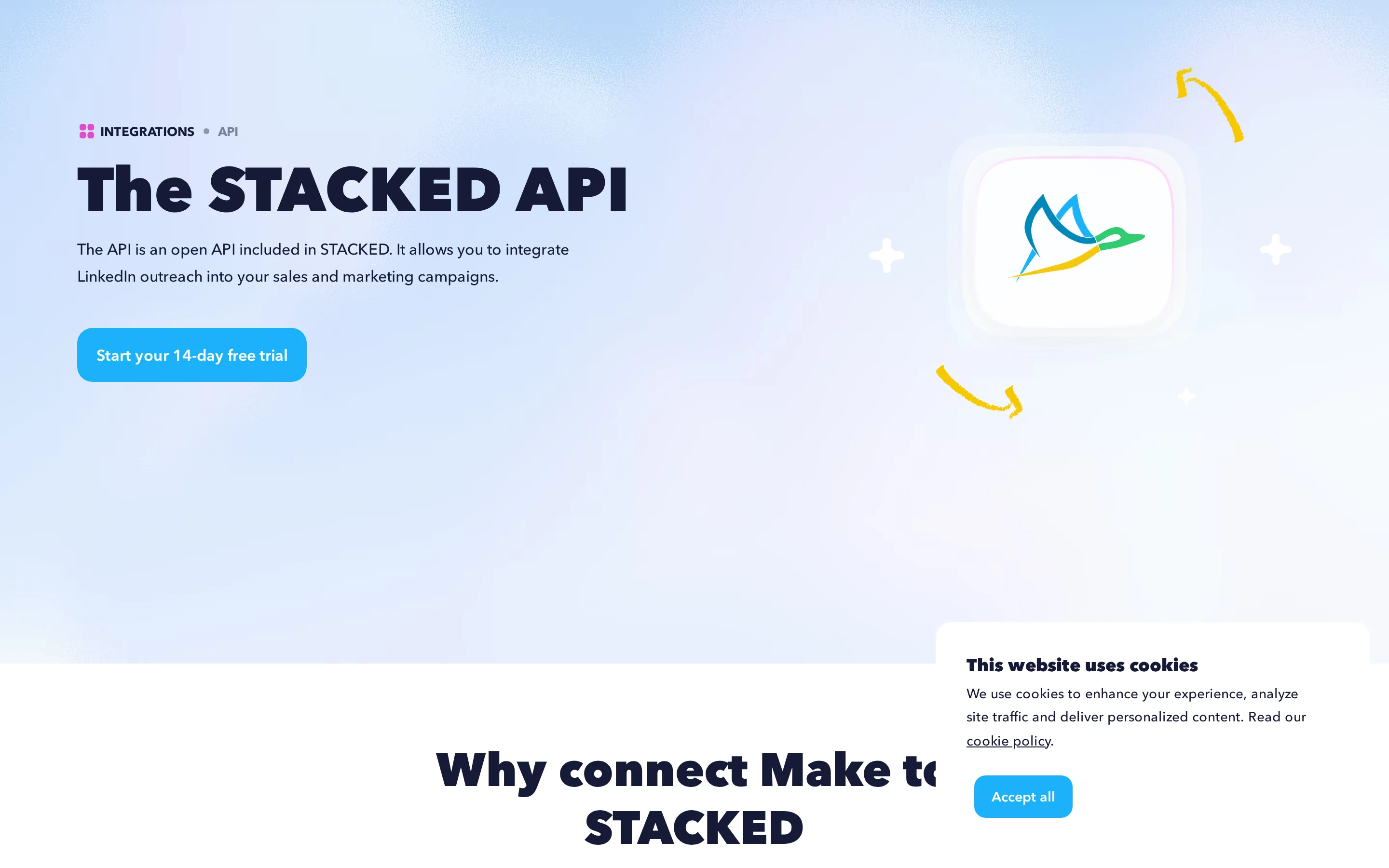 Full resolution
Channel Dominance & Infrastructure: Multi-Channel Email/SMS Engine vs. LinkedIn-Native Automation
Outplay HQ operates as a comprehensive sales engagement platform centered on email deliverability and integrated voice/SMS capabilities. Its infrastructure is built to manage SMTP server health through features like auto-email rotation, spintax support, and A/B testing, ensuring that high-volume cold outreach does not compromise domain reputation. The platform unifies these channels into a single 'Centralised Master Inbox,' allowing reps to switch contexts seamlessly between an email thread, a phone call, and an SMS message without leaving the interface. This architecture prioritizes pipeline velocity across traditional B2B channels where email remains the primary driver of meetings.
In contrast, Dux Soup is a specialized LinkedIn automation tool focused exclusively on social selling workflows. It does not possess native email or SMS engines; instead, it automates actions within the LinkedIn ecosystem such as connection requests, profile visits, endorsements, and InMails. The critical differentiator here is the underlying infrastructure risk management. While Outplay manages IP reputation, Dux Soup manages LinkedIn account safety by simulating human behavior through its 'STACKED' engine. It detects responses to pause campaigns automatically, preventing the 'spammy' appearance that often leads to LinkedIn account restrictions. For teams whose primary lead source is LinkedIn networking rather than cold email lists, Dux Soup’s depth in this single channel outweighs Outplay’s breadth.
The tradeoff is clear: Outplay HQ is the superior choice for organizations running complex, multi-touch sequences involving calls and emails, where data hygiene and CRM synchronization are paramount. Dux Soup is the definitive winner for teams executing pure-play LinkedIn outbound strategies, particularly those leveraging Sales Navigator or Recruiter licenses. If your sales motion relies heavily on building a network of connections before pitching, Dux Soup’s native integration with LinkedIn’s UI provides a level of control and safety that Outplay’s partial LinkedIn integration cannot match.
Execution Model & Scalability: Cloud-Based Seat Licensing vs. Local/Cloud Hybrid Deployment
Dux Soup offers a unique architectural choice between 'STACKED local' and 'STACKED cloud.' The local version runs on the user’s own machine (Mac/Win desktop app), costing $55.00/month per seat. This model appeals to users who want complete control over their execution environment and wish to avoid continuous cloud subscription costs for idle time, though it requires the machine to be on for campaigns to run. The cloud version, priced at $99.00/month per seat, runs on Dux Soup’s managed infrastructure, offering 'tap-and-go' access and continuous uptime regardless of the user’s device status. This hybrid approach allows scaling based on budget versus reliability needs.
Outplay HQ enforces a purely cloud-based SaaS model with tiered limits on prospect storage and mailbox counts per seat. Scalability in Outplay is driven by database capacity and AI sequence limits rather than concurrent campaign slots. The Free plan supports 5k prospects and 2 mailboxes, while the Growth plan expands this to 100k prospects and unlimited mailboxes. Unlike Dux Soup’s per-seat pricing that includes specific action limits, Outplay’s pricing tiers unlock feature sets (like advanced analytics or dedicated success managers) alongside capacity increases. This means scaling up in Outplay often involves moving to a higher tier to unlock team management features, whereas Dux Soup scales linearly by adding seats.
For distributed teams needing always-on automation, Dux Soup’s Cloud option provides necessary redundancy but at a premium price point ($99/mo). Outplay’s model is more predictable for enterprise growth, as it doesn’t penalize users for keeping their computers off. However, Dux Soup’s local option presents a significant cost advantage for solo founders or small agencies who can tolerate downtime when their laptop is closed. Ultimately, Outplay’s cloud-native structure ensures better collaboration and real-time data sync across remote teams, while Dux Soup’s local/cloud split caters to individual operators or tightly controlled agency environments where data residency on local machines is preferred.
Data Enrichment & Integration Depth: CRM-Centric Sync vs. Event-Driven Webhook Architecture
Outplay HQ integrates deeply with CRMs (HubSpot, Salesforce, Pipedrive) to sync inbound forms and manage contact records within a centralized master inbox. Its architecture treats the CRM as the source of truth for pipeline stages, pushing activity logs (calls, emails, tasks) back into the CRM automatically. This two-way data flow prioritizes pipeline hygiene, ensuring that sales leaders see accurate forecast data without manual logging. Features like 'Dynamic Sequences' allow prospects to move between campaigns based on CRM triggers, creating a cohesive loop between marketing automation and sales execution.
Dux Soup relies on an open API and webhook system ('visit', 'action', 'message' events) to push structured LinkedIn profile data into external systems like Salesforce, Zapier, or Make. It acts less as a CRM replacement and more as a data generator. The key technical divergence is data ownership: Outplay stores the prospect record and interaction history natively, while Dux Soup captures raw LinkedIn data (name, title, company, email if available) and exports it via CSV or API. To maintain CRM consistency, Dux Soup users must build custom orchestration layers using tools like Make or Zapier, mapping LinkedIn events to CRM fields manually.
Outplay wins for organizations requiring immediate, out-of-the-box visibility into sales performance and strict adherence to CRM data standards. Its native integrations reduce the need for middleware. Dux Soup excels for developers and tech-forward teams who want granular control over how LinkedIn data enters their stack. By exposing webhooks for every profile visit or message sent, Dux Soup allows for highly customized enrichment pipelines—for example, triggering a separate email verification service only when a LinkedIn connection is accepted. However, this flexibility comes at the cost of complexity; setting up a robust CRM sync with Dux Soup requires significantly more configuration effort than connecting Outplay to HubSpot.
Pricing & true cost
Published tier structures, credit scaling mechanics, and total outbound cost.
 Full resolution
 Full resolution
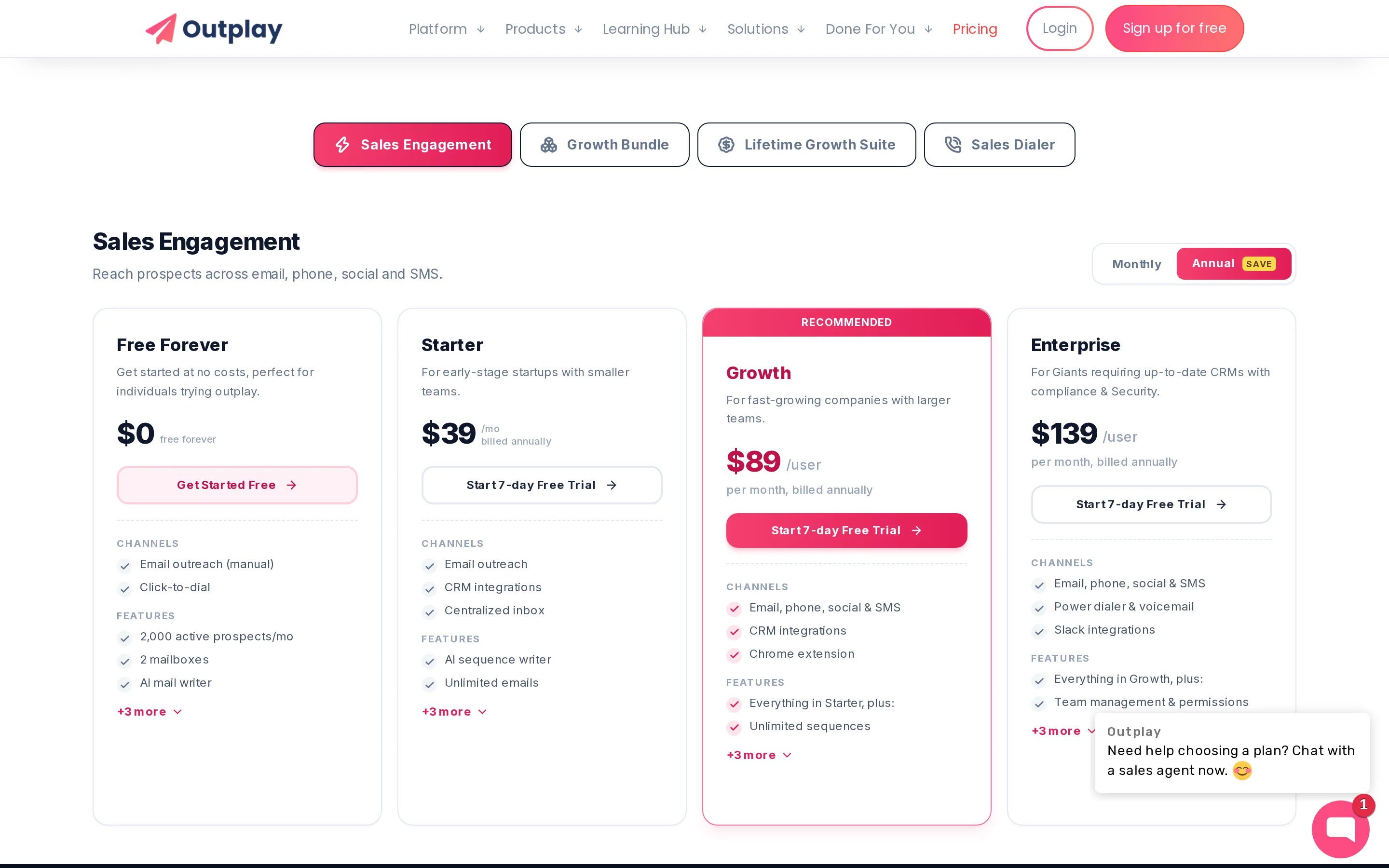
Outplay HQ plans
- Free Forever: $0/mo (5k prospects, 2 mailboxes, basic features)
- Starter: Pricing not explicitly listed in research snippet, typically entry-level paid tier
- Growth: Pricing not explicitly listed in research snippet, mid-tier with unlimited mailboxes
- Enterprise: Custom Enterprise Pricing (Contact Sales)
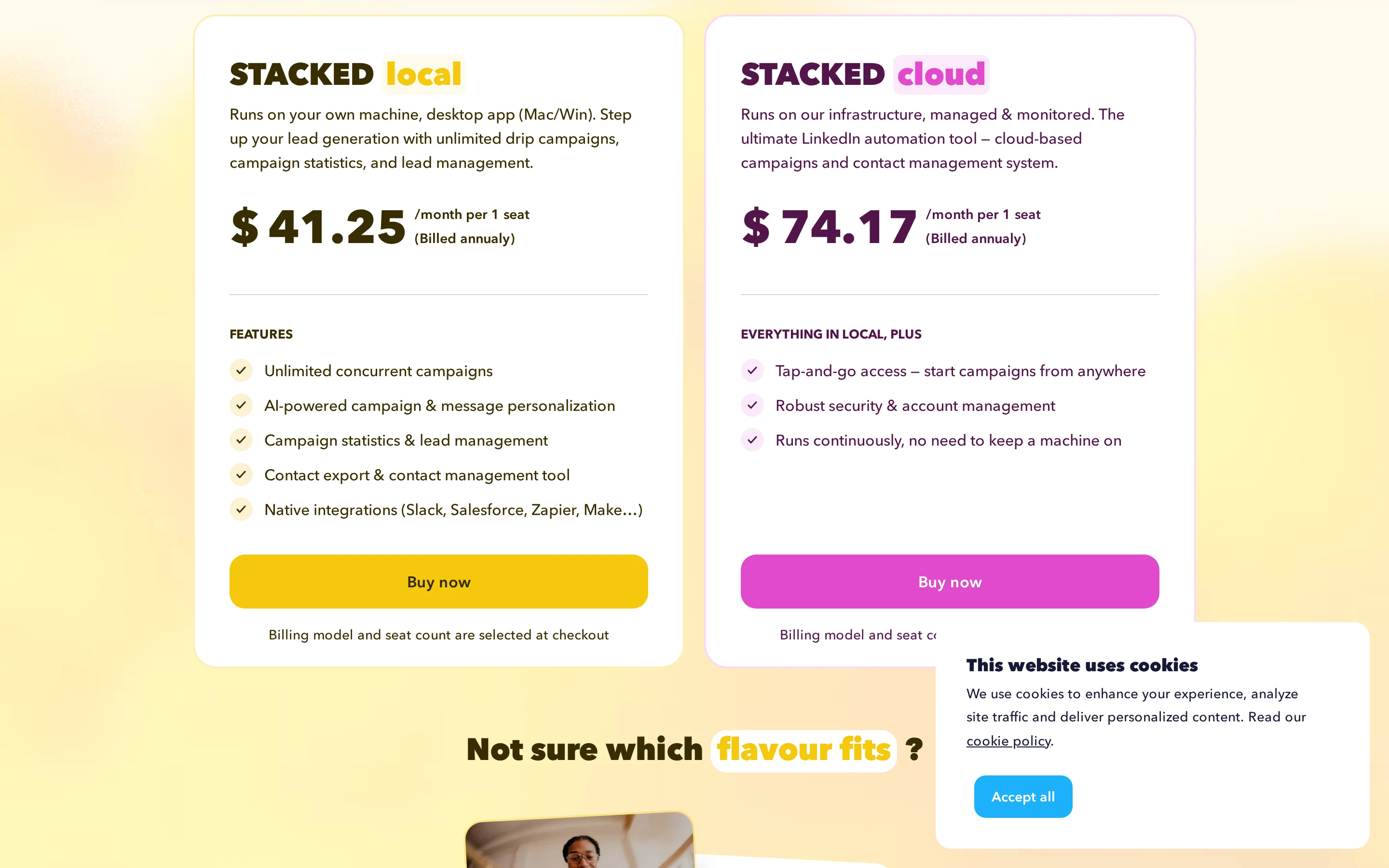
Dux Soup plans
- STACKED Local: $55.00/month per seat (or $41.25/mo billed annually)
- STACKED Cloud: $99.00/month per seat (or $74.17/mo billed annually)
Outplay HQ offers a more accessible entry point with its Free Forever plan, making it ideal for startups or individual reps testing the waters without financial commitment. However, once scaling beyond the free limits, Outplay’s paid tiers (Starter/Growth) generally command higher monthly fees due to the inclusion of multi-channel capabilities (Voice, SMS) and advanced CRM syncing. Dux Soup has no free tier, forcing an immediate investment of $55-$99 per month per user. While Dux Soup’s annual discount (25%) brings the effective cost down to ~$41-$74, it remains a specialized tool. If you compare them head-to-head for a single rep doing only LinkedIn work, Dux Soup Local is cheaper than most Outplay paid plans. But if you factor in the need for email and calling tools, Outplay becomes the more economical consolidated solution compared to buying Dux Soup plus a separate email sequencer.
of Ownership Analysis
For a 5-person sales team needing 10,000 verified leads per month:
Scenario A: Outplay HQ (Growth Plan)
Assuming the Growth plan covers 100k prospects (well above the 10k requirement) and includes unlimited mailboxes.
* Cost: Exact dollar amount for Growth is not provided in the snippet, but typical market rates for this tier range $80-$120/user/mo. Let's estimate conservatively at $100/user/mo for calculation purposes based on industry standards for comparable features.
* Total Monthly: 5 users * $100 = $500/mo.
* Includes: Email, SMS, Calling, CRM Sync, Analytics.
Scenario B: Dux Soup (STACKED Cloud)
Since Dux Soup does not handle email/calls, the team would need a separate tool for those channels, but assuming they ONLY use LinkedIn for this exercise:
* Cost: 5 users * $99/mo = $495/mo.
* Annual Discount: 5 users * $74.17/mo = $370.85/mo.
* Limitation: No native email/SMS. Requires additional spend on an email sequencer (e.g., Instantly.ai or Smartlead) to reach 10k leads effectively if LinkedIn alone isn't enough.
Verdict: If the team relies solely on LinkedIn, Dux Soup Cloud is slightly cheaper (~$495 vs ~$500+). However, if they need multi-channel outreach (which is standard for 10k leads), Outplay provides all necessary tools in one subscription, whereas Dux Soup would require stacking another $200-$300/mo tool, making Outplay the more efficient total cost of ownership for full-funnel outbound.
Which fits your outbound model?
Match your team size, deal complexity, and lead volume to the right engine.
High-Volume Cold Outbound
Outplay HQ is built for this, offering mailbox rotation, spintax, and integrated dialers to maximize reply rates across email and phone.
LinkedIn Social Selling & Networking
Dux Soup provides superior, safe automation specifically for LinkedIn actions like connections, InMails, and profile visits.
Agency White-Labeling
Outplay’s Agency plans and multi-client management features make it easier for agencies to manage distinct client domains and sequences.
Recruiting & Talent Acquisition
Both are strong, but Dux Soup’s deep LinkedIn integration is often preferred by recruiters for sourcing passive candidates via Sales Navigator.
Where each platform falls short
Constructive limitations and architectural trade-offs to weigh before signing.
Where Outplay HQ falls short
- No native LinkedIn automation depth (relies on extensions/integrations rather than direct API-like control)
- Pricing tiers for Starter/Growth are not publicly explicit in snippets, requiring sales contact for exact quotes
- Heavier learning curve due to multi-channel complexity (Voice, SMS, Email, CRM)
Where Dux Soup falls short
- No native email, SMS, or voice calling capabilities
- No free plan; mandatory paid subscription from day one
- Local version requires computer to be on for campaigns to run, limiting scalability for some users
The switching playbook
What you gain and give up when migrating across platforms.
- Consolidated multi-channel outreach (Email, SMS, Voice) in one platform
- Robust CRM integration and two-way data sync
- Advanced deliverability features like mailbox rotation and spintax
- Speciali
- Deep, safe automation specifically for LinkedIn workflows
- Option for local desktop execution to save costs
- Simpler setup for teams focusing exclusively on social selling
- All email, SMS, and voice capabilities
- Native CRM synchroni
Frequently asked questions
Direct technical answers about Outplay HQ and Dux Soup.
Which platform has better data accuracy?
Neither platform is a data provider. Outplay integrates with providers like Apollo/Lusha, while Dux Soup scrapes public LinkedIn profiles. Accuracy depends on the source, but Outplay offers scrubbed list imports, while Dux Soup captures real-time profile data.
How do their starting costs compare?
Outplay starts at $0 with a Free Forever plan. Dux Soup starts at $55/month for the Local plan or $99/month for Cloud. Outplay is cheaper to start, but Dux Soup may be cheaper for solo LinkedIn-only users.
Can I connect unlimited mailboxes?
Yes, Outplay HQ offers unlimited mailboxes on the Growth and Enterprise plans. Dux Soup does not manage email mailboxes as it is a LinkedIn-only tool.
Which tool is easier to learn?
Dux Soup is generally easier to learn for its specific purpose (LinkedIn automation). Outplay has a steeper learning curve due to its multi-channel nature, CRM integrations, and advanced automation rulesets.
Does Dux Soup support email sequences?
No. Dux Soup is strictly a LinkedIn automation tool. You must pair it with a separate email sequencer if you want to send cold emails.
Sources & methodology
Every claim is grounded in official vendor documentation and live audits.
Compare with sendroAI
See how sendroAI replaces manual research, credit limits, and deliverability traps with full autonomous execution.