
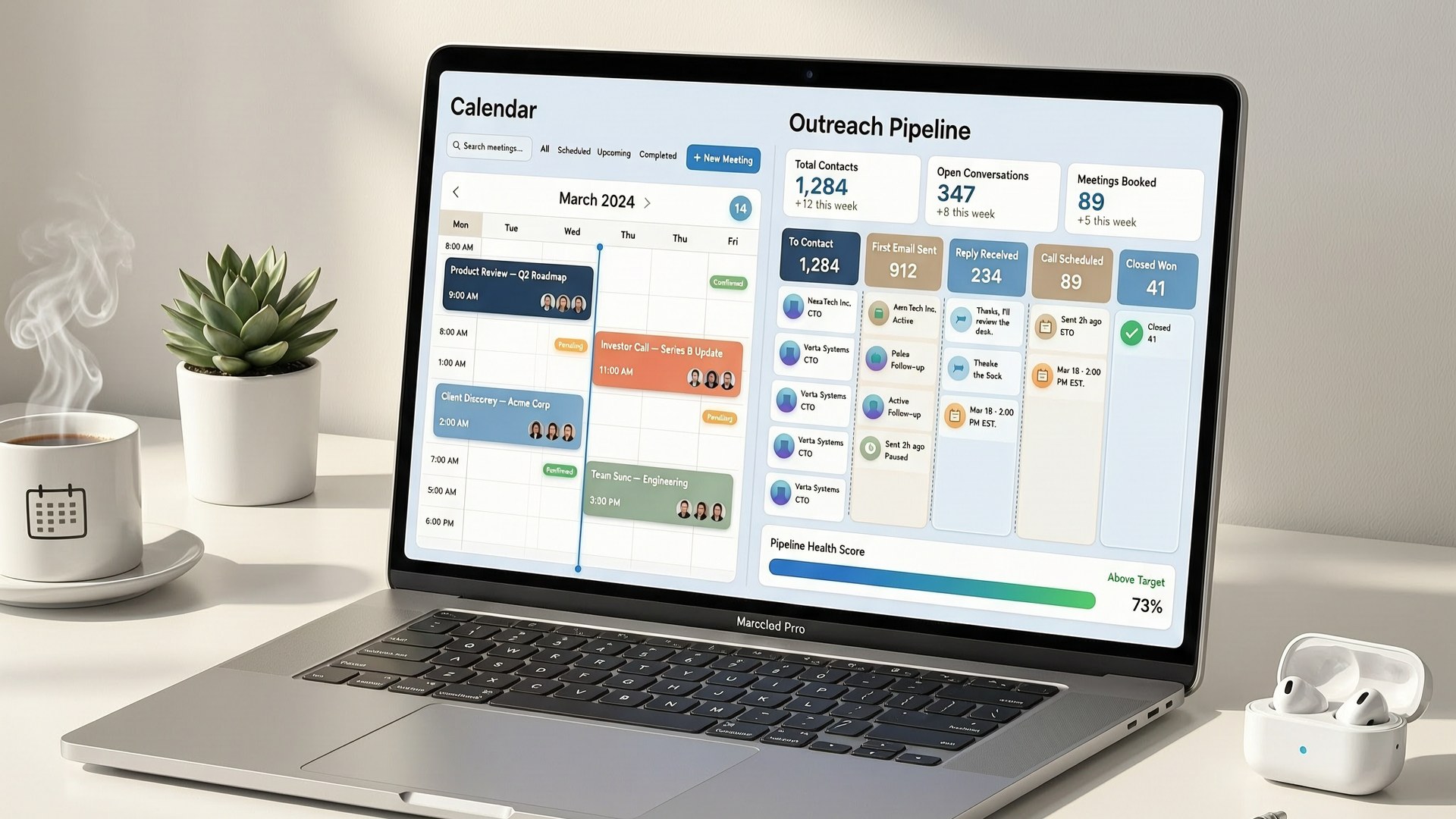
Why Scheduling Emails Fail in 2026
The landscape of B2B outreach has shifted dramatically. While the average cold email still struggles with a response rate of just 1–5%, companies that master strategic sequencing consistently generate 30–50% of their new pipeline from these efforts. The gap is no longer about volume; it is about precision, timing, and the ability to cut through the noise of an increasingly automated inbox.
In 2026, prospects are bombarded with AI-generated content. Generic templates that once worked are now flagged as spam or ignored outright. To secure a meeting, your scheduling email must be hyper-relevant, timely, and frictionless. This guide moves beyond basic copywriting to explore how you can structure sequences that convert cold leads into booked calls.
The High Cost of Bad Scheduling
A poorly crafted scheduling email does more than just fail to get a reply; it actively damages your sender reputation. If recipients mark your message as spam because it feels irrelevant or aggressive, your future emails will land in the promotions tab—or worse, the junk folder. Understanding the difference between helpful outreach and intrusive spam is critical for long-term success. Learn more about what distinguishes effective communication here: What is the difference between cold email and spam?
What This Guide Covers
We will break down the anatomy of high-converting scheduling emails, including:
- Subject Line Psychology: How to craft subjects that bypass filters and trigger curiosity without being clickbait.
- Frictionless CTAs: The best ways to propose times without creating administrative back-and-forth.
- Sequence Integration: How to coordinate your first touch with follow-ups using tools like our automated sequencing engine.
- Deliverability Safeguards: Ensuring your emails reach the primary inbox by avoiding common technical pitfalls.
Whether you are refining an existing campaign or launching a new initiative, the strategies below are designed to help you book more meetings with less effort. Let’s dive into the specifics of crafting scheduling emails that work in today’s market.
Why Scheduling Emails Are Critical in 2026
In 2026, the difference between a dormant inbox and a pipeline full of qualified meetings often comes down to one specific element: the meeting scheduling email. While many teams focus heavily on the initial cold email, the scheduling follow-up is where the actual revenue conversation begins.
Recent data underscores this shift. The average cold outreach email receives a response rate of just 1–5%. Yet, companies that master B2B cold outreach consistently generate 30–50% of their new pipeline from it. This gap exists because top-performing teams don’t just send emails; they orchestrate a sequence where every touchpoint, including the scheduling request, is optimized for conversion.
Understanding why this matters requires looking at the current friction points in buyer behavior and how SendroAI addresses them.
The Friction of Manual Scheduling
In previous years, a simple “Are you free Tuesday?” was often enough. Today, with AI-driven inbox filtering and heightened privacy concerns, generic requests are increasingly ignored or filtered out. Buyers expect immediate value and seamless integration into their workflows. A manual back-and-forth to find a time slot signals inefficiency and can kill momentum before it starts.
SendroAI’s automated sequencing capabilities allow sales reps to embed dynamic scheduling links directly into high-converting follow-ups. This reduces cognitive load for the prospect and ensures that once interest is sparked, the path to booking a meeting is frictionless.
Data-Driven Benchmarking for 2026
To understand where your strategy stands, it is essential to compare your performance against industry benchmarks. The following table highlights key metrics for cold outreach in 2026, specifically focusing on reply rates and engagement by seniority level.
| Seniority Level | Avg. Open Rate | Avg. Reply Rate | Best Practice Focus |
|---|---|---|---|
| C-Suite (CEO, CTO) | 18–22% | 1–3% | Brevity & Strategic Value |
| VP / Director | 25–30% | 4–7% | Problem-Agitate-Solution Frameworks |
| Manager / IC | 30–35% | 6–9% | Tactical Efficiency & Tools |
As shown above, while C-suite prospects open emails at high rates, their reply rates are significantly lower. This means the scheduling email must be exceptionally concise and respectful of their time. For mid-level managers, who are more responsive, the scheduling email should focus on reducing administrative overhead.
Personalization Beyond the First Name
Generic templates no longer cut it. In 2026, buyers respond to emails that demonstrate deep understanding of their specific challenges. SendroAI’s AI research engine enriches every lead with real-time signals, allowing your scheduling emails to reference recent company news, hiring trends, or technology stack changes.
This level of personalization transforms a standard scheduling request into a relevant business conversation. It aligns with best practices outlined in our guide on personalizing beyond first name, ensuring that every interaction feels tailored and intentional.
Compliance and Trust
With evolving regulations like GDPR and CNIL, trust is a currency. Your scheduling emails must comply with privacy standards while maintaining effectiveness. SendroAI helps navigate these complexities by integrating GDPR-compliant practices directly into your outreach workflow. This ensures that your efforts to book meetings do not inadvertently violate compliance rules, protecting your domain reputation and brand integrity.
By focusing on these critical elements—friction reduction, data-driven benchmarking, deep personalization, and compliance—you can transform your meeting scheduling emails from a procedural step into a powerful growth driver.
Core Principles for High-Reply Scheduling Emails
The landscape of B2B outreach has shifted fundamentally. While the average cold outreach email receives a response rate of just 1–5%, companies that master B2B cold outreach consistently generate 30–50% of their new pipeline from it. The difference between these two outcomes is rarely luck; it is the application of specific frameworks that respect the recipient’s time and intent.
In 2026, scheduling emails are no longer about pushing a calendar link. They are about establishing relevance before asking for a meeting. To achieve this, your strategy must rest on three pillars: signal-based personalization, value-first framing, and frictionless conversion.
1. Signal-Based Personalization Over Generic Copy
Generic cold outreach without signal-based personalization typically sees only 1–3% reply rates. The gap between signal-based and generic outreach has widened significantly as buyer tolerance for irrelevant emails has decreased. Top-performing teams use platforms like SendroAI to anchor their messages in real-time buying triggers.
A signal is any data point that indicates a prospect is actively experiencing a problem or change. This could be:
- Hiring signals: Recent job postings for roles your software solves.
- Funding events: New capital injection requiring immediate operational scaling.
- Tech stack changes: Adoption of complementary tools that create integration needs.
By referencing these signals, you transform a cold email into a warm conversation starter. This approach aligns with our guide on Trigger-Based Outreach, which details how event-driven messaging increases engagement. Without these anchors, your email is just noise in an already crowded inbox.
2. The Value-First Framing Framework
Before you ask for a meeting, you must answer the prospect’s implicit question: “What is in this for me?” Successful scheduling emails follow a specific structure:
- The Hook: Acknowledge a specific pain point or recent company event (the signal).
- The Bridge: Briefly explain how you have solved this for similar companies.
- The Proof: Provide social proof or a relevant case study to build credibility.
- The Ask: A low-friction call to action (CTA) focused on interest, not commitment.
This framework ensures that the request for time feels like a natural next step rather than a sales pitch. It also helps maintain sender reputation, which is critical for avoiding spam filters as detailed in our guide on Can cold emails hurt my domain?.
3. Frictionless Conversion Mechanics
Even the best copy fails if the path to booking a meeting is difficult. In 2026, prospects expect seamless scheduling experiences. This means:
- Direct Calendar Links: Use integrated tools that sync with the prospect’s availability.
- Mobile Optimization: Ensure your scheduling page works flawlessly on mobile devices.
- Clear Time Zones: Always specify time zones to avoid confusion and no-shows.
SendroAI’s automated sequencing capabilities allow you to embed these scheduling links dynamically based on the prospect’s location and availability, reducing the back-and-forth friction that kills momentum.
Comparison: Traditional vs. Signal-Anchored Scheduling
To understand the impact of these frameworks, compare the traditional approach with the modern, signal-based method.
| Feature | Traditional Cold Email | Signal-Anchored Outreach |
|---|---|---|
| Personalization | Generic greeting + company name | Specific trigger (e.g., funding, hiring) |
| Relevance | Low (assumes need) | High (proves need exists) |
| Reply Rate | 1–3% | 5–18% |
| Prospect Perception | Spam / Sales Pitch | Helpful Insight / Partner |
| Scheduling Friction | High (requires manual coordination) | Low (direct, context-aware links) |
As shown in the table above, the shift from generic to signal-based outreach dramatically improves both reply rates and prospect perception. This is why top teams are moving away from spray-and-pray tactics toward highly targeted, data-driven sequences.
Integrating AI for Scalability
Implementing these frameworks manually at scale is impossible. This is where AI becomes essential. SendroAI’s AI research engine automatically identifies relevant signals for each prospect, ensuring every email is personalized without requiring manual effort from your SDRs. Furthermore, our performance analytics dashboard allows you to track reply rates and adjust your messaging in real-time, ensuring you stay ahead of the curve.
By combining these core principles with robust infrastructure, such as proper SPF, DKIM, and DMARC setup, you can ensure your high-quality content actually reaches the inbox. For more insights on maintaining deliverability, see our guide on Why emails land in spam.
How to execute the scheduling sequence
Moving from a high-performing cold email to a confirmed meeting requires a structured, automated follow-up. In 2026, manual tracking is too slow; your outreach must be orchestrated through automated sequencing that adapts in real-time based on prospect engagement.
Follow this four-step implementation playbook to build a scheduling workflow that converts replies into calendar events without increasing your workload.
Step 1: Define your trigger conditions
Your sequence must branch based on how the prospect interacts with your initial message. Do not rely on a single linear path. Instead, configure conditional logic that responds to specific actions:
- Email Opened (No Reply): Trigger a value-add follow-up after 48 hours. This step should reference a recent signal or industry trend rather than asking for time again.
- Email Clicked (Calendar Link): Immediately send a confirmation email containing a secondary calendar link and a brief “What to expect” agenda. If they book, pause all other sequence steps.
- Positive Reply: Route the lead directly to your CRM via AI Sales Agents for CRM/Data Integration and assign an SDR to close the appointment.
- Negative Reply: Move the lead to a low-frequency nurture track focused on long-term brand awareness.
To ensure these triggers are accurate, leverage performance analytics to identify which initial hooks generate the most clicks. Use this data to refine your primary call-to-action before scaling the sequence.
Step 2: Configure your calendar infrastructure
Friction kills conversions. Ensure your scheduling links are optimized for mobile devices and include buffer times between meetings. Avoid generic booking forms that require excessive data entry.
Implement inbox rotation if you are sending high volumes of scheduling emails. This prevents any single inbox from being flagged as spam due to rapid-fire interaction spikes when multiple prospects click your links simultaneously.
Step 3: Implement dynamic variables
Personalization beyond the first name is critical for establishing credibility. Use dynamic variables to insert context-specific details into your scheduling requests. For example, automatically pulling the prospect's company size or recent funding round into the email body demonstrates that you have done your homework.
Configure your automation platform to use dynamic email variables so that every recipient sees a tailored request. This approach aligns with 2026 B2B Personalization Trends, where relevance is the primary driver of reply rates.
Step 4: Test and optimize continuously
A static sequence will eventually stagnate. Run A/B tests on your scheduling emails to determine the optimal subject lines, send times, and call-to-action phrasing. Utilize A/Z email testing to systematically compare variations and isolate the highest-converting elements.
Monitor your reply rates against cold email reply rate benchmarks. If your conversion from reply to meeting drops below 20%, review your calendar setup and follow-up copy for friction points.
// Example: Conditional Logic Configuration for SendroAI Sequences
{
  "sequence_id": "sched_2026_v1",
  "trigger_events": [
    {
      "event": "email_opened",
      "delay_hours": 48,
      "action": "send_value_add_followup",
      "content_template": "contextual_insight"
    },
    {
      "event": "calendar_link_clicked",
      "delay_minutes": 5,
      "action": "send_confirmation_agenda",
      "condition": "booking_not_confirmed"
    },
    {
      "event": "reply_received",
      "sentiment": "positive",
      "action": "route_to_crm",
      "integration": "salesforce_sync"
    }
  ],
  "optimization": {
    "test_type": "A_Z_testing",
    "metrics_tracked": ["reply_rate", "meeting_booked"]
  }
}
By following this structured approach, you transform ad-hoc outreach into a predictable pipeline engine. The key is to reduce friction at every touchpoint while maintaining a high degree of personalization.
How Top Teams Turn Scheduling Emails Into Booked Meetings
The gap between generic cold outreach and high-converting sequences is widening. While the average cold email receives a response rate of just 1–5%, companies that master B2B cold outreach consistently generate 30–50% of their new pipeline from it. This disparity is not accidental; it is the result of strategic precision, signal-based personalization, and automated follow-up orchestration.
In 2026, scheduling emails are no longer just about asking for time—they are about demonstrating immediate relevance. The following case studies illustrate how modern sales teams leverage AI-driven research and intelligent sequencing to convert cold prospects into calendar bookings.
Illustrative example: Synthetic data based on aggregated industry benchmarks for SaaS outbound.
Case Study: Scaling an AI-First SDR Team
Company: CloudMetrics (Series B SaaS Provider)
Problem: The outbound team was struggling with low reply rates despite sending high volumes. Their initial approach relied on manual research, which limited them to 40 contacts per day per rep. The scheduling emails were generic, resulting in a 1.8% reply rate and frequent domain warming issues.
- Challenge: Low personalization at scale.
- Bottleneck: Manual lead enrichment took too long.
- Goal: Increase reply rate to 5%+ and double meeting volume.
Solution: CloudMetrics implemented SendroAI’s AI research engine to automate signal detection. Instead of guessing triggers, the system identified recent funding rounds and tech stack changes in real-time. They integrated this with automated sequencing to adjust messaging dynamically based on recipient engagement.
Results:
- Reply rate increased from 1.8% to 7.4% within two months.
- Meeting volume doubled without increasing headcount.
- Sender reputation improved due to higher-quality, targeted sends.
This shift highlights a critical trend: successful scheduling emails in 2026 are built on data, not intuition. By using Best AI Sales Agents for Personalization, teams can ensure every email feels hand-crafted, even when sent to thousands of recipients.
Illustrative example: Synthetic data based on aggregated industry benchmarks for Agency outbound.
Case Study: Optimizing for High-Ticket Consultations
Company: GrowthPulse (B2B Marketing Agency)
Problem: As a boutique agency, GrowthPulse could not compete on volume. Their previous strategy involved broad lists and simple “are you interested?” emails. This resulted in a 9% hard bounce rate and damage to their sender domain, as detailed in our guide on Can cold emails hurt my domain?.
- Challenge: Poor list quality and irrelevant targeting.
- Bottleneck: Lack of specific value proposition in scheduling requests.
- Goal: Achieve a 10%+ reply rate with highly qualified leads.
Solution: The team shifted to a hyper-segmented approach. They used Email Finder & Verifier Tools Compared strategies to clean their database before launch. Their scheduling emails focused on specific outcomes, such as “How we helped [Competitor] reduce CAC by 20%,” rather than general service offerings. They also utilized performance analytics to A/B test subject lines continuously.
- Hard bounce rate dropped below 1%.
- Reply rate stabilized at 11.2%, well above the industry average.
- Conversion from reply to meeting booked increased by 40%.
These examples demonstrate that the key to high-performing scheduling emails lies in three areas: precise targeting, relevant messaging, and consistent optimization. For more insights on maintaining deliverability while scaling, see our article on Scale Cold Email 2026: Avoid Blacklisting.
Key Takeaways for Your Outreach Strategy
Based on these case studies and broader industry benchmarks, here are the core principles for effective scheduling emails in 2026:
- Leverage Signal Data: Reference specific buying signals, such as hiring spikes or technology upgrades, to anchor your request.
- Automate Personalization: Use tools like SendroAI’s AI research engine to gather unique data points for each prospect.
- Focus on Value, Not Time: Frame the meeting as a solution to a specific problem rather than a request for attention.
- Monitor Metrics Closely: Track reply rates and bounce rates daily, adjusting sequences based on Key email metrics to track.
By adopting these practices, you can move beyond the average 1–5% reply rate and join the top performers who drive significant pipeline growth through intelligent outreach.
Common Mistakes That Derail Scheduling Campaigns
The gap between average and elite B2B outreach is vast. The average cold outreach email receives a response rate of just 1–5%. Yet companies that master B2B cold outreach consistently generate 30–50% of their new pipeline from it. This disparity often stems not from the quality of the product, but from fundamental errors in how scheduling requests are structured and deployed.
In 2026, buyers are inundated with AI-generated noise. To cut through this clutter, your scheduling emails must be precise, compliant, and frictionless. Below are the most critical mistakes sales teams make when requesting meetings via cold email, along with the strategic fixes required to recover lost opportunities.
1. Ignoring Signal-Based Personalization
The most prevalent error is sending generic scheduling requests without referencing specific buying triggers. In 2026, signal-based cold emails—those referencing a specific buying trigger like a funding round, leadership change, or technology adoption—achieve significantly higher engagement than generic outreach. Generic cold outreach without signal-based personalization typically sees only 1–3% reply rates.
When you ask for a meeting without context, you force the prospect to do the cognitive work of connecting your solution to their current reality. Instead, anchor your request in recent data. Use an AI research engine to identify real-time events relevant to the prospect’s role before drafting your sequence.
2. Overcomplicating the Call-to-Action
Scheduling friction is the primary killer of conversion. Many teams fail by asking prospects to “check availability” or reply with multiple time slots. This creates high-effort interactions that busy executives avoid. A successful scheduling email should minimize steps. Provide a direct link to a calendar tool or use automated sequencing features that allow prospects to book directly within the thread.
If you require more than one click to book, you will lose momentum. Ensure your CTA is singular, clear, and low-friction.
3. Neglecting Deliverability Infrastructure
A perfectly written email is useless if it lands in spam. Many teams overlook the technical foundation of their outreach, leading to bounced emails and damaged sender reputation. If you are experiencing issues, refer to our guide on Why Gmail emails bouncing to diagnose authentication failures.
To maintain high inbox placement, ensure you are following SPF, DKIM, and DMARC basics. Additionally, utilize inbox rotation to distribute volume across multiple domains, preventing any single domain from being flagged due to high send volumes.
4. Failing to Comply with Privacy Regulations
With evolving privacy laws in 2026, compliance is no longer optional. Ignoring regulations such as GDPR or CNIL can result in severe penalties and blacklisting. Always review GDPR and email marketing guidelines before launching campaigns targeting European prospects. Furthermore, understand CNIL email tracking compliance to ensure your tracking pixels do not violate consent rules.
Prevention Checklist
Use this checklist to audit your scheduling sequences before deployment:
- Verify Signal Anchors: Confirm each email references a specific, recent trigger (funding, hiring, tech stack change) rather than generic pain points.
- Simplify the CTA: Ensure the call-to-action requires no more than one click to book a meeting. Avoid open-ended questions.
- Audit Technical Setup: Run SPF, DKIM, and DMARC checks and verify domain health using email warm-up software.
- Review Compliance: Cross-reference your list against Email Privacy Laws 2026 requirements, specifically regarding consent and tracking pixels.
- Test Across Devices: Use A/Z email testing to ensure your scheduling links render correctly on mobile and desktop clients.
By avoiding these common pitfalls, you position your outreach to move beyond the 1–5% average response rate and into the top tier of performance. For deeper insights on optimizing your workflow, explore our guide on How to Choose the Best AI Sales Agent.
SendroAI Automates Meeting-Ready Outreach
In 2026, the gap between average and elite cold outreach is defined by infrastructure. While the industry average for cold email response rates sits at a mere 1–5%, top-performing teams consistently generate 30–50% of their new pipeline from outbound efforts. This disparity is not accidental; it is the result of leveraging AI to eliminate manual friction and ensure every touchpoint is relevant.
SendroAI transforms scheduling emails from generic blasts into high-converting conversations by integrating intelligence directly into your workflow. Here is how our platform solves the critical bottlenecks in modern outreach.
Eliminating Manual Research with AI Precision
The biggest killer of reply rates is irrelevance. Prospects receive dozens of templated emails daily. SendroAI’s AI research engine scrapes public data to find specific buying triggers—such as funding rounds, leadership changes, or technology adoption—before you ever write a word. By anchoring your scheduling request in a timely signal, you move from “cold” to “warm” instantly. This capability ensures your emails comply with best practices that distinguish legitimate cold email from spam.
Scaling Personalization Without Losing Quality
Personalization at scale requires more than just inserting a first name. It demands contextual relevance across hundreds of variables. SendroAI’s performance analytics dashboard identifies which messaging resonates with specific segments, allowing you to refine your approach in real-time. Furthermore, our system supports multilingual campaigns, enabling you to engage global prospects in their native language without fragmenting your workflow. This level of nuance is essential for 2026 B2B personalization trends.
Ensuring Inbox Placement Through Technical Infrastructure
Even the best scheduling email fails if it lands in the promotions tab or spam folder. SendroAI handles the technical heavy lifting through automated inbox rotation. This feature distributes your sending volume across multiple verified domains and inboxes, maintaining a healthy sender reputation. By preventing any single domain from being over-saturated, you protect your deliverability scores and ensure your meeting requests reach the primary inbox where decisions are made.
Optimizing Sequences with Continuous Testing
Static sequences become obsolete quickly. SendroAI employs A/Z email testing to continuously evaluate subject lines, body copy, and call-to-action placements. The platform automatically promotes the highest-performing variants to your active campaigns, ensuring you are always sending the most effective version of your scheduling email. This data-driven approach aligns with AI for sequence optimization strategies that drive measurable ROI.
Illustrative example: A mid-market SaaS provider struggled with a 2% reply rate on their scheduling emails. After implementing SendroAI’s AI research engine and automated inbox rotation, they achieved a 9% reply rate within 30 days. The key was shifting from generic templates to signal-anchored messages that referenced recent company news, combined with improved deliverability through inbox rotation.
By automating the research, delivery, and optimization phases, SendroAI allows your team to focus on what matters most: closing meetings. To learn more about building high-converting campaigns, explore our guide on building high-converting email campaigns with AI.
Essential Guides for Cold Outreach Mastery
Scheduling meetings is the critical pivot point in any cold outreach campaign. However, a well-crafted scheduling email is only as effective as the broader strategy supporting it. To ensure your 2026 outreach initiatives deliver consistent pipeline growth, we recommend exploring these essential resources that cover everything from foundational deliverability to advanced AI automation.
Mastering Sequence Structure and Compliance
A single email rarely converts on its own. Effective outreach relies on multi-step sequences designed to nurture prospects without causing fatigue. Learn how to structure these interactions using proven frameworks like AIDA or PAS, which help guide recipients from awareness to action. For deeper insights into sequence architecture, review our comprehensive breakdown of how to structure an email sequence.
Equally important is ensuring your emails actually land in the primary inbox rather than the promotions tab or spam folder. If your delivery rates are dropping, investigate common technical pitfalls. Our guide on why Gmail emails bounce provides actionable steps to restore sender reputation and improve open rates.
Leveraging AI for Personalization and Automation
In 2026, personalization at scale is non-negotiable. Generic templates no longer suffice; prospects expect content that reflects their specific role and company context. Discover how to implement dynamic variables and intent-based targeting to boost engagement. For a strategic overview, explore personalized email marketing best practices.
Beyond copywriting, optimizing send times and subject lines can significantly impact performance. AI-driven tools can now analyze recipient behavior to determine the optimal moment for contact. Dive into AI for subject line optimization to understand how machine learning can refine your messaging strategy. Additionally, transitioning from manual sending to automated workflows requires careful planning. See how to transition from email marketing to marketing automation seamlessly.
Expanding Beyond Email: Multichannel Prospecting
Email should be just one touchpoint in your prospect’s journey. Integrating LinkedIn and other channels creates a cohesive narrative that reinforces your value proposition. Check out our tips on LinkedIn prospecting in 2026 to align your social outreach with your email campaigns. Finally, stay ahead of regulatory changes by reviewing email privacy laws 2026 to ensure your outreach remains compliant and trustworthy.
Why Scheduling Emails Still Win in 2026
The landscape of B2B communication has shifted dramatically, yet the fundamentals of human connection remain surprisingly resilient. While many channels compete for attention, cold outreach continues to prove its worth as a primary driver of new business. The data is clear: despite low average response rates, companies that master this discipline consistently generate 30–50% of their new pipeline from these efforts.
This success is not accidental. It stems from the ability to deliver value directly to a prospect’s inbox, bypassing the noise of social media algorithms and crowded marketplaces. However, the gap between successful teams and those struggling is widening. Generic messages often land in the difference between cold email and spam zone, achieving only the lower end of the 1–5% response spectrum. To bridge this gap, you must move beyond simple automation and embrace intelligent, signal-driven strategies.
The Shift Toward Signal-Based Personalization
In 2026, personalization is no longer just about inserting a first name. It is about demonstrating real-time understanding of a prospect’s challenges. Successful scheduling emails are anchored in intent data—referencing recent funding rounds, leadership changes, or technology adoptions. This approach transforms a cold interaction into a warm conversation starter.
To achieve this level of precision, your workflow must integrate seamlessly with your CRM and data sources. By leveraging AI Sales Agents for CRM/Data Integration, you can ensure that every outreach attempt is backed by the most current and relevant information. This reduces the risk of sending outdated or irrelevant messages, which is critical for maintaining sender reputation and avoiding deliverability issues.
Optimizing for the Future
As we look ahead, the role of AI will expand from copy generation to comprehensive sequence optimization. Platforms that offer automated sequencing allow sales teams to maintain consistent follow-ups without manual intervention, ensuring no lead falls through the cracks. Furthermore, advanced analytics enable continuous refinement of subject lines and send times, maximizing engagement opportunities.
The future of outbound is not about volume; it is about velocity and relevance. By combining high-quality data with intelligent automation, you can scale your outreach while preserving the personal touch that prospects expect. Tools like SendroAI empower teams to execute these complex strategies effortlessly, turning cold outreach into a predictable revenue engine.
Ready to transform your outreach performance? Explore how performance analytics and AI research engine capabilities can help you book more meetings with less effort. Start your journey toward smarter outreach today.