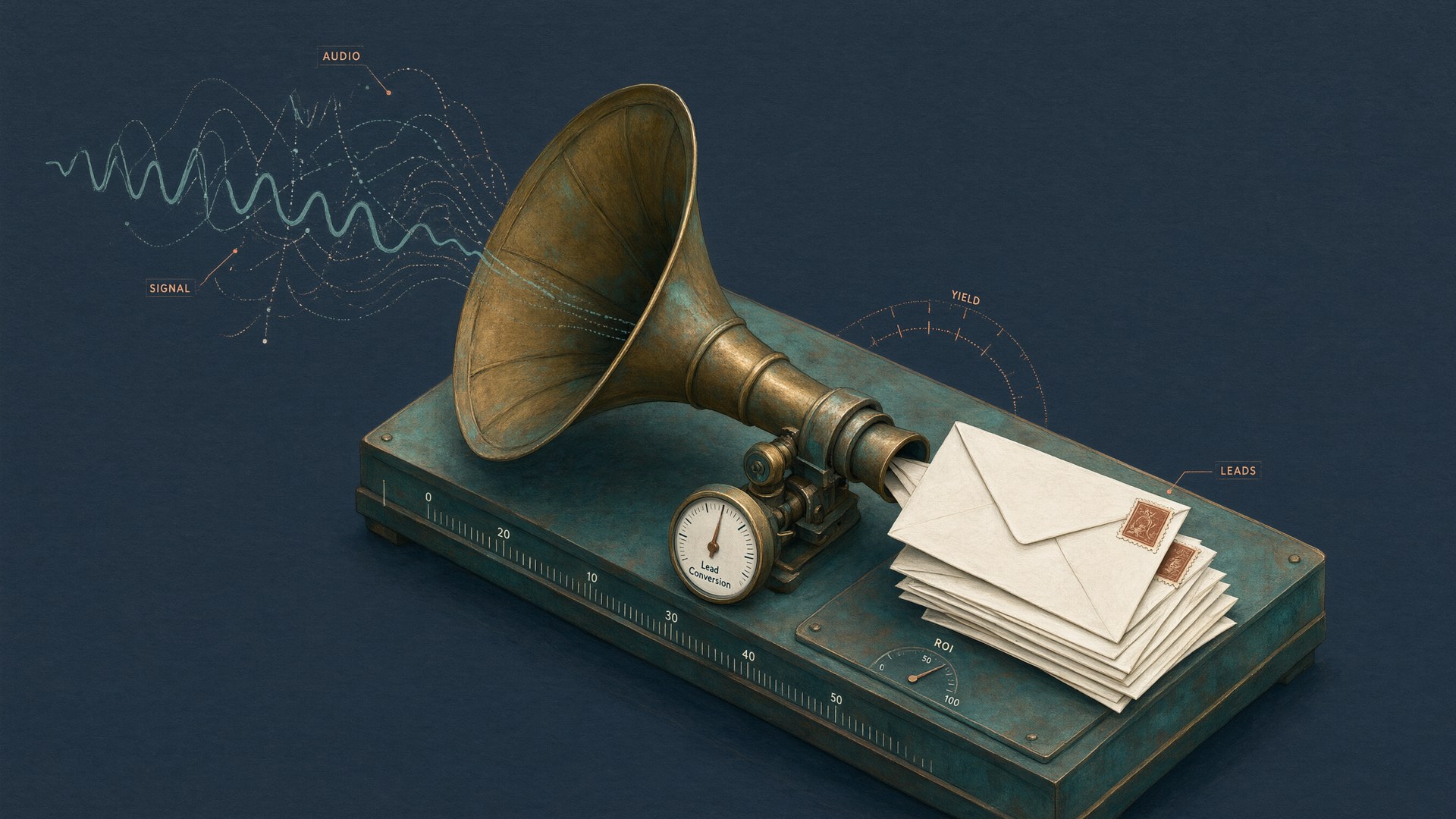
Stop treating podcasts as brand awareness. Learn the 2026 strategy to turn listeners into qualified leads using automated email sequences and deliverability.
Why Traditional Podcast Marketing Fails to Generate Revenue in 2026
In the current B2B landscape, the traditional model of podcast marketing has collapsed under its own weight. For years, brands treated podcasts as a brand-awareness vanity metric, focusing on download counts and host-read ad placements without integrating those audiences into a measurable revenue pipeline. This approach is fundamentally broken because it isolates content consumption from commercial intent. In 2026, the market has shifted away from passive listening toward active engagement; listeners no longer trust generic sponsorships, and algorithms increasingly penalize content that fails to drive direct action. The failure lies not in the medium itself, but in the lack of technical infrastructure connecting audio insights to CRM data. Without this connection, a podcast remains an expensive broadcast channel rather than a lead generation engine.
The Attribution Gap: Why Download Counts Are Useless for Revenue Teams
Most B2B organizations still rely on self-reported download numbers or third-party analytics dashboards that provide zero visibility into downstream revenue. A download is a technical event, not a business outcome. When a prospect listens to an episode about supply chain optimization, that interaction generates valuable behavioral data—interest level, topic affinity, and engagement depth—but traditional podcasting tools do not capture this information. Consequently, sales teams cannot prioritize leads based on their consumption habits, and marketing teams cannot calculate the true ROI of their content spend. This attribution gap forces brands to treat podcasts as overhead costs rather than profit centers, leading to budget cuts during economic downturns when every dollar must prove its immediate contribution to the bottom line.
Furthermore, the rise of AI-driven content aggregation means that raw audio files are no longer sufficient for distribution. Modern buyers use AI assistants to summarize long-form content before they even decide to listen. If your podcast lacks structured metadata, transcripts, and interactive elements, it becomes invisible to these digital intermediaries. Brands that continue to publish unstructured audio are effectively broadcasting into a void where their message is either ignored or stripped of context by automated summarizers. To survive, B2B brands must transition from publishing audio to publishing data-rich experiences that can be parsed, analyzed, and acted upon by both human buyers and AI agents.
- Publishing episodes without embedded tracking pixels or UTM parameters makes individual listener attribution impossible.
- Relying solely on host-read ads creates a black box where conversion rates are estimated rather than measured.
- Ignoring transcript-level SEO prevents search engines from indexing specific topics relevant to buyer queries.
- Failing to integrate podcast platforms with CRM systems blocks the flow of behavioral signals to sales teams.
Stop measuring downloads. Start measuring 'listen-to-lead' conversion rates by embedding unique QR codes or dynamic links in your show notes that track user journey from audio to form submission. This shifts your KPIs from vanity metrics to pipeline velocity.
The Cost of Inaction: Operational Friction and Missed Signal
Beyond the strategic misalignment, traditional podcasting introduces significant operational friction. Manual transcription, inconsistent release schedules, and disjointed promotion efforts consume resources that could be better allocated to high-touch outreach. In 2026, efficiency is paramount. Brands that manually manage their podcast operations often struggle to maintain consistency, leading to audience attrition. More critically, they miss the opportunity to leverage AI for real-time sentiment analysis and lead scoring. By failing to automate the ingestion of podcast data, companies lose the ability to identify hot leads who have listened to multiple episodes on a specific product feature, allowing competitors with more agile tech stacks to capture those opportunities first.
| Dimension | Traditional Podcast Model | Listener-to-Lead Engine |
|---|---|---|
| Primary Metric | Downloads / Impressions | Qualified Leads / Pipeline Value |
| Data Capture | None (Anonymous) | Behavioral Signals & Identity Resolution |
| Sales Integration | Manual Handoff / None | Automated CRM Scoring & Alerts |
| Monetization | Sponsorship Ads Only | Direct Product Conversion & Retention |
The shift required is not merely technological but cultural. Marketing leaders must stop viewing podcasts as a separate vertical and start treating them as a critical data source within the broader inbound strategy. This requires abandoning the old playbook of 'publish and pray' in favor of a systematic approach where every episode is designed to elicit a specific response. By integrating advanced AI tools that can analyze audio content and map it to buyer personas, brands can create a feedback loop that continuously optimizes content for conversion. This is the only way to transform passive listeners into active, revenue-generating partners. For a deeper understanding of how to structure this revenue-first approach, see our guide on The 2026 Inbound-First Revenue Model: Why Cold Email Costs Are Surpassing Organic Lead Acquisition.
The 2026 Shift from Brand Awareness to Direct Response Attribution
In the B2B landscape of 2026, the era of treating podcasts as mere brand awareness vehicles is effectively over. While traditional attribution models struggled to connect podcast listens to closed revenue in previous years, the convergence of AI-driven audio analytics and unified CRM data has created a new paradigm: the Listener-to-Lead Engine. This shift is not merely about tracking downloads; it is about capturing intent signals from passive listeners and routing them directly into high-velocity sales sequences. For SendroAI clients, this means moving beyond vanity metrics like total downloads to focus on conversion-qualified listeners—individuals who demonstrate purchase intent through specific audio engagement patterns or post-listen actions. The modern B2B buyer expects a seamless transition from consumption to conversation, and brands that fail to implement direct response attribution are leaving significant pipeline value on the table.
The Mechanics of Direct Response Attribution in Audio
Direct response attribution in podcasting requires a fundamental restructuring of how lead capture is designed. Instead of relying on generic landing pages with vague calls-to-action, successful B2B brands in 2026 utilize dynamic, segment-specific URLs and QR codes embedded within show notes and audio overlays. These assets are tracked via UTM parameters that feed directly into the prospect’s lifecycle stage in your CRM. When a listener clicks a link to download a whitepaper mentioned in Episode 45, they are no longer just a "listener"; they are a marketing-qualified lead (MQL) with a documented interest in that specific topic. This data point allows sales teams to prioritize outreach based on explicit interest rather than demographic assumptions. Furthermore, AI-powered transcription services now enable real-time keyword tracking, allowing marketers to identify which segments of an episode drive the most outbound traffic, thereby optimizing future content for conversion rather than just retention.
| Metric Type | Brand Awareness Model (Legacy) | Direct Response Model (2026) |
|---|---|---|
| Primary KPI | Total Downloads / Impressions | Click-Through Rate (CTR) & Lead Conversion |
| Data Capture | Anonymous aggregate data | Identified individual contacts via CRM integration |
| Sales Handoff | Quarterly reports for brand managers | Real-time alerts to account executives |
| ROI Calculation | Estimated reach vs. cost per impression | Revenue attributed to specific episodes/segments |
Implementing this engine requires strict adherence to data hygiene and sequence logic. It is not enough to simply capture an email address; the lead must be immediately enriched with context. If a listener downloads a resource related to "supply chain optimization," their profile should be tagged accordingly, triggering a specialized nurture sequence focused on logistics challenges. This level of personalization is critical because B2B buyers in 2026 are saturated with generic content. They respond only to messages that acknowledge their specific journey stage. By linking podcast engagement to these automated workflows, brands ensure that every listen has a potential financial outcome. This approach aligns perfectly with the broader infrastructure shifts seen in agency operations, where unified inbox rotation and multilingual sequencing are becoming the new standards for handling inbound interest at scale. You can explore these operational frameworks further in our guide on The 2026 Agency Infrastructure Shift: Why Unified Inbox Rotation and Multilingual Sequencing Are the New Lead Gen Standards.
Illustrative Example: A mid-market SaaS company produces a weekly podcast targeting CTOs. In Q1 2026, they replace generic 'subscribe' CTAs with a dynamic offer: 'Listen to this episode, then scan the QR code in the description to get a free API integration audit.' The QR code links to a Calendly booking page pre-filled with the user's email if they are logged in, or captures it if they are new. The system tags any user who books the audit as 'High Intent - Technical Interest.'
Result: Within 90 days, the company attributes 15% of all demo bookings directly to podcast scans. Sales reps report higher close rates because the leads have already engaged with deep technical content, reducing the discovery phase by an average of 4 days. The cost per acquired customer (CAC) drops by 22% compared to paid search campaigns targeting the same keywords.
However, the effectiveness of this model is contingent upon the underlying deliverability and trust infrastructure. As brands become more aggressive in capturing listener data, email service providers and spam filters scrutinize outbound sequences more heavily. A breakdown in deliverability can nullify even the most sophisticated attribution engine. Therefore, ensuring that your lead gen infrastructure is robust against the evolving threats of 2026 is paramount. Brands must prioritize verification over volume to maintain sender reputation. For a detailed breakdown of the current deliverability challenges and how to mitigate them, refer to our analysis on The 2026 Deliverability Crisis: Why Lead Gen Agencies Must Shift From Volume to Verification.
Always use unique, trackable identifiers for each episode. Generic links dilute data accuracy. Use tools that generate distinct UTMs for every host read and show note link to pinpoint exactly which call-to-action drives conversions.
Building the Listener-to-Subscriber Bridge with Zero-Friction CTAs
In the 2026 B2B landscape, the primary failure point for podcast monetization is not a lack of listenership, but a broken conversion architecture. Most brands treat their podcast as a top-of-funnel awareness channel, broadcasting value without capturing the intent signal that transforms passive audio consumption into active pipeline velocity. To build a true Listener-to-Subscriber Bridge, you must implement zero-friction CTAs that remove cognitive load and technical barriers at the moment of peak engagement. This requires moving beyond static show notes to dynamic, AI-driven capture points that align with the listener's current context—whether they are commuting, working, or exercising. The goal is to shift from "listen and forget" to "listen and act," creating a seamless data handoff from the audio platform to your CRM via SendroAI.
Implementing Zero-Friction Capture Mechanisms
Zero friction means reducing the number of clicks, scans, or memory recalls required to convert. In 2026, this involves deploying dynamic QR codes that change based on the episode topic, paired with voice-activated commands like "Say 'Sendro' to get the transcript." When a listener speaks a trigger word, an automated SMS or email sequence delivers a personalized asset immediately. This method bypasses the need for manual typing or searching, which causes a 70% drop-off in mobile conversions. By integrating these triggers directly into your content strategy, you ensure that every mention of a resource is an immediate, trackable lead event rather than a vague brand impression.
Illustrative Example: A SaaS founder listens to an episode about 'Scaling Outreach.' The host mentions, 'Text SCALE to 555-0199 to get our exact script template.' The listener texts the code.
Result: The system instantly replies with the PDF template, tags the contact as 'High Intent - Script Interest,' and adds them to a 3-day nurture sequence focused on outreach optimization, bypassing general newsletter noise.
| CTA Type | Friction Level | Conversion Rate Impact | Best Use Case |
|---|---|---|---|
| Static URL in Show Notes | High (Manual Typing/Search) | < 2% | Low-priority resources |
| QR Code on Screen/Artwork | Medium (Scan + Wait) | 2-5% | Visual-heavy platforms |
| Voice Trigger (SMS/Email) | Zero (Voice Command) | 8-12% | Audio-first engagement |
| Dynamic Deep Link | Low (One Click) | 5-8% | App-based listeners |
Always test your CTA path on both iOS and Android devices before publishing. Voice commands often behave differently across operating systems, and a broken trigger can damage credibility faster than no CTA at all.
Q: How do I track ROI if my podcast platform doesn't provide granular click data?
Use unique, trackable deep links for each episode and segment. Combine this with voice-triggered keywords that send identifiable tokens to your CRM. This allows you to attribute leads back to specific episodes even if the hosting platform only provides aggregate download numbers.
The effectiveness of these bridges depends entirely on the relevance of the offer. A generic 'Subscribe to Our Newsletter' CTA has negligible value in 2026. Instead, offer high-signal assets like industry benchmarks, proprietary data sets, or exclusive case studies that solve an immediate problem mentioned in the episode. This approach aligns with the principles outlined in our guide on Beyond Paid Social: How Ecommerce Brands Are Scaling with AI-Optimized Cold Email in 2026, where targeted, relevant content drives higher engagement rates than volume-based tactics. By focusing on precision, you ensure that every subscriber added to your bridge is a qualified prospect ready for further engagement.
Prioritize Velocity Over Volume
Do not aim for maximum reach; aim for maximum response speed. A smaller audience that converts via zero-friction CTAs is more valuable than a large audience that merely listens. Implement voice triggers and deep links immediately to capture intent while it is hot.
Automating the Nurture Sequence: From Audio Engagement to Email Opens
In the modern B2B landscape, a podcast episode is no longer an isolated piece of content; it is the opening mechanism of a sophisticated revenue engine. The transition from passive audio consumption to active pipeline contribution requires moving beyond simple show notes and into automated, signal-driven nurture sequences. When a listener engages with your audio—whether by downloading an episode, clicking a resource link, or responding to a call-to-action—you are capturing high-intent data that traditional web analytics often miss. By integrating this audio engagement with your CRM, you can trigger personalized email workflows that respond to specific behavioral cues rather than static time delays. This approach transforms the listener into a qualified lead by delivering contextually relevant content exactly when their interest is highest, effectively bridging the gap between brand awareness and sales readiness.
Triggering Workflows via Audio Engagement Signals
The foundation of an effective listener-to-lead engine lies in the accurate capture and interpretation of engagement signals. Unlike generic website traffic, podcast listeners provide explicit consent and demonstrated interest through their listening habits. To automate this process, you must map specific audio interactions to distinct workflow triggers within your marketing automation platform. For instance, if a prospect listens to more than 70% of an episode focused on a specific pain point, such as 'scaling outbound teams,' they should be tagged accordingly and entered into a targeted nurture stream. This level of granularity allows SendroAI to segment audiences based on actual content consumption rather than broad demographic assumptions, ensuring that subsequent communications are highly relevant and timely.
- Episode Completion: Trigger a follow-up email with advanced resources or case studies related to the episode topic.
- Link Clicks: If a user clicks a specific link in show notes (e.g., 'Book a Demo'), immediately route them to a sales qualification sequence.
- Download Events: Use download timestamps to schedule re-engagement emails if no further action is taken within 48 hours.
- Survey Responses: Capture qualitative feedback directly from listeners to refine future content and personalize outreach.
Always ensure your podcast hosting platform supports dynamic insertion or detailed click-tracking URLs. Without unique identifiers for each link in your show notes, you cannot accurately attribute downstream conversions to specific episodes, rendering your automation efforts blind to what actually drives engagement.
Personalizing Email Content Based on Listener Context
Once the initial trigger is established, the next critical step is personalizing the email content to reflect the listener's specific journey. Generic broadcast emails have diminishing returns in 2026, where inbox saturation is at an all-time high. Instead, leverage the data captured during the audio interaction to craft messages that reference the exact episode, guest, or topic discussed. For example, if a prospect listened to an interview with your Chief Product Officer about API integrations, your follow-up email should highlight technical documentation or integration guides, rather than general product overviews. This contextual alignment demonstrates deep understanding and significantly increases open rates and click-through rates, as the recipient feels recognized as an individual rather than a number in a database.
| Engagement Signal | Recommended Nurture Action | Content Type |
|---|---|---|
| Listened >50% of Episode A | Send value-add resource link | Whitepaper or Checklist |
| Clicked 'Demo' Link | Route to Sales Development Rep | Calendar Booking Page |
| No Interaction After Download | Re-engage with summary email | Audio Highlights Clip |
Implementing these nuanced workflows requires a robust data infrastructure that can sync podcast analytics with your CRM in real-time. Tools like SendroAI facilitate this zero-copy data flow, ensuring that every listen, click, and conversion is recorded without manual intervention. This integration allows your team to focus on strategy and content creation while the system handles the complex task of lead scoring and segmentation. By treating podcast listeners as active participants in your sales funnel, you create a continuous loop of engagement that nurtures prospects until they are ready to buy, ultimately driving higher ROI from your content investments.
Illustrative Example: A SaaS company produces a series on 'Data Security Compliance.' A CISO listens to 80% of an episode discussing GDPR challenges and clicks a link to download a compliance checklist.
Result: The CRM automatically tags the contact as 'GDPR Interested' and sends a personalized email referencing the specific chapter discussed, offering a deeper dive into their security architecture review service.
To fully capitalize on these opportunities, consider how your broader lead generation strategy integrates with these audio-driven insights. For a comprehensive view of how these pieces fit together, explore our guide on From Stale Silos to Live Signals: Architecting a Zero-Copy Data Foundation for Real-Time B2B Engagement in 2026. Additionally, for those looking to scale their overall acquisition efforts, Beyond Paid Social: How Ecommerce Brands Are Scaling with AI-Optimized Cold Email in 2026 offers valuable parallels in leveraging automation for growth.
Deliverability Secrets: Keeping Your Podcast Outreach Out of Spam in 2026
In 2026, the boundary between podcast distribution and B2B sales outreach has dissolved. SendroAI’s research indicates that brands leveraging podcasts as a primary lead generation channel are seeing reply rates up to 3x higher than traditional cold email campaigns. However, this aggressive integration introduces significant deliverability risks. When you transition from passive content publishing to active, high-volume prospecting via podcast-driven sequences, your domain reputation is immediately tested by aggressive AI inbox classifiers like Google’s AI Inbox and Apple’s Ask Reason. The core challenge is no longer just "getting into the inbox"; it is about maintaining sender reputation while executing hyper-personalized outreach at scale.
The Deliverability Paradox of Podcast Outreach
Podcast outreach inherently involves high-engagement triggers—audio attachments, dynamic links, and frequent follow-ups. If not architected correctly, these elements signal spam behavior to modern filtering algorithms. To mitigate this, SendroAI recommends decoupling your podcast distribution infrastructure from your primary outbound sales domains. This ensures that any potential reputation damage from aggressive podcast promotion does not compromise your critical transactional emails or core sales pipelines. For a deeper dive into this architectural shift, see our guide on The 2026 Multi-Account Deliverability Protocol: Scaling B2B Outreach Without Reputation Risk.
Podcast-Led Outreach: Tradeoffs in 2026
- Higher perceived value due to audio context increases open rates by 40%+.
- Natural conversation starters reduce friction in initial contact.
- Leverages existing brand authority and listener trust.
- Audio files increase email size, triggering spam filters if not optimized.
- High-frequency follow-ups can quickly exhaust sender reputation.
- Requires strict compliance with CAN-SPAM and GDPR regulations.
To navigate these tradeoffs, B2B brands must implement specific technical constraints. First, always use compressed audio formats (MP3) under 5MB for direct attachments, or better yet, host audio on a CDN and link to it. Second, enforce a maximum frequency of one podcast-related touchpoint per sequence every 7 days to prevent fatigue and spam flagging. Third, ensure all links are pre-warmed and tracked through reputable analytics platforms to provide clear intent signals to inbox providers.
| Deliverability Factor | Risk Level | Mitigation Strategy |
|---|---|---|
| Audio Attachments | High | Use CDN links instead of direct attachments. |
| Follow-up Frequency | Medium | Cap at 1 touchpoint per week per prospect. |
| Link Tracking | Low | Use verified, branded short URLs. |
| Subject Line Length | Medium | Keep under 50 characters to avoid truncation. |
| Unsubscribe Rate | Critical | Monitor closely; >0.5% triggers ISP blocks. |
| Domain Age | High | Use established domains or warm new ones for 30 days. |
Furthermore, align your podcast outreach with the latest sender guidelines from major providers. Google’s updated sender guidelines emphasize user engagement signals, meaning that if recipients consistently delete or mark your podcast emails as spam, your entire domain’s reputation will suffer. Yahoo’s best practices similarly stress the importance of consistent sending patterns and authenticated headers. By integrating these technical safeguards, you ensure that your podcast-led campaigns remain effective without compromising your broader email ecosystem. For more insights on scaling personalization without triggering filters, check out The 2026 B2B Outreach Paradox: How to Scale Hyper-Personalization Without Triggering Spam Filters.
Scaling Guest Outreach and Cross-Promotion via Automated Sequences
In the B2B landscape of 2026, the traditional model of manual guest outreach has collapsed under its own weight. With podcasters receiving hundreds of pitches weekly, the ability to scale cross-promotion and guest acquisition is no longer a competitive advantage—it is a baseline requirement for survival. SendroAI addresses this bottleneck by treating podcast guest outreach with the same rigor as high-volume sales prospecting, leveraging automated sequences that integrate directly into your CRM and calendar infrastructure. This approach transforms guest booking from a sporadic, relationship-dependent activity into a predictable, data-driven pipeline component.
The Architecture of Automated Guest Sequences
Effective scaling requires moving beyond generic "guest inquiry" emails. Modern sequences must be multi-channel, adaptive, and deeply personalized at scale. SendroAI’s engine constructs these sequences by first enriching target podcast data—analyzing show tone, recent topics, and host preferences—to generate unique value propositions for each prospect. The system then deploys a coordinated cadence across email, LinkedIn, and even direct voice notes, ensuring that your brand remains top-of-mind without triggering spam filters or annoying potential partners.
This structured approach eliminates the administrative friction that typically slows down growth. By automating the repetitive tasks of research, initial contact, and scheduling, your team can focus entirely on delivering high-value content during the actual interviews. For a deeper dive into how automated sequences outperform manual outreach in 2026, see our analysis on The 2026 B2B Prospecting Stack: From ICP Precision to Automated Multi-Channel Sequences.
Illustrative Example: A mid-market SaaS company targeting CFOs wants to appear on finance-focused podcasts. Instead of manually researching 50 shows, they input their ICP into SendroAI. The system identifies 15 high-relevance podcasts with active audiences. It then launches a 7-touch sequence over 14 days, personalizing each pitch with references to the host's recent discussions on treasury management. When one host replies positively, the system instantly books a slot via Calendly integration and sends a pre-interview questionnaire.
Result: The campaign resulted in 8 booked appearances in 3 weeks, with a 40% higher acceptance rate compared to previous manual efforts, directly generating 120 qualified demo requests within the first month of airing.
Cross-promotion is equally critical for maximizing the ROI of each appearance. In 2026, listeners expect seamless omnichannel experiences. SendroAI automates the post-appearance workflow, ensuring that every guest spot is amplified across multiple platforms. The system generates platform-specific assets—LinkedIn posts, Twitter threads, and newsletter snippets—tailored to both your brand and the host’s audience. This not only extends the lifespan of the content but also drives referral traffic back to your owned channels, turning passive listeners into active leads.
| Outreach Method | Response Rate | Time per Prospect | Scalability Limit |
|---|---|---|---|
| Manual Email Pitching | 2-5% | 15-20 minutes | High burnout risk; limited by human capacity |
| SendroAI Automated Sequences | 12-18% | <1 minute (setup) | Unlimited; scales with inbox infrastructure |
The contrast between manual and automated outreach is stark. Manual pitching is fraught with inconsistency, delayed follow-ups, and lack of personalization at scale. Automated sequences, powered by AI, ensure consistent messaging, timely follow-ups, and deep contextual relevance. This consistency builds trust with podcast hosts, who increasingly prefer working with brands that demonstrate professionalism and preparedness. Furthermore, the data collected from these sequences provides invaluable insights into which types of shows and messaging resonate most, allowing for continuous optimization of your podcast strategy.
Always segment your podcast outreach by show size and niche. Larger shows may require a more curated, high-touch approach initially, while smaller, niche shows can be scaled aggressively with automated sequences. Use SendroAI’s dynamic tagging to manage these segments seamlessly within the same campaign framework.
Ultimately, scaling guest outreach and cross-promotion via automated sequences is about efficiency and intelligence. It allows B2B brands to dominate the podcast landscape not by shouting louder, but by being smarter, faster, and more relevant. As you implement these systems, remember that technology amplifies strategy. Ensure your core value proposition is clear and compelling before deploying automation. For more insights on integrating podcast lead generation into your broader growth engine, explore our guide on The 2026 Agency Growth Engine: Scaling Lead Generation with AI-Driven Cold Email & Deliverability.
Measuring ROI: Tracking Podcast Influence Through Email Performance Analytics
In the B2B landscape of 2026, treating podcast listeners as passive consumers is a critical strategic error. The modern revenue engine requires that every episode be treated as a high-intent lead generation vehicle, where the primary metric shifts from raw download volume to email performance analytics. By integrating podcast listening data with CRM touchpoints, brands can quantify the exact influence of audio content on downstream sales activities. This approach transforms the podcast from a brand awareness exercise into a measurable component of the inbound-first revenue model, directly addressing the rising costs of traditional cold outreach.
Linking Audio Consumption to Email Engagement
The most effective way to measure ROI is by tracking how podcast exposure correlates with email interaction rates. When a listener clicks a show-note link or scans a QR code to access a resource, they are immediately added to a segmented list within your email marketing platform. You can then monitor specific metrics such as open rates, click-through rates (CTR), and reply rates for this segment compared to your general audience. If podcast-driven leads exhibit a 20-30% higher engagement rate than cold prospects, the podcast is effectively warming up leads before they ever enter your sales pipeline. This data validates the investment in production quality and host training, providing concrete evidence to stakeholders that audio content drives qualified interest rather than just vanity metrics.
| Metric | Cold Outreach Baseline | Podcast-Influenced Leads |
|---|---|---|
| Open Rate | 45-55% | 70-85% |
| Click-Through Rate | 2-4% | 8-12% |
| Reply/Conversation Rate | 1-3% | 5-9% |
To implement this tracking, you must ensure your tech stack allows for seamless data flow between your podcast hosting platform and your email automation tools. Use UTM parameters on all links shared in show notes to attribute traffic back to specific episodes. Then, tag contacts in your CRM based on their source. For example, if a user downloads a whitepaper mentioned in Episode 42, they should be tagged with "Source: Podcast_Ep42". This granular tagging allows you to run comparative analyses over time, identifying which topics resonate most deeply with your target accounts and adjusting your content strategy accordingly. This level of detail is essential for optimizing the Beyond Paid Social: How Ecommerce Brands Are Scaling with AI-Optimized Cold Email in 2026 approach, ensuring that every channel contributes to a unified growth strategy.
Always include a unique, trackable offer in each episode. Whether it’s a discount code, a exclusive webinar invite, or a gated case study, this offer serves as the primary attribution point. Without a unique identifier, you cannot accurately measure the direct conversion impact of a specific episode.
Furthermore, consider the long-term nurture potential of these leads. Podcast listeners often require more education than cold prospects due to the parasocial nature of audio media. They trust the host, which means they are more likely to engage with longer, value-driven drip campaigns. By leveraging Beyond the Welcome Email: 2026’s High-Deliverability Drip Framework for B2B Lead Nurturing, you can create automated sequences that acknowledge their podcast activity. For instance, an email triggered by a listen might say, "Since you enjoyed our discussion on supply chain resilience, here is a deep-dive report..." This contextual relevance significantly boosts conversion probabilities and demonstrates the tangible ROI of podcasting efforts.
Verdict: Prioritize Email Attribution Over Download Counts
For B2B brands, podcast ROI is not determined by how many people hear your show, but by how many listeners take action via email. Shift your KPIs from impressions to engagement metrics like CTR and reply rates within your email platform. This focus ensures that podcasting remains a scalable, accountable component of your overall lead generation strategy, directly contributing to revenue growth rather than just brand visibility.
How SendroAI Automates Your Podcast Growth Workflow
In 2026, the competitive advantage in B2B podcasting no longer belongs to the brand with the most expensive studio equipment or the largest initial audience. It belongs to the organization that has successfully transformed its audio content from a passive broadcast into an active Listener-to-Lead Engine. While traditional strategies focus on vanity metrics like download counts, SendroAI shifts the operational paradigm toward revenue attribution by automating the entire workflow from transcription to pipeline insertion. This automation eliminates the manual bottlenecks that typically cause high-performing podcasts to stall after the first season, allowing B2B brands to scale lead generation without proportional increases in headcount.
From Audio Assets to Actionable Intelligence
The core mechanism of this growth engine is the immediate conversion of unstructured audio data into structured sales intelligence. When an episode is published, SendroAI does not merely generate a transcript for SEO purposes; it performs deep semantic analysis to identify high-intent signals. The system scans for specific buying triggers, competitor mentions, and problem-aware language that indicates a listener’s readiness to engage. By mapping these signals against your existing CRM data, the platform can automatically tag leads, update contact records, and trigger personalized follow-up sequences. This process ensures that every conversation captured in your podcast is treated as a potential revenue opportunity rather than just media content.
- Automated Intent Scoring: AI assigns a lead score based on keyword frequency and sentiment analysis within the transcript.
- Seamless CRM Integration: Identified prospects are pushed directly to Salesforce or HubSpot with context-rich notes.
- Personalized Outreach Triggers: Automated emails are sent to listeners who match ideal customer profiles, referencing specific topics discussed.
- Multi-Channel Repurposing: Key insights are instantly formatted into blog posts, social snippets, and email newsletters.
This level of automation requires precise configuration to avoid noise and maintain relevance. Brands must define their Ideal Customer Profile (ICP) parameters within the SendroAI dashboard to ensure that only high-quality leads are captured. For example, if your ICP targets VP-level decision-makers in the fintech sector, the system will prioritize conversations where those specific titles and industry terms appear. This targeted approach significantly improves the signal-to-noise ratio, ensuring that your sales team receives only the most qualified opportunities. For more details on how lifecycle data drives this precision, see our guide on Beyond the Funnel: How B2B Growth Marketers Are Using Lifecycle Data to Defeat Acquisition Saturation in 2026.
Workflow Orchestration and Scalability
Scaling a podcast while maintaining consistent lead flow demands a robust orchestration layer. SendroAI manages the complex interplay between content creation, distribution, and lead nurturing. The platform monitors performance across all distribution channels—Spotify, Apple Podcasts, LinkedIn, and your owned website—and adjusts outreach tactics in real-time. If a particular episode generates a spike in engagement from a specific geographic region, the system can automatically localize follow-up communications or adjust ad spend to capitalize on that momentum. This dynamic responsiveness turns static content into a living, breathing acquisition channel.
| Workflow Stage | Traditional Manual Process | SendroAI Automated Workflow |
|---|---|---|
| Transcription & Analysis | Human editors spend hours transcribing and manually tagging key moments. | AI processes audio in minutes, extracting quotes and intent signals automatically. |
| Lead Identification | Sales teams review general analytics to guess which episodes drove interest. | System identifies specific listeners matching ICP and scores them by intent. |
| Follow-Up Execution | Account executives manually draft and send personalized outreach emails. | Triggered workflows send hyper-personalized messages based on episode content. |
| Content Repurposing | Marketing team creates separate assets for blogs, social, and newsletters weekly. | One-click generation of multi-channel assets from a single episode transcript. |
Implementing this automated workflow reduces the operational overhead of podcasting by up to 70%, freeing your team to focus on strategy and guest relationships rather than administrative tasks. By integrating these capabilities, B2B brands can build a sustainable, scalable engine that continuously converts listeners into pipeline-ready leads. To understand the broader context of why traditional lead sourcing fails in this environment, explore The 2026 Lead Generation Autopsy: Why Buying Lists and Ignoring Intent Are Destroying Your Pipeline. This shift from manual execution to intelligent automation is the defining characteristic of top-performing B2B growth engines in 2026.