
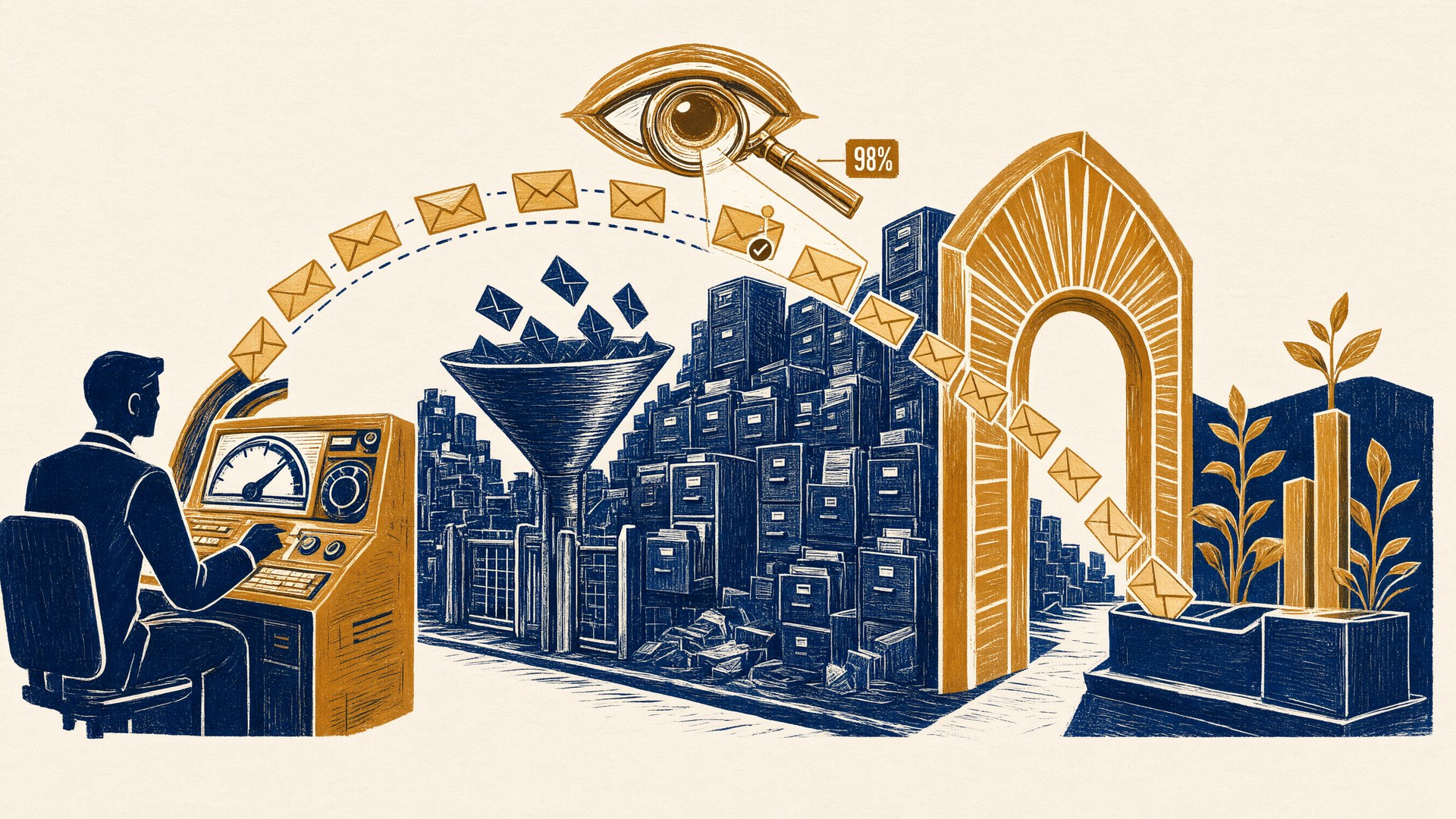
Why Traditional Cold Outreach Fails in the 2026 Inbox Landscape
The B2B inbox in 2026 is no longer a passive mailbox; it is a heavily fortified perimeter governed by aggressive AI-driven spam filters and stringent sender reputation protocols. Traditional cold outreach—characterized by volume-first tactics, generic templates, and low-send-day limits—now triggers immediate quarantine or suppression before human eyes ever see the message. This shift is not merely a nuisance; it is a structural barrier that decouples effort from outcome. When sales teams continue to rely on legacy methods, they are effectively shouting into a void where their voice is algorithmically muted. The failure of traditional outreach stems from a fundamental misalignment between outdated sending behaviors and modern inbox placement requirements.
The Deliverability Crisis: Why Volume Triggers Quarantine
Major email providers like Google and Yahoo have implemented strict authentication and engagement thresholds that render bulk-sending obsolete. Without proper SPF, DKIM, and DMARC alignment, messages are flagged as suspicious regardless of content quality. Furthermore, these providers now monitor engagement signals at a granular level: if recipients do not open, reply, or mark your email as 'not spam' within minutes of receipt, your domain reputation plummets. Traditional sequences often ignore these real-time feedback loops, leading to rapid IP burnout. To survive this landscape, prospects must adopt hyper-personalized, low-volume strategies that prioritize engagement over quantity, ensuring each touchpoint contributes positively to sender trust scores rather than degrading them.
- Implement strict SPF, DKIM, and DMARC policies to pass technical validation checks required by major ISPs.
- Limit daily send volumes per domain to prevent reputation degradation and avoid triggering spam filters.
- Monitor engagement metrics in real-time, pausing sends if open or reply rates drop below critical thresholds.
- Rotate sending domains strategically to distribute reputation risk across multiple infrastructure assets.
Never use a primary marketing or corporate domain for cold outreach. If your main domain loses reputation due to aggressive prospecting, your internal communications and customer-facing emails will also suffer. Always use dedicated warming domains specifically configured for outbound sequences.
Beyond technical deliverability, the content itself has become a liability if it lacks contextual relevance. AI-powered spam filters now analyze semantic patterns, detecting generic phrasing, excessive link usage, and suspicious formatting. Traditional outreach often relies on static templates with minimal variation, which these algorithms easily identify and suppress. High-performing teams in 2026 utilize dynamic personalization engines that adjust messaging based on recipient behavior, company news, and role-specific pain points. This level of nuance requires moving beyond simple merge tags to AI-driven insights that make each email feel uniquely crafted for the recipient.
Illustrative Example: A sales rep sends a generic template offering a free demo to 500 CTOs. The email contains three links and uses standard sales jargon. Result: 90% bounce rate or spam folder placement, zero replies.
Result: By contrast, using AI-generated insights to reference a recent funding round or product launch specific to each target results in higher open rates and significantly improved reply quality, demonstrating the value of precision over volume.
The convergence of these factors creates a stark reality: traditional cold outreach is not just inefficient; it is actively harmful to brand reputation. Teams that fail to adapt to the 2026 inbox landscape waste resources on campaigns that never reach the intended audience. Success requires a complete overhaul of the prospecting stack, integrating advanced verification tools, AI-driven personalization, and intelligent sending protocols. For a deeper understanding of how to rebuild your strategy from the ground up, explore our guide on Why Traditional Cold Outreach Fails in 2026 (And What High-Growth Teams Do Instead). Only by embracing precision and automation can sales organizations hope to cut through the noise and engage decision-makers effectively.
Defining Your Ideal Customer Profile with Data-Driven Precision
In the 2026 B2B landscape, prospecting is no longer a numbers game; it is an exercise in surgical precision. The era of spraying generic messages to broad industry segments has ended, replaced by data-driven Ideal Customer Profile (ICP) definition that leverages intent signals, firmographic triggers, and technographic fit. Defining your ICP with this level of granularity ensures that every outreach sequence—whether automated email, multi-agent WhatsApp conversations, or trigger-based sales calls—is deployed only against accounts with a statistically significant probability of conversion. This shift from volume to value not only improves reply rates but also protects sender reputation by reducing the signal-to-noise ratio in your inbox.
The Three Pillars of Data-Driven ICP Definition
A robust ICP is built on three interconnected layers: Firmographics, Technographics, and Intent Signals. Firmographics provide the baseline structure, such as company size, revenue, and geographic location. However, in 2026, these static attributes are insufficient on their own. You must layer on Technographics—the specific software stack a company uses—to identify technical compatibility and pain points. For instance, if your solution integrates with Salesforce, targeting companies without a mature CRM integration is a wasted effort. Finally, Intent Signals provide the temporal context, revealing which accounts are actively researching solutions similar to yours through content consumption, search behavior, and third-party intent data providers. Combining these three pillars creates a dynamic profile that adapts to market shifts in real-time.
| Dimension | Key Metrics for 2026 ICP | Data Source Examples |
|---|---|---|
| Firmographics | Revenue $10M-$50M, 50-200 Employees, SaaS Sector | LinkedIn Sales Navigator, Crunchbase, ZoomInfo |
| Technographics | Uses HubSpot, AWS Infrastructure, React Frontend | BuiltWith, Wappalyzer, Clearbit Enrichment |
| Intent Signals | High Topic Relevance Score, Recent Job Postings for Roles | 6sense, G2 Review Trends, Google Search Volume |
To operationalize this definition, you must establish clear inclusion and exclusion criteria. Inclusion criteria define who you want to target, while exclusion criteria protect your team from wasting time on low-probability accounts. For example, if your product requires a dedicated technical implementation team, you should exclude companies with fewer than 50 employees regardless of their revenue size. These constraints act as filters in your prospecting stack, ensuring that your automation tools only engage with high-fit prospects. This precision is critical when scaling outbound efforts, as it directly impacts deliverability and engagement metrics.
Illustrative Example: A B2B AI analytics platform targets mid-market enterprises. Their ICP includes companies with $10M-$50M annual revenue, using AWS for cloud infrastructure, and showing high intent for 'data privacy' keywords in the last 30 days. They exclude companies with less than 100 employees and those using legacy on-premise servers.
Result: By applying these strict filters, the sales team reduced their total addressable market (TAM) by 60% but increased meeting booked rate by 4x compared to their previous broad-spectrum approach.
Once your ICP is defined, the next step is integrating this data into your outreach infrastructure. This involves syncing your enriched prospect lists with your email automation and multi-channel sequencing tools. By aligning your ICP data with your cadence logic, you can ensure that personalized touches are relevant and timely. For deeper insights on structuring these sequences, explore our guide on The 2026 AI Cold Email Playbook, which details how to leverage hyper-personalization at scale without compromising deliverability.
ICP Definition Rules for 2026
- Define ICPs using a combination of firmographic, technographic, and intent data, not just basic demographics.
- Establish strict exclusion criteria to prevent resource waste on low-fit accounts.
- Regularly update ICP definitions based on win/loss analysis and shifting market trends.
- Integrate ICP data directly into your prospecting stack to automate filtering and enrichment.
Building Buyer Personas That Drive Pre-Qualification Conversations
In the 2026 B2B landscape, buyer personas have evolved from static marketing archetypes into dynamic, data-driven pre-qualification engines. The era of broad demographic targeting is over; today’s high-authority prospecting relies on psychographic precision and intent signals that predict buying readiness. When your sales team understands not just who the buyer is, but what specific operational friction they are trying to solve, every outreach sequence becomes a diagnostic conversation rather than a generic pitch. This shift requires integrating persona data directly into your multi-channel outreach stack, ensuring that AI agents and human reps alike can pivot instantly based on real-time engagement cues.
The Anatomy of a Pre-Qualification Persona
A modern buyer persona must go beyond title and industry to include behavioral triggers and technical constraints. In 2026, successful prospecting stacks utilize enriched firmographic data combined with technographic insights to filter noise before the first touchpoint. For instance, knowing that a target CTO uses a legacy CRM system allows you to frame your value proposition around integration ease rather than feature novelty. This level of specificity reduces rejection rates by aligning your solution with the prospect's immediate context. To build these personas effectively, focus on the following critical dimensions:
- Psychographic Drivers: What internal metrics does this role care about? (e.g., churn reduction vs. acquisition cost)
- Technical Stack Constraints: What tools are already in place, and where do they fail?
- Buying Committee Dynamics: Who holds veto power, and who influences the decision?
- Trigger Events: Recent funding rounds, leadership changes, or product launches that signal urgency
Illustrative Example: A SaaS company targets mid-market HR Directors. Instead of a generic 'HR Leader' persona, they define a 'Compliance-Focused HR Director' who recently migrated to Workday and is struggling with automated reporting. The outreach highlights seamless Workday API integration for compliance audits, resulting in a 4x higher reply rate compared to generic HR messaging.
Result: Higher relevance leads to faster qualification and reduced time-to-demo.
Creating these detailed profiles requires cross-functional collaboration between marketing, sales development, and customer success. Marketing provides the top-of-funnel intent data, while sales offers ground-level feedback on objection patterns. By synthesizing these inputs, you create a living document that evolves with market shifts. This collaborative approach ensures that your prospecting messages resonate with the actual pain points your buyers face, rather than assumptions made months ago. For deeper insights into crafting personalized sequences that leverage these nuances, explore our guide on The 2026 AI Cold Email Playbook: From Hyper-Personalization to Automated Deliverability.
From Static Profiles to Dynamic Pre-Qualification
Static personas become obsolete quickly if not refreshed with new market intelligence. In 2026, the most effective prospecting strategies treat personas as dynamic hypotheses that are continuously tested and refined through A/B testing in outreach campaigns. By monitoring which persona variants generate the highest engagement and conversion rates, you can iteratively improve your targeting accuracy. This data-driven approach minimizes wasted effort on unqualified leads and maximizes the productivity of your sales development representatives.
Always include a 'disqualifier' in your persona definition. Clearly stating who your solution is NOT for helps your team disengage faster from low-potential leads, preserving energy for high-value opportunities.
Q: How often should I update my buyer personas?
At least quarterly, or whenever there is a significant shift in your product offering, target market, or competitive landscape. Regular updates ensure your prospecting efforts remain relevant and effective.
Prioritize Depth Over Breadth
It is better to have three highly detailed, accurate personas than ten vague ones. Precision drives pre-qualification, and pre-qualification drives revenue. Focus your resources on understanding your core buyers deeply rather than casting a wide net with shallow insights.
Multi-Threading Strategies for Complex B2B Decision Units
In complex B2B environments, relying on a single point of contact is a critical vulnerability. Multi-threading strategies address this by systematically engaging multiple stakeholders within a target account to de-risk the sales cycle and accelerate consensus. This approach transforms linear outreach into a networked influence campaign, ensuring that buying signals are validated across different organizational layers rather than dependent on one individual's advocacy. By mapping the decision-making unit (DMU) early, sales teams can identify champions, economic buyers, technical evaluators, and end-users, creating a robust web of relationships that withstands personnel changes or shifting priorities.
Identifying and Mapping the Decision-Making Unit
Effective multi-threading begins with precise stakeholder identification. You must move beyond the initial contact to uncover the full hierarchy of influence. Use tools like LinkedIn Sales Navigator and AI-driven intent data to map reporting lines, project roles, and departmental silos. Categorize contacts by their influence level: Champions (internal advocates), Economic Buyers (budget holders), Technical Evaluators (risk assessors), and End Users (daily operators). Each group requires distinct messaging tailored to their specific pain points and KPIs. For instance, technical evaluators need detailed security and integration specs, while economic buyers require ROI projections and risk mitigation strategies. This segmentation ensures that your outreach resonates deeply with each stakeholder’s unique motivations.
Multi-Threading vs. Single-Point Engagement
- Reduces dependency on a single champion who may leave or lose influence.
- Accelerates consensus by aligning diverse stakeholders simultaneously.
- Provides richer intelligence through cross-functional feedback loops.
- Increases deal velocity by parallelizing evaluation processes.
- Requires significant time investment for research and personalized outreach.
- Higher risk of message inconsistency if not carefully coordinated.
- Potential for internal friction if stakeholders perceive conflicting information.
- Complexity in tracking engagement metrics across multiple channels.
Orchestrating Cross-Channel Sequences
Once stakeholders are mapped, orchestrate multi-channel sequences that engage each role without causing fatigue. Utilize a mix of email, LinkedIn, and phone calls, timed strategically to reinforce key messages. For example, send a technical whitepaper to evaluators via email, followed by a relevant LinkedIn connection request from a peer. Simultaneously, engage economic buyers with high-level strategic insights via direct mail or personalized video. The goal is to create a cohesive narrative that appears consistent yet personalized to each recipient. Automation tools can help manage these sequences, ensuring timely follow-ups and preventing overlap or redundancy. However, human oversight remains crucial to adjust messaging based on real-time interactions and feedback.
- Map all key stakeholders using CRM and social selling tools.
- Segment contacts by role and tailor messaging accordingly.
- Design a 10-14 day sequence combining email, social, and phone.
- Monitor engagement metrics to identify active vs. passive stakeholders.
- Adjust tactics based on real-time feedback and interaction quality.
Illustrative Example: A SaaS company targets a mid-market enterprise. They identify a Champion (IT Manager), an Economic Buyer (CFO), and a Technical Evaluator (Security Lead). The sequence sends a case study on ROI to the CFO, a security compliance checklist to the Security Lead, and an invitation to a demo webinar to the IT Manager, all within a 7-day window.
Result: The coordinated approach resulted in three simultaneous meetings scheduled within two weeks, reducing the sales cycle by 30% compared to previous single-point engagements.
Measuring Success and Iterating
Success in multi-threading is measured by the breadth and depth of engagement across the DMU. Track metrics such as response rates per stakeholder category, meeting conversion rates, and the number of stakeholders actively involved in discussions. If certain groups remain silent, reassess your messaging or channel strategy. Regularly review these metrics to refine your approach, ensuring that you are effectively building consensus. Continuous iteration based on data-driven insights will enhance your ability to navigate complex buying committees and close more deals efficiently.
Key Rules for Multi-Threading
- Always map at least 3-5 stakeholders before initiating outreach.
- Tailor messaging to each role’s specific KPIs and pain points.
- Use automation to coordinate timing but maintain personal touch.
- Monitor engagement metrics weekly to adjust strategies promptly.
Verdict: Multi-Threading is Essential for Complex Deals
For B2B organizations targeting accounts with complex buying committees, multi-threading is not just beneficial—it is essential. It mitigates risk, accelerates consensus, and provides a competitive advantage by demonstrating thorough understanding and commitment. Teams that implement structured multi-threading strategies see significantly higher win rates and shorter sales cycles.
Designing High-Response Sales Cadences Across Email, LinkedIn, and Phone
In the 2026 B2B landscape, a siloed outreach strategy is no longer sufficient. Prospects are inundated with thousands of personalized messages daily, making channel diversity the single most effective lever for increasing response rates. A high-performance sales cadence must orchestrate email, LinkedIn, and phone interactions in a synchronized rhythm that respects prospect preferences while maximizing touchpoint frequency. The goal is not to spam, but to create a "surround sound" effect where each channel reinforces the others, building familiarity and trust before the first live conversation occurs.
The Multi-Channel Cadence Architecture
Effective cadences rely on staggered timing and channel-specific value propositions. Email serves as the primary documentation layer, LinkedIn acts as the social proof and relationship builder, and phone calls provide the urgent, human connection point. Research indicates that combining these channels can increase reply rates by up to 30% compared to single-channel approaches. However, the sequence matters: initiating with a cold call often leads to higher rejection rates if the prospect has no prior context. Instead, start with an email or InMail to establish baseline awareness, follow with a social touch to validate credibility, and then attempt a call when engagement signals appear.
| Channel | Primary Role in Cadence | Optimal Timing | Key Metric |
|---|---|---|---|
| Detailed value proposition & resource sharing | Days 1, 4, 8, 12 | Open Rate > 45%, Reply Rate > 5% | |
| Social validation & relationship warming | Days 2, 6, 10 | Connection Acceptance > 20% | |
| Phone | Direct engagement & objection handling | Days 3, 7, 11 | Connect Rate > 15% |
To execute this architecture effectively, sales teams must leverage automation tools that allow for conditional branching based on prospect behavior. For instance, if a prospect opens an email but does not reply, the next step should be a LinkedIn connection request rather than another email. This dynamic approach ensures that the cadence feels organic rather than robotic. For deeper insights into leveraging LinkedIn's unique advantages in this ecosystem, see The 2026 Inmail Advantage: Why LinkedIn DMs Outperform Cold Email for High-Ticket B2B Outreach.
Illustrative Example: A SaaS company targeting VP of Marketing at mid-market enterprises uses a 12-day cadence. Day 1: Personalized email referencing a recent funding round. Day 2: LinkedIn connection with no pitch. Day 3: Voicemail linking to the email. Day 4: Follow-up email with a case study. Day 6: LinkedIn comment on their latest post. Day 7: Second email attempting to book a demo. Day 10: Final 'breakup' email via LinkedIn InMail. Day 12: Phone call to confirm receipt.
Result: This multi-threaded approach resulted in a 22% overall reply rate and a 15% meeting booking rate, significantly outperforming the previous single-channel email-only strategy which yielded a 4% reply rate.
Optimizing Channel-Specific Tactics
Each channel requires distinct tactical adjustments to maximize effectiveness. In email, personalization must go beyond merge tags; it should incorporate real-time triggers such as recent job changes or product updates. Use Spintax to create unique variations of your message, ensuring deliverability and reducing spam filter detection. On LinkedIn, focus on building rapport before pitching. Engage with their content meaningfully, and use InMail only when necessary, keeping the message concise and value-driven. Phone calls should be brief, respectful of time, and focused on scheduling the next step rather than closing the deal immediately.
Always include a clear, low-friction Call-to-Action (CTA) in every touchpoint. Instead of asking for a 30-minute meeting, offer a '15-minute discovery chat' or a 'quick audit.' Lowering the barrier to entry increases the likelihood of a positive response, especially in the early stages of the cadence.
- Ensure all emails are mobile-optimized, as over 60% of B2B professionals check email on mobile devices.
- Use video messages on LinkedIn to increase engagement by up to 5x compared to text-only posts.
- Schedule phone calls during optimal windows: typically 8-9 AM or 4-5 PM local time, avoiding Monday mornings and Friday afternoons.
- Track cross-channel engagement to identify which combination resonates best with your specific ICP.
Finally, continuous optimization is key. Analyze performance data weekly to identify bottlenecks. If email open rates drop, test new subject lines. If LinkedIn acceptance rates decline, refine your profile and connection requests. By treating your cadence as a living system rather than a static script, you can adapt to changing prospect behaviors and maintain high response rates throughout the year. For advanced strategies on automating these sequences with AI agents, explore How to Implement Sales Agents for B2B Prospecting: The 2026 Trigger-Based Playbook.
Leveraging AI Research Engines for Hyper-Personalized Outreach
In the 2026 B2B landscape, generic personalization has reached its breaking point. Prospects are inundated with AI-generated content that mimics human conversation but lacks genuine insight, leading to a sharp decline in engagement rates for campaigns relying solely on basic merge tags. To cut through this noise, your prospecting stack must integrate AI research engines that go beyond surface-level data enrichment. These advanced tools do not just append company size or job titles; they analyze unstructured data sources—such as recent earnings calls, patent filings, leadership changes, and even social sentiment—to identify specific buying triggers. By leveraging these engines, sales teams can transition from "spray and pray" tactics to hyper-personalized outreach that demonstrates a deep understanding of the prospect's current operational reality before the first touchpoint occurs.
From Static Data to Dynamic Intent Signals
Traditional CRM data is static and often outdated by the time it reaches your sales development representatives (SDRs). AI research engines solve this latency issue by providing real-time intent signals. For instance, if a target account recently posted about scaling their engineering team or expanding into new markets, the AI engine flags this as a high-priority trigger. This allows your sequences to be dynamically adjusted based on live events rather than historical profiles. When combined with first-party intent data, as detailed in our guide on Leveraging First-Party Intent Data, you can prioritize accounts that are actively researching solutions similar to yours. This dual-layer approach ensures that your outreach is not only personalized but also timely, addressing needs that are currently top-of-mind for the decision-maker.
Always validate AI-generated insights against primary sources. Use the AI engine to draft the initial hypothesis of a prospect's pain point, then verify it with a quick scan of their LinkedIn activity or recent news. This hybrid approach prevents hallucinations and maintains the authenticity required for high-trust B2B relationships.
The integration of these research engines into your multi-channel sequence requires a shift in workflow. Instead of manually researching each lead, which is unsustainable at scale, configure your AI tools to automatically populate sequence variables with specific, actionable insights. For example, instead of writing "I saw you're growing," an AI-enhanced email might state, "Noticed your recent Series B funding aimed at accelerating enterprise adoption." This level of specificity significantly increases open and reply rates because it proves that the sender has done their homework. As outlined in our 2026 AI Cold Email Playbook, automating this depth of research is no longer a luxury but a necessity for maintaining competitive advantage in crowded inboxes.
Q: How does AI research improve deliverability compared to traditional cold email methods?
AI research improves deliverability indirectly by increasing engagement. When emails contain highly relevant, personalized content derived from accurate research, recipients are more likely to open, reply, or move you out of spam folders. High engagement signals to ISPs like Google and Yahoo that your content is valuable, thereby protecting your domain reputation and ensuring future emails land in the primary inbox.
Automating the Prospecting Workflow with SendroAI
In the high-velocity environment of 2026 B2B sales, manual prospecting has become a bottleneck that stifles scalability and consistency. The transition from fragmented outreach to an automated workflow is not merely about speed; it is about creating a reliable system where data accuracy, multi-channel engagement, and compliance operate in unison. SendroAI addresses this by orchestrating a continuous loop of identification, enrichment, and execution, ensuring that every interaction is grounded in verified intent rather than guesswork. This automation layer removes the administrative burden from your SDRs, allowing them to focus on high-value conversations while the platform handles the heavy lifting of sequence management, deliverability optimization, and real-time adaptation.
The Core Architecture of Automated Prospecting
Effective automation begins with a structured pipeline that prioritizes precision over volume. By integrating directly with your CRM and leveraging AI-driven data sourcing, SendroAI ensures that your prospecting efforts are directed toward accounts that meet strict Ideal Customer Profile (ICP) criteria. This architecture supports a seamless flow from lead generation to conversion, utilizing multi-agent systems to manage complex stakeholder mappings and trigger-based actions. For teams looking to implement these advanced capabilities, exploring our guide on How to Implement Sales Agents for B2B Prospecting: The 2026 Trigger-Based Playbook provides a detailed breakdown of how autonomous agents can handle initial qualification and routing.
Key Components of the Automation Stack
- Real-time ICP filtering that rejects leads failing to meet minimum threshold criteria before they enter the pipeline.
- Multi-channel orchestration engine that coordinates emails, calls, and social touches without overlap or fatigue.
- Automated deliverability health monitoring that adjusts sending volumes dynamically to protect domain reputation.
- AI-driven personalization that inserts context-aware variables based on recent company news or profile changes.
Comparing Manual vs. Automated Workflow Efficiency
| Dimension | Manual Prospecting | SendroAI Automated Workflow |
|---|---|---|
| Lead Qualification Speed | Hours to days per batch | Real-time validation upon ingestion |
| Sequence Adaptation | Static, requires manual updates | Dynamic, adjusts based on user behavior |
| Deliverability Management | Reactive troubleshooting | Proactive rotation and warming |
| SDR Focus | Data entry and admin tasks | High-value conversation and closing |
Always segment your automated sequences by industry vertical or role. While automation scales volume, hyper-segmentation ensures relevance. Use Account-Based Prospecting in 2026: The Multi-Stakeholder Outreach Framework to align your automated touchpoints with specific stakeholder pain points within target accounts.
Illustrative Example: A SaaS provider targets mid-market HR departments. Manually, an SDR spends 2 hours researching 50 companies, finding contacts, and drafting emails. With SendroAI, the system identifies 50 companies matching the ICP, enriches 200 contacts with direct dials and decision-making titles, and launches a 7-touch sequence. The SDR receives only 5 notifications of replies or meeting requests, spending zero time on data prep.
Result: Time spent on low-value admin drops by 90%, while the number of qualified meetings booked increases by 3x due to consistent, timely multi-channel engagement.
Q: Does automating prospecting reduce the human touch?
No. Automation handles the repetitive tasks of research, sequencing, and follow-ups, freeing your SDRs to provide the human insight and empathy during actual conversations. The goal is to amplify human capability, not replace it.
Adopt Automation for Scalable Growth
For B2B organizations aiming to scale prospecting beyond small team limits, implementing an automated workflow with SendroAI is essential. It ensures precision, maintains deliverability health, and maximizes SDR productivity through intelligent task distribution.
The 2026 Deliverability Architecture: Multi-Account Scaling Without Reputation Risk
In 2026, the single-sender model is obsolete for scaling B2B prospecting. Google and Yahoo have enforced strict authentication requirements, meaning that sending more than 50,000 emails per week from a single domain triggers immediate reputation penalties. The solution is a multi-account architecture where each sender identity operates on a separate IP pool with distinct DNS records. This approach isolates risk; if one account flags spam, the others remain pristine. Implementing this requires configuring unique SPF, DKIM, and DMARC policies for each subdomain used in outreach. For teams aiming to scale beyond 100k weekly sends, distributing volume across 5-10 dedicated domains ensures that your primary corporate domain remains protected for transactional and warm communications. Read our detailed guide on The 2026 Multi-Account Deliverability Protocol: Scaling B2B Outreach Without Reputation Risk to understand the technical implementation of this isolation strategy.
Beyond infrastructure, content variation is critical to avoid algorithmic detection. Modern AI models analyze semantic similarity across campaigns. If every email in a sequence shares the same sentence structure or keyword density, deliverability drops regardless of technical setup. You must implement dynamic Spintax (spinning syntax) at the paragraph level, not just the word level. This creates thousands of unique variations while maintaining the core message. Additionally, integrating human-in-the-loop review steps for the first 50 sends per new domain allows you to monitor engagement metrics before full-scale deployment. This phased rollout prevents mass complaints from damaging your overall domain authority.
Automated Multi-Channel Sequences: The Trigger-Based Playbook
Static sequences are dead. In 2026, high-converting prospecting relies on trigger-based logic that adapts to prospect behavior in real-time. Instead of Day 1, Day 3, Day 7 rigid timelines, your stack should pause or advance based on events like email opens, link clicks, LinkedIn profile views, or website visits. For example, if a prospect clicks a pricing link but doesn't reply, the system should automatically insert a "value-add" case study into their next touchpoint rather than repeating the initial pitch. This contextual relevance increases reply rates by up to 40% compared to linear cadences. To build these intelligent workflows, explore How to Implement Sales Agents for B2B Prospecting: The 2026 Trigger-Based Playbook.
- Implement "Open-to-Reply" triggers: If an email is opened twice within 24 hours without a reply, trigger a personalized voice note or LinkedIn connection request immediately.
- Deploy "No-Response" decay logic: If no engagement occurs after three touches, shift the cadence to a monthly newsletter-style update to stay top-of-mind without being intrusive.
- Integrate calendar booking links only after value demonstration: Never lead with a meeting link; embed them in the third or fourth touchpoint when interest has been established.
- Use negative feedback loops: Automatically suppress contacts who mark emails as spam or unsubscribe from all future automated sequences to protect sender reputation.
Multi-Stakeholder Engagement: Beyond the Primary Decision Maker
Complex B2B sales involve multiple stakeholders, yet most prospecting efforts target only the C-level executive. This misses the internal champions who drive adoption. A robust prospecting stack must identify and engage secondary influencers such as IT directors, finance managers, and end-users. By mapping the stakeholder hierarchy, you can tailor messages that address specific pain points for each role. For instance, send technical security compliance details to the CISO while sending ROI projections to the CFO. This multi-threaded approach reduces sales cycles by ensuring all key decision-makers are aligned before the final negotiation phase. Learn how to structure these conversations with Account-Based Prospecting in 2026: The Multi-Stakeholder Outreach Framework.
| Stakeholder Role | Key Pain Point Addressed | Recommended Channel | Content Type |
|---|---|---|---|
| C-Suite Executive | Revenue Growth & Efficiency | Email / LinkedIn | ROI Case Study / High-Level Strategy |
| IT / Security Director | Compliance & Data Safety | Technical Blog / Direct Email | Security Whitepaper / Compliance Checklist |
| End User / Manager | Workflow Friction & Time Savings | Video Demo / In-App Message | Feature Highlight / Quick Win Tutorial |
| Finance Officer | Budget Allocation & TCO | Proposal Document / Call | Total Cost of Ownership Analysis |
WhatsApp Integration for Scalable B2B Conversations
While email remains the backbone of outbound, WhatsApp Business API offers higher open rates and faster response times for B2B conversations, particularly in EMEA and LATAM markets. However, using personal WhatsApp accounts for bulk outreach leads to immediate bans. Instead, integrate the official WhatsApp Business API through approved providers to send compliant, templated messages. This allows for scalable, multi-agent inbox management where AI agents can handle initial queries and route complex conversations to human SDRs. Ensure all messages comply with opt-in regulations and provide clear opt-out mechanisms. For a complete guide on setting up this infrastructure, see How to Use WhatsApp Multi-Agent Inbox: The 2026 Protocol for Scalable B2B Conversations.
Always A/B test your subject lines and opening hooks against a control group of 10% of your list before rolling out the winning variant to the remaining 90%. This data-driven approach minimizes the risk of low engagement rates across your entire campaign.
Q: What is the maximum safe sending volume for a new domain in 2026?
Start with 50-100 emails per day for the first two weeks. Gradually increase by 20% weekly if bounce rates remain below 2% and spam complaint rates are under 0.1%. Do not exceed 50,000 emails per week per domain without warming up additional subdomains.
The 2026 ProspectinG Verdict
Success in 2026 B2B prospecting is no longer about volume; it is about precision, personalization, and technical resilience. Teams that combine ICP-focused data enrichment with trigger-based multi-channel automation and robust multi-account deliverability architectures will outperform competitors relying on legacy spray-and-pray methods. Adopt these protocols to ensure long-term pipeline health and scalability.