Quick decision verdict
Executive rulings based on technical testing and pricing data.
Best for Enterprise Outbound
Apollo.io. Its massive proprietary database (240M+ contacts) and deep native CRM integrations make it the standard for large-scale, structured sales teams requiring high-volume prospecting.
Best for Email Deliverability & Personalization
lemlist. The platform is engineered specifically for cold email hygiene, offering built-in warmup, rotating IPs, and AI-driven 'human-like' personalization that avoids spam filters better than generic bulk senders.
Best for High-Volume Prospecting
Apollo.io. If your primary bottleneck is finding leads at scale, Apollo’s credit-based access to verified emails and phone numbers outperforms lemlist’s smaller, enrichment-focused dataset.
Best Overall Value for SMBs
lemlist. For small to mid-sized teams already possessing a list or using external lead sources, lemlist’s unlimited user model and focused outreach tools offer higher ROI than paying per-seat for Apollo’s data-heavy plans.
lemlist vs Apollo.io at a glance
Side-by-side core specifications and live platform viewports.
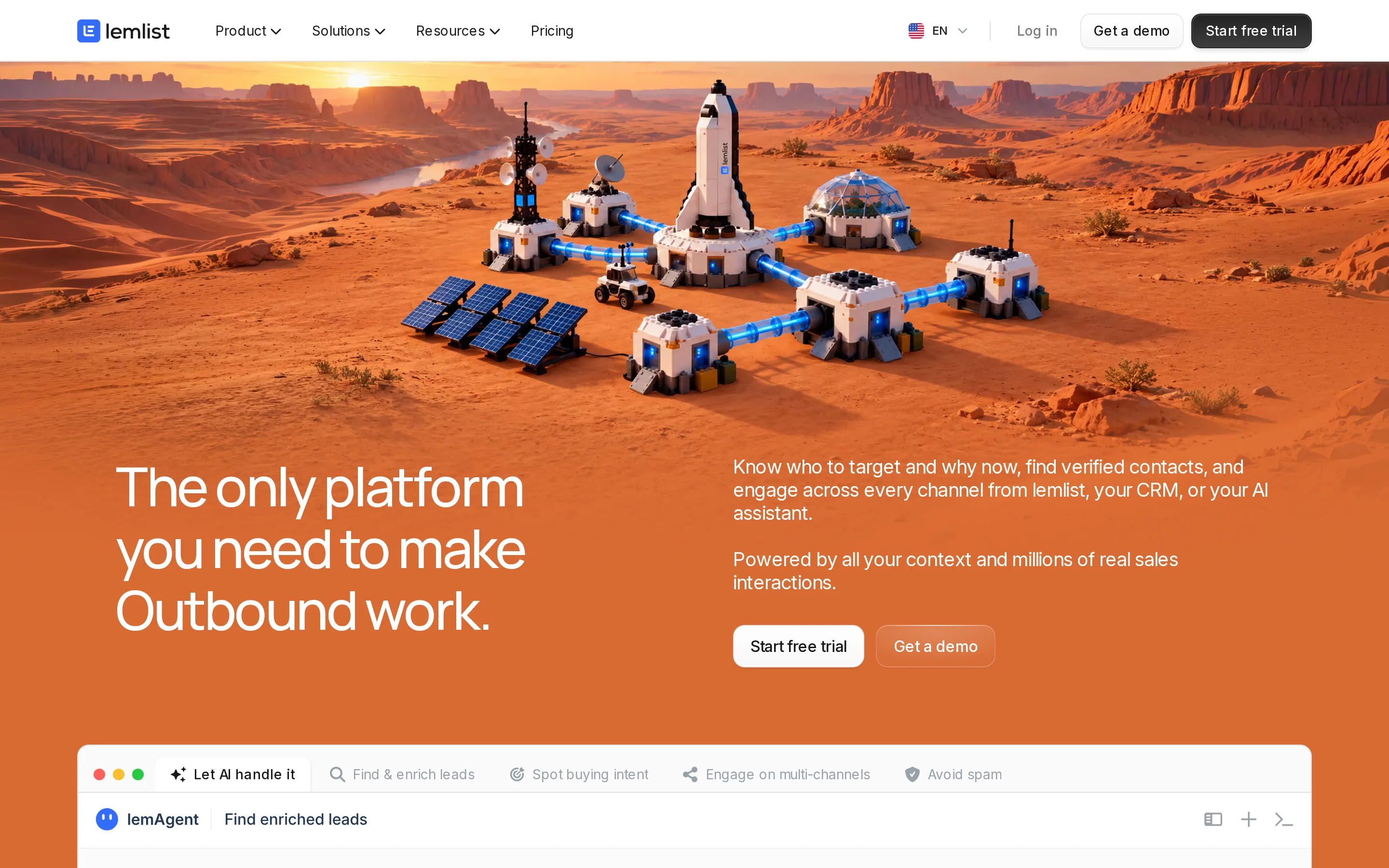
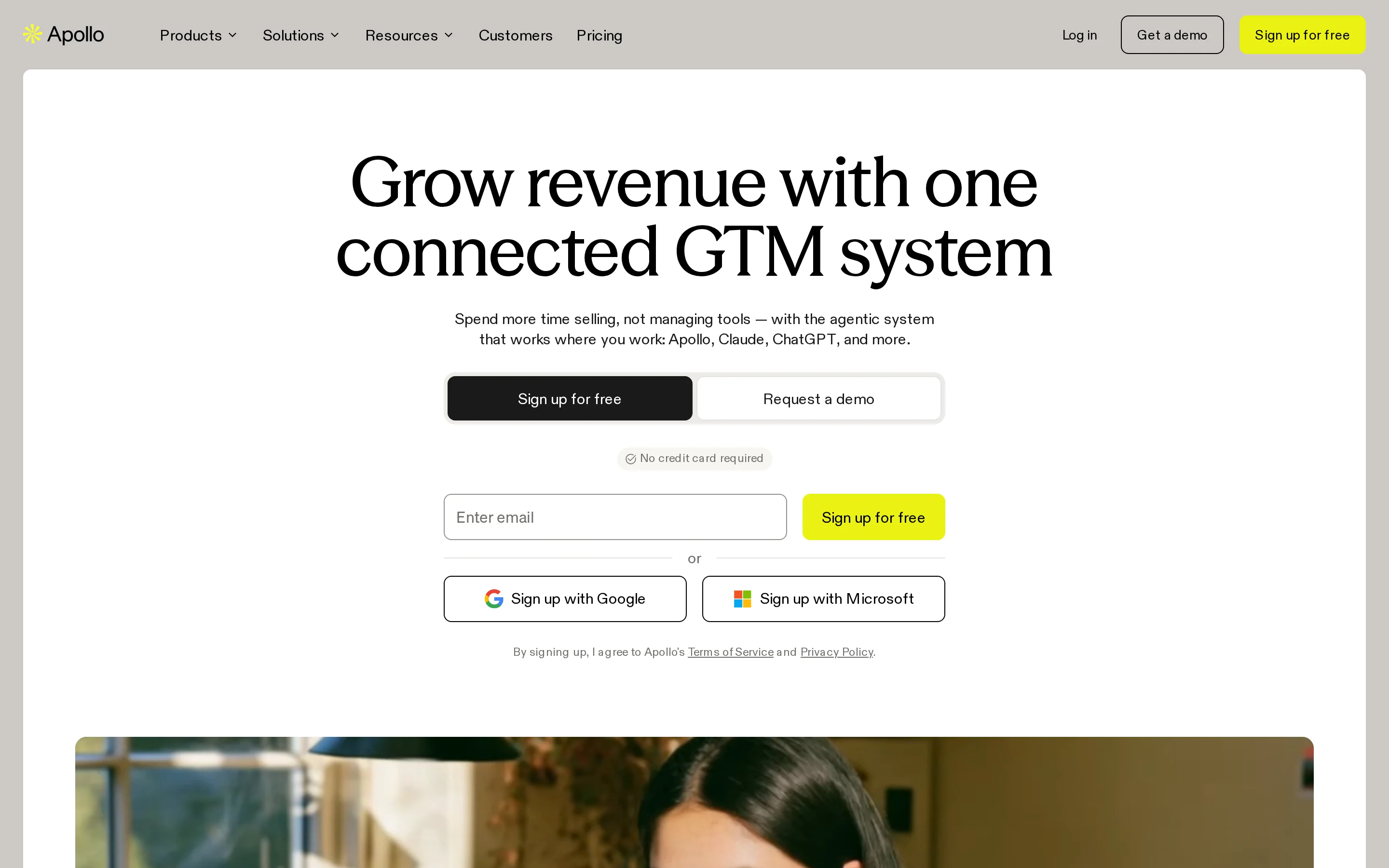
| Attribute | lemlist | Apollo.io |
|---|---|---|
| Primary Purpose | Cold Email Outreach & Multichannel Sequencing | B2B Data Intelligence & Full GTM Platform |
| Starting Price | Quote-Based / Custom Enterprise Pricing | Free Plan Available; Paid tiers start ~$49/user/mo (Annual) |
| Free Plan | No (Trial only) | Yes (Starter Plan with limited credits) |
| Core Strength | AI-Powered Personalization & Deliverability | Massive Contact Database & API Access |
| Data Source | Enrichment via AI Web Search & URL Scraping | Proprietary Network (240M+ Contacts) |
| Integration Depth | Native CRMs + MCP Server for AI Agents | Deep Native Syncs (Salesforce, HubSpot) + REST API |
| User Model | Unlimited Users on Higher Tiers | Per-Seat Licensing |
| Best For | Agile GTM Teams focusing on reply rates | RevOps Teams needing unified data & execution |
Feature-by-feature matrix
Audited capabilities across data sourcing, sending infrastructure, and integrations.
| Capability | Why it matters | lemlist | Apollo.io | Winner |
|---|---|---|---|---|
| B2B Contact Database Size | Determines how many net-new leads you can find without external tools. | ◐ Partial (650M+ enriched/verified focus) | ✓ Native (240M+ contacts, 30M+ companies) | apollo.io |
| Email Finder & Verifier | Critical for ensuring deliverability and reducing bounce rates. | ✓ Native (Credit-based) | ✓ Native (Credit-based) | Tie |
| Phone Number Finder | Essential for multichannel outreach (calls/SMS). | ✓ Native | ✓ Native | Tie |
| LinkedIn Enrichment | Provides context for personalized messaging. | ✓ Native (Unlimited export) | → Integration (via Chrome Extension/API) | lemlist |
| AI Personalization Engine | Automates the creation of human-like, relevant messages. | ✓ Native (lemAgent, Liquid Syntax) | ◐ Partial (AI Research & Writing Assistants) | lemlist |
| Email Warmup | Protects sender reputation before launching campaigns. | ✓ Native (lemwarm included) | ✓ Native (Included in paid plans) | Tie |
| Multichannel Sequencing | Allows outreach across Email, LinkedIn, Calls, and SMS. | ✓ Native (Email, LinkedIn, Voice, SMS, WhatsApp) | ✓ Native (Email, Phone, LinkedIn via extension) | lemlist |
| CRM Integration | Ensures data flows back into the system of record. | ✓ Native (HubSpot, Salesforce, Pipedrive, Attio, etc.) | ✓ Native (Salesforce, HubSpot, Marketo, etc.) | Tie |
| API & Developer Tools | Enables custom workflows and data pipelines. | ✓ Native (REST API, CLI, MCP Server) | ✓ Native (REST API, MCP Server) | Tie |
| Intent Signals | Helps prioritize leads showing buying behavior. | ✓ Native (Intent signal agents) | ✓ Native (Buying signals & intent data) | Tie |
| Deliverability Controls | Advanced settings to avoid spam folders. | ✓ Native (Rotating IPs, Smart Sending, Inbox Rotation) | ◐ Partial (Standard sending limits) | lemlist |
| Call Recording & VoIP | Integrates voice channels into sequences. | → Integration (Aircall, Ringover, Trellus) | ✓ Native (In-app calling & recording) | apollo.io |
| Team Management | Roles, permissions, and shared visibility. | ✓ Native (Custom roles, Shared campaigns) | ✓ Native (Team management, Credit caps) | Tie |
| Reporting & Analytics | Measures campaign performance and ROI. | ✓ Native (Custom reporting, Campaign review) | ✓ Native (Pipeline analytics, Engagement tracking) | Tie |
| Mobile App | On-the-go access to leads and tasks. | — None (Web-based primarily) | ✓ Native (iOS & Android apps) | apollo.io |
| Browser Extension | Prospecting directly from LinkedIn/Websites. | ✓ Native (Chrome Extension) | ✓ Native (Chrome Extension) | Tie |
| SSO/SAML Security | Required for enterprise compliance. | ✓ Native (Enterprise Plan) | ✓ Native (Custom/Enterprise Plan) | Tie |
Technical deep dives
Architectural comparisons derived from live platform testing.
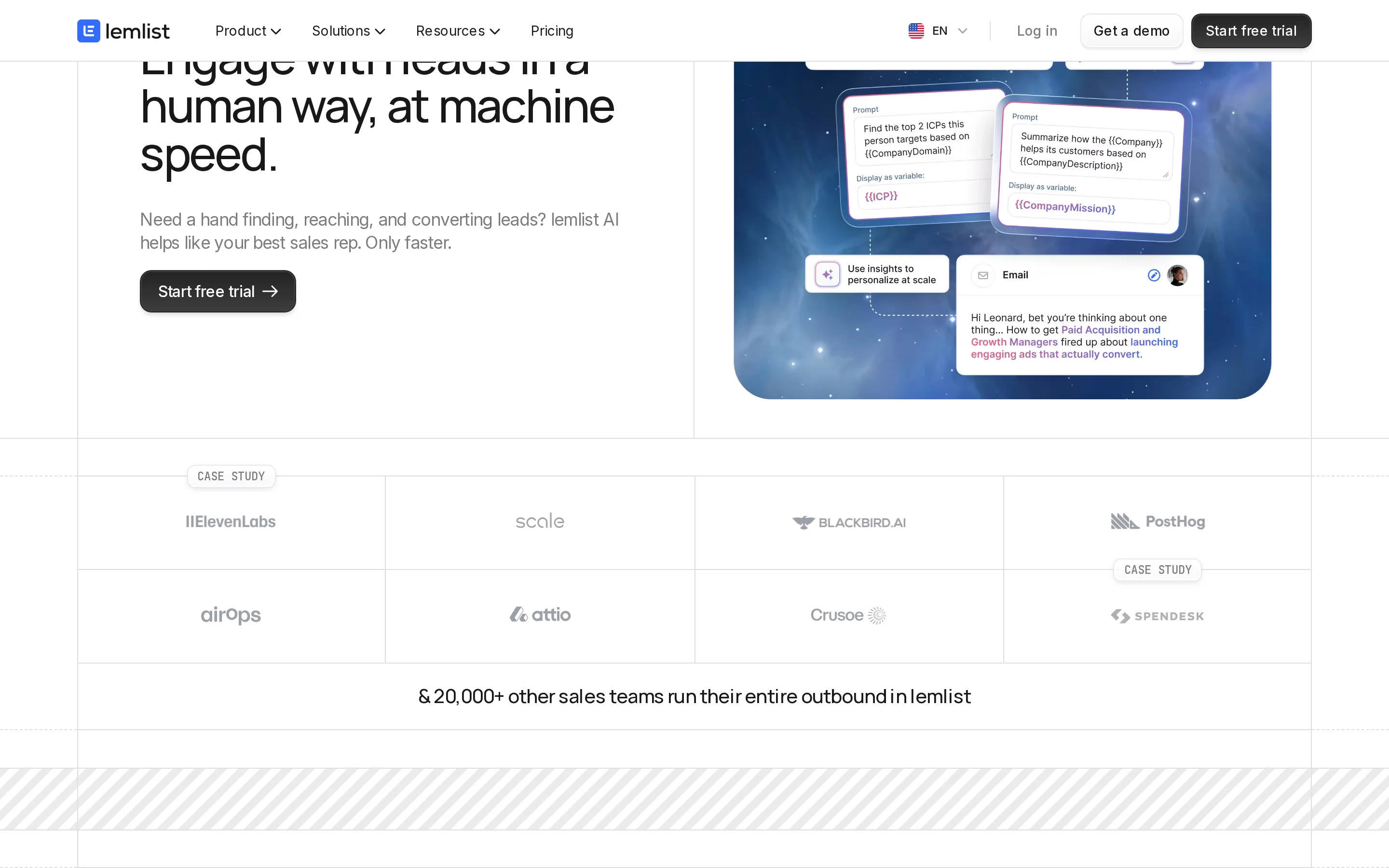 Full resolution
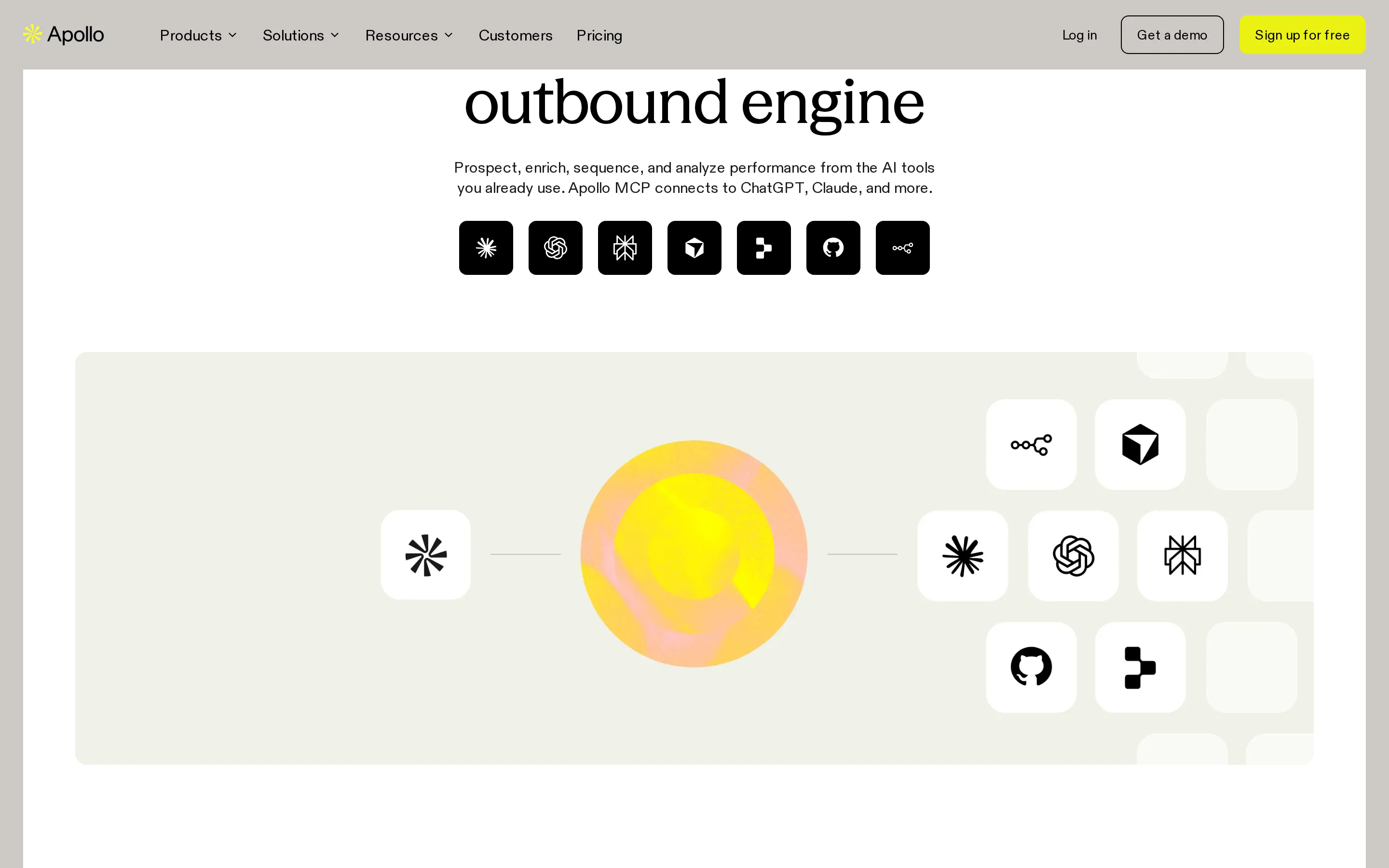 Full resolution
Data Acquisition & Enrichment Architecture: Proprietary Network vs. Real-Time Web Crawling
Apollo.io operates as a data-first platform, leveraging a massive proprietary network effect. With over 240 million contacts and 30 million companies, its strength lies in volume and breadth. The data is updated via user contributions and automated crawling, creating a static but extensive directory. This architecture allows Apollo to serve as a primary source of truth for lead generation, particularly for teams needing to fill top-of-funnel gaps quickly. However, reliance on a cached database can sometimes result in staleness, where contact details may have changed since the last crawl, potentially impacting deliverability if not verified at the moment of use.
In contrast, lemlist adopts an 'enrichment-first' approach designed to complement existing lists rather than replace them. While it offers a 650M+ lead database, its core differentiator is real-time web crawling and AI-powered verification. Features like 'URL-scraping agents' and 'AI web search enrichment' allow lemlist to pull live data from LinkedIn bios, company websites, and news feeds at the exact moment a campaign is launched. This ensures that the personalization variables used in emails are current, significantly reducing bounce rates caused by outdated directory data and improving the relevance of the outreach.
The tradeoff is clear: Apollo wins on raw volume and ease of finding net-new leads from scratch. lemlist wins on data freshness and contextual accuracy for personalization. For enterprises with strict RevOps requirements, Apollo’s centralized data hub is superior. For agile sales teams prioritizing reply rates over sheer volume, lemlist’s real-time enrichment provides a tactical advantage in crowded inboxes.
Outreach Execution & Personalization Engine: Template-Driven Sequences vs. AI-Native Human Simulation
Apollo’s sequencing engine is robust and scalable, designed for high-volume execution. It supports multi-step sequences across email and phone, with conditional logic based on engagement. However, its personalization capabilities have historically been template-driven, relying on manual variable insertion or basic AI writing assistants. While effective for broad campaigns, this approach often requires significant manual tweaking to avoid sounding robotic or triggering spam filters associated with mass-sending patterns. Apollo’s strength here is integration with its own data, allowing users to segment and sequence directly from the prospecting view.
lemlist differentiates itself through an AI-native personalization engine centered around 'lemAgent' and 'Liquid Syntax.' lemAgent doesn’t just generate text; it actively cleans data (normalizing dates, capitalizing names, removing emojis) and researches specific pain points from competitor sites and LinkedIn profiles. This shifts the workflow from 'mass sending' to 'machine-speed human-like engagement.' The platform allows for dynamic content injection that feels bespoke to each recipient, which is critical for maintaining domain reputation and achieving high reply rates in the modern B2B landscape.
For teams focused purely on throughput, Apollo’s straightforward sequence builder is efficient. However, for teams where conversion rate is the primary KPI, lemlist’s advanced personalization tools offer a distinct edge. lemlist’s ability to clone voices for LinkedIn notes and auto-generate context-aware emails reduces the cognitive load on reps while increasing the perceived value of the message, making it the superior choice for quality-over-quantity outbound strategies.
Integration Depth & Automation Flexibility: Standard CRM Sync vs. MCP Server & Agent Orchestration
Apollo.io has established itself as a central node in the GTM stack, offering deep, native two-way syncs with major CRMs like Salesforce, HubSpot, and Marketo. These integrations are mature, supporting complex field mapping and activity logging, which makes Apollo ideal for structured enterprise environments where data governance is paramount. Additionally, Apollo’s REST API is highly documented and widely used for building custom data pipelines, allowing developers to programmatically enrich records and manage sequences outside the UI.
lemlist targets modern, flexible tech stacks with a focus on agentic workflows. Beyond standard CRM integrations (HubSpot, Salesforce, Pipedrive), lemlist offers 'MCP server access' (Model Context Protocol). This allows lemlist to connect directly with AI platforms like Claude and ChatGPT, enabling users to trigger actions (e.g., 'Find leads matching X criteria and add to campaign Y') via natural language prompts. This 'Conditioned next steps' feature allows for non-linear automation logic, such as triggering a LinkedIn voice note only after an email open, without rigid CRM dependencies.
Apollo is the better choice for organizations requiring standardized, auditable data flows within a traditional CRM-centric architecture. lemlist appeals to agile GTM teams who want to leverage AI agents for orchestration and prefer a more fluid, less rigid automation framework. If your team uses AI chat interfaces as their primary workspace, lemlist’s MCP integration provides a seamless bridge that Apollo’s traditional API does not replicate in the same conversational manner.
Pricing & true cost
Published tier structures, credit scaling mechanics, and total outbound cost.
 Full resolution
 Full resolution
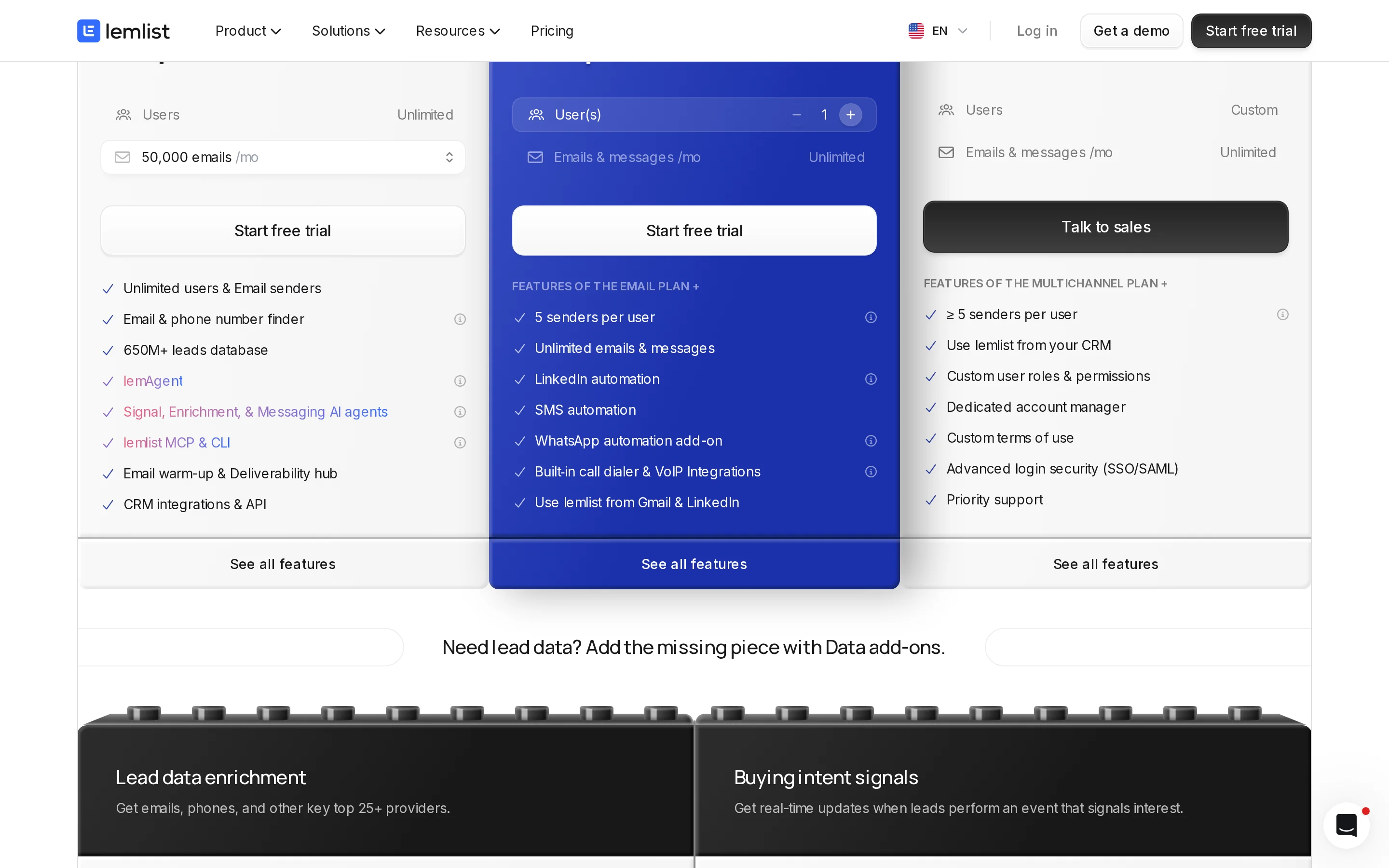
lemlist plans
- Email Plan: Quote-Based (Pricing scales with monthly email volume)
- Multichannel Plan: Quote-Based (Includes Email, LinkedIn, Calls, SMS)
- Enterprise: Custom Enterprise Pricing (Contact Sales for SSO, dedicated support, and custom terms)
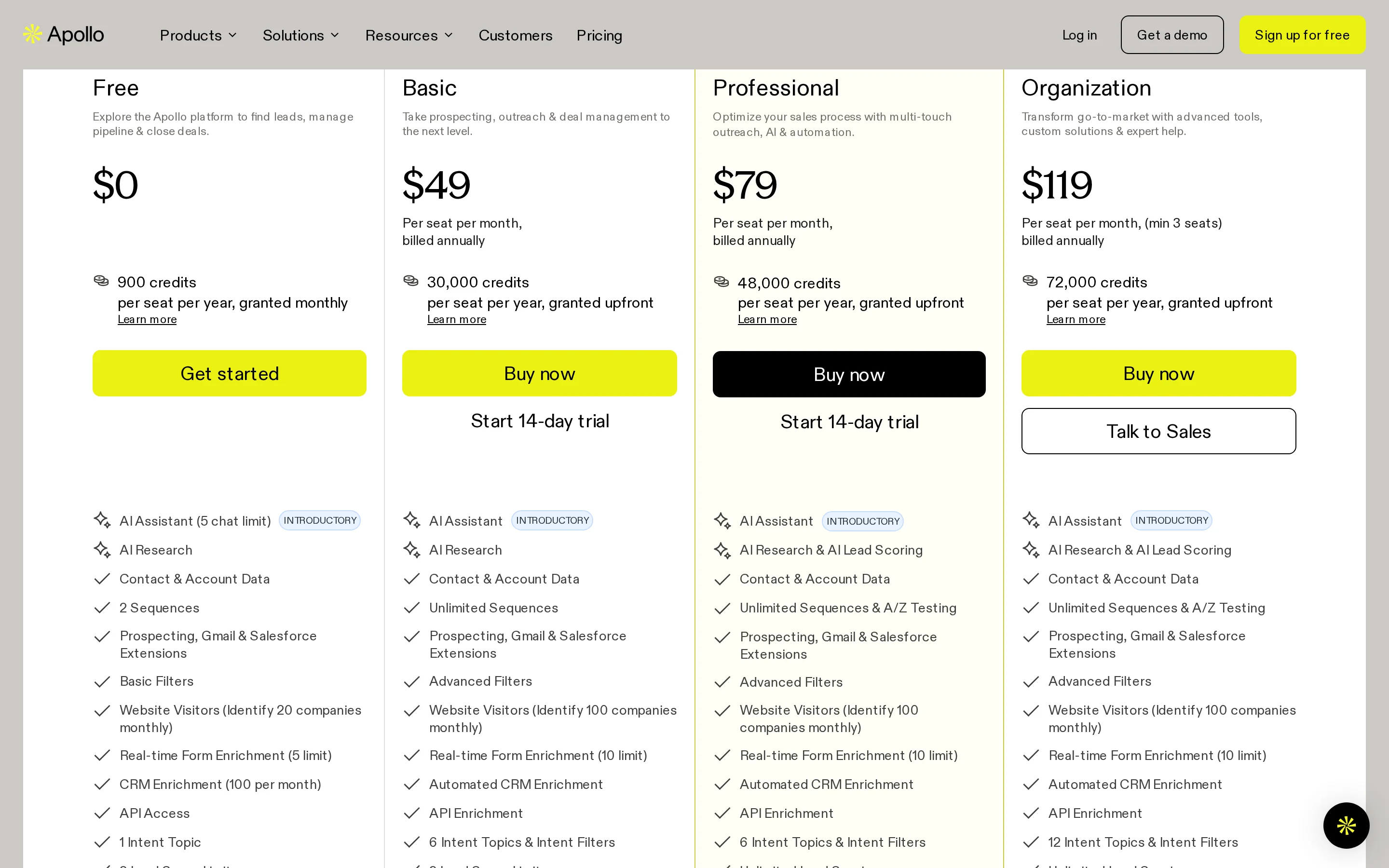
Apollo.io plans
- Free: $0/mo (Limited credits, basic features)
- Basic: ~$49/user/mo (Annual billing) - Core sequencing & integrations
- Professional: ~$79/user/mo (Annual billing) - Higher credits, AI features, call recording
- Custom: Quote-Based (Enterprise needs, SSO, advanced security)
Apollo.io utilizes a hybrid pricing model combining per-seat licensing with a credit-based consumption system. This structure is transparent for individual sellers but can become unpredictable for teams heavily reliant on data enrichment, as unused credits do not roll over. The entry-level Basic plan is affordable, but meaningful access to the full database and AI features typically pushes teams toward the Professional tier. In contrast, lemlist employs a volume-based pricing model tied to email sends and channel usage rather than strictly per-seat costs. This makes lemlist more cost-effective for larger teams with multiple users who share a common sending infrastructure, as it avoids the 'seat tax' found in Apollo. However, lemlist’s lack of public self-serve pricing requires a sales conversation, which can be a friction point for small startups seeking immediate transparency.
of Ownership Analysis
For a 5-person sales team needing 10,000 verified leads per month:
Apollo.io:
Assuming the Professional plan (~$79/user/mo annual), the base cost is $395/month. To acquire 10,000 leads, the team would likely exhaust included credits and need to purchase add-on credits. Depending on the mix of email vs. phone data, this could add $200-$500/month in variable costs. Total estimated monthly spend: $600 - $900. Note: Credits reset monthly, so waste is possible.
lemlist:
lemlist pricing is quote-based. A typical Multichannel plan for 5 users might range from $300 to $600/month depending on the selected email volume tier. Since lemlist includes unlimited users on higher tiers and focuses on enrichment credits (which roll over if active), the cost is more predictable. If the team brings their own list, they pay primarily for sending capacity. If they rely on lemlist's finder, credits are consumed similarly. Estimated total monthly spend: $400 - $700, with better predictability for larger teams due to the unlimited user model.
Which fits your outbound model?
Match your team size, deal complexity, and lead volume to the right engine.
High-Volume Cold Outbound
lemlist is built for maximizing reply rates through superior deliverability controls (rotating IPs, smart sending) and AI-driven personalization, making it ideal for aggressive cold email campaigns.
Bulk List Building & Data Hygiene
Apollo.io provides superior access to a massive proprietary database, making it the best tool for filling empty CRMs with thousands of new prospects quickly.
Developer API Data Pipelines
Apollo.io offers higher rate limits and more mature documentation for programmatic data enrichment, suitable for engineering-led GTM teams.
Multichannel ABM (Account-Based Marketing)
lemlist’s native integration of LinkedIn voice notes, SMS, and WhatsApp alongside email creates a cohesive multichannel experience for targeting key accounts.
Where each platform falls short
Constructive limitations and architectural trade-offs to weigh before signing.
Where lemlist falls short
- No public self-serve pricing; requires sales interaction for quotes.
- Smaller native contact database compared to Apollo’s 240M+ records.
- Lacks a dedicated mobile app for on-the-go prospecting.
- Advanced features like WhatsApp and Voice require add-ons or specific plan tiers.
Where Apollo.io falls short
- Credits do not roll over, leading to potential waste if usage fluctuates.
- Personalization engine is less sophisticated than lemlist’s AI-native approach.
- Per-seat pricing can become expensive for large teams with low individual usage.
- Deliverability controls are less granular than lemlist’s specialized warmup and rotation features.
The switching playbook
What you gain and give up when migrating across platforms.
- Significantly improved email deliverability and inbox placement.
- Access to advanced AI personalization (lemAgent) for higher reply rates.
- Unified multichannel sequences including LinkedIn voice notes and SMS.
- Cost savings for larger teams due to unlimited user models on higher tiers.
- Loss of direct access to Apollo’s massive proprietary contact database.
- Need to integrate external lead sources or pay for enrichment credits separately.
- Less mature native CRM field mapping for complex enterprise structures.
- Immediate access to 240M+ contacts and 30M+ companies for rapid pipeline filling.
- Robust, well-documented REST API for custom data workflows.
- Native mobile app for prospecting on the go.
- Transparent, self-serve pricing with a free starter tier.
- Reduced control over email deliverability and spam avoidance.
- Less sophisticated AI-driven personalization capabilities.
- Higher per-user costs for large teams.
- Potential frustration with non-rolling credit expiration.
Frequently asked questions
Direct technical answers about lemlist and Apollo.io.
Which platform has better data accuracy?
Apollo.io generally has broader coverage due to its massive database size, but lemlist often provides higher *contextual* accuracy because it verifies and enriches data in real-time via web scraping at the moment of outreach, reducing stale contact issues.
How do their starting costs compare?
Apollo.io starts with a Free plan and paid tiers beginning around $49/user/month (annual). lemlist does not publish fixed starting prices; it uses a quote-based model tied to email volume and channel usage, which can be cheaper for teams with many users but lower individual send counts.
Can I connect unlimited mailboxes?
lemlist explicitly supports unlimited users and email senders on its higher-tier plans, focusing on safe scaling. Apollo.io also allows multiple connections but ties mailbox usage and sending limits more closely to the number of seats and credit consumption.
Which tool is easier to learn?
Apollo.io has a steeper learning curve due to its comprehensive GTM suite (data, dialer, CRM, sequences). lemlist is designed for simplicity in outreach execution, with a more intuitive interface for setting up campaigns and personalization rules.
Do credits roll over?
No. Apollo.io credits expire at the end of each billing cycle. lemlist credits roll over for as long as the subscription remains active, offering more flexibility for teams with fluctuating usage.
Sources & methodology
Every claim is grounded in official vendor documentation and live audits.
Compare with sendroAI
See how sendroAI replaces manual research, credit limits, and deliverability traps with full autonomous execution.