Quick decision verdict
Executive rulings based on technical testing and pricing data.
Best for Enterprise Outbound
lemlist offers a comprehensive enterprise suite with SSO, dedicated account management, and advanced AI agents suitable for large-scale operations.
Best for Email Deliverability
Mailshake provides robust email rotation and warmup features natively within its core plans, ensuring high deliverability for pure email campaigns.
Best for High-Volume Prospecting
lemlist’s 650M+ lead database and AI-powered enrichment allow for massive, targeted prospecting at scale without manual list building.
Best Overall Value
Mailshake offers transparent, predictable pricing with unlimited sends on mid-tier plans, making it highly cost-effective for teams focused on email volume.
lemlist vs Mailshake at a glance
Side-by-side core specifications and live platform viewports.
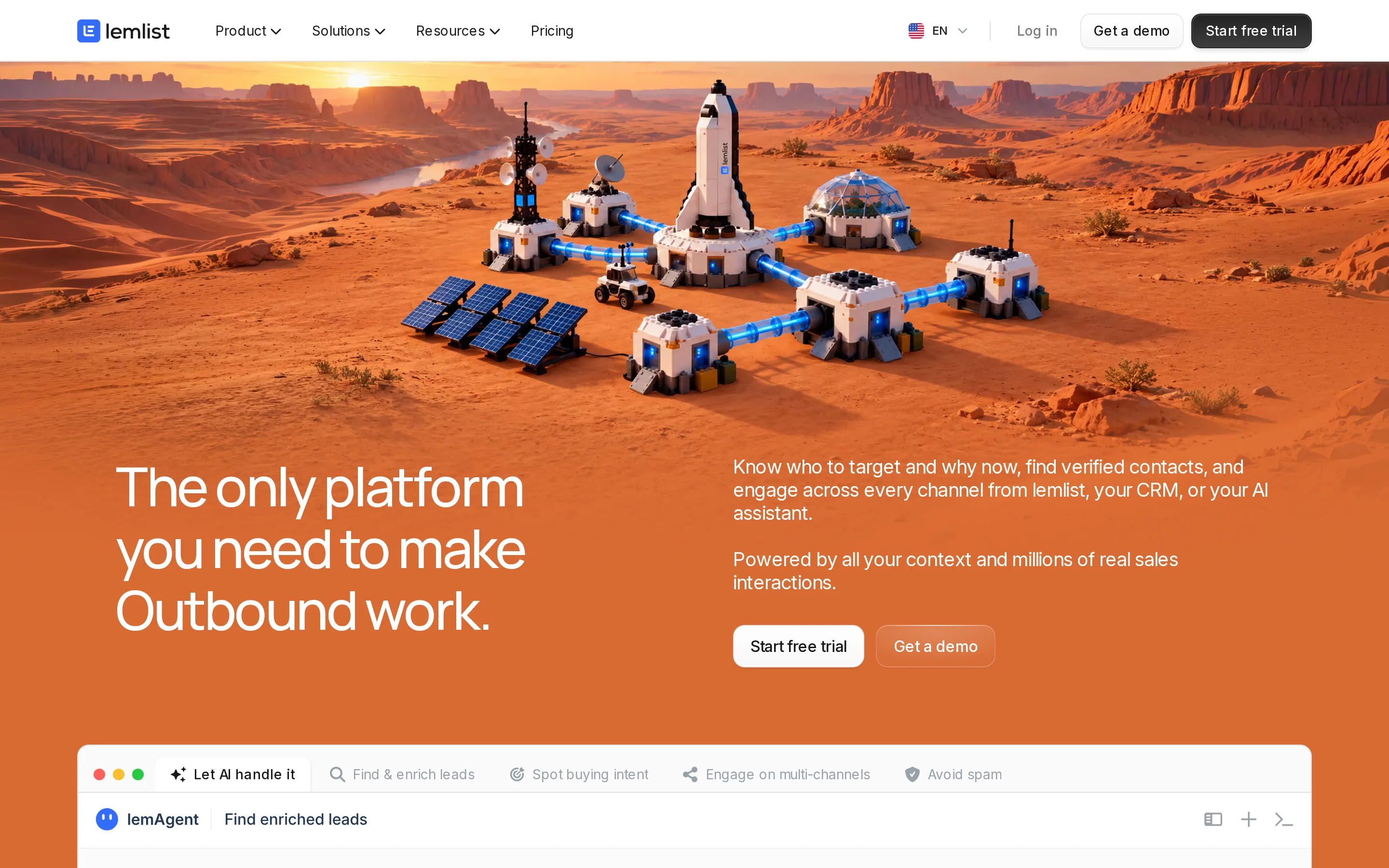
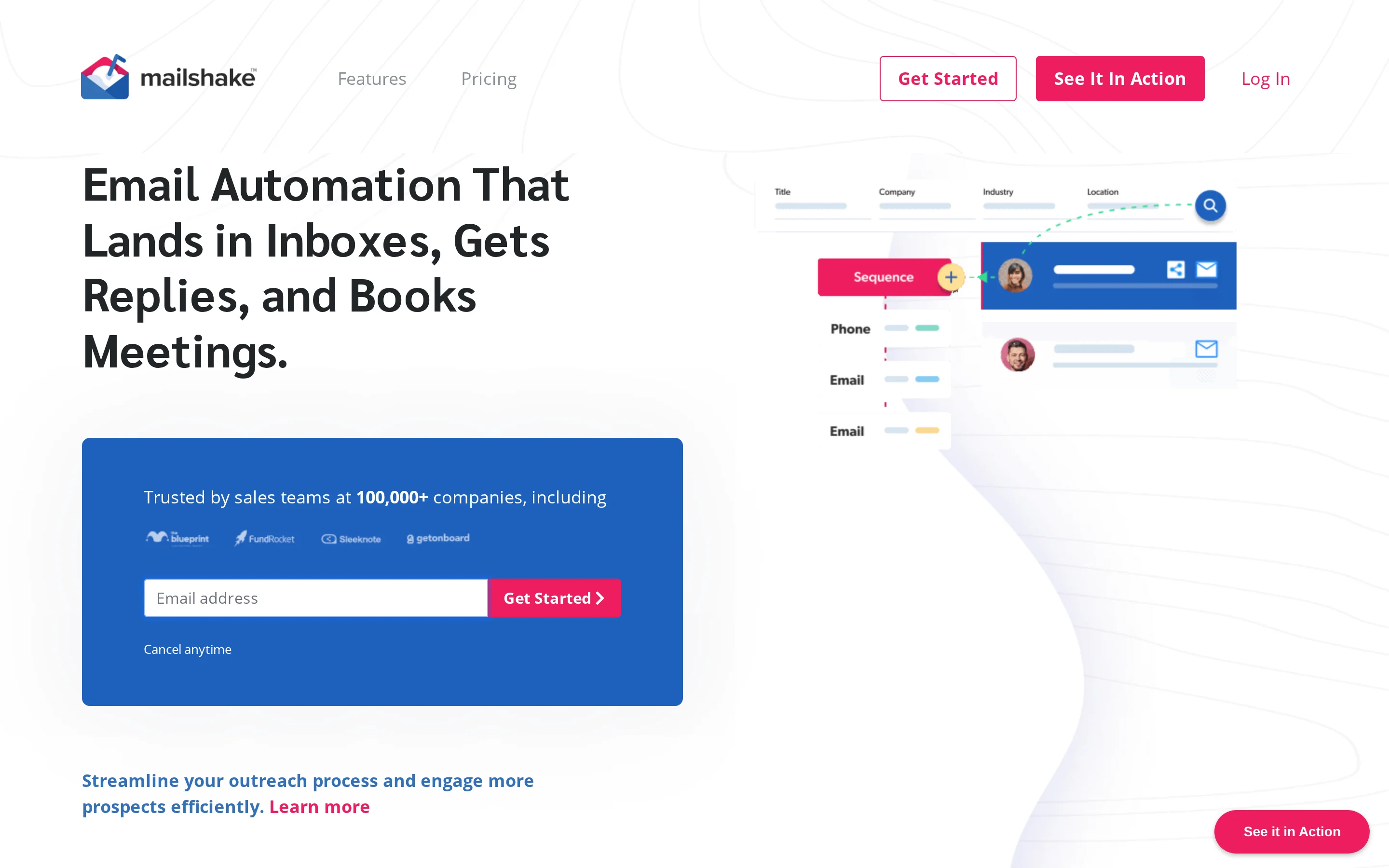
| Attribute | lemlist | Mailshake |
|---|---|---|
| Primary Purpose | Full-stack multichannel engagement platform with AI automation | Email-centric outreach automation tool |
| Starting Price | Custom Quote-Based (No public self-serve tiers listed) | $59/mo (Starter Plan) |
| Free Plan | Paid only (with free credits for trial) | Paid only (with 50 free data finder credits) |
| Core Strength | AI-driven personalization and omnichannel orchestration | Simplicity, reliability, and email deliverability |
Feature-by-feature matrix
Audited capabilities across data sourcing, sending infrastructure, and integrations.
| Capability | Why it matters | lemlist | Mailshake | Winner |
|---|---|---|---|---|
| B2B Contact Database | Access to net-new leads | ✓ Native | — None | lemlist |
| Email Finder & Verifier | Discovering verified addresses | ✓ Native | ✓ Native | Tie |
| LinkedIn Automation | Expanding reach beyond inbox | ✓ Native | → Integration | lemlist |
| Phone Dialer | Voice outreach integration | ✓ Native | ✓ Native | Tie |
| AI Copy Generation | Personalized message creation | ✓ Native | ✓ Native | Tie |
| SMS/WhatsApp Outreach | Multichannel touchpoints | ✓ Native | — None | lemlist |
| Email Warmup | Protecting sender reputation | ✓ Native | ✓ Native | Tie |
| CRM Integrations | Workflow synchronization | ✓ Native | ✓ Native | Tie |
| API Access | Custom automation pipelines | ✓ Native | ✓ Native | Tie |
| SSO/SAML Security | Enterprise security compliance | ✓ Native | — None | lemlist |
| Unlimited Users | Team scalability | ✓ Native | ◐ Partial | lemlist |
| A/B Testing | Optimizing campaign performance | ✓ Native | ✓ Native | Tie |
| Unified Inbox | Centralized reply management | ✓ Native | ✓ Native | Tie |
| Lead Scoring | Prioritizing high-value prospects | ✓ Native | — None | lemlist |
| Call Recording & Coaching | Sales enablement | ✓ Native | — None | lemlist |
| Custom Domains | Branded sending infrastructure | ✓ Native | — None | lemlist |
| Mobile App | On-the-go access | N/A | N/A | Tie |
Technical deep dives
Architectural comparisons derived from live platform testing.
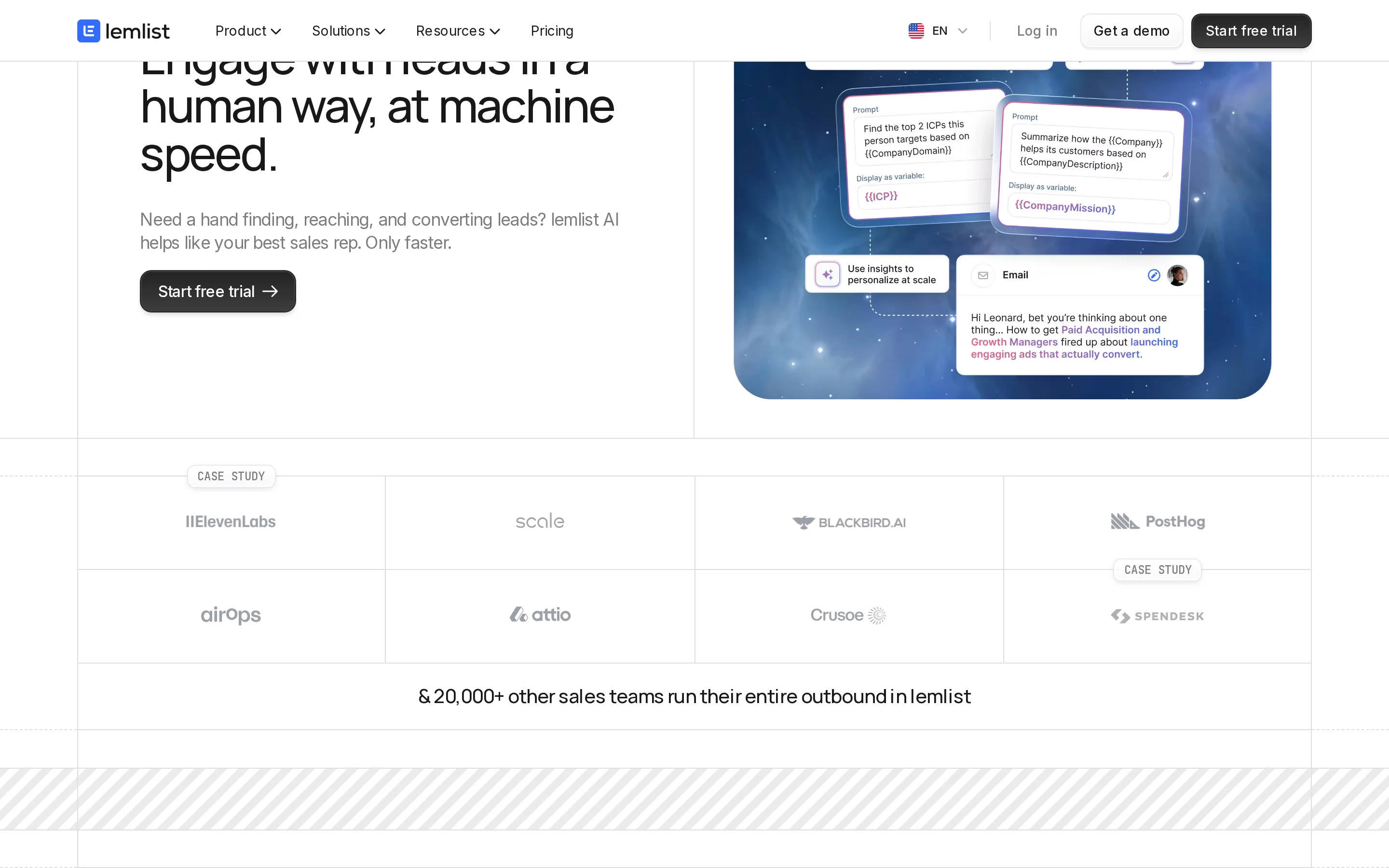 Full resolution
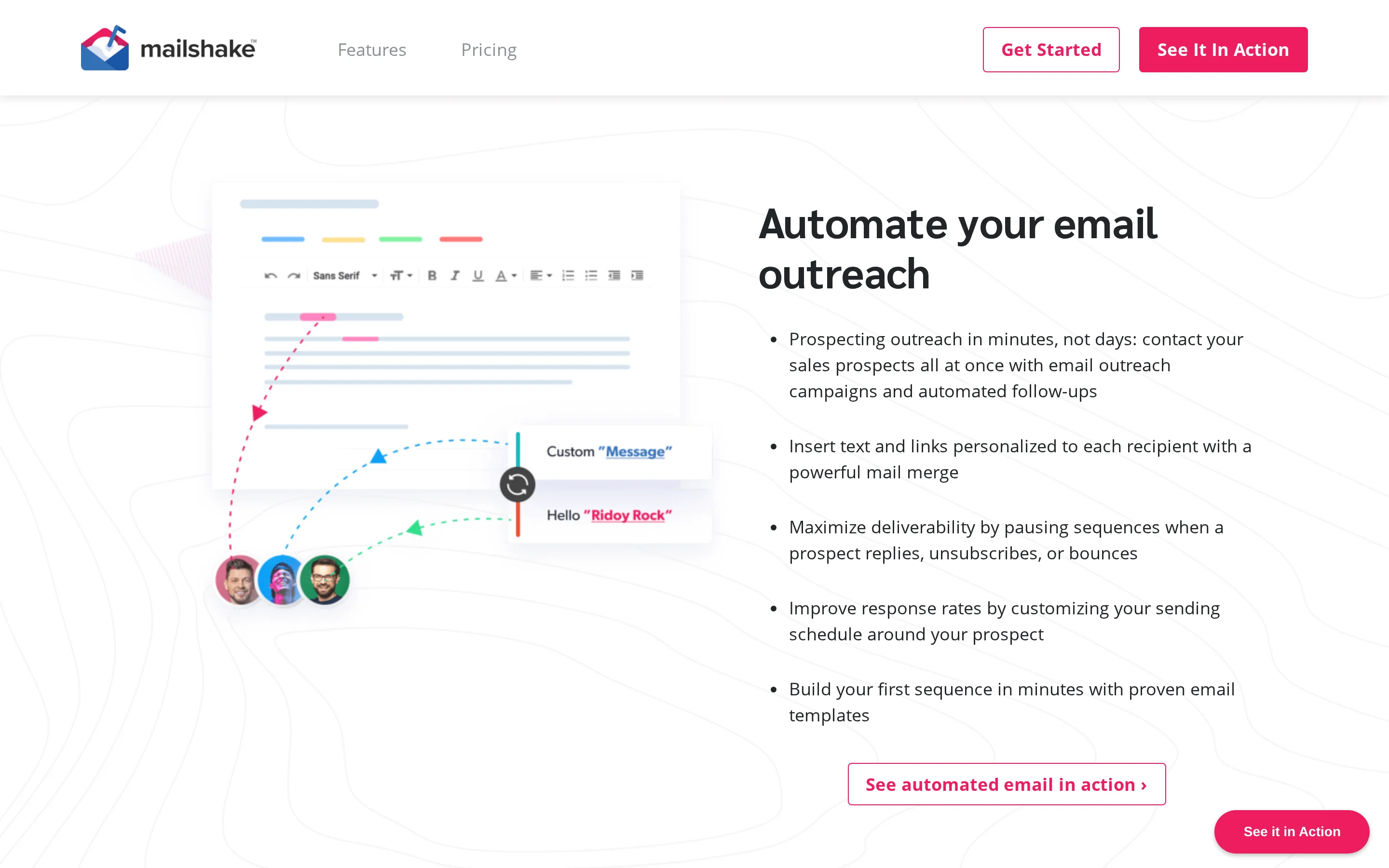 Full resolution
AI-Driven Intelligence & Data Hygiene: Generative Enrichment vs. Static Database Filtering
lemlist has evolved into an AI-first platform, leveraging a proprietary stack including lemAgent, MCP server access, and URL-scraping agents to dynamically clean data and extract intent signals. It utilizes a 650M+ lead database and AI variables to normalize dates, capitalize names, and remove emojis automatically. This generative approach allows for real-time contextual enrichment from LinkedIn bios and websites, enabling hyper-personalized messaging at scale.
In contrast, Mailshake relies on a traditional 'Data Finder' that uses static filters such as role, location, and company. While it includes 50 free data finder credits per plan and integrates with external tools like Voila Norbert, it lacks the deep, generative AI layer found in lemlist. Mailshake’s strength lies in its simplicity and reliability rather than automated data hygiene or intent detection.
The tradeoff is clear: lemlist offers superior data intelligence and automation for teams willing to invest in a more complex, AI-driven workflow. Mailshake is better suited for users who prefer manual control over their data lists and want a straightforward, no-frills approach to email outreach without relying on AI-generated insights.
Multichannel Orchestration & Engagement Depth: Unified Omnichannel Suite vs. Email-Centric Automation
lemlist operates as a full-stack engagement platform, supporting email, LinkedIn (visits, follows, messages, voice notes), SMS, WhatsApp, and in-app calling within a single interface. Its AI capabilities include reply intent detection and auto-generated responses, allowing sales teams to manage all prospect interactions from one dashboard. This unified approach reduces context switching and ensures consistent messaging across channels.
Mailshake is strictly an email automation tool focused on sequence logic, A/B testing, and deliverability warmup. While it offers a built-in phone dialer and integrates with third-party tools for LinkedIn and SMS, it does not provide native multichannel orchestration. Teams using Mailshake must rely on external integrations or separate tools to expand their outreach beyond email.
For organizations seeking a comprehensive outbound strategy that leverages multiple touchpoints, lemlist is the superior choice. However, for teams that prioritize email deliverability and simplicity, Mailshake’s focused approach minimizes complexity and potential points of failure in the outreach process.
Workflow Automation & Personalization Engine: Liquid Syntax & AI Copy Generation vs. Basic Mail Merge & Template Library
lemlist utilizes advanced Liquid Syntax for complex conditional logic and 'Shakespeare'-like AI capabilities to draft multichannel sequences and personalize content at scale. It can generate personalized intros based on competitor data and pain points scraped from prospect profiles, ensuring messages feel human-like and relevant. This engine allows for dynamic, highly customized outreach that adapts to each lead’s unique context.
Mailshake offers robust but simpler mail merge functionality with predefined templates and basic A/B testing. It focuses on structural delivery optimization and scheduling, allowing users to insert field replacement tags for basic personalization. While effective for standard cold email campaigns, it lacks the depth of dynamic personalization and AI-driven copy generation found in lemlist.
The decision here hinges on the need for personalization depth. lemlist is ideal for teams that require high-touch, personalized outreach at scale, leveraging AI to reduce manual effort. Mailshake is better for teams that prefer a more controlled, template-based approach with reliable deliverability and straightforward automation workflows.
Pricing & true cost
Published tier structures, credit scaling mechanics, and total outbound cost.
 Full resolution
 Full resolution
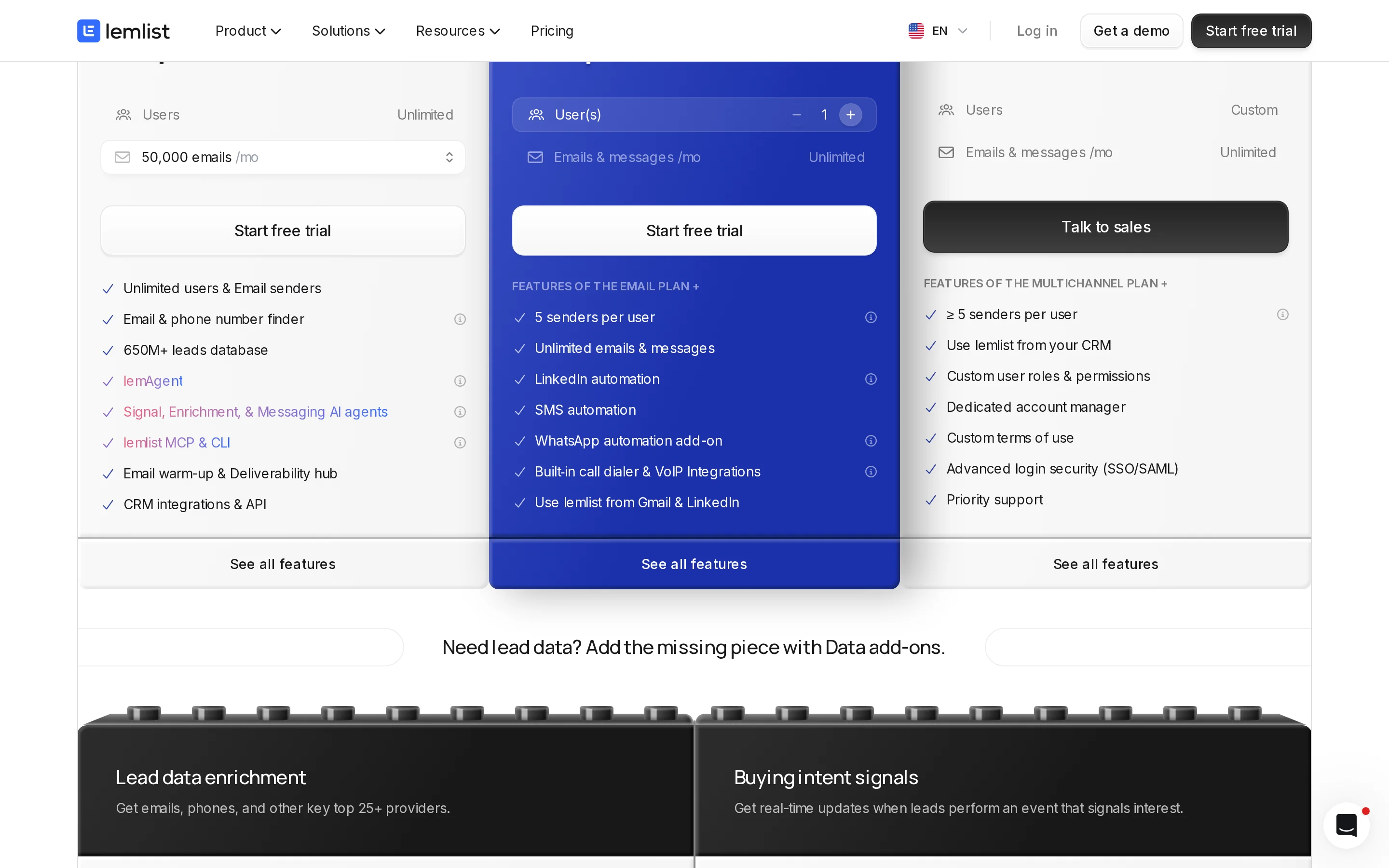
lemlist plans
- Email Starter: $32/month annual ($39/mo monthly) — 1 sending mailbox, 500 emails/day
- Email Pro: $55/month annual ($69/mo monthly) — 3 sending mailboxes, CRM integrations
- Multichannel Expert: $87/month annual ($109/mo monthly) — LinkedIn automation, phone dialer, custom video
- Enterprise: Custom quote — dedicated account manager, advanced security
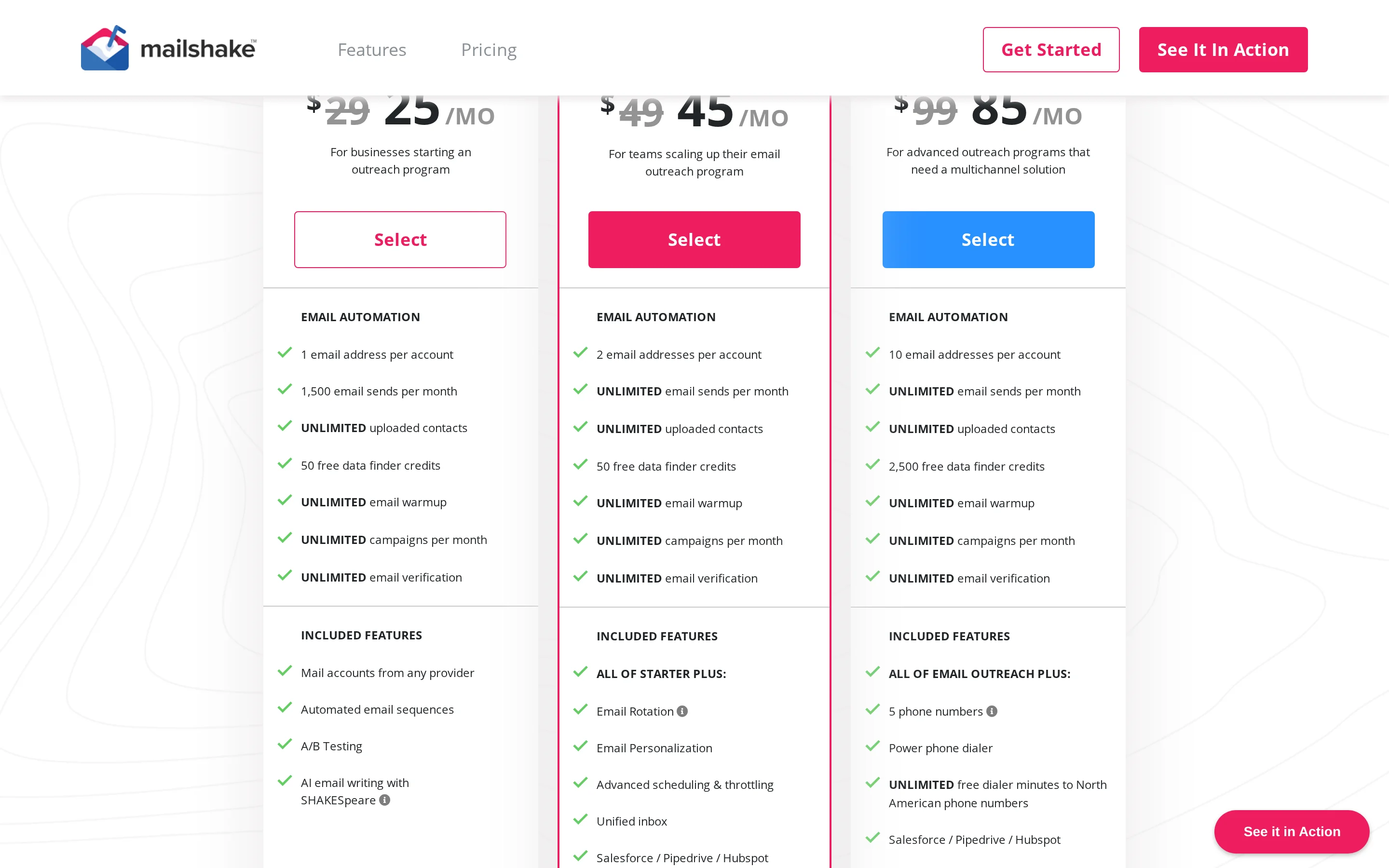
Mailshake plans
- Starter Plan: $25/user/month annual ($29/user/mo monthly) — 1,500 sends/mo, basic email personalization
- Email Outreach Plan: $45/user/month annual ($49/user/mo monthly) — 5,000 sends/mo, email warmup included
- Sales Engagement Plan: $85/user/month annual ($99/user/mo monthly) — phone dialer, social task sequences
lemlist employs a quote-based pricing model that scales with team size, feature requirements, and credit usage for data enrichment. This structure offers flexibility for large enterprises but lacks transparency for smaller teams. Mailshake, conversely, offers transparent, tiered pricing based on user count and mailbox limits, with unlimited email sends on most plans. This makes Mailshake more predictable and accessible for growing teams, while lemlist’s costs can escalate significantly with high-volume data usage and advanced AI features.
of Ownership Analysis
For a 5-person sales team needing 10,000 verified leads per month: lemlist would likely incur significant costs due to credit consumption for data enrichment and AI processing, potentially totaling $1,500-$3,000+/month depending on custom plan terms. Mailshake’s equivalent setup would cost approximately $745/month ($149 x 5 users) for the Sales Engagement plan, plus additional costs for external data enrichment tools if needed, resulting in a lower base software cost but higher operational overhead for data sourcing.
Which fits your outbound model?
Match your team size, deal complexity, and lead volume to the right engine.
High-Volume Cold Outbound
lemlist is built for high-volume, personalized outreach with AI-driven personalization and multichannel support, making it ideal for scaling outbound efforts efficiently.
Bulk List Cleaning & Hygiene
lemlist provides superior automated data cleaning and enrichment via AI variables, reducing manual effort and improving list quality compared to Mailshake’s static filtering.
Simple Email Campaigns
Mailshake offers a straightforward, reliable platform for simple email campaigns with excellent deliverability features and easy-to-use interfaces, perfect for teams not requiring complex automation.
Enterprise Security & Compliance
lemlist supports SSO/SAML, custom terms, and dedicated account management, making it the better choice for enterprises with strict security and compliance requirements.
Where each platform falls short
Constructive limitations and architectural trade-offs to weigh before signing.
Where lemlist falls short
- Pricing is not publicly listed, requiring sales contact for quotes, which can be opaque for SMBs.
- Complexity of AI features may have a steeper learning curve for new users.
- Credit-based model for data enrichment can lead to unpredictable costs at high volumes.
Where Mailshake falls short
- Lacks native multichannel capabilities (LinkedIn, SMS) beyond email and phone.
- Limited AI-driven personalization compared to lemlist’s generative AI stack.
- No native B2B contact database; requires external tools for lead sourcing.
The switching playbook
What you gain and give up when migrating across platforms.
- Access to a unified multichannel platform with AI-driven personalization.
- Enhanced data intelligence with automatic cleaning and enrichment.
- Enterprise-grade security features including SSO and custom compliance options.
- Higher potential costs due to credit-based data usage and custom pricing.
- Increased complexity in setup and management of AI features.
- Transparent, predictable pricing with unlimited email sends on mid-tier plans.
- Simpler, more intuitive interface focused on core email automation.
- Strong deliverability features with native email warmup and rotation.
- Loss of native multichannel capabilities (LinkedIn, SMS) requiring external integrations.
- Reduced AI-driven personalization and data enrichment capabilities.
Frequently asked questions
Direct technical answers about lemlist and Mailshake.
Which platform has better data accuracy?
lemlist offers superior data accuracy through its AI-driven enrichment and verification processes, leveraging a 650M+ database and automated cleaning. Mailshake relies on static filters and external integrations, which may require more manual verification.
How do their starting costs compare?
Mailshake starts at $59/mo for the Starter plan, offering transparent pricing. lemlist does not publish public prices and requires contacting sales for a custom quote, making direct comparison difficult but potentially more flexible for enterprise needs.
Can I connect unlimited mailboxes?
lemlist allows unlimited users and email senders on its plans, providing greater flexibility for large teams. Mailshake limits mailboxes based on the plan tier (e.g., 1 on Starter, 2 on Email Outreach, 10 on Sales Engagement).
Which tool is easier to learn?
Mailshake is generally considered easier to learn due to its simpler, email-focused interface and straightforward automation features. lemlist’s extensive AI and multichannel capabilities offer more power but come with a steeper learning curve.
Sources & methodology
Every claim is grounded in official vendor documentation and live audits.
Compare with sendroAI
See how sendroAI replaces manual research, credit limits, and deliverability traps with full autonomous execution.