
Best Constant Contact Alternatives in 2026: 7 Powerful Email Marketing Platforms Compared
Constant Contact is often chosen because it feels safe. Easy to use, familiar, and built for newsletters and small businesses. For basic email sending, it works. But teams start looking for alternatives when automation feels extremely limited, personalization stops at first name, and pricing feels high for how basic the platform is.
Constant Contact is often chosen because it feels safe. Easy to use, familiar, and built for newsletters and small businesses. For basic email sending, it works.
But teams start looking for Constant Contact alternatives when automation feels extremely limited, personalization stops at first name, reporting doesn't explain why results change, and email needs to support growth not just consistency.
If Constant Contact feels dependable but dated, these are stronger alternatives.
Constant Contact vs Alternatives — Quick Snapshot
| Tool | How It Compares to Constant Contact | Best For | Stronger | Weaker | Pricing |
|---|---|---|---|---|---|
| SendroAI | Intelligence-first upgrade | Teams focused on outcomes | AI personalization & adaptive automation | Not newsletter-first | Tiered pricing |
| Sender.net | Lightweight newsletter ESP | SMBs & Simplicity | Simplicity & deliverability | Shallow automation | Tiered pricing |
| Mailjet | API + email platform | SaaS & product teams | Transactional + marketing email | Weak automation | Usage-based pricing |
| Moosend | Automation-focused ESP | Growing SMBs | Visual workflows | Less brand familiarity | Tiered pricing |
| AWeber | Classic email platform | Solo businesses | Ease of use | Outdated automation | Tiered pricing |
| Elastic Email | Delivery-first platform | High-volume senders | Cost & deliverability | Weak UI | Usage-based pricing |
| Benchmark Email | Design-first ESP | Non-technical teams | Templates & UX | Limited automation | Tiered pricing |
SendroAI — Best Overall Alternative to Constant Contact
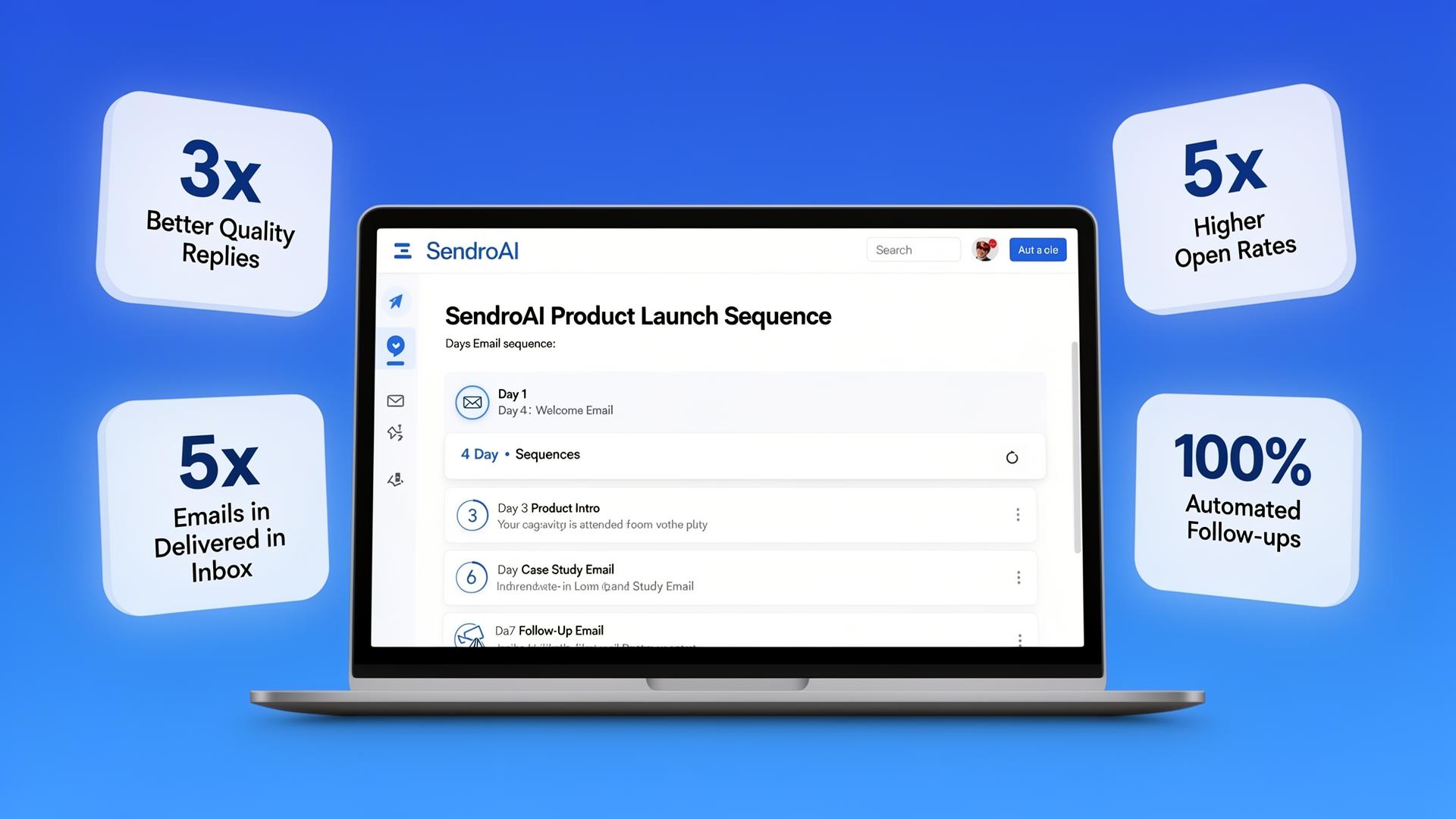
Constant Contact is built for sending emails reliably. SendroAI is built for improving email performance over time. Instead of static lists and one-off campaigns, SendroAI uses AI to personalize messages per recipient, adjusts follow-ups based on real engagement and replies, and learns which messaging patterns actually convert.
- AI-driven personalization at scale: Context-aware messaging for every recipient
- Automation that adapts: Without rebuilding flows manually
- Messaging optimized for responses: Not just opens
- Engagement plateaus despite consistent sending
- Personalization feels cosmetic
- Automation is limited to basic drip emails
- Email needs to support sales, outbound, or lifecycle growth
- Not designed as a beginner newsletter tool: More powerful than necessary for simple newsletter-only use cases
A B2B team moves from Constant Contact to SendroAI to personalize follow-ups based on engagement instead of blasting the same newsletter to everyone.
Constant Contact optimizes for comfort and familiarity. SendroAI optimizes for learning and outcomes.
Ready to see what AI-powered outreach can do? SendroAI is built for the future of email, where AI handles the research and personalization that used to take hours.
SendroAI is the strongest upgrade for teams that want smarter email without complexity.
Try SendroAI NowSender.net — Lightweight Newsletter ESP

Sender.net is built around one core promise: send newsletters reliably without getting in your way. Where Constant Contact focuses on familiarity and legacy workflows, Sender.net strips email marketing down to the essentials: broadcast campaigns, simple automations, list management, and deliverability monitoring.
- Faster campaign setup: Less friction for recurring newsletters
- Cleaner interface: Fewer menus and steps
- Stronger deliverability focus: More time writing, less navigating
- Campaign creation feels slower than it should
- They don't use most of Constant Contact's features
- Email is a communication channel, not a growth engine
- Shallow automation: Limited beyond basic sequences
- Basic personalization: No advanced lifecycle logic
A content-driven business leaves Constant Contact to send weekly newsletters faster and with fewer clicks, without needing advanced automation.
Sender.net is leaner and faster. Constant Contact is more familiar, but heavier.
Mailjet — API + Email Platform
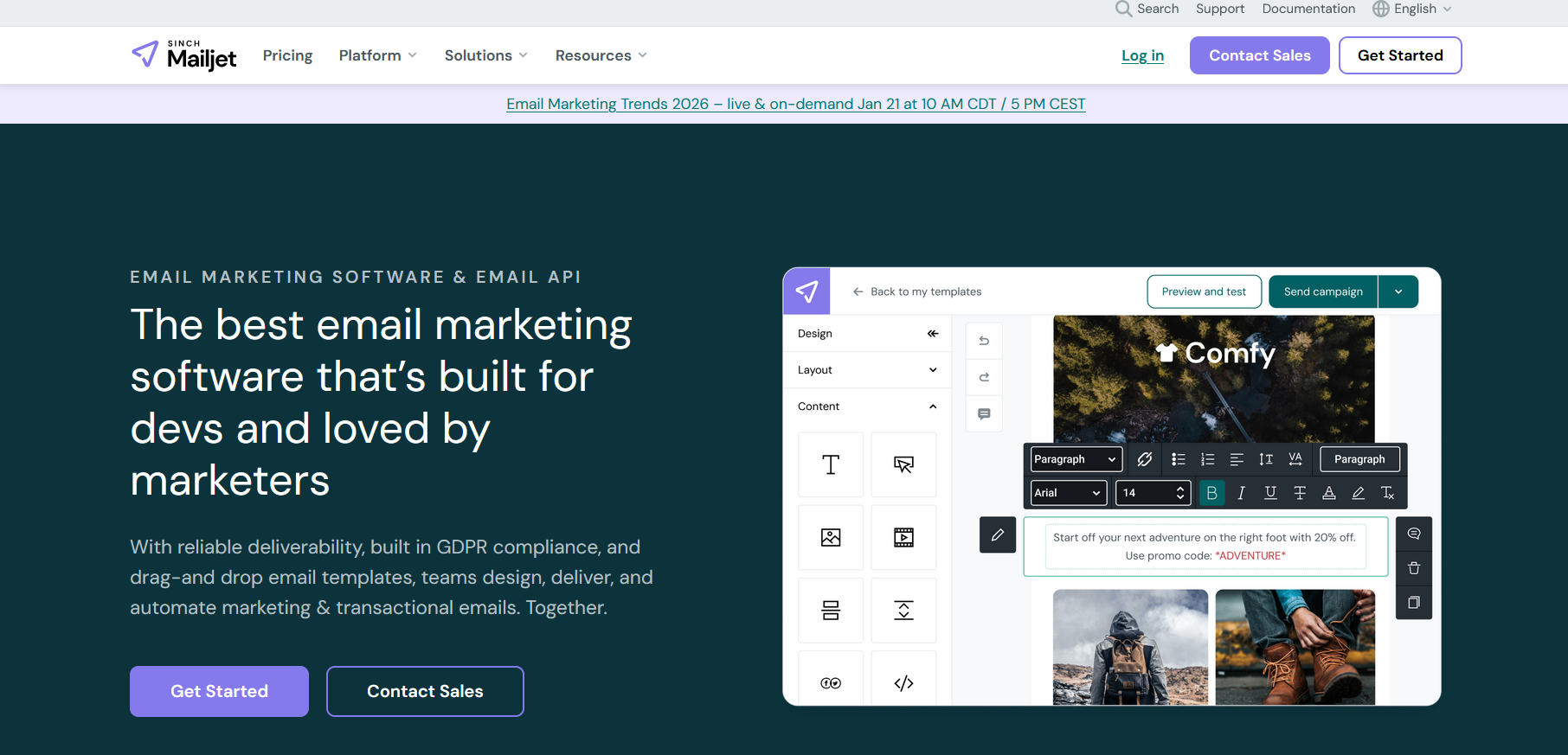
Mailjet sits at the intersection of marketing email and transactional email. Unlike Constant Contact, which is firmly marketer-centric, Mailjet is designed for teams that need marketing campaigns, transactional emails, API-driven sending, and technical control.
- Strong developer APIs: Greater control over sending behavior
- Transactional + marketing email: In one platform
- Better fit for SaaS teams: Handles complexity Constant Contact doesn't attempt
- Product or transactional emails matter
- Engineering teams need API access
- Marketing and product email must live together
- Basic automation: Lifecycle and behavioral logic are limited
- Less intuitive for non-technical marketers: Not a beginner tool
A SaaS company replaces Constant Contact to manage product notifications and marketing emails from a single platform with API control.
Mailjet is more powerful technically. Constant Contact is simpler for marketers.
Moosend — Visual Automation Without Enterprise Complexity
Moosend is built for teams that want visual automation without enterprise complexity. Compared to Constant Contact's basic autoresponders, Moosend emphasizes visual workflow builders, behavioral triggers, and flexible automation paths. It's designed to help growing teams move beyond newsletters into actual automation.
- More flexible automation logic: Easier workflow visualization
- Better trigger options: React to behavior, not just time
- Build journeys, not just sequences: Modern automation UX
- Time-based autoresponders stop working
- They want visual automation flows
- Constant Contact feels outdated
- Smaller ecosystem: Less brand recognition
- Reporting isn't as deep: Powerful but not expansive
An SMB leaves Constant Contact to automate follow-ups based on site visits and engagement rather than fixed schedules.
Moosend is more flexible and modern. Constant Contact is simpler but limiting.
AWeber — Classic Email Platform
AWeber is one of the oldest names in email marketing. It focuses on basic newsletters, simple automation, and stability and ease of use. There's no ambition to reinvent email here — just to keep it reliable.
- Very straightforward setup: Less clutter than Constant Contact
- Stable sending reputation: For basic email, it does the job
- They want something equally simple
- Familiar workflows matter
- Reliability is more important than innovation
- Automation feels dated: Personalization is minimal
- Not built for growth-stage teams: Hasn't evolved much — by design
A solo business owner switches from Constant Contact to AWeber for simpler workflows and fewer decisions.
AWeber is equally simple. Neither is built for long-term sophistication.
Elastic Email — Delivery-First Platform
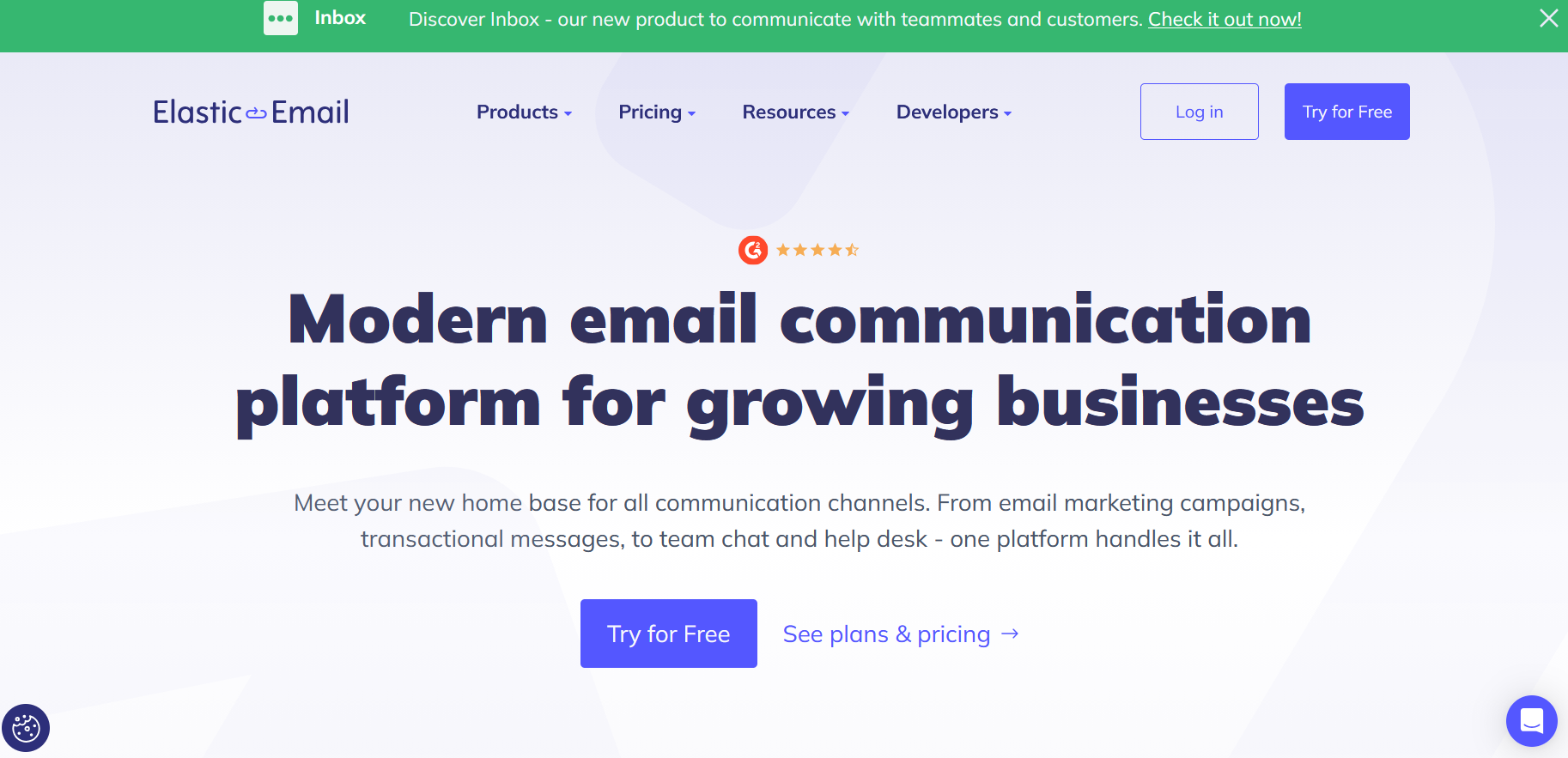
Elastic Email is built for volume and cost efficiency, not polish. It focuses on high-volume sending, cost-effective delivery, and transactional and bulk email. Email here is infrastructure, not marketing software.
- Much lower cost at scale: Built for numbers, not aesthetics
- Strong deliverability controls: Flexible sending options
- Email volume grows quickly
- Cost per email matters
- Technical teams manage sending
- Weak UI: Minimal automation
- Not beginner-friendly: Assumes technical competence
A platform with millions of monthly emails replaces Constant Contact to reduce sending costs dramatically.
Elastic Email is cheaper and scalable. Constant Contact is easier to manage.
Benchmark Email — Design-First ESP
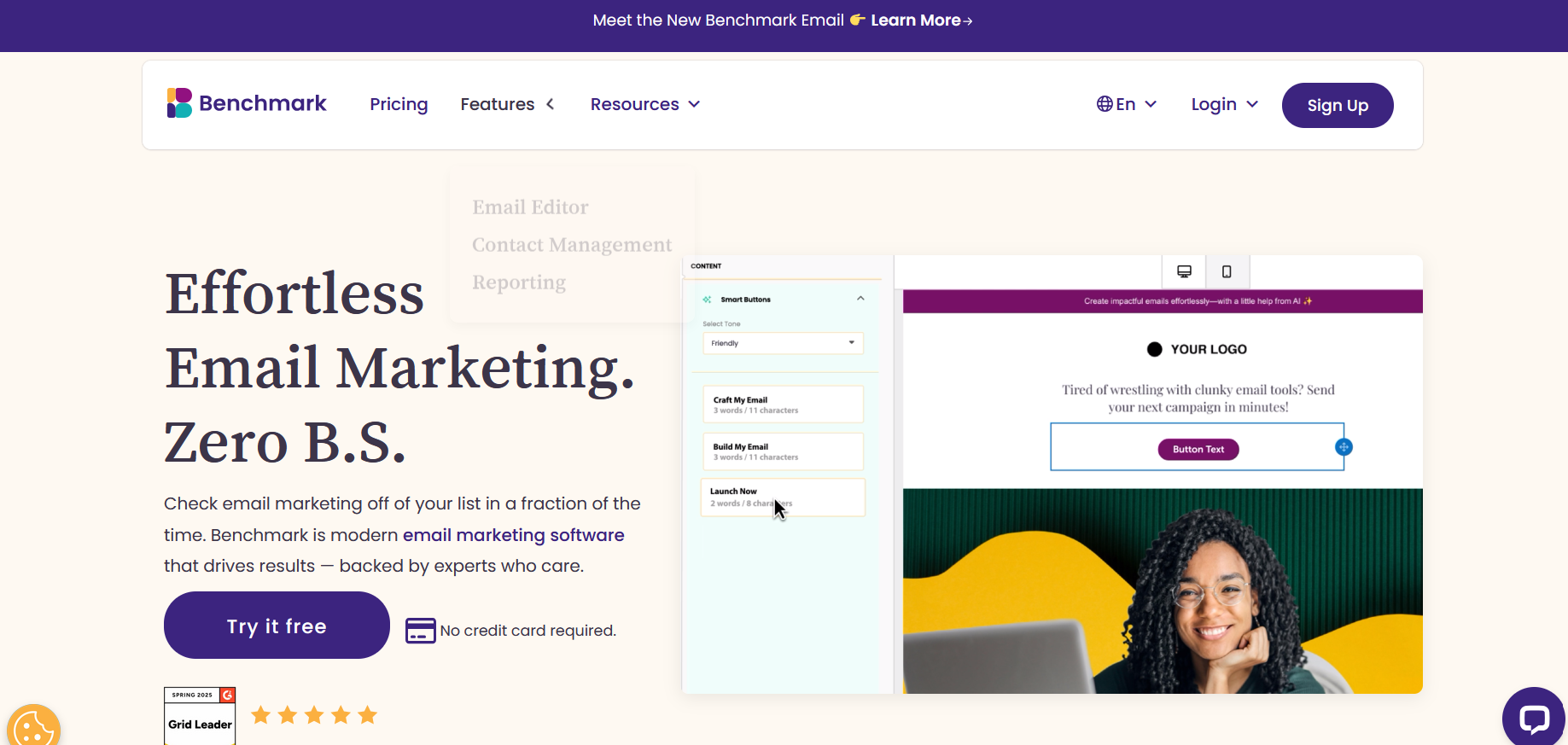
Benchmark Email is design-first. It's built for teams that care about templates, drag-and-drop editing, and visual polish. Automation exists, but it's not the main focus.
- Better visual editor: Faster design workflows
- Cleaner templates: Emails simply look better with less effort
- Visual quality matters
- Non-technical users manage email
- Design speed beats automation depth
- Shallow automation: Personalization is limited
- Not for lifecycle marketing: Design comes first — everything else follows
A marketing team replaces Constant Contact to create better-looking newsletters without hiring designers.
Benchmark Email is better for design. Constant Contact is more utilitarian.
Choosing the Right Constant Contact Alternative
Patterns you'll notice:
- SendroAI focuses on intelligence and adaptability where Constant Contact focuses on familiarity
- Sender.net strips email down to essentials
- Mailjet bridges marketing and transactional email
- Moosend adds visual automation without complexity
- AWeber offers classic reliability with minimal evolution
- Elastic Email optimizes for volume and cost
- Benchmark Email prioritizes design over automation
Switching & Migration Considerations
- Automation Needs: Constant Contact keeps automation basic. If you're moving for deeper logic, make sure your new platform can handle the complexity.
- Team Skill Level: Some alternatives require more technical expertise. Consider your team's bandwidth for learning new tools.
- Reporting Depth: If Constant Contact's reporting feels insufficient, look for platforms with stronger analytics and attribution.
- Migration Path: Consider how you'll move templates, lists, and automation. Some providers offer migration support.
Final Recommendation
Switch from Constant Contact if:
- Automation feels extremely limited
- Personalization stops at first name
- Reporting doesn't explain why results change
- Email needs to support growth, not just consistency
- Pricing feels high for how basic the platform is
Stick with Constant Contact if:
- Constant Contact's simplicity and familiarity are exactly what you need
- You don't need advanced automation or personalization
- Your team is already trained and comfortable with the platform
If you're leaving Constant Contact, it's usually because email needs to do more than just 'send nicely.'
Constant Contact is reliable but static. If your priority is learning, personalization, and continuous improvement, SendroAI is the strongest long-term alternative.
Bottom Line
Constant Contact is reliable — but static. If your priority is learning, personalization, and continuous improvement, SendroAI is the strongest long-term alternative.