
Best Alternatives to HubSpot 2026
HubSpot is often positioned as the all-in-one growth platform. CRM. Email marketing. Automation. Sales pipelines. Reporting. And for many teams, it works — at least early on.
But companies usually start looking for HubSpot alternatives when:
Costs rise faster than usage. Simple workflows become over-engineered. Email flexibility is limited by CRM structure. Teams only need part of HubSpot, not the entire ecosystem. Automation feels powerful but slow to adapt.
If HubSpot feels comprehensive but heavy, these are the best alternatives, depending on what you actually need next.
HubSpot vs Alternatives — Quick Snapshot
| Tool | How It Compares to HubSpot | Best For | Stronger | Weaker | Pricing |
|---|---|---|---|---|---|
| SendroAI | Intelligence-first alternative | Teams wanting adaptive automation | AI-driven personalization & learning | No full CRM suite | Tiered pricing |
| ActiveCampaign | Automation-first platform | Lifecycle marketing teams | Conditional workflows | Less native CRM depth | Tiered pricing |
| Salesforce Marketing Cloud | Enterprise automation | Large enterprises | Scalability & depth | Very complex & custom pricing | Custom pricing |
| Zoho | Modular cloud suite | SMBs & mid-market | Cost control & flexibility | Less polish | Tiered pricing |
| Customer.io | Event-driven messaging | Product-led SaaS | Real-time behavioral triggers | Technical setup | Usage-based pricing |
| Pipedrive | Sales-first stack | Sales-led teams | Pipeline simplicity | Weak marketing automation | Tiered pricing |
| Freshworks | Lightweight CRM suite | Growing teams | Ease of use | Less extensible | Tiered pricing |
SendroAI — Best Overall Alternative to HubSpot
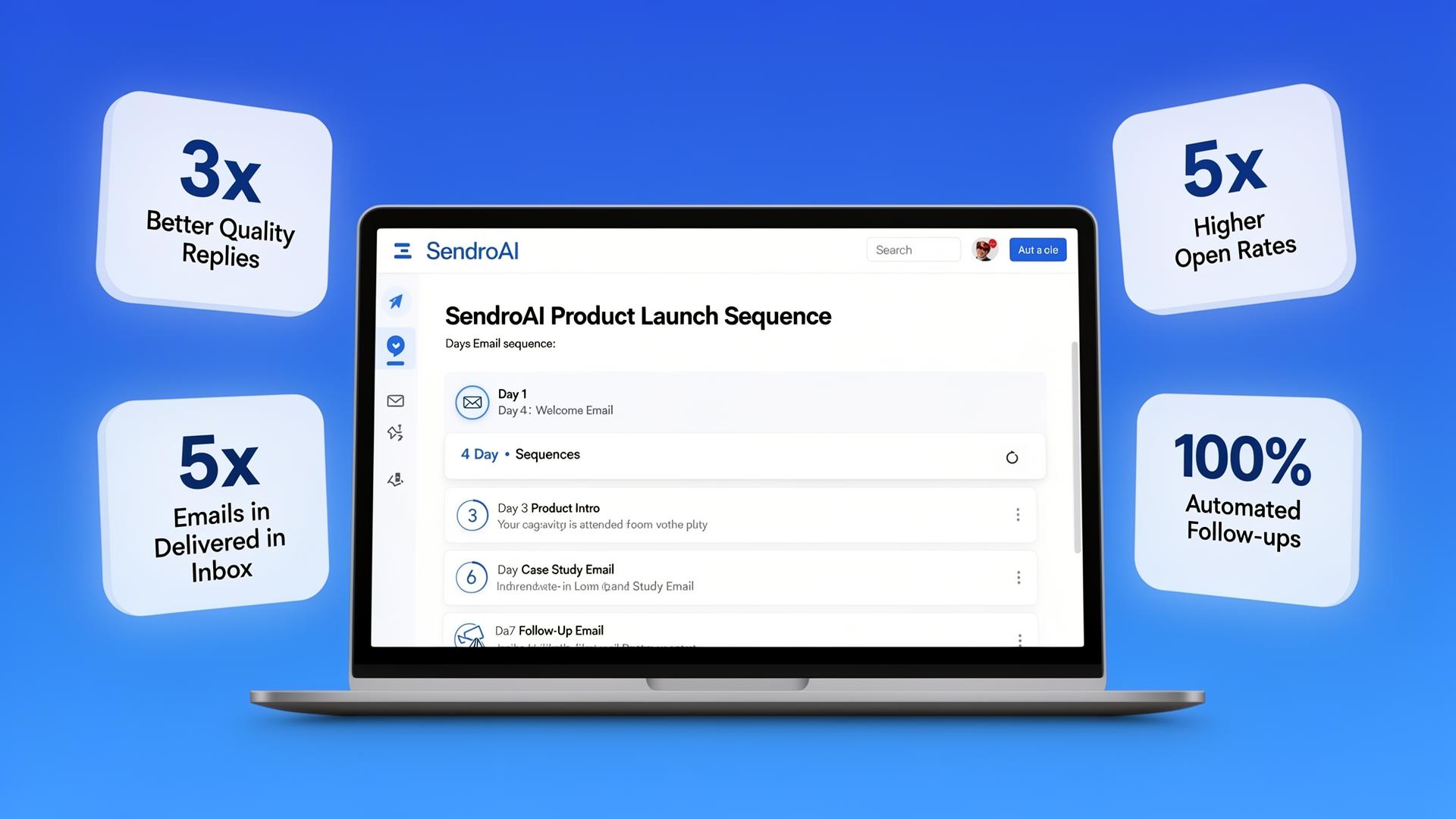
HubSpot is built around structure. SendroAI is built around adaptation.
Where HubSpot asks you to define pipelines, stages, rules, and workflows, SendroAI focuses on learning from engagement, personalizing messages automatically, and adapting follow-ups based on responses.
Instead of rigid lifecycle stages, email becomes context-aware and self-improving.
- AI-driven personalization at scale: Emails adapt per recipient without manual rules
- Automation that adapts without constant rebuilding: Follow-ups adjust based on engagement
- Faster iteration with less setup overhead: Get campaigns running in minutes, not weeks
- They don't need a massive CRM
- Email performance matters more than dashboards
- Automation feels slow to iterate
- Personalization still relies on manual rules
- No full CRM suite: If you need deal management and service desk in one tool, HubSpot still has an edge
A B2B growth team replaces HubSpot email automation with SendroAI to personalize outbound and lifecycle emails without maintaining heavy workflows.
HubSpot optimizes structure and reporting. SendroAI optimizes outcomes and adaptability.
If HubSpot feels too heavy for what you need, SendroAI is the intelligence upgrade your email deserves.
SendroAI is the strongest upgrade for teams that want smarter email without complexity.
Try SendroAI NowActiveCampaign — Automation-First Platform
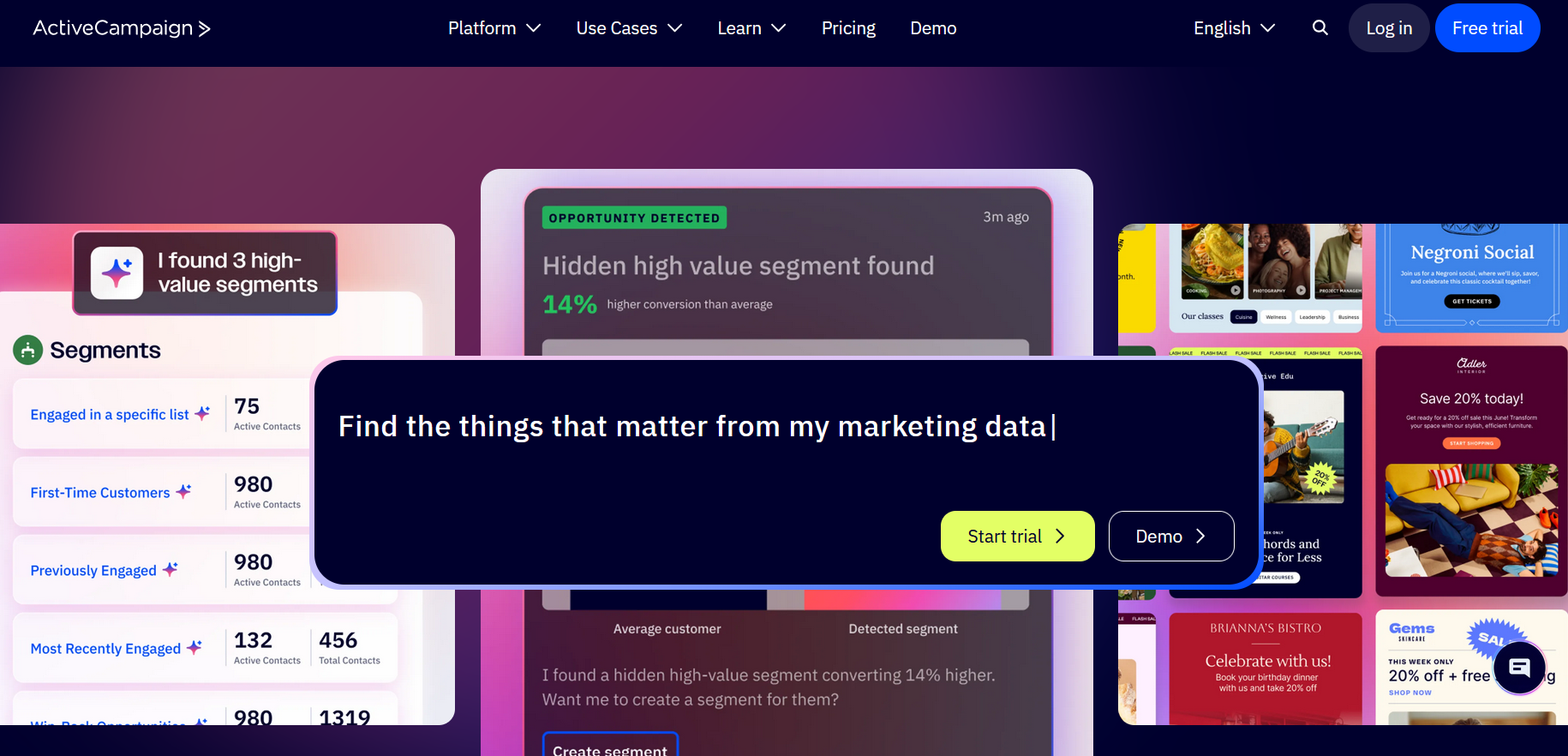
ActiveCampaign focuses almost entirely on automation depth.
Instead of a broad CRM suite, it prioritizes conditional workflows, behavior-based automation, and email journeys tied to engagement.
- More granular automation logic: Complex branching workflows based on behavior
- Deeper email personalization: Beyond simple merge tags
- Less dependency on CRM objects: Email stands on its own
- CRM features go unused
- Automation feels limited by HubSpot's structure
- Email journeys need more flexibility
- Smaller CRM: Not a full CRM suite like HubSpot
- Less executive-level reporting: Dashboards are less polished
A SaaS team replaces HubSpot onboarding flows with ActiveCampaign's conditional workflows tied to feature usage.
More flexible automation. Less comprehensive platform.
Salesforce Marketing Cloud — Enterprise Automation Platform
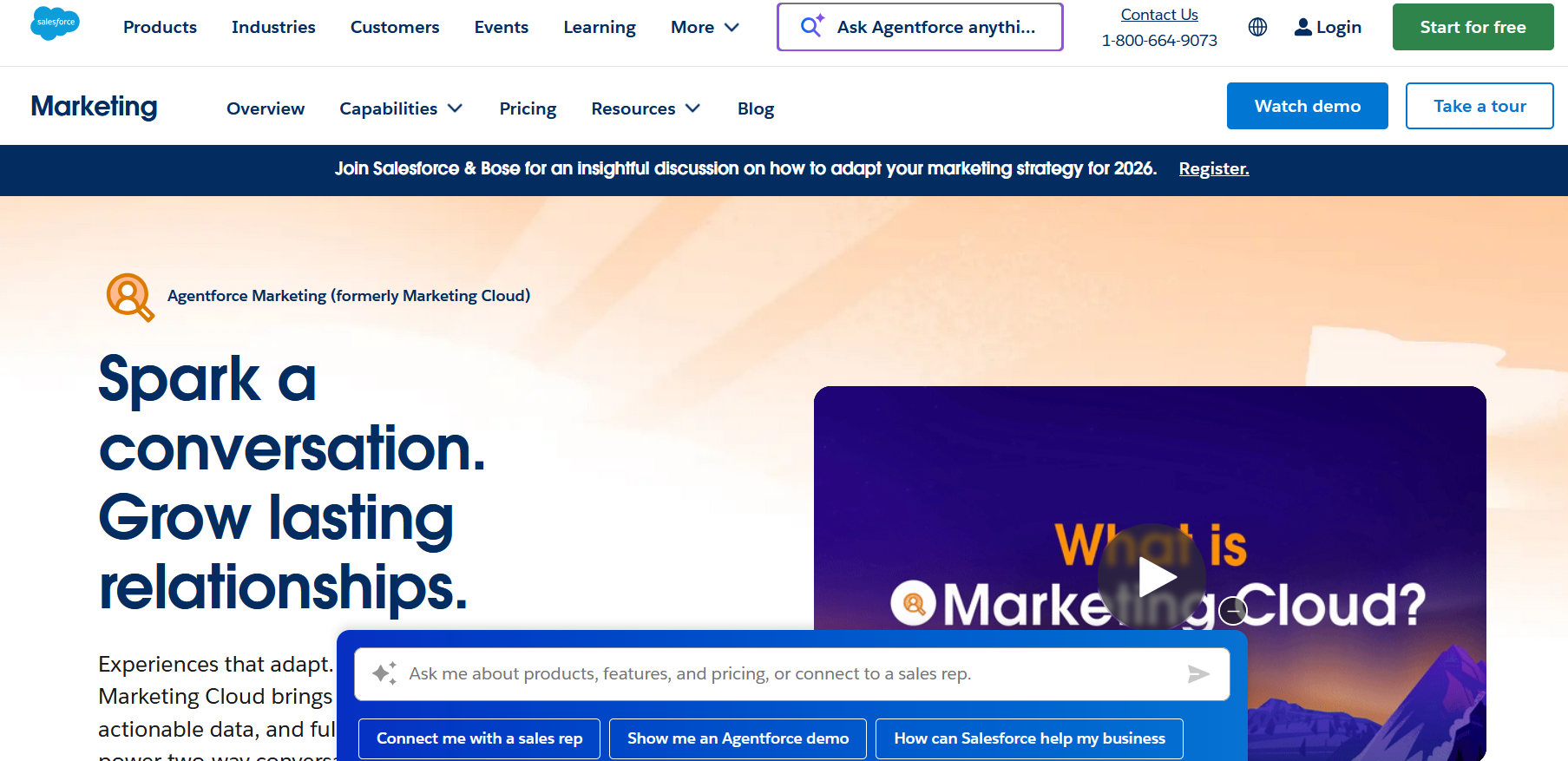
Salesforce Marketing Cloud is an enterprise-grade orchestration layer.
Where HubSpot aims to be approachable and all-in-one, Salesforce Marketing Cloud is built for massive data volumes, highly complex customer journeys, and deep integration with Salesforce CRM.
- Enterprise-scale data handling: Handles massive customer data volumes
- Advanced cross-channel orchestration: Coordinate email, mobile, and personalization
- Deep CRM and data cloud integration: Native Salesforce ecosystem
- Governance, permissions, and compliance at scale: Enterprise-grade controls
- HubSpot's data model becomes limiting
- Multiple products, regions, or brands must coexist
- Personalization needs large-scale customer data
- Salesforce CRM is already the system of record
- Extremely complex to implement: Requires dedicated specialists
- Very high total cost of ownership: Premium enterprise pricing
- Slow iteration compared to lighter tools: Heavy processes slow things down
A global ecommerce brand leaves HubSpot to coordinate email, mobile, and personalization across multiple regions using Salesforce as the core data layer.
HubSpot is for growing teams. Salesforce Marketing Cloud is for large, operationally complex organizations.
Zoho — Modular Cloud Suite
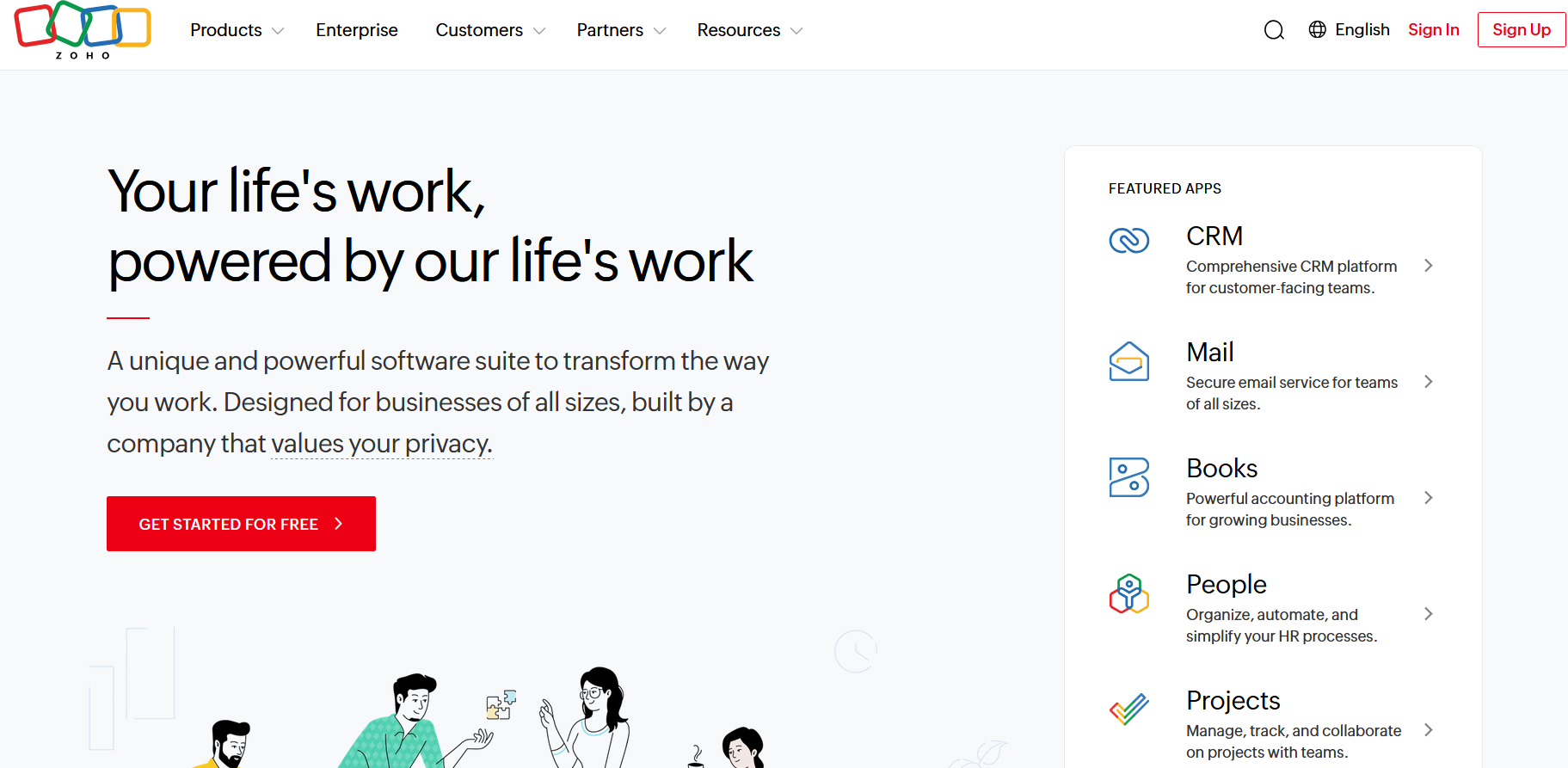
Zoho offers a modular alternative to HubSpot's all-in-one approach.
Instead of one tightly bundled platform, Zoho lets teams assemble CRM, email campaigns, automation, and support tools piece by piece.
- Significantly lower cost at scale: More affordable than HubSpot
- Modular pricing and adoption: Pay for what you use
- Broad feature coverage across departments: CRM, email, support, and more
- HubSpot pricing feels disproportionate to usage
- They only need parts of the platform
- Budget control matters more than polish
- Flexibility matters more than elegance
- UI feels less refined: Not as polished as HubSpot
- More manual configuration: Requires more setup effort
- Reporting and automation feel less cohesive: Modules don't integrate as seamlessly
A mid-market company leaves HubSpot to reduce costs while keeping CRM, email, and automation functionality intact.
HubSpot is smoother. Zoho is more economical and flexible.
Customer.io — Event-Driven Messaging Platform
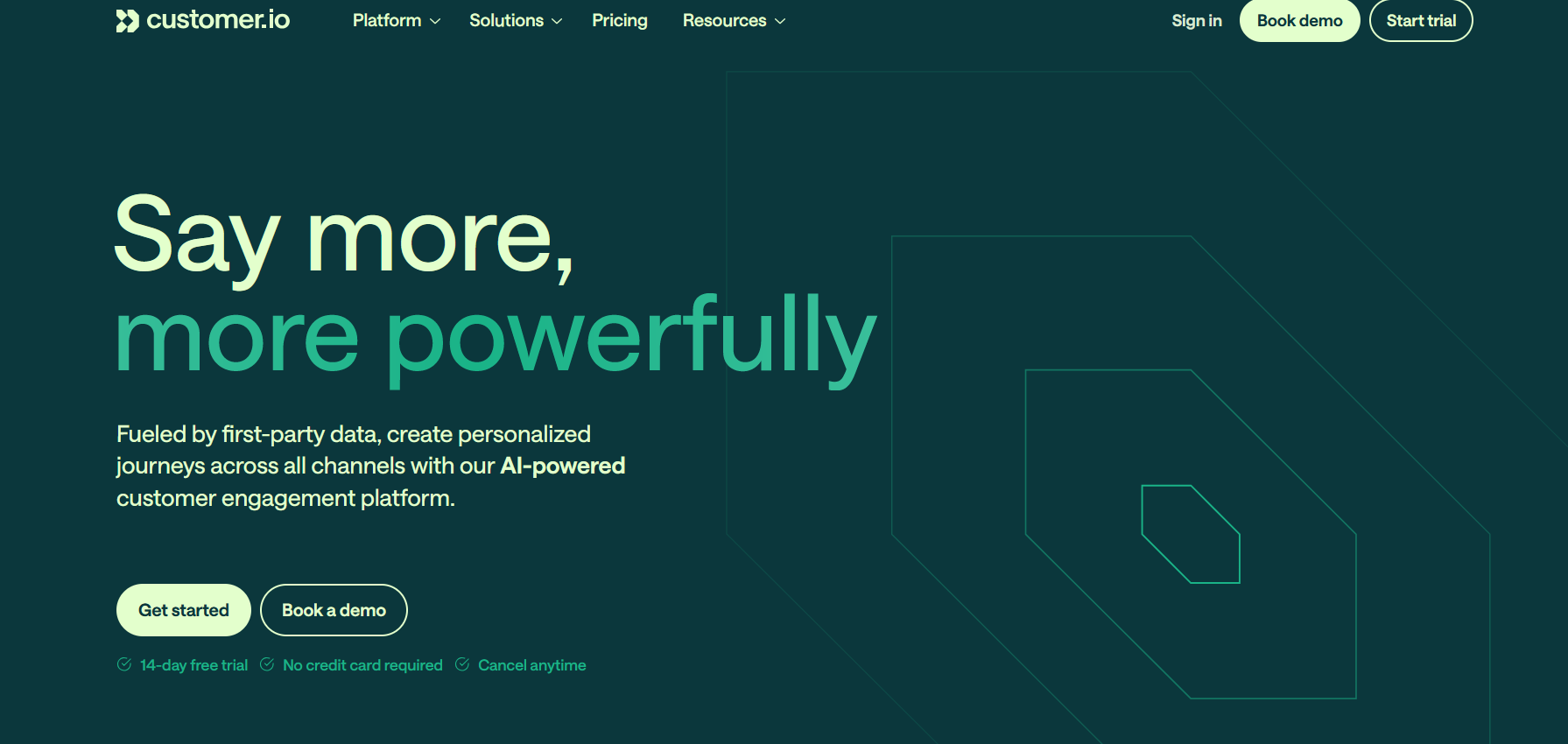
Customer.io removes the CRM abstraction entirely.
Instead of pipelines and lifecycle stages, everything is driven by real-time product events, behavioral data, and custom triggers.
- Real-time, event-based triggers: React instantly to user behavior
- Deep behavioral precision: Messaging tied to actual product usage
- Strong developer control and flexibility: Engineering-friendly platform
- Product usage matters more than deal stages
- Messaging must react instantly to user behavior
- HubSpot's CRM model feels artificial
- Engineering teams want more control
- Requires technical setup: Not marketer-friendly out of the box
- No traditional CRM or sales workflows: Product-focused, not sales-focused
A SaaS company replaces HubSpot email automation to trigger messages based on feature adoption and in-app behavior.
Customer.io is more precise and faster. HubSpot is broader and more accessible.
Pipedrive — Sales-First CRM Stack
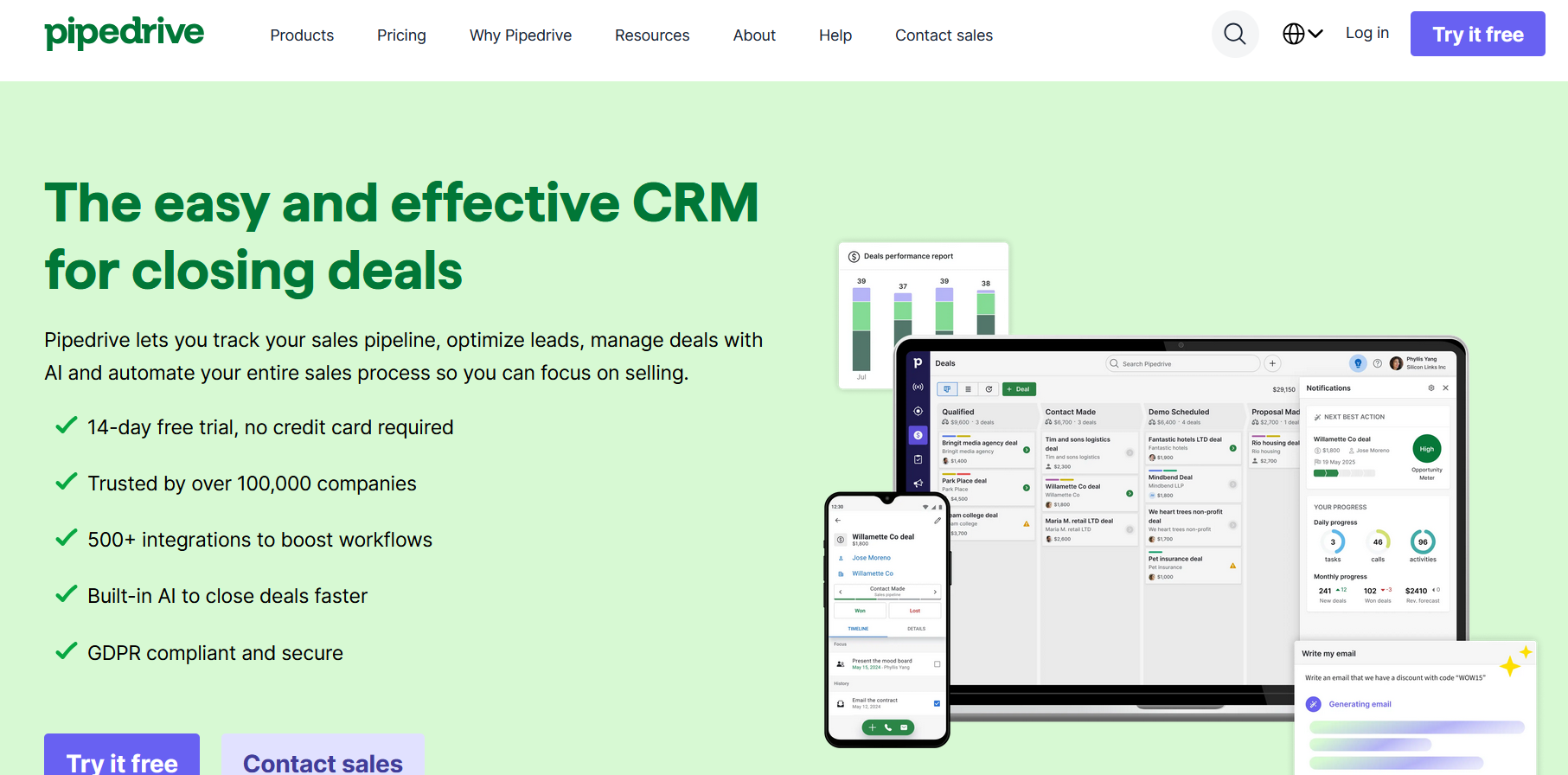
Pipedrive flips HubSpot's priorities. It's built for sales clarity, not marketing breadth.
The core focus is pipeline visibility, deal progression, and sales activity tracking. Email marketing exists only to support sales conversations.
- Cleaner, faster sales workflows: Built for sales team productivity
- Higher sales team adoption: Sales teams actually enjoy using it
- Lower complexity: Simpler than HubSpot's sprawling platform
- Sales is the primary growth engine
- Marketing automation is secondary
- HubSpot feels cluttered and overbuilt
- Sales adoption matters more than features
- Weak marketing automation: Not a marketing platform
- No deep lifecycle journeys: Email is sales-centric
A sales-led B2B company leaves HubSpot to simplify CRM usage and improve pipeline hygiene.
Better for sales teams. Much weaker for marketing automation.
Freshworks — Lightweight CRM Suite
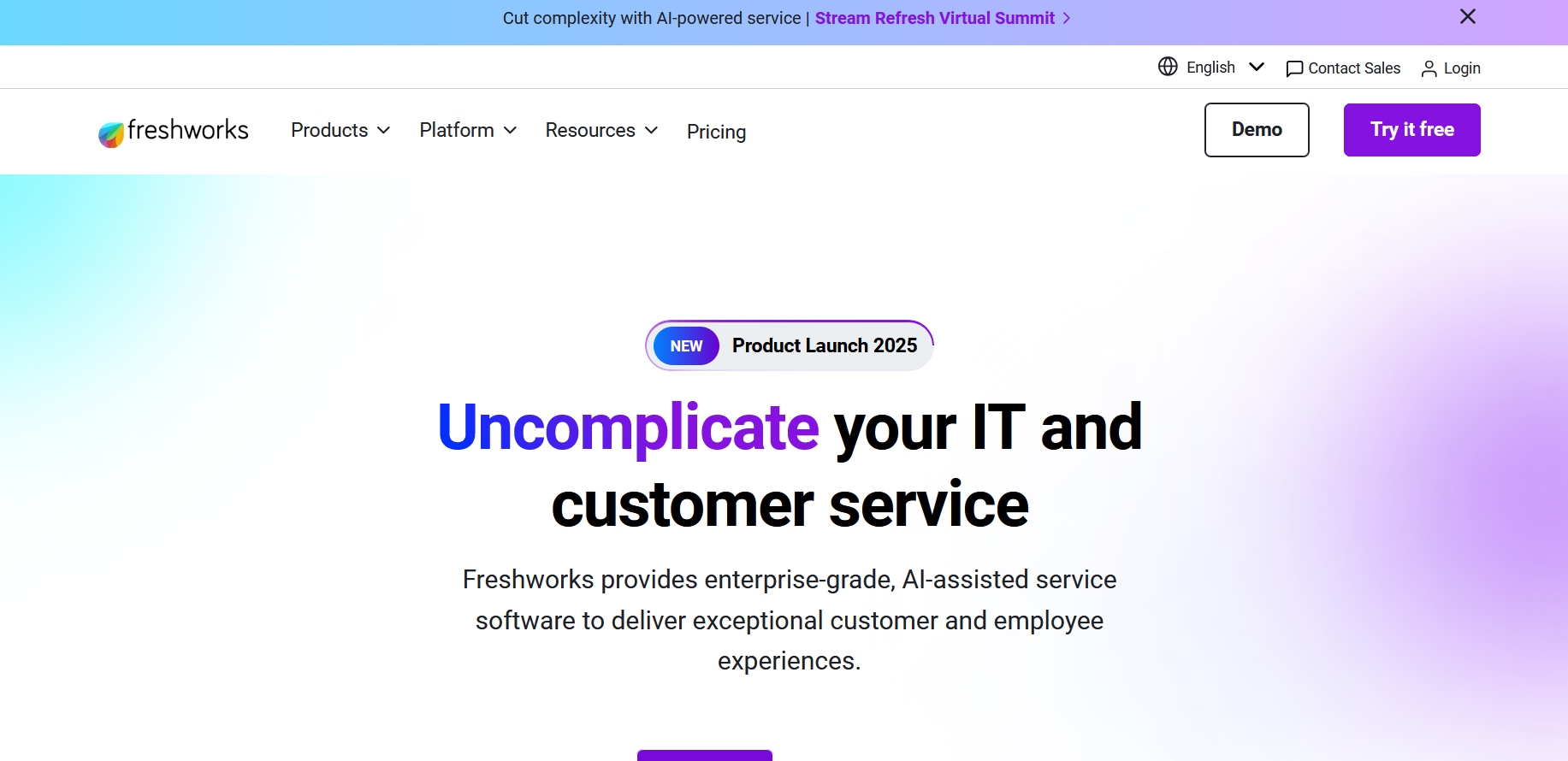
Freshworks offers a lighter, faster alternative to HubSpot.
It combines CRM (Freshsales), marketing automation (Freshmarketer), and support tools — all designed for quick onboarding and ease of use.
- Cleaner UI: More modern and intuitive interface
- Faster setup: Get productive quickly
- Lower learning curve: Easier for cross-team adoption
- HubSpot feels overwhelming
- Time-to-value matters
- Teams want simpler workflows
- Feature completeness matters less than usability
- Less extensible: Smaller ecosystem and fewer integrations
- Automation depth is limited: Intentionally lightweight
A growing SMB leaves HubSpot to reduce onboarding time and give sales and marketing simpler tools.
Freshworks is simpler and faster to adopt. HubSpot is more powerful but heavier.
Choosing the Right HubSpot Alternative
Patterns you'll notice:
- SendroAI replaces CRM complexity with intelligent execution and adaptive automation
- ActiveCampaign adds deep automation logic without the CRM overhead
- Salesforce Marketing Cloud scales to enterprise complexity HubSpot can't handle
- Zoho trades polish for affordability and modular flexibility
- Customer.io replaces lifecycle stages with real-time behavioral triggers
- Pipedrive focuses on sales pipeline clarity over marketing breadth
- Freshworks prioritizes speed of adoption over feature depth
Switching & Migration Considerations
- CRM vs Email Focus: HubSpot bundles CRM and marketing. Most alternatives force you to pick a primary focus — choose based on whether pipeline management or email performance matters more.
- Cost at Scale: HubSpot's pricing escalates quickly with contacts and features. Many alternatives offer more predictable or modular pricing.
- Team Adoption: HubSpot's breadth can overwhelm teams. Simpler alternatives often achieve higher adoption with less training.
- Automation Depth: HubSpot's automation is broad but has limits. Specialized platforms offer deeper conditional logic and behavioral triggers.
Final Recommendation
Switch from HubSpot if:
- Costs rise faster than usage
- Simple workflows become over-engineered
- Email flexibility is limited by CRM structure
- Teams only need part of HubSpot, not the entire ecosystem
- Automation feels powerful but slow to adapt
Stick with HubSpot if:
- You need the full CRM, deal management, and service desk in one tool
- Complex reporting and dashboards are critical
- Your team is deeply invested in HubSpot's ecosystem and integrations
If you're considering leaving HubSpot, the real question is what you actually need:
HubSpot is powerful — but heavy. If your priority is intelligence, adaptability, and faster execution, SendroAI is the strongest overall alternative.
Bottom Line
HubSpot is powerful — but heavy. If your priority is intelligence, adaptability, and faster execution, SendroAI is the strongest overall alternative.