
7 Best Alternatives to Mailtrap 2026
Mailtrap is popular because it does one thing very well: It lets developers test emails safely. For QA and staging environments, it's solid.
But teams usually look for alternatives when:
Email moves from testing to production. Transactional emails need real deliverability guarantees. Marketing, product, and lifecycle emails collide. Monitoring matters more than previews. Email becomes part of growth, not just development.
If Mailtrap feels great for testing but insufficient for real-world email workflows, these are the best alternatives, depending on what stage you're at.
Mailtrap vs Alternatives — Quick Snapshot
| Tool | How It Compares to Mailtrap | Best For | Stronger | Weaker | Pricing |
|---|---|---|---|---|---|
| SendroAI | Production & intelligence layer | Teams sending real emails | AI personalization & adaptive automation | Not a dev-only sandbox | Tiered pricing |
| Postmark | Transactional email service | SaaS & product teams | Deliverability & logs | No inbox sandbox | Usage-based pricing |
| MailHog | Local testing tool | Local dev environments | Free & open-source | No production sending | Free |
| SendGrid | Scalable ESP | Growing products | Ecosystem & scale | Complex UI | Tiered pricing |
| Amazon SES | Infrastructure-level email | High-volume senders | Cost & scale | Complex setup | Usage-based pricing |
| SparkPost | Delivery analytics platform | Engineering teams | Advanced analytics | Heavier setup | Tiered pricing |
| Resend | Modern developer API | Fast-moving startups | Clean DX & speed | Limited automation | Usage-based pricing |
SendroAI — Best Overall Alternative to Mailtrap
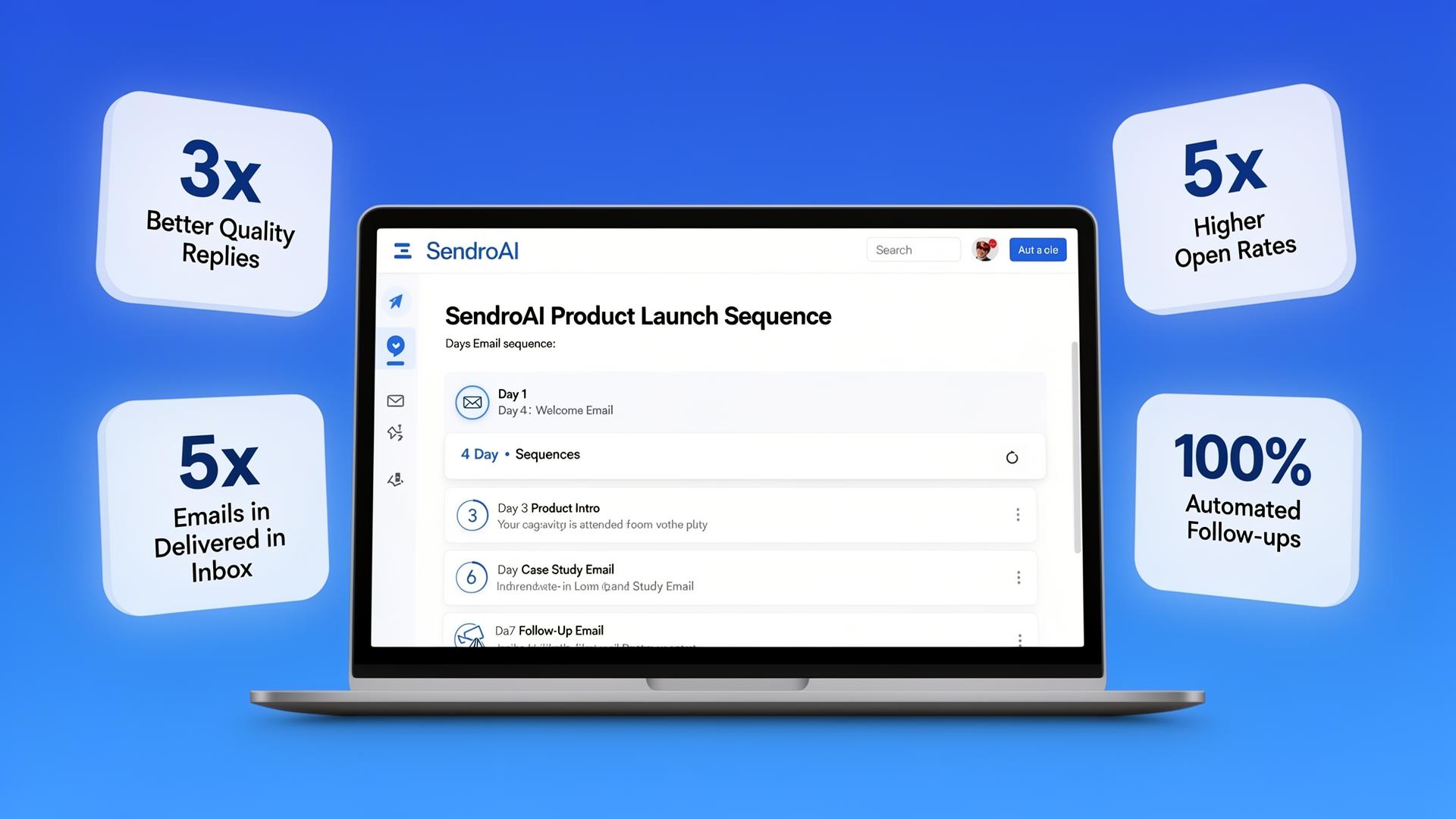
Mailtrap is designed to stop emails before they reach users. SendroAI is designed to make emails perform once they do.
Instead of previewing templates in isolation, SendroAI focuses on personalizing real emails with AI, adapting follow-ups based on engagement and replies, and learning which messages actually work over time.
Email becomes an adaptive system, not a test artifact.
- AI-driven personalization: Emails are context-aware, not template-bound
- Adaptive automation: Sequences evolve based on engagement, not fixed rules
- Real-world performance optimization: Messaging that improves automatically over time
- Emails are going to real customers
- Engagement and replies matter
- QA is no longer the bottleneck
- Email supports onboarding, sales, or lifecycle growth
- Not built as a developer inbox simulator: Designed for production, not QA sandboxes
A dev team finishes QA with Mailtrap, then moves to SendroAI to send intelligent, personalized email campaigns that improve over time.
Mailtrap is about safety. SendroAI is about results.
If Mailtrap is great for testing but insufficient for real-world email workflows, SendroAI is the production intelligence layer your email needs.
SendroAI is the strongest upgrade for teams that want smarter email without complexity.
Try SendroAI NowPostmark — Transactional Email Service
Postmark is designed for one thing: transactional email that must arrive, fast.
Password resets, account notifications, receipts — these emails are not optional. They're part of the product experience.
Unlike Mailtrap, which exists to prevent emails from reaching users, Postmark assumes emails are production-ready, delivery speed matters, and reliability is non-negotiable.
- Industry-leading transactional deliverability: Emails reach inboxes consistently
- Detailed delivery logs and diagnostics: Full visibility into email status
- Clear API designed for developers: Fast integration for engineering teams
- Fast sending with predictable performance: Replaces safe testing with safe delivery
- Email leaves staging and enters production
- Missed emails become support tickets
- Developers need delivery logs, not previews
- Testing is complete and reliability matters more
- Not built for marketing campaigns: Transactional focus only
- No lifecycle automation: Limited to transactional emails
- Limited use beyond transactional: It does one job extremely well — and stops there
A SaaS product finishes QA with Mailtrap, then switches to Postmark to ensure password resets and notifications reliably reach users.
Mailtrap is for testing emails. Postmark is for emails you can't afford to fail.
MailHog — Local, Open-Source Email Testing
MailHog is a local, open-source alternative to Mailtrap.
Instead of sending emails to a hosted inbox, MailHog captures outgoing emails locally, displays them in a browser UI, and requires no external service.
It's designed for developers who want full control and zero dependencies.
- Completely free: No subscription or usage limits
- Runs locally: No external dependencies
- No accounts or limits: Works offline
- Local development is enough
- They don't want third-party services in dev
- Budgets are tight
- Simplicity beats polish
- No hosted environment: Local only
- No collaboration features: Single developer use
- No production sending: Testing only
- No analytics: MailHog stops at local testing
A backend team replaces Mailtrap with MailHog to test email locally during development without relying on external services.
MailHog is simpler and cheaper. Mailtrap is more polished and collaborative.
SendGrid — Scalable Production Email Engine

SendGrid is often the next logical step after Mailtrap.
Once emails are tested, SendGrid takes over to handle transactional email delivery, event tracking and webhooks, and scalable production sending. It's not a testing tool — it's a delivery engine.
- Production-grade sending: Built for real users
- Scales from thousands to millions: Handles growth Mailtrap was never designed for
- Large integration ecosystem: Works with almost anything
- Detailed event tracking: Visibility into email performance
- Emails must reach real users
- Volume starts increasing
- Ecosystem support matters
- They want a proven, scalable platform
- UI complexity: Can feel overwhelming
- Steeper learning curve: More setup required
- Overkill for small apps: SendGrid trades simplicity for power
A growing SaaS app replaces Mailtrap with SendGrid to send onboarding, notifications, and system emails at scale.
Mailtrap is the sandbox. SendGrid is the engine.
Amazon SES — Email Infrastructure at Scale
Amazon SES is email infrastructure, not a product-led tool.
It's built for massive scale, extremely low cost per email, and programmatic sending via APIs. There's no focus on UX — because SES assumes engineers are in control.
- Incredibly low sending costs: Nothing else competes on price at scale
- Near-unlimited scalability: AWS infrastructure
- Tight AWS integration: Works with Lambda, S3, and more
- Email volume grows rapidly
- Cost efficiency becomes critical
- Email is part of backend infrastructure
- AWS is already the stack
- Complex setup: Requires AWS expertise
- Minimal UI: Console-driven experience
- Deliverability management is manual: SES gives you power — but no guardrails
A platform sending millions of notifications per month replaces Mailtrap with SES to reduce costs and scale globally.
SES is powerful but unforgiving. Mailtrap is safe and beginner-friendly.
SparkPost — Delivery Analytics & Insight Platform
SparkPost is focused on delivery insight and analytics.
It's designed for teams that want to understand why emails land or fail, engagement patterns, and deliverability signals. Testing exists, but delivery visibility is the priority.
- Advanced analytics: Deep insight into email performance
- Rich event tracking: Explains what Mailtrap only previews
- Strong API flexibility: Developer-friendly integrations
- Deliverability diagnostics: Identify and fix issues proactively
- Testing is no longer enough
- Delivery issues need diagnosing
- Engineering teams want deep insight
- Less friendly for non-technical users: Assumes engineering ownership
- Heavier setup: More configuration required
- Not a marketing tool: Technical focus only
An engineering team replaces Mailtrap with SparkPost to monitor and optimize deliverability across multiple transactional email streams.
SparkPost is diagnostic and analytical. Mailtrap is preventive and visual.
Resend — Modern Developer-First Email API

Resend is a modern, developer-first email API built for speed.
It focuses on clean APIs, modern frameworks, and minimal configuration. It removes legacy complexity common in older ESPs.
- Very fast setup: Minutes to first email
- Clean developer experience: Modern API design
- Modern tooling compatibility: Friction-free for builders
- Startups need to ship fast
- DX matters more than feature breadth
- Mailtrap testing is complete
- Legacy ESPs feel heavy
- Limited automation: No lifecycle workflows
- Lighter analytics: Basic compared to mature ESPs
- Not built for enterprise needs: Resend prioritizes speed over sophistication
A startup replaces Mailtrap with Resend to move from testing to production email with minimal setup overhead.
Resend is modern and fast. Mailtrap is safe and contained.
Choosing the Right Mailtrap Alternative
Patterns you'll notice:
- SendroAI moves email from testing to intelligent, adaptive production campaigns
- Postmark replaces safe testing with reliable transactional delivery
- MailHog offers a free, local alternative for developers who want zero dependencies
- SendGrid scales from testing to enterprise-grade sending with a broad ecosystem
- Amazon SES provides the lowest-cost infrastructure for massive sending volumes
- SparkPost adds deep analytics and deliverability diagnostics beyond what testing tools offer
- Resend offers a modern, fast API for startups moving quickly from dev to production
Switching & Migration Considerations
- Testing vs Production: Mailtrap is designed exclusively for testing. Every alternative here is built for production sending — with varying degrees of marketing, transactional, or infrastructure focus.
- Analytics Depth: Mailtrap offers previews. Postmark, SendGrid, and SparkPost offer production-grade analytics and delivery diagnostics.
- Infrastructure Choice: Amazon SES offers raw infrastructure, while SendGrid and Postmark provide managed services. Choose based on your team's tolerance for operational overhead.
- Development Stage: MailHog is great for early-stage local dev. Postmark and Resend are ideal for startups shipping to production. SendGrid and SES scale with growth.
Final Recommendation
Switch from Mailtrap if:
- Email moves from testing to production
- Transactional emails need real deliverability guarantees
- Marketing, product, and lifecycle emails collide
- Monitoring matters more than previews
- Email becomes part of growth, not just development
Stick with Mailtrap if:
- You only need a sandbox for email testing during development
- Your entire email workflow is QA and staging-focused
- Production sending is handled by a separate team or system
Mailtrap does what it promises: it catches emails before they reach users. For QA and staging, it's simple and effective. But most teams eventually need to move beyond testing:
And if your team is looking for something that doesn't just send email — but improves it automatically — SendroAI is the alternative built for what comes after testing.
Bottom Line
Mailtrap does what it promises — but most teams eventually need more. If you want email that doesn't just send but improves automatically, SendroAI is built for what comes after testing.