
Best Alternatives to Omnisend 2026
Omnisend is often chosen by ecommerce teams because it's simple, fast to set up, and built specifically for email and SMS marketing. For early-stage and mid-sized stores, it works well.
But as brands grow, many teams start to feel constrained. Automation depth is limited. Segmentation doesn't scale well. And personalization tends to rely heavily on templates rather than intelligence.
If Omnisend feels narrow for where your business is going, these are the best alternatives to consider — depending on what you actually need next.
Omnisend vs Alternatives — Quick Snapshot
| Tool | How It Compares to Omnisend | Best For | Stronger | Weaker | Pricing |
|---|---|---|---|---|---|
| SendroAI | Broader AI-driven automation | Teams scaling beyond ecommerce | AI personalization; flexible workflows | Less ecommerce-native | Custom pricing via sales |
| Klaviyo | Deeper ecommerce automation | Data-heavy ecommerce brands | Advanced segmentation | Higher complexity | Usage-based pricing |
| ActiveCampaign | Automation-first platform | Lifecycle-heavy teams | Advanced logic & workflows | Less ecommerce-native | Usage-based pricing |
| HubSpot | All-in-one platform | Teams wanting CRM & reporting depth | CRM + reporting depth | Higher cost | Tiered pricing |
| Brevo | Budget-friendly alternative | SMBs needing affordable email + SMS | Lower cost | Limited automation depth | Tiered pricing |
| Mailchimp | Lightweight option | Small stores & beginners | Ease of use | Weak ecommerce automation | Tiered pricing |
| Drip | Ecommerce + lifecycle hybrid | Growing DTC brands | Flexible flows | Smaller ecosystem | Usage-based pricing |
| ConvertKit | Creator-focused platform | Creators & content-led brands | Simplicity & clarity | Weak ecommerce depth | Tiered pricing |
| Campaign Monitor | Design-first tool | Brand-led teams | Email design quality | Minimal automation | Tiered pricing |
| GetResponse | Marketing suite | SMBs needing webinars + email | Feature breadth | UI complexity | Tiered pricing |
SendroAI — Best Overall Alternative to Omnisend
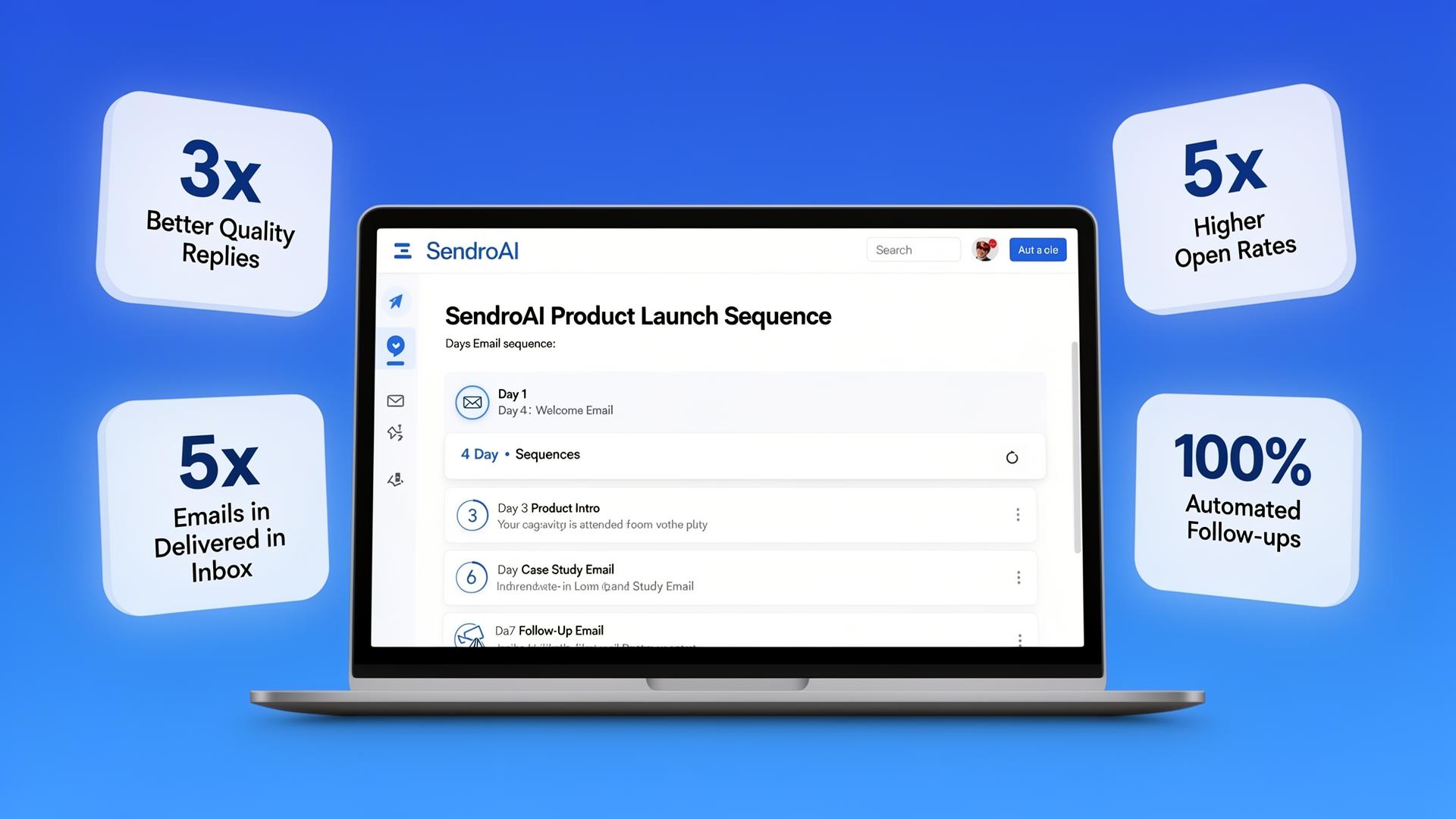
SendroAI is an AI-powered email automation and outreach platform designed for teams that have outgrown rigid ecommerce workflows.
While Omnisend relies heavily on predefined triggers and templates, SendroAI focuses on context-aware personalization and adaptive automation.
Instead of asking you to stitch together flows manually, it uses AI to generate, personalize, and optimize outreach at scale.
- AI-driven personalization: Messages are generated based on context, not templates
- Flexible automation: Works across ecommerce, sales, and lifecycle use cases
- Scales without contact anxiety: Not rigidly tied to list size
- Ecommerce is no longer your only growth channel
- Personalization needs to go beyond product tags
- Automation should adapt, not just trigger
- Less ecommerce-native: No deep SKU-level triggers
- Fewer prebuilt ecommerce flows: Requires more strategic setup
A B2B team drops Omnisend's email + SMS setup and moves to SendroAI to improve reply quality and outbound performance.
If Omnisend feels too narrow for where your business is going, SendroAI is the most future-proof alternative.
If Omnisend's ecommerce focus feels limiting, SendroAI is the intelligence upgrade your email needs.
SendroAI is the strongest upgrade for teams that want smarter email without complexity.
Try SendroAI NowKlaviyo — Best Ecommerce-Depth Alternative
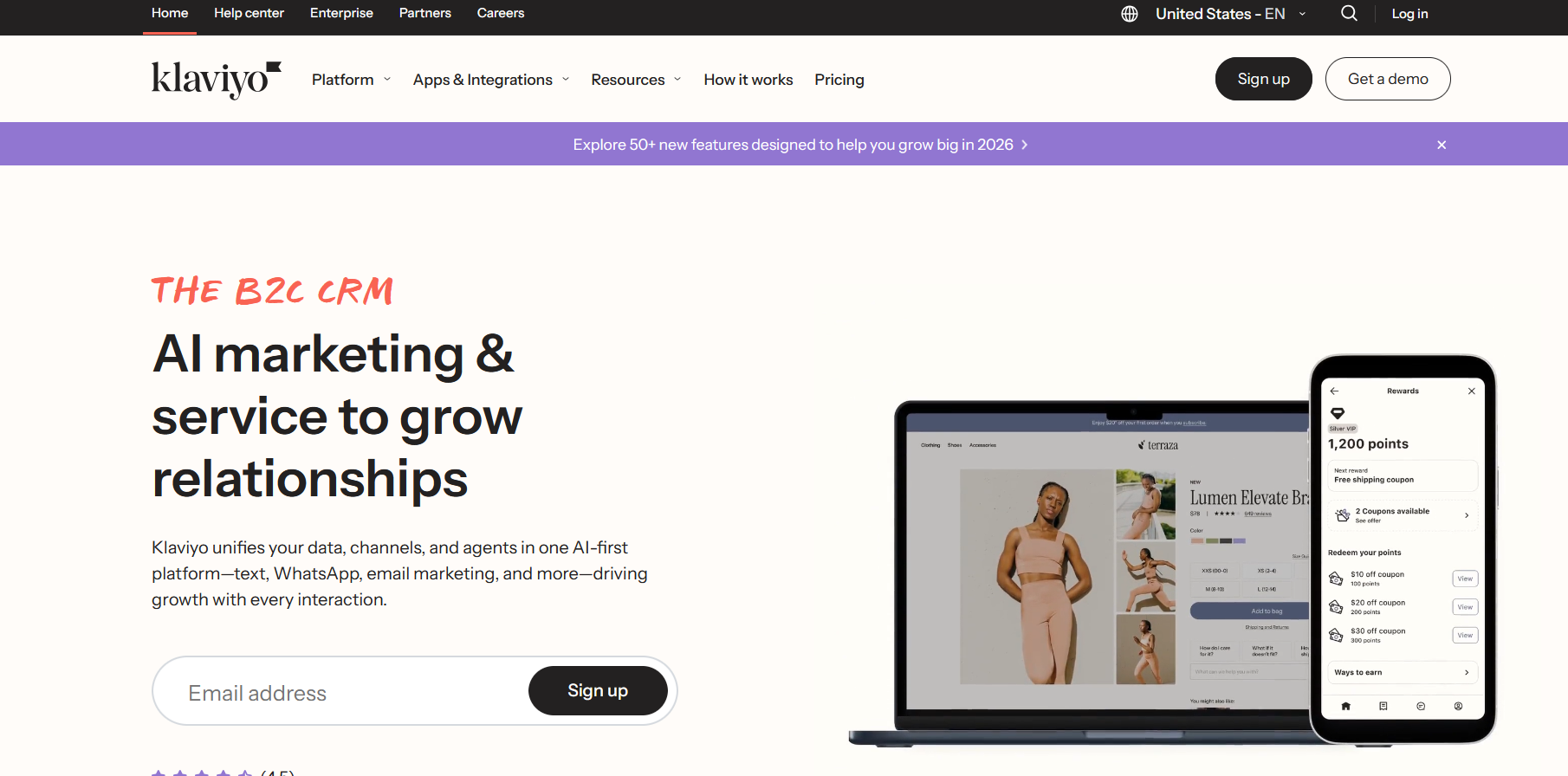
Klaviyo is an ecommerce-first email and SMS platform built around customer behavior, product data, and revenue attribution.
Compared to Omnisend's simpler ecommerce flows, Klaviyo gives brands far more control over how browsing, purchasing, and product interactions drive messaging.
It's less about speed and more about precision.
- Advanced segmentation: Behavioral, predictive, and product-based targeting
- Revenue reporting: Clear visibility into how emails drive sales
- Flow customization: More granular control over ecommerce automations
- Segmentation needs to go deeper
- Revenue attribution becomes non-negotiable
- Product-level personalization directly impacts conversion
- Complexity: Requires more setup and ongoing maintenance
- Pricing pressure: Usage-based pricing scales quickly with growth
- Overkill risk: Too heavy for smaller or early-stage stores
A fast-growing Shopify brand finds Omnisend's segmentation limiting and switches to Klaviyo to unlock product-level targeting and deeper revenue insights — accepting higher costs in exchange for control.
Klaviyo is a stronger choice for data-heavy ecommerce teams, but it trades simplicity for depth.
ActiveCampaign — Best Automation-Heavy Alternative
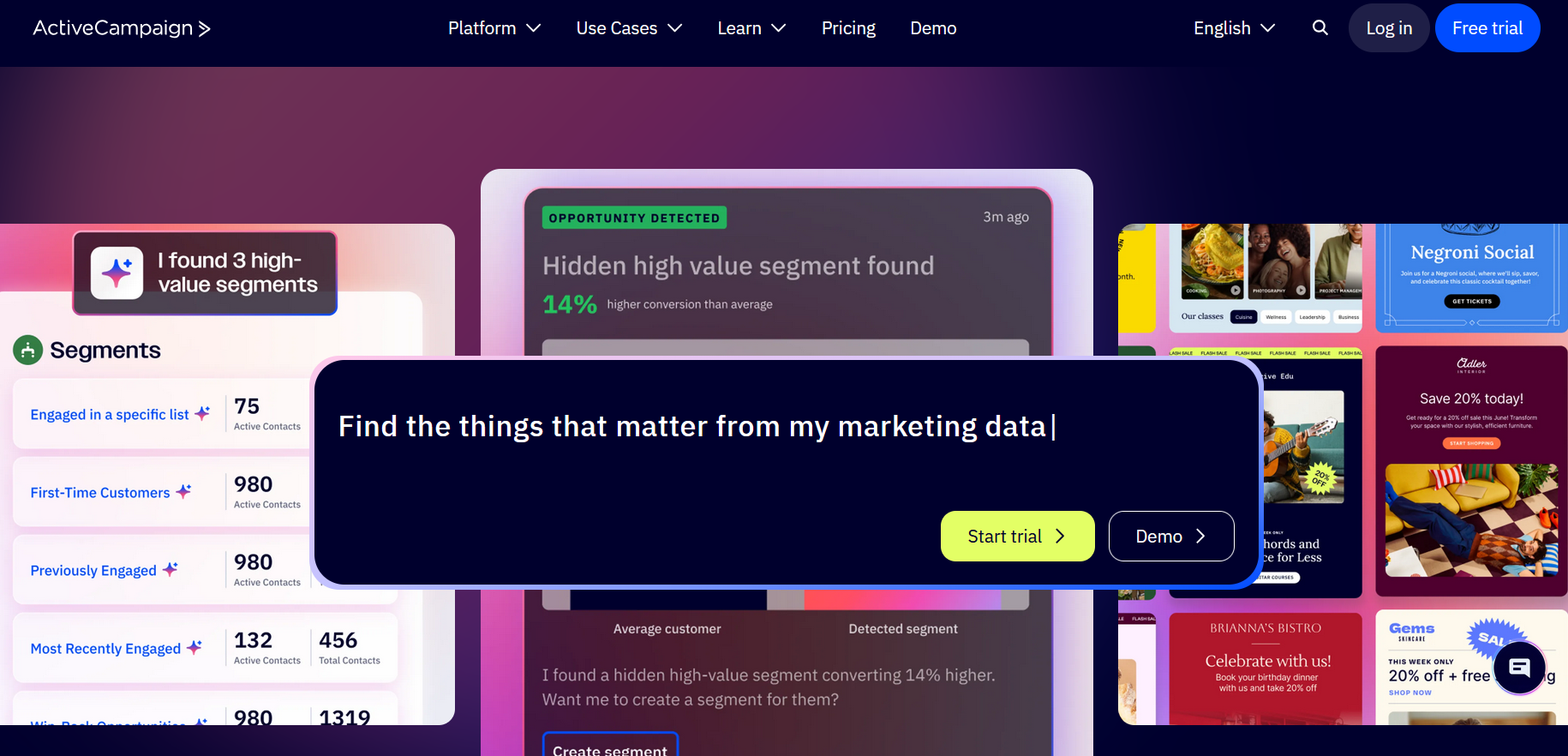
ActiveCampaign is an automation-first platform designed for logic-heavy, lifecycle-based email marketing.
Unlike Omnisend, which centers on ecommerce triggers, ActiveCampaign is built around conditional workflows, scoring, and long-term customer journeys.
It's about systems, not templates.
- Automation depth: Complex conditional workflows
- Lifecycle flexibility: Works beyond ecommerce use cases
- Behavior-based messaging: Not tied only to store events
- Ecommerce triggers aren't enough
- Email supports onboarding, retention, or education
- Automation requires branching logic and scoring
- Learning curve: More complex to build and maintain
- Less ecommerce-native: Requires integrations for store data
- Operational overhead: Automations need ongoing care
A subscription-based brand expands beyond ecommerce promos into onboarding and retention flows, pushing Omnisend beyond its limits and prompting a move to ActiveCampaign.
ActiveCampaign is ideal when automation logic matters more than ecommerce simplicity.
HubSpot — Best All-in-One Platform Alternative
HubSpot replaces Omnisend with a CRM-first marketing platform, where email is one component of a larger revenue engine.
Instead of focusing on ecommerce flows, HubSpot emphasizes lifecycle management across marketing, sales, and service.
- Native CRM: Unified contact and deal data
- Reporting depth: Full funnel and lifecycle insights
- Platform breadth: Marketing, sales, and service tools in one place
- Email needs to connect directly to CRM data
- Funnel-level reporting matters
- Sales and marketing alignment becomes critical
- Cost: Grows quickly as features unlock
- Feature gating: Advanced automation lives in higher tiers
- Less ecommerce-focused: Not optimized for product catalogs
A brand expands into B2B or wholesale and outgrows Omnisend's ecommerce focus, moving to HubSpot for centralized CRM and reporting.
HubSpot wins on breadth and structure, not ecommerce specialization.
Brevo — Best Budget-Friendly Alternative
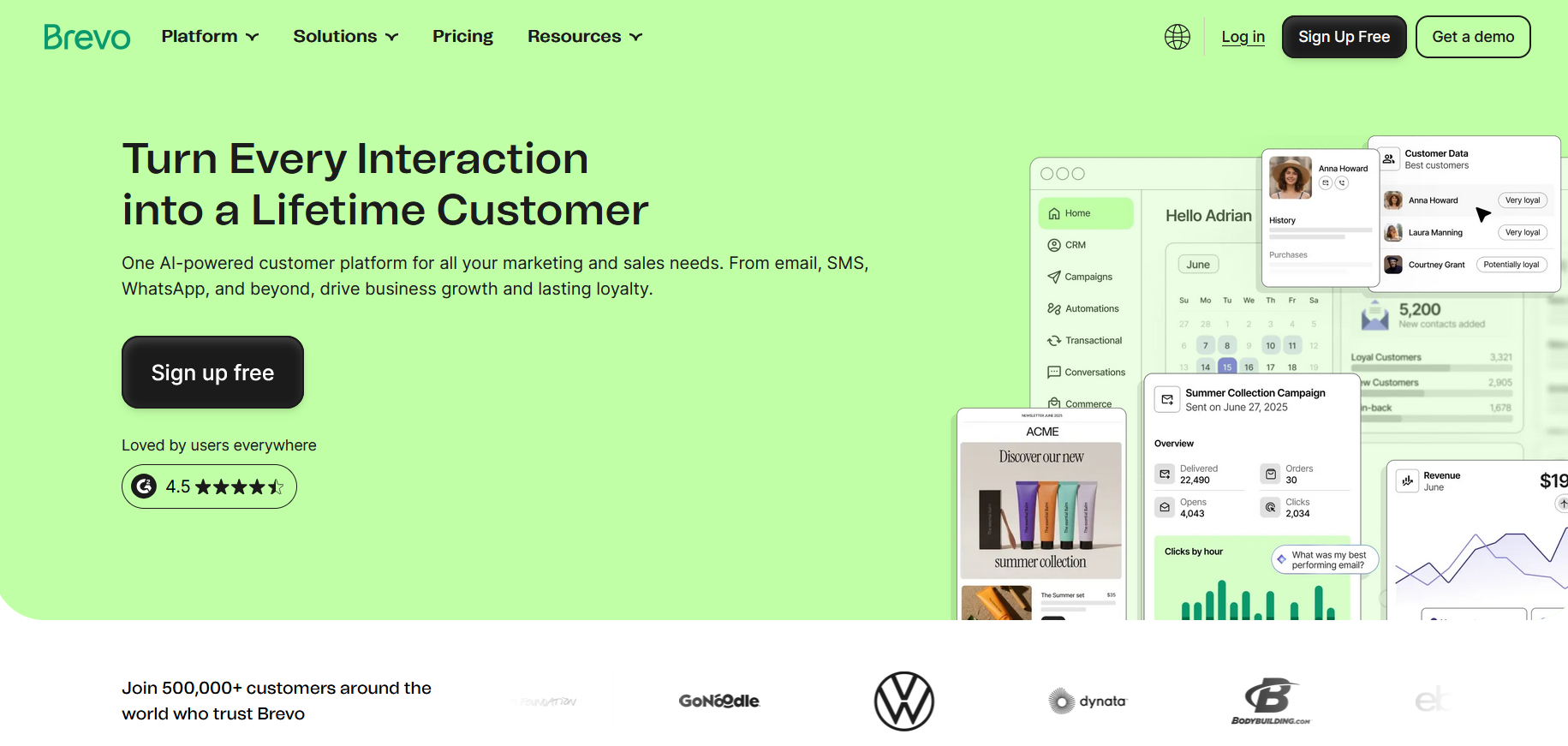
Brevo combines email, SMS, and basic automation into a cost-effective, multi-channel platform.
Compared to Omnisend, it competes primarily on price and simplicity, not depth.
- Lower cost structure: Often cheaper at similar volumes
- Multi-channel support: Email and SMS included
- Simpler pricing: Less aggressive usage scaling
- Budget predictability matters
- SMS is required alongside email
- Automation needs are straightforward
- Automation depth: Limited for advanced teams
- Personalization: Mostly template-driven
- Scalability: Can be outgrown
A small ecommerce business finds Omnisend's pricing creeping up and switches to Brevo to maintain email and SMS affordably.
Brevo is practical and economical — not powerful.
Mailchimp — Best Lightweight Alternative
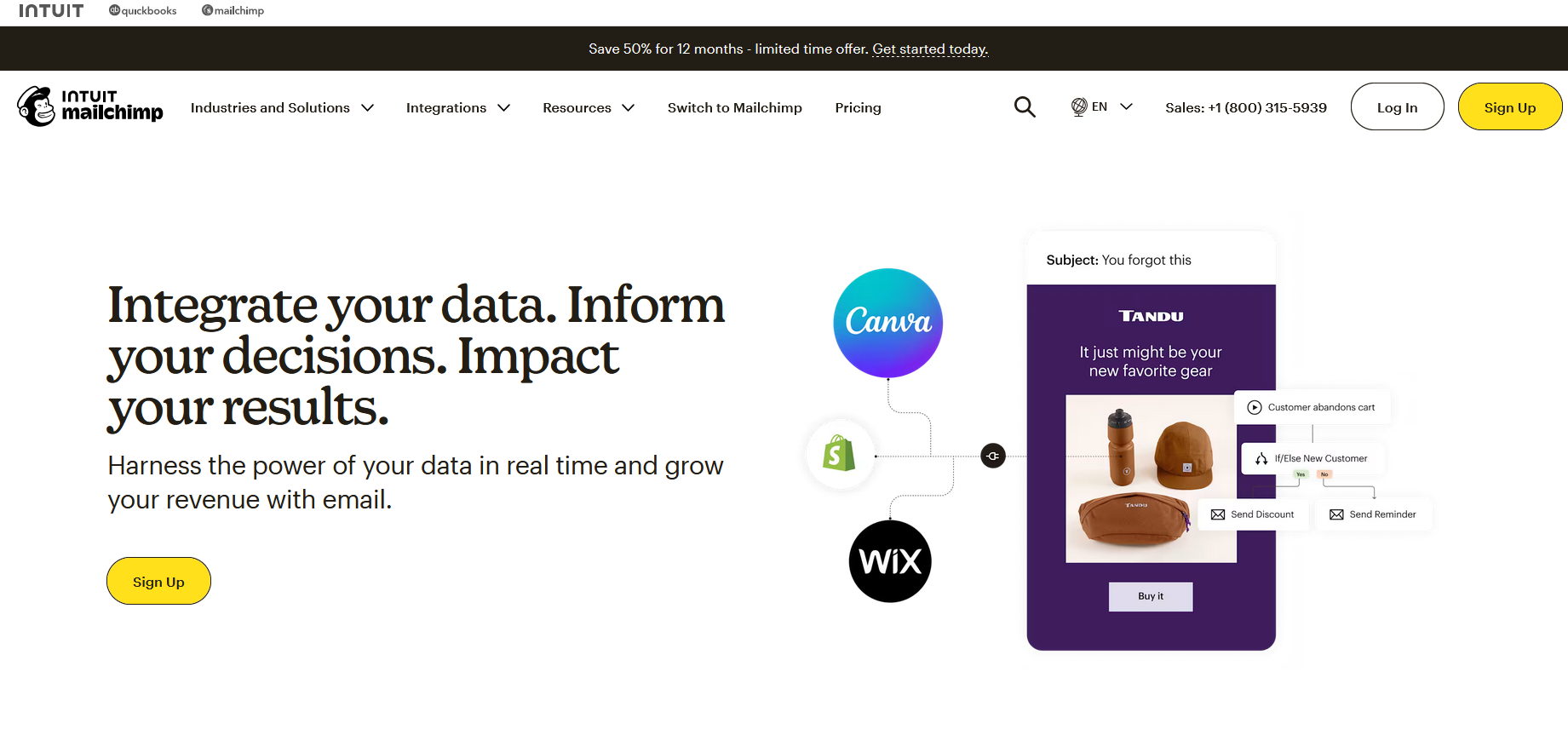
Mailchimp is a general-purpose email marketing platform focused on simplicity, templates, and quick campaign execution.
Compared to Omnisend's ecommerce-first positioning, Mailchimp is broader but far less specialized.
It's built for sending newsletters, announcements, and basic automations — not for complex ecommerce or lifecycle systems.
- Ease of use: Very low learning curve
- Template library: Strong drag-and-drop design tools
- Broad use cases: Works for nonprofits, creators, and service businesses
- They want something extremely easy to use
- Ecommerce automation is not a priority
- Email is more about communication than conversion
- Weak ecommerce automation: Limited cart, browse, and purchase logic
- Shallow automation: Basic drips compared to Omnisend flows
- Scalability issues: Outgrown quickly by growth-focused teams
A small brand finds Omnisend too ecommerce-focused and switches to Mailchimp for simple newsletters and announcements — sacrificing automation depth for ease of use.
Mailchimp is simpler and broader, but significantly less powerful. It works when email is a channel, not a growth engine.
Drip — Best Mid-Ground Alternative
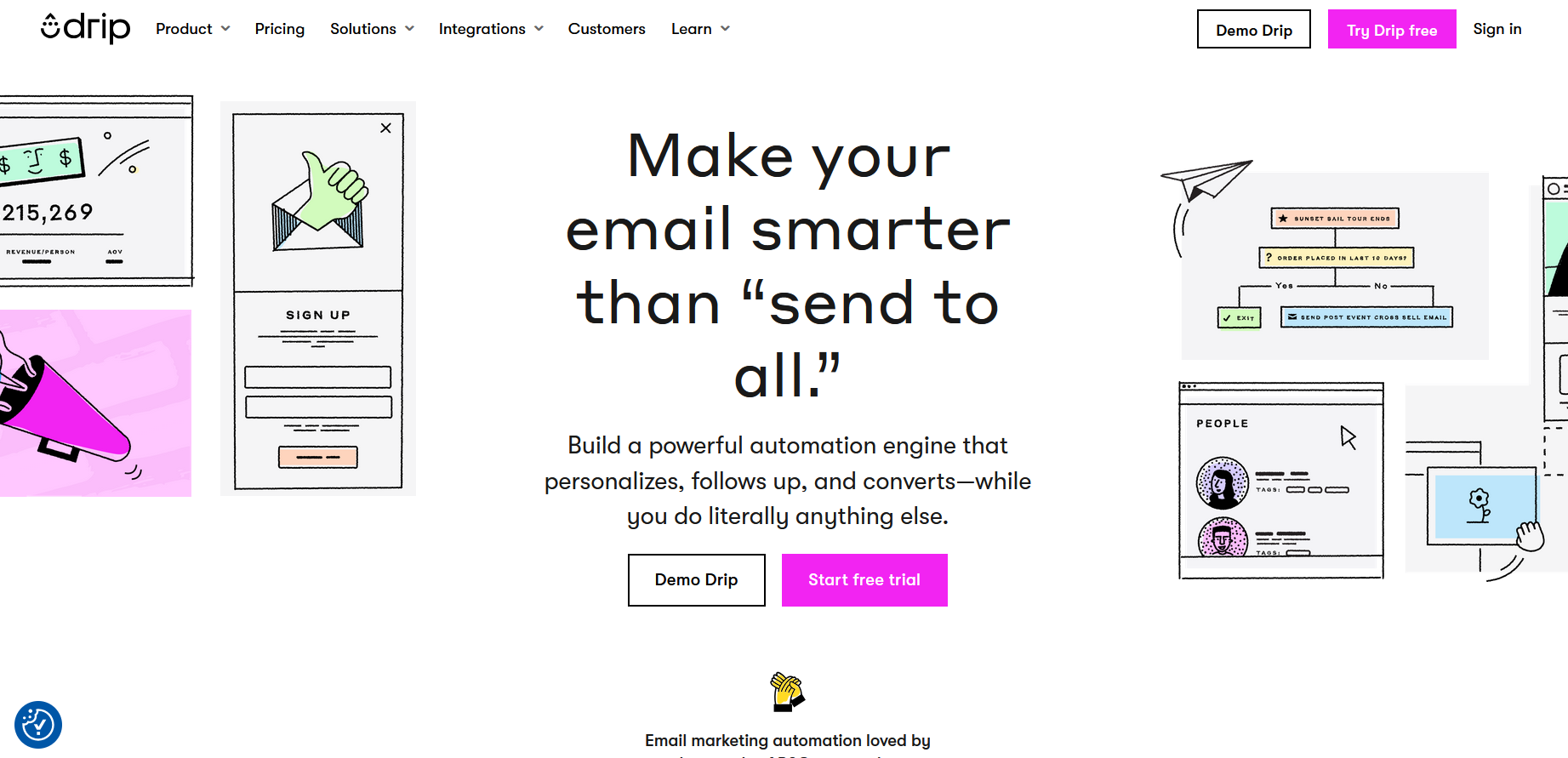
Drip positions itself between Omnisend and Klaviyo.
It combines ecommerce triggers with more flexible lifecycle automation, without going fully enterprise or fully template-driven.
Think of Drip as a system for brands that want more control than Omnisend, but don't want Klaviyo's weight.
- Flexible workflows: More control over how users move through journeys
- Lifecycle orientation: Better beyond just promotions
- Cleaner automation logic: Easier to reason about than heavy platforms
- Omnisend's flows feel too rigid
- Lifecycle automation starts to matter
- They want more customization without extreme complexity
- Smaller ecosystem: Fewer integrations than Klaviyo
- Less polish: UI and templates feel utilitarian
- No AI personalization: Mostly rule-based
A DTC brand grows beyond basic ecommerce flows and wants more lifecycle control without rebuilding everything from scratch. Drip becomes the middle ground.
Drip is a solid step up in flexibility, but it doesn't radically change how personalization works.
ConvertKit — Best Creator-First Alternative
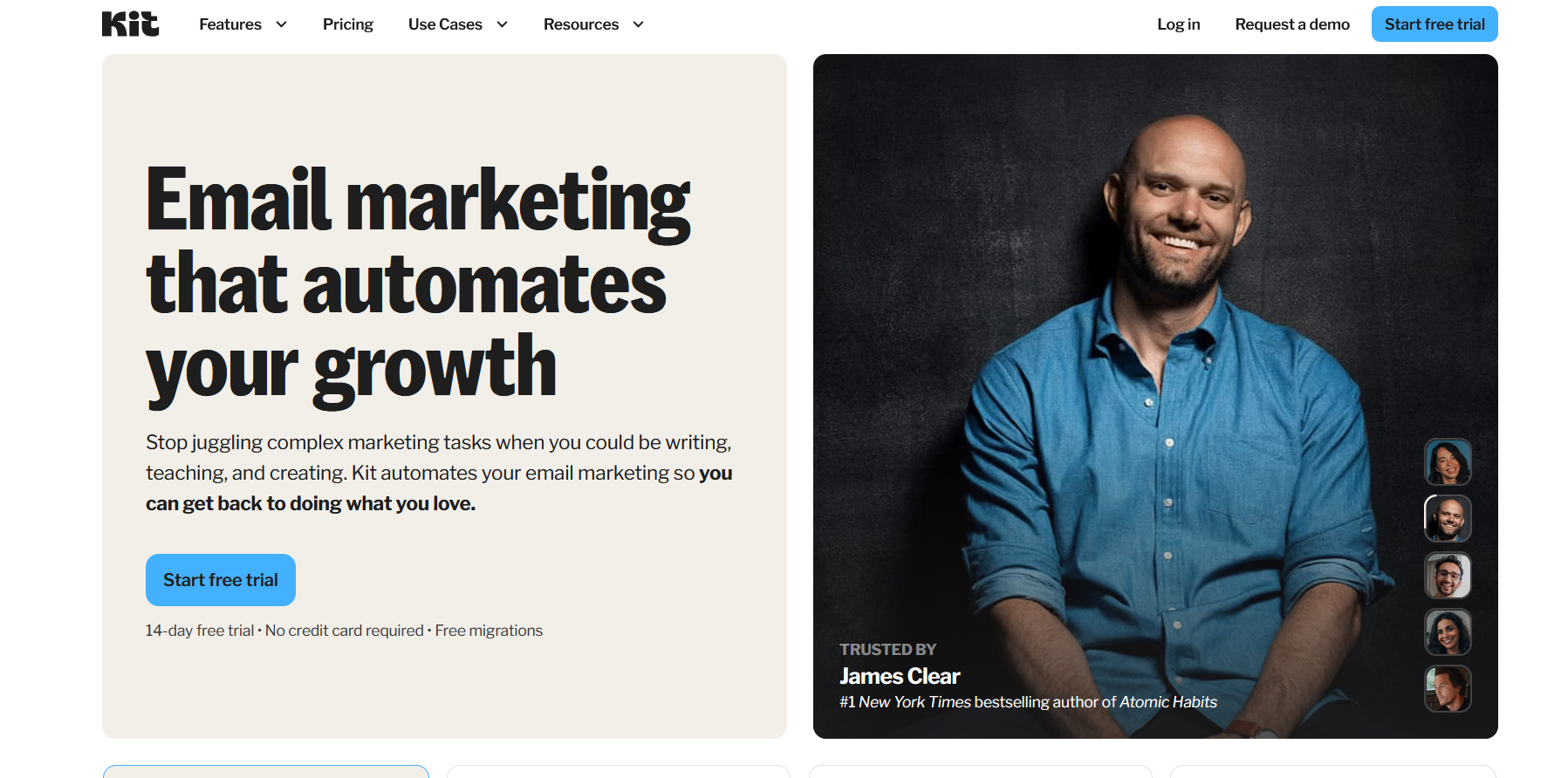
ConvertKit is built for creators, educators, and content-led businesses, not ecommerce brands.
Instead of focusing on carts and products, it centers around subscriptions, audiences, and content delivery.
Compared to Omnisend, it's simpler, cleaner, and far less transactional.
- Audience-first model: Subscriptions over lists
- Clean UX: Minimal clutter and setup friction
- Creator workflows: Built for publishing, not selling SKUs
- Email supports content, courses, or newsletters
- Simplicity matters more than automation depth
- Ecommerce is secondary or nonexistent
- Weak ecommerce support: Not designed for stores
- Limited automation: Basic sequences only
- Minimal reporting: Not revenue-centric
A content creator using Omnisend for digital products switches to ConvertKit to simplify audience management and focus on publishing rather than ecommerce logic.
ConvertKit is excellent for creators — but not a serious Omnisend replacement for ecommerce brands.
Campaign Monitor — Best Design-First Alternative
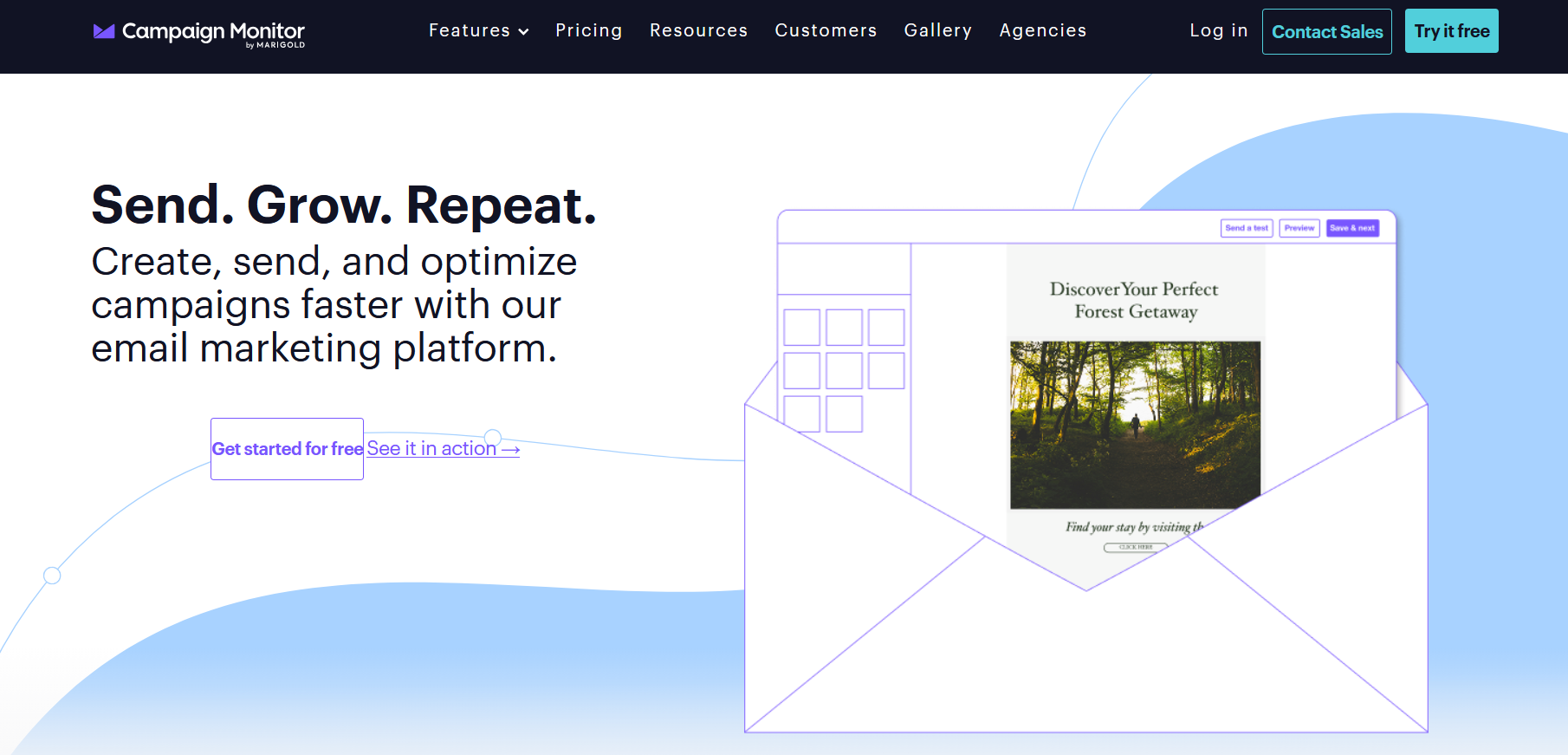
Campaign Monitor is built around email design, brand consistency, and visual quality.
Compared to Omnisend, it prioritizes how emails look over how automation works.
It's campaign-centric, not lifecycle-centric.
- Design quality: Strong templates and rendering
- Brand control: Consistent visual output
- Simplicity: Focused, uncluttered experience
- Brand presentation is critical
- Emails are editorial or promotional
- Automation needs are light
- Minimal automation: Very limited flows
- No ecommerce depth: Weak store integrations
- Not scalable: Not built for growth systems
A brand-led company prioritizes polished newsletters over automation and moves from Omnisend to Campaign Monitor for visual consistency.
Campaign Monitor is about how emails look, not how they scale.
GetResponse — Best Feature-Rich Marketing Suite Alternative
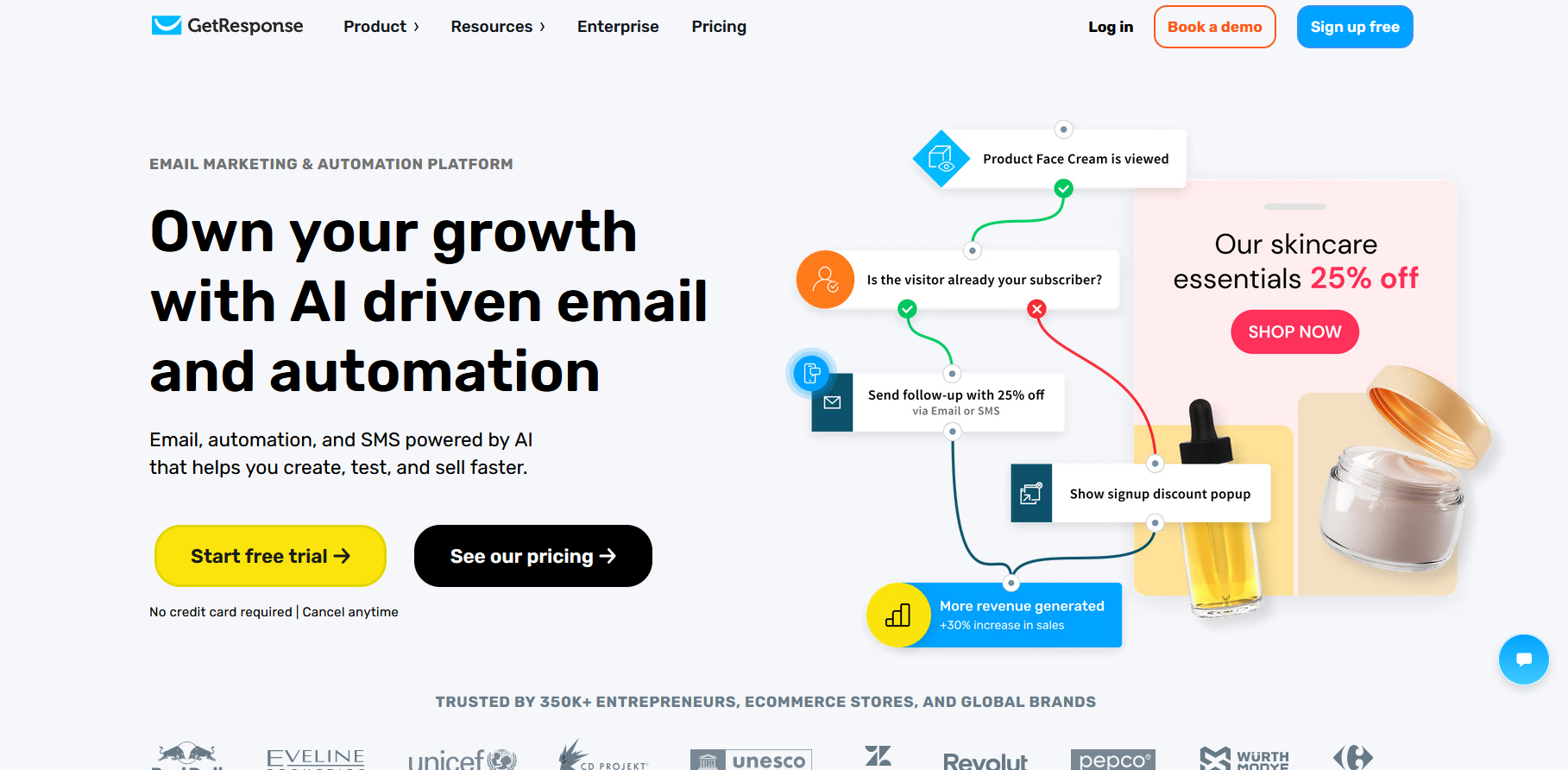
GetResponse combines email marketing, automation, landing pages, and webinars into a broad marketing suite.
Compared to Omnisend, it's less ecommerce-specific but more feature-rich overall.
- Feature breadth: Email, pages, automation, webinars
- Non-ecommerce flexibility: Works beyond stores
- Marketing versatility: More than just campaigns
- They need webinars or landing pages alongside email
- Marketing extends beyond ecommerce
- They want an all-in-one marketing suite
- UI complexity: Can feel cluttered
- Less ecommerce-native: Weaker product triggers
- Depth vs focus: Many features, none best-in-class
A business running webinars and lead-gen campaigns outgrows Omnisend's ecommerce focus and switches to GetResponse for broader marketing control.
GetResponse is wide, not deep — useful when marketing needs extend beyond ecommerce.
Choosing the Right Omnisend Alternative
Patterns you'll notice:
- SendroAI replaces rigid ecommerce triggers with adaptive, AI-driven personalization
- Klaviyo adds deep ecommerce segmentation and revenue attribution
- ActiveCampaign brings conditional logic and lifecycle depth
- HubSpot connects email to CRM and pipeline reporting
- Omnisend alternatives trade ecommerce simplicity for focus — whether in intelligence, automation depth, or design
Switching & Migration Considerations
- Automation Depth: Omnisend's automation is simple and ecommerce-focused. If you need conditional logic or lifecycle marketing, prioritize platforms with stronger workflow builders.
- Ecommerce Focus vs Breadth: Omnisend is built for stores. Most alternatives trade ecommerce depth for broader use cases or intelligence.
- Reporting Depth: If you need to connect email performance to revenue or engagement outcomes, look for platforms with analytics beyond opens and clicks.
- Team Fit: Omnisend works for ecommerce marketers. More specialized tools require dedicated expertise but deliver better results in their focus area.
Final Recommendation
Switch from Omnisend if:
- Automation depth is limited
- Segmentation doesn't scale well
- Personalization relies on templates rather than intelligence
- Email needs to support growth beyond ecommerce
Stick with Omnisend if:
- You need fast, simple ecommerce setup
- Channel coverage matters more than depth in any single area
- Your team values speed and simplicity over specialization
If you're leaving Omnisend, the real question is focus:
If your priority is personalization, adaptive automation, and measurable outcomes, SendroAI is the strongest long-term alternative to Omnisend.
Bottom Line
Omnisend is great for fast ecommerce setup. If your goal is to move from rigid ecommerce triggers to intelligent, adaptive engagement at scale, SendroAI is the most future-proof alternative.