Autonomous Research vs. Agentic Ecosystem: The Depth of Personalization
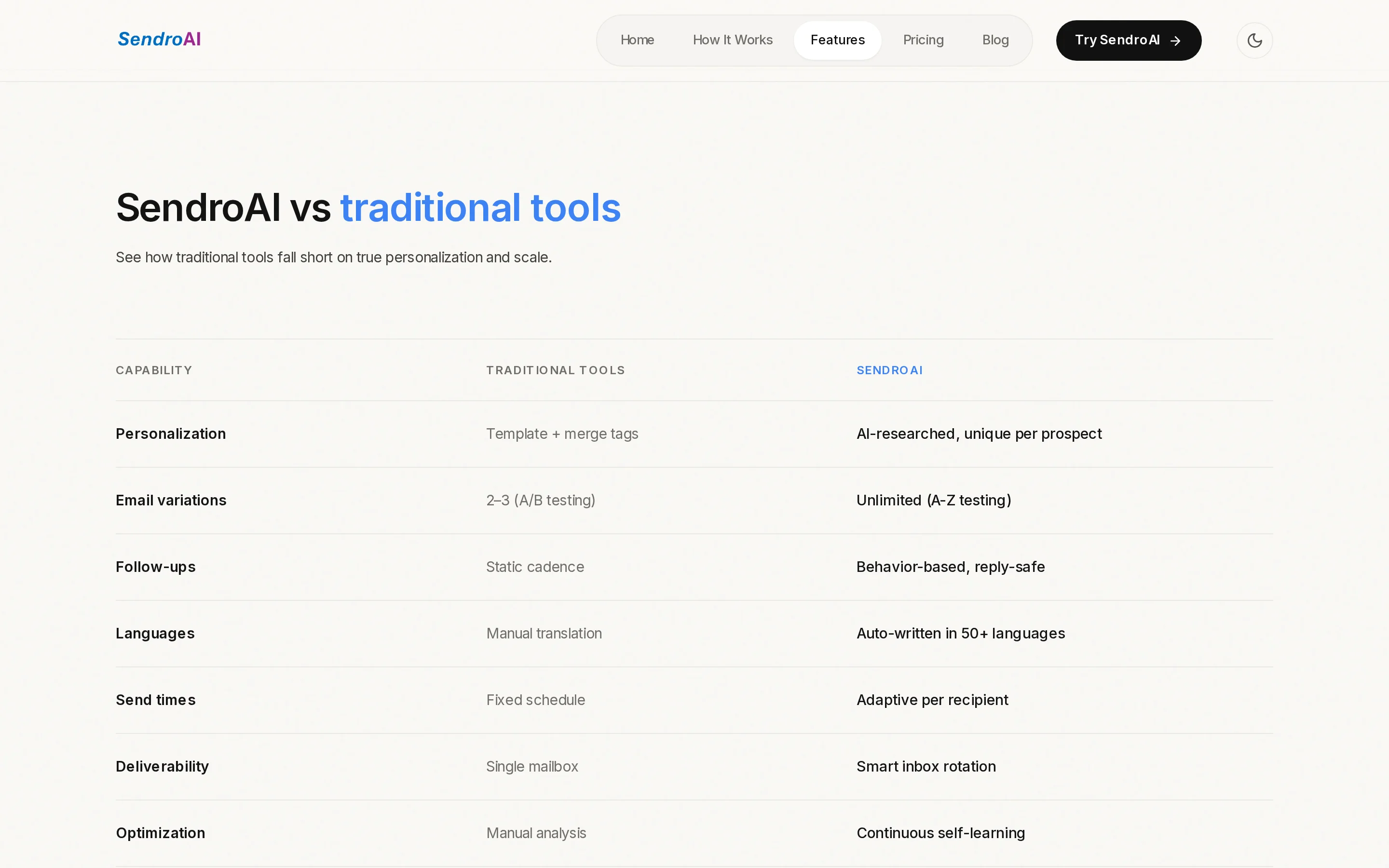
The fundamental architectural difference between SendroAI and Salesforce lies in how they approach personalization at scale. SendroAI operates as an autonomous outbound engine where the AI Research Engine 2.0 is mandatory for every single email sent. Before drafting a word, SendroAI scrapes real-time company positioning, role analysis, and market signals to craft a unique, hand-written-feeling email. This eliminates the 'template + merge tag' paradigm entirely, ensuring that no two emails share identical phrasing or structure. In contrast, Salesforce’s Agentforce ecosystem focuses on connecting humans, data, and AI agents across the enterprise to support employees and customers. While powerful for internal workflow automation and customer service, it does not inherently generate unique, researched cold emails for external prospects without significant custom configuration.
In daily execution, SendroAI’s SDRs save hours by having the AI handle the research phase instantly. What takes a human 10-20 minutes per lead, SendroAI does in seconds for entire lists. The output is context-rich messaging that feels bespoke because it is derived from live data, not static fields. Salesforce users, however, often rely on standard CRM data points or manual enrichment to personalize messages. Even with Salesforce’s generative AI capabilities, the default workflow tends toward structured templates unless heavily customized. For outbound teams focused purely on reply rates, SendroAI’s zero-template approach provides a distinct competitive advantage by bypassing spam filters that flag repetitive patterns.
The tradeoff here is scope versus depth. Salesforce offers a broader agentic ecosystem suitable for managing the entire customer lifecycle, but it lacks the specialized, deep-outbound focus of SendroAI. SendroAI wins for modern outbound teams because it prioritizes the quality of the initial touchpoint. By ensuring every email is unique and researched, SendroAI maximizes the probability of engagement, whereas Salesforce’s generalist approach may dilute the personalization required to cut through inbox noise.