Autonomous AI Research vs. Static Data Management: The Personalization Gap
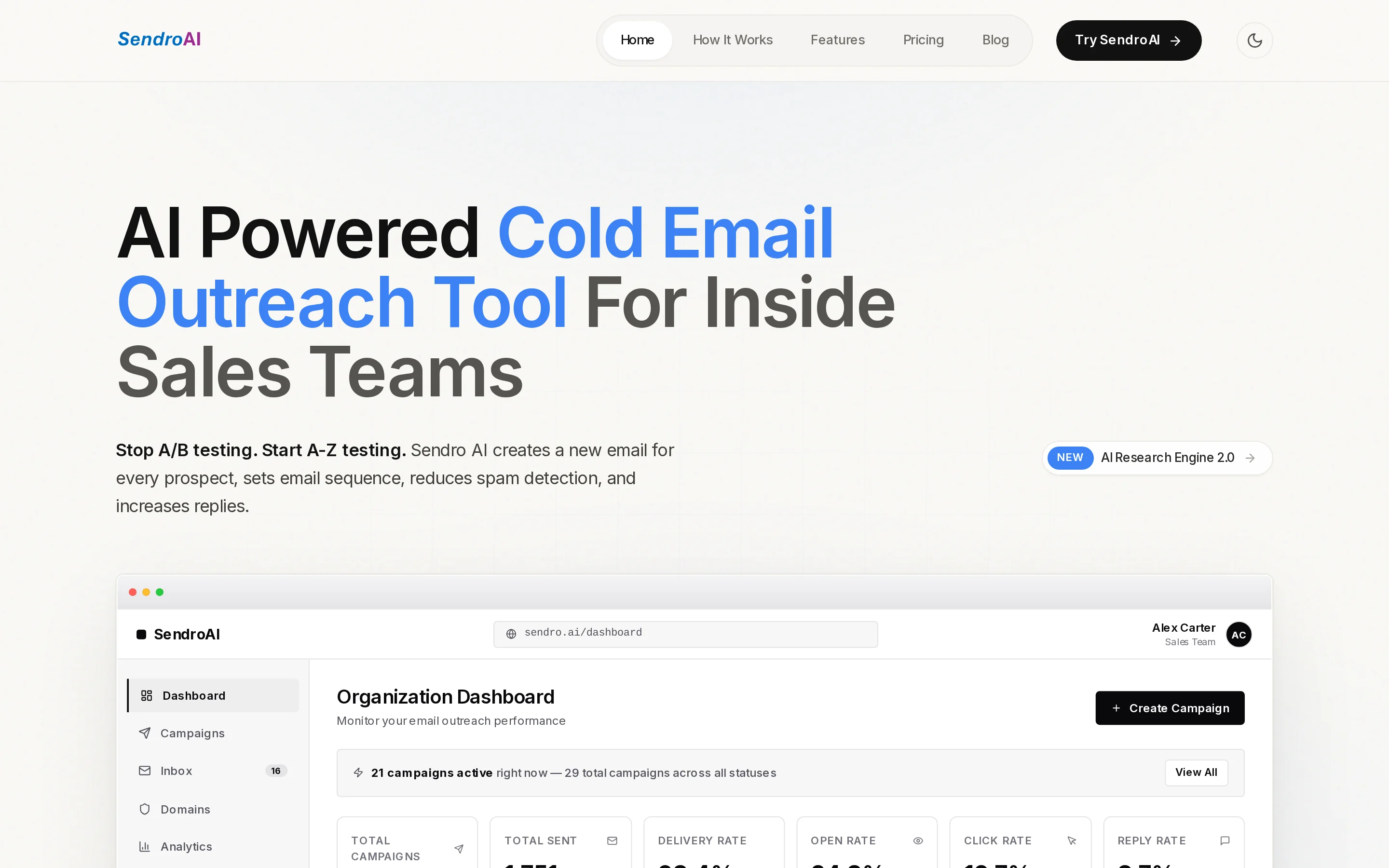
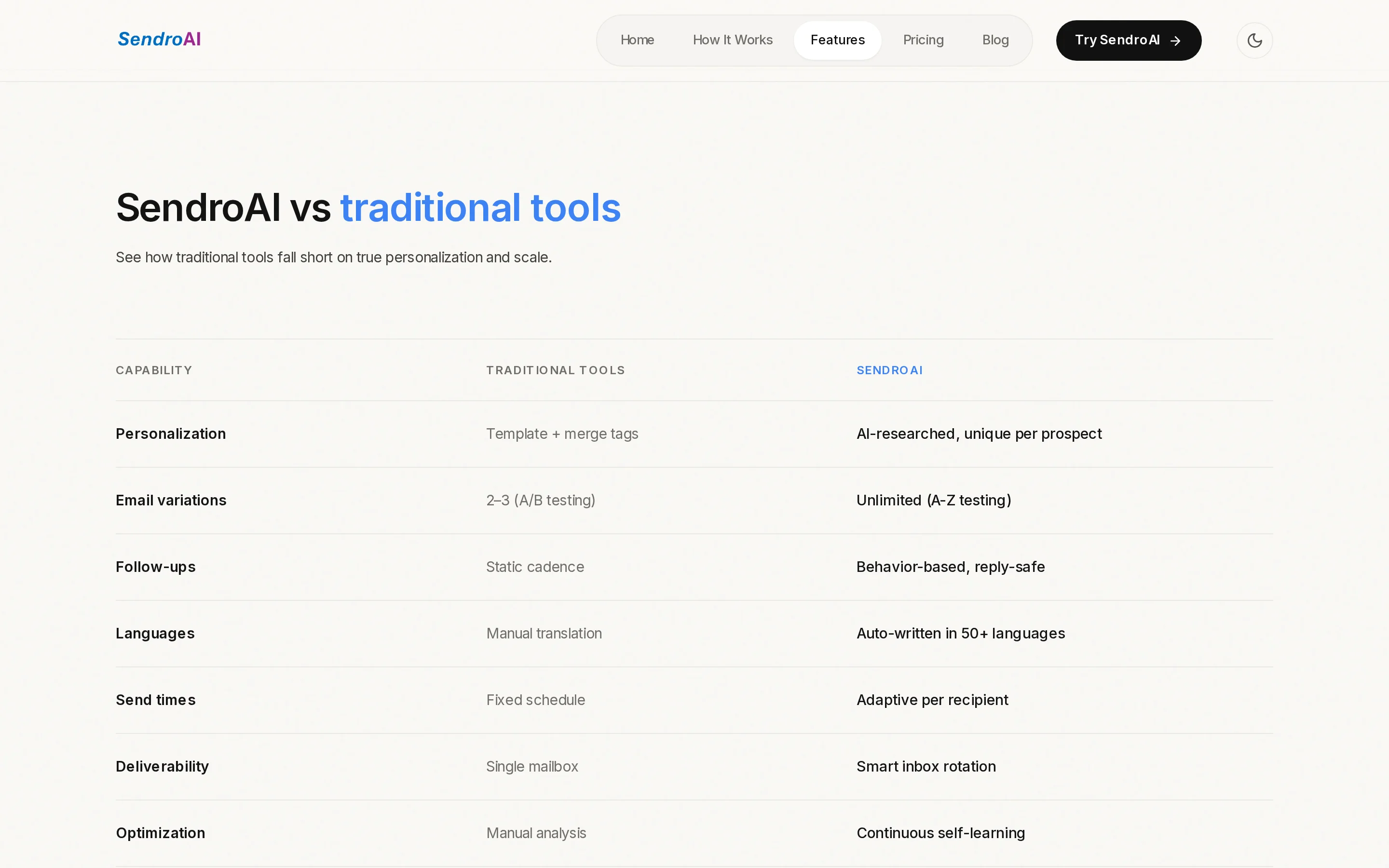
The fundamental architectural difference between SendroAI and Zoho CRM lies in how they handle prospect data. Zoho CRM is primarily a database management tool; it stores static contact records that require manual entry or basic import. While powerful for tracking interactions, it offers no native mechanism to generate new insights about a prospect before you reach out. In contrast, SendroAI’s core differentiator is its Autonomous AI Research Engine, which scrapes real-time company positioning, role analysis, and market signals for every single lead before drafting a word. This eliminates the 'spray and pray' approach entirely, ensuring that every email is unique, context-rich, and hand-written-feeling, rather than relying on generic merge tags.
In daily execution, this distinction creates a massive efficiency gap. A sales team using Zoho CRM must manually research each prospect to find relevant talking points, a process that takes 10-20 minutes per lead. SendroAI automates this instantly, synthesizing research into custom outreach sequences in seconds. For high-volume teams, this means SDRs can focus on closing deals rather than hunting for news articles or LinkedIn updates. Furthermore, SendroAI’s A-Z testing capability continuously optimizes content based on engagement, whereas Zoho relies on static templates that do not adapt or learn from individual recipient behavior.
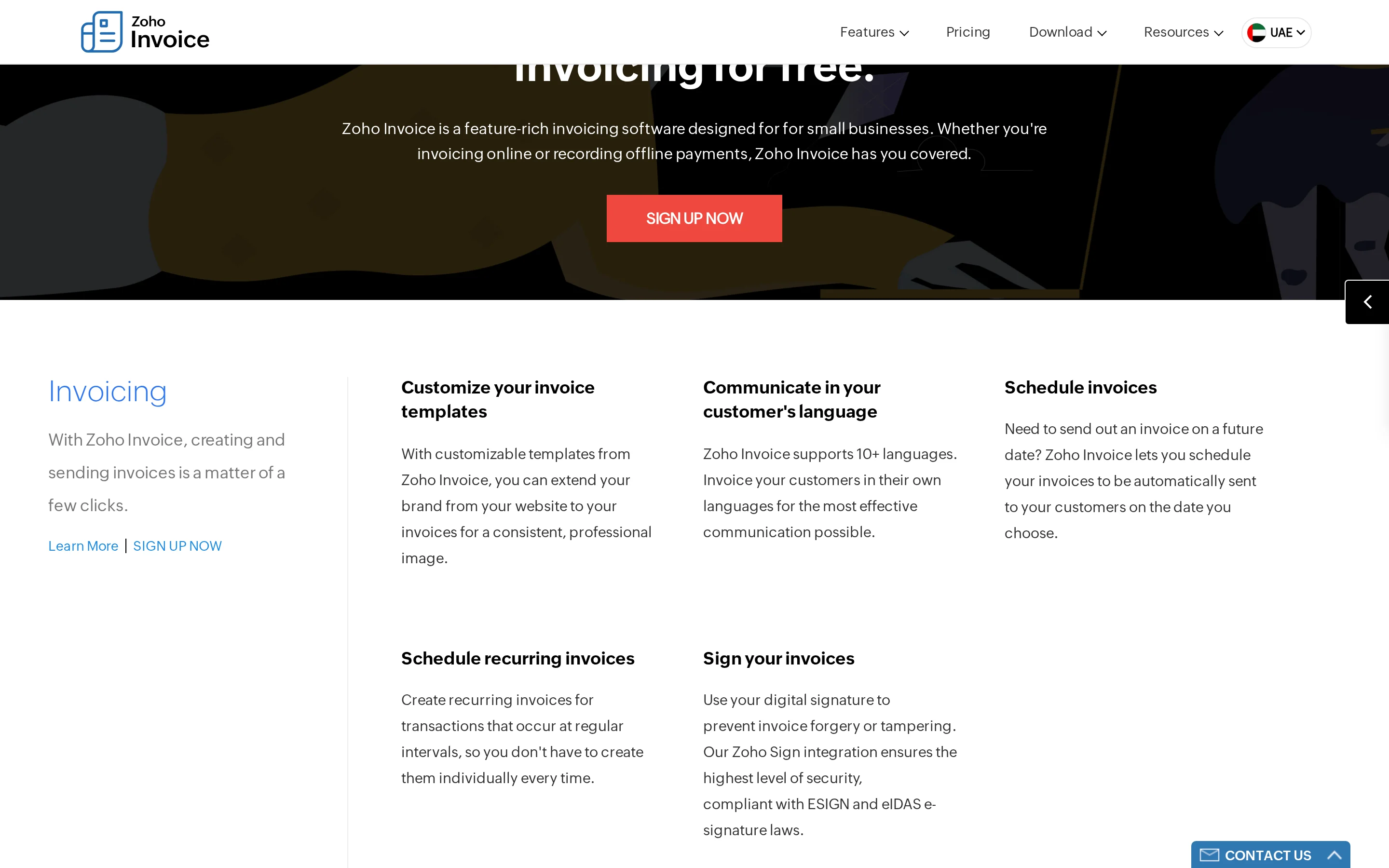
The tradeoff is clear: Zoho CRM provides a robust repository for managing existing relationships but lacks the proactive intelligence required for cold outreach at scale. SendroAI sacrifices some of the deep, long-term relationship history tracking found in full-stack CRMs in favor of aggressive, intelligent acquisition. For teams prioritizing reply rates and reducing manual research time, SendroAI’s autonomous research engine is the superior choice.