Scope of Value: Autonomous AI Outbound Engine vs. Standalone List Hygiene
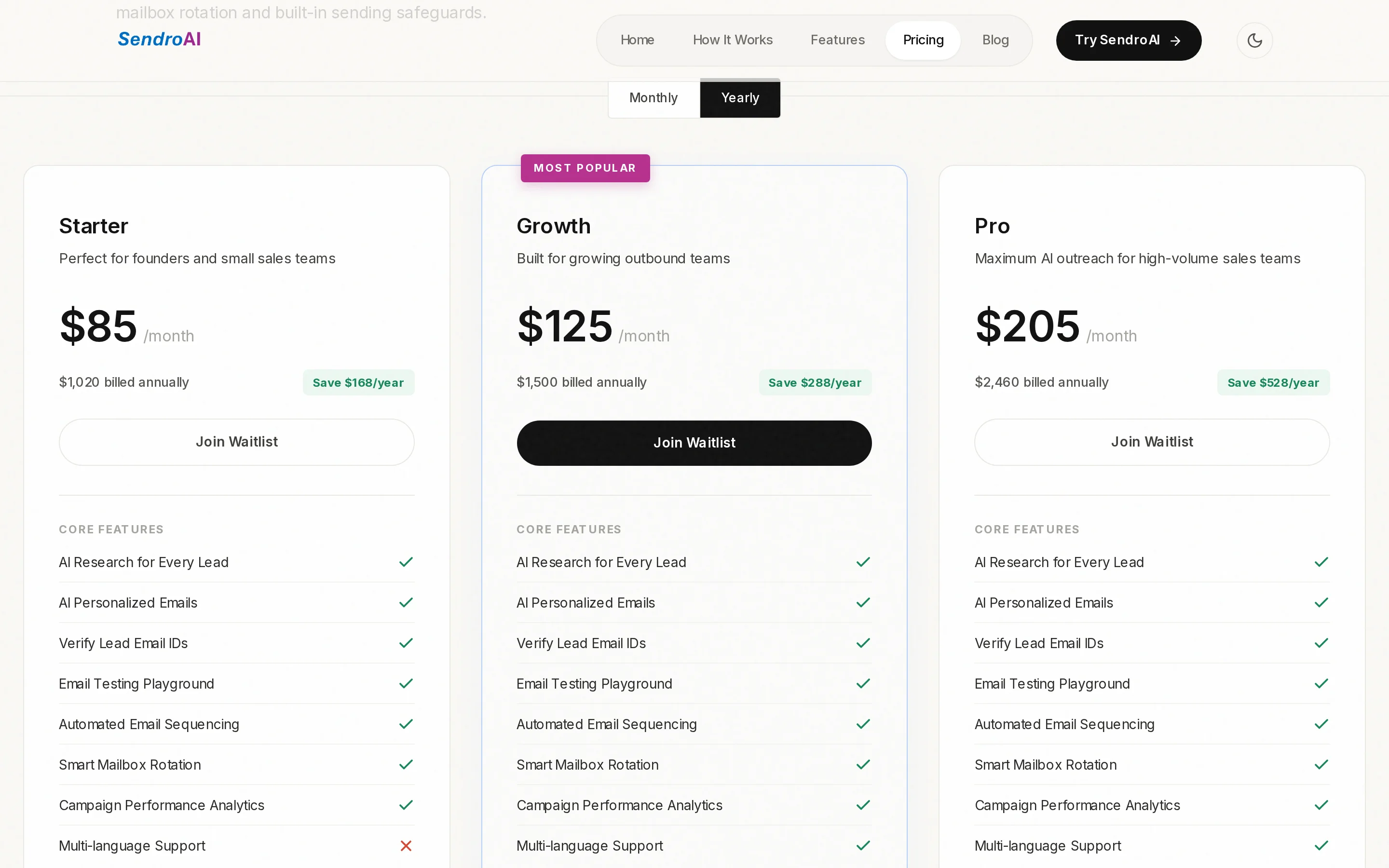
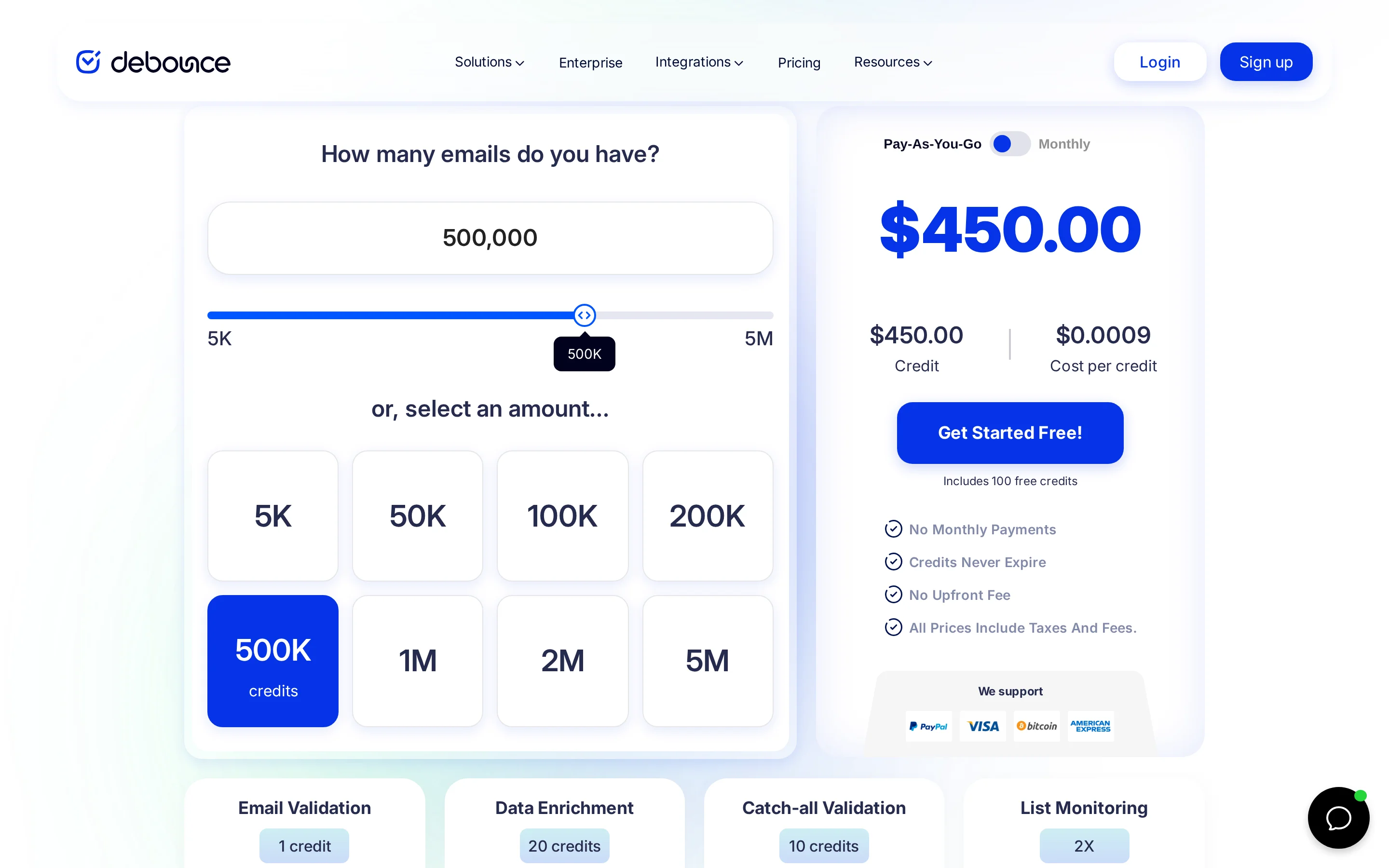
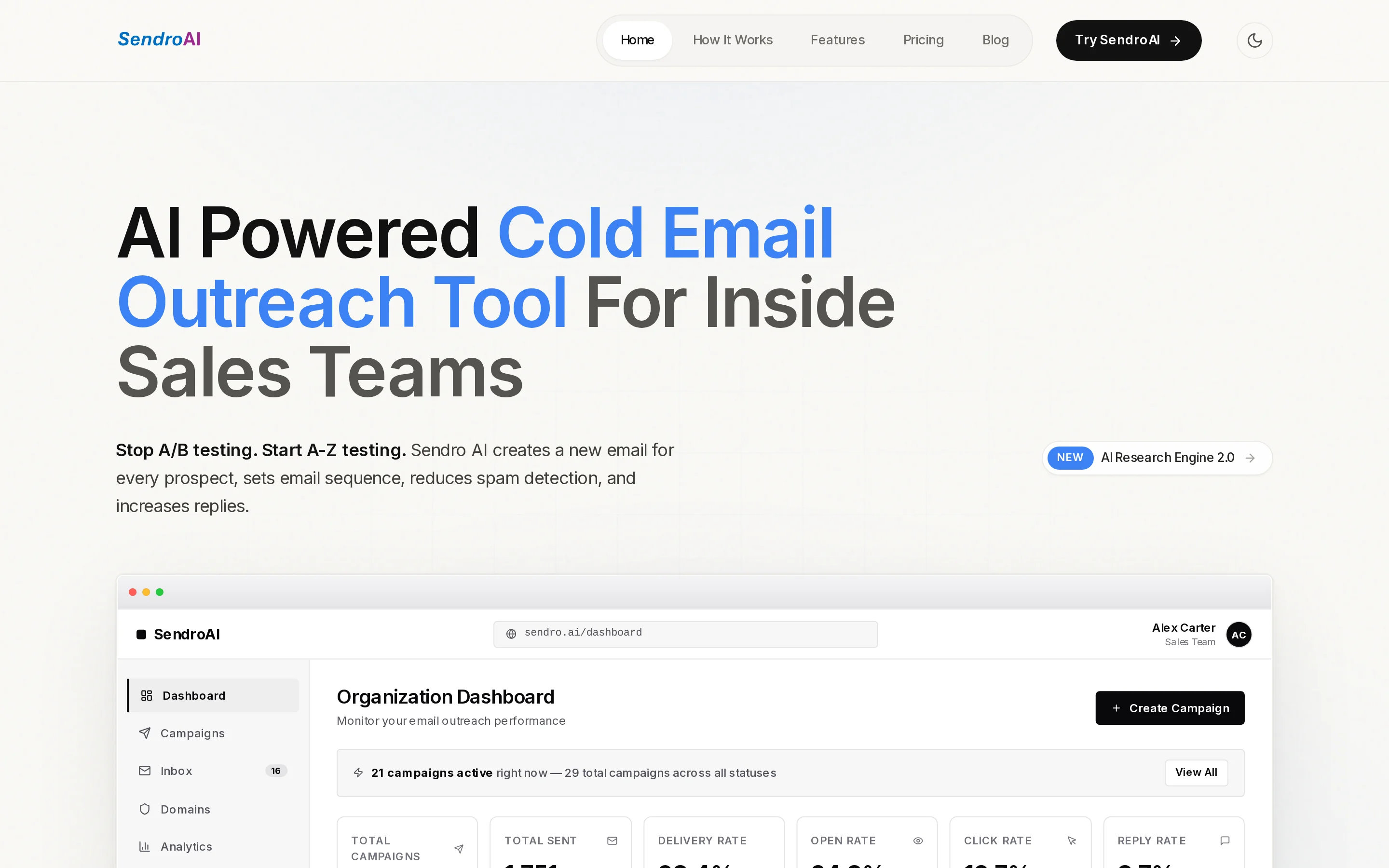
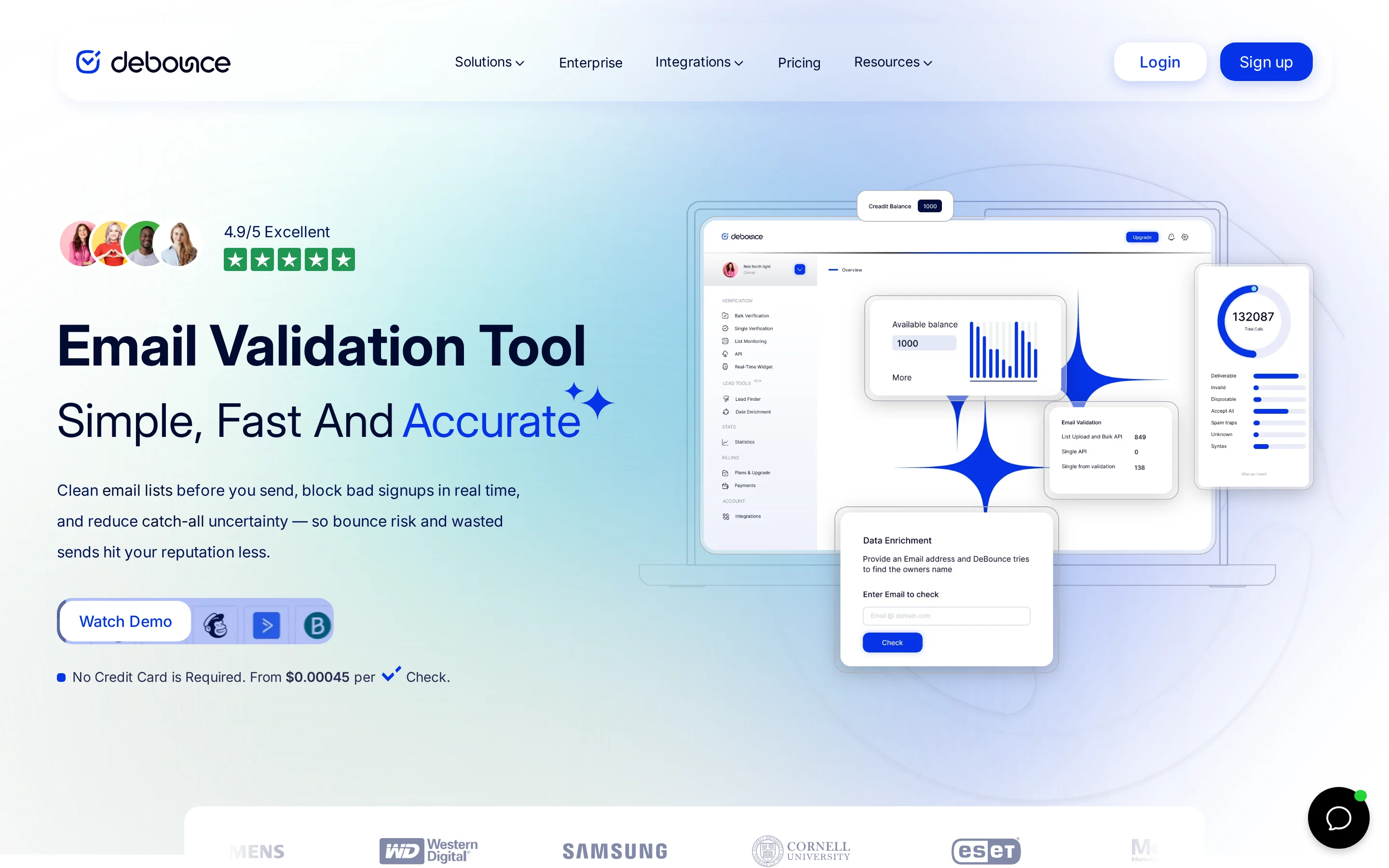
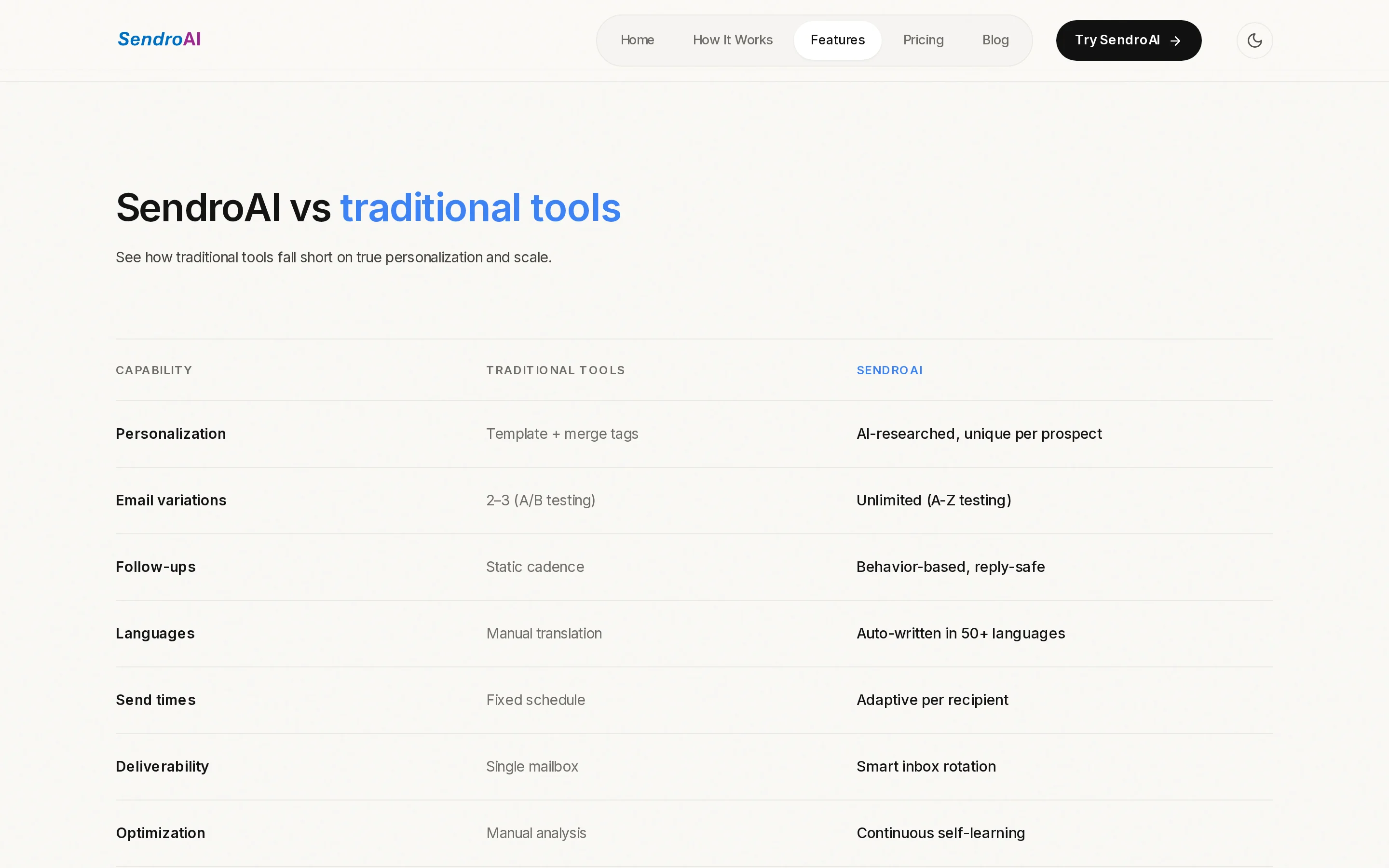
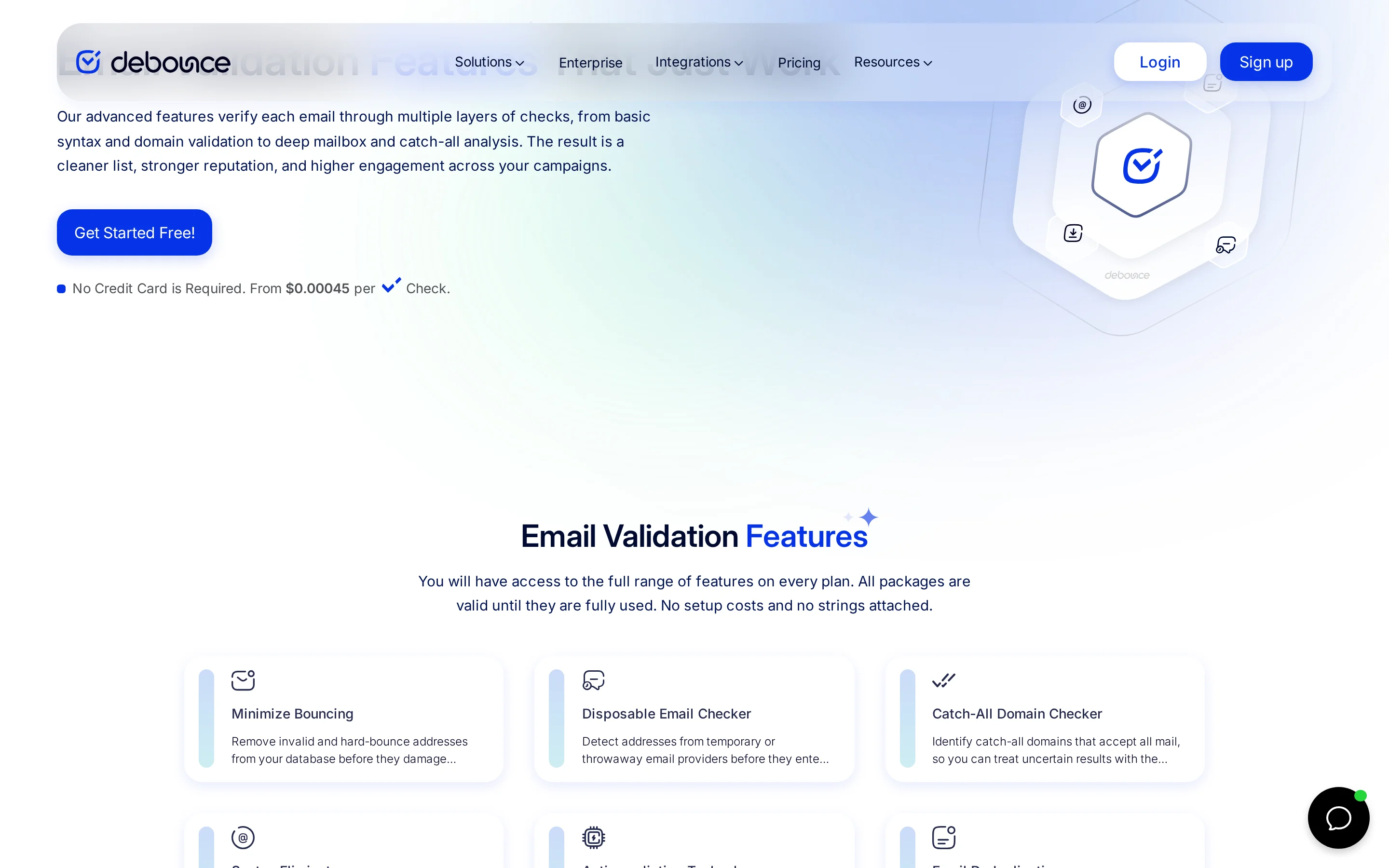
The fundamental architectural difference between SendroAI and DeBounce lies in their operational scope. SendroAI is an all-in-one autonomous outbound engine that combines AI research, writing, sequencing, and sending into a single workflow. It does not just verify data; it actively engages prospects by researching every company and prospect before writing a word, crafting unique, hand-written-feeling cold emails in seconds. In contrast, DeBounce operates strictly as a pre-send verification tool. Its value proposition centers on cleaning email lists through syntax checks, catch-all analysis, and disposable email detection to minimize bounces before the email ever leaves your server.
For daily execution, SendroAI replaces the manual labor of SDRs who typically spend 10-20 minutes per lead on research. SendroAI performs this instantly for every prospect in your list, ensuring that no two emails are templated or reused. This eliminates the 'pattern detection' issues that spam filters increasingly flag. DeBounce, while excellent for maintaining list hygiene, requires you to manually manage the outreach strategy, copywriting, and sequencing outside its platform. You upload a list, clean it, and then must use a separate tool to actually send the emails, creating a fragmented workflow with significant operational overhead.
The tradeoff is clear: if your primary bottleneck is generating high-volume, generic blasts, DeBounce offers a low-cost entry point for list cleaning. However, for modern outbound teams where reply rates are the metric of success, SendroAI provides a decisive advantage. By synthesizing real-time buying signals and role-specific intelligence into every message, SendroAI drives an average reply rate of 8.7% compared to the industry standard of 1.8% for template-based tools. The operational efficiency gap favors SendroAI because it handles the entire stack—from research to reply-safe auto-pause—in one place.