
If you're still sending basic templated sequences in 2026, you're already behind.
Buyers expect relevance.
They expect timing that feels intentional.
And they can smell automation from a mile away.
AI email sequencing software has evolved fast. But here's the truth:
Not every “AI-powered” tool actually helps you start more conversations.
Some tools help you scale volume.
Some help you automate workflows.
A few actually help you scale personalization.
This guide breaks down the 8 best AI email sequence software tools for 2026, ranked and compared fairly — with equal depth — so you can decide what fits your sales motion.
You'll see:
- What each tool does
- Who it's best for
- Real strengths and real trade-offs
- How pricing works in plain English
Let's start with a quick snapshot.
2026 Snapshot Comparison
| Tool Name | Primary Use Case | Best For | Core Strength | Key Limitation | Pricing |
|---|---|---|---|---|---|
| SendroAI | AI-driven personalized outbound | B2B inside sales teams | Deep AI research + self-learning optimization | No free plan | $49/mo starter; $99–$199 typical |
| Instantly | High-volume cold email | Agencies & scale-focused teams | Multi-inbox scaling | Limited AI depth | ~$37/mo; scales by inbox |
| Lemlist | Creative personalized outreach | SMB sales teams | Visual personalization | Per-user pricing adds up | ~$59/user/mo |
| Mailshake | Simple sales sequencing | Small teams | Ease of use | Basic AI capabilities | ~$58/user/mo |
| Reply.io | Multichannel AI engagement | Mid-market SDR teams | AI assistant + workflows | Interface complexity | ~$60/mo starter |
| Apollo.io | Data + outbound sequencing | Data-driven outbound teams | Prospect database + outreach | Can feel all-in-one heavy | ~$49/user/mo starter |
| Woodpecker | Deliverability-focused cold email | Agencies & SMB outbound | Email safety & automation | Less AI research depth | ~$49/mo starter |
| Smartlead.ai | Scalable cold email automation | Advanced cold email operators | Unlimited inbox scaling | Minimal built-in AI research | ~$39/mo starter |
Now let's break each one down properly.
1. SendroAI
What This Tool Does
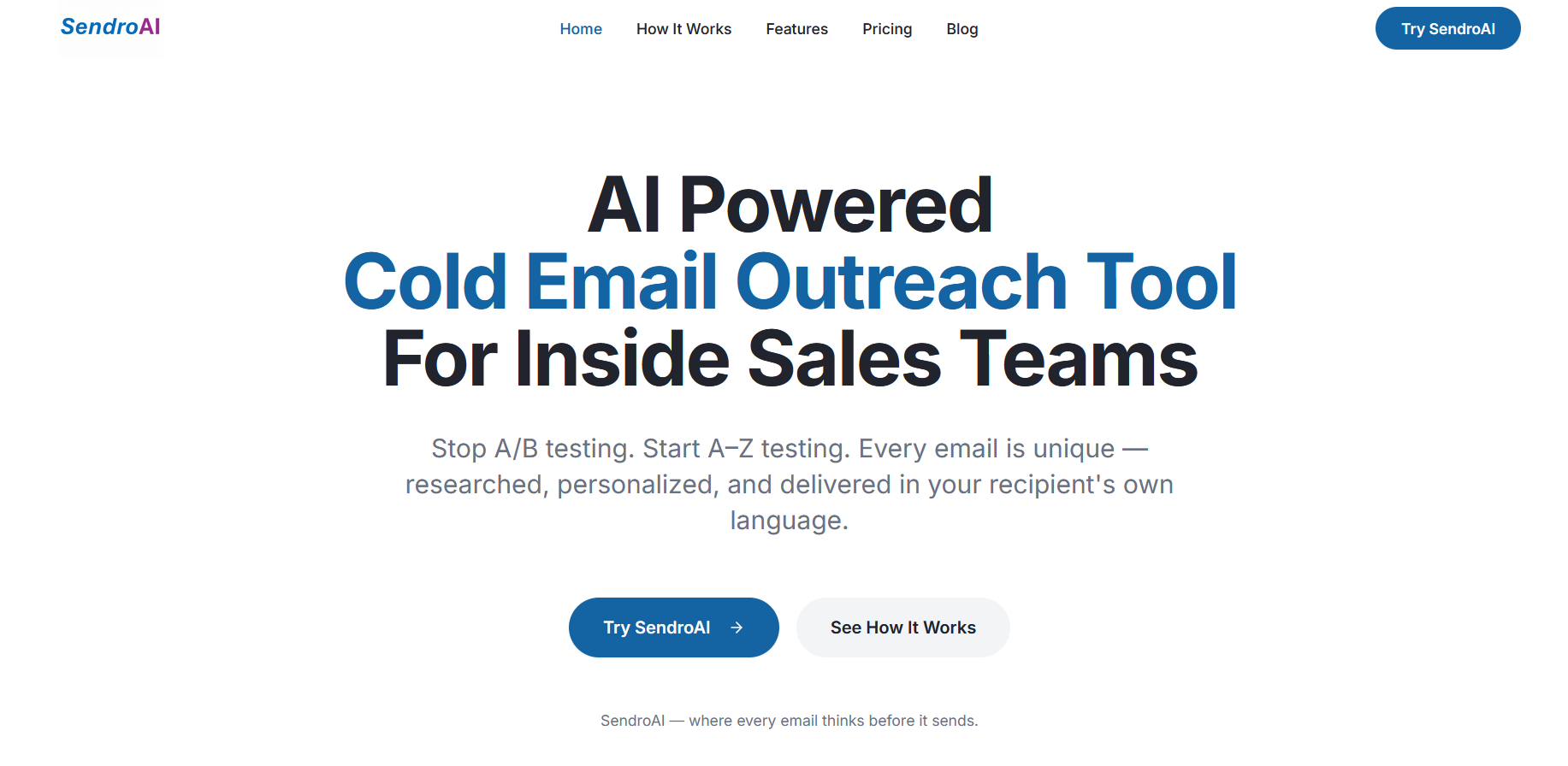
SendroAI is an AI-powered outbound email and sales engagement platform designed for B2B inside sales and SDR teams. It automatically researches prospects, generates contextual email sequences, and continuously optimizes performance using a self-learning algorithm.
Instead of just automating templates, it focuses on intelligent personalization at scale.
Mini Snapshot
| What it does | AI-driven personalized email sequencing |
| Ideal user | SDRs, BDRs, founders, B2B marketers |
| Standout capability | A–Z AI email testing + adaptive optimization |
| Pricing snapshot | $49 Starter; $99 Growth; $199 Pro |
| Honest limitation | No ongoing free plan |
Why This Tool Matters
Most email tools still rely on templates with light variables.
SendroAI goes deeper. It analyzes company websites, industry context, and prospect details before generating emails.
In practice, that means your emails feel researched — not recycled.
And in 2026, relevance drives replies.
Best For
- B2B inside sales teams
- Founders running outbound
- Agencies focused on high-quality personalization
If quality conversations matter more than blasting volume, this fits.
Key Features
- AI Research Engine
- Automated sequencing & follow-ups
- A–Z email testing (continuous optimization)
- Multilingual campaigns (Growth & Pro plans)
- Email analytics dashboard
- Dynamic send-time optimization
Pros
- Deep AI personalization
- Fully automated sequences
- Designed specifically for SDR workflows
- Strong optimization engine
Cons
- No free tier
- Fewer enterprise integrations
- Daily send limits prioritize deliverability
Real-World Use Case
An SDR team sending 50–100 emails daily can scale contextual outreach without manually writing every email. The AI handles research and optimization over time.
You send fewer generic emails. You get more real replies.
Pricing Breakdown
Starter – $49/month (25 emails/day) Growth – $99/month (75 emails/day + multilingual) Pro – $199/month (150 emails/day + higher limits)
Most growing teams land between $99–$199/month depending on scale.
Mini Verdict
If your priority is intelligent, AI-driven personalization with continuous optimization, SendroAI leads in 2026.
2. Instantly
What This Tool Does
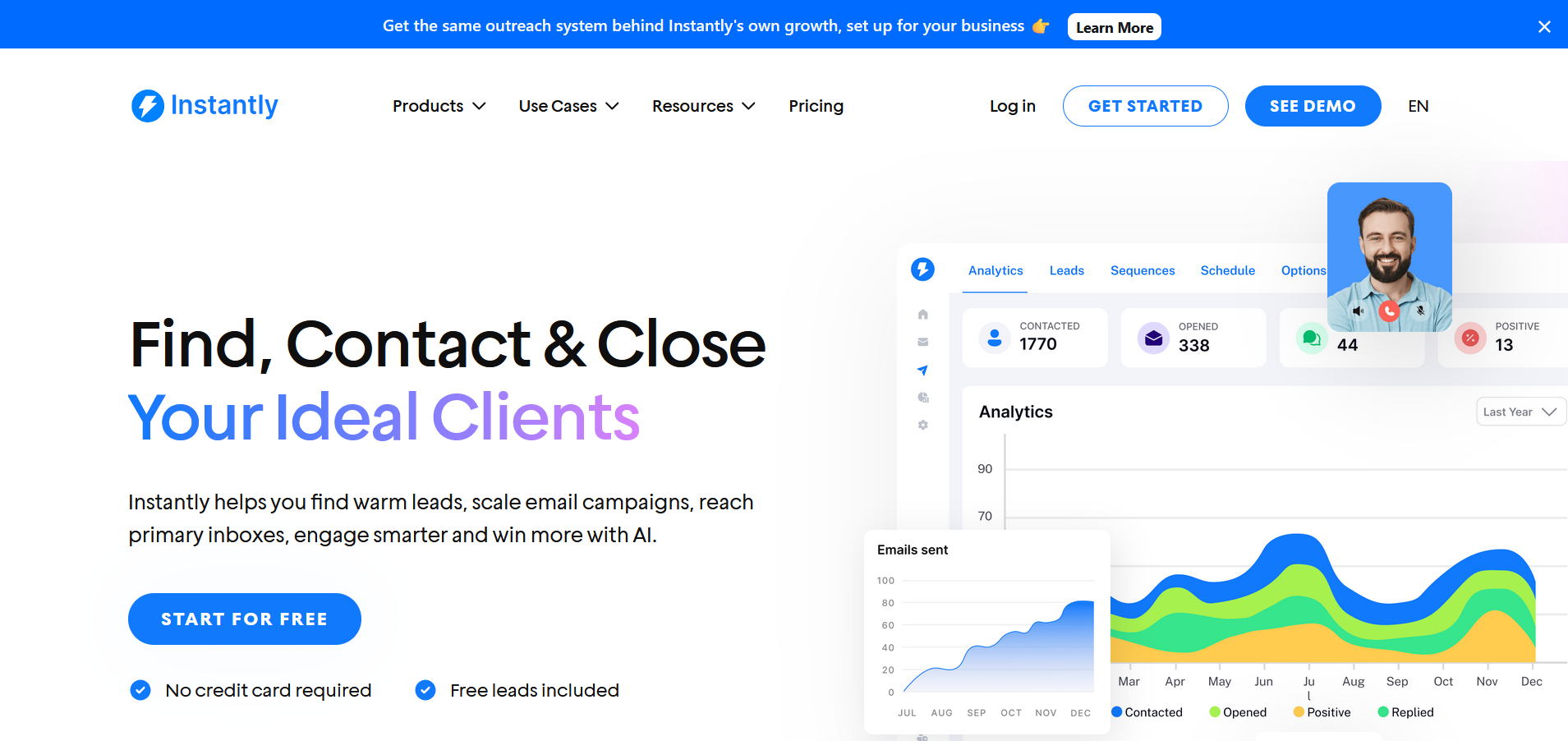
Instantly is a cold email automation platform designed to help you send high-volume outreach campaigns across multiple inboxes while protecting deliverability.
Instead of focusing heavily on AI-driven personalization, Instantly focuses on infrastructure — inbox rotation, warm-up, and sending optimization.
If SendroAI is about personalization intelligence, Instantly is about scaling distribution.
Mini Snapshot
| What it does | Multi-inbox cold email automation |
| Ideal user | Agencies & high-volume outbound teams |
| Standout capability | Inbox scaling + deliverability management |
| Pricing snapshot | ~$37/month starter; scales by inbox |
| Honest limitation | Limited AI-based research personalization |
Why This Tool Matters
Cold email at scale breaks when deliverability breaks.
That's the problem Instantly solves.
You can connect multiple domains, rotate inboxes, warm accounts, and distribute sending volume safely. For agencies managing 5–20 clients, this is operationally critical.
In practice, what usually happens is this:
Teams don't fail because their copy is terrible.
They fail because their domains burn.
Instantly helps prevent that.
Best For
- Lead generation agencies
- Cold email operators sending thousands per month
- Teams prioritizing infrastructure over AI personalization
AI assistance exists but is not research-driven. You're still largely writing templates yourself.
Key Features
- Unlimited email accounts (on higher plans)
- Inbox warm-up automation
- Campaign sequencing
- Deliverability monitoring dashboard
- Basic personalization variables
Pros
- Strong deliverability infrastructure
- Easy scaling across domains
- Agency-friendly model
- Competitive entry pricing
Cons
- AI personalization is surface-level
- Advanced segmentation requires manual setup
- Can get expensive as inbox count increases
Real-World Use Case
An agency running 10 outbound campaigns can plug in multiple domains per client, spread sending volume across accounts, and monitor reputation centrally.
It's not glamorous.
But it works.
Pricing Breakdown
Starter plans begin around $37/month.
Pricing increases as you add inboxes.
Most agencies land in the $100–$300/month range depending on scale.
There's no complex enterprise negotiation here — just scaling costs based on infrastructure.
Mini Verdict
If your strategy depends on volume and inbox scaling, Instantly is one of the most operationally efficient tools in 2026.
If your edge depends on AI-driven personalization, you'll want something deeper.
3. Lemlist
What This Tool Does
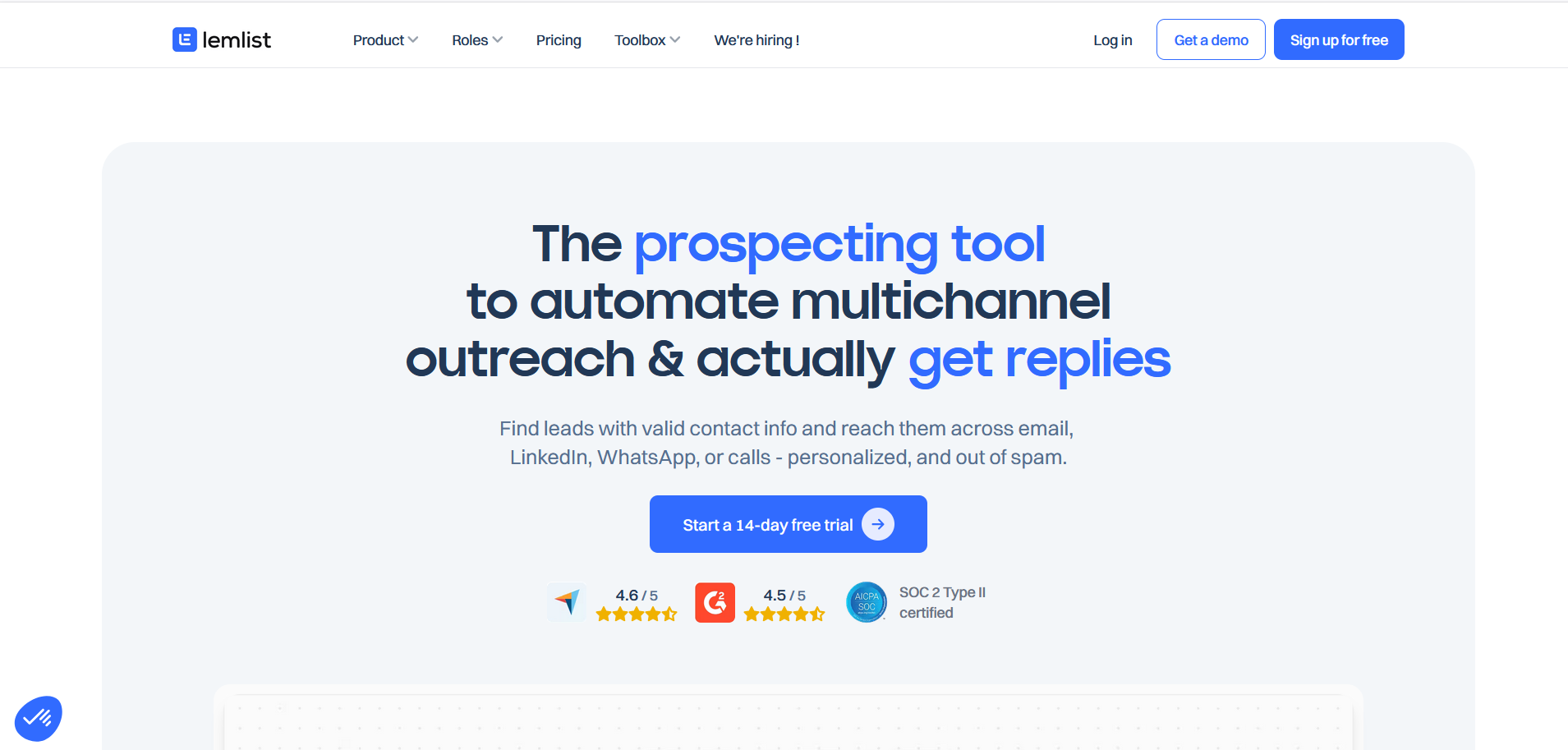
Lemlist is a personalized cold outreach platform that combines email sequencing with visual and dynamic personalization elements.
It's known for helping you stand out visually — custom images, dynamic landing pages, personalized videos — inside your outreach emails.
Mini Snapshot
| What it does | Personalized multichannel outreach |
| Ideal user | SMB sales teams & creative outbound teams |
| Standout capability | Dynamic image & video personalization |
| Pricing snapshot | ~$59/user/month |
| Honest limitation | Seat-based pricing scales quickly |
Why This Tool Matters
Attention is harder than ever.
Lemlist gives you a creative edge.
You can send emails with dynamically generated images referencing the prospect's company name or website. You can embed personalized thumbnails. You can combine LinkedIn steps and emails in one flow.
Used well, that increases replies.
Used poorly, it feels gimmicky.
Execution matters here.
Best For
- Founders doing hands-on outreach
- SMB sales teams
- Creative outbound campaigns
- Agencies wanting visual differentiation
AI writing assistance exists, but Lemlist isn't deeply AI-research-driven. Personalization still relies heavily on what you configure.
Key Features
- Custom image personalization
- Video personalization
- Multichannel sequences
- Email warm-up
- A/B testing
- CRM integrations
Pros
- Strong visual differentiation
- Easy-to-build multichannel sequences
- Clean interface
- Good onboarding support
Cons
- Pricing is per user
- Costs increase fast for larger teams
- AI research depth is limited compared to AI-native tools
Real-World Use Case
If you're targeting 150 high-value SaaS companies and want to include personalized images referencing their homepage in every email, Lemlist makes that easy.
For high-ticket outreach, that creative layer can move the needle.
Pricing Breakdown
Entry plans start around $59 per user/month.
Multichannel and advanced features push pricing higher.
A 5-person SDR team can easily spend $300–$500/month.
It's predictable, but seat-based.
Mini Verdict
If creativity and visual personalization are central to your strategy, Lemlist is powerful.
If you want deep AI-led contextual research, it's not the most advanced in that category.
4. Mailshake
What This Tool Does
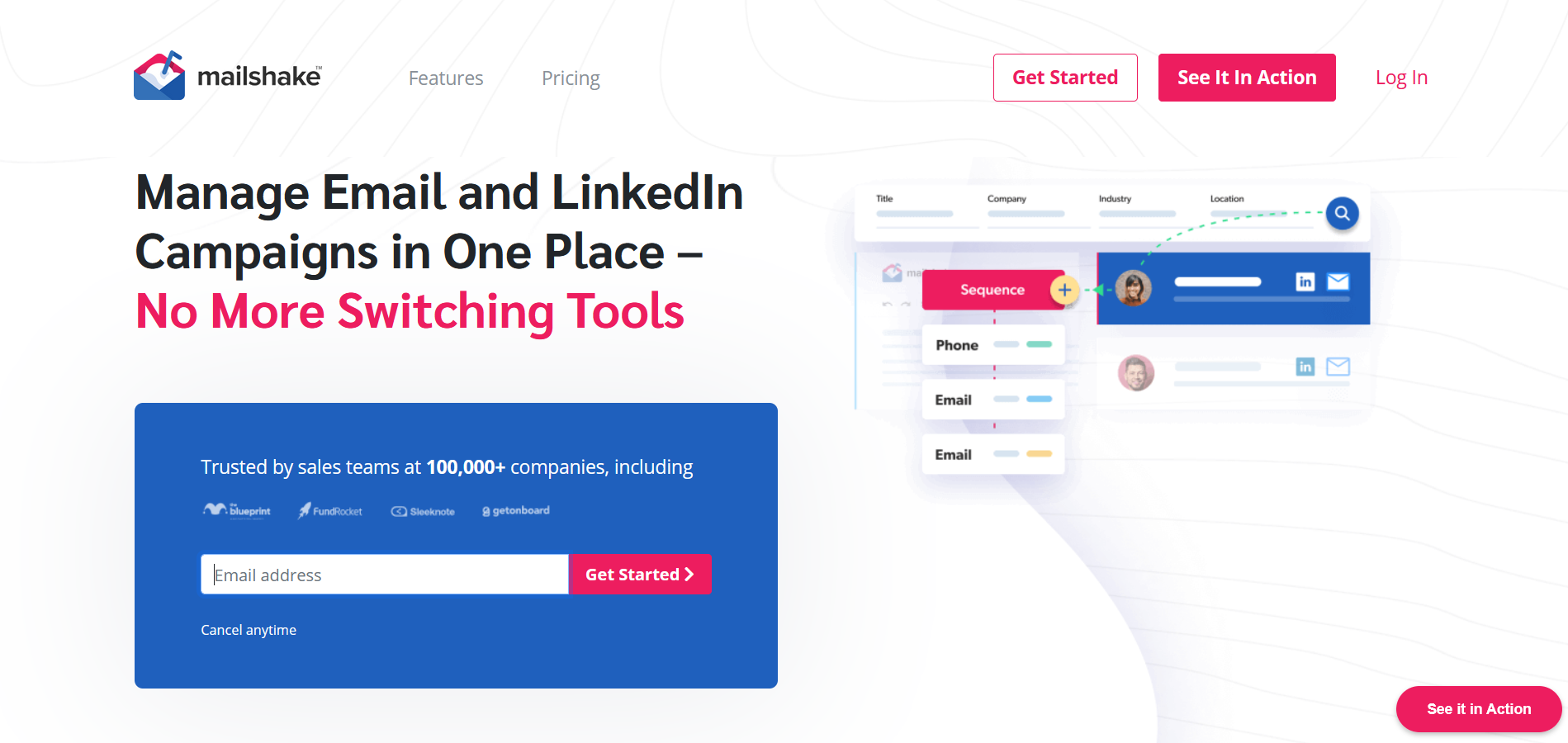
Mailshake is a sales engagement platform designed for simple email sequencing and outreach automation. It focuses on usability and quick deployment rather than heavy AI intelligence layers.
It's built for teams that want straightforward outbound without complexity.
Mini Snapshot
| What it does | Simple email sequencing |
| Ideal user | Small to mid-size sales teams |
| Standout capability | Ease of setup & usability |
| Pricing snapshot | ~$58 per user/month |
| Honest limitation | AI features are basic |
Why This Tool Matters
Outbound doesn't have to be complicated.
Mailshake works well when your team needs to launch campaigns quickly without extensive onboarding or training.
You create a sequence, schedule follow-ups, track replies. Done.
For many businesses, that simplicity wins.
Best For
- Small B2B teams
- First-time outbound teams
- Businesses prioritizing speed over sophistication
AI functionality exists but is not the central engine of the platform.
Key Features
- Automated email sequences
- A/B testing
- Reply tracking
- CRM integrations
- Basic personalization variables
Pros
- Easy onboarding
- Clean user interface
- Predictable pricing
- Reliable campaign automation
- Low learning curve
Cons
- Limited advanced AI personalization
- Seat-based pricing model
- Less adaptive optimization compared to AI-native tools
- Fewer automation layers than enterprise platforms
Real-World Use Case
A small SaaS startup launching outbound for the first time can go live in days instead of weeks.
No complicated workflows. No overwhelming feature sets.
Sometimes that speed matters more than sophistication.
Pricing Breakdown
Starts around $58 per user/month.
A 5-person team can expect around $290/month.
No dramatic tier complexity. Straightforward per-seat pricing.
Mini Verdict
Mailshake is dependable and simple.
But if you're looking for adaptive AI sequencing that improves automatically over time, you'll likely need something more advanced.
5. Reply.io
What This Tool Does
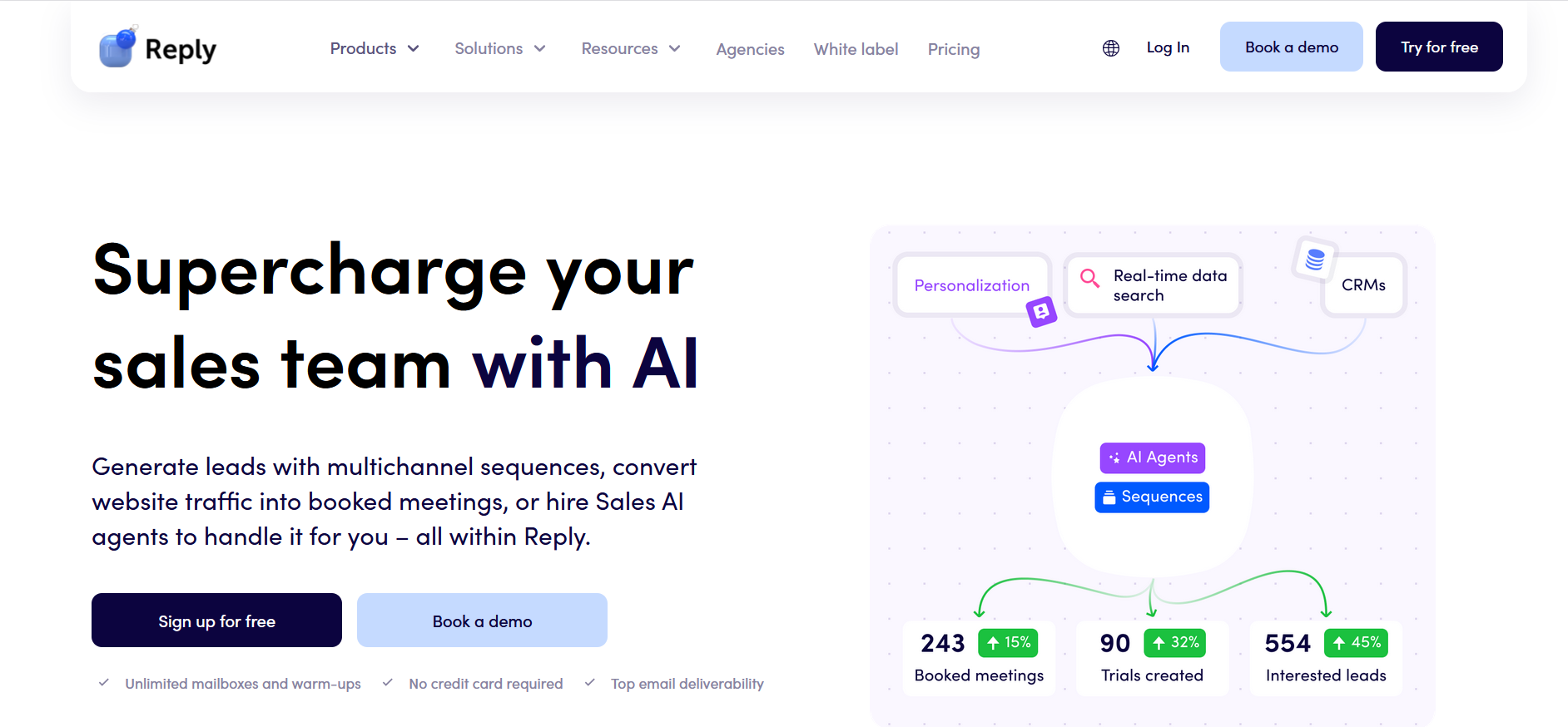
Reply.io is a multichannel sales engagement platform that combines email sequencing, LinkedIn automation, call tasks, SMS, and AI-assisted email writing into one structured outbound workflow.
It's not just an email tool. It's a full outbound orchestration system.
If your sales team runs complex, multi-step, multi-channel outreach — Reply.io is designed to manage that complexity in one place.
Mini Snapshot
| What it does | AI-assisted multichannel sales engagement |
| Ideal user | Growing SDR teams & mid-market outbound |
| Standout capability | Conditional workflows across channels |
| Pricing snapshot | ~$60/month starter; higher tiers $100–$200+ |
| Honest limitation | Interface can feel feature-heavy |
Why This Tool Matters
As outbound matures, simple email sequences aren't enough.
Here's what usually happens in growing teams:
SDR sends email → No reply → Manual LinkedIn follow-up → CRM task created → Call reminder scheduled
It becomes fragmented.
Reply.io centralizes all of that into structured, conditional workflows.
Instead of managing three tools and a spreadsheet, you manage one system.
That operational clarity can increase consistency — and consistency drives pipeline.
Best For
- Mid-market SDR teams
- Companies running 5+ outbound reps
- Teams combining email + LinkedIn + call touches
- Organizations that want workflow logic
The AI here helps with drafting and rewriting emails, but it does not deeply research prospects automatically the way AI-native personalization engines do. Optimization is largely workflow-driven.
Key Features
- AI email assistant for drafting
- Conditional sequences (if opened, if clicked, if replied)
- Multichannel outreach (email, LinkedIn, calls)
- Built-in task automation
- CRM integrations
- Analytics dashboard with performance breakdowns
Pros
- Strong multichannel orchestration
- Flexible automation logic
- AI drafting support
- Suitable for structured outbound teams
- Good reporting and analytics
Cons
- Learning curve for new users
- Interface can feel dense
- Advanced automation features increase pricing
- Not purely AI-first personalization
Real-World Use Case
Imagine a 10-person SDR team targeting mid-market SaaS companies.
They want: 5-step email sequence, LinkedIn connection request, Follow-up message, Call task if email opened but no reply.
Reply.io makes that operationally manageable.
Without structure, this kind of outreach quickly becomes chaotic.
Pricing Breakdown
Starter plans begin around $60/month per user.
But here's what realistic spending looks like:
Small team (3 SDRs): ~$180/month Growing team (7 SDRs): $420+/month Mid-market setup with advanced automation: $700–$1,500/month
Pricing scales per user and by feature tier.
You're paying for workflow depth and multichannel capabilities.
Mini Verdict
Reply.io is strong for structured, multichannel outbound teams.
If you want orchestration depth and process control, it's solid.
If you want deeply autonomous AI personalization, it's not fully there yet.
6. Apollo.io
What This Tool Does
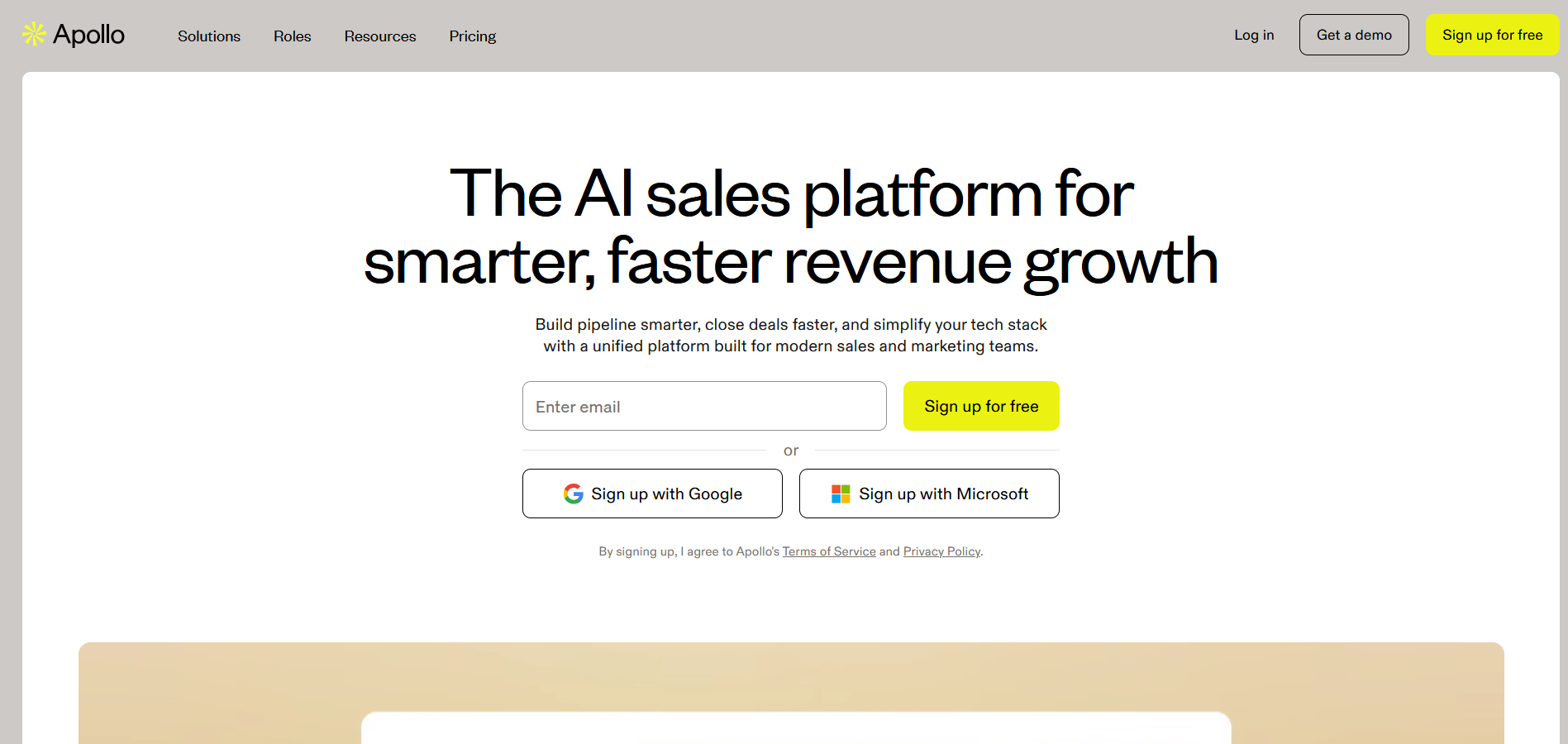
Apollo.io combines a B2B contact database with outbound email sequencing and engagement tools.
It's both a prospecting engine and a sales engagement platform.
That combination is its biggest differentiator.
Mini Snapshot
| What it does | Prospect database + outbound sequencing |
| Ideal user | Data-driven SDR teams |
| Standout capability | Built-in contact & company database |
| Pricing snapshot | Free tier; ~$49/user starter; $99+ mid-tier |
| Honest limitation | Can feel overwhelming for small teams |
Why This Tool Matters
Most outbound stacks look like this: Data provider, Enrichment tool, Sequencing platform, CRM.
Apollo compresses part of that stack.
You can: Search contacts, Export lists, Build sequences, Launch outreach.
All without switching tools.
That reduces friction.
But it also increases system complexity.
Best For
- Teams that build large prospect lists regularly
- SDR teams focused heavily on data sourcing
- Companies wanting fewer tool integrations
- Teams comfortable managing feature-heavy platforms
The AI writing features are supportive — not deeply contextual research engines. The real value is the data layer.
Key Features
- Large B2B contact database
- Advanced filters (industry, revenue, tech stack, etc.)
- Email sequencing
- Analytics
- CRM integrations
- Limited AI email assistance
Pros
- Massive built-in contact database
- Data + outreach in one platform
- Free starter tier
- Flexible filtering capabilities
- Good value for teams that export large volumes
Cons
- Can feel overwhelming for new users
- Data accuracy varies by region
- AI personalization not deeply autonomous
- Per-user pricing scales with team size
Real-World Use Case
Let's say your SDR team builds 1,000 new contacts weekly.
With Apollo, you can: Filter by revenue, Filter by job title, Export, Launch sequences immediately.
That speed reduces operational lag.
But you'll still need thoughtful messaging strategy.
Pricing Breakdown
Free Plan (limited usage) Basic Paid – ~$49 per user/month Professional – ~$99–$119 per user/month Higher enterprise tiers increase export limits and engagement capacity
A 5-person SDR team often spends $250–$600/month.
Costs scale with both seats and data usage.
Mini Verdict
Apollo.io is powerful if prospecting and sequencing need to live together.
It's less about advanced AI personalization and more about data-driven outbound efficiency.
7. Woodpecker
What This Tool Does
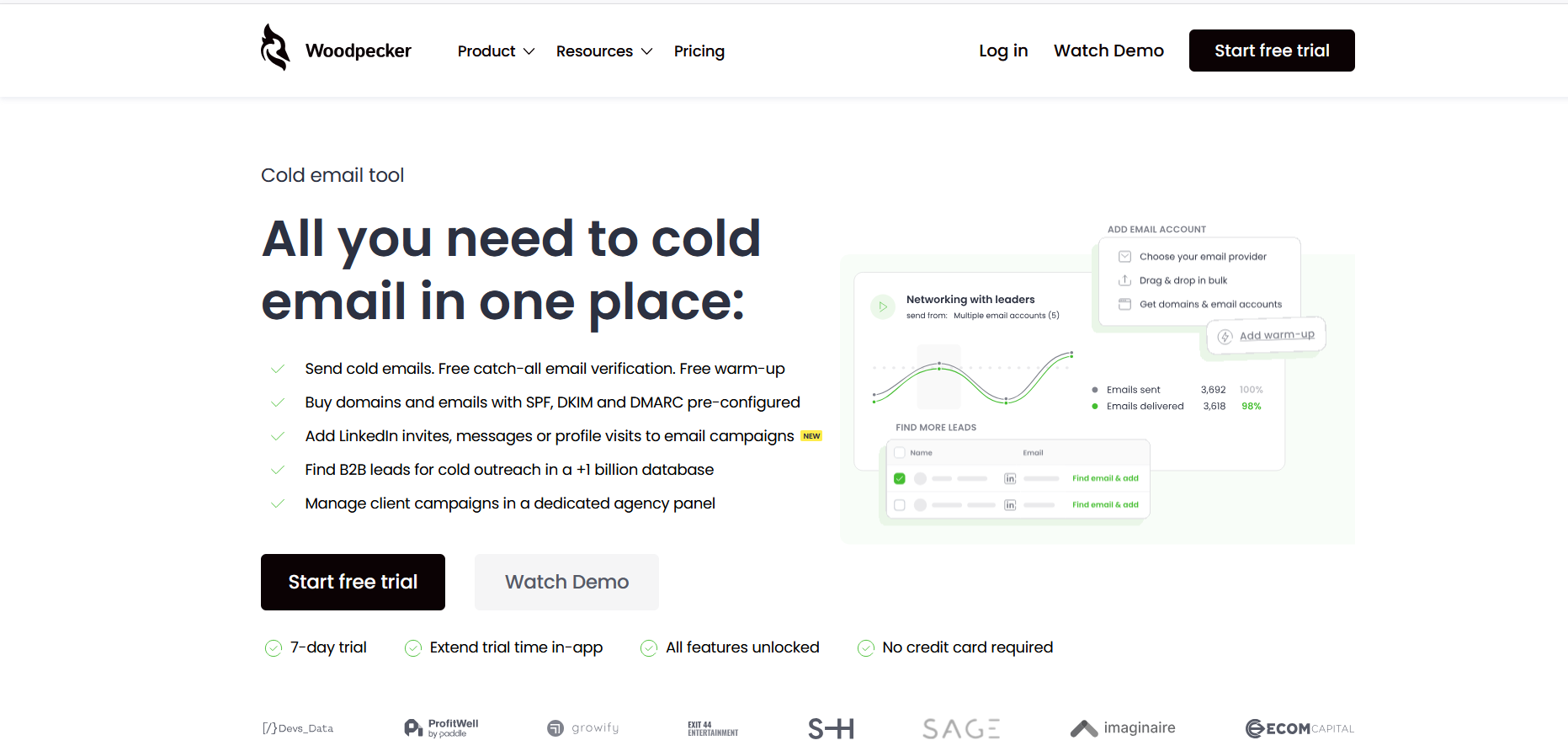
Woodpecker is a cold email automation platform designed with deliverability safety at its core.
Its philosophy is conservative sending, stable reputation management, and steady campaign execution.
It's less flashy. More controlled.
Mini Snapshot
| What it does | Deliverability-focused cold email automation |
| Ideal user | SMB outbound teams & agencies |
| Standout capability | Safe sending & reply detection |
| Pricing snapshot | ~$49/month starter; scales by features |
| Honest limitation | Limited advanced AI personalization |
Why This Tool Matters
Burning a domain hurts.
Recovering from spam damage takes time.
Woodpecker's design prioritizes safe sending patterns and reputation management over aggressive scaling.
If your industry is sensitive — finance, legal, healthcare — conservative outbound matters.
Best For
- SMB outbound teams
- Agencies managing client domains
- Teams prioritizing long-term domain health
- Companies in deliverability-sensitive industries
AI drafting and contextual research are not its core strengths. The strength is sending discipline.
Key Features
- Automated follow-ups
- Reply detection
- Bounce monitoring
- Conditional sending
- Integrations with CRMs
- Basic personalization
Pros
- Reliable deliverability safeguards
- Simple workflow design
- Good reputation management
- Suitable for long-term domain usage
- Agency-friendly campaign management
Cons
- Not AI-native
- Limited contextual personalization depth
- Less infrastructure flexibility compared to scaling tools
- Fewer advanced automation layers
Real-World Use Case
An agency managing outbound for 8 B2B clients wants predictable sending without risking domain damage.
Woodpecker offers stable sending control and clear reply tracking.
It may not be cutting-edge AI — but it protects your reputation.
Pricing Breakdown
Starter plans begin around $49/month.
As you add: More prospects, Additional inboxes, Advanced features.
Costs rise into $100–$300/month territory.
Pricing is predictable and moderate.
Mini Verdict
Woodpecker is a reliability-first platform.
If AI research automation is your priority, you may need a more intelligence-focused tool.
If safe sending matters most, it's dependable.
8. Smartlead.ai
What This Tool Does
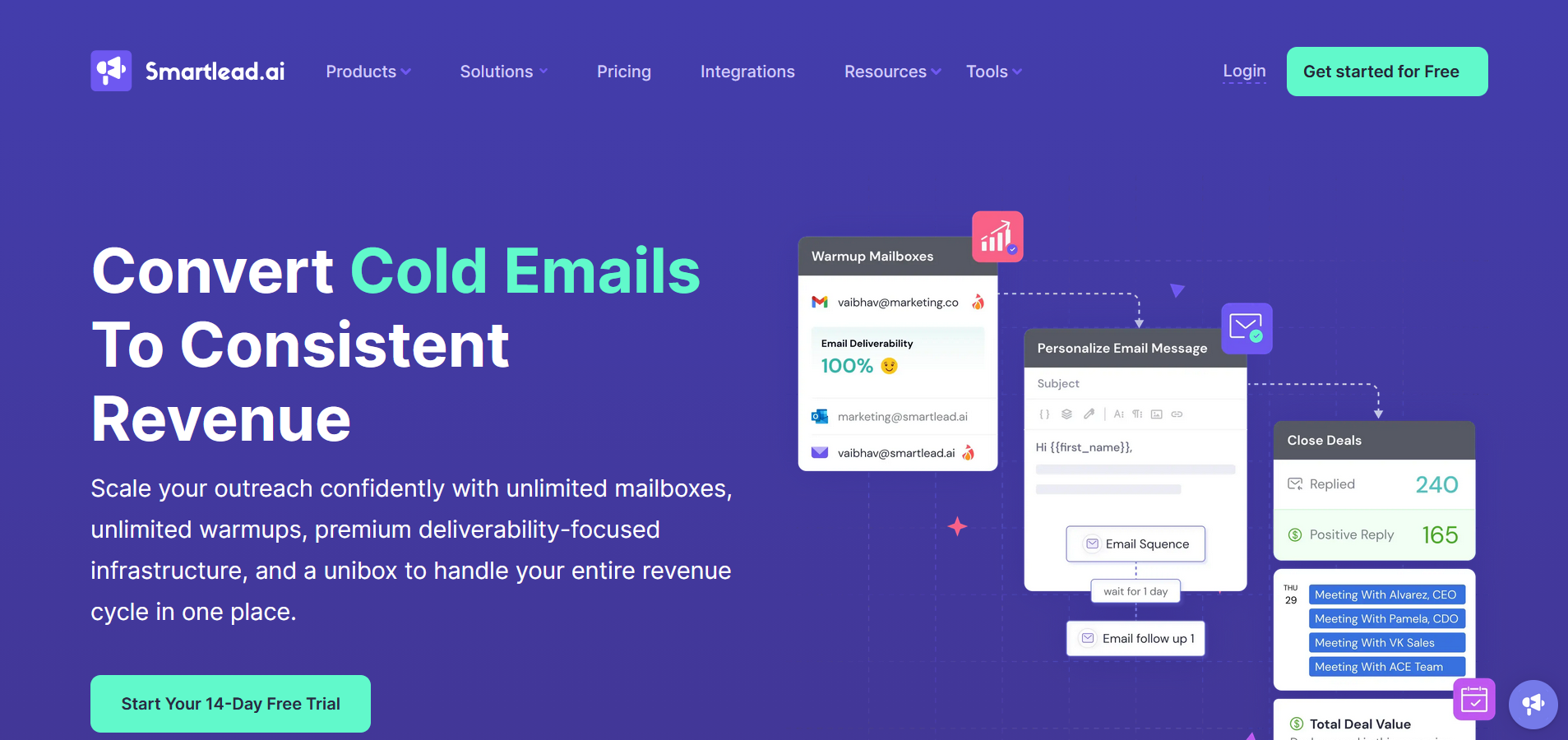
Smartlead.ai is a cold email infrastructure platform built for serious scale. It allows unlimited mailbox connections and focuses heavily on volume distribution and campaign flexibility.
It's infrastructure-first.
Mini Snapshot
| What it does | Scalable cold email infrastructure |
| Ideal user | Advanced cold email operators |
| Standout capability | Unlimited mailbox scaling |
| Pricing snapshot | ~$39/month starter |
| Honest limitation | Minimal built-in AI research |
Why This Tool Matters
When your outbound operation crosses 20+ inboxes, most tools start limiting you.
Smartlead removes those limitations.
You can connect unlimited mailboxes (depending on plan) and manage campaigns centrally.
For serious outbound operators, that flexibility matters.
Best For
- High-volume cold email operators
- Agencies managing large-scale campaigns
- Teams with technical outbound expertise
- Companies optimizing for scale efficiency
AI drafting exists but does not deeply research individual prospects. The focus is scalability.
Key Features
- Unlimited mailbox connections (plan dependent)
- Campaign rotation
- Deliverability tools
- Centralized inbox management
- API access for integrations
Pros
- Massive scaling capability
- Infrastructure flexibility
- Suitable for advanced operators
- Agency-friendly management
- Good value for scale-heavy users
Cons
- Minimal contextual AI personalization
- Not ideal for small teams
- Requires outbound knowledge to maximize
- Focused more on sending than intelligence
Real-World Use Case
An outbound agency managing 30 domains across multiple client accounts needs centralized control.
Smartlead allows infrastructure management without restrictive inbox caps.
For volume operators, that's powerful.
Pricing Breakdown
Starts around $39/month.
As you increase infrastructure usage, costs typically land between: $100–$400/month for serious operators Higher tiers available for advanced features
Pricing scales based on infrastructure depth, not per-seat in the traditional sense.
Mini Verdict
Smartlead.ai is excellent for scaling infrastructure.
But if your goal is autonomous AI personalization and adaptive optimization, it's not built primarily for that.
Final Recommendation: Which AI Email Sequence Software Should You Choose in 2026?
Here's the honest answer:
There isn't one “best” tool for everyone.
There is only the best tool for your strategy.
And your strategy matters more than features.
Let's break it down clearly.
If You Care About High-Volume Infrastructure
If your outbound motion depends on:
- Multiple domains
- 20+ inboxes
- Large-scale campaigns
- Agency-style operations
Then tools like Instantly and Smartlead.ai make operational sense.
They're built for infrastructure.
You'll get inbox flexibility, domain scaling, and deliverability controls that help you push volume safely.
But here's the tradeoff:
You're responsible for personalization quality.
The AI won't deeply research prospects for you.
Scale wins. Intelligence is manual.
If You Want Creative Differentiation
If your strategy is:
- Smaller lists
- Highly targeted accounts
- Visually differentiated outreach
Then Lemlist stands out.
Its image and video personalization can make your emails look different from everyone else in the inbox.
But this works best when:
- Volume is controlled
- Personalization is carefully designed
It's creative-first, not AI-intelligence-first.
If You Want Simplicity and Structure
If your team values:
- Quick setup
- Clean workflows
- Minimal onboarding complexity
Then Mailshake is reliable.
If you want:
- Multichannel orchestration
- Conditional automation
- Structured outbound processes
Then Reply.io offers depth.
And if you want:
Built-in data + sequencing in one tool
Apollo.io simplifies your tech stack.
These tools are workflow-driven.
They help you organize outbound.
But they don't fundamentally change how intelligent your personalization is.
If You Care About Deliverability Stability
If domain reputation is your biggest concern — especially in sensitive industries — Woodpecker offers a steady, conservative approach.
It's not flashy.
But it protects long-term sending health.
Now Let's Talk About Intelligence
Here's the shift happening in 2026:
Outbound isn't about sending more.
It's about sending smarter.
Buyers expect context.
They expect relevance.
They expect research.
And this is where tools start to separate.
If your team's bottleneck is:
- Writing personalized emails
- Researching every prospect
- Optimizing sequences manually
- Managing A/B tests constantly
Then AI-native personalization matters.
That's where SendroAI leads this category.
Not because it sends the most emails.
Not because it has the most integrations.
But because it focuses on:
- Deep AI-driven prospect research
- Automated sequencing
- Continuous A–Z email optimization
- Self-learning campaign intelligence
Instead of treating AI like a writing assistant, it treats AI like a performance engine.
That's a meaningful difference.
So What Should You Actually Do?
Ask yourself one question:
What is limiting your outbound growth right now?
- If it's inbox capacity → choose infrastructure tools.
- If it's workflow complexity → choose orchestration tools.
- If it's list building → choose data-driven platforms.
- If it's personalization quality and reply rates → choose AI-native intelligence.
For most B2B sales teams in 2026, the bottleneck isn't sending volume.
It's relevance.
And that's why intelligent personalization platforms — led by SendroAI — are becoming the smarter long-term investment.
The Bottom Line
All eight tools in this list can run email sequences.
But they're built around different philosophies:
- Scale-first
- Workflow-first
- Data-first
- Safety-first
- Intelligence-first
The winners in 2026 won't just automate outreach.
They'll automate relevance.
Choose the platform that aligns with how you plan to win.
Because in outbound, strategy always beats software.