Let me start with a hard truth.
Most emails don't fail because of bad writing. They fail because they're written for the sender, not the reader.
If you've ever stared at your email analytics and thought:
- "Why are people opening but not clicking?"
- "Why does this sound good but still flop?"
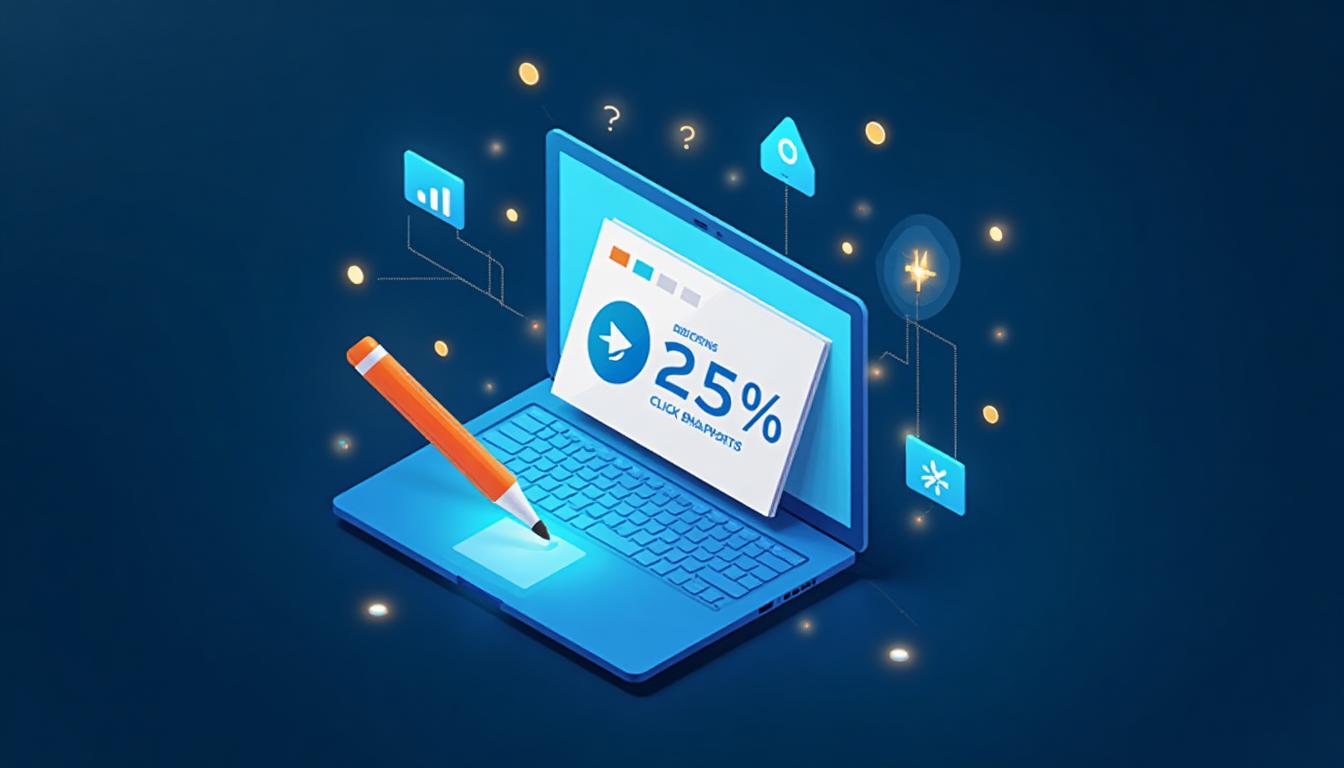
- "How are some brands casually hitting 25%+ click rates while I'm stuck at 2–5%?"
You're asking the right questions.
Because a 25% click rate isn't magic. It's psychology, structure, and intent—done deliberately.
In this guide, I'll break down exactly how high-click emails are written, why they work, and how you can replicate the same results—without gimmicks, spammy tricks, or fake urgency.
Let's reset how you think about email clicks.
First: Let's Get Real About "25% Click Rates"
Before we go tactical, we need context.
According to aggregated benchmarks from platforms like Mailchimp and HubSpot, average email click-through rates usually sit between:
- 2–3% for newsletters
- 3–6% for segmented campaigns
- 10–15% for very strong, targeted sends
So yes—25% is high.
But here's what most blogs won't tell you:
25% click rates happen when the email has one clear job, sent to the right audience, at the right moment.
Not when you cram five links, three CTAs, and your life story into one email.
The Biggest Click-Rate Myth (That's Killing Your Emails)
Most people think clicks come from:
- Better subject lines
- More buttons
- Louder CTAs
Those help—but they're not the lever.
Clicks come from curiosity + relevance + momentum.
If the reader feels like clicking is the natural next step, they click.
If clicking feels optional, they don't.
Everything else in this guide supports that one idea.
The One-Goal Rule (Why High-Click Emails Feel "Simple")
Here's the fastest way to double—or triple—your click rate:
Decide the ONE action you want the reader to take.
Not two. Not "read this and also check that."
One.
High-click emails are not informational dumps. They're bridges.
- From curiosity → clarity
- From problem → possibility
- From "this sounds interesting" → "I need to see this"
If your email doesn't have a single destination, the reader won't go anywhere.
Anatomy of a 25% Click Email
1. The Subject Line Creates an Open With Intent
A good subject line doesn't just get opens. It sets up the click.
Bad subject lines try to be clever. Great ones create a gap.
Examples:
- "I almost didn't send this email"
- "This one change doubled our clicks"
- "Quick question about your emails"
They don't explain. They invite.
2. The First Line Earns the Read
Most emails lose clicks in the first sentence.
People open emails quickly, with low patience.
Your opening line should do one of three things:
- Call out a specific problem
- Say something unexpected
- Mirror a thought they've had
Example:
"If your emails get opened but ignored, this is probably why."
Short. Direct. Personal.
3. The Body Builds Tension (Not Information)
This is where most people mess up.
They start teaching.
But high-click emails don't teach. They tease clarity.
Instead of:
"Here are 7 ways to improve your email CTAs…"
Try:
"Most CTAs fail for one simple reason—and once you see it, you can't unsee it."
You're not hiding value. You're positioning the click as the value.
4. The CTA Feels Like Relief, Not a Pitch
If your CTA feels like an ad, you've already lost.
The best CTAs feel like:
- "Yes, that's exactly what I need"
- "That answers the question in my head"
- "This feels like the next step"
Examples that work:
- "See the example"
- "Show me how this works"
- "Read the breakdown"
Examples that don't:
- "BUY NOW"
- "CLICK HERE"
- "LIMITED TIME OFFER!!!"
Clicks happen when the CTA completes a thought—not interrupts one.
Why Short Emails Often Outperform Long Ones
This surprises people.
Long emails can work—but short emails click more often.
Why?
Because clicks happen when:
- The reader hasn't been fully satisfied yet
- Curiosity is still unresolved
- Momentum is intact
If you explain everything in the email, there's no reason to click.
Think of your email like a movie trailer, not the movie.
The "Open Loop" Technique Top Marketers Use
High-click emails often use open loops.
An open loop is when you:
- Introduce a problem
- Hint at a solution
- Delay full resolution
Example:
"We noticed something strange in our email data last month—and it changed how we write every campaign now."
Your brain wants closure. The click provides it.
Why Personalization Increases Clicks (When Done Right)
Adding {FirstName} isn't personalization.
Real personalization is contextual relevance.
That means:
- Referencing what they signed up for
- Matching their stage of awareness
- Speaking to their current pain
This is where tools like SendroAI help—by enabling personalized mass emails at scale, without messages sounding robotic or copy-pasted.
Timing Matters More Than You Think
Even a perfect email can flop at the wrong time.
High-click emails are sent when:
- The problem is fresh
- The solution feels timely
- The reader isn't overloaded
It's not about sending more emails. It's about sending them when the click makes sense.
Mobile Optimization Is Non-Negotiable
Over 60% of emails are opened on mobile, according to consistent industry reporting.
If your email:
- Has long paragraphs
- Buries the CTA
- Requires zooming
Your click rate will suffer.
High-click emails use:
- Short lines
- Plenty of white space
- Clear, tappable CTAs
The Hidden Reason Most Emails Don't Get Clicks
Most emails don't get clicks because:
They don't earn attention over time.
High click rates are built on:
- Trust
- Consistency
- Relevance
When your emails regularly help, clicks become natural.
A Simple High-Click Email Framework You Can Use Today
- Subject: Create curiosity
- Opening line: Call out a pain
- Middle: Build tension + hint solution
- CTA: Make the click feel obvious
No hacks. Just intentional writing.
Final Thoughts: 25% Click Rates Are Built, Not Hacked
People don't click emails because they're told to.
They click because it feels like the next logical step.
When you respect attention, clicks follow.
Key Takeaways
- One email, one goal
- Curiosity beats explanation
- Short emails often outperform long ones
- CTAs should feel helpful
- Trust compounds clicks
What do you think—when was the last time you clicked an email, and why did it work on you?