
Prospect Intelligence: Autonomous 1:1 Research vs. Static Catalog & Template Workflows
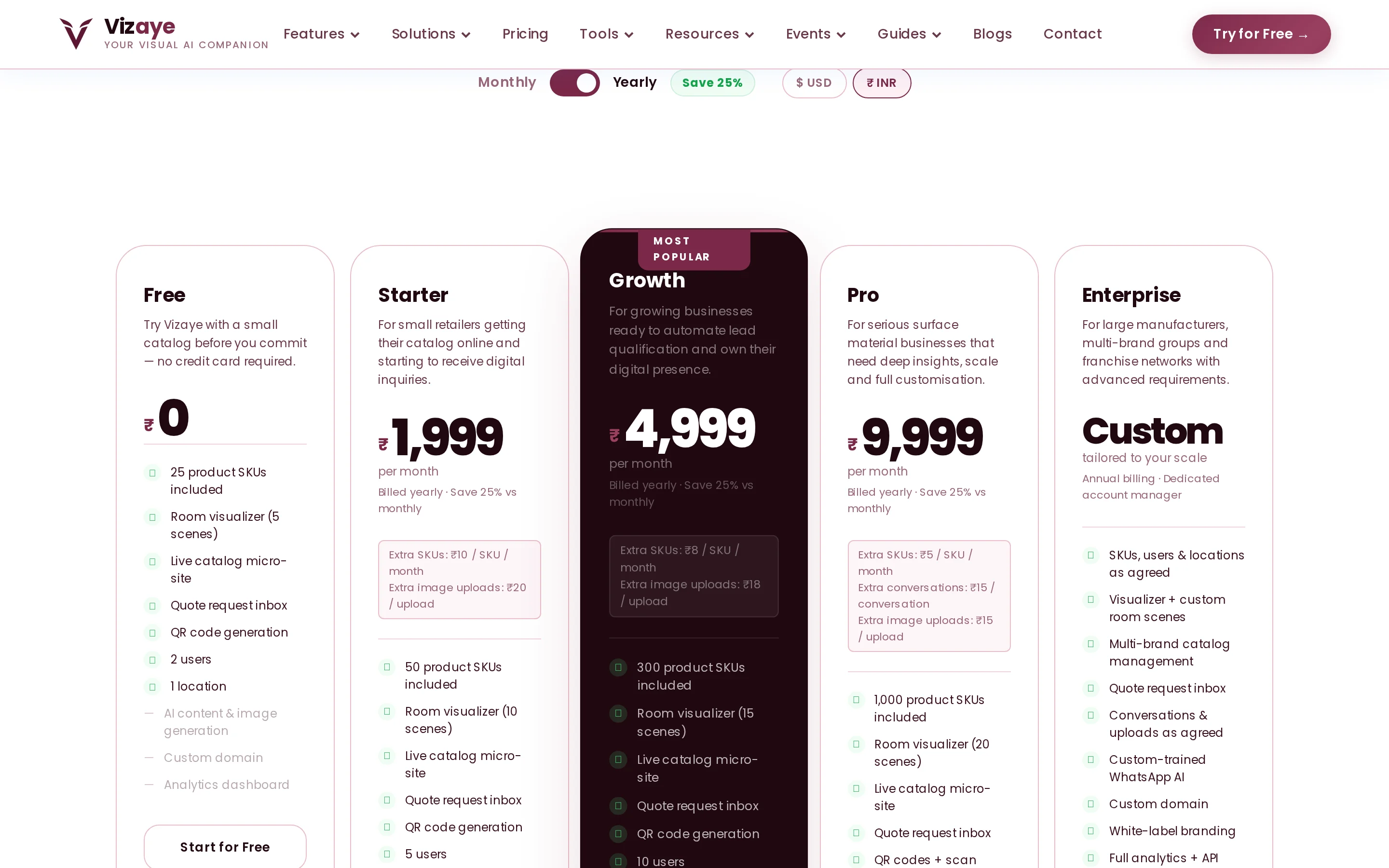
The fundamental difference lies in how each tool generates value for the sales team. Vizaye operates as a digital storefront and qualification layer, relying on pre-defined product SKUs and static data. Its 'AI' capabilities are primarily used for generating catalog descriptions or powering a WhatsApp chatbot that matches users to existing inventory. This approach works well for inbound retail traffic where the customer already knows they need a specific type of tile or stone. However, it offers zero capability for proactive, personalized outreach to unknown prospects.
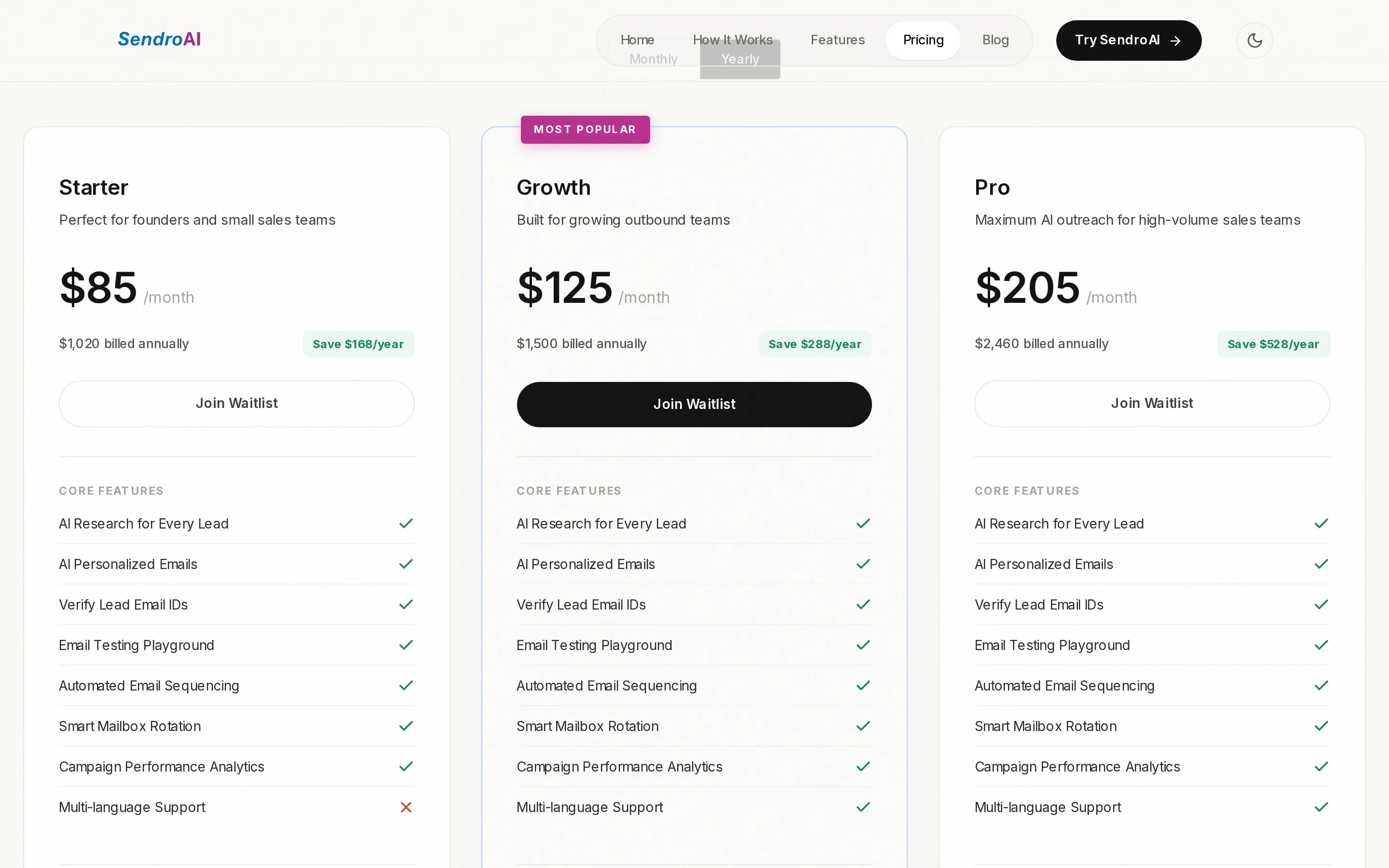
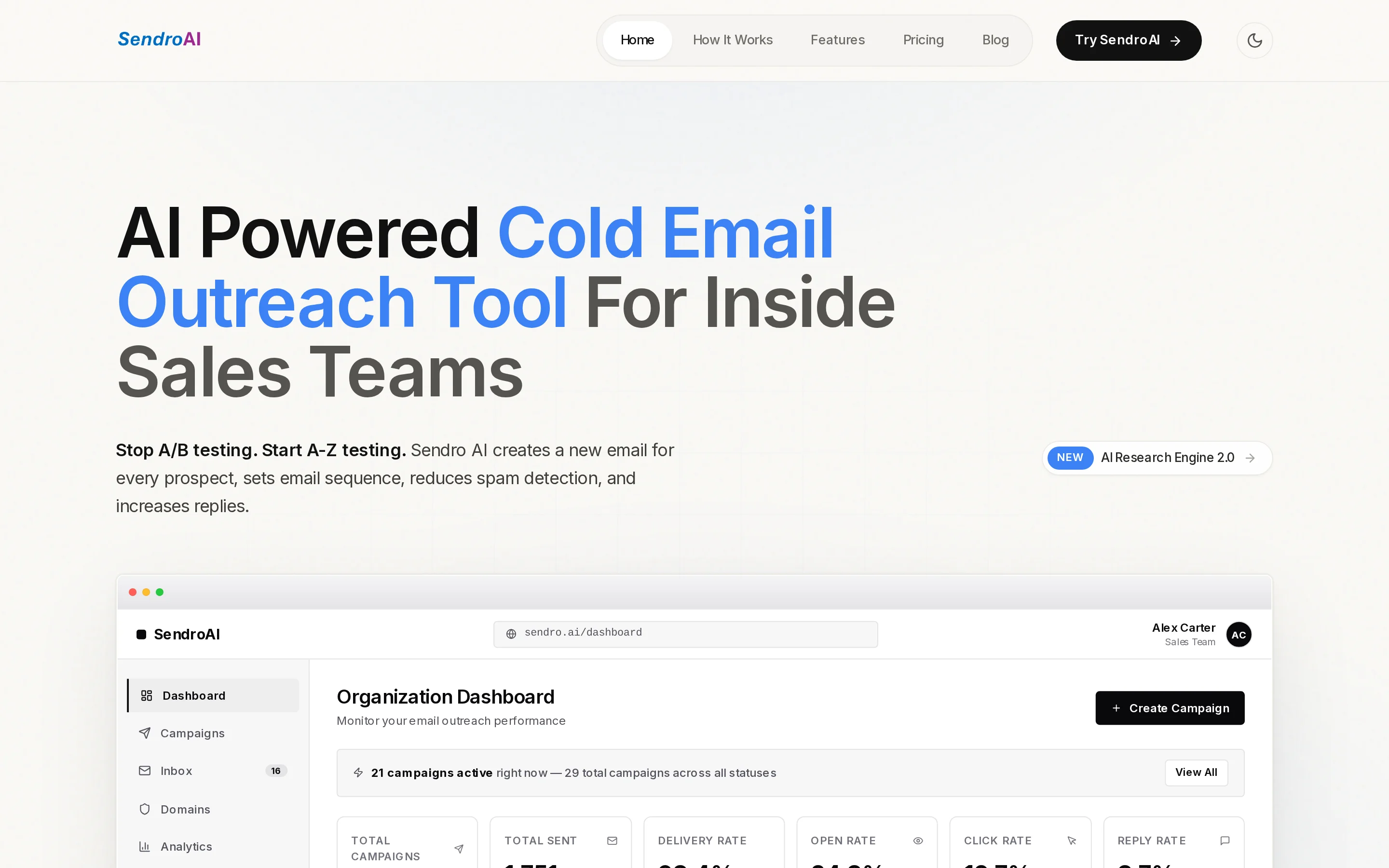
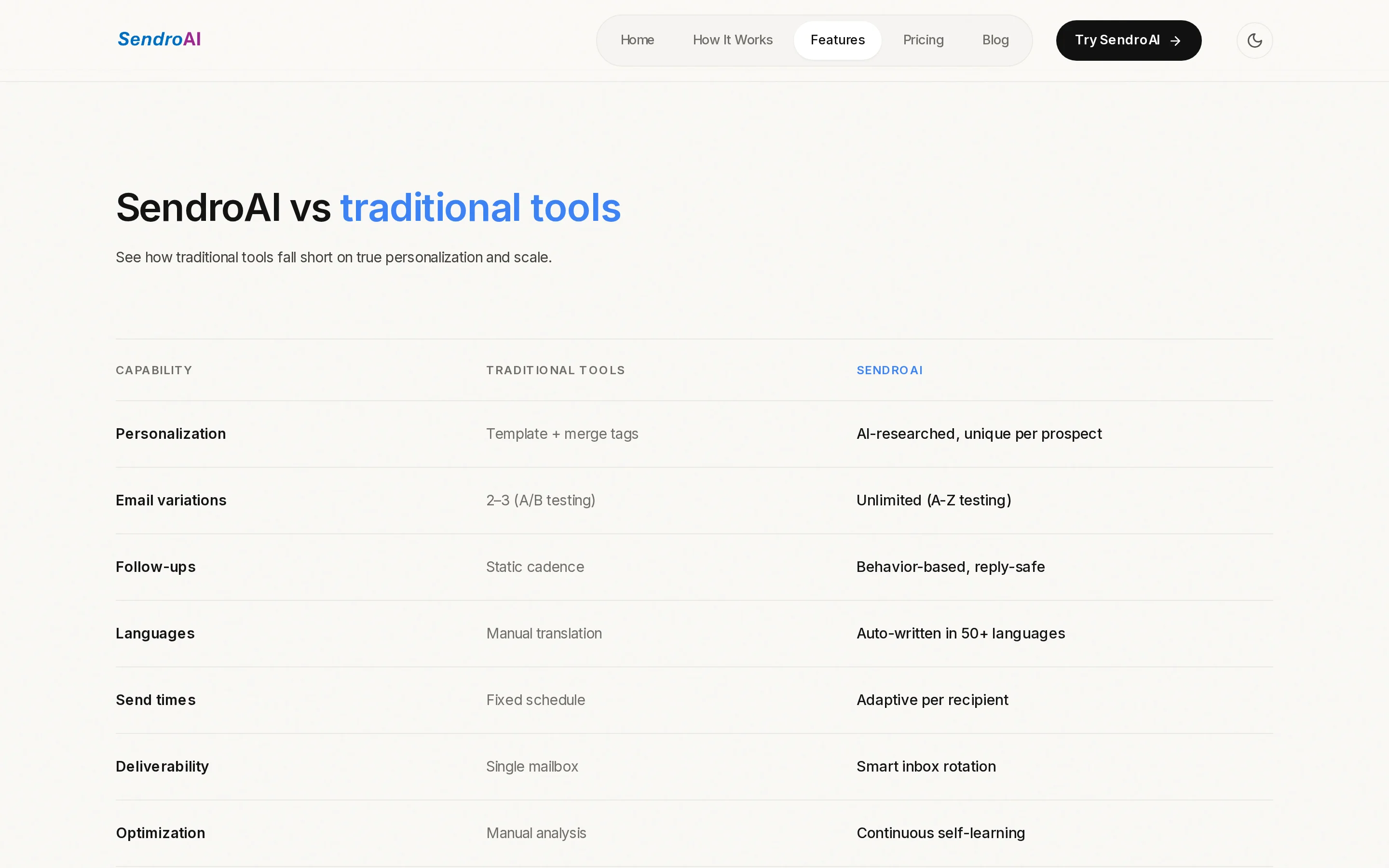
In contrast, SendroAI functions as an autonomous outbound engine. Before sending a single word, its AI conducts real-time research on every individual prospect and their company. It does not use merge tags or templates; instead, it crafts a unique, hand-written-feeling cold email from scratch for each recipient. This dynamic generation ensures that messaging is hyper-relevant to the prospect's specific context, significantly increasing reply rates compared to generic blasts. For B2B teams, this means replacing hours of manual LinkedIn research with automated, high-quality intelligence gathering.
While Vizaye excels at converting interested walk-ins through visualization, SendroAI wins for modern outbound because it solves the 'cold start' problem. By treating every email as a unique experiment rather than a template fill, SendroAI avoids the pattern detection mechanisms of spam filters that often flag mass-mailed catalog links or generic sales pitches.