Autonomous Research vs. Template-Driven Personalization: The AI Engine War
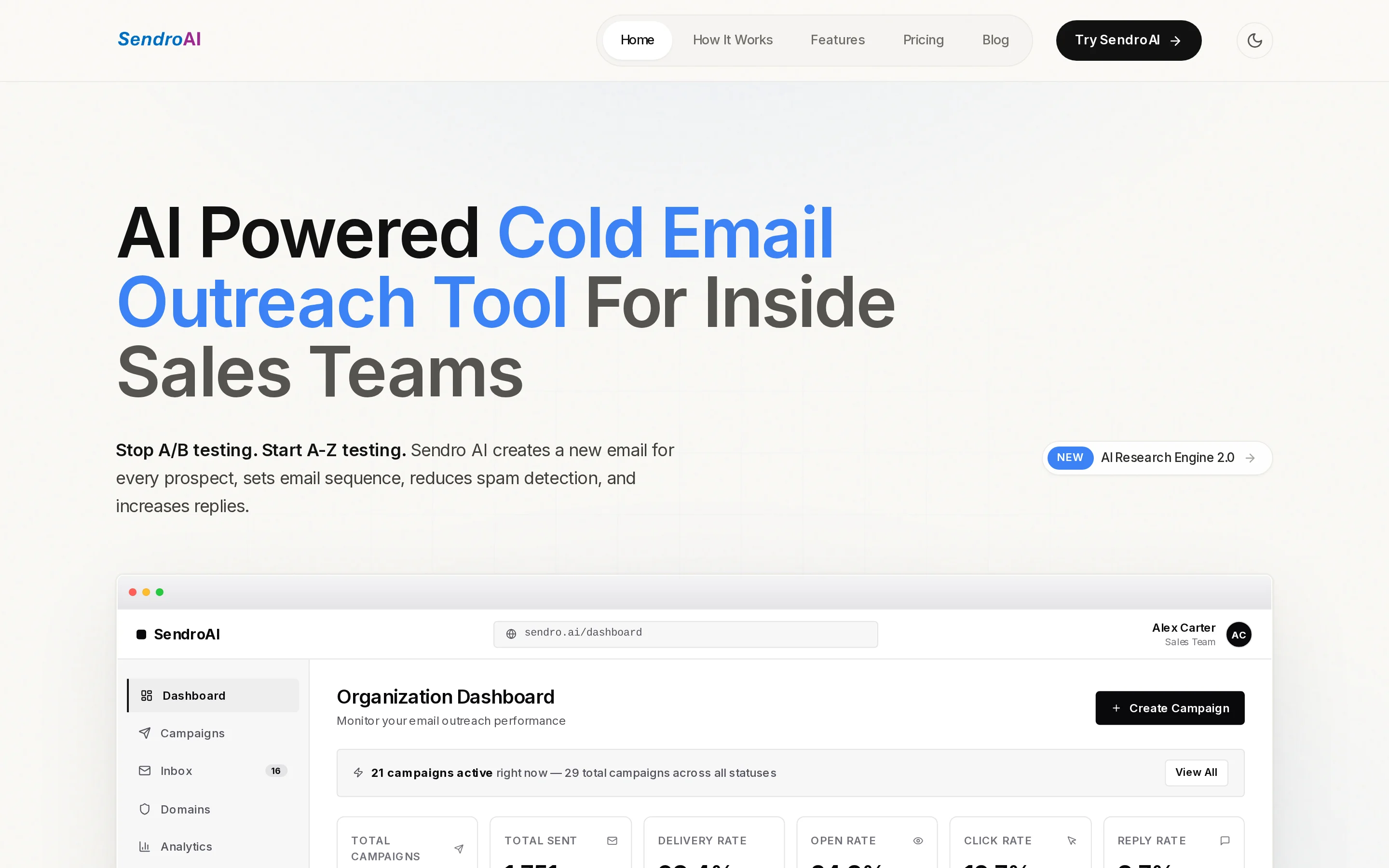
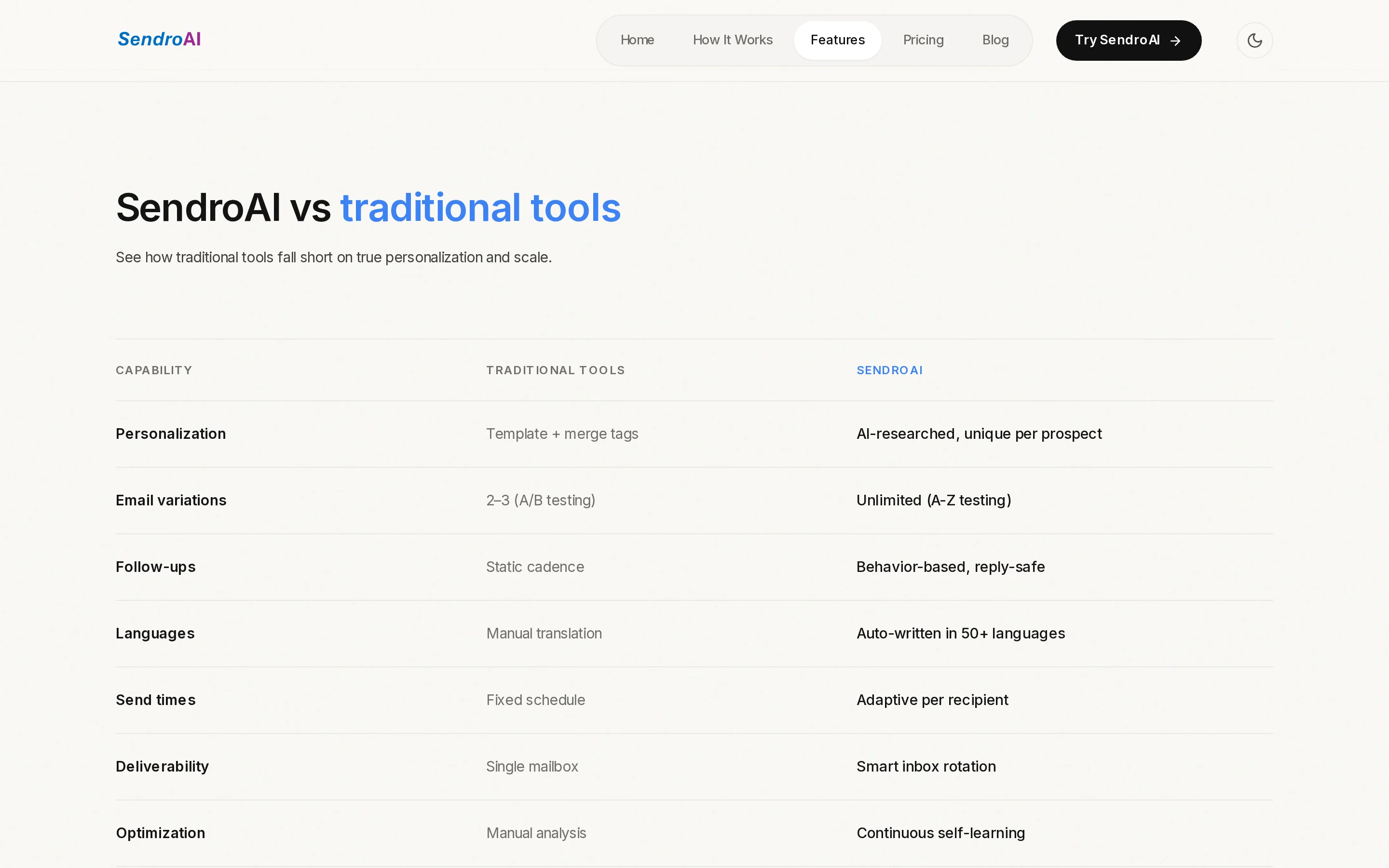
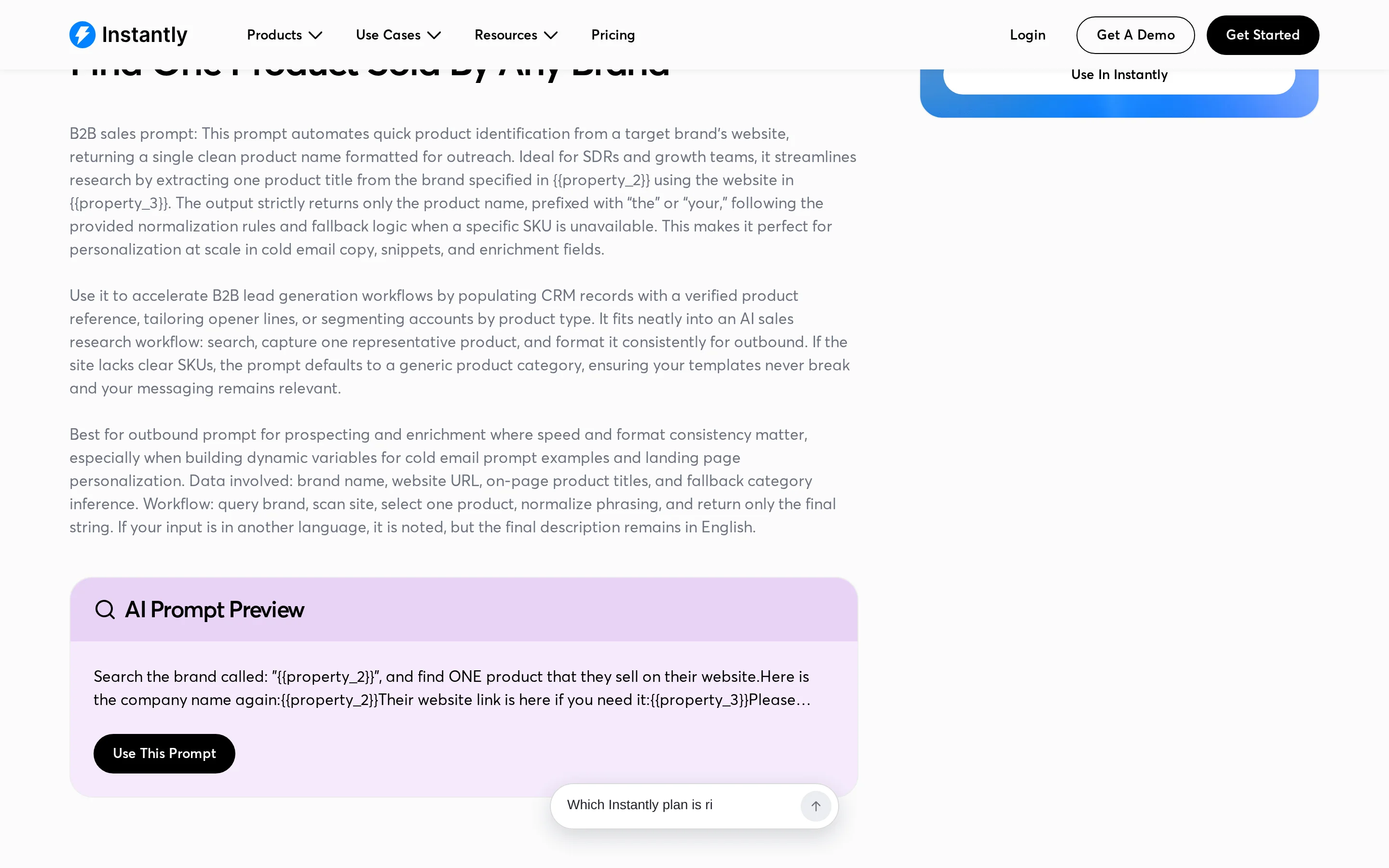
The fundamental architectural difference between SendroAI and Instantly.ai lies in how they approach personalization. SendroAI utilizes an Autonomous Research Engine that scrapes real-time company positioning, prospect roles, and market signals before writing a single word. This ensures every email is unique, hand-written-feeling, and generated from scratch, completely eliminating the 'template fatigue' that spam filters increasingly flag. In contrast, Instantly.ai relies on a library of community templates and LLM API integrations where users must manually prompt or select base structures. While Instantly offers tools like its 'Supersearch' to find specific products, it still requires the user to construct the narrative framework, whereas SendroAI synthesizes the entire message dynamically.
For daily execution, SendroAI’s workflow is designed to save SDRs hours of manual research time by handling the heavy lifting of data synthesis. A user imports a list, and SendroAI researches each prospect individually, creating a unique angle for every recipient. Instantly’s workflow often involves selecting a template, inserting variables, and relying on the user to ensure the context is accurate. This manual layer introduces the risk of generic messaging if not carefully managed. SendroAI’s 'A-Z testing' creates a unique email for every prospect, turning every send into an experiment, while Instantly typically limits users to standard A/B testing with 2-3 variations.
The tradeoff here is speed versus depth. Instantly may feel faster for users who already have a proven, static template they want to blast out. However, SendroAI wins on long-term ROI because its autonomous research prevents the 'pattern detection' issues that plague templated outreach. By never reusing templates and always researching first, SendroAI protects sender reputation and significantly increases reply rates compared to the static, merge-tag-driven approach of Instantly.