Autonomous Intelligence vs. Static Data: The Research Paradigm Shift
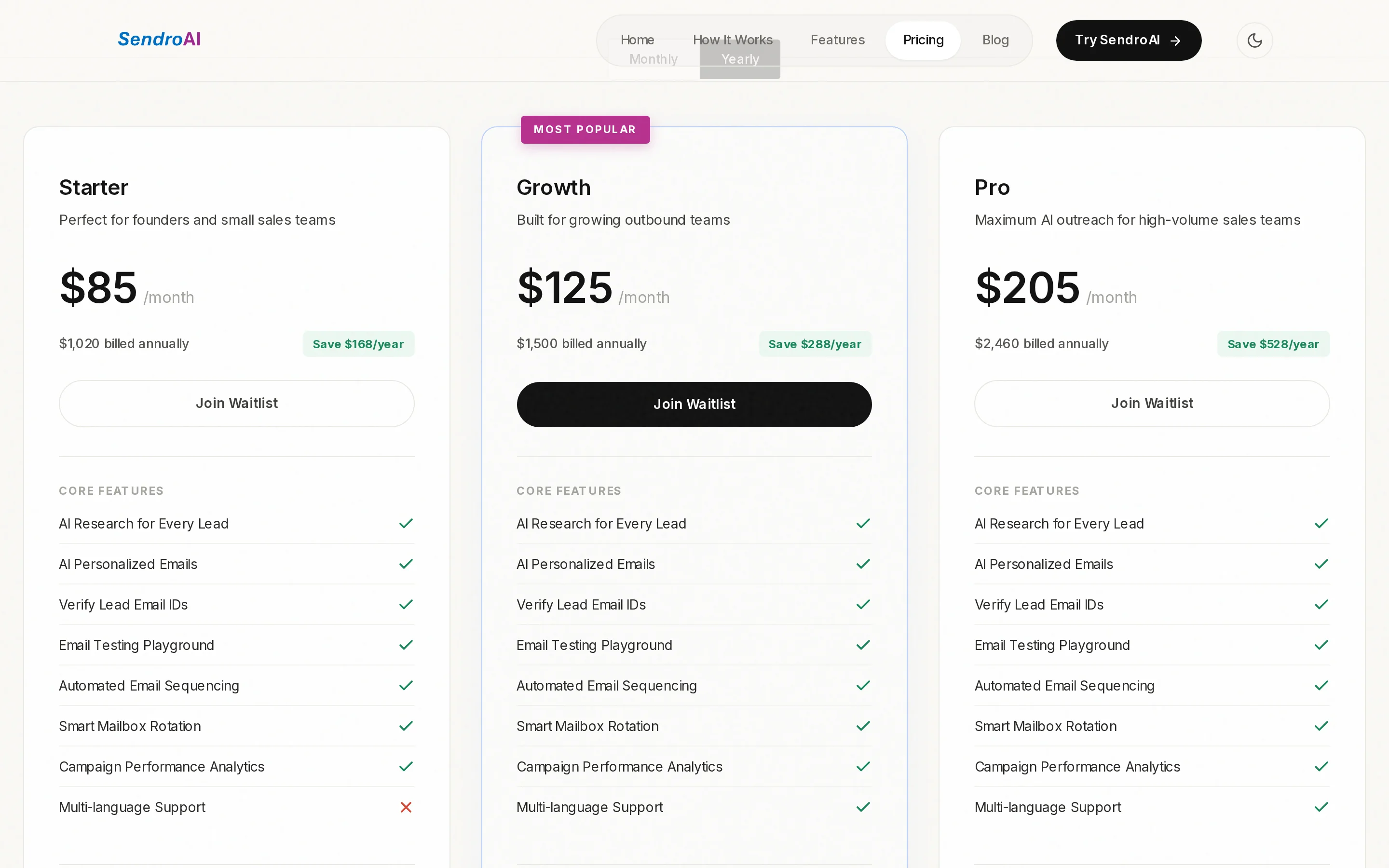
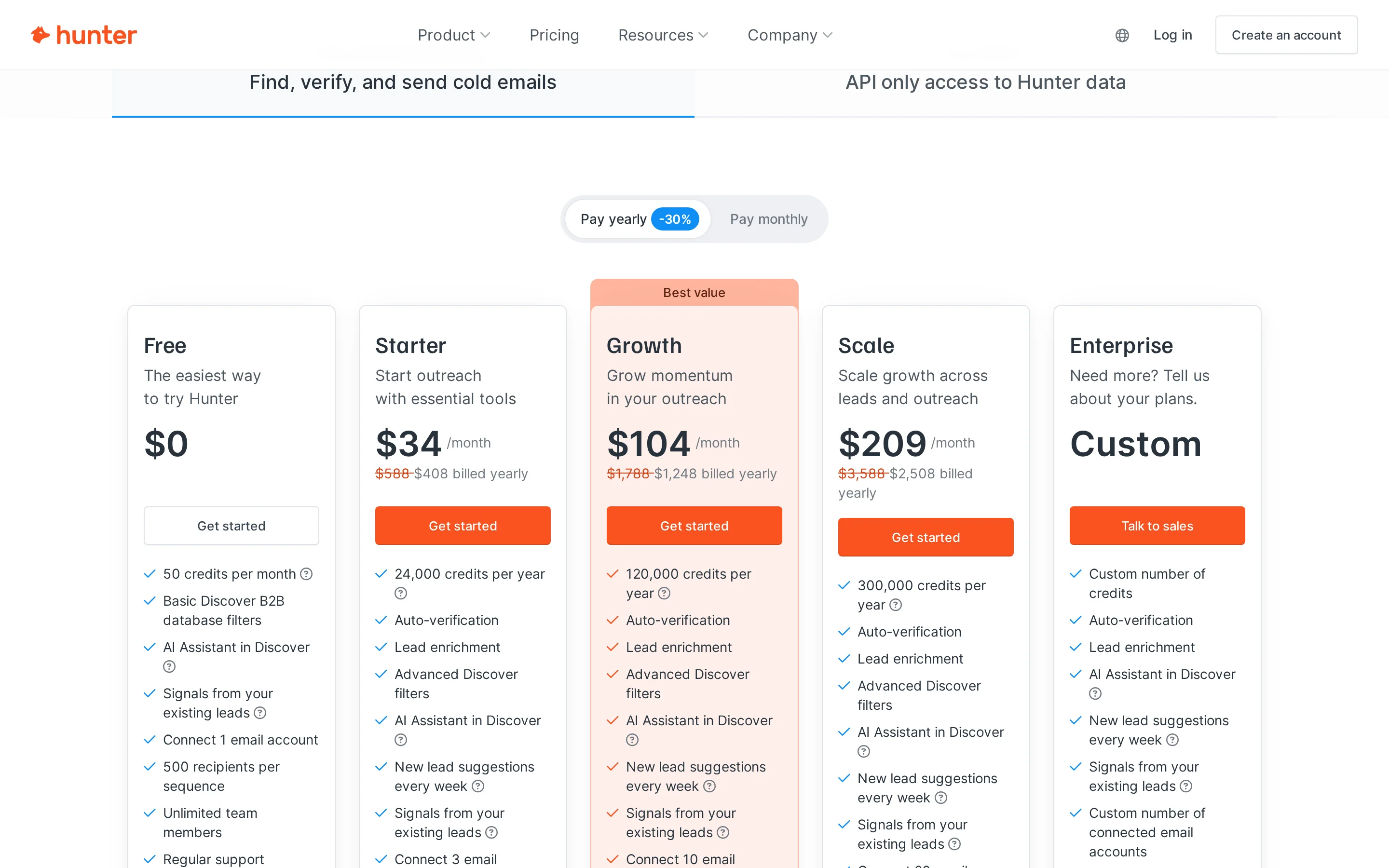
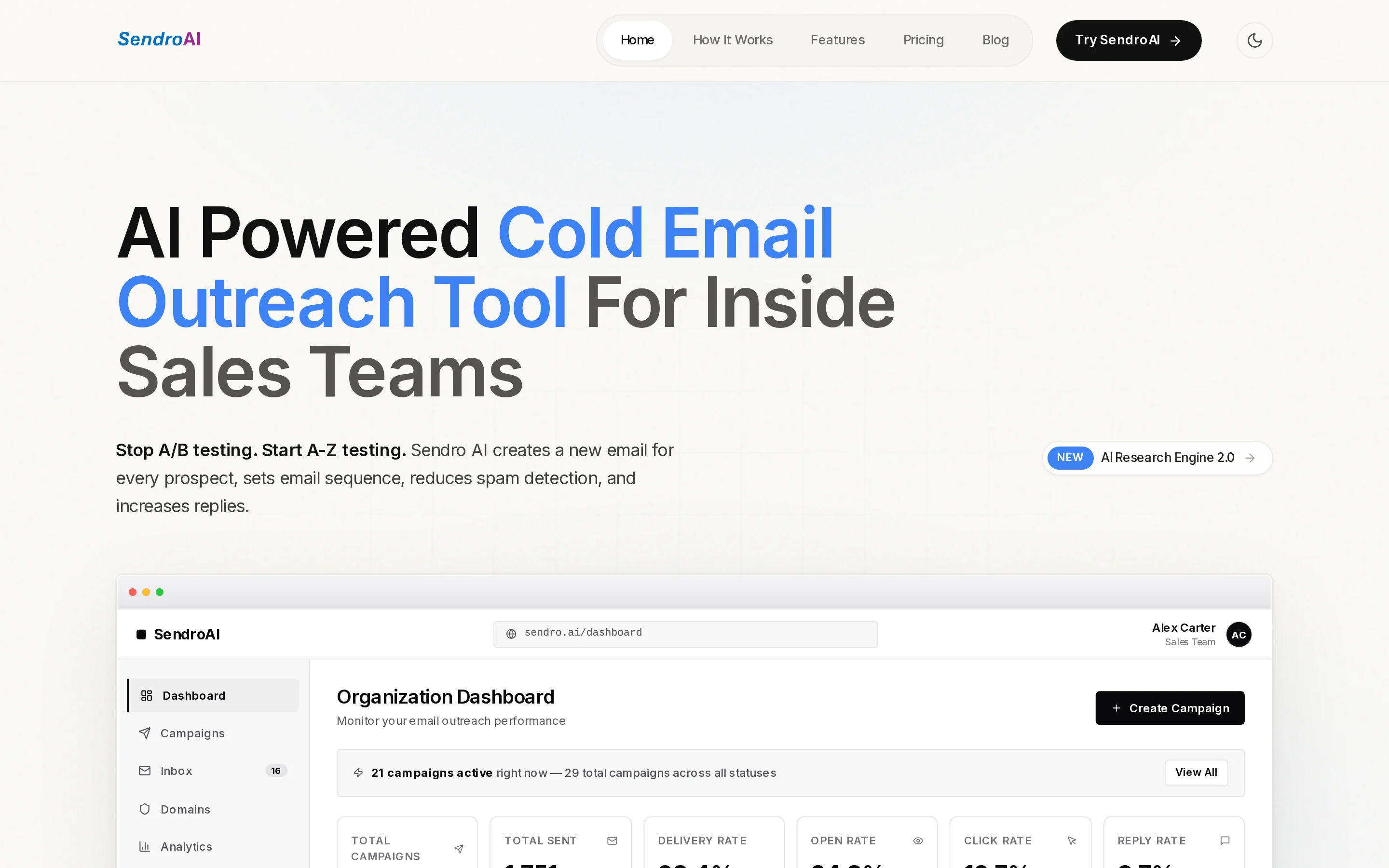
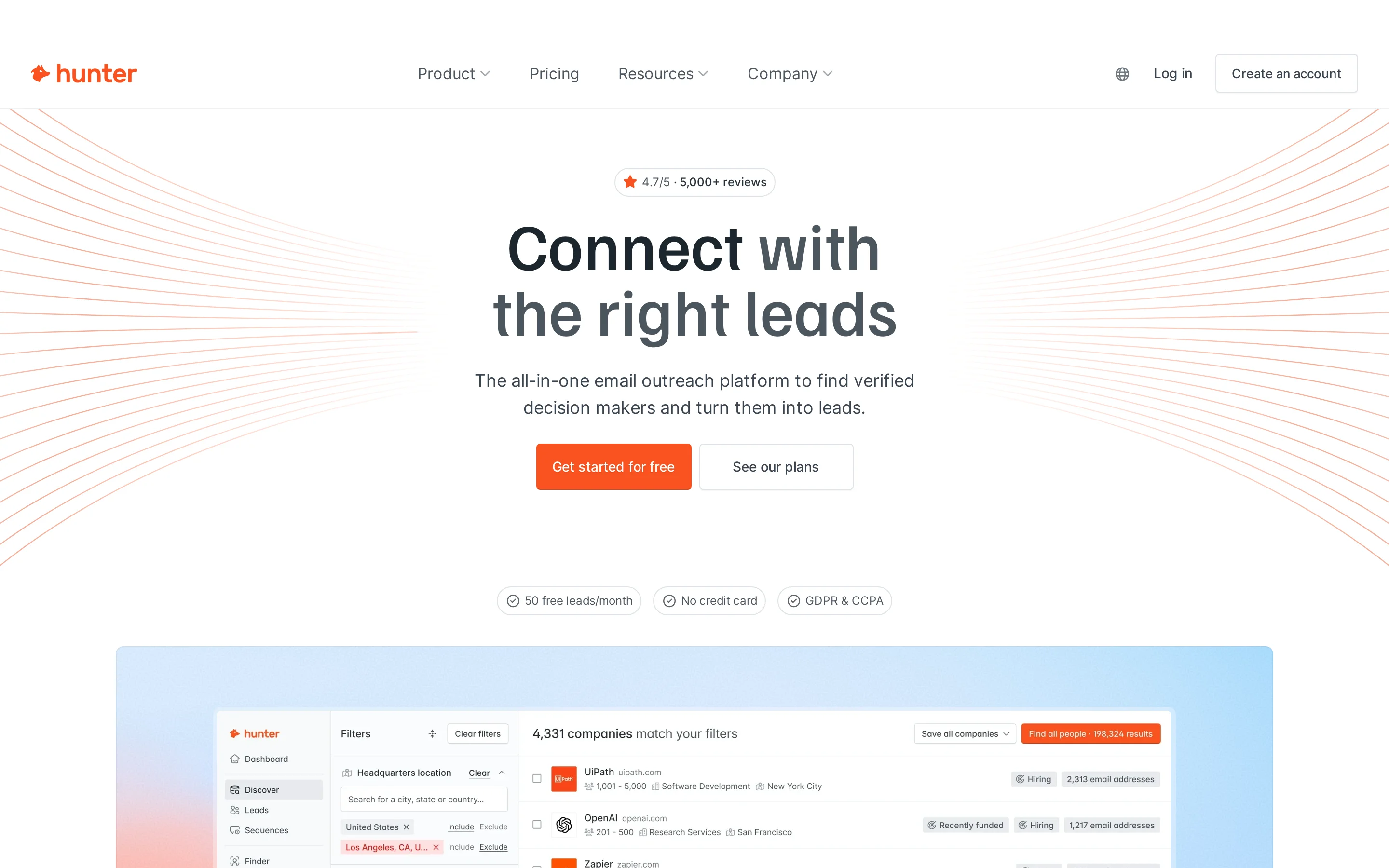
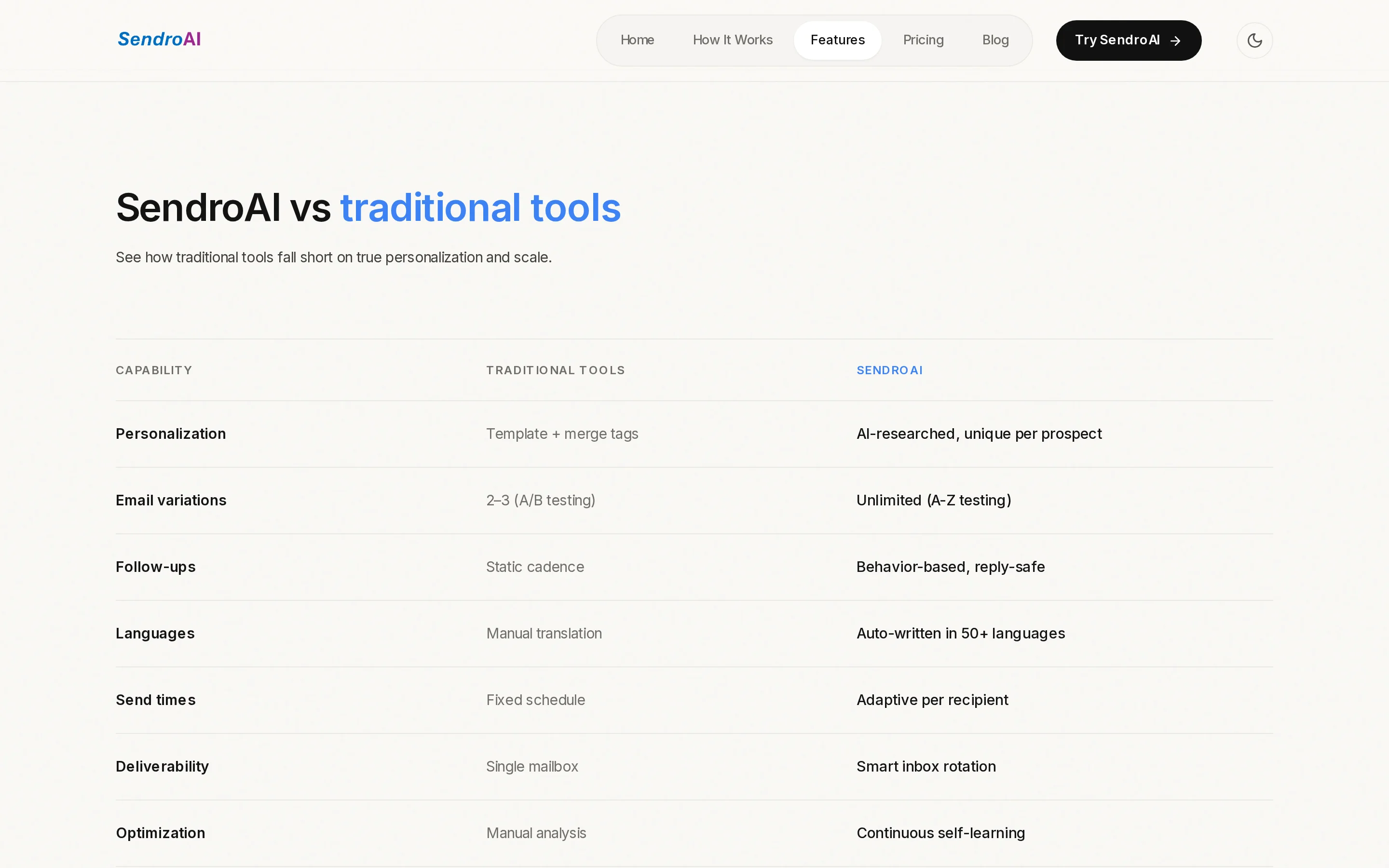
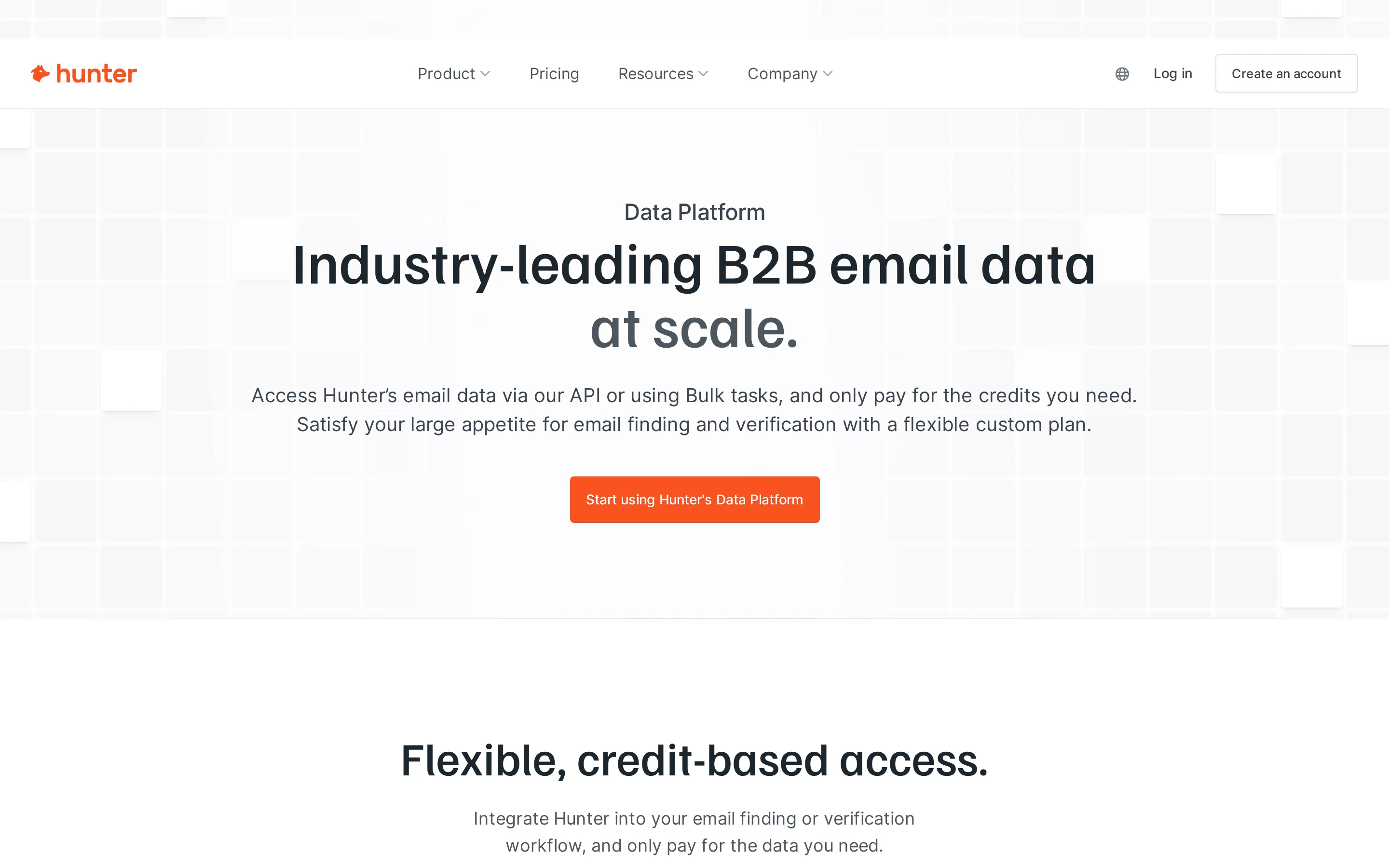
The fundamental architectural difference between SendroAI and Hunter.io lies in how they approach personalization. Hunter.io operates primarily as a data discovery engine; its strength is finding email addresses through domain searches and email finders, but its outreach capabilities rely on static databases and manual enrichment. In contrast, SendroAI functions as an autonomous outbound engine that researches every company and prospect before writing a single word. This real-time intelligence gathering allows SendroAI to craft unique, hand-written-feeling cold emails that are never templated, eliminating the generic 'hope you're well' patterns that trigger spam filters.
For daily execution, Hunter.io users often face a fragmented workflow where they must manually enrich leads or rely on basic AI assistants that do not perform deep contextual research. SendroAI automates this entire process, analyzing persona roles, buying signals, and market positioning instantly. While Hunter.io provides the raw contact data, SendroAI transforms that data into context-rich messaging that feels personally crafted by an SDR, saving hours of manual research time per lead while ensuring every message lands with relevance.
The tradeoff is clear: if your primary need is simply to find an email address, Hunter.io excels. However, for teams focused on reply rates and conversion, SendroAI’s autonomous research engine is superior. By synthesizing live data into custom outreach sequences, SendroAI ensures that personalization scales without sounding automated, whereas Hunter.io’s template-based approach often results in lower engagement due to lack of depth.