
Autonomous 1:1 Research vs. CRM-Data Personalization
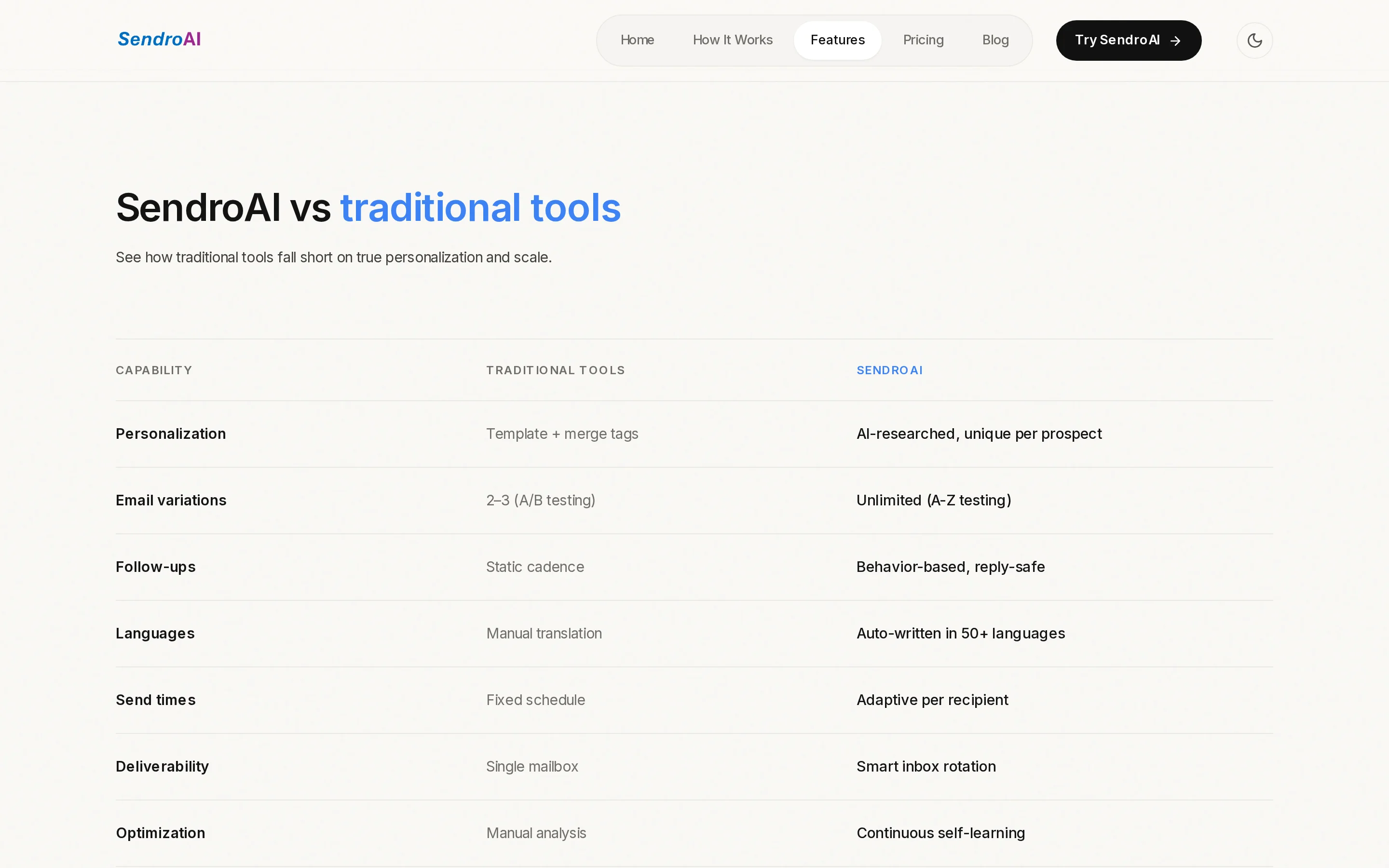
The fundamental architectural difference between SendroAI and HubSpot lies in how they approach personalization. SendroAI utilizes an Autonomous AI Research Engine that scrapes real-time company positioning, prospect roles, and market signals before writing a single word. This ensures every email is unique, hand-written-feeling, and context-rich, effectively eliminating the 'template fatigue' that prospects ignore. In contrast, HubSpot relies on existing CRM properties and static merge tags (e.g., {{First Name}}, {{Company}}). While HubSpot’s AI can assist with drafting, it operates within predefined structural constraints, often resulting in repetitive patterns that spam filters and savvy buyers easily detect.
In daily execution, SendroAI saves SDRs hours of manual research by synthesizing intelligence instantly for every lead in a list. A user imports a CSV, and SendroAI handles the deep dive for each prospect. HubSpot requires users to manually enrich their database or rely on limited third-party integrations to populate fields. For high-volume outbound, SendroAI’s approach scales relevance without scaling effort, whereas HubSpot’s model often requires significant manual oversight to ensure templates don’t look generic across thousands of contacts.
The tradeoff is clear: if you need a static database lookup tool, HubSpot excels. However, for cold outreach where reply rates are driven by relevance, SendroAI’s proactive intelligence gathering is superior. HubSpot’s reliance on historical CRM data means your emails are only as good as the data you’ve already collected, while SendroAI creates fresh, timely hooks for every new prospect.