Architectural Divergence: Modular Infrastructure vs. Monolithic Multichannel Stack
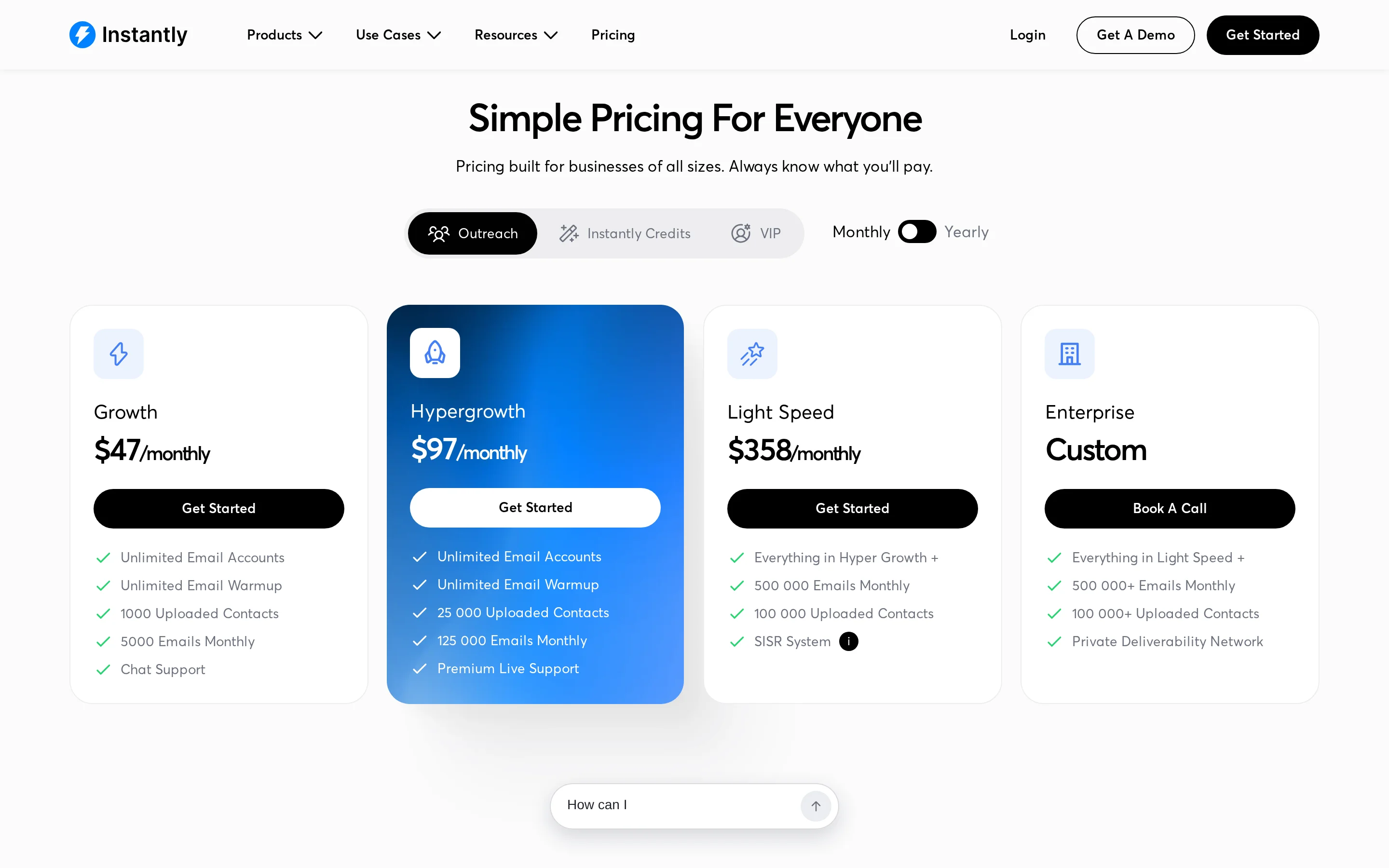
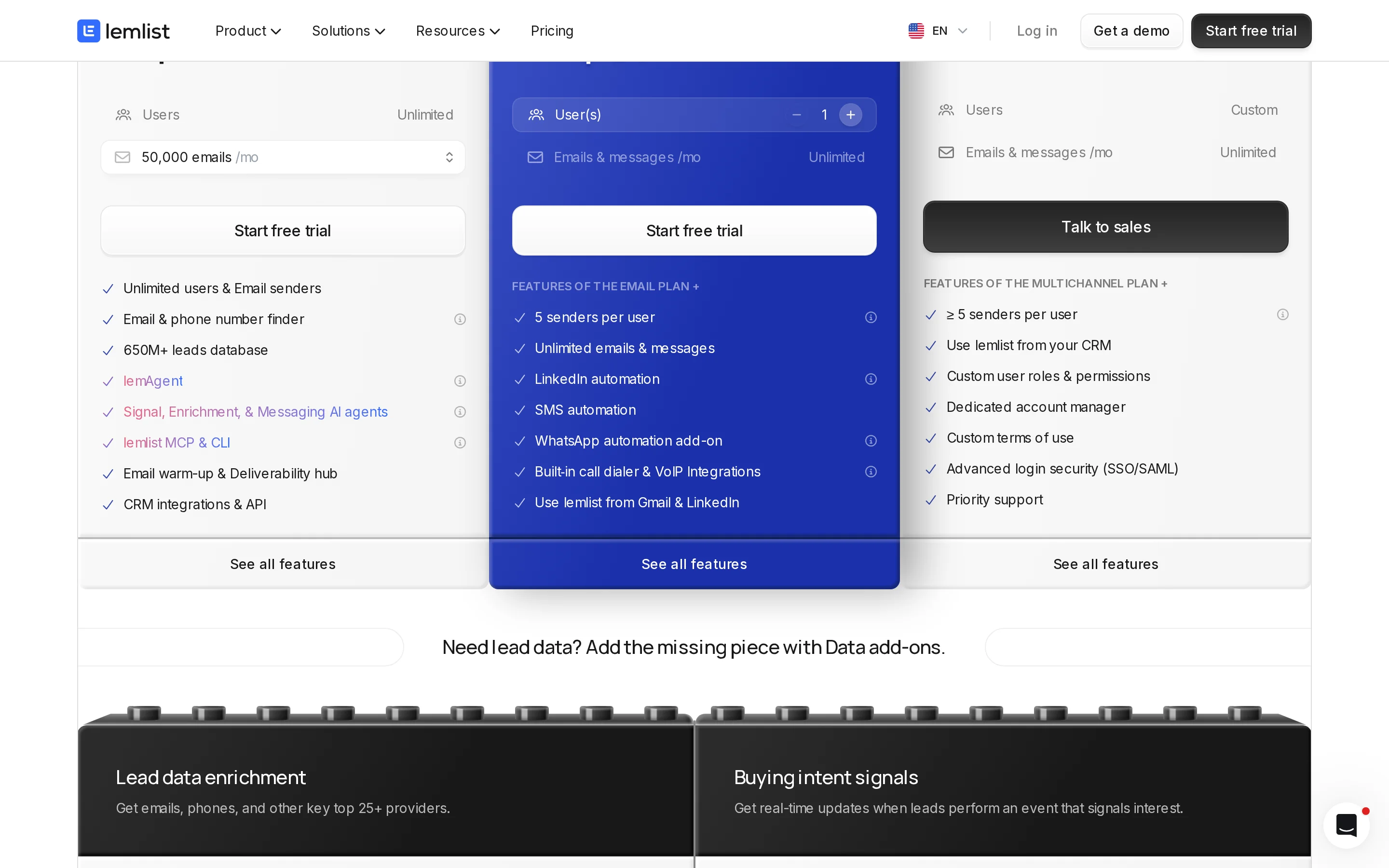
Instantly.ai operates as a modular infrastructure layer, decoupling email sending (AirMail), lead generation (Lead Database), and AI automation into distinct, scalable bundles (Starter/Scale/Agency). This architecture allows users to mix and match components, such as using their own email accounts while leveraging Instantly’s warmup and sending infrastructure. In contrast, lemlist functions as a unified multichannel suite where email is bundled with native LinkedIn automation, SMS, WhatsApp, and in-app calling under fixed user tiers. LeMLIST prioritizes workflow consolidation, offering a single interface for all outreach channels, which simplifies management but limits infrastructural flexibility compared to Instantly's modular approach.
For SDRs and sales managers, Instantly’s model requires more initial setup but offers greater control over deliverability and scaling. Users can add unlimited email accounts and domains, making it ideal for high-volume campaigns. LeMLIST’s monolithic stack is easier to onboard for smaller teams who want a 'plug-and-play' solution that handles multiple touchpoints without needing to integrate separate tools. However, this convenience comes at the cost of higher per-user pricing when scaling beyond basic email-only needs.
The architectural winner depends on scale. For enterprises and agencies managing thousands of leads across multiple domains, Instantly’s modular design provides the necessary elasticity and cost-efficiency. For startups and mid-market teams focused on personalized, multi-channel engagement with less technical overhead, lemlist’s integrated suite offers a smoother user experience and faster time-to-value.