
Mailcheck vs Blaze Verify

A technical comparison of data scale, outbound sequencing, and true cost of ownership.

Last updated: •Verified Technical Data

Quick Decision Verdict

Decisive executive rulings based on technical testing and pricing data.

Decision CategoryExecutive Ruling
Best for Enterprise OutboundMailcheck
Best for Email DeliverabilityBlaze Verify
Best for High-Volume ProspectingMailcheck
Best Overall ValueBlaze Verify

Mailcheck vs Blaze Verify at a Glance

Side-by-side core specifications and live platform viewports.

AttributeMailcheckBlaze Verify
Primary PurposeFull-stack B2B prospecting & lead generationSpecialized email verification & deliverability
Starting PriceCustom Enterprise Pricing (Contact Sales)Pay-as-you-go (No monthly payments)
Free PlanPaid onlyYes (250 free credits)
Core StrengthAccess to proprietary contact database and automation workflowsMulti-step real-time validation and credit flexibility

Feature-by-Feature Matrix

Audited capabilities across data sourcing, sending infrastructure, and integrations.

CapabilityWhy It MattersMailcheckBlaze VerifyWinner
B2B Contact DatabaseAccess to net-new leads✓ Native— Nonemailcheck
Email FinderDiscovering verified addresses✓ Native— Nonemailcheck
Email VerificationPreserving domain health◐ Partial✓ Nativeblaze-verify
CRM IntegrationSeamless data sync→ Integration→ IntegrationTie
Zapier AutomationWorkflow connectivity→ Integration→ IntegrationTie
Make.com SupportAdvanced logic flows→ Integration→ IntegrationTie
API AccessCustom developer builds✓ Native✓ NativeTie
Bulk List UploadCleaning existing databases✓ Native✓ NativeTie
Real-time ValidationForm submission accuracyN/A✓ Nativeblaze-verify
Disposable Email DetectionPreventing spam traps◐ Partial✓ Nativeblaze-verify
SMTP Ping VerificationTechnical inbox existence checkN/A✓ Nativeblaze-verify
DNS/MX Record CheckDomain validity confirmationN/A✓ Nativeblaze-verify
Lead Scoring/EnrichmentPrioritizing high-value prospects✓ Native— Nonemailcheck
Credit Expiration PolicyBudget planning efficiencyN/ACredits never expireblaze-verify
Unknown Result RefundsCost efficiency on bad dataN/A✓ Nativeblaze-verify
Enterprise Custom PricingLarge volume discounts✓ Native✓ NativeTie
Self-Serve Pricing TableEase of procurement— None✓ Nativeblaze-verify

Technical Deep Dives

Architectural comparisons derived directly from live platform testing.

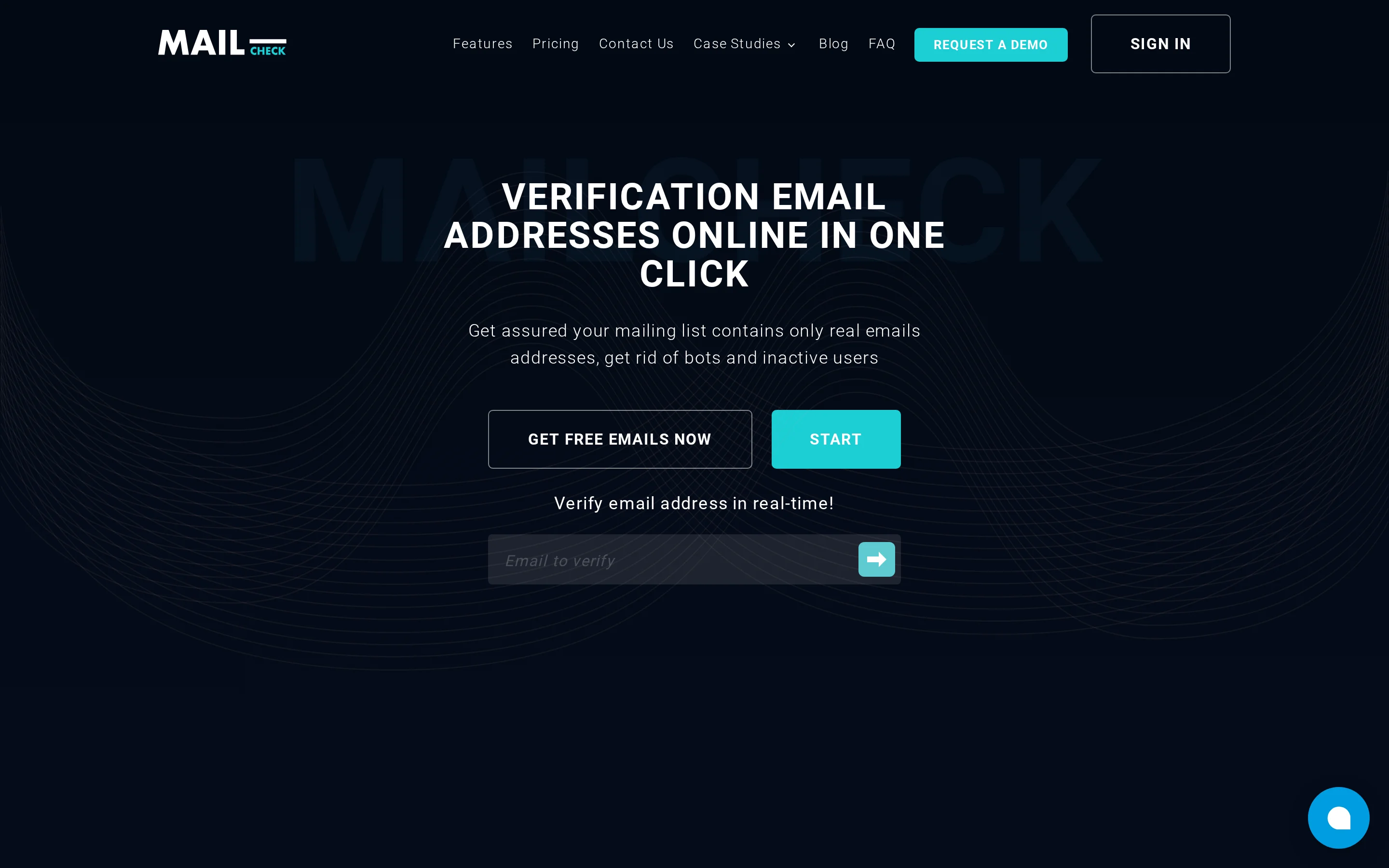
Mailcheck workspace view
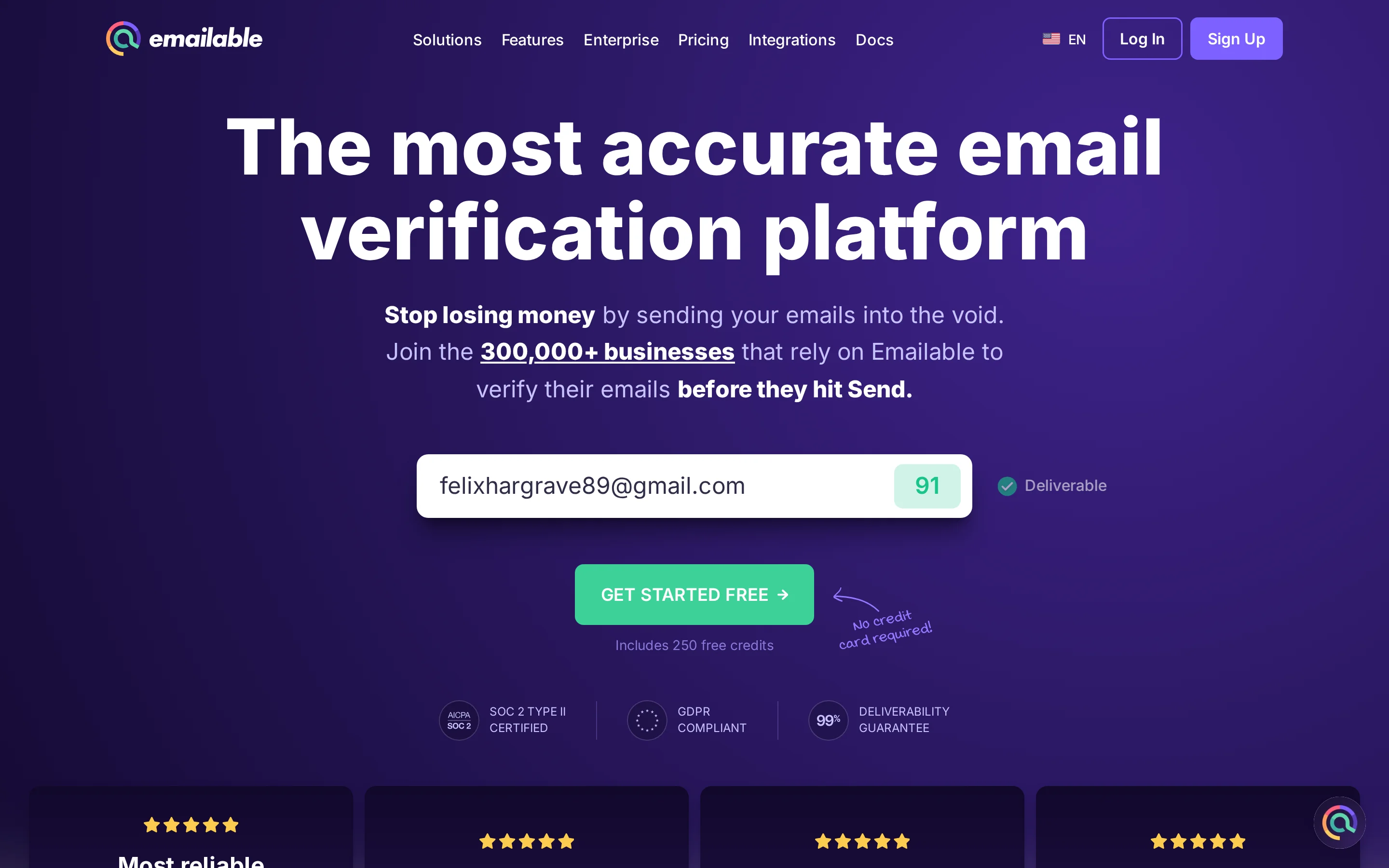
Blaze Verify workspace view

Verification Methodology & Accuracy: Proprietary Network vs. Multi-Step Real-Time Validation

Mailcheck operates primarily as a B2B data provider, leveraging its proprietary network and contact database to identify and verify leads. While it offers verification capabilities, its core strength lies in the discovery phase—finding emails that exist within its indexed ecosystem. This approach is highly effective for outbound prospecting where the goal is to find *new* contacts rather than validate an existing list. However, because it relies heavily on its own database freshness, it may lack the granular, real-time technical checks required for strict deliverability hygiene on legacy lists.

In contrast, Blaze Verify (Emailable) utilizes a rigorous multi-step technical validation process. This includes SMTP pings, DNS checks, disposable email detection, and syntax validation. This methodology is designed specifically to ensure that an email address is not just 'found' but is technically capable of receiving messages. Blaze Verify’s ability to handle 'Unknown' results by refunding credits demonstrates a commitment to accuracy over volume, ensuring that users only pay for definitive 'Valid' or 'Invalid' outcomes.

The trade-off here is clear: Mailcheck wins on discovery speed and access to a broad pool of potential leads, making it ideal for filling top-of-funnel pipelines. Blaze Verify wins on technical accuracy and deliverability protection. If your primary concern is preventing bounces and protecting sender reputation, Blaze Verify’s multi-step validation is superior. If your priority is finding new contacts quickly, Mailcheck’s proprietary network provides the necessary scale.
Integration Ecosystem & API Flexibility: Native CRM Sync vs. Automation Platform Connectors

Both platforms offer robust integration capabilities, but their ecosystems cater to slightly different user preferences. Mailcheck supports integrations via N8N, Zapier, Make.com, SendGrid, and others, providing a solid foundation for connecting with major marketing and communication tools. Its API-first approach allows developers to build custom workflows that leverage its contact database directly into CRMs or outreach sequences.

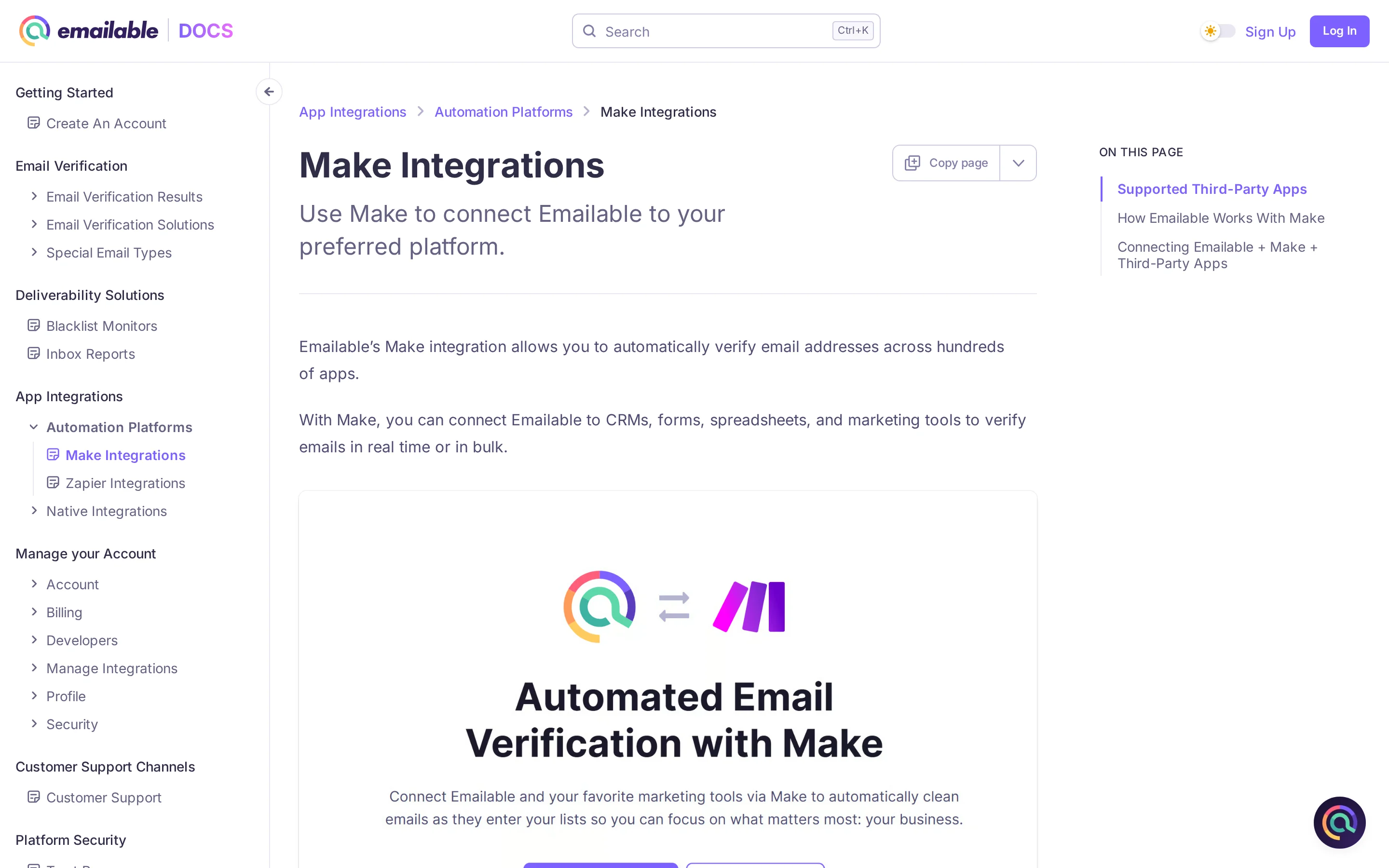
Blaze Verify excels in the automation space, with deep, native integrations in Zapier and Make.com. These integrations are designed for seamless real-time or bulk verification workflows, allowing users to trigger verifications from forms, CRMs, or spreadsheets automatically. Blaze Verify’s documentation emphasizes ease of setup with no coding required for basic automations, making it accessible to non-technical marketers. It also integrates with a wide array of third-party apps including HubSpot, ActiveCampaign, and Intercom.

While both tools are well-integrated, Blaze Verify’s focus on automation connectors like Zapier and Make makes it easier to embed verification into existing daily workflows without heavy development overhead. Mailcheck’s integrations are strong but appear more focused on linking its data output to sending platforms like SendGrid. For teams relying on complex, multi-step automations, Blaze Verify’s ecosystem offers greater flexibility and ease of use.

Pricing & True Cost of Ownership

Published tier structures, credit scaling mechanics, and total outbound cost.

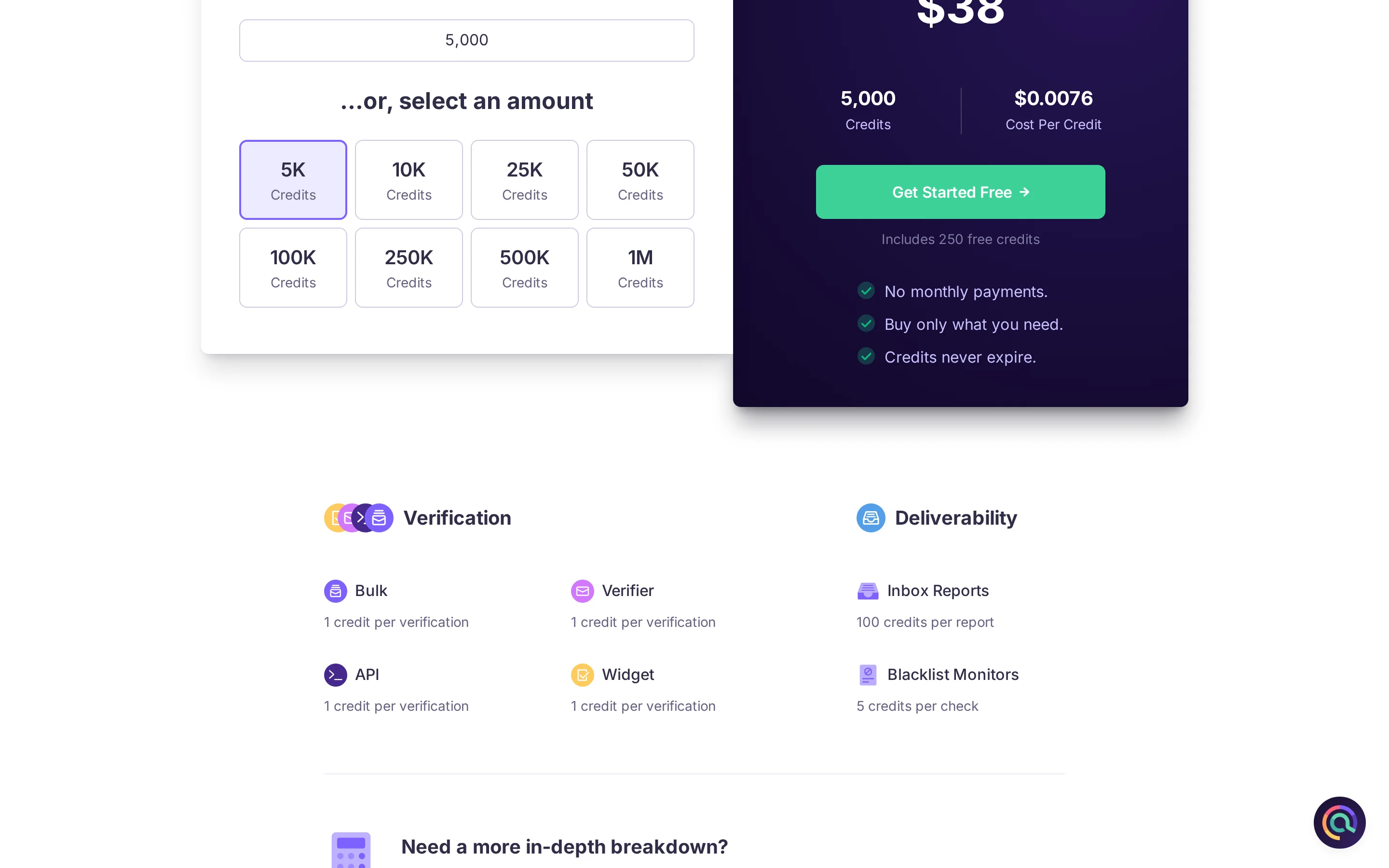
Blaze Verify published pricing cards
Mailcheck Plans
  • Custom Enterprise Pricing (Contact Sales)
Blaze Verify Plans
  • Pay-as-you-go Credits (No monthly payments)
  • Subscription Option (Save 15% annually)
Total Cost Analysis & Verdict

Mailcheck’s pricing is opaque and likely structured around enterprise contracts, which can be advantageous for large-scale operations needing dedicated support and bundled data services. However, this lack of transparency makes it less accessible for SMBs. Blaze Verify’s credit-based model is significantly more user-friendly and cost-effective for variable usage. With no expiration dates, volume discounts, and refunds for unknown results, Blaze Verify minimizes waste and maximizes budget efficiency. For most teams, Blaze Verify offers a clearer path to ROI due to its transparent, pay-for-what-you-use structure.

True Cost Calculation:

of Ownership Analysis

For a 5-person sales team verifying 10,000 leads per month: Mailcheck would require contacting sales for a custom quote, potentially bundling data acquisition costs with verification, which could result in higher fixed costs if volume fluctuates. In contrast, using Blaze Verify’s pay-as-you-go model, assuming a cost of roughly $0.004-$0.005 per credit (based on typical industry rates for similar services), the cost would be approximately $40-$50 per month. With Blaze Verify’s refund policy for unknowns/duplicates, the effective cost could be even lower. Blaze Verify offers a predictable, low-risk cost structure compared to Mailcheck’s potential enterprise lock-in.

Which Fits Your Outbound Model?

Match your team size, deal complexity, and lead volume to the right engine.

Use CaseMailcheckBlaze VerifyRecommendation
High-Volume Cold Outbound⭐⭐⭐⭐⭐⭐⭐⭐Mailcheck is built for finding new leads at scale, making it ideal for cold outreach campaigns that require a constant influx of fresh contacts.
Bulk List Cleaning & Hygiene⭐⭐⭐⭐⭐⭐⭐⭐Blaze Verify provides superior technical validation for cleaning existing lists, ensuring high deliverability rates and protecting sender reputation.
Developer API Data Pipelines⭐⭐⭐⭐⭐⭐⭐⭐⭐Blaze Verify offers higher rate limits and more flexible credit usage for API-driven applications, allowing developers to integrate verification seamlessly.
Startup Budget Management⭐⭐⭐⭐⭐⭐⭐Blaze Verify’s no-commitment, pay-as-you-go model is perfect for startups that need to manage cash flow carefully and avoid large upfront costs.

Where Each Platform Falls Short

Constructive limitations and architectural trade-offs to weigh before signing.

Where Mailcheck Falls Short
  • No public pricing information, requiring sales engagement for quotes.
  • Limited transparency on verification methodology compared to specialized tools.
  • May lack advanced real-time validation features for strict deliverability needs.
Where Blaze Verify Falls Short
  • Does not provide B2B contact discovery or lead generation capabilities.
  • Requires upfront credit purchases, which may deter users preferring subscription models.
  • Verification speed depends on queue load, though typically fast for standard volumes.

The Switching Playbook

What you gain and give up when migrating across platforms.

Switching to Mailcheck
You Gain
  • Access to a proprietary B2B contact database for new lead discovery.
  • Streamlined workflow for finding and verifying leads in one platform.
  • Potential for dedicated account management and custom enterprise solutions.
Switching to Blaze Verify
You Gain
  • Superior technical email verification with multi-step validation.
  • Transparent, flexible pricing with no expiration on credits.
  • Refunds for unknown results and duplicates, reducing wasted spend.

Frequently Asked Questions

Direct technical answers about Mailcheck and Blaze Verify.

Which platform has better data accuracy?

Blaze Verify offers more accurate technical validation through multi-step processes like SMTP pings and DNS checks, ensuring emails are truly deliverable. Mailcheck’s accuracy is tied to its proprietary database freshness, which is excellent for discovery but may not match Blaze Verify’s technical rigor for deliverability.

How do their starting costs compare?

Mailcheck requires contacting sales for custom pricing, with no public starting point. Blaze Verify starts with 250 free credits and a pay-as-you-go model, making it immediately accessible with no financial commitment.

Can I connect unlimited mailboxes?

Both platforms support integrations with major email and CRM tools via Zapier, Make, and APIs. Blaze Verify’s integrations are particularly robust for automating verification across multiple sources, while Mailcheck focuses on connecting its data to sending platforms like SendGrid.

Which tool is easier to learn?

Blaze Verify is generally easier to adopt for verification tasks due to its simple credit-based interface and extensive no-code automation guides. Mailcheck may have a steeper learning curve if you are unfamiliar with its proprietary data structures and enterprise-focused workflows.

Final Verdict & Recommendation
Choose Mailcheck if: Choose Mailcheck if you need a comprehensive B2B prospecting solution that combines lead discovery with verification, particularly for high-volume outbound campaigns where accessing a proprietary contact database is critical.
Choose Blaze Verify if: Choose Blaze Verify if you primarily need reliable, cost-effective email verification to protect sender reputation and ensure high deliverability, especially for cleaning existing lists or integrating verification into automated workflows.

Sources & Methodology

Every claim on this page is grounded in official vendor documentation and live audits.

Looking for an Autonomous Alternative? Compare with SendroAI

See how SendroAI replaces manual research, credit limits, and deliverability traps with full autonomous execution.

Ready to Automate Your Cold Email Outreach?

SendroAI conducts deep prospect research, crafts tailored 1:1 emails, and protects deliverability across unlimited mailboxes automatically.