
Gong.io vs 6sense

A technical comparison of data scale, outbound sequencing, and true cost of ownership.

Last updated: •Verified Technical Data

Quick Decision Verdict

Decisive executive rulings based on technical testing and pricing data.

Decision CategoryExecutive Ruling
Best for Enterprise OutboundGong.io
Best for Email Deliverability6sense
Best for High-Volume ProspectingGong.io
Best Overall Value6sense

Gong.io vs 6sense at a Glance

Side-by-side core specifications and live platform viewports.

AttributeGong.io6sense
Primary PurposeRevenue Intelligence & Conversation AnalyticsAccount-Based Marketing & Intent Data
Starting PriceCustom Enterprise Pricing (Contact Sales)Custom Enterprise Pricing (Contact Sales)
Free PlanNoNo
Core StrengthPost-interaction contextualization and coachingPre-contact predictive scoring and ABM activation

Feature-by-Feature Matrix

Audited capabilities across data sourcing, sending infrastructure, and integrations.

CapabilityWhy It MattersGong.io6senseWinner
B2B Contact DatabaseAccess to net-new leads✓ Native— Nonegong
Email FinderDiscovering verified addresses✓ Native✓ NativeTie
Email VerificationPreserving domain health◐ Partial✓ Native6sense
Intent Signal ArchitectureIdentifying buying signals◐ Partial✓ Native6sense
Conversation IntelligenceAnalyzing sales calls/meetings✓ Native— Nonegong
CRM IntegrationData sync with Salesforce/HubSpot✓ Native✓ NativeTie
ABM Campaign ActivationTriggering marketing workflows→ Integration✓ Native6sense
AI-Powered CoachingImproving rep performance✓ Native— Nonegong
Predictive Lead ScoringPrioritizing outreach targets◐ Partial✓ Native6sense
Deal Stage ForecastingAccurate pipeline visibility✓ Native→ Integrationgong
Third-Party Data AggregationBroad market coverage◐ Partial✓ Native6sense
Self-Serve PricingEase of procurement— None— NoneTie
API ExtensibilityCustom integrations✓ Native✓ NativeTie
Mobile App ExperienceOn-the-go access✓ Native✓ NativeTie
Security ComplianceEnterprise data protection✓ Native✓ NativeTie
Partner EcosystemAdditional tools/services✓ Native✓ NativeTie

Technical Deep Dives

Architectural comparisons derived directly from live platform testing.

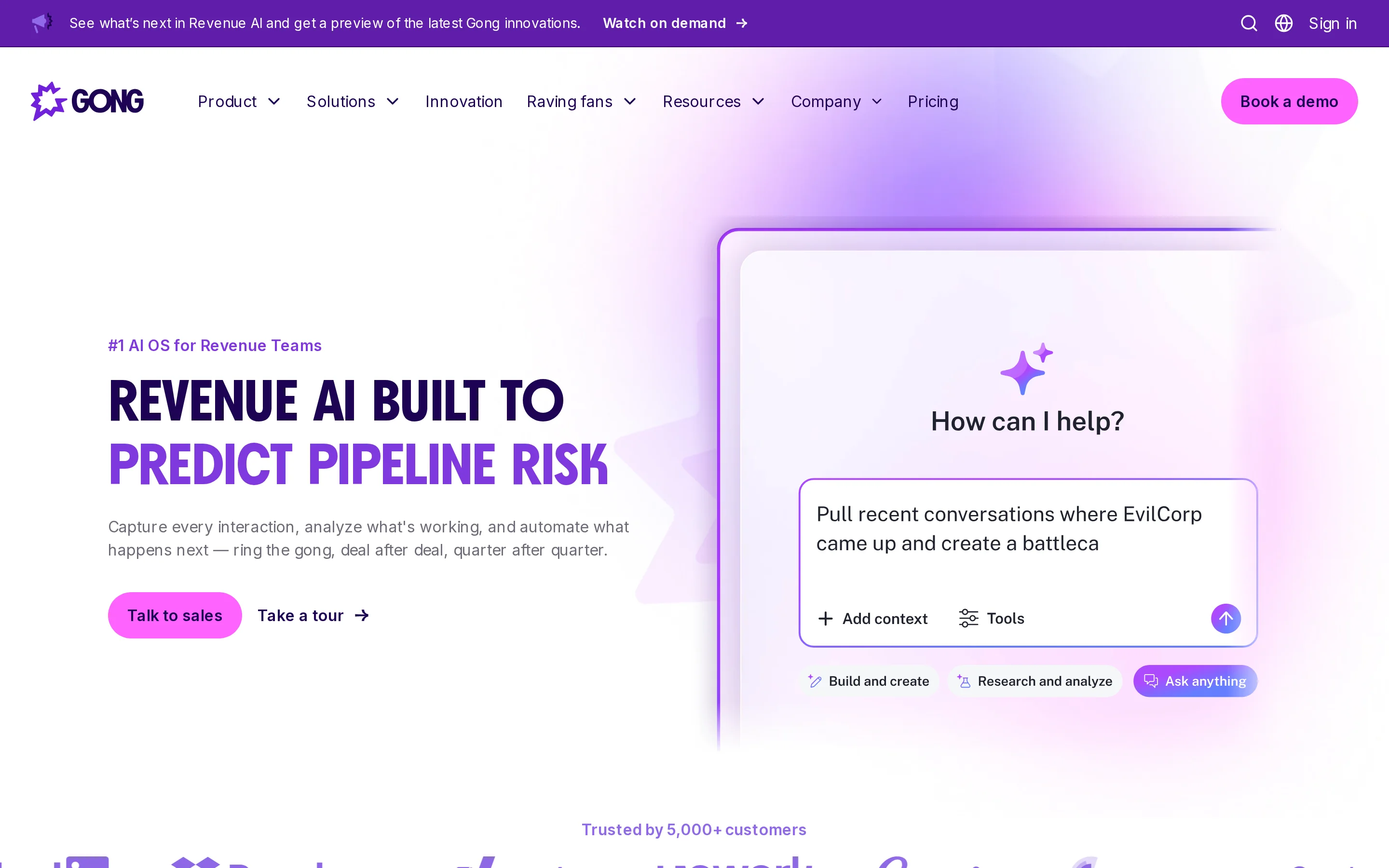
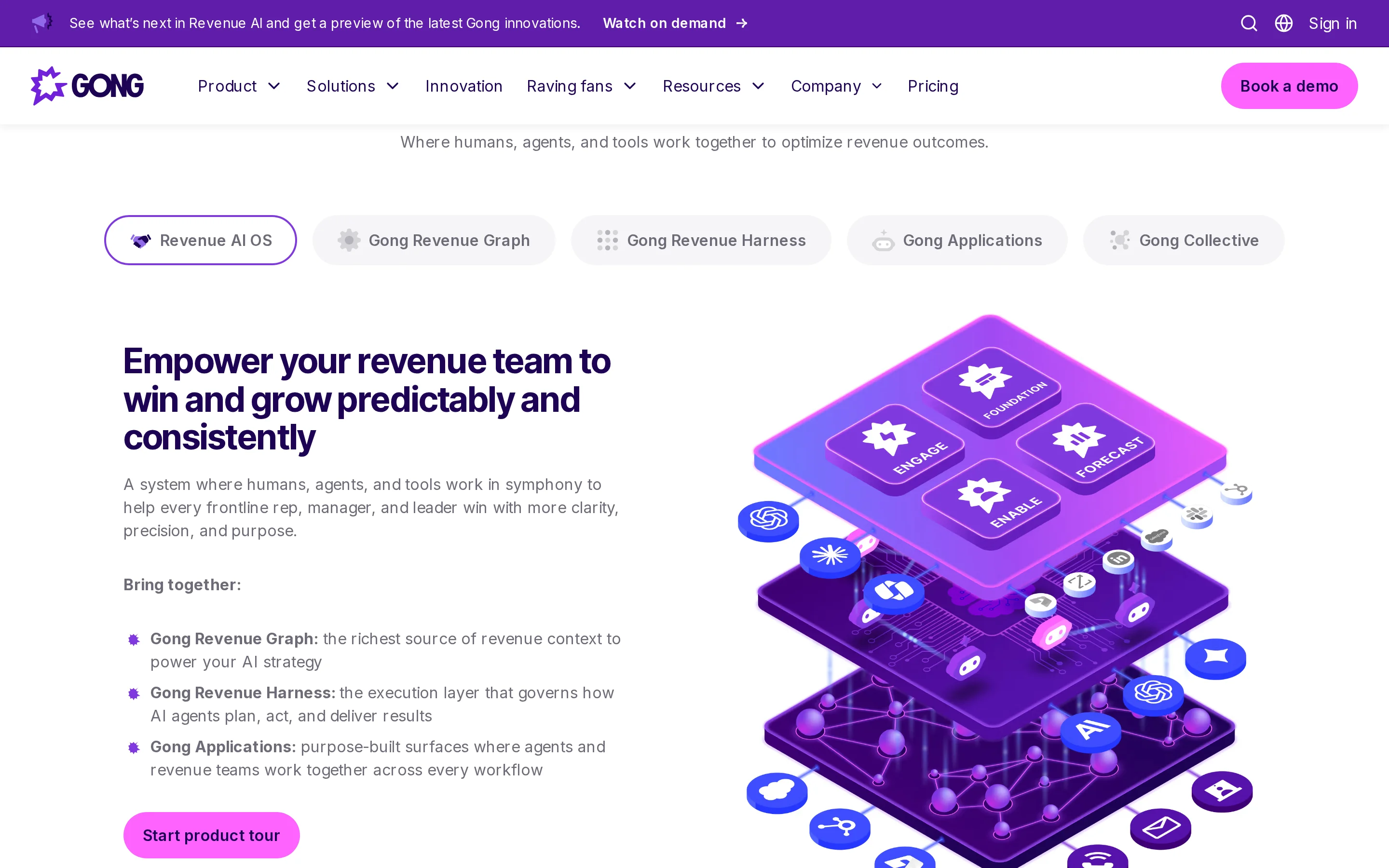
Gong.io workspace view
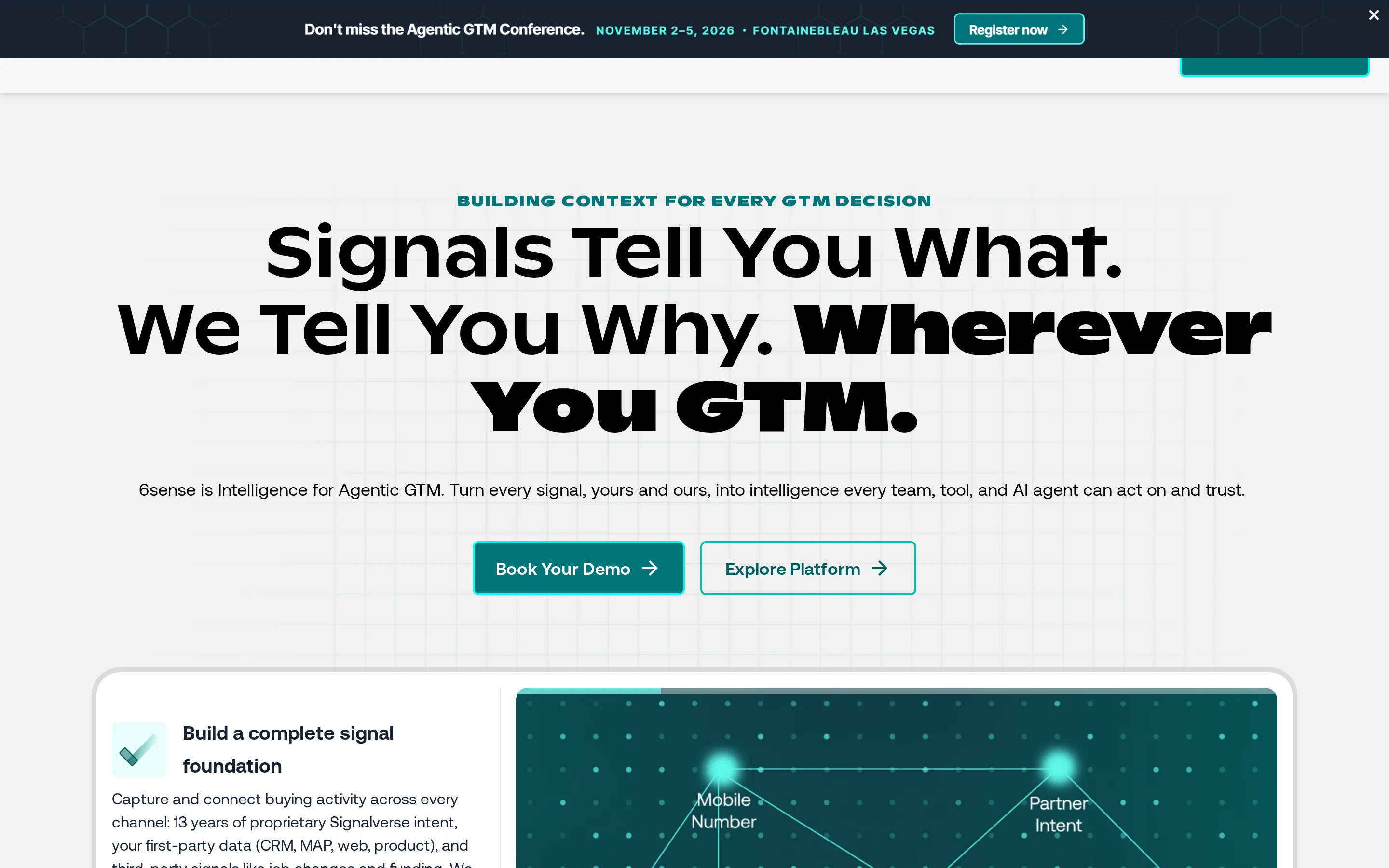
6sense workspace view

Intent Signal Architecture: First-Party Behavioral Graph vs. Third-Party Firmographic Aggregation

Gong’s intent architecture is fundamentally rooted in first-party behavioral data derived from actual customer interactions. By analyzing conversation transcripts, deal-stage progression, and engagement metrics within the CRM, Gong constructs a 'Revenue Graph' that reflects real-world buying signals. This bottom-up approach ensures that intent is validated by human interaction, reducing noise from irrelevant digital footprints.

In contrast, 6sense relies on a top-down aggregation of third-party browsing data, technographics, and firmographic signals. It identifies accounts before direct contact is made by monitoring anonymous web activity across millions of sites. While this allows for earlier identification of potential opportunities, it can sometimes result in false positives where digital interest does not translate to commercial intent.

The tradeoff here is precision versus breadth. Gong offers higher accuracy for deals already in motion, leveraging conversational context to predict outcomes. 6sense provides broader market coverage, enabling teams to identify net-new opportunities before competitors engage. For outbound strategies focused on converting existing leads, Gong’s signal is more actionable; for greenfield prospecting, 6sense offers superior early-stage visibility.
Enrichment Trigger Mechanism: Post-Interaction Contextualization vs. Pre-Contact Predictive Scoring

Gong’s enrichment mechanism is triggered post-interaction. After a call or meeting is recorded, Gong’s AI analyzes the transcript to extract missing context, such as budget constraints, decision-making authority, or specific pain points. This enriched data is then used to update CRM records and guide next-best-actions, effectively turning raw conversation into structured sales intelligence.

6sense operates on a pre-contact predictive scoring model. It enriches prospects by analyzing their digital footprint prior to any direct interaction. By identifying when an account shows high intent signals, 6sense provides contact details and prioritization scores to SDRs before they even begin outreach. This allows teams to focus their efforts on accounts most likely to convert based on historical patterns of successful deals.

Operationally, Gong’s approach requires reps to engage first to unlock insights, making it ideal for optimizing existing pipelines. 6sense enables proactive targeting, allowing teams to bypass cold outreach entirely by focusing on warm, intent-driven accounts. The choice depends on whether your team prefers to refine conversations after they happen (Gong) or prevent unproductive conversations from starting (6sense).

Data Utility & Actionability: Conversational Intelligence Output vs. Account-Based Marketing Activation

Gong’s enriched data is primarily designed for internal sales enablement and coaching. The output feeds directly into sales workflows, helping managers identify coaching opportunities, forecast pipeline accuracy, and replicate winning techniques across the team. Its utility lies in improving the effectiveness of frontline sellers through real-time guidance and post-call analysis.

6sense’ enriched data is optimized for Account-Based Marketing (ABM) activation. It integrates seamlessly with marketing automation platforms to trigger targeted ad campaigns, personalized email sequences, and content delivery. The primary goal is to align sales and marketing efforts around high-intent accounts, ensuring that marketing spend is directed toward prospects with demonstrated interest.

From an ecosystem perspective, Gong excels in driving revenue productivity by enhancing individual and team performance. 6sense shines in orchestrating multi-channel campaigns that nurture accounts at scale. If your priority is improving close rates through better selling, Gong is the superior choice. If your goal is increasing top-of-funnel awareness and engagement through coordinated marketing, 6sense offers greater actionability.

Pricing & True Cost of Ownership

Published tier structures, credit scaling mechanics, and total outbound cost.

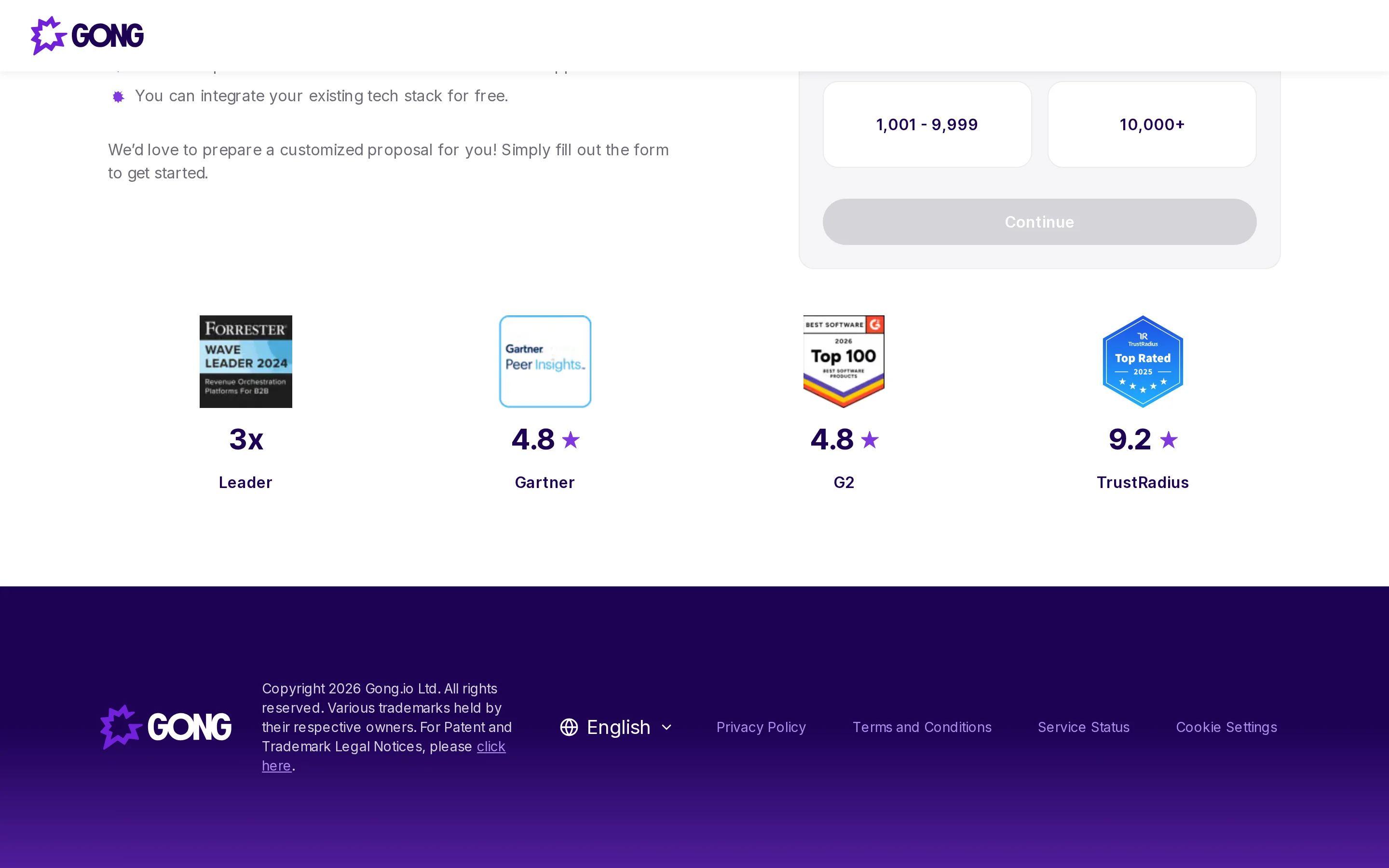
Gong.io published pricing cards
Gong.io Plans
  • Standard: Custom Enterprise Pricing (Contact Sales)
  • Professional: Custom Enterprise Pricing (Contact Sales)
  • Enterprise: Custom Enterprise Pricing (Contact Sales)
6sense Plans
  • Standard: Custom Enterprise Pricing (Contact Sales)
  • Professional: Custom Enterprise Pricing (Contact Sales)
  • Enterprise: Custom Enterprise Pricing (Contact Sales)
Total Cost Analysis & Verdict

Both Gong.io and 6sense operate on a quote-based enterprise pricing model, meaning there are no publicly listed per-seat costs. This typically results in higher minimum commitments compared to mid-market SaaS tools. Gong’s pricing is often driven by the number of seats required for conversation intelligence and the depth of AI features accessed. 6sense’ costs are influenced by the volume of accounts covered and the extent of intent data usage. Buyers should expect significant investment in both cases, with total contract values often exceeding $100k annually for mid-sized organizations.

True Cost Calculation:

of Ownership Analysis

For a 5-person sales team requiring 10,000 verified leads per month, the cost structure differs significantly. With Gong, you would pay for seat licenses plus any additional costs for contact data integrations like Apollo or Cognism, which may incur separate fees. Assuming an average enterprise seat cost of $3,000/year ($250/month), the base cost is $1,250/month. Adding third-party data costs could push this to $2,500-$3,000/month. With 6sense, you pay for platform access and intent data coverage. While exact prices are unknown, similar platforms charge approximately $15,000-$20,000 annually for full functionality, equating to $1,250-$1,667/month. However, 6sense may include some data verification capabilities, potentially reducing external tool costs. Overall, 6sense may offer a lower total cost of ownership if integrated efficiently, while Gong’s value comes from improved win rates rather than pure lead generation efficiency.

Which Fits Your Outbound Model?

Match your team size, deal complexity, and lead volume to the right engine.

Use CaseGong.io6senseRecommendation
High-Volume Cold Outbound⭐⭐⭐⭐⭐⭐⭐⭐Gong.io is built for optimizing outbound conversations. Its ability to analyze and improve each interaction makes it invaluable for teams sending high volumes of emails and making cold calls. The feedback loop helps reps refine their pitch rapidly.
Bulk List Cleaning & Hygiene⭐⭐⭐⭐⭐⭐⭐⭐6sense provides superior data hygiene through its native verification processes. For teams needing to clean large lists before launching campaigns, 6sense’ integrated verification reduces bounce rates and protects domain reputation more effectively than Gong’s partial integration approach.
Developer API Data Pipelines⭐⭐⭐⭐⭐⭐⭐⭐6sense offers higher rate limits and more robust API endpoints for custom data pipelines. Developers building automated workflows will find 6sense’ infrastructure more suitable for handling large-scale data extractions and integrations with other systems.
Sales Coaching & Enablement⭐⭐⭐⭐⭐⭐⭐Gong.io is the undisputed leader in sales coaching. Its AI-powered insights provide managers with detailed analytics on rep performance, allowing for targeted training and consistent messaging across the team. 6sense lacks these deep conversational analytics capabilities.

Where Each Platform Falls Short

Constructive limitations and architectural trade-offs to weigh before signing.

Where Gong.io Falls Short
  • Requires initial customer interactions to generate meaningful insights, limiting its usefulness for purely cold outreach without prior engagement.
  • Higher total cost of ownership due to potential need for separate contact data providers.
  • Complex implementation process requiring significant change management and adoption efforts across sales teams.
Where 6sense Falls Short
  • Lacks deep conversational intelligence, making it difficult to coach reps on specific call techniques or objection handling.
  • Dependence on third-party data sources can lead to inaccuracies or delays in signal detection.
  • Less effective for optimizing existing deals once they are in the pipeline, focusing instead on pre-engagement activities.

The Switching Playbook

What you gain and give up when migrating across platforms.

Switching to Gong.io
You Gain
  • Improved win rates through data-driven coaching and conversation analysis.
  • Better forecast accuracy with real-time pipeline visibility.
  • Enhanced rep productivity via AI-guided next-best-actions.
Switching to 6sense
You Gain
  • Earlier identification of high-intent accounts through predictive scoring.
  • Streamlined ABM campaign execution with integrated marketing activations.
  • Lower risk of bounced emails due to superior data verification.

Frequently Asked Questions

Direct technical answers about Gong.io and 6sense.

Which platform has better data accuracy?

Gong.io generally offers higher accuracy for existing deals because its data is derived from actual customer interactions. 6sense provides broader coverage but may include less precise signals for accounts that have not yet engaged directly.

How do their starting costs compare?

Both platforms use custom enterprise pricing, so direct comparisons are difficult. However, Gong’s costs are often tied to seat count and feature tiers, while 6sense’ costs relate to account coverage and data usage. Both require significant investment.

Can I connect unlimited mailboxes?

Gong.io supports connecting multiple mailboxes for conversation recording, but the number of connections may be limited by your license tier. 6sense does not focus on mailbox integration, instead relying on digital footprint tracking.

Which tool is easier to learn?

6sense may have a gentler learning curve for marketers familiar with ABM concepts. Gong.io requires deeper understanding of sales methodologies and AI-driven insights, which may take longer for teams to fully adopt.

Final Verdict & Recommendation
Choose Gong.io if: Choose Gong.io if you need to optimize existing sales pipelines, improve rep performance through coaching, and gain deep insights into customer conversations. It is ideal for teams focused on maximizing conversion rates and forecasting accuracy.
Choose 6sense if: Choose 6sense if you primarily need to identify net-new opportunities through predictive intent data, execute coordinated ABM campaigns, and maintain high data hygiene. It is best suited for organizations looking to accelerate top-of-funnel engagement and align sales with marketing efforts.

Sources & Methodology

Every claim on this page is grounded in official vendor documentation and live audits.

Looking for an Autonomous Alternative? Compare with SendroAI

See how SendroAI replaces manual research, credit limits, and deliverability traps with full autonomous execution.

Ready to Automate Your Cold Email Outreach?

SendroAI conducts deep prospect research, crafts tailored 1:1 emails, and protects deliverability across unlimited mailboxes automatically.