
Hunter.io vs ZoomInfo

A technical comparison of data scale, outbound sequencing, and true cost of ownership.

Last updated: •Verified Technical Data

Quick Decision Verdict

Decisive executive rulings based on technical testing and pricing data.

Decision CategoryExecutive Ruling
Best for Enterprise OutboundZoomInfo
Best for Email DeliverabilityHunter.io
Best for High-Volume ProspectingHunter.io
Best Overall ValueHunter.io

Hunter.io vs ZoomInfo at a Glance

Side-by-side core specifications and live platform viewports.

AttributeHunter.ioZoomInfo
Primary PurposeEmail finding, verification, and outreach sequencingFull-spectrum B2B intelligence, intent data, and CRM enrichment
Starting Price$49/mo (Starter)Custom Enterprise Pricing (Contact Sales)
Free PlanYes (50 credits/month)No public free tier; demo/quote-based access only
Core StrengthTransparent web-crawling data accuracy and credit-based scalabilityProprietary buying intent signals and deep firmographic/technographic insights

Feature-by-Feature Matrix

Audited capabilities across data sourcing, sending infrastructure, and integrations.

CapabilityWhy It MattersHunter.ioZoomInfoWinner
B2B Contact DatabaseAccess to net-new leads✓ Native✓ NativeTie
Email FinderDiscovering verified addresses✓ Native✓ NativeTie
Email VerificationPreserving domain health✓ Native✓ NativeTie
Buying Intent SignalsIdentifying in-market accounts— None✓ Nativezoominfo
Direct Dial/Mobile NumbersMulti-channel outreach capability— None✓ Nativezoominfo
Outreach SequencingAutomating email campaigns✓ Native◐ Partial (via integrations/workflows)hunter
API AccessDeveloper integration and bulk processing✓ Native✓ NativeTie
CRM IntegrationSyncing lead data to sales pipeline→ Integration✓ Nativezoominfo
AI Assistant/SearchAutomated prospect discovery✓ Native✓ NativeTie
Account-Based Marketing (ABM)Targeting specific high-value accounts— None✓ Nativezoominfo
Browser ExtensionOn-the-fly data capture✓ Native✓ NativeTie
Lead EnrichmentAdding context to existing contacts✓ Native✓ NativeTie
Data Privacy ControlsGDPR/CCPA compliance and subject removal✓ Native✓ NativeTie
Mobile AppField sales accessibility— None✓ Nativezoominfo
Unlimited UsersTeam scaling without per-seat fees✓ Native— None (Per-seat model)hunter
Custom Domains for OutreachImproving sender reputation✓ Native (Add-on)— Nonehunter

Technical Deep Dives

Architectural comparisons derived directly from live platform testing.

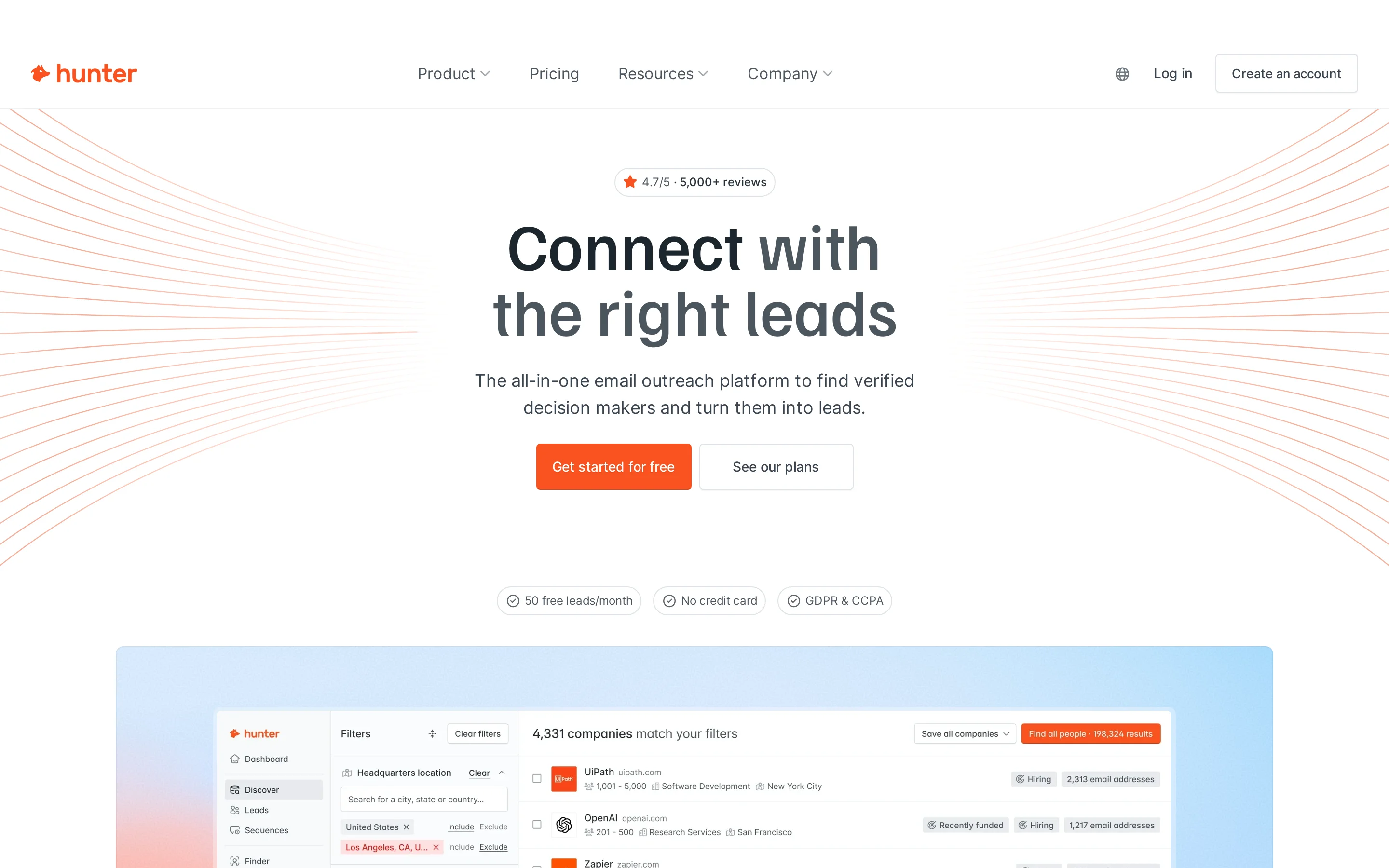
Hunter.io workspace view
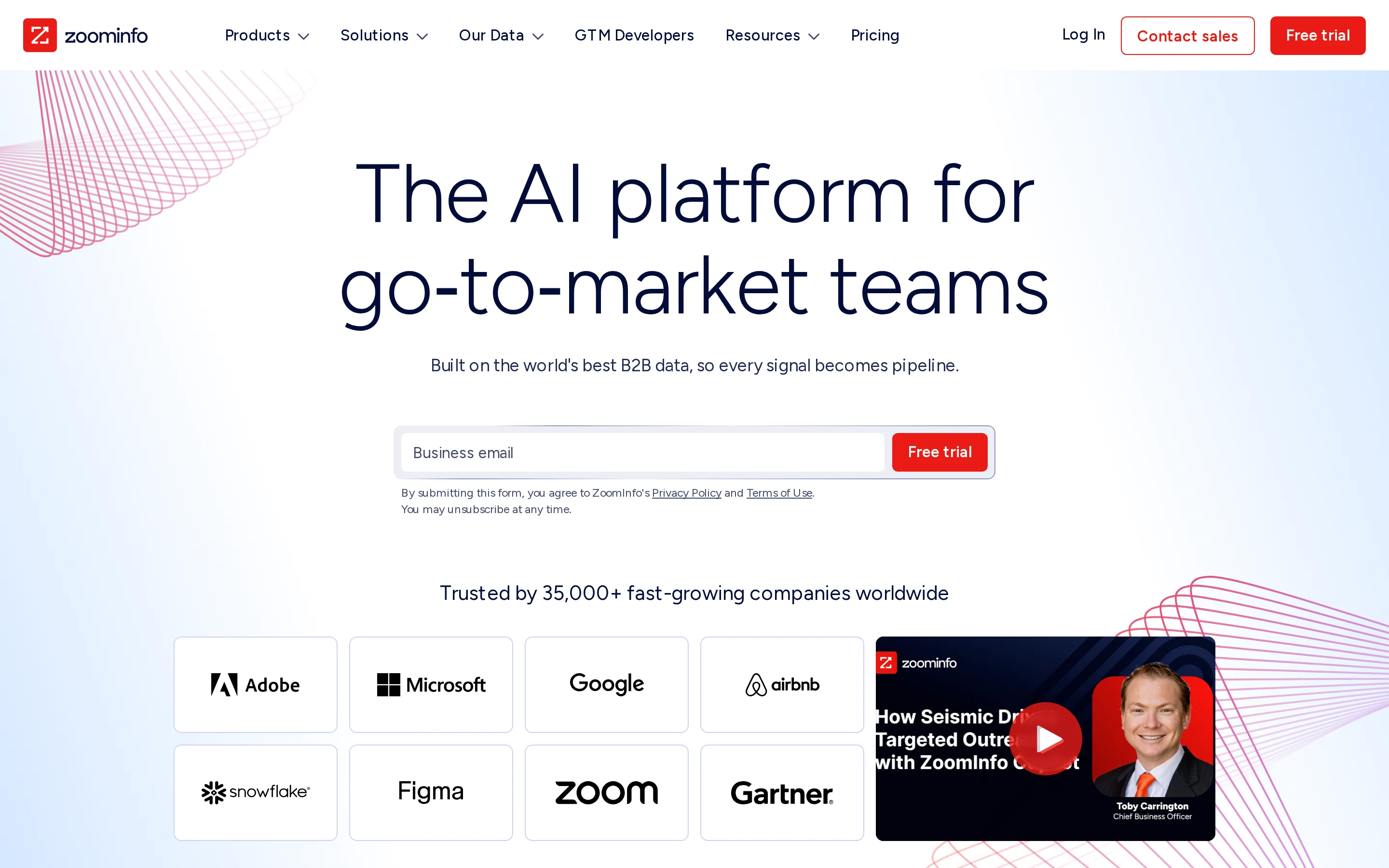
ZoomInfo workspace view

Data Acquisition & Verification Architecture: Real-Time Web Crawling vs. Proprietary Intent Network

Hunter.io operates on a transparent, real-time web crawling model. By visiting millions of web pages daily, it extracts contact information directly from public sources, allowing for granular control over data sources. This architecture supports subject removal requests and adheres strictly to privacy regulations by processing data transparently. In contrast, ZoomInfo utilizes a massive, proprietary network involving direct contributor signals and partnerships with over 35,000 companies. This approach prioritizes depth of firmographic and technographic data, creating a 'black box' of high-confidence data that is less transparent regarding its immediate source but highly enriched with historical context.

Operationally, Hunter’s crawler model means data freshness is tied to web visibility. If a company updates their website, Hunter finds it quickly. However, it lacks the deep organizational hierarchy and internal signaling that ZoomInfo captures through its proprietary network. ZoomInfo’s data is updated via its FuZIon system, which verifies, monitors, and updates profiles continuously. For outbound teams, this means ZoomInfo provides not just an email, but a full profile including direct dials, mobile numbers, and org charts, whereas Hunter focuses primarily on email discovery and verification.

The tradeoff lies in transparency versus depth. Hunter offers a cleaner, more compliant data acquisition path ideal for strict privacy environments, while ZoomInfo provides superior contextual intelligence. For pure email finding, Hunter’s method is efficient and accurate. For complex enterprise selling requiring understanding of buying committees and tech stacks, ZoomInfo’s proprietary network delivers significantly richer insights.
Core Value Proposition & Workflow Scope: Email-Centric Discovery vs. Full-Spectrum GTM Intelligence

Hunter.io is architected as a specialized tool for the 'how to reach' aspect of sales. Its core value proposition revolves around email finding, verification, and outreach sequencing. It allows users to save leads, verify emails to protect domain health, and run automated sequences using connected mailboxes. The workflow is linear and focused: find the email, verify it, and send the message. It does not attempt to tell you *who* to target based on intent or firmographics beyond basic domain searches, leaving that strategic layer to the user or other tools.

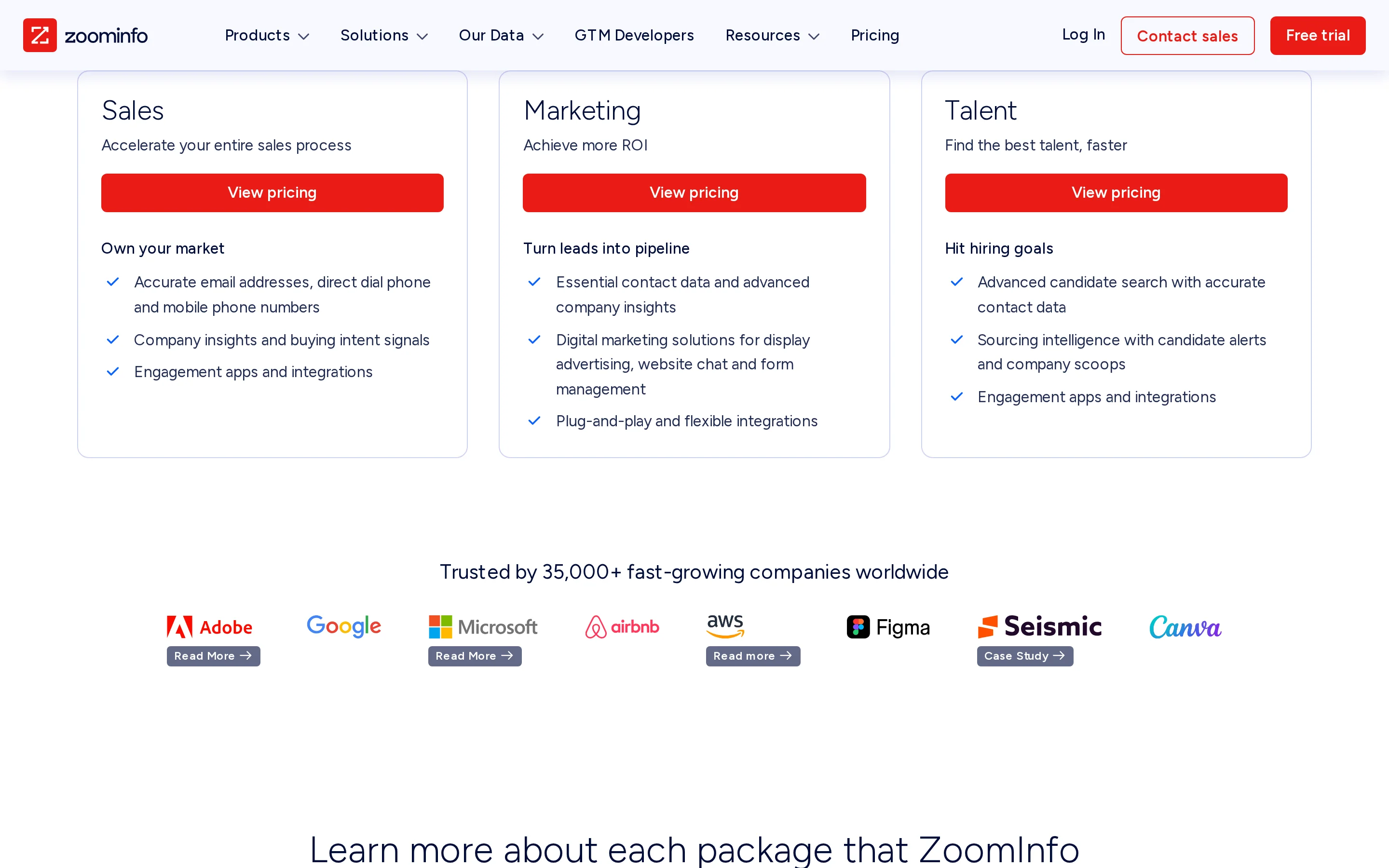
ZoomInfo positions itself as an all-in-one platform covering 'who to reach, how to reach, and when.' It integrates sales, marketing (audience solutions), and talent acquisition into a single ecosystem. Beyond contact data, it provides buying intent signals, account fit scores, and engagement apps. The workflow is holistic: identify high-intent accounts, enrich them with deep firmographic data, prioritize them using AI-driven signals, and then engage via integrated workflows or third-party CRMs. It embeds lead generation within a broader strategy of market intelligence.

The ruling here depends on team maturity. For lean teams or solo founders focused purely on volume cold outreach, Hunter’s email-centric scope is sufficient and less overwhelming. For mature sales organizations needing to prioritize accounts based on intent and budget, ZoomInfo’s full-spectrum intelligence reduces guesswork and aligns sales and marketing efforts more effectively.

Pricing & True Cost of Ownership

Published tier structures, credit scaling mechanics, and total outbound cost.

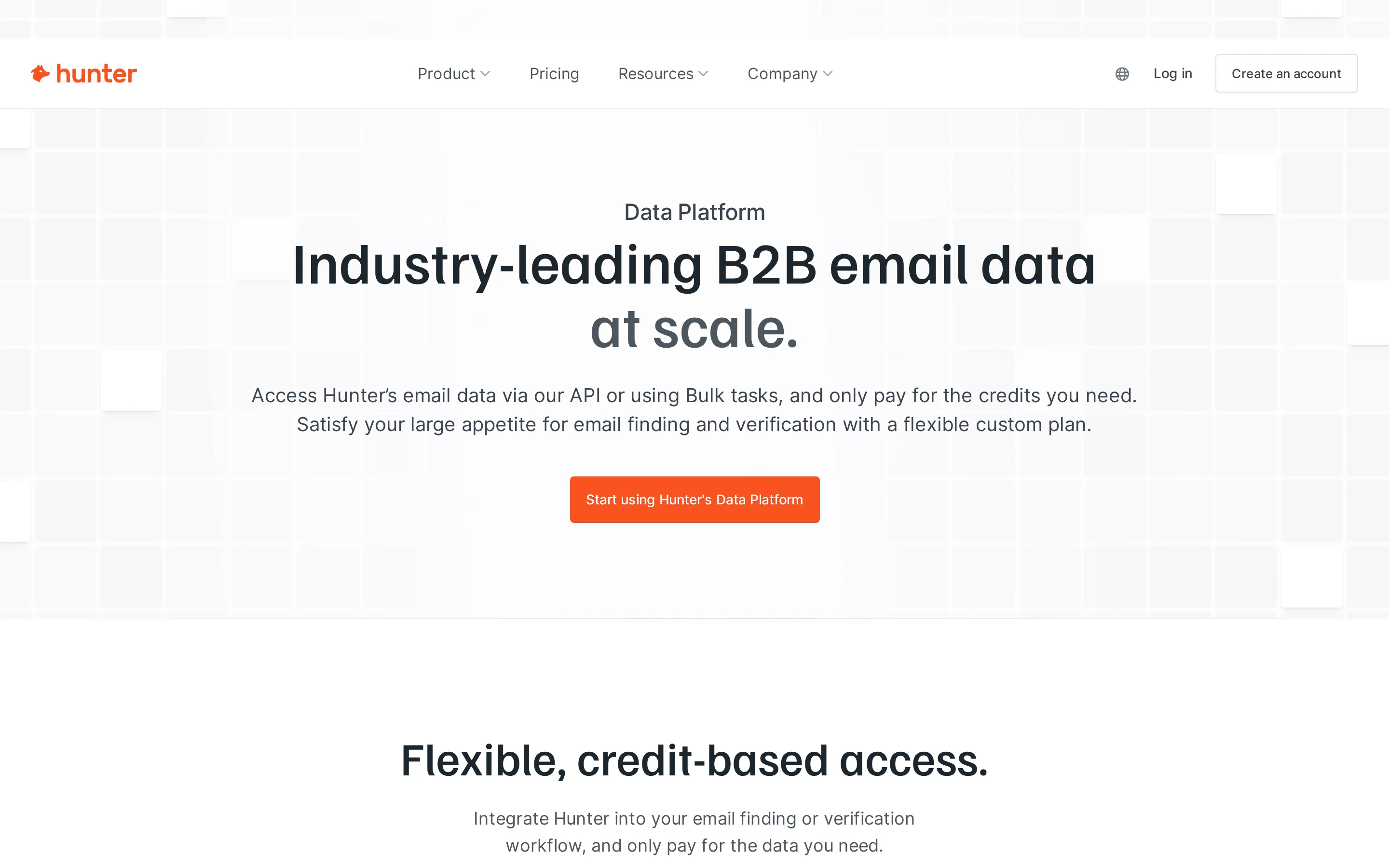
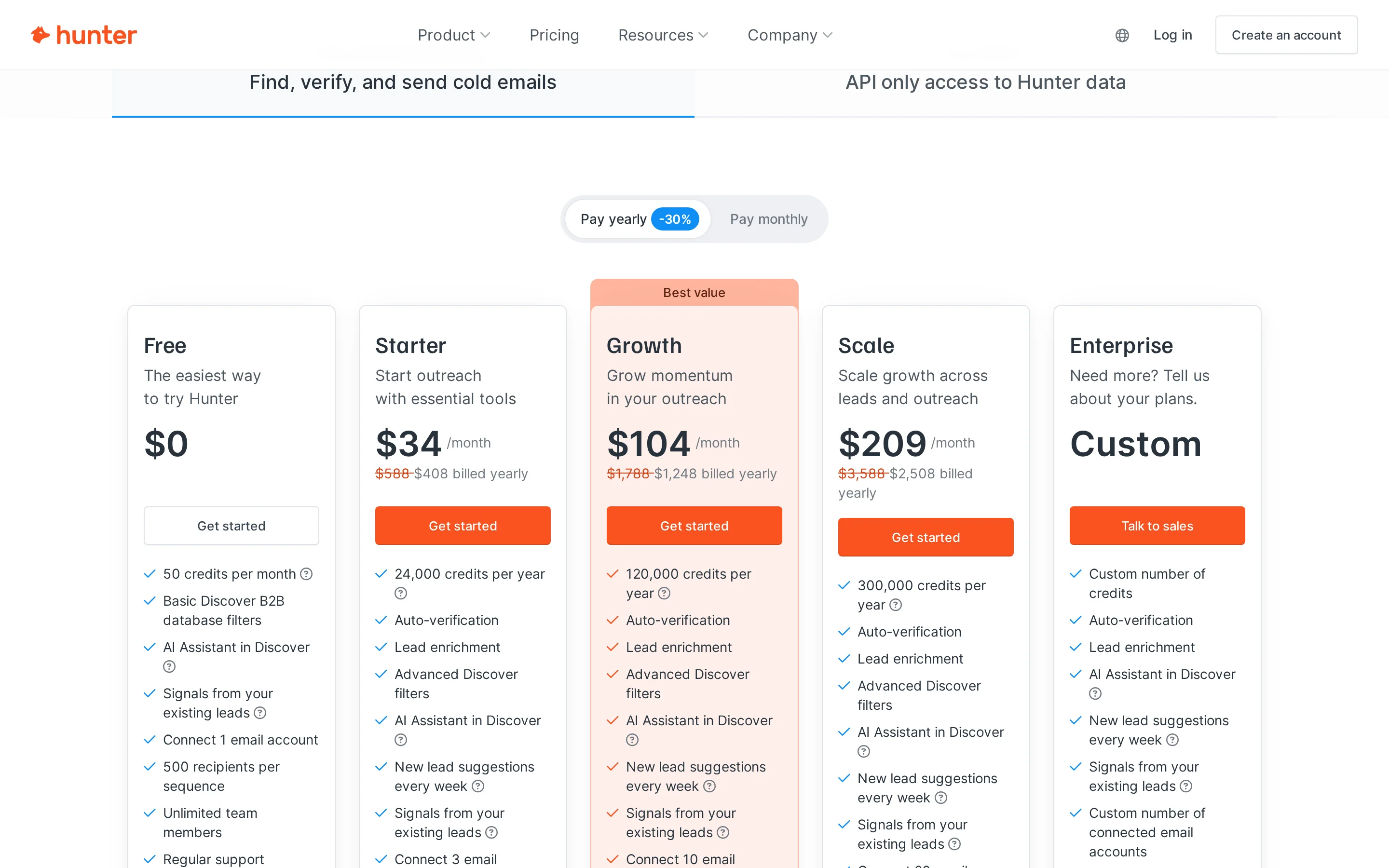
Hunter.io published pricing cards
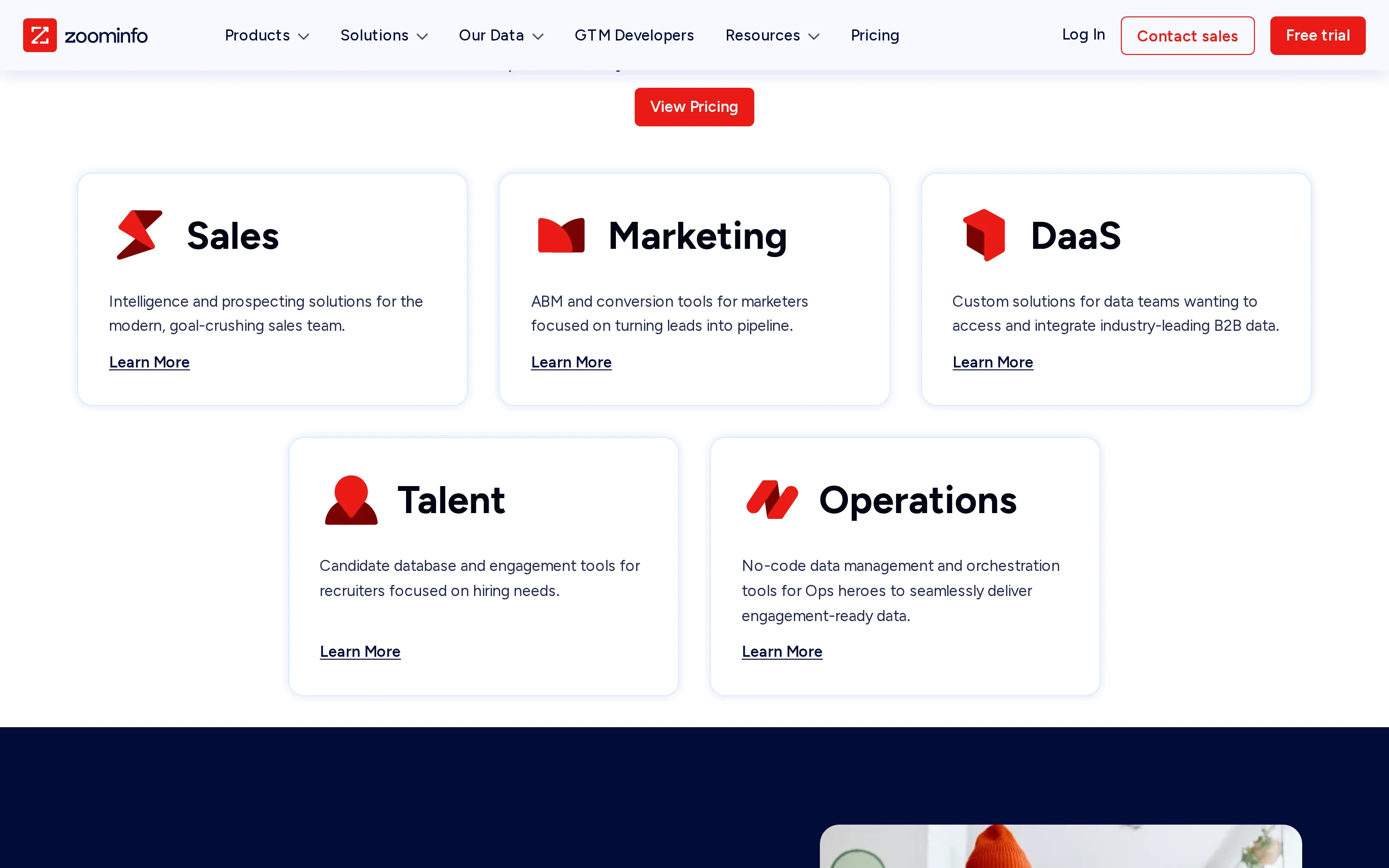
ZoomInfo published pricing cards
Hunter.io Plans
  • Free Plan: $0 — 25 monthly searches, 50 email verifications
  • Starter Plan: $34/month annual ($49/mo monthly) — 500 searches, 1,000 verifications, 3 email accounts
  • Growth Plan: $104/month annual ($149/mo monthly) — 2,500 searches, 5,000 verifications, 10 email accounts
  • Business Plan: $209/month annual ($299/mo monthly) — 10,000 searches, 20,000 verifications, 20 email accounts
ZoomInfo Plans
  • Professional: Custom Enterprise Pricing (Contact Sales)
  • Copilot Advanced: Custom Enterprise Pricing (Contact Sales)
  • Copilot Enterprise: Custom Enterprise Pricing (Contact Sales)
Total Cost Analysis & Verdict

Hunter.io offers a transparent, low-barrier entry point with predictable credit-based costs, making it accessible for startups and mid-market teams. ZoomInfo requires a significant financial commitment with opaque, quote-based pricing, positioning it as an investment for established enterprises. Hunter’s model rewards efficiency (pay for what you use), while ZoomInfo’s model rewards adoption (pay for seat access to a vast database).

True Cost Calculation:

of Ownership Analysis

For a 5-person sales team needing 10,000 verified leads per month: Using Hunter.io's Scale plan ($209/mo annual rate), the team gets 25,000 credits/month, which covers both finding and verifying well above the 10k requirement. Total cost: ~$2,508/year. Adding 5 extra email accounts for outreach (~$50/mo) brings it to ~$3,108/year. For ZoomInfo, assuming a baseline Professional license for 5 seats, industry estimates suggest a minimum annual contract of $15,000-$25,000+ depending on region and negotiation. Hunter.io is approximately 5-8x more cost-effective for this specific volume.

Which Fits Your Outbound Model?

Match your team size, deal complexity, and lead volume to the right engine.

Use CaseHunter.ioZoomInfoRecommendation
High-Volume Cold Outbound⭐⭐⭐⭐⭐⭐⭐⭐Hunter.io is built for high-volume email discovery and sequencing at a fraction of the cost. Its credit model allows teams to scale outreach without prohibitive per-seat fees.
Enterprise Account-Based Selling⭐⭐⭐⭐⭐⭐⭐ZoomInfo provides superior firmographic data, buying intent signals, and org chart intelligence essential for targeting complex enterprise deals.
Developer Data Pipelines⭐⭐⭐⭐⭐⭐⭐⭐Hunter.io’s API and bulk task capabilities allow developers to easily integrate email finding and verification into custom applications with flexible credit purchasing.
Sales Team Efficiency⭐⭐⭐⭐⭐⭐⭐⭐ZoomInfo’s native CRM integrations and AI-driven insights reduce manual research time, allowing reps to focus on selling rather than hunting for data.

Where Each Platform Falls Short

Constructive limitations and architectural trade-offs to weigh before signing.

Where Hunter.io Falls Short
  • Lacks deep firmographic and technographic data compared to ZoomInfo.
  • No native buying intent signals or account prioritization features.
  • Does not provide direct dial phone numbers or mobile contacts.
Where ZoomInfo Falls Short
  • Significantly higher cost with opaque, quote-based pricing models.
  • Requires long-term contracts and has high switching costs.
  • Overkill for small teams or simple email-only outreach needs.

The Switching Playbook

What you gain and give up when migrating across platforms.

Switching to Hunter.io
You Gain
  • Drastic reduction in software spend for high-volume outreach.
  • Greater flexibility to scale credits up or down monthly.
  • Simpler, more transparent data acquisition process.
Switching to ZoomInfo
You Gain
  • Access to comprehensive buying intent and account intelligence.
  • Deeper CRM integration and native workflow automation.
  • Broader contact data including direct dials and mobile numbers.

Frequently Asked Questions

Direct technical answers about Hunter.io and ZoomInfo.

Which platform has better data accuracy?

Both platforms pride themselves on high accuracy. Hunter.io uses real-time web crawling and auto-verification, ensuring fresh data. ZoomInfo uses a proprietary network and continuous monitoring. Hunter is often preferred for email-specific accuracy, while ZoomInfo excels in role and company data accuracy.

How do their starting costs compare?

Hunter.io starts at $49/month for the Starter plan. ZoomInfo does not publish public pricing and requires contacting sales for a quote, typically resulting in much higher annual commitments for enterprise teams.

Can I connect unlimited mailboxes?

Hunter.io allows unlimited users on all plans, but mailbox connections are limited per plan (e.g., 1 for Starter, 3 for Growth, 10 for Scale) with options to add more. ZoomInfo’s mailbox integration depends on the specific CRM or outreach tool integration used.

Which tool is easier to learn?

Hunter.io is generally considered easier to learn due to its focused interface on email finding and verification. ZoomInfo has a steeper learning curve due to its extensive features, dashboards, and data points.

Final Verdict & Recommendation
Choose Hunter.io if: Choose Hunter.io if you need a cost-effective, scalable solution for high-volume email finding, verification, and outreach sequencing. It is ideal for startups, agencies, and sales teams focused on pure outbound execution without the need for deep intent data.
Choose ZoomInfo if: Choose ZoomInfo if you require comprehensive B2B intelligence, including buying intent, firmographic data, and direct contact details for enterprise account-based selling. It is best suited for mature sales organizations willing to invest in a full-stack GTM platform.

Sources & Methodology

Every claim on this page is grounded in official vendor documentation and live audits.

Looking for an Autonomous Alternative? Compare with SendroAI

See how SendroAI replaces manual research, credit limits, and deliverability traps with full autonomous execution.

Ready to Automate Your Cold Email Outreach?

SendroAI conducts deep prospect research, crafts tailored 1:1 emails, and protects deliverability across unlimited mailboxes automatically.