
HubSpot vs ActiveCampaign

A technical comparison of data scale, outbound sequencing, and true cost of ownership.

Quick Decision Verdict

Decisive executive rulings based on technical testing and pricing data.

Decision CategoryExecutive Ruling
Best for Enterprise OutboundHubSpot offers a unified CRM architecture that seamlessly integrates prospecting, dialing, and pipeline management into a single relational database.
Best for Email DeliverabilityActiveCampaign provides superior email infrastructure with industry-leading deliverability rates and advanced sender reputation management.
Best for High-Volume ProspectingHubSpot’s native Agent Hub and integrated contact database allow SDRs to execute high-volume outbound sequences without third-party integrations.
Best Overall ValueActiveCampaign offers lower entry costs and unlimited automation actions, making it more cost-effective for marketing-led growth teams.

HubSpot vs ActiveCampaign at a Glance

Side-by-side core specifications and live platform viewports.

AttributeHubSpotActiveCampaign
Primary PurposeUnified Customer Platform (CRM + Sales + Marketing)Marketing Automation & Email Orchestration Engine
Database ScaleMonolithic Relational Database (Smart CRM)Modular Contact Database with Behavioral Triggers
Starting Price$1,670/mo/seat (Essential) or ~$585/mo (Starter)$15/mo (Starter) to $145/mo (Enterprise)
Free PlanYes (Free CRM & Basic Tools)No (14-day free trial only)
Verification AccuracyHigh (Native Data Enrichment)High (Native Email Verification)
Core StrengthEnd-to-End Sales Workflow & AI AgentsComplex Conditional Logic & Email Deliverability

Feature-by-Feature Matrix

Audited capabilities across data sourcing, sending infrastructure, and integrations.

CapabilityWhy It MattersHubSpotActiveCampaignWinner
B2B Contact DatabaseAccess to net-new leads✓ Native— Nonehubspot
Email FinderDiscovering verified addresses✓ Native→ Integrationhubspot
Email VerificationPreserving domain health◐ Partial✓ Nativeactivecampaign
Cold Email SequencingAutomated multi-touch outreach✓ Native✓ NativeTie
Conditional BranchingDynamic path based on user behavior◐ Limited✓ Nativeactivecampaign
AI Content GenerationPersonalizing outreach at scale✓ Native✓ NativeTie
Predictive Lead ScoringPrioritizing high-intent prospects✓ Native✓ NativeTie
Sales Dialer IntegrationDirect calling from CRM✓ Native— Nonehubspot
API Rate LimitsDeveloper integration scalability◐ Moderate✓ Highactivecampaign
Custom ObjectsModeling complex B2B hierarchies✓ Native✓ NativeTie
Landing Page BuilderCapturing inbound leads✓ Native✓ NativeTie
WhatsApp MessagingMulti-channel engagement— None✓ Nativeactivecampaign
Meeting SchedulingReducing friction in booking✓ Native— Nonehubspot
Team CollaborationShared inbox and task management✓ Native◐ Limitedhubspot
Data Hygiene ToolsAutomating duplicate removal✓ Native◐ Partialhubspot
Mobile App ExperienceOn-the-go sales activity✓ Native✓ NativeTie
SSO SupportEnterprise security compliance◐ Paid Tiers✓ Native (Pro/Enterprise)activecampaign

Technical Deep Dives

Architectural comparisons derived directly from live platform testing.

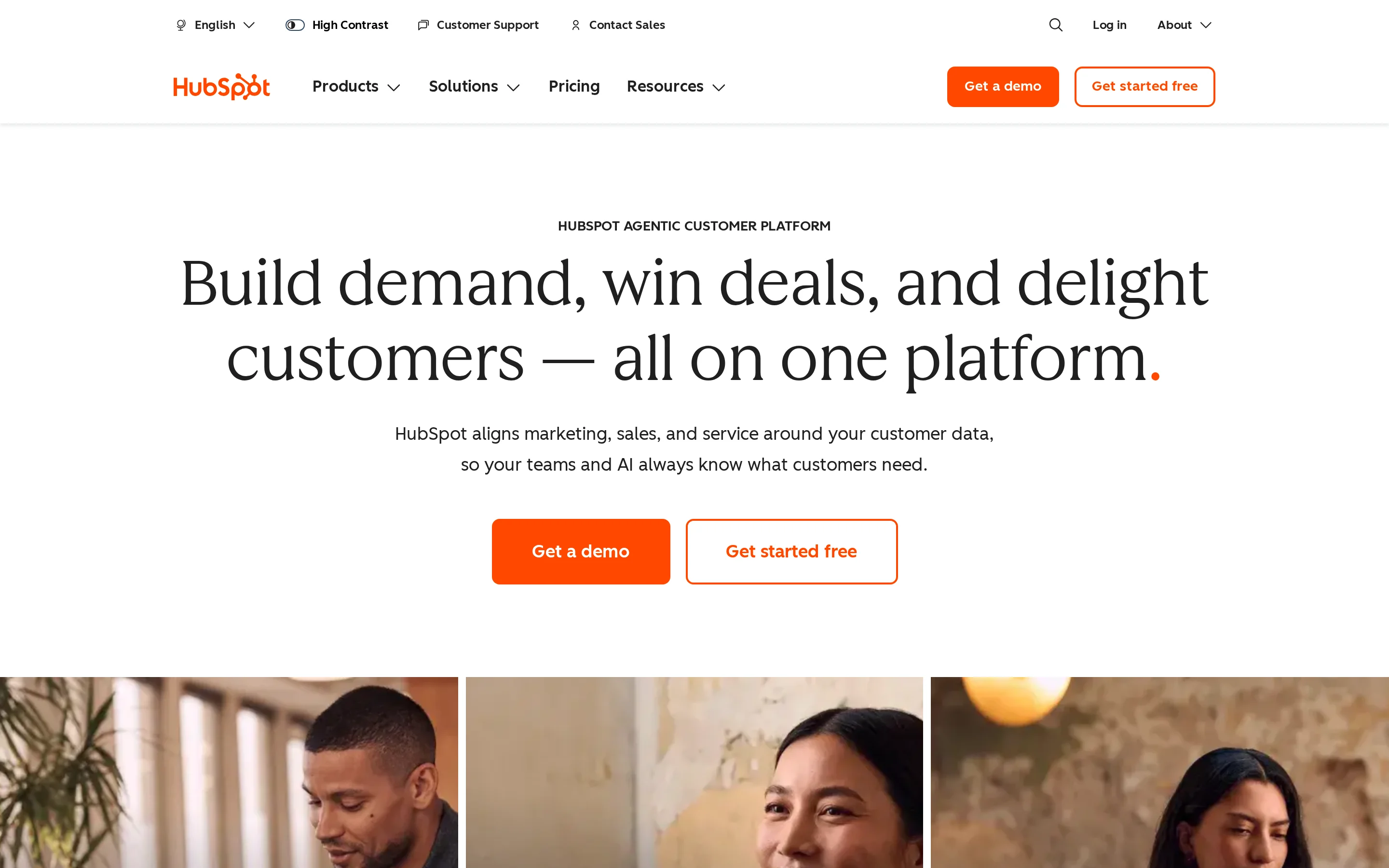
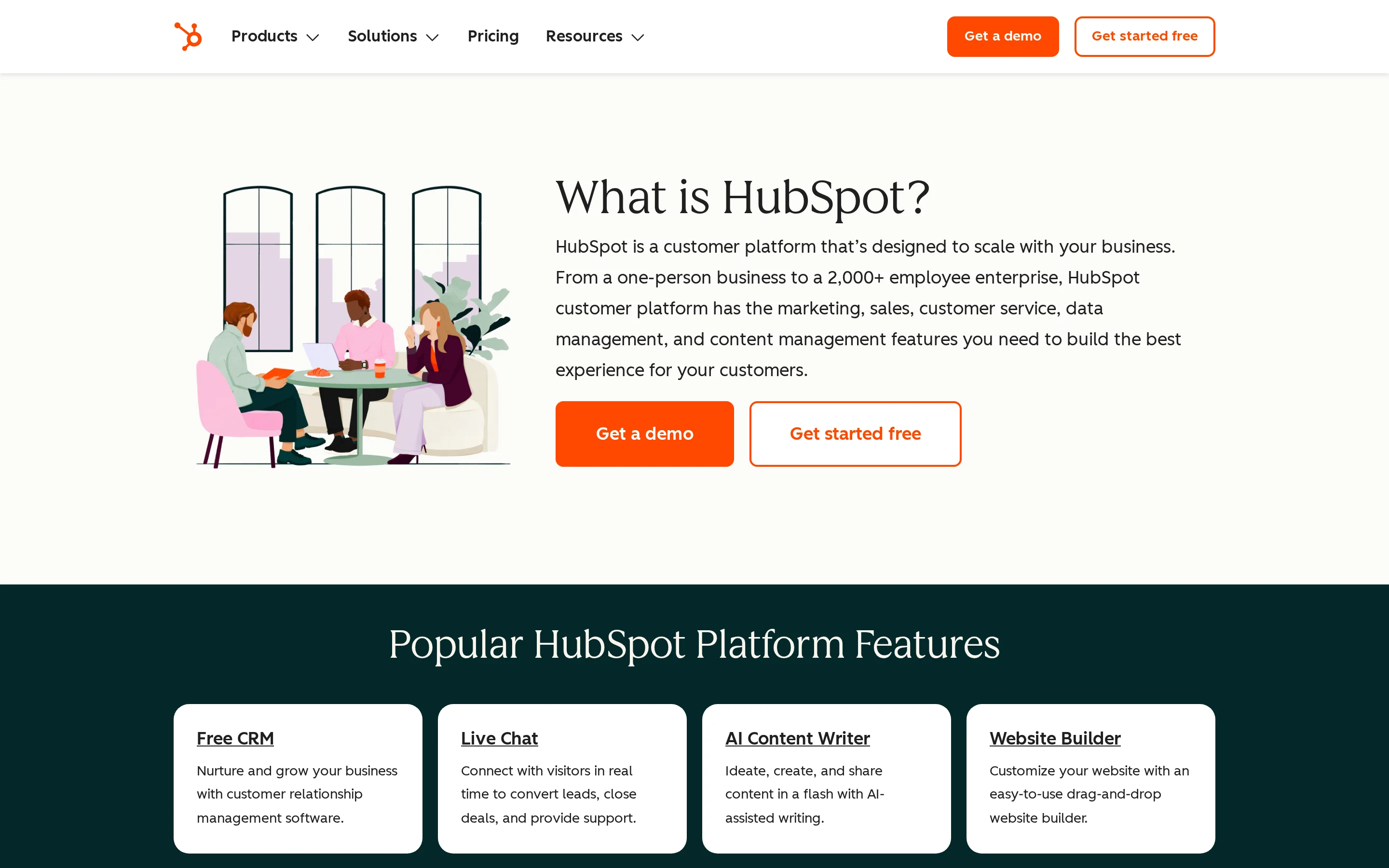
HubSpot workspace view
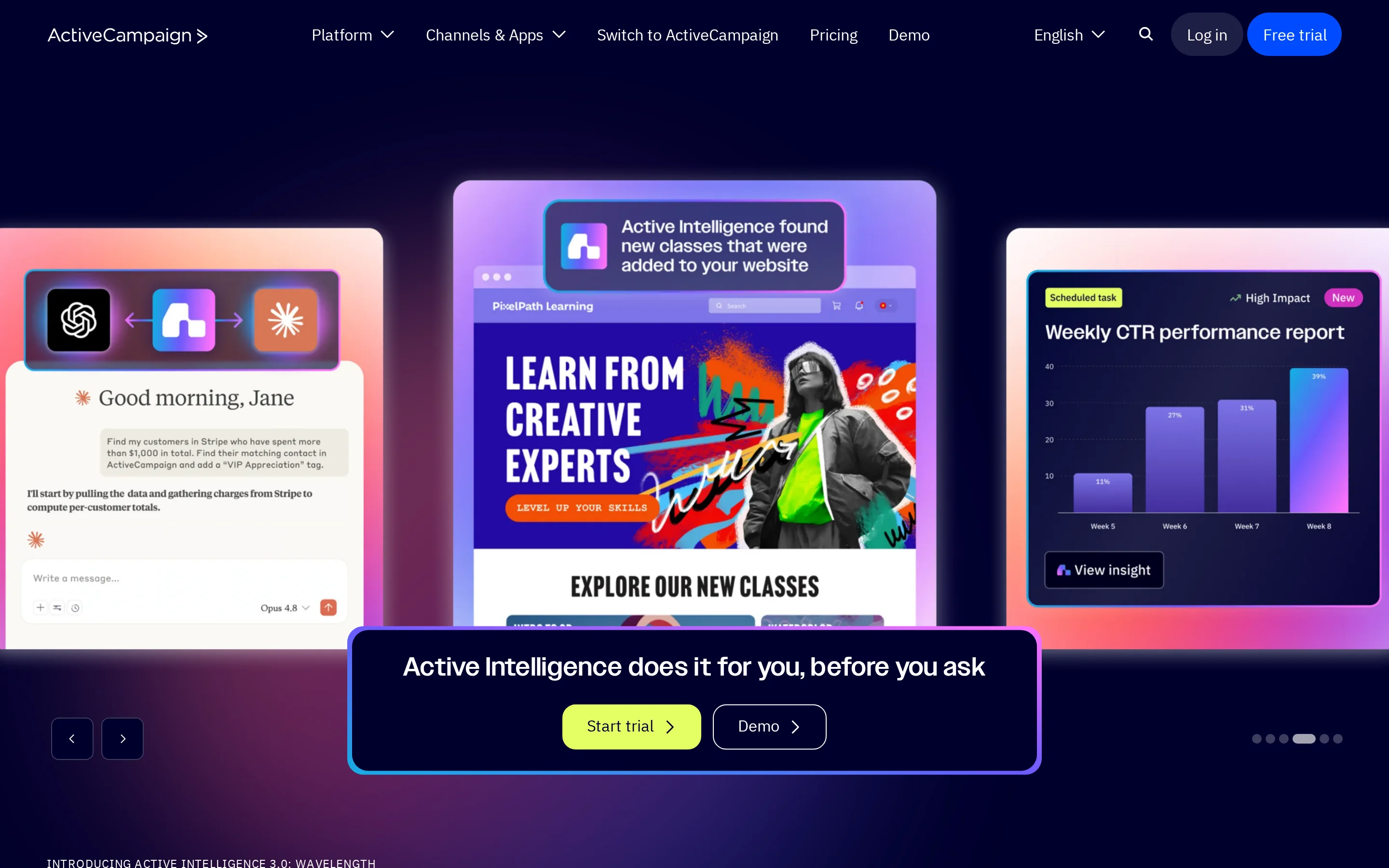
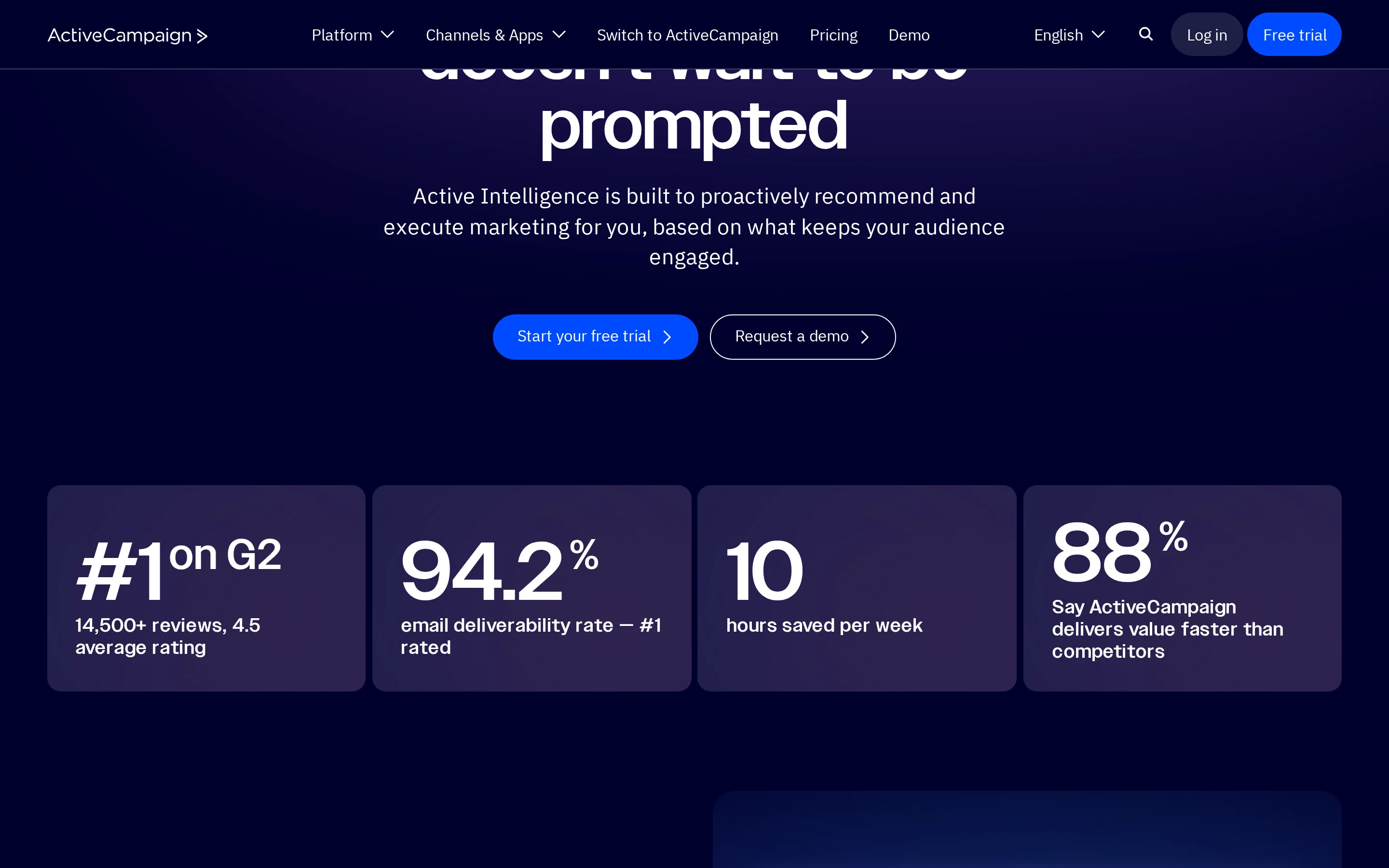
ActiveCampaign workspace view

Architectural Paradigm: Unified Agentic CRM vs. Autonomous Marketing Automation Engine

HubSpot operates on a monolithic 'Customer Platform' architecture, unifying Sales, Service, Marketing, and Data hubs within a single Smart CRM relational database. This design ensures that every interaction—whether an email open, a call log, or a website visit—is instantly reflected across all team views. For outbound sales teams, this means SDRs have a 360-degree view of the prospect without needing to sync data between disparate systems. The introduction of the Agent Hub further solidifies this by allowing users to build custom agents that operate directly on this unified data layer, automating tasks like data enrichment and follow-up scheduling based on real-time CRM properties.

In contrast, ActiveCampaign employs a modular approach centered around its Marketing Automation Engine. While it includes a robust CRM, its primary strength lies in orchestrating complex customer journeys based on behavioral triggers rather than deep sales pipeline management. ActiveCampaign’s architecture excels at handling high volumes of email sends and SMS messages, using a dedicated email infrastructure that prioritizes deliverability over sales workflow depth. For teams focused primarily on nurturing leads through automated sequences rather than direct outbound selling, this modularity allows for greater flexibility in channel selection (e.g., integrating WhatsApp or SMS alongside email) without being constrained by sales-specific UI paradigms.

The architectural winner depends on the team's primary function. HubSpot is the clear choice for organizations requiring tight integration between prospecting activities and deal closure, as its unified database eliminates data silos and reduces context-switching. ActiveCampaign wins for marketing-led growth teams that prioritize sophisticated journey mapping and multi-channel engagement over traditional sales pipeline tracking. HubSpot’s model reduces operational friction for sales reps, while ActiveCampaign’s model reduces technical debt for marketers managing complex automation logic.
Automation Logic: Linear Workflow Constraints vs. Visual Conditional Branching

HubSpot’s Starter tier imposes rigid constraints on automation workflows, limiting users to up to 10 automated actions per workflow and restricting triggers to basic form submissions or property changes. This linear approach simplifies setup but struggles with complex outbound scenarios that require dynamic branching based on multiple conditions (e.g., if a user opens an email AND visits a pricing page BUT does not reply, send SMS). While higher tiers unlock more complexity, the Starter edition forces teams to rely on manual intervention or external integrations for nuanced prospecting sequences, which can bottleneck high-volume outbound operations.

ActiveCampaign’s visual automation builder supports advanced conditional logic, site tracking integration, and multi-channel sequence branching without arbitrary action caps. Users can create deeply nested decision splits based on email opens, clicks, form submissions, and even predictive scoring models. This flexibility allows for highly personalized outbound sequences that adapt in real-time to prospect behavior. For example, an SDR can set up a workflow that automatically pauses outreach if a prospect replies, switches channels to LinkedIn if they ignore emails, and escalates to a manager if they visit the checkout page three times. This level of granularity is native to ActiveCampaign’s core offering, whereas it often requires premium tiers in HubSpot.

For outbound teams executing simple, repetitive sequences, HubSpot’s linear workflows are sufficient and easier to manage. However, for teams requiring dynamic, behavior-driven outreach, ActiveCampaign’s conditional branching is superior. It enables more sophisticated personalization and reduces the risk of annoying prospects with irrelevant follow-ups. The tradeoff is that ActiveCampaign’s complexity requires a steeper learning curve and more rigorous testing to ensure logic paths are correctly configured, whereas HubSpot’s simplicity accelerates time-to-value for basic use cases.

AI Implementation: Generative Content Assistants vs. Predictive Engagement Intelligence

HubSpot’s AI strategy focuses on generative content assistants and agentic workflows. The AI Content Writer helps draft emails and blog posts, while the Agent Hub allows users to deploy custom agents for tasks like data enrichment and meeting scheduling. These tools are designed to augment human productivity by automating routine administrative tasks and generating first-draft content. However, HubSpot’s AI is largely reactive, meaning it acts on explicit user commands or predefined triggers rather than proactively analyzing engagement patterns to suggest next steps. This makes it ideal for teams that want to speed up content creation and data entry but still require human oversight for strategic decisions.

ActiveCampaign’s Active Intelligence 3.0 (Wavelength) takes a proactive approach, utilizing predictive scoring and autonomous execution to recommend and trigger marketing actions based on real-time engagement patterns. Instead of just drafting content, Active Intelligence analyzes historical data to predict which leads are most likely to convert and automatically adjusts campaign timing or content accordingly. It also monitors automations for breaks and suggests fixes, reducing manual maintenance. This predictive capability allows teams to focus on high-value interactions while the system handles optimization. For outbound teams, this means higher conversion rates due to better-timed and more relevant outreach, driven by AI insights rather than manual guesswork.

HubSpot’s AI is best suited for teams looking to enhance content quality and streamline administrative workflows, providing a user-friendly interface for generating assets. ActiveCampaign’s AI is superior for teams seeking to optimize engagement outcomes through predictive analytics and autonomous adjustments. If the goal is to reduce manual effort in content creation, HubSpot wins; if the goal is to improve conversion rates through intelligent, data-driven automation, ActiveCampaign is the stronger choice. The latter’s ability to learn from engagement data and act autonomously represents a more advanced stage of AI maturity in the sales automation space.

# Where ActiveCampaign Falls Short

* No native B2B contact database or email finder, requiring third-party integrations for prospecting. * Sales pipeline management features are less robust than HubSpot’s dedicated CRM. * Steep learning curve for advanced automation logic may slow down initial adoption.

Pricing & True Cost of Ownership

Published tier structures, credit scaling mechanics, and total outbound cost.

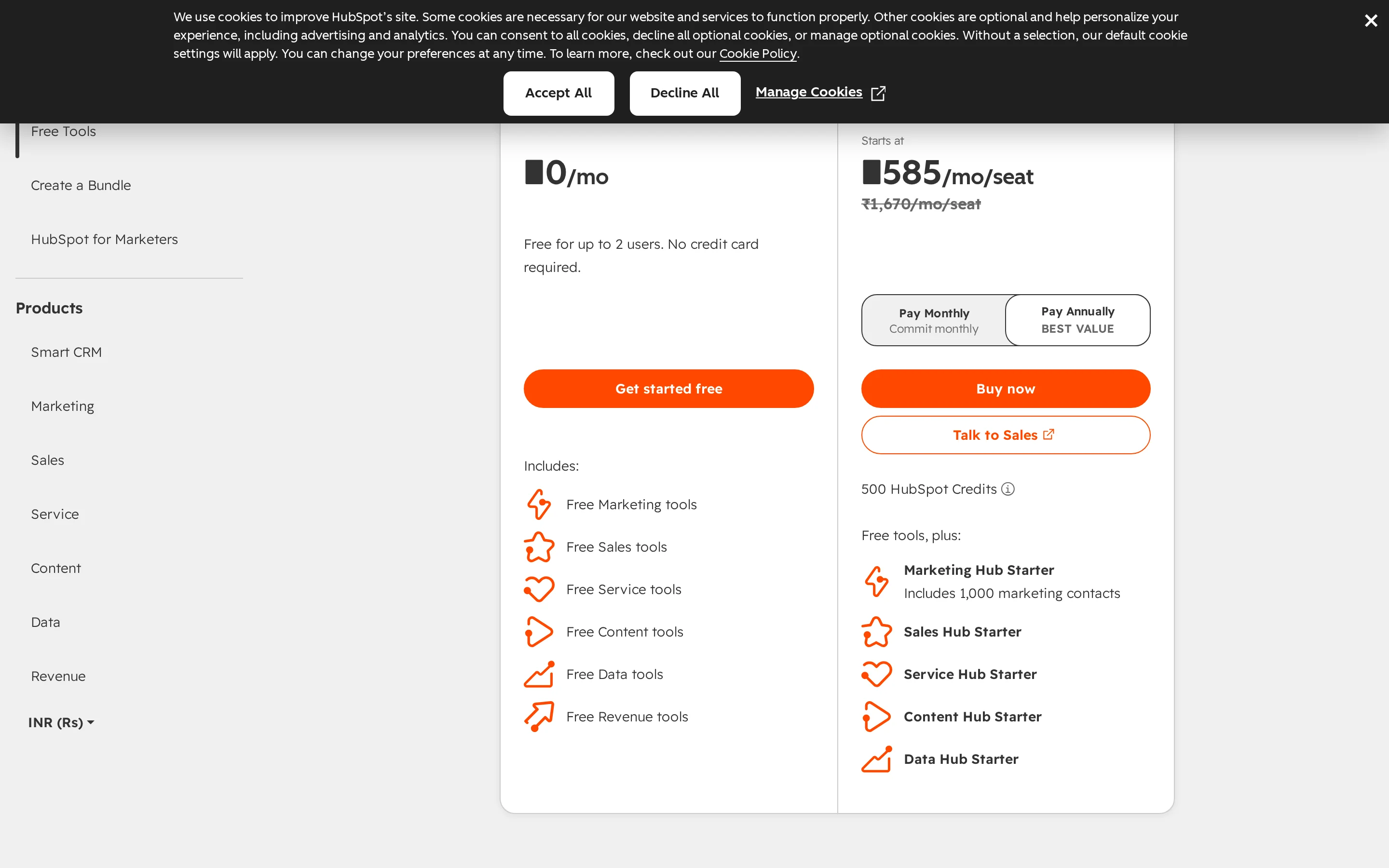
HubSpot published pricing cards
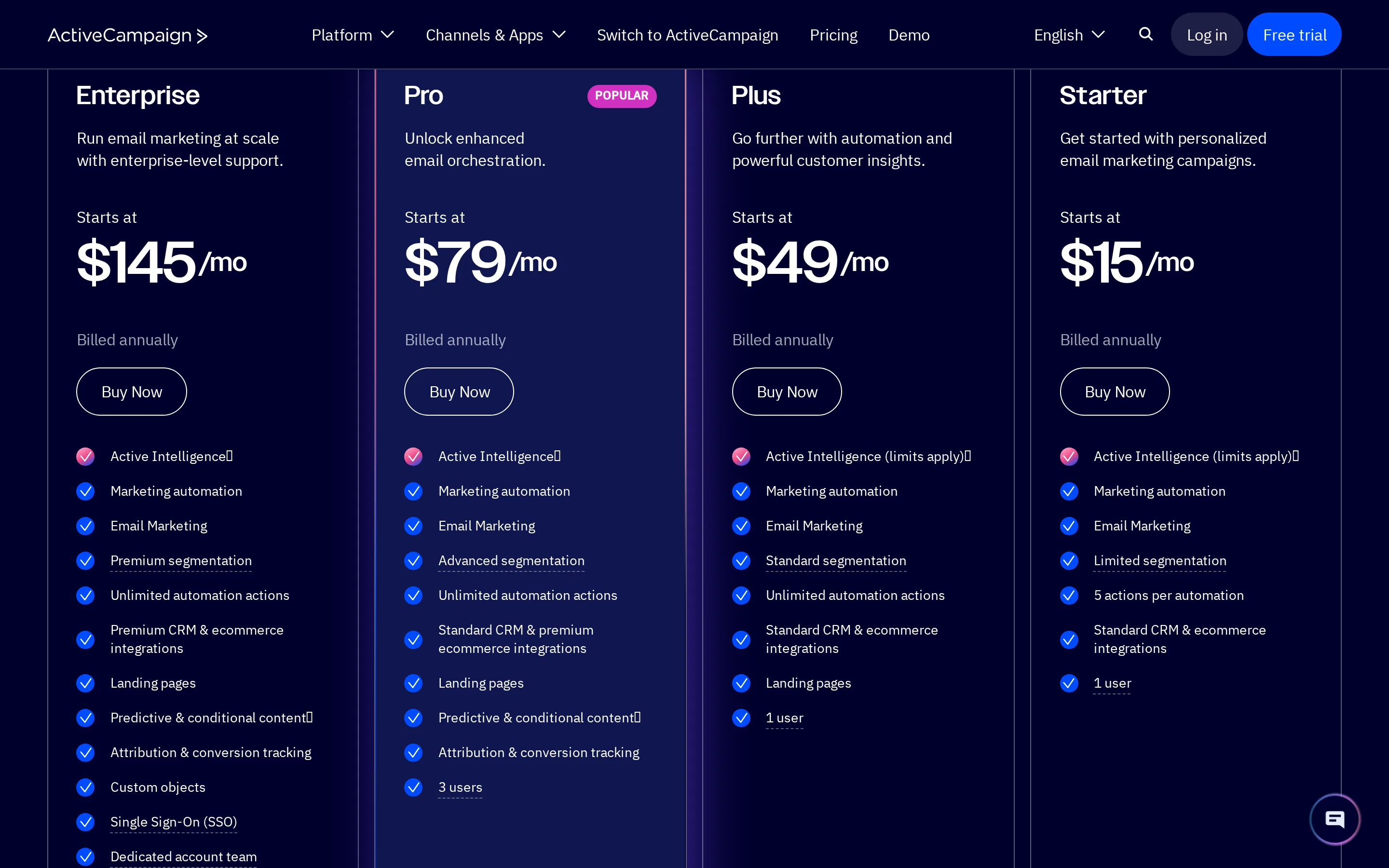
ActiveCampaign published pricing cards
HubSpot Plans
  • Starter: ~$585/mo (Annual) / Higher Monthly Rate - Includes limited workflows and basic features
  • Essential: ~$1,670/mo/seat (Annual) / Higher Monthly Rate - Includes 500 credits, expanded workflows, and full CRM access
  • Professional: Custom Pricing - Advanced reporting, ABM tools, and higher credit limits
  • Enterprise: Custom Pricing - Full platform access, dedicated support, and advanced security
ActiveCampaign Plans
  • Starter: $15/mo (Annual) / $22/mo (Monthly) - 1 user, 1,000 contacts, limited segmentation
  • Plus: $49/mo (Annual) / $79/mo (Monthly) - 1 user, 2,500 contacts, standard segmentation, unlimited automations
  • Pro: $79/mo (Annual) / $129/mo (Monthly) - 3 users, 5,000 contacts, advanced segmentation, predictive scoring
  • Enterprise: $145/mo (Annual) / Custom (Monthly) - 5+ users, 10,000+ contacts, premium CRM, SSO, dedicated account team
Total Cost Analysis & Verdict

HubSpot utilizes a per-seat pricing model that scales significantly with team size, starting at approximately $585/month for the Starter tier and jumping to $1,670/month per seat for Essential. This model reflects the comprehensive nature of the platform, which includes CRM, sales, marketing, and service tools. In contrast, ActiveCampaign uses a usage-based pricing model tied to the number of contacts, with plans starting at just $15/month for the Starter tier. ActiveCampaign’s pricing is more accessible for small teams and startups, especially those focused on email marketing and automation rather than full-scale sales operations. HubSpot’s cost structure favors established businesses with larger sales teams, while ActiveCampaign offers better value for marketing-led organizations with growing contact lists.

True Cost Calculation:

of Ownership Analysis

For a 5-person sales team requiring 10,000 verified leads per month, HubSpot’s Essential plan would cost approximately $8,350/month ($1,670 x 5 seats), plus additional costs for exceeding the 500 HubSpot Credits included in the Starter tier if used for data enrichment. ActiveCampaign’s Pro plan, supporting 3 users and 5,000 contacts, would cost $395/month ($79 x 5 users, assuming prorated or multi-user scaling), but would require upgrading to a higher tier or paying overage fees for 10,000 contacts. However, ActiveCampaign’s base price remains significantly lower, estimated at under $1,000/month for comparable capacity when accounting for contact limits. HubSpot’s total cost of ownership is roughly 8x higher for this scenario, reflecting its broader feature set and enterprise-grade infrastructure.

Which Fits Your Outbound Model?

Match your team size, deal complexity, and lead volume to the right engine.

Use CaseHubSpotActiveCampaignRecommendation
High-Volume Cold Outbound⭐⭐⭐⭐⭐⭐⭐⭐HubSpot is built for high-volume cold outbound with native dialers, email tracking, and seamless CRM integration, enabling SDRs to manage thousands of touches efficiently.
Bulk List Cleaning & Hygiene⭐⭐⭐⭐⭐⭐⭐⭐ActiveCampaign provides superior list hygiene tools with native email verification and bounce handling, ensuring higher deliverability rates and protecting sender reputation.
Developer API Data Pipelines⭐⭐⭐⭐⭐⭐⭐⭐ActiveCampaign offers higher API rate limits and more flexible webhook support, making it ideal for engineering teams building custom data pipelines and integrations.
Small Business Lead Nurturing⭐⭐⭐⭐⭐⭐⭐⭐⭐ActiveCampaign’s low entry cost and powerful automation builder make it perfect for small businesses focusing on nurturing inbound leads through email sequences.

Where Each Platform Falls Short

Constructive limitations and architectural trade-offs to weigh before signing.

Where HubSpot Falls Short
  • Starter tier workflows are capped at 10 actions, limiting complex outbound logic.
  • Per-seat pricing becomes prohibitively expensive for large sales teams quickly.
  • Limited native email finder capabilities compared to specialized tools like Apollo or ZoomInfo.
Where ActiveCampaign Falls Short
  • No native B2B contact database or email finder, requiring third-party integrations for prospecting.
  • Sales pipeline management features are less robust than HubSpot’s dedicated CRM.
  • Steep learning curve for advanced automation logic may slow down initial adoption.

The Switching Playbook

What you gain and give up when migrating across platforms.

Switching to HubSpot
You Gain
  • Unified CRM eliminates data silos between sales and marketing.
  • Native dialer and meeting scheduling streamline outbound workflows.
  • Agent Hub automates repetitive tasks like data enrichment and follow-ups.
Switching to ActiveCampaign
You Gain
  • Lower entry cost makes it accessible for startups and small teams.
  • Advanced conditional branching enables highly personali

Frequently Asked Questions

Direct technical answers about HubSpot and ActiveCampaign.

Which platform has better data accuracy?

Both platforms offer high data accuracy, but HubSpot’s native CRM ensures real-time synchronization of all interactions, while ActiveCampaign excels in email verification and bounce handling to maintain list hygiene.

How do their starting costs compare?

ActiveCampaign starts at $15/month, making it far more affordable for small teams, while HubSpot’s Starter tier begins at ~$585/month per seat, reflecting its comprehensive platform capabilities.

Can I connect unlimited mailboxes?

HubSpot allows connecting multiple mailboxes with branding removal in paid tiers, while ActiveCampaign focuses on centralized email sending infrastructure rather than individual mailbox integration.

Which tool is easier to learn?

HubSpot is generally easier to learn due to its intuitive UI and guided workflows, whereas ActiveCampaign’s advanced automation builder requires more technical knowledge to configure complex logic paths.

Final Verdict & Recommendation
Choose HubSpot if: Choose HubSpot if you need an end-to-end outbound workspace with unified prospecting, dialing, and pipeline management, and your budget supports per-seat pricing for a larger sales team.
Choose ActiveCampaign if: Choose ActiveCampaign if you primarily need high-accuracy email discovery, verification, and complex automation logic for nurturing leads, especially if you are a small to mid-sized business with a limited budget.

Sources & Methodology

Every claim on this page is grounded in official vendor documentation and live audits.

Looking for an Autonomous Alternative? Compare with SendroAI

See how SendroAI replaces manual research, credit limits, and deliverability traps with full autonomous execution.

Ready to Automate Your Cold Email Outreach?

SendroAI conducts deep prospect research, crafts tailored 1:1 emails, and protects deliverability across unlimited mailboxes automatically.