
Bulk email isn't dead. Relevance is just no longer optional.
In 2026, sending emails at scale without good list hygiene, personalization, and deliverability practices is a fast route to the spam folder. The tools below are ranked on factors that actually matter: deliverability, automation, ease of use, and price.
Snapshot Comparison
| Tool | Use Case | Best For | Strength | Limitation | Pricing |
|---|---|---|---|---|---|
| SendroAI | AI-powered outbound + email marketing | Quality-focused B2B teams | AI-driven personalization at scale | Daily sending limits by design | ~$49–$199/user/month |
| ActiveCampaign | Marketing automation | SMBs & e-commerce | Automation depth | Complex setup | ~$15–$145/month (500–5K contacts) |
| MailerLite | Simple newsletters | Content creators & solopreneurs | Ease of use | Limited advanced automation | ~$10–$50/month (1K–5K subscribers) |
| Brevo (formerly Sendinblue) | Transactional + marketing | E-commerce & SMBs | Transactional email baked in | Pricing by volume | ~$8–$66/month (20K–100K emails) |
| HubSpot Marketing Hub | Full marketing suite | Mid-market & enterprises | All-in-one ecosystem | High cost | ~$45–$3,600/month (1K–10K contacts) |
| Omnisend | E-commerce email + SMS | Online stores | E-commerce focus | Limited B2B use | ~$16–$99/month (1K–5K contacts) |
| Klaviyo | Data-driven email marketing | E-commerce & DTC | Segmentation & analytics | Cost at scale | ~$20–$350/month (500–5K contacts) |
| GetResponse | All-in-one marketing | Growing SMBs | Feature breadth | Feature overkill | ~$15–$145/month (500–5K contacts) |
| AWeber | Newsletter-focused | Beginners & creators | Simplicity | Outdated UX | ~$12.50–$25/month (500–2.5K subscribers) |
| Constant Contact | SMB email marketing | Local businesses & organizations | Ease of setup | Limited scalability | ~$12–$80/month (500–2.5K contacts) |
1. SendroAI
What This Tool Does
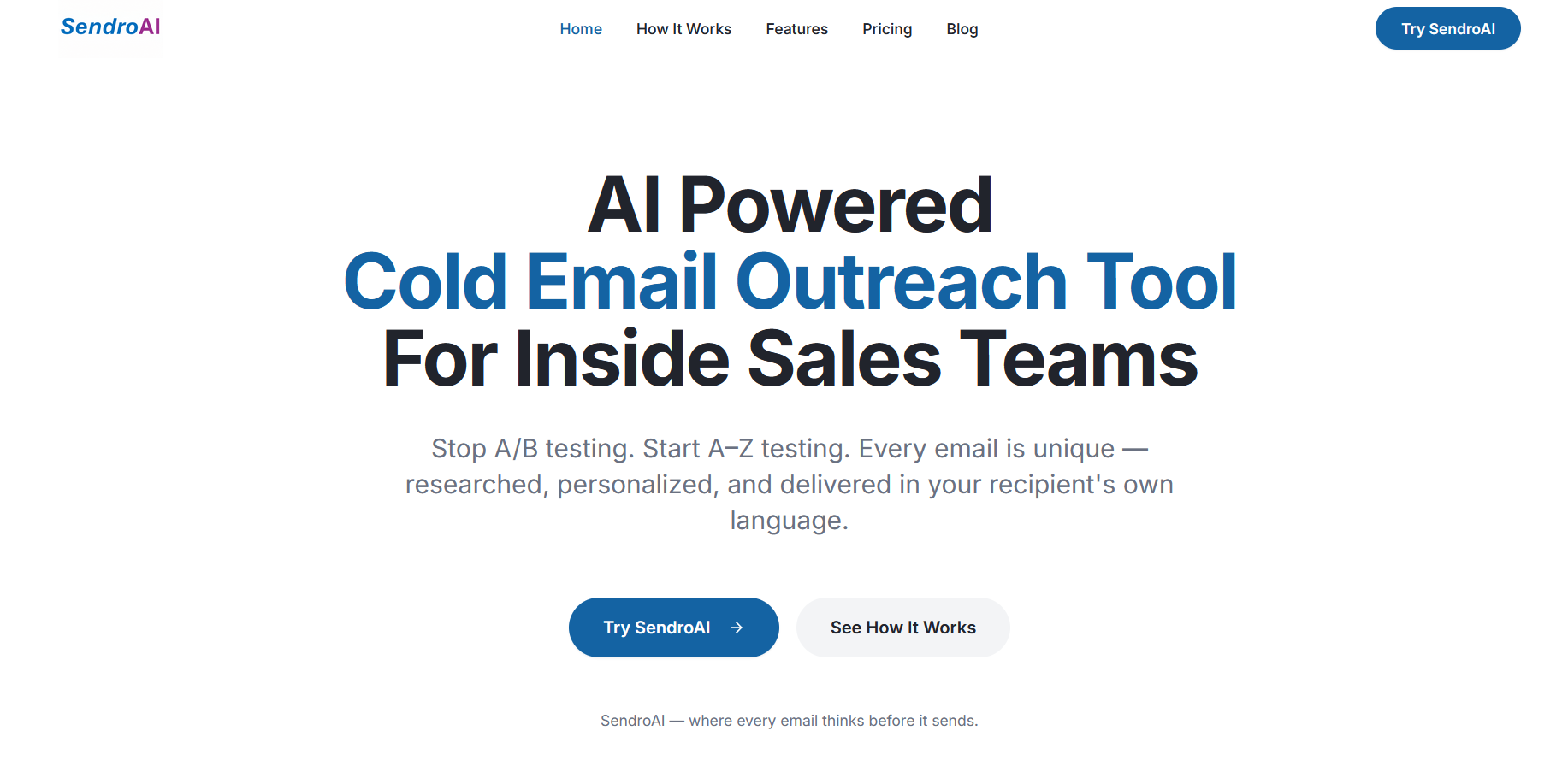
SendroAI is an AI-powered outbound platform built for personalized, high-reply outreach—not mass broadcast blasts. It researches each prospect and generates customized emails automatically.
Why This Tool Matters
Most bulk email tools optimize for deliverability. SendroAI optimizes for relevance—using AI to make every message feel like a one-to-one conversation.
Best For
- B2B sales teams
- Founders
- Agencies
- Anyone who wants replies, not opens
Key Features
- AI-driven prospect research
- Auto-generated human-like emails
- Automated follow-up sequencing
- Continuous A–Z email optimization
- Multilingual outbound support
Pros
- High reply and conversion rates
- No manual A/B testing needed
- Scales personalization effectively
- Strong deliverability standards
Cons
- No free plan
- Fewer native integrations
- Conservative daily sending limits by design
Real-World Use Case
A B2B SaaS founder runs personalized outbound campaigns at scale without sacrificing message quality or relevance.
Pricing Breakdown
Plans range from ~$49–$199/user/month. Pricing is based on quality sending rather than mass volume. No free tier.
Mini Verdict
SendroAI combines the infrastructure of a bulk email tool with the personalization of an AI outbound assistant—without the noise.
2. ActiveCampaign
What This Tool Does
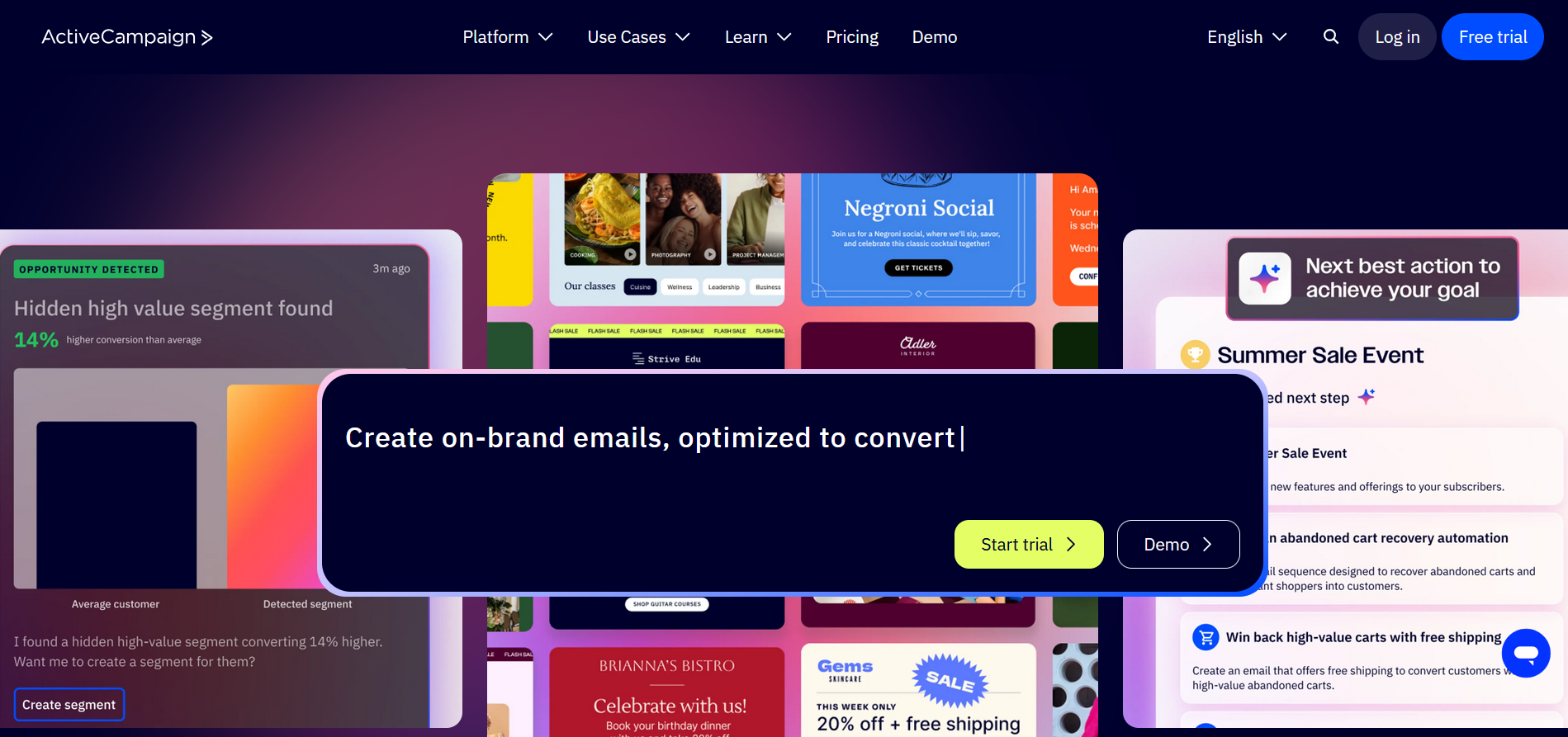
ActiveCampaign is an email marketing and automation platform that combines segmentation, conditional content, and CRM in one system.
Why This Tool Matters
It gives marketers enough power to build sophisticated behaviors triggered by what contacts actually do—not just who they are.
Best For
- SMB marketing teams
- E-commerce brands
- Subscription businesses
Key Features
- Advanced automation builder
- Conditional content
- Lead scoring
- CRM and sales automation
- A/B testing
Pros
- Powerful automation logic
- Strong segmentation
- Good deliverability
Cons
- Steep learning curve
- Contact list management can get expensive
- UI feels dense
Real-World Use Case
An e-commerce store triggers personalized product recommendations based on past purchases, browse history, and email engagement.
Pricing Breakdown
Plans range from ~$15/month (500 contacts) to ~$145/month (5K contacts). Pricing scales with contact count.
Mini Verdict
ActiveCampaign remains the gold standard for marketing automation—if you have the patience to learn it.
3. MailerLite
What This Tool Does
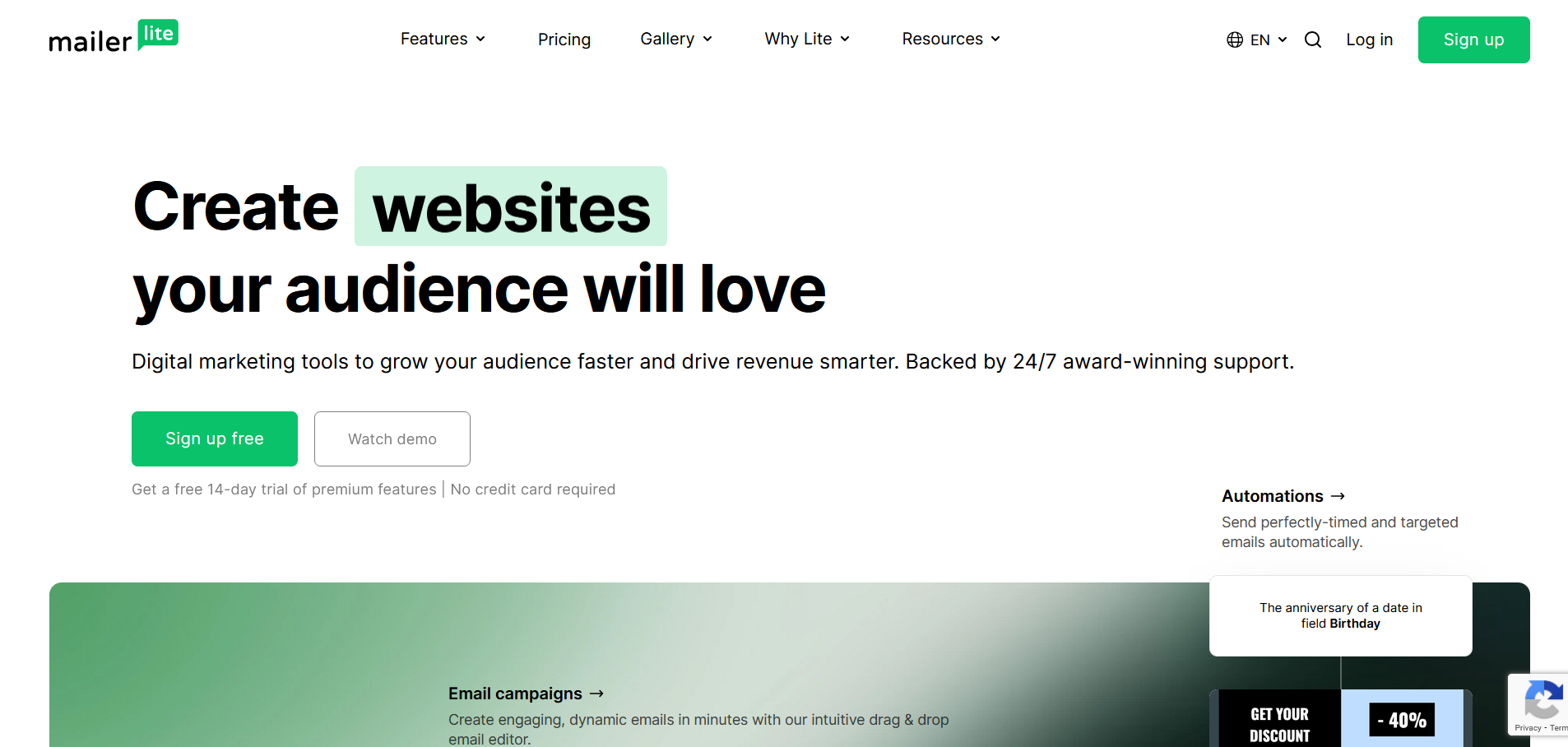
MailerLite is a lightweight email marketing platform that makes it easy to send clean campaigns, build simple automations, and manage subscribers without complexity.
Why This Tool Matters
Not everyone needs an automation powerhouse. MailerLite respects that by keeping things fast, affordable, and distraction-free.
Best For
- Bloggers
- Content creators
- Freelancers
- Small businesses that want simplicity
Key Features
- Drag-and-drop newsletter builder
- Basic automation workflows
- Landing pages
- Subscriber management
- A/B testing
Pros
- Very affordable
- Intuitive editor
- Good deliverability
Cons
- Limited automation depth
- Basic reporting
- Fewer integrations than competitors
Real-World Use Case
A creator sends a weekly newsletter to 3,000 subscribers with minimal setup and consistent deliverability.
Pricing Breakdown
Free plan covers up to 1,000 subscribers. Paid plans start ~$10/month for 1K subscribers.
Mini Verdict
MailerLite is the simplest reliable option if you need basic email marketing without the overhead.
4. Brevo (formerly Sendinblue)
What This Tool Does
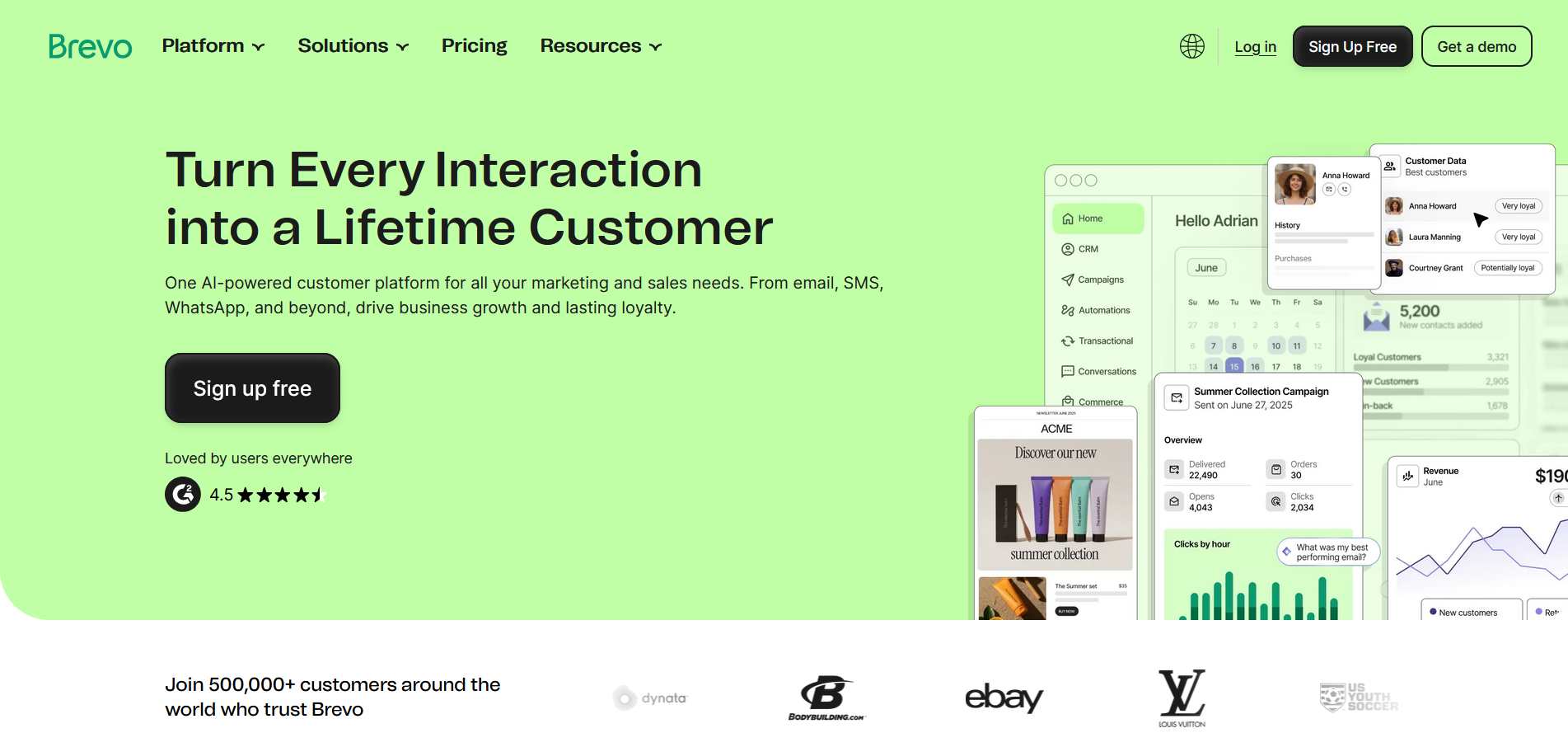
Brevo is an all-in-one platform that handles both marketing & transactional email from a single infrastructure.
Why This Tool Matters
Most email marketing platforms treat transactional emails as an afterthought. Brevo treats them as a first-class feature, which matters for apps and stores that send order confirmations, password resets, and shipping updates alongside campaigns.
Best For
- E-commerce stores
- SaaS companies
- SMBs that send both marketing and transactional emails
Key Features
- Email campaigns & automation
- Transactional email via SMTP/API
- SMS marketing
- Contact management & segmentation
- A/B testing & reporting
Pros
- Strong transactional email support
- Affordable entry pricing
- Good deliverability
- SMS included
Cons
- Pricing scales with volume, not contacts
- Automation less advanced than ActiveCampaign
- UI is functional, not exceptional
Real-World Use Case
An online store sends abandoned cart emails, order confirmations, and weekly promotions from the same platform.
Pricing Breakdown
Free plan includes 300 emails/day. Paid plans start at ~$8/month for 20K emails/month.
Mini Verdict
Brevo is a pragmatic, all-in-one choice when you need both marketing and transactional email without managing two systems.
5. HubSpot Marketing Hub
What This Tool Does
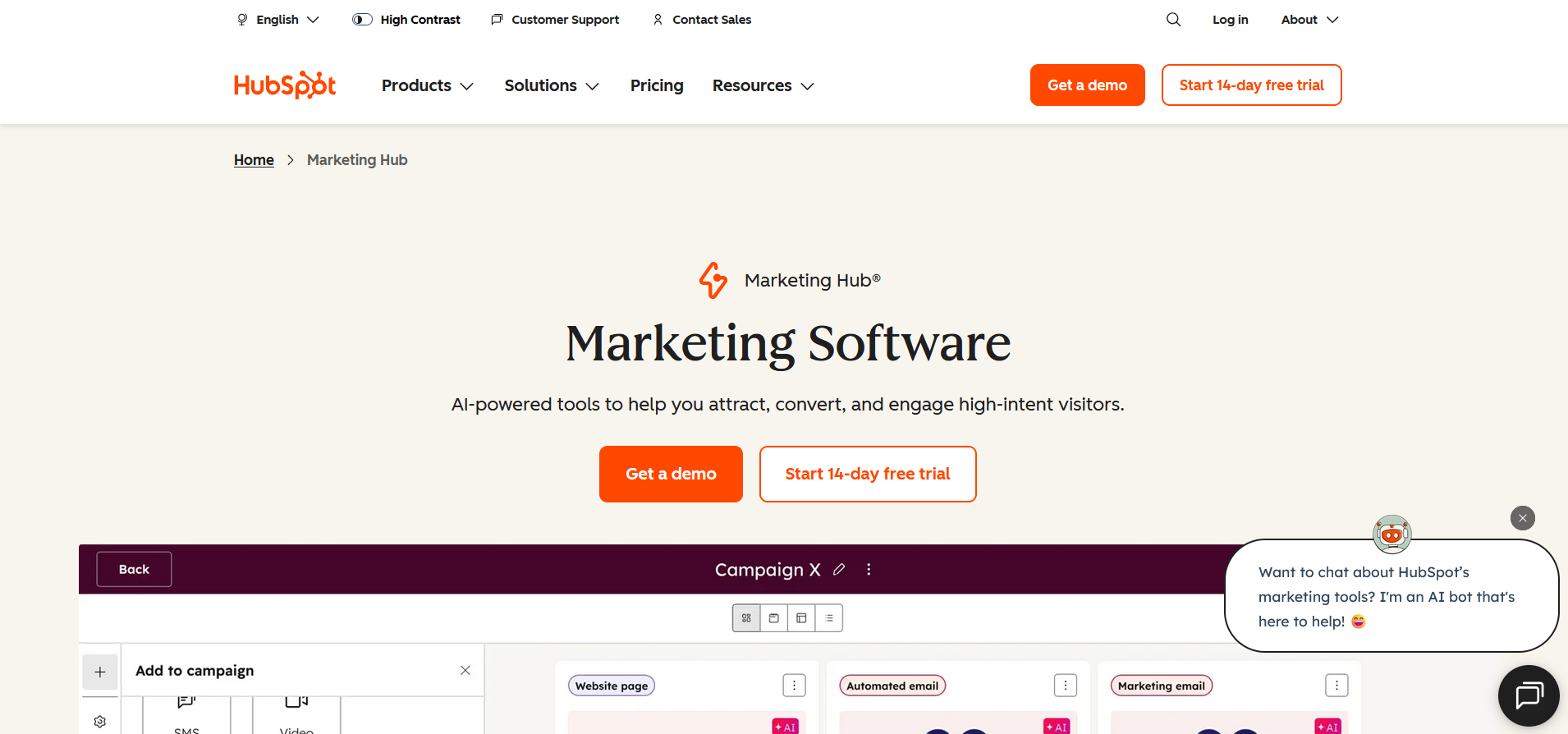
HubSpot Marketing Hub is a complete marketing platform with email marketing, automation, analytics, landing pages, and CRM—all deeply integrated.
Why This Tool Matters
HubSpot works best when marketing needs to connect with sales and service in a single system. The tools are powerful, but you pay for that cohesion.
Best For
- Mid-market companies
- Enterprise marketing teams
- Organizations already in the HubSpot ecosystem
Key Features
- Drag-and-drop email builder
- Advanced marketing automation
- Smart content and personalization
- Deep analytics and attribution
- Seamless CRM integration
Pros
- Unified marketing and sales platform
- Excellent reporting and attribution
- Large app marketplace
Cons
- Expensive as contact lists grow
- Can be overkill for simple email marketing
- Complex to administer
Real-World Use Case
A B2B company runs lifecycle campaigns, lead scoring, and attribution from a single HubSpot instance connected to their CRM.
Pricing Breakdown
Starts at ~$45/month (1K contacts) and scales to ~$3,600/month (10K contacts). Enterprise pricing is custom.
Mini Verdict
HubSpot is unmatched for integrated marketing-sales workflows—but only if your budget matches your ambition.
6. Omnisend
What This Tool Does
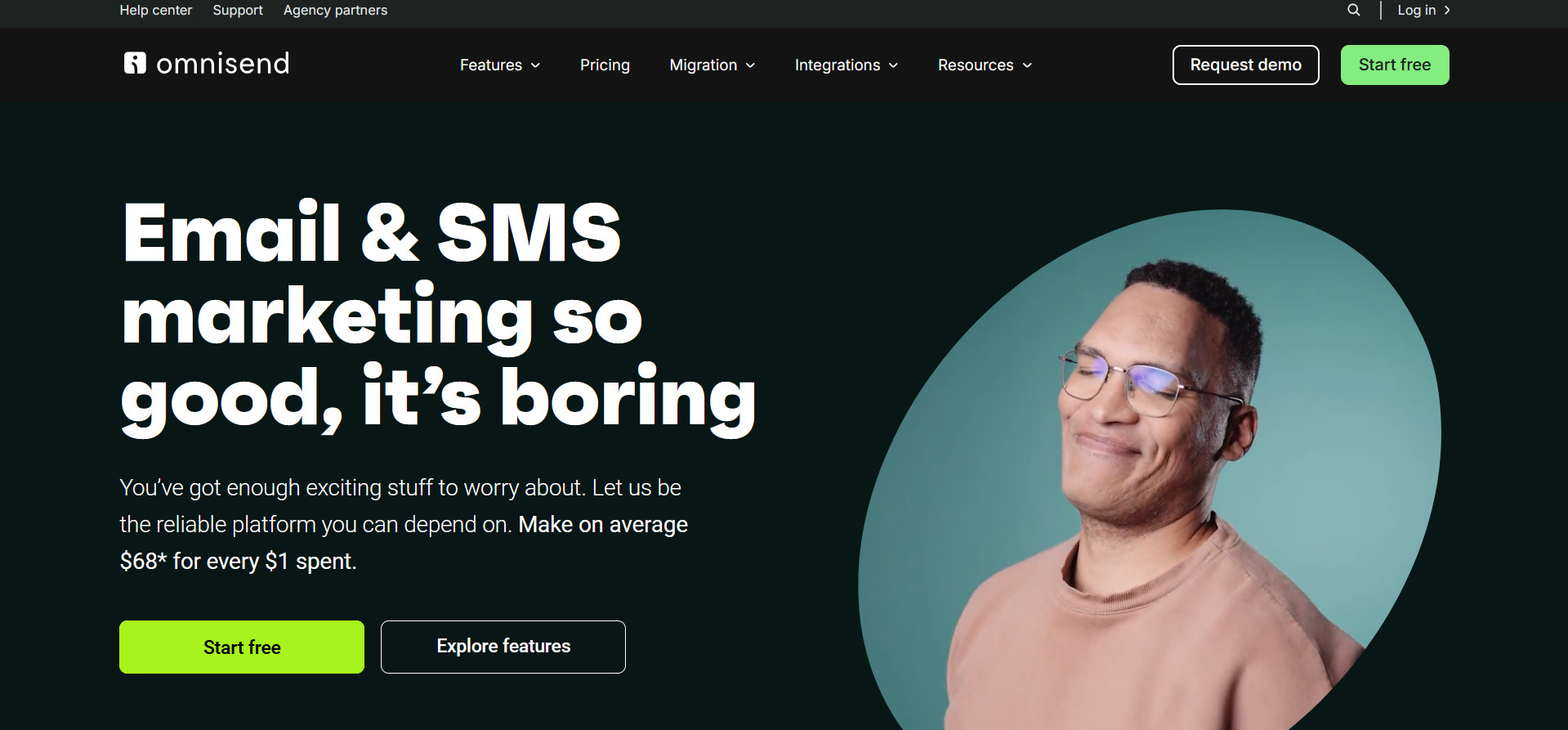
Omnisend is an email and SMS marketing platform built specifically for e-commerce brands, with deep integrations into Shopify, WooCommerce, and BigCommerce.
Why This Tool Matters
Generic email tools miss e-commerce context. Omnisend is built for it—product feeds, browse behavior, and purchase history are first-class data points.
Best For
- E-commerce stores
- DTC brands
- Shopify/WooCommerce merchants
Key Features
- E-commerce automation workflows
- SMS and push notifications
- Product feed emails
- Pre-built e-commerce templates
Pros
- Purpose-built for e-commerce
- Good automation templates
- SMS and email unified
Cons
- Limited B2B functionality
- Smaller user community
- Advanced segmentation has limits
Real-World Use Case
A Shopify store automates welcome flows, abandoned cart reminders, and post-purchase cross-sells—all based on purchase behavior.
Pricing Breakdown
Free plan up to 250 contacts. Paid plans start at ~$16/month for 1K contacts.
Mini Verdict
Omnisend is the strongest dedicated e-commerce email platform—if you're selling online, it's worth a close look.
7. Klaviyo
What This Tool Does
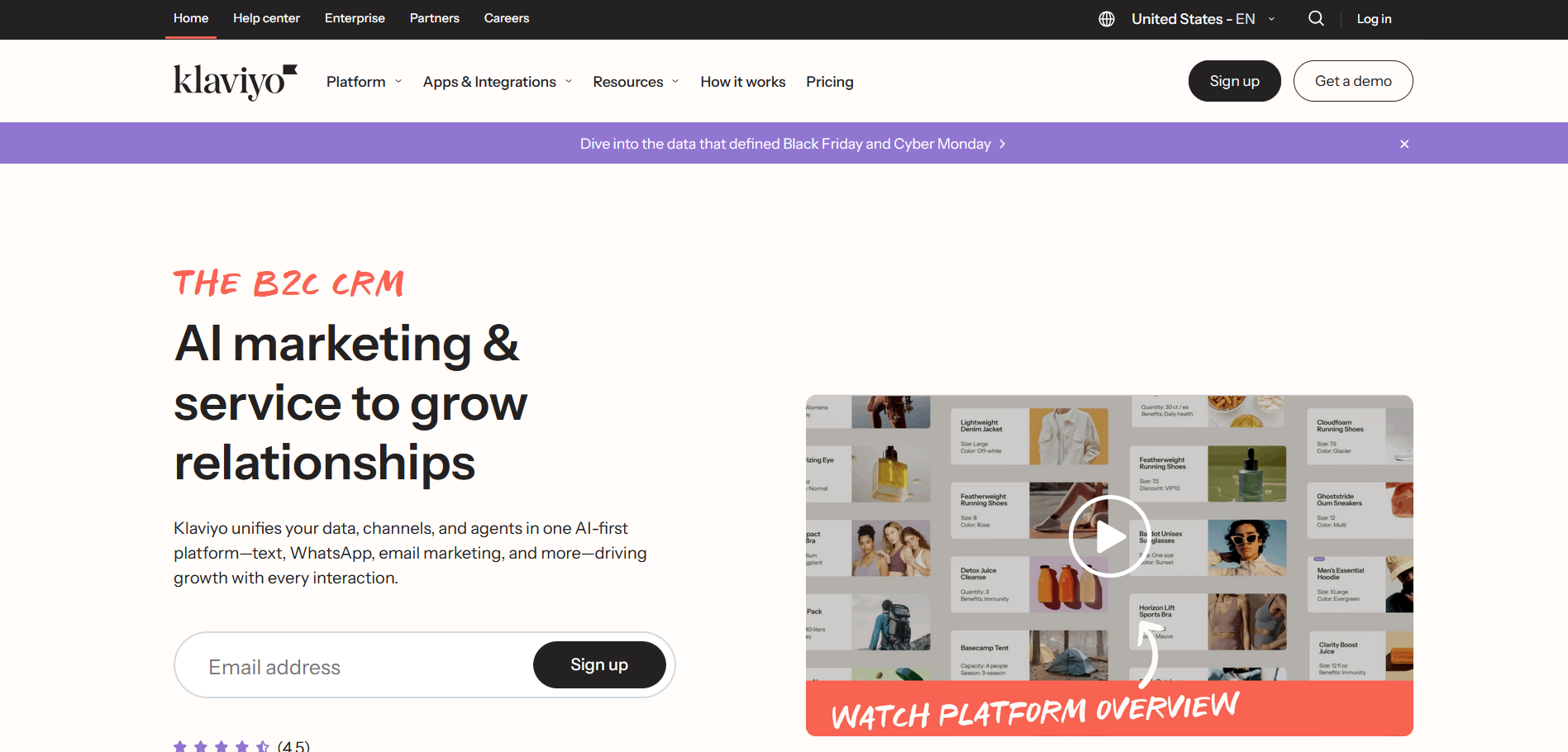
Klaviyo is an email and SMS marketing platform that uses customer data—purchase history, browse behavior, engagement patterns—to drive highly targeted campaigns.
Why This Tool Matters
Klaviyo treats data as the core of email marketing, not an add-on. That focus makes segmentation, personalization, and analytics significantly more powerful than general-purpose platforms.
Best For
- E-commerce brands
- DTC companies
- Data-driven marketing teams
Key Features
- Advanced segmentation based on customer behavior
- SMS marketing integration
- Predictive analytics
- Pre-built flow templates
- Deep e-commerce integrations
Pros
- Excellent data-driven segmentation
- Strong e-commerce integrations
- Powerful analytics and reporting
Cons
- Becomes expensive at scale
- Steeper learning curve than MailerLite
- Focus is e-commerce first
Real-World Use Case
An e-commerce brand segments customers by lifetime value, purchase frequency, and product affinity to send behaviorally triggered campaigns.
Pricing Breakdown
Free plan available. Paid plans start at ~$20/month for 500 contacts, scaling to ~$350/month for 5K contacts.
Mini Verdict
Klaviyo is the platform to beat for data-driven e-commerce email marketing—if your data hygiene is solid and your budget can scale.
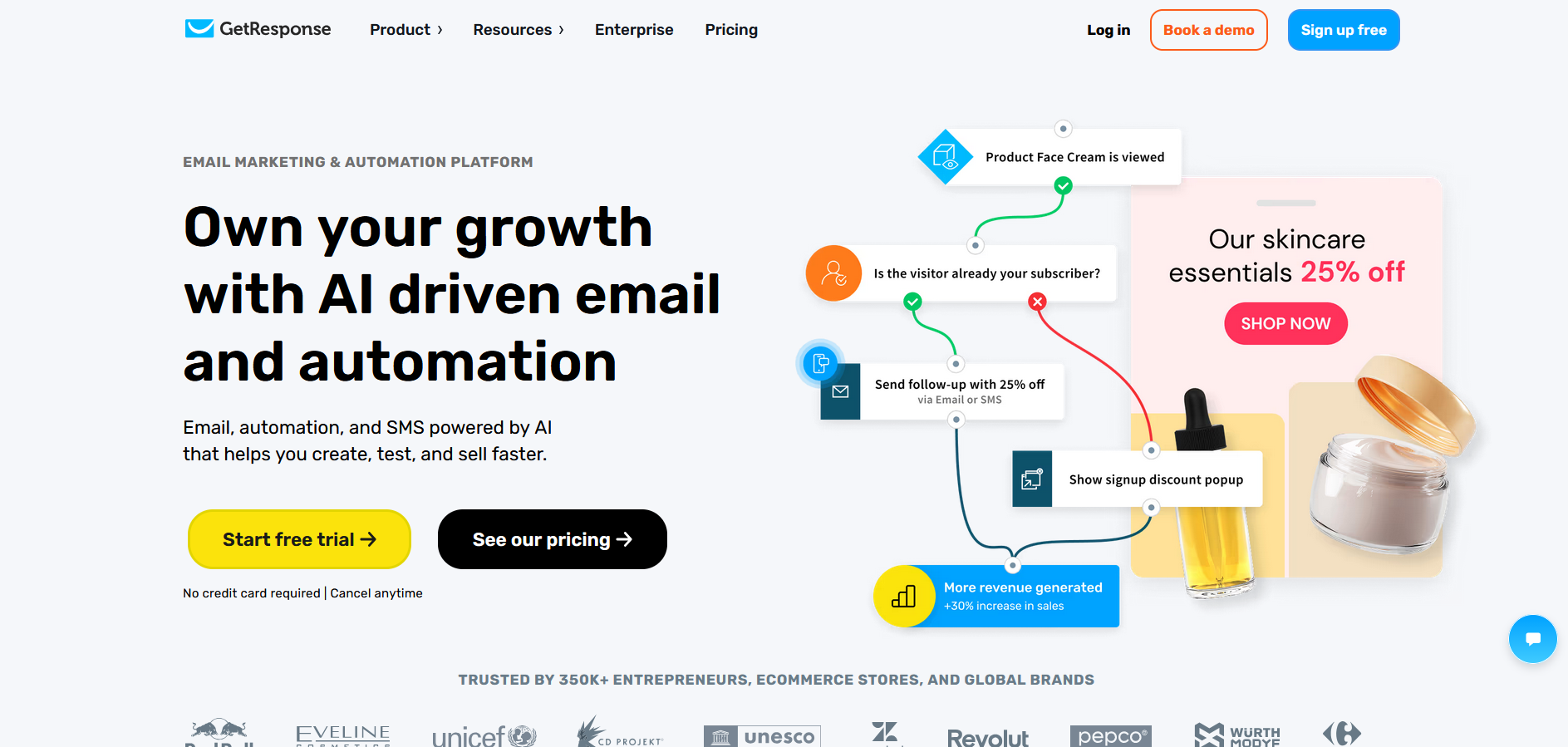
8. GetResponse
What This Tool Does
GetResponse is a full-featured email marketing platform that also includes landing pages, webinars, automation, and CRM features.
Why This Tool Matters
GetResponse tries to be everything in one place. That breadth is useful for growing teams that don't want to manage multiple subscriptions.
Best For
- Growing SMBs
- Marketers who want one platform for email, landing pages, and webinars
Key Features
- Email campaigns and automation
- Landing page builder
- Webinar hosting
- CRM and lead management
- A/B testing
Pros
- Broad feature set
- Competitive pricing
- Good automation builder
Cons
- Feature depth doesn't match specialized tools
- UI can feel overwhelming
- Deliverability can vary
Real-World Use Case
A growing SMB runs email campaigns, hosts webinars, and manages leads—all from GetResponse.
Pricing Breakdown
Free plan available. Paid plans start at ~$15/month for 500 contacts, scaling to ~$145/month for 5K contacts.
Mini Verdict
GetResponse is a strong Swiss Army knife for teams that want features over specialization.
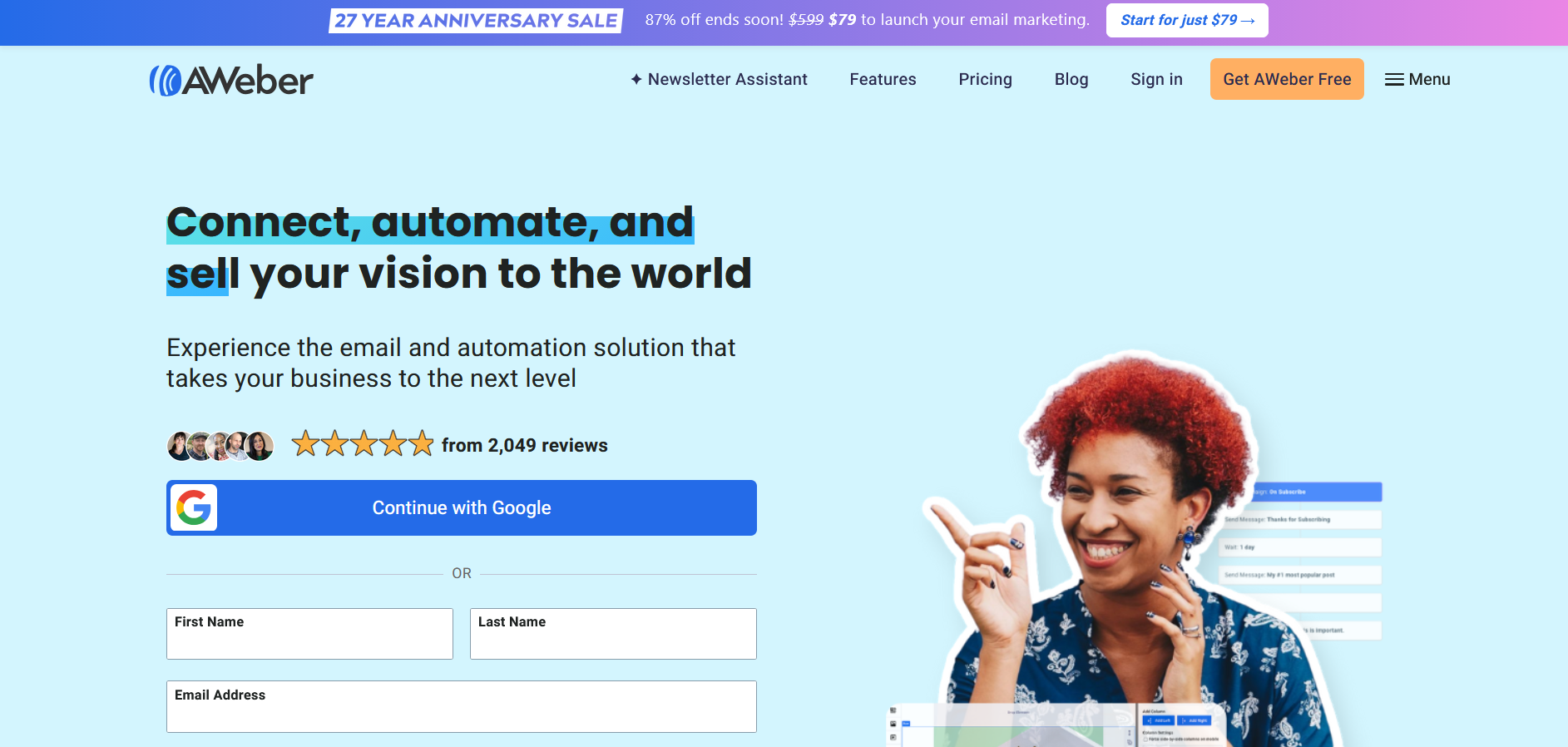
9. AWeber
What This Tool Does
AWeber is one of the oldest email marketing platforms, focused on helping beginners and creators send clean, simple newsletters.
Why This Tool Matters
AWeber has survived because it solves the core email problem reliably. It's not the flashiest tool, but for newsletter-focused users, it works without drama.
Best For
- Bloggers
- Creators
- Beginners who need simplicity and reliable support
Key Features
- Drag-and-drop email builder
- Automation workflows
- Landing pages
- Subscriber segmentation
- Analytics and reporting
Pros
- Very easy to use
- Good customer support
- Affordable entry pricing
Cons
- Design feels dated
- Limited advanced automation
- Fewer integrations than modern competitors
Real-World Use Case
A blogger sends a weekly newsletter to 2,000 subscribers with simple automations and consistent delivery.
Pricing Breakdown
Free plan available for up to 500 subscribers. Paid plans start at ~$12.50/month for 500 subscribers.
Mini Verdict
AWeber is a solid, simple choice for newsletter-focused users who value reliability over innovation.
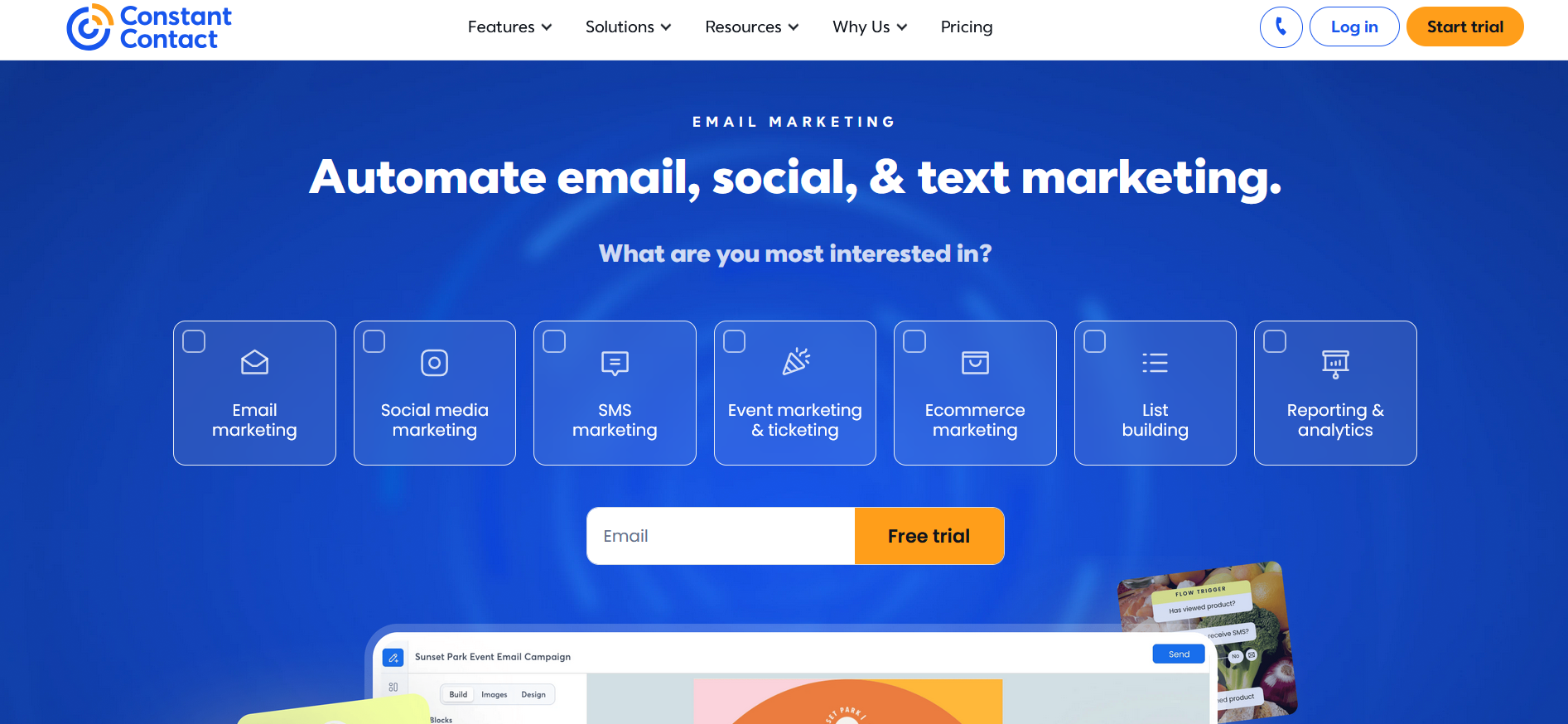
10. Constant Contact
What This Tool Does
Constant Contact provides simple email marketing and online marketing tools for small businesses, nonprofits, and local organizations.
Why This Tool Matters
Constant Contact's strength is its low barrier to entry. It's designed for teams without dedicated marketing expertise.
Best For
- Local businesses
- Nonprofits and associations
- Small teams without dedicated marketers
Key Features
- Drag-and-drop email editor
- Template library
- List management and segmentation
- Event management tools
- Basic reporting
Pros
- Quick to set up
- Helpful customer support
- Good template selection
Cons
- Less powerful automation
- Limited scalability for growing lists
- Basic reporting compared to competitors
Real-World Use Case
A local nonprofit sends monthly newsletters, event invitations, and donor updates with minimal technical overhead.
Pricing Breakdown
Pricing starts at ~$12/month for 500 contacts, scaling to ~$80/month for 2.5K contacts.
Mini Verdict
Constant Contact remains a practical choice for organizations that need email marketing without complexity.