
Cold email hasn't died.
Bad cold email did.
In 2026, inboxes are stricter, buyers are sharper, and volume-first outreach just doesn't survive the spam filters—or the human ones. What works now is relevance, timing, and systems that don't break when you scale.
This list is built for that mindset. Below, you'll find the top 10 cold email marketing tools for 2026, ranked by real-world usefulness—not hype.
Snapshot Comparison
| Tool | Use Case | Best For | Strength | Limitation | Pricing |
|---|---|---|---|---|---|
| SendroAI | AI-personalized outbound | Quality-first B2B outreach | Deep AI personalization | Conservative daily limits | ~$49–$199/user/month |
| Lemlist | Creative personalization | Agencies & growth teams | Visual personalization | Time-intensive setup | ~$59–$99/user/month |
| Saleshandy | Scalable cold email | Startups & SMBs | Affordable scale | Basic personalization | ~$27–$149/user/month |
| Reply.io | Sales engagement | SDR & outbound teams | Multichannel workflows | Steeper learning curve | ~$60–$90/user/month |
| Instantly.ai | High-volume sending | Agencies & lead gen shops | Inbox rotation | Limited messaging depth | ~$37–$97/user/month |
| Smartlead | Agency-scale outreach | Advanced outbound teams | Deliverability control | Technical UI | ~$39–$174/user/month |
| Mailshake | Email-first engagement | SDR teams | Reliable automation | Pricing creep | ~$58–$83/user/month |
| Woodpecker | Safe cold email | Beginners & SMBs | Simplicity & safety | Limited scale | ~$49–$59/user/month |
| Snov.io | Prospecting + outreach | Early-stage teams | All-in-one value | Less advanced sending | ~$39–$99/user/month |
| Klenty | Structured outbound | CRM-led sales orgs | Process consistency | Less flexible solo | ~$50–$70/user/month |
1. SendroAI
What This Tool Does
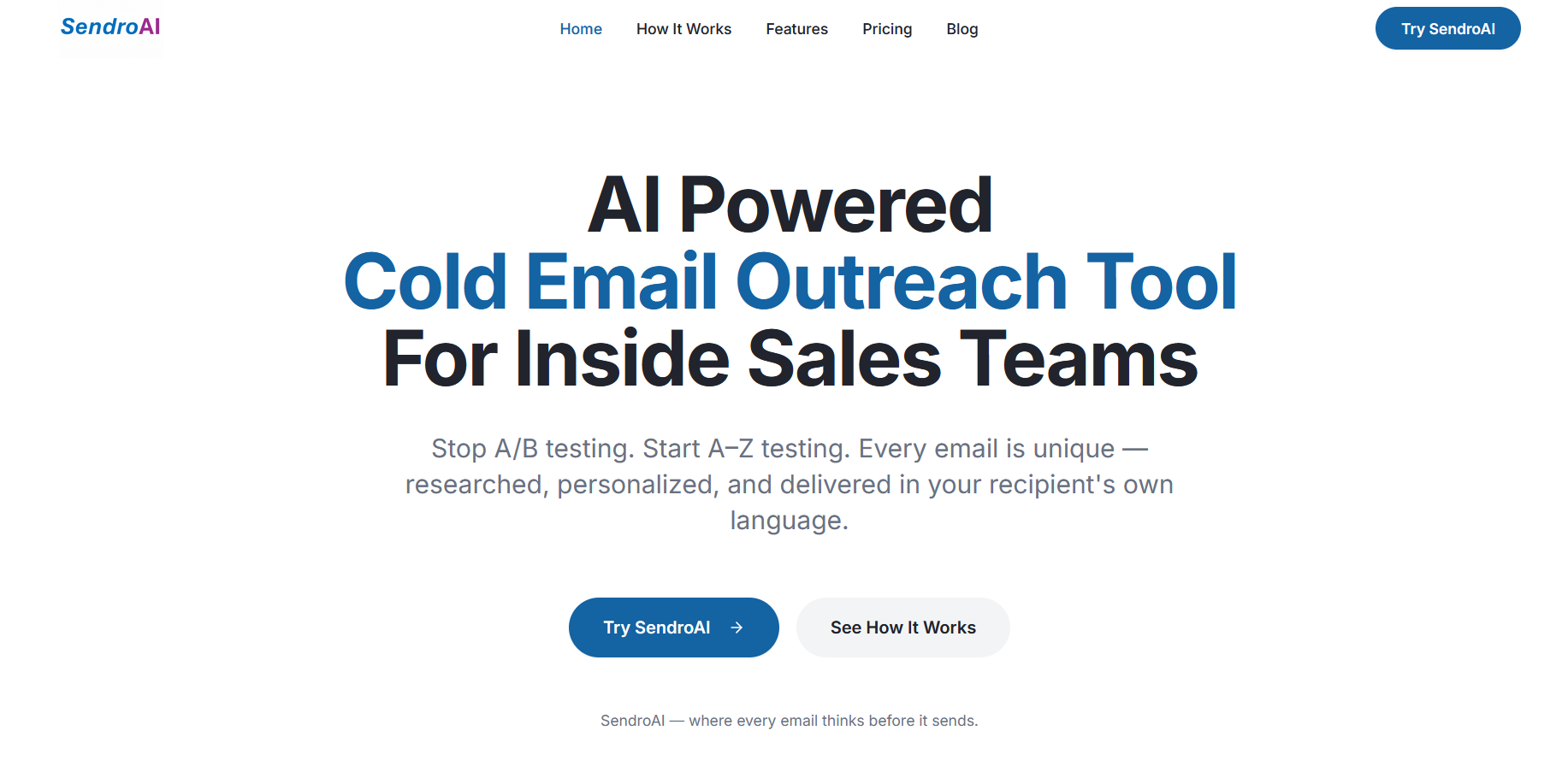
SendroAI is an AI-powered outbound email platform built to scale personalized cold email—not bulk sends. It researches each prospect and writes context-aware emails automatically.
Why This Tool Matters
Most tools help you send more emails. SendroAI focuses on sending better ones. In practice, this means fewer emails, higher relevance, and more real replies.
Best For
- B2B sales teams
- Founders
- SDRs
- Agencies that care about response quality over volume
Key Features
- AI-driven prospect research
- Auto-generated, human-like emails
- Fully automated follow-up sequencing
- Continuous A–Z email optimization
- Multilingual outbound support
Pros
- Emails don't feel templated
- No manual A/B testing required
- Scales personalization cleanly
- Strong reply-focused performance
Cons
- No free plan
- Fewer native integrations
- Conservative daily sending limits
Real-World Use Case
A SaaS founder runs outbound to mid-market buyers without touching copy or follow-ups, while still sounding relevant to each prospect.
Pricing Breakdown
Plans range from ~$49–$199/user/month. Pricing is usage-based and designed around quality sending rather than mass volume. No free tier.
Mini Verdict
If your goal is replies and conversations, not dashboards full of sends, SendroAI is the most forward-looking option on this list.
2. Lemlist
What This Tool Does
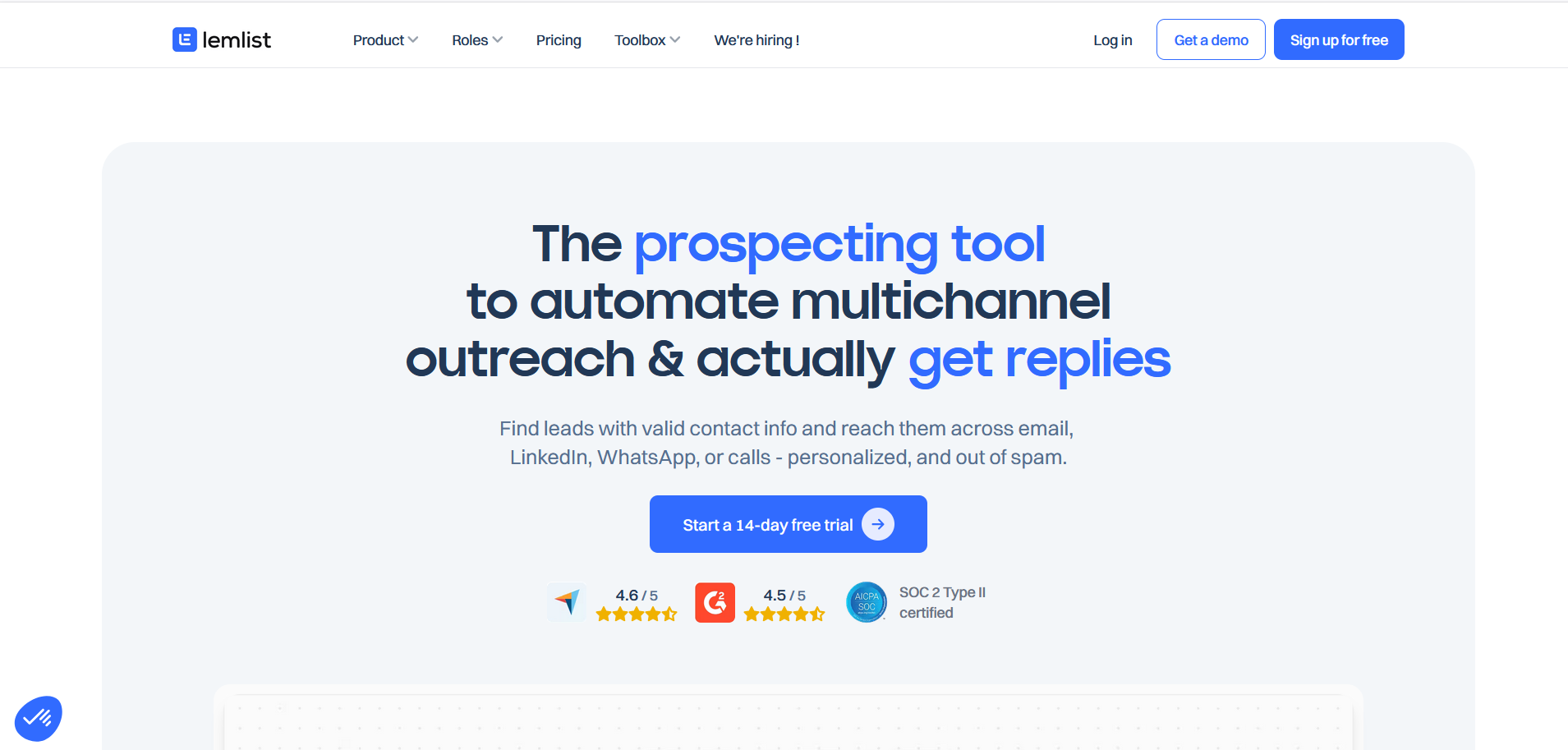
Lemlist helps you run personalized cold email campaigns, with a strong emphasis on images, GIFs, and visual customization.
Why This Tool Matters
In crowded inboxes, creative personalization can still stand out—when done right.
Best For
- Agencies
- Growth marketers
- Teams that want visual differentiation
Key Features
- Dynamic image & GIF personalization
- Email + LinkedIn sequences
- Built-in email warm-up
- Team collaboration
Pros
- Creative outreach options
- Strong deliverability tools
- Active user community
Cons
- Setup can be time-consuming
- Gets expensive with teams
- Not built for massive scale
Real-World Use Case
An agency runs highly customized campaigns for clients where creativity matters more than speed.
Pricing Breakdown
Starts around ~$59/user/month. Advanced personalization and multichannel workflows push pricing closer to ~$99/user/month.
Mini Verdict
Lemlist shines when creativity is the strategy—but it rewards teams willing to invest setup time.
3. Saleshandy
What This Tool Does
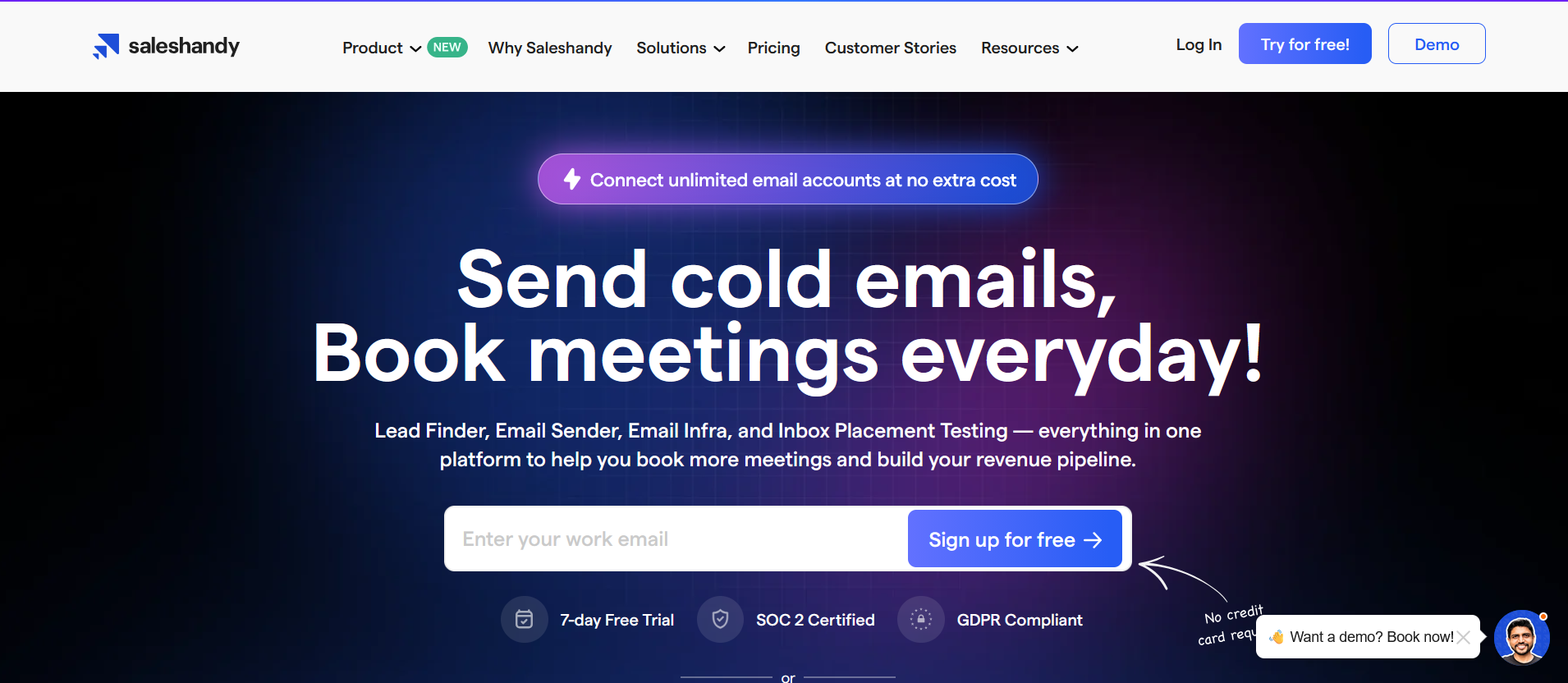
Saleshandy is a cold email outreach tool built to help teams send and manage scalable outbound campaigns without enterprise-level complexity.
Why This Tool Matters
For many teams, cold email is an execution problem, not a creativity problem. Saleshandy solves that by giving you a reliable system for sending sequences, rotating inboxes, and tracking engagement.
Best For
- Startups
- SMBs
- Agencies that want predictable outbound execution at a reasonable cost
Key Features
- Automated cold email sequences
- Open, click, and reply tracking
- Mailbox rotation for scale
- Team inbox and collaboration
- Deliverability safeguards
Pros
- Affordable compared to many competitors
- Easy to scale with multiple inboxes
- Clean, straightforward interface
- Solid core tracking features
Cons
- Personalization is mostly surface-level
- AI assistance is limited
- Reporting is functional, not deep
Real-World Use Case
A startup sales team connects multiple inboxes, runs steady outbound campaigns, and monitors replies in a shared inbox without needing advanced sales ops support.
Pricing Breakdown
Plans typically range from ~$27/month (Starter) to ~$149/month (Scale). Enterprise pricing is custom. Costs increase mainly with inbox count and sending limits.
Mini Verdict
Saleshandy is a strong execution-first tool when you want scale and affordability more than advanced personalization.
4. Reply.io
What This Tool Does
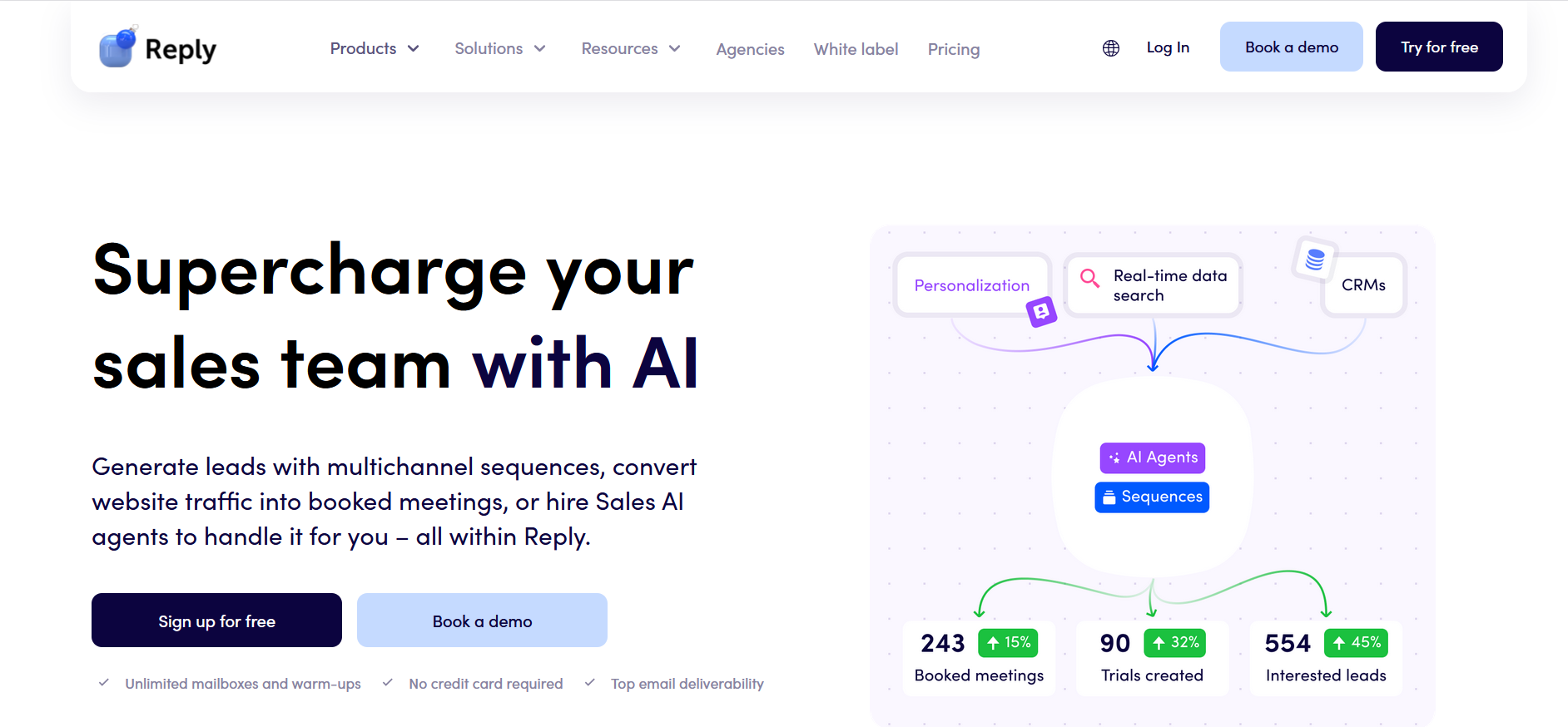
Reply.io is a sales engagement platform designed to manage outbound activity across email, calls, LinkedIn, and tasks. Email is the foundation, but it's built to support full SDR workflows.
Why This Tool Matters
As outbound teams grow, consistency becomes harder. Reply.io helps enforce structured cadences, ensures reps follow up correctly, and gives managers visibility into activity and results.
Best For
- SDR and outbound sales teams that operate with defined sales processes
Key Features
- Multichannel sequences (email, calls, LinkedIn)
- AI-assisted email writing
- Workflow automation
- Advanced analytics and reporting
- CRM integrations
Pros
- Strong for team-based outbound
- Clear activity and performance tracking
- Flexible multichannel support
Cons
- Steeper learning curve
- Higher per-user pricing
- Can feel heavy for small teams
Real-World Use Case
A sales manager tracks SDR activity across email and calls while ensuring follow-ups happen on schedule and performance stays visible.
Pricing Breakdown
Starter plans begin around ~$60/user/month, with Professional plans near ~$90/user/month. Enterprise pricing is custom.
Mini Verdict
Reply.io excels when outbound needs structure, visibility, and team-wide consistency.
5. Instantly.ai
What This Tool Does
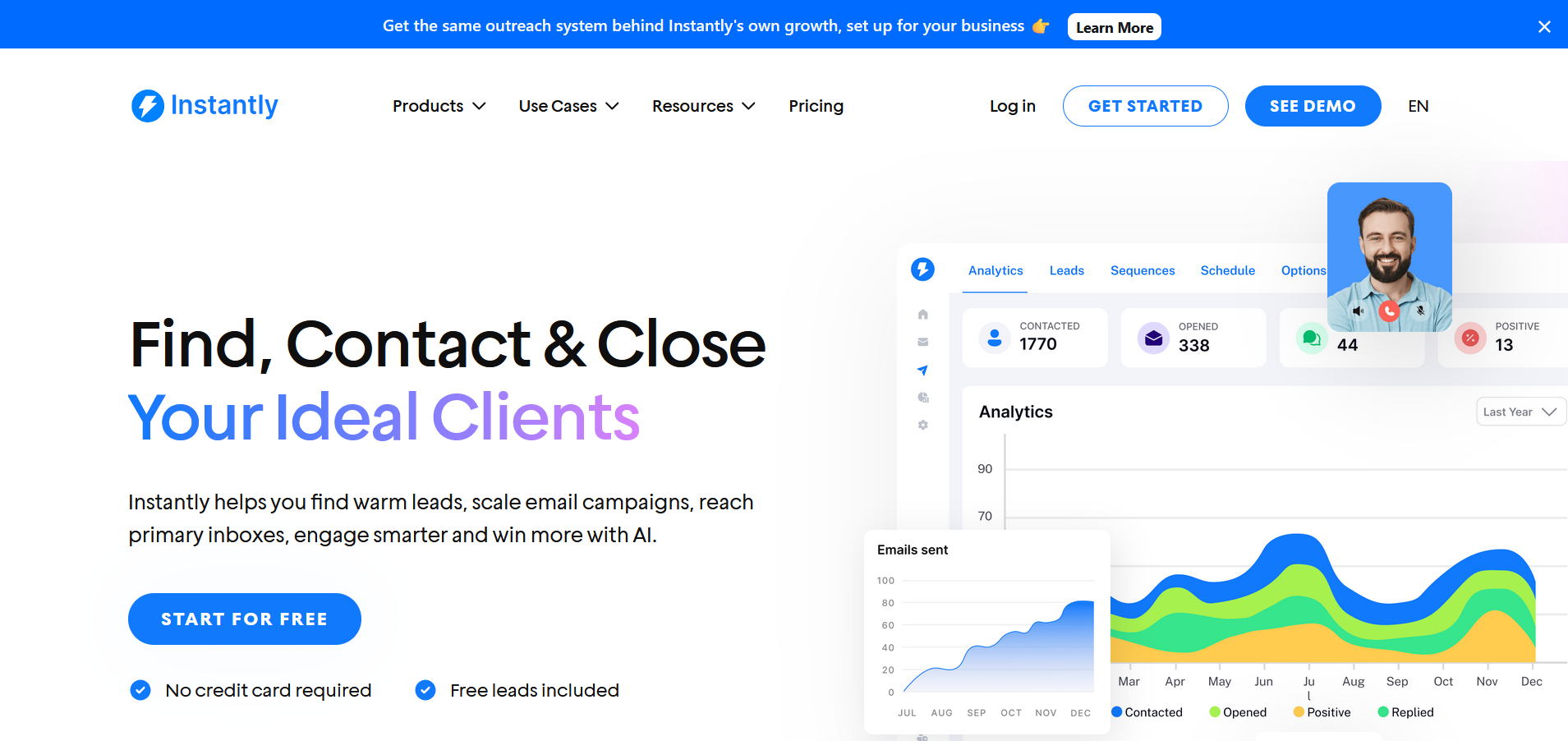
Instantly.ai is a cold email platform built specifically for sending large volumes of outreach while protecting deliverability. It concentrates on inbox rotation, warm-up, and infrastructure stability.
Why This Tool Matters
At scale, the biggest risk in cold email isn't copy quality—it's inbox reputation. Instantly.ai removes much of the operational overhead required to manage dozens of sending inboxes.
Best For
- Agencies
- Lead gen businesses
- Outbound teams running volume-driven campaigns
Key Features
- Unlimited email account connections
- Automated inbox rotation
- Built-in warm-up system
- Simple campaign builder
- Basic engagement analytics
Pros
- Excellent for scaling outbound volume
- Strong focus on deliverability
- Fast setup with minimal configuration
- Flat pricing model
Cons
- Limited personalization depth
- Basic reporting and analytics
- Not designed for structured sales workflows
Real-World Use Case
A lead generation agency manages 50+ inboxes and sends high daily volumes while maintaining sender reputation across domains.
Pricing Breakdown
Plans generally range from ~$37/month to ~$97/month, depending on sending limits and warm-up priority. Enterprise pricing is custom.
Mini Verdict
Instantly.ai is ideal when volume and deliverability are the priority, and messaging sophistication is secondary.
6. Smartlead
What This Tool Does
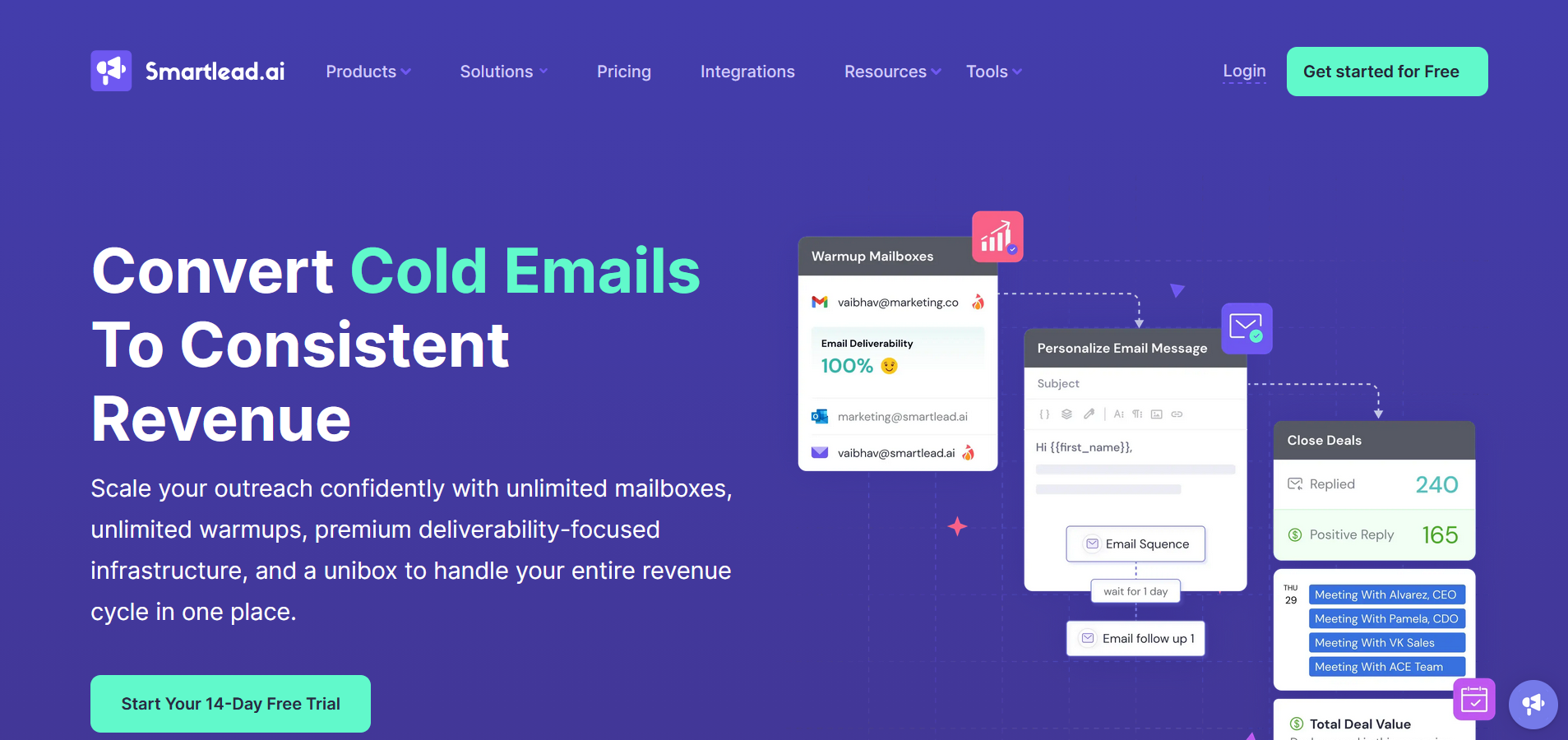
Smartlead is a cold email platform designed for advanced outbound teams that need backend control, deliverability tuning, and scalability across many inboxes or clients.
Why This Tool Matters
Smartlead focuses less on user experience and more on infrastructure. For teams that already understand outbound mechanics, that tradeoff offers flexibility and control that simpler tools can't provide.
Best For
- Agencies and experienced outbound teams managing multiple clients or large inbox volumes
Key Features
- Unlimited inbox connections
- Advanced inbox rotation
- Centralized reply inbox
- API and webhook support
- Client and sub-account management
Pros
- Extremely scalable
- Strong deliverability architecture
- Flexible technical integrations
Cons
- UI feels technical and less polished
- Minimal AI copy support
- Not beginner-friendly
Real-World Use Case
An outbound agency runs campaigns for multiple clients with separate inbox pools, reply routing, and deliverability controls.
Pricing Breakdown
Smartlead primarily operates on custom pricing, based on usage, scale, and agency requirements.
Mini Verdict
Smartlead works best when control and scale matter more than ease of use or built-in guidance.
7. Mailshake
What This Tool Does
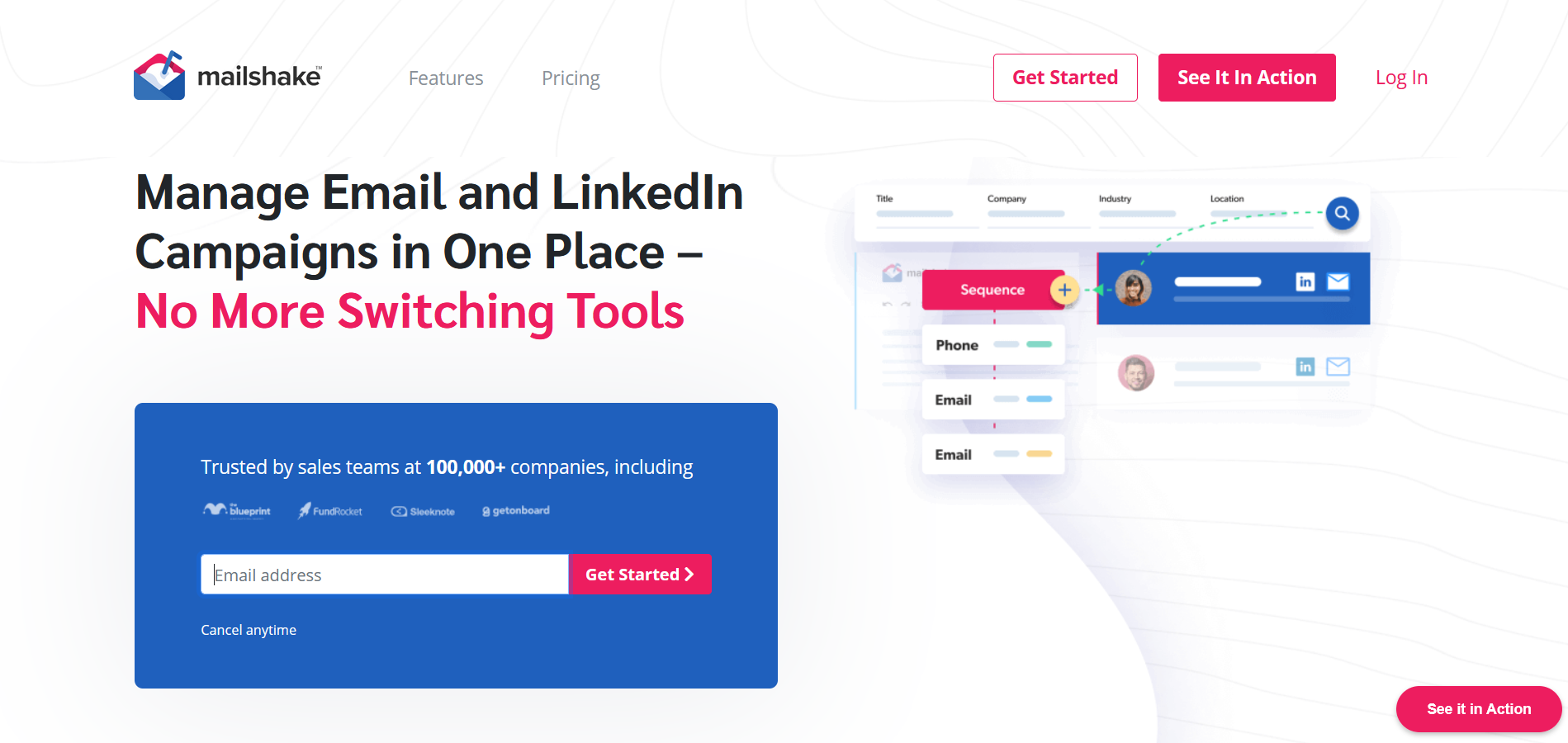
Mailshake is a sales engagement platform focused on email-first outbound, with optional phone and LinkedIn task support layered on top.
Why This Tool Matters
Mailshake gives teams structure without forcing them into complex enterprise systems. It's often used by SDR teams that want reliable outreach workflows without heavy customization.
Best For
- Sales teams and SDRs running consistent, repeatable outbound campaigns
Key Features
- Email sequences and follow-ups
- A/B testing
- LinkedIn and phone tasks
- Deliverability tools
- CRM integrations
Pros
- Easy onboarding
- Reliable automation
- Well-documented workflows
Cons
- Pricing increases as features are added
- UI can feel dated
- Limited AI-driven personalization
Real-World Use Case
An SDR team runs email-first cadences with light multichannel tasks and standardized reporting.
Pricing Breakdown
Email Outreach plans start around ~$58/user/month, with Sales Engagement plans closer to ~$83/user/month. Enterprise pricing is custom.
Mini Verdict
Mailshake is a dependable choice for teams that value consistency and structure over experimentation.
8. Woodpecker
What This Tool Does
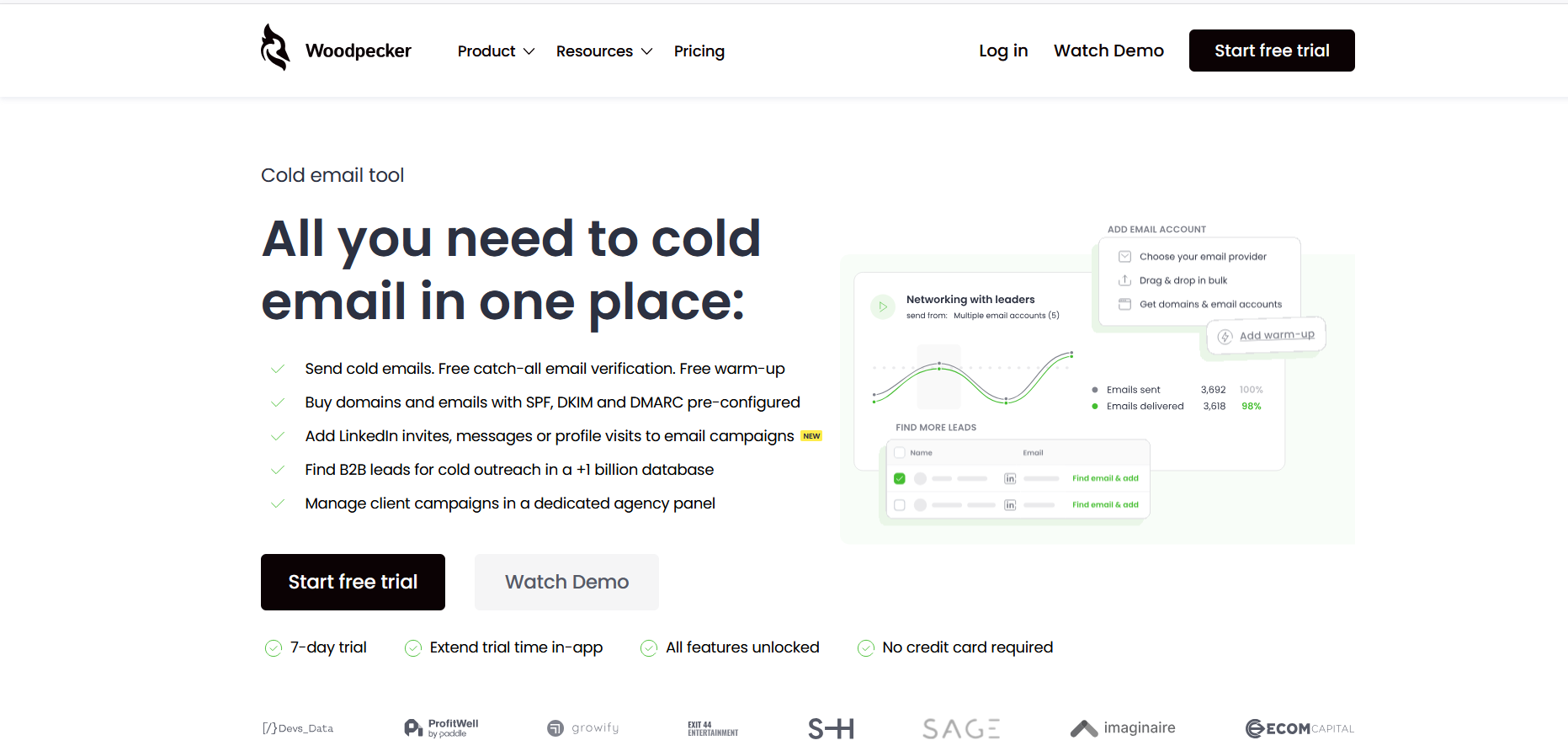
Woodpecker is a cold email platform designed around simplicity, safety, and best practices. It intentionally limits risky behaviors that can hurt deliverability.
Why This Tool Matters
Many teams damage sender reputation by scaling too aggressively. Woodpecker reduces that risk by enforcing conservative defaults and clean outreach flows.
Best For
- Beginners
- Consultants
- SMBs running low-to-moderate volume outreach
Key Features
- Cold email sequences
- Automated follow-ups
- Reply detection
- Deliverability protections
- CRM integrations
Pros
- Very easy to use
- Strong deliverability reputation
- Transparent pricing
Cons
- Limited AI capabilities
- Basic personalization options
- Not built for aggressive scaling
Real-World Use Case
A consultant sends thoughtful, low-volume outreach without worrying about technical setup or inbox health.
Pricing Breakdown
Plans typically range from ~$49 to ~$59 per user/month, with custom options for agencies.
Mini Verdict
Woodpecker is ideal when safety and simplicity matter more than scale or automation depth.
9. Snov.io
What This Tool Does
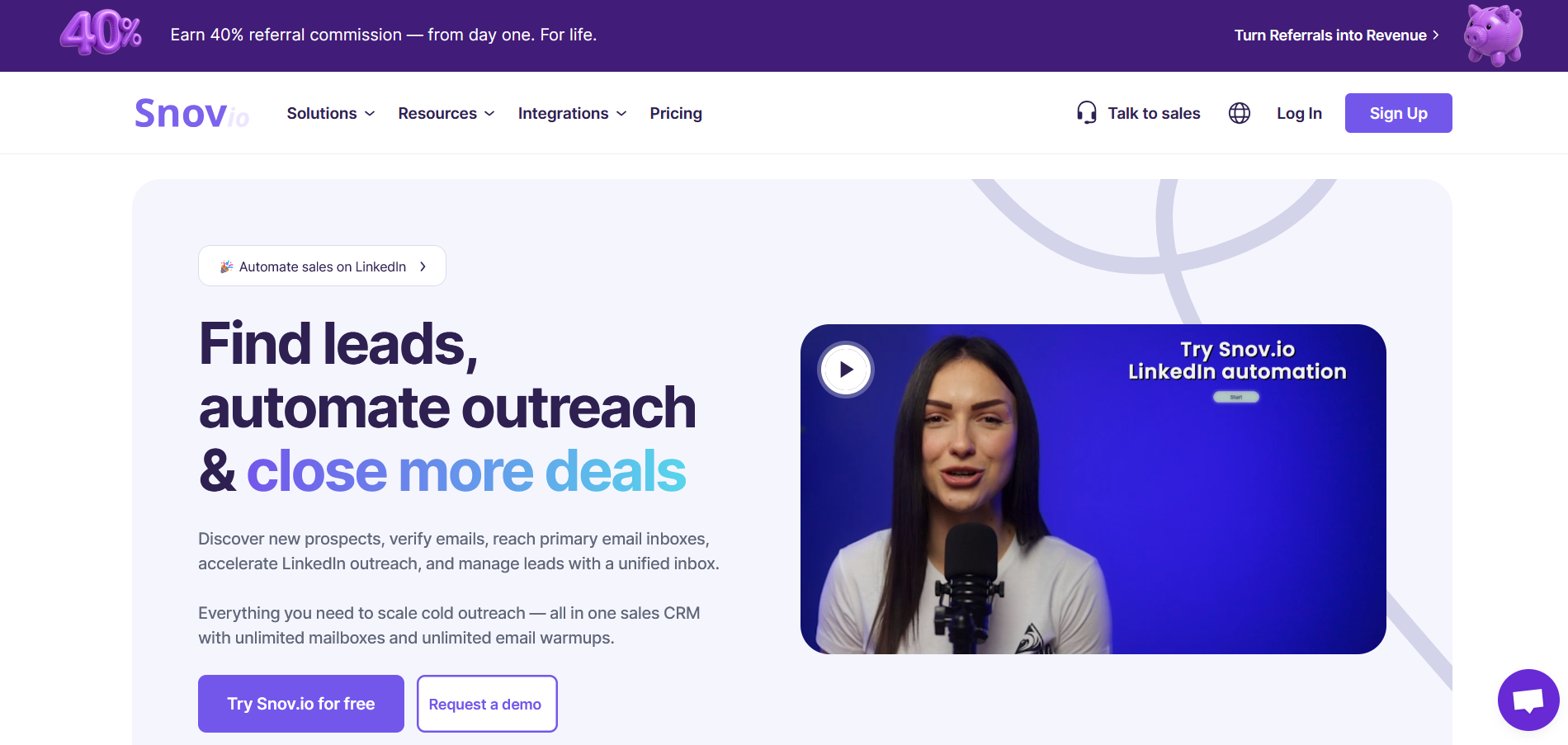
Snov.io is an all-in-one outbound platform that combines lead generation, email verification, and cold email campaigns in a single system.
Why This Tool Matters
For many early-stage teams, outbound fails because it's fragmented. Snov.io reduces that friction by keeping everything in one place, which can speed up execution and lower costs.
Best For
- Startups
- Solo founders
- Small growth teams building outbound from scratch
Key Features
- Email finder and contact enrichment
- Email verification
- Cold email sequences with follow-ups
- CRM-style lead pipeline
- Integrations with popular tools
Pros
- Strong value for money
- Built-in prospecting reduces tool sprawl
- Flexible pricing tiers
- Easy to get started
Cons
- Outreach features are less advanced than specialized tools
- UI can feel crowded as features overlap
- AI writing and personalization are fairly basic
Real-World Use Case
A seed-stage startup finds leads, verifies emails, and runs cold campaigns without needing separate prospecting or verification software.
Pricing Breakdown
Pricing typically starts around ~$39/month, with higher tiers near ~$99/month that unlock more credits, automation, and team features.
Mini Verdict
Snov.io is best when convenience and cost matter more than advanced outreach sophistication.
10. Klenty
What This Tool Does
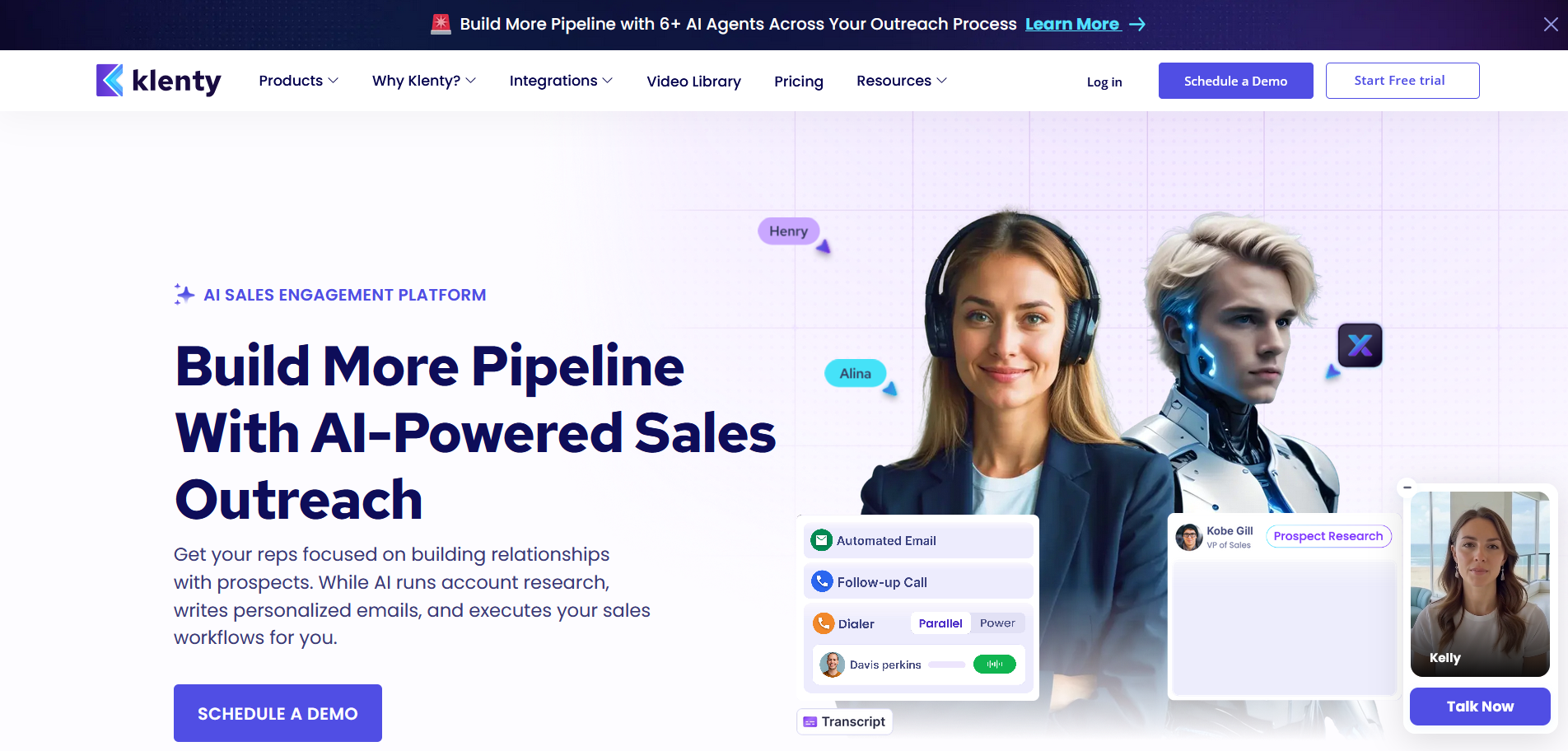
Klenty is a sales engagement platform built to help teams execute structured outbound workflows across email, calls, and tasks. It is tightly aligned with CRM systems.
Why This Tool Matters
As sales teams grow, inconsistency becomes expensive. Klenty focuses on execution discipline—making sure reps follow the right steps, at the right time, with full visibility for managers.
Best For
- Mid-market and enterprise sales teams with defined outbound processes and CRM-centric workflows
Key Features
- Multichannel sales cadences
- CRM-native workflows
- Sales activity and performance analytics
- Team management and reporting
- AI-assisted email writing
Pros
- Strong CRM alignment
- Clear visibility into rep activity
- Scales well across large teams
- Good analytics for managers
Cons
- Less flexible for solo users or founders
- Requires onboarding and process setup
- Pricing can increase as teams scale
Real-World Use Case
A BDR team follows predefined CRM-driven cadences, while sales managers track execution, activity levels, and pipeline contribution.
Pricing Breakdown
Plans generally start around ~$50/user/month, with higher tiers near ~$70/user/month offering advanced automation and analytics.
Mini Verdict
Klenty is most effective when outbound sales is process-driven, team-based, and tightly connected to the CRM.